Amoxiclav
Poland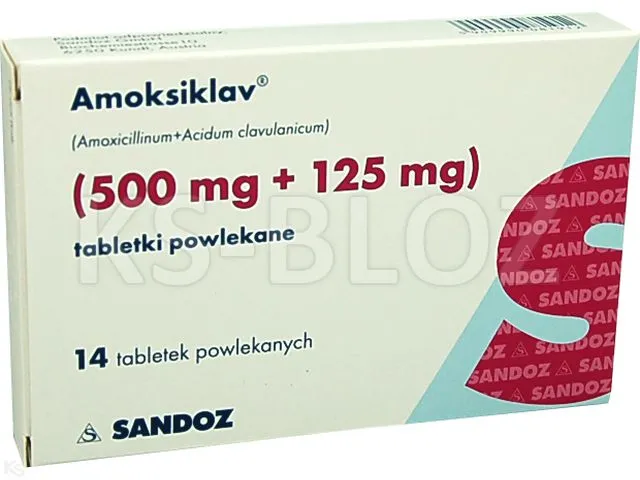
Table of Contents
Patient Information Leaflet
NOTE: Keep this leaflet, packaging information in foreign language.
Amoksiklav (Amoksiklav 2x 1000 mg), (875 mg + 125 mg), coated tablets
Amoxicillinum + Acidum clavulanicum
Amoksiklav and Amoksiklav 2x 1000 mg are different brand names for the same medicine.
Please read this leaflet carefully before taking this medicine, as it contains
important information for you.
- Keep this leaflet so that you can read it again if necessary.
- If you have any questions, please consult your doctor or pharmacist.
- This medicine has been prescribed for a specific individual. Do not pass it on to others. This medicine may harm someone else, even if their symptoms are the same.
- If you experience any adverse effects, including any not listed in this leaflet, tell your doctor, pharmacist or nurse. See section 4.
Leaflet Contents
- What Amoksiklav is and what it is used for
- What you need to know before taking Amoksiklav
- How to take Amoksiklav
- Possible side effects
- How to store Amoksiklav
- Contents of the pack and other information
1. What Amoksiklav is and what it is used for
Amoksiklav is an antibiotic that kills bacteria causing infections. It contains two different active substances: amoxicillin and clavulanic acid. Amoxicillin belongs to a group of medicines called penicillins, whose activity can sometimes be inhibited (neutralized). The second active substance (clavulanic acid) counteracts this inhibition.
Amoksiklav is used in adults and children to treat the following infections:
- middle ear and sinus infections,
- respiratory tract infections,
- urinary tract infections,
- skin and soft tissue infections, including dental infections,
- bone and joint infections.
2. Important information before using Amoksiklav
When not to use Amoksiklav
- if the patient is allergic (hypersensitive) to amoxicillin, clavulanic acid, penicillin, or to any of the other ingredients of this medicine (listed in section 6);
- if the patient has ever experienced a severe allergic reaction (hypersensitivity) to any other antibiotic; such a reaction may include skin rash, swelling of the face or neck;
- if the patient has ever had liver function disorders or jaundice (yellowing of the skin) caused by taking an antibiotic.
→ If any of the above situations apply, the patient should not take
Amoksiklav. If in doubt, consult a doctor or pharmacist before using Amoksiklav.
Warnings and precautions
Before using this medicine, discuss with a doctor or pharmacist if the patient:
- has infectious mononucleosis,
- is being treated for liver or kidney function disorders,
- does not urinate regularly.
If in doubt whether any of these conditions apply, consult a doctor or pharmacist before using
the medicine.
In some cases, the doctor may test which type of bacteria caused the infection. Depending on
the test results, the patient may be prescribed a different strength of Amoksiklav or another medicine.
Conditions to be aware of
Taking Amoksiklav may worsen the course of certain pre-existing conditions or cause serious
adverse effects (such as allergic reactions, seizures, and inflammation of the large intestine).
To reduce the risk of any problems, it is important to monitor for specific symptoms during
treatment with Amoksiklav (see "Conditions to be aware of" in section 4).
Blood and urine tests
If the patient is due to have blood tests (e.g. red blood cell count or liver function tests) or
urine tests (for glucose), inform the doctor or nurse that the patient is taking Amoksiklav.
The medicine may affect the results of such tests.
Amoksiklav and other medicines
Tell the doctor or pharmacist about all medicines the patient is currently taking or has recently
taken, as well as any medicines the patient plans to use, including those available without a
prescription and herbal medicines.
If the patient is taking allopurinol (used to treat gout) together with Amoksiklav, the likelihood of
a skin allergic reaction increases.
If the patient is taking probenecid (used to treat gout), the doctor may decide to adjust the dose
of Amoksiklav.
If the patient is taking medicines that reduce blood clotting (such as warfarin) together with
Amoksiklav, additional blood tests may be required.
Amoksiklav may affect the action of methotrexate (a medicine used to treat cancer or rheumatic
diseases).
If the patient is receiving mycophenolate mofetil (a medicine used to prevent rejection of a
transplanted organ), the doctor will closely monitor the patient's health during treatment with
Amoksiklav.
Pregnancy and breastfeeding
If the patient is pregnant or breastfeeding, suspects she may be pregnant, or is planning to
have a child, she should consult a doctor or pharmacist before using this medicine.
Driving and operating machinery
Amoksiklav may cause adverse effects and symptoms that may impair the ability to drive.
Do not drive or operate machinery unless the patient feels well.
Amoksiklav contains sodium and potassium
This medicine contains less than 1 mmol (23 mg) of sodium per coated tablet, meaning the
medicine is considered "sodium-free".
The medicine contains 24 mg of potassium, i.e. less than 1 mmol (or 39 mg) per coated tablet.
The medicine contains 1.85 mmol (72 mg) of potassium per maximum daily dose, which should
be taken into account in patients with reduced kidney function and in patients monitoring dietary potassium intake.
3. How to take Amoksiklav
This medicine should always be taken as directed by the doctor. If in doubt, consult a doctor or pharmacist.
Adults and children with body weight of 40 kg or more
- Usual dose: 1 tablet twice daily
- Higher dose: 1 tablet three times daily
Children with body weight less than 40 kg
Children up to 6 years of age should preferably receive Amoksiklav as an oral suspension.
Before administering Amoksiklav tablets to children with body weight less than 40 kg,
consult a doctor or pharmacist.
Patients with kidney or liver disease
- For patients with impaired kidney function, the dose may be adjusted. The doctor may recommend a different strength or another medicine.
- Patients with impaired liver function may require more frequent blood tests to monitor liver function. How to take Amoksiklav
- Swallow the tablets whole with a glass of water, at the beginning of a meal or just before a meal.
- Maintain regular intervals of at least 4 hours between doses during the day. Do not take 2 doses within 1 hour.
- Do not use Amoksiklav for longer than 2 weeks. If the patient still feels unwell, contact the doctor again. Taking more Amoksiklav than prescribed If the patient takes more Amoksiklav than prescribed, symptoms such as stomach and intestinal irritation (nausea, vomiting, or diarrhoea) or seizures may occur. Contact a doctor as soon as possible. Take the medicine packaging along to show the doctor. If you forget to take Amoksiklav If the patient forgets to take a dose, they should take it as soon as they remember. Do not take the next dose too soon, but wait approximately 4 hours before taking the next dose. Stopping Amoksiklav treatment Continue taking Amoksiklav for the full duration of treatment, even if the patient feels better. All doses are needed to eliminate the infection. If some bacteria survive, they may cause the infection to return. If you have any further questions about the use of this medicine, consult your doctor or pharmacist.
4. Possible adverse effects
Like all medicines, this medicine can cause adverse effects, although not everyone will experience them.
Symptoms that require attention
Allergic reactions:
- skin rash
- vasculitis, which may appear as red or purple raised spots on the skin, but may also affect other parts of the body
- fever, joint pain, swelling of lymph nodes in the neck, armpits or groin
- swelling, sometimes of the face or mouth (angioedema), causing difficulty in breathing
- fainting
→ If any of these symptoms occur, seek medical advice immediately.
Stop taking Amoksiklav.
Inflammation of the large intestine
Inflammation of the large intestine causing watery diarrhoea, usually with blood and mucus,
abdominal pain and (or) fever.
→ If any of these symptoms occur, contact a doctor as soon as possible for advice.
Very common adverse effects (occurring in more than 1 in 10 people)
- diarrhoea
Common adverse effects (occurring in up to 1 in 10 people)
- candidiasis – a fungal infection of the vagina, mouth (oral thrush) or skin folds
- nausea, especially when high doses of the medicine are taken → If nausea occurs, take Amoksiklav before meals.
- vomiting
Uncommon adverse effects (occurring in up to 1 in 100 people)
- skin rash, itching
- raised, itchy rash (urticaria)
- indigestion
- dizziness
- headache
Uncommon adverse effects that may appear in blood test results:
- increased activity of certain substances (enzymes) produced in the liver
Rare adverse effects (occurring in up to 1 in 1000 people)
- skin rash which may develop into blisters and resemble target-like lesions (a dark spot in the centre surrounded by a paler ring with a dark edge at the periphery)
- erythema multiforme) → If the patient notices any of these symptoms, contact a doctor urgently.
Rare adverse effects that may appear in blood test results:
- low number of cells involved in blood clotting (thrombocytopenia)
- low number of white blood cells (leukopenia)
Other adverse effects
Other adverse effects occurred in a very small number of people, but their exact frequency is unknown:
- allergic reactions (see above)
- inflammation of the large intestine (see above)
- severe skin reactions:
- widespread skin rash with blisters and peeling of the skin, especially around the mouth, nose, eyes and genital organs (Stevens-Johnson syndrome) and a more severe form causing extensive peeling of the skin (affecting more than 30% of the body surface – toxic epidermal necrolysis [Lyell's syndrome])
- extensive red skin rash with small pustules filled with pus (pemphigoid dermatitis)
- red, scaly rash with subcutaneous nodules and blisters (bullous pemphigoid)
- flu-like symptoms with rash, fever, swollen lymph nodes and abnormal blood test results [including increased white blood cell count (eosinophilia) and increased liver enzyme activity]; drug reaction with eosinophilia and systemic symptoms (DRESS)
- aseptic meningitis
→ If the patient experiences any of the above symptoms, seek medical advice immediately.
- hepatitis (liver inflammation)
- jaundice due to increased blood levels of bilirubin (a substance produced in the liver), which may cause yellowing of the skin and whites of the eyes
- interstitial nephritis
- prolonged blood clotting time
- hyperkinesia (excessive motor activity)
- seizures (in patients receiving high doses of Amoksiklav or with kidney disease)
- black hairy tongue
- overgrowth of resistant bacteria leading to infection
Adverse effects that may appear in blood test results:
- marked decrease in white blood cell count
- low number of red blood cells (hemolytic anaemia)
- crystals in urine
Reporting of adverse effects
If any adverse effects occur, including any not listed in this leaflet, inform your doctor, pharmacist or nurse. Adverse effects can be reported directly to the Department of Monitoring of Adverse Drug Reactions, Office for Registration of Medicinal Products, Medical Devices and Biocidal Products
Al. Jerozolimskie 181C
02-222 Warsaw
tel: +48 22 49 21 301 fax: +48 22 49 21 309
website: https://smz.ezdrowie.gov.pl
Reporting adverse effects helps to provide more information on the safety of the medicine.
5. How to store Amoksiklav
- Keep this medicine out of sight and reach of children.
- Store below 25°C, in the original packaging.
- Do not use this medicine after the expiry date stated on the packaging. The expiry date refers to the last day of the stated month.
- Translation of some information on the immediate packaging: LOT - batch number MNF - date of manufacture EXP - expiry date
- Medicines should not be disposed of via wastewater or household waste. Ask your pharmacist how to dispose of medicines no longer required. These measures will help protect the environment.
6. Contents of the pack and other information
What Amoksiklav contains
- The active substances are amoxicillin and clavulanic acid. One tablet contains: 875 mg of amoxicillin as amoxicillin trihydrate and 125 mg of clavulanic acid as potassium clavulanate.
- The other ingredients are: colloidal anhydrous silica, crospovidone, sodium croscarmellose, magnesium stearate, microcrystalline cellulose. Tablet coating: hydroxypropylcellulose, ethylcellulose, polysorbate 80, triethyl citrate, titanium dioxide, talc.
What Amoksiklav looks like and contents of the pack
Amoksiklav 625 mg film-coated tablets are white or almost white, oval-shaped, with sharp edges, marked with "875/125" on one side and "AMC" on the other, packed in Al/Al blisters. Each pack contains 14 tablets.
For more detailed information, please contact the marketing authorisation holder or the parallel importer.
Marketing Authorisation Holder in Romania, country of export:
Lek Pharmaceuticals d.d.
Verovškova 57
1526 Ljubljana, Slovenia
Manufacturer:
Lek Pharmaceuticals d.d.
Verovškova 57
1526 Ljubljana, Slovenia
Lek Pharmaceuticals d.d.
Perzonali 47
SI-2391 Prevalje, Slovenia
Parallel Importer:
PharmaVitae Sp. z o.o. Sp. k., ul. E. Orzeszkowej 3/35, 59-820 Leśna
Repackaged in:
Pharma Innovations Sp. z o.o., ul. Jagiellońska 76, 03-301 Warsaw
Synoptis Industrial Sp. z o.o., ul. Szosa Bydgoska 58, 87-100 Toruń
Prespack Jacek Karoński, ul. Św. Wawrzyńca 34, 60-541 Poznań
CEFEA Sp. z o.o. sp. komandytowa, ul. Działkowa 56, 02-234 Warsaw
Marketing Authorisation Number in Romania, country of export: 6354/2006/02
Parallel Import Authorisation Number: 92/17
Medical education
Antibiotics are used to treat bacterial infections. They are ineffective in treating viral infections.
Sometimes, bacterial infections do not respond to antibiotic treatment.
One of the most common reasons for this is that bacteria are resistant to the antibiotic administered.
This means that bacteria can survive or multiply despite the use of the antibiotic.
Bacteria may become resistant to antibiotics for various reasons. Careful use of antibiotics may help reduce the risk of developing bacterial resistance.
The antibiotic prescribed by your doctor is intended solely for the treatment of your current illness. Paying attention to the following advice may help prevent the development of resistant bacteria that could interfere with the effectiveness of antibiotics.
- It is very important to take the antibiotic at the correct dose, at the correct time, and for the correct number of days. Please read the instructions provided in the package leaflet, and if any of them are unclear, ask your doctor or pharmacist for clarification.
- The patient should not take an antibiotic unless it has been prescribed specifically for them. It should be taken only to treat the infection for which it was prescribed.
- The patient should not take an antibiotic prescribed for another person, even if that person had a similar infection.
- Do not give antibiotics prescribed for you to other people.
- If any antibiotic remains after completing the treatment as directed by your doctor, return it to a pharmacy, which will ensure its proper disposal.