Amlopin 10 mg
Poland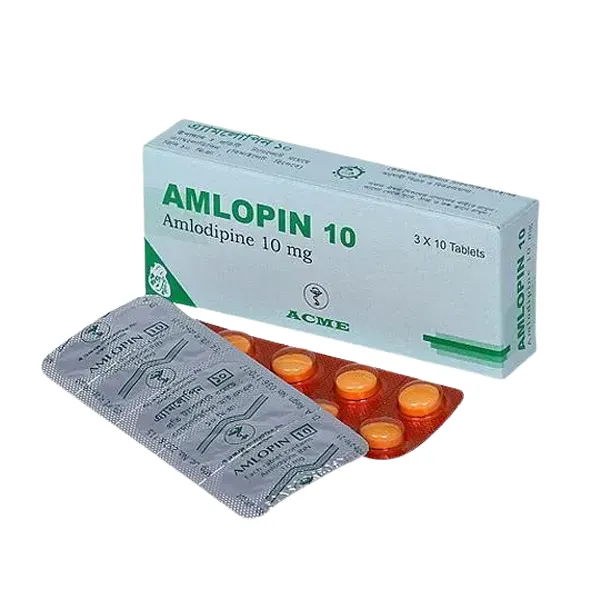
Table of Contents
Patient Information Leaflet
Warning! Keep this leaflet! Information on the immediate packaging is in a foreign language.
Amlopin 10 mg (Amlodipin - 1 A Pharma 10 mg Tabletten N)
10 mg, tablets
Amlodipinum
Amlopin 10 mg and Amlodipin - 1 A Pharma 10 mg Tabletten N are different brand names of the
same medicine.
Please read this leaflet carefully before taking this medicine, as it contains important information for you.
- Keep this leaflet for future reference.
- If you have any questions, consult your doctor or pharmacist.
- This medicine has been prescribed for a specific individual. Do not share it with others. This medicine may harm other people, even if their symptoms are the same.
- If you experience any adverse effects, including any not listed in this leaflet, inform your doctor or pharmacist. See section 4.
Table of contents:
- What Amlopin 10 mg is and what it is used for
- What you need to know before taking Amlopin 10 mg
- How to take Amlopin 10 mg
- Possible side effects
- How to store Amlopin 10 mg
- Contents of the pack and other information
1. What Amlopin 10 mg is and what it is used for
Amlopin 10 mg belongs to a group of medicines called calcium channel blockers.
It is used to treat:
- high blood pressure (hypertension),
- a certain type of chest pain known as angina pectoris, including its rare form, Prinzmetal's angina (variant angina).
In patients with high blood pressure, Amlopin 10 mg relaxes blood vessels, making it easier for blood to flow.
In patients with angina, Amlopin 10 mg improves blood supply to the heart muscle and thereby oxygen delivery, helping to prevent episodes of chest pain.
Amlopin 10 mg does not provide immediate relief of angina pain.
2. Important information before using Amlopin 10 mg
When not to use Amlopin 10 mg
- if the patient is allergic to amlodipine, to any other calcium antagonist, or to any of the other ingredients of this medicine (listed in section 6). Symptoms may include itching, skin redness, or difficulty breathing.
- if the patient has very low blood pressure (hypotension).
- if the patient has aortic valve stenosis (aortic stenosis) or cardiogenic shock (a condition in which the heart cannot deliver sufficient blood to the body).
- if the patient has heart failure following a previous myocardial infarction.
Warnings and precautions
Before starting treatment, discuss with your doctor or pharmacist if the patient currently has or has had in the past:
- recent myocardial infarction,
- heart failure,
- severe increase in blood pressure (hypertensive crisis),
- liver disease,
- need for dose adjustment (in elderly patients).
Children and adolescents
The use of Amlopin 10 mg has not been studied in children under 6 years of age. This medicine should be used for the treatment of hypertension only in children and adolescents aged 6 to 17 years (see section 3).
For further information, please consult your doctor.
Amlopin 10 mg and other medicines
Tell your doctor or pharmacist about all medicines the patient is currently taking or has recently taken, as well as any medicines the patient plans to use, including those available without a prescription.
Amlopin 10 mg and other medicines may affect each other's actions. These include:
- ketoconazole and itraconazole (antifungal medicines);
- ritonavir, indinavir, nelfinavir (so-called protease inhibitors used in the treatment of HIV infection);
- rifampicin, erythromycin, clarithromycin (antibiotics);
- St John's wort (Hypericum perforatum);
- verapamil, diltiazem (medicines used for heart conditions);
- dantrolene (a medicine used intravenously in severe disturbances of body temperature);
- simvastatin (a medicine used to lower elevated blood cholesterol levels);
- tacrolimus, cyclosporine (medicines used to control immune system responses, allowing acceptance of transplanted organs).
Amlopin 10 mg may lower blood pressure more strongly if the patient is already taking other antihypertensive medicines.
Amlopin 10 mg with food and drink
If the patient is taking Amlopin 10 mg, they should not eat grapefruit or drink grapefruit juice.
These may increase the blood concentration of the active substance (amlodipine) and, consequently, unpredictably intensify the blood pressure-lowering effect.
Pregnancy and breastfeeding
Pregnancy
The safety of using Amlopin 10 mg in pregnant women has not been established. If the patient is pregnant, suspects she may be pregnant, or is planning to become pregnant, she should consult her doctor or pharmacist before using this medicine.
Breastfeeding
It has been shown that small amounts of amlodipine pass into breast milk. If the patient is breastfeeding or planning to breastfeed, she should inform her doctor before starting treatment with Amlopin 10 mg.
Driving and operating machinery
Amlopin 10 mg may affect the ability to drive or operate machinery.
If the patient experiences nausea, dizziness, fatigue, or headache, they should not drive or operate machinery. Inform your doctor immediately.
Amlopin 10 mg contains sodium
This medicine contains less than 1 mmol (23 mg) of sodium per tablet, meaning the medicine is considered "sodium-free".
3. How to use Amlopin 10 mg
This medicine should always be taken as directed by the physician. In case of doubt, consult
your doctor or pharmacist.
Available on the market are: Amlopin 5 mg and Amlopin 10 mg tablets.
The usual initial dose of Amlopin is 5 mg once daily. Your doctor may
increase the dose to 10 mg once daily.
The medicine can be taken regardless of meals and drinks. It should be taken at the same time
each day, with water. Do not take Amlopin 10 mg with grapefruit juice.
Use in children and adolescents
For children and adolescents (aged 6 to 17 years), the recommended initial dose is 2.5 mg per day.
The maximum recommended dose is 5 mg per day.
It is important to take the tablets continuously. Do not wait until all prescribed tablets are used up before
seeing your doctor.
Tablets may be divided into equal doses.
Taking more Amlopin 10 mg than prescribed
Taking too many tablets may cause a significant drop in blood pressure, even to dangerously low levels.
Dizziness, lightheadedness, fainting, or weakness may occur. A marked drop in blood pressure may lead to shock.
The patient's skin may become cold and clammy, and loss of consciousness may occur. If a patient has taken
too many Amlopin 10 mg tablets, seek immediate medical help.
Missing a dose of Amlopin 10 mg
Stay calm. If the patient forgets to take a tablet, they should skip the missed dose and take the next
dose at the usual time. Never take a double dose to make up for a missed one.
Stopping treatment with Amlopin 10 mg
Your doctor will determine how long you should take Amlopin 10 mg. Stopping treatment earlier than advised
may cause the condition to return.
If you have any further doubts about the use of this medicine, consult your doctor or pharmacist.
4. Possible adverse reactions
Like any medicine, this medicine can cause adverse reactions, although not everyone will experience them.
If any of the following adverse reactions occur in the patient after taking the medicine,
seek immediate medical advice:
- sudden wheezing, chest pain, shortness of breath or difficulty breathing;
- swelling of the eyelids, face or lips;
- swelling of the tongue and throat, making breathing significantly difficult;
- severe skin reactions, including intense rash, hives, redness of the entire skin surface, severe itching, blistering, peeling and swelling of the skin, mucosal inflammation (Stevens-Johnson syndrome, toxic epidermal necrolysis) or other allergic reactions;
- myocardial infarction, irregular heartbeat;
- pancreatitis, which may cause severe abdominal and back pain accompanied by a very poor general condition.
The following very common adverse reaction has been reported. If it is troublesome for the patient or
if it persists for more than one week , consult a doctor .
Very common : may occur in more than 1 in 10 people
- swelling (fluid retention).
The following common adverse reactions have been reported. If any of them are troublesome for the patient or if they persist for more than one week , consult a doctor.
Common : may occur in less than 1 in 10 people
- headache, dizziness, drowsiness (especially at the beginning of treatment)
- palpitations (awareness of heartbeat), skin flushing (especially of the face)
- abdominal pain, nausea
- changes in bowel habits, diarrhoea, constipation, indigestion
- ankle swelling
- feeling of fatigue, weakness
- visual disturbances, double vision
- muscle cramps.
Other reported adverse reactions are listed below. If any of the adverse symptoms worsen or if any adverse reactions not listed in this leaflet occur, inform your doctor or pharmacist.
Uncommon : may occur in less than 1 in 100 people
- mood swings, anxiety, depression, insomnia
- tremor, taste disturbances, fainting
- numbness or tingling of limbs, loss of pain sensation
- ringing in the ears
- low blood pressure
- sneezing/runny nose due to inflammation of the nasal mucosa (rhinitis)
- cough
- dry mouth, vomiting
- hair loss, excessive sweating, skin itching, presence of red spots on the skin, skin discoloration
- urinary disturbances, increased need to urinate at night, increased frequency of urination
- impotence, discomfort or enlargement of breasts in men
- pain, general malaise
- joint or muscle pain, back pain
- increased or decreased body weight.
Rare : may occur in less than 1 in 1,000 people
- confusion.
Very rare : may occur in less than 1 in 10,000 people
- decreased white blood cell count, decreased platelet count, which may lead to unusual bruising or easy bleeding
- elevated blood sugar levels (hyperglycaemia)
- nerve disorders, which may cause weakness, tingling or numbness
- gum swelling
- abdominal bloating (gastric mucosal inflammation)
- liver function disorders, hepatitis, jaundice, increased liver enzyme activity, which may affect results of certain diagnostic tests
- increased muscle tension
- inflammation of blood vessels, often associated with skin rash
- increased sensitivity to light.
Adverse reactions with unknown frequency: frequency cannot be estimated from available data
- tremor, rigid posture, mask-like face, slowed movements and shuffling gait, unsteady gait.
Reporting of adverse reactions
If any adverse reactions occur, including any not listed in this leaflet, inform your doctor or pharmacist. Adverse reactions can be reported directly to the Department of Monitoring Adverse Reactions of Medicinal Products at the Office for Registration of Medicinal Products, Medical Devices and Biocidal Products, Al. Jerozolimskie 181C, 02-222 Warsaw, phone: +48 22 49 21 301, fax: +48 22 49 21 309, website: https://smz.ezdrowie.gov.pl.
Reporting adverse reactions helps provide more information on the safety of this medicine.
5. How to store Amlopin 10 mg
Keep this medicine out of sight and reach of children.
Do not use this medicine after the expiry date stated on the packaging. The expiry date refers to the last day of the stated month.
Translation of some information on the immediate packaging:
Ch.-B./verwendbar bis: siehe Prägung – batch number/expiry date: see imprint.
Do not store above 30°C. Store in the original packaging to protect from light.
Medicines must not be disposed of via wastewater or household waste. Ask your pharmacist how to dispose of medicines no longer required. These measures help protect the environment.
6. Contents of the package and other information
What Amlopin 10 mg contains
- The active substance is amlodipine. Each tablet contains 10 mg of amlodipine (as amlodipine besilate).
- The other ingredients are: sodium carboxymethyl starch (type A), calcium hydrogen phosphate, microcrystalline cellulose, and magnesium stearate.
What Amlopin 10 mg looks like and contents of the pack
White or almost white, elongated tablets with bevelled edges, marked with a central dividing
score line on one side and the inscription "10" on the other side.
The tablet can be divided into equal doses.
Pack sizes contain 30 and 60 tablets.
For further information, please contact the responsible party or the parallel importer.
Marketing Authorisation Holder in Germany, the exporting country:
1 A Pharma GmbH, Keltenring 1 + 3, 82041 Oberhaching, Germany
Manufacturer:
LEK S.A., Podlipie 16, 95-010 Stryków, Poland
Salutas Pharma GmbH, Otto-von-Guericke-Allee 1., 39179 Barleben, Germany
Lek Pharmaceuticals d.d., Trimlini 2D, 9220 Lendava, Slovenia
LEK S.A., Domaniewska 50 C, 02-672 Warsaw, Poland
ROWA Pharmaceuticals Ltd., Newtown, Bantry, Co. Cork, Ireland
Sandoz S.R.L., Livezeni Street No. 4, 540472 Târgu-Mureș, Romania
Parallel Importer:
InPharm Sp. z o.o., Strumykowa 28/11, 03-138 Warsaw, Poland
Repackaged by:
InPharm Sp. z o.o. Services sp. k., Chełmżyńska 249, 04-458 Warsaw, Poland
Marketing Authorisation Number in Germany, the exporting country: 66351.00.00
Parallel Import Authorisation Number: 127/22