Amlator
Poland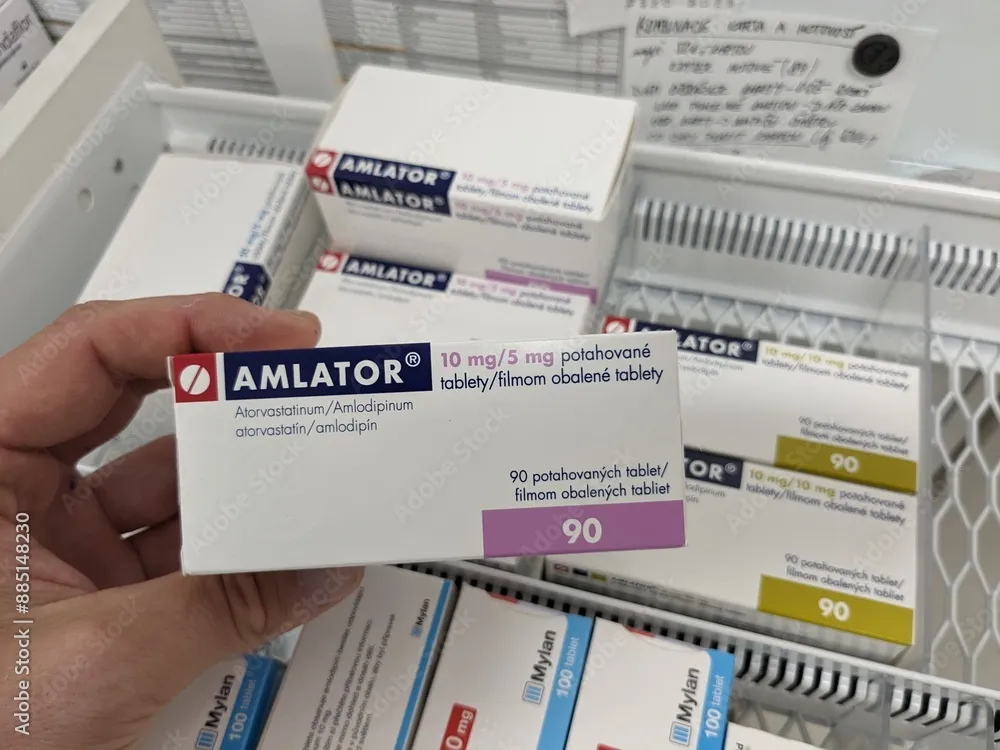
Table of Contents
Package leaflet: Information for the patient
Amlator, 10 mg + 5 mg, film-coated tablets
Amlator, 10 mg + 10 mg, film-coated tablets
Amlator, 20 mg + 5 mg, film-coated tablets
Amlator, 20 mg + 10 mg, film-coated tablets
Atorvastatin + Amlodipine
Please read this leaflet carefully before taking this medicine, as it contains important
information for you.
- Keep this leaflet. You may need to read it again.
- If you have any further questions, please ask your doctor or pharmacist.
- This medicine has been prescribed for you personally. Do not pass it on to others. It may harm someone else even if their symptoms are the same as yours.
- If you experience any side effects, including any not listed in this leaflet, tell your doctor or pharmacist. See section 4.
Leaflet contents
- What Amlator is and what it is used for
- What you need to know before taking Amlator
- How to take Amlator
- Possible side effects
- How to store Amlator
- Contents of the pack and other information
1. What Amlator is and what it is used for
Amlator is a combination medicine containing two active substances: atorvastatin and amlodipine.
Atorvastatin belongs to a group of medicines called statins, which are lipid-lowering agents (lipid-regulating medicines).
Amlodipine belongs to a group of medicines known as calcium channel blockers, which have a vasodilatory effect on blood vessels.
Amlator is indicated as a replacement therapy in patients whose condition is adequately controlled with amlodipine and atorvastatin taken concomitantly at the same doses as in the fixed-dose combination. Amlator is used in the treatment of hypertension in adult patients (with or without chronic stable angina pectoris) and/or Prinzmetal's angina, in whom one of the following conditions coexists:
- elevated cholesterol levels (so-called primary hypercholesterolemia) or elevated cholesterol and triglyceride levels (so-called mixed or combined hyperlipidemia),
- genetically elevated cholesterol levels (so-called homozygous familial hypercholesterolemia),
- prevention of cardiovascular events in adult patients at high risk of experiencing a first cardiovascular event, together with measures aimed at reducing other risk factors.
Amlator is not intended for initiating therapy. When starting Amlator, treatment with its individual components (medicines containing amlodipine and atorvastatin) should be discontinued.
A standard cholesterol-lowering diet should be maintained during treatment.
Your doctor may decide to prescribe Amlator if they determine that both active substances, when used separately, are appropriate for the individual patient, or if the patient has previously been treated with medicines containing these active substances.
2. Important information before using Amlator
When not to use Amlator
- if the patient is allergic to amlodipine, atorvastatin, or if the patient is allergic to the group of medicines known as calcium channel blockers, or to any other medicines similar to atorvastatin used to lower blood lipid (fat) levels, or to any of the other ingredients of this medicine (listed in section 6),
- if the patient has severe low blood pressure (hypotension),
- if the patient has aortic valve stenosis (narrowing of the aortic valve) or cardiogenic shock (a condition in which the heart does not deliver enough blood to the body),
- if the patient has been diagnosed with heart failure following a heart attack,
- if the patient currently has or has previously had liver disease,
- if the patient has abnormal liver function test results of unknown cause,
- in women of childbearing potential who are not using effective methods of contraception,
- in pregnant women or women planning to become pregnant,
- in breastfeeding women,
- if the patient is taking glecaprevir with pibrentasvir for the treatment of hepatitis C virus infection.
Warnings and precautions
Before starting treatment with Amlator, discuss this with your doctor or pharmacist if:
-
the patient has been diagnosed with heart failure,
-
the patient recently had a heart attack,
-
the patient has acute high blood pressure (hypertensive crisis),
-
the patient has previously had a stroke with bleeding into the brain or if small fluid-filled spaces in the brain due to prior stroke have been detected,
-
in case of kidney problems,
-
in case of hypothyroidism,
-
in case of recurrent or unexplained muscle pain or muscle problems in the past, or similar problems in family members,
-
if the patient currently has or has previously had myasthenia (a disease causing general muscle weakness, including in some cases muscles involved in breathing) or ocular myasthenia (a disease causing weakness of eye muscles), because statins may sometimes worsen symptoms of the disease or lead to the development of myasthenia (see section 4),
-
if the patient has previously experienced muscle problems while taking other lipid-lowering medicines (e.g. other statins or fibrates),
-
if the patient regularly consumes large amounts of alcohol,
-
if the patient has previously had liver disease,
-
in patients over 70 years of age,
-
if the patient is taking or has taken within the last 7 days orally or by injection a medicine containing fusidic acid (a medicine used for bacterial infections).
Taking fusidic acid together with Amlator may lead to severe muscle damage (rhabdomyolysis).
Please consult your doctor or pharmacist before using Amlator -
if the patient has severe respiratory insufficiency.
In patients with any of the above conditions, the doctor may order a blood test before starting treatment with Amlator and possibly during treatment to monitor the risk of muscle-related adverse effects. The risk of muscle-related adverse effects, such as rhabdomyolysis, increases when certain medicines are taken concomitantly (see section 2 “Amlator and other medicines”).
Inform your doctor or pharmacist if muscle weakness persists. Additional tests and additional medicines may be necessary to diagnose and treat this condition.
Patients with diabetes or those at risk of developing diabetes will be under close medical supervision during treatment with this medicine. Patients with high blood sugar and lipid levels, overweight, and high blood pressure may be at risk of developing diabetes.
Children and adolescents
Amlator is not recommended for use in children and adolescents due to lack of data on safety and efficacy.
Amlator and other medicines
Tell your doctor or pharmacist about all medicines you are currently taking, have recently taken, or plan to take.
Some medicines may alter the effect of Amlator, and Amlator may affect the action of other medicines. These interactions may result in reduced effectiveness of one or both medicines. This may increase the risk or severity of adverse effects, including a serious muscle disease called rhabdomyolysis, described in section 4.
- Certain antibiotics or antifungal medicines, e.g.: erythromycin, clarithromycin, telithromycin, ketoconazole, itraconazole, voriconazole, fluconazole, posaconazole, rifampicin.
- Other lipid-regulating medicines, e.g. gemfibrozil, other fibrates, cholestyramine, simvastatin.
- Certain calcium channel blockers used for angina or hypertension, e.g. diltiazem; medicines regulating heart rhythm, e.g. digoxin, verapamil, amiodarone.
- Medicines modifying the immune system, e.g. cyclosporine.
- Letermovir, a medicine used to prevent cytomegalovirus infection,
- Medicines used to treat HIV infection, e.g. ritonavir, lopinavir, atazanavir, indinavir, darunavir, nelfinavir, combination therapy tipranavir/ritonavir, etc.
- Certain medicines used to treat hepatitis C, e.g. telaprevir, boceprevir, and combination medicines containing elbasvir with grazoprevir, ledipasvir with sofosbuvir.
- Other medicines known to interact with Amlator, including ezetimibe (which lowers cholesterol), warfarin (which reduces blood clotting), oral contraceptives, stiripentol (an anticonvulsant used to treat epilepsy), cimetidine (used to treat heartburn and stomach ulcers), phenazone (a painkiller), colchicine (used to treat gout), and antacids (medicines used for indigestion containing aluminium or magnesium).
- Dantrolene (an intravenous infusion used in severe disturbances of body temperature).
- Tacrolimus, sirolimus, temsirolimus and everolimus (medicines used to modify immune system function).
- Over-the-counter medicines: preparations of St John’s wort (Hypericum perforatum).
- If the patient needs to take oral fusidic acid to treat a bacterial infection, treatment with Amlator should be temporarily discontinued. The doctor will advise when it is safe to resume taking Amlator. Taking Amlator together with fusidic acid may rarely lead to muscle weakness, tenderness or pain (rhabdomyolysis). For more information about rhabdomyolysis, see section 4.
Amlator may enhance blood pressure lowering effects if the patient is taking other antihypertensive medicines.
Amlator, food, drink and alcohol
For information on taking Amlator, see section 3. Pay attention to the following products:
Grapefruit juice
Patients taking Amlator should not consume grapefruit juice or grapefruits, as they may increase blood levels of the active ingredient amlodipine, which could result in unexpected intensification of Amlator’s blood pressure-lowering effect.
Alcohol
While taking Amlator, avoid excessive alcohol consumption.
For further details, see section 2, "Warnings and precautions".
Pregnancy and breastfeeding
Do not use Amlator if you are pregnant or planning to become pregnant.
It has been shown that small amounts of amlodipine pass into human milk. Do not use Amlator if you are of childbearing potential unless you are using effective methods of contraception.
Amlator should not be used during breastfeeding.
The safety of Amlator during pregnancy and breastfeeding has not been established. If you are pregnant, suspect you may be pregnant, plan to become pregnant, or are breastfeeding, consult your doctor or pharmacist before using this medicine.
Driving and operating machinery
This medicine usually does not affect the ability to drive or operate machinery. However, if tablets cause nausea, dizziness, fatigue, headache or blurred vision, do not drive or operate machinery.
Amlator contains sodium carboxymethyl starch
This medicine contains less than 1 mmol (23 mg) of sodium per coated tablet, i.e. this medicine is considered "sodium-free".
3. How to use Amlator
This medicine should always be used exactly as directed by the doctor. In case of doubt, consult
your doctor or pharmacist.
Before starting treatment, your doctor will recommend a low-cholesterol diet; this diet should
be continued during treatment with Amlator.
Adults
The dose of Amlator is determined by the doctor. The doctor will decide whether the patient should take
one coated tablet of Amlator 10 mg + 5 mg, Amlator 10 mg + 10 mg, Amlator 20 mg + 5 mg, or
Amlator 20 mg + 10 mg once daily.
The maximum daily dose is one coated tablet of Amlator 20 mg + 10 mg.
Tablets should be swallowed whole with water; they may be taken at any time of day, with or
without food. However, it is advisable to take the tablet at the same time each day.
Follow your doctor's advice regarding diet, especially a low-fat diet, engage in regular physical
exercise, and do not smoke.
The duration of treatment with Amlator is determined by the doctor.
If you feel that the effect of Amlator is too strong or too weak, consult your doctor.
Elderly patients
No dose adjustment is required in elderly patients.
Use in children and adolescents
Amlator is not recommended for use in children and adolescents.
Renal impairment
No dose adjustment is necessary in patients in this group.
Hepatic impairment
Amlator should be used with caution in patients in this group; liver function tests should be performed
frequently.
Taking more Amlator than recommended
Taking too many tablets may cause a drop in blood pressure, even to dangerously low levels.
Dizziness, a feeling of emptiness in the head, fainting, or weakness may occur. If the drop in blood
pressure is severe, shock may occur. The patient's skin may become cold and clammy, and loss of
consciousness may occur. If an overdose of Amlator is taken, contact the nearest hospital or doctor
immediately for advice. Bring any remaining tablets, the medicine packaging, and labels so that
hospital staff know which medicine has been taken.
Up to 24–48 hours after taking the medicine, shortness of breath may occur due to excess fluid
accumulating in the lungs (pulmonary oedema).
If you forget to take Amlator
If a dose of Amlator is missed, take the next dose at the scheduled time.
Do not take a double dose to make up for the missed dose.
Stopping Amlator
Do not stop taking this medicine unless your doctor decides to discontinue treatment.
If you have any further questions about the use of this medicine, consult your doctor or pharmacist.
4. Possible adverse effects
Like all medicines, this medicine can cause adverse effects, although they do not occur in everyone.
If the patient experiences any of the following serious adverse effects or symptoms, stop taking the tablets immediately and contact a doctor or go to the nearest hospital emergency department:
Uncommon (may occur in fewer than 1 in 100 people):
- Heart rhythm disorders, irregular heartbeat.
Rare (may occur in fewer than 1 in 1,000 people):
- Severe allergic reaction causing swelling of the face, tongue and/or throat, which may cause significant breathing difficulties.
- Severe skin reactions, including severe rash, hives, redness of the skin all over the body, intense itching, blisters, peeling or swelling of the skin, mucosal inflammation (Stevens-Johnson syndrome, toxic epidermal necrolysis), or other allergic reactions.
- Muscle weakness, tenderness, pain, muscle rupture, or red-brown discoloration of urine, especially accompanied by malaise or high fever, which may be due to muscle breakdown. Muscle breakdown may not always resolve even after discontinuation of atorvastatin and can be life-threatening and lead to kidney problems.
Very rare (may occur in fewer than 1 in 10,000 people):
- Myocardial infarction,
- Lupus-like syndrome (including rash, joint disorders and effects on blood cells),
- If unexpected bleeding or bruising occurs, this may indicate liver problems. Contact a doctor as soon as possible.
Other possible adverse effects of Amlator:
Very common (may occur in more than 1 in 10 people):
- Swelling (edema).
Common (may occur in fewer than 1 in 10 people):
- Drowsiness, headache, dizziness (especially at the beginning of treatment), fatigue, feeling of weakness,
- Vision disturbances (including double vision),
- Nasal mucosal inflammation, sore throat, nosebleeds,
- Flushing,
- Palpitations (awareness of heartbeat),
- Shortness of breath,
- Abdominal pain, nausea, constipation, bloating, indigestion, diarrhea,
- Muscle pain, muscle cramps, ankle swelling, joint pain and back pain, limb pain,
- Allergic reactions,
- Increased blood glucose levels (if the patient has diabetes, blood glucose levels should be carefully monitored),
- Increased creatine kinase activity in blood,
- Blood test results indicating abnormal liver function.
Uncommon (may occur in fewer than 1 in 100 people):
- Nasal mucosal inflammation (nasal congestion/sneezing),
- Cough,
- Loss of appetite, weight gain, weight loss, decreased blood glucose levels (if the patient has diabetes, blood glucose levels should still be carefully monitored),
- Mood changes, anxiety, depression, tremor,
- Numbness or tingling in fingers and toes, reduced sensation of pain or touch, altered taste sensation, memory loss,
- Blurred vision,
- Ringing in the ears and/or head,
- Chest pain,
- Heart rhythm disorders, irregular heartbeat,
- Fainting, low blood pressure (arterial hypotension),
- Dry mouth, vomiting, heartburn, upper and lower abdominal pain, pancreatitis (inflammation of the pancreas which may cause abdominal pain),
- Hepatitis,
- Hair loss, red spots on the skin, skin discoloration, rash, itchy rash, hives, urticaria, increased sweating,
- Neck pain, muscle fatigue,
- Urinary disorders, increased need to urinate at night, increased frequency of urination,
- Erectile dysfunction (impotence), gynecomastia (discomfort or enlargement of breasts in men),
- Elevated body temperature, malaise, swelling, especially of the ankles (swelling),
- Nightmares, insomnia,
- Presence of white blood cells in urine.
Rare (may occur in fewer than 1 in 1,000 people):
- Decreased platelet count, which may cause unexpected bleeding or bruising,
- Cholestasis (yellowing of the skin and whites of the eyes),
- Disorientation,
- Peripheral neuropathy (a nervous system disorder which may cause weakness, tingling or numbness),
- Tendon injury,
- Angioedema.
Very rare (may occur in fewer than 1 in 10,000 people):
- Decreased white blood cell count,
- Muscle stiffness or tension, disorders involving stiffness and/or movement difficulties,
- Myocardial infarction, inflammation of small blood vessels,
- Gingival hyperplasia,
- Allergic reactions – symptoms may include sudden onset of wheezing and chest pain or tightness, swelling of eyelids, face, lips, mouth, tongue or throat, breathing difficulties, collapse,
- Light sensitivity,
- Hearing loss,
- Abdominal bloating (gastritis),
- Liver failure.
Unknown (frequency cannot be estimated from available data):
- Persistent muscle weakness,
- Myasthenia gravis (a disease causing general muscle weakness, including in some cases muscles involved in breathing),
- Ocular myasthenia (a disease causing weakness of eye muscles),
Talk to a doctor if the patient experiences weakness in the arms or legs, worsening after periods of activity, double vision or drooping eyelids, difficulty swallowing, or shortness of breath.
- Tremor, rigidity, facial masking, slowed movements and dragging the feet when walking, unsteady gait.
Possible adverse effects reported with the use of certain statins (medicines of the same type):
- Sexual dysfunction,
- Depression,
- Breathing problems, including persistent cough and/or shortness of breath or fever,
- Diabetes. The likelihood of developing diabetes is higher in people who have high blood sugar and fat levels, overweight, and high blood pressure. The doctor will monitor the patient's condition during treatment with this medicine.
Reporting of adverse effects
If any adverse effects occur, including any not listed in this leaflet, tell a doctor, pharmacist, or nurse.
Adverse effects can be reported directly to the Department of Monitoring Adverse Drug Reactions of the Office for Registration of Medicinal Products, Medical Devices and Biocidal Products
Al. Jerozolimskie 181C
02-222 Warsaw
Phone: +48 22 49 21 301
Fax: +48 22 49 21 309
Website: https://smz.ezdrowie.gov.pl
Adverse effects can also be reported to the marketing authorization holder.
Reporting adverse effects helps provide more information on the safety of this medicine.
5. How to store the medicine Amlator
| Keep this medicine out of sight and reach of children. | |
| Do not use this medicine after the expiry date which is stated on the packaging. The expiry | |
| date refers to the last day of the stated month. | |
| Store below 25°C. | |
| Keep in the original packaging to protect from light and moisture. | |
| Medicines should not be disposed of via wastewater or household waste. Ask your pharmacist | |
| how to dispose of medicines no longer required. Such measures will help protect the | |
| environment. | |
6. Contents of the pack and other information
What Amlator contains
The active substances in Amlator are atorvastatin and amlodipine.
Amlator 10 mg + 5 mg, film-coated tablets contain 10 mg atorvastatin (as atorvastatin with L-lysine) and 5 mg amlodipine (as amlodipine besylate) in each film-coated tablet.
Amlator 10 mg + 10 mg, film-coated tablets contain 10 mg atorvastatin (as atorvastatin with L-lysine) and 10 mg amlodipine (as amlodipine besylate) in each film-coated tablet.
Amlator 20 mg + 5 mg, film-coated tablets contain 20 mg atorvastatin (as atorvastatin with L-lysine) and 5 mg amlodipine (as amlodipine besylate) in each film-coated tablet.
Amlator 20 mg + 10 mg, film-coated tablets contain 20 mg atorvastatin (as atorvastatin with L-lysine) and 10 mg amlodipine (as amlodipine besylate) in each film-coated tablet.
Other components:
Tablet core:
calcium carbonate,
microcrystalline cellulose (type 102),
pregelatinized starch, maize,
sodium croscarmellose,
calcium oxide,
sodium carboxymethyl starch (type A),
hydroxypropylcellulose,
polysorbate 80,
colloidal anhydrous silica,
magnesium stearate.
Tablet coating (Opadry II 85F 18422 White):
polyvinyl alcohol, partially hydrolysed,
titanium dioxide (E171),
macrogol 4000,
talc.
What Amlator looks like and contents of the pack
Amlator 10 mg + 5 mg, film-coated tablets are white, round, biconvex film-coated tablets with a diameter of approximately 9.0 mm. One side is embossed with the code "CE3", the other side is smooth.
Amlator 10 mg + 10 mg, film-coated tablets are white, round, biconvex film-coated tablets with a diameter of approximately 9.0 mm. One side is embossed with the code "CE5", the other side is smooth.
Amlator 20 mg + 5 mg, film-coated tablets are white, oblong, biconvex film-coated tablets with dimensions of approximately 15.5 x 8.0 mm. One side is embossed with the code "CE4", the other side is smooth.
Amlator 20 mg + 10 mg, film-coated tablets are white, oblong, biconvex film-coated tablets with dimensions of approximately 15.5 x 8.0 mm. One side is embossed with the code "CE6", the other side is smooth.
30 and 90 film-coated tablets packed in white opaque blisters made of PA/Aluminum/PVC//Aluminum foil and placed in a carton box.
Not all pack sizes may be marketed.
Marketing Authorisation Holder:
Gedeon Richter Plc.
1103 Budapest
Gyömrői út 19-21
Hungary
Manufacturer:
Gedeon Richter Romania S.A.
Str. Cuza Vodă Nr. 99-105
540306 Târgu-Mureş
Romania
For further information about this medicinal product and its trade names in other European Economic Area countries, please contact:
GEDEON RICHTER POLSKA Sp. z o.o.
Medical Department
ul. Ks. J. Poniatowskiego 5
05-825 Grodzisk Mazowiecki
Poland
Tel. +48 (22)755 96 48
[email protected]
(( logo of the marketing authorisation holder ))