Amizepin
Poland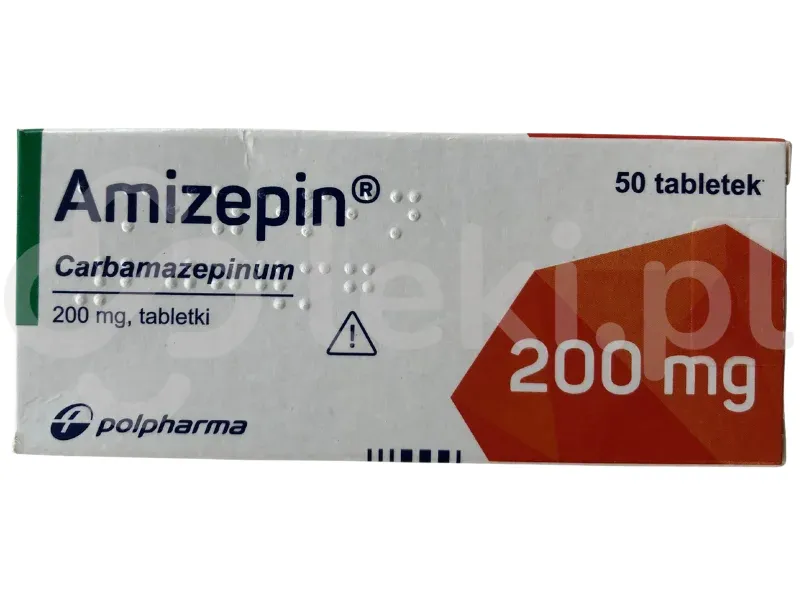
Table of Contents
Amizepin, 200 mg, tablets
Carbamazepinum
Please read the package leaflet carefully before using this medicine, as it contains
important information for the patient.
- Keep this leaflet so that you can read it again if necessary.
- If you have any doubts, consult your doctor or pharmacist.
- This medicine has been prescribed for a specific individual. Do not share it with others. The medicine may harm another person, even if their symptoms are the same.
- If the patient experiences any adverse reactions, including any adverse reactions not listed in this leaflet, inform the doctor or pharmacist. See section 4.
Table of contents of the package leaflet
- What Amizepin is and what it is used for
- Important information before taking Amizepin
- How to take Amizepin
- Possible side effects
- How to store Amizepin
- Contents of the pack and other information
1. What Amizepin is and what it is used for
Amizepin belongs to a group of antiepileptic medicines. It has anticonvulsant properties,
may also modify certain types of pain and regulate mood disorders.
Amizepin is used:
- in the treatment of certain types of epilepsy
- in the treatment of pain occurring in certain neurological diseases, such as trigeminal neuralgia
- in the prevention of bipolar affective disorders (alternating episodes of depression and mania) in patients who do not respond to lithium treatment.
2. Important information before using Amizepin
When not to use Amizepin:
- if the patient is allergic to carbamazepine, other similar medicines, e.g. tricyclic antidepressants such as amitriptyline, desipramine, protriptyline, or any of the other ingredients of this medicine (listed in section 6);
- if the patient has porphyria (a disorder in porphyrin production, a pigment important for liver function and blood formation);
- if the patient has atrioventricular heart block;
- if the patient has previously experienced severe blood disorders (bone marrow dysfunction, including severe anaemia);
- if the patient is currently being treated with antidepressant medicines called MAO inhibitors, e.g. phenelzine, selegiline, tranylcypromine (carbamazepine may be used no earlier than 14 days after discontinuation of MAO inhibitors).
Warnings and precautions
Before starting treatment with Amizepin, discuss this with your doctor or pharmacist.
Exercise particular caution when using Amizepin if:
- there is a blood disorder (including those caused by other medicines);
- the patient has ever had hypersensitivity to oxcarbazepine or other medicines (rash or other allergic symptoms). Patients allergic to carbamazepine may (in approximately 1 in 4 (25%)) also develop hypersensitivity to oxcarbazepine;
- blood count abnormalities occurred during treatment with other medicines, e.g. leucopenia (reduced white blood cell count);
- the patient has ever had an allergic reaction to the antiepileptic medicine phenytoin;
- there are or have been in the past circulatory, liver or kidney diseases;
- there are kidney problems associated with low blood sodium levels or concomitant use of medicines that reduce blood sodium levels (diuretics such as hydrochlorothiazide and furosemide);
- there are difficulties in urine retention;
- the patient has glaucoma (increased intraocular pressure);
- the patient has a mental disorder called psychosis, which may be accompanied by symptoms such as disorientation and agitation (especially in elderly patients);
- the patient has hypothyroidism.
In case of:
- an allergic reaction, manifested by fever accompanied by swollen lymph nodes, rash or skin blisters, inform your doctor or go to the nearest hospital (see section 4);
- increased frequency of seizures or occurrence of mixed epileptic seizures, including loss of consciousness, inform your doctor immediately;
- symptoms indicating liver inflammation, such as jaundice (yellowing of the skin and eyes), inform your doctor;
- appearance of symptoms such as fever, sore throat, rash, oral ulcers, easy bruising, petechiae or purpura, contact your doctor immediately.
Do not stop taking Amizepin without consulting your doctor.
To prevent worsening of epilepsy, the medicine must not be stopped abruptly.
Severe skin rashes (Stevens-Johnson syndrome, toxic epidermal necrolysis) have been reported during treatment with carbamazepine. Skin rashes are often accompanied by ulcers of the mouth, throat, nose, genital organs, and conjunctivitis (red and swollen eyes). These serious rashes are often preceded by flu-like symptoms such as fever, headache, and bone pain. The rash may progress to blistering and skin peeling. The highest risk of serious skin reactions occurs during the first months of treatment. Severe skin reactions are more common in patients of Asian origin. In patients of Chinese or Thai origin, the risk of such reactions can be predicted by blood testing. Your doctor should advise whether blood tests are necessary before starting treatment with carbamazepine.
If a rash or other skin symptoms occur, discontinue carbamazepine and contact your doctor immediately.
A small number of people taking antiepileptic medicines containing carbamazepine have had thoughts of harming or killing themselves.
If such thoughts occur, contact your doctor immediately.
When Amizepin is used during pregnancy, there is a risk of harmful effects on the unborn child. If the patient is of childbearing age, she should use an effective method of contraception during treatment with Amizepin and for two weeks after the last dose (see "Pregnancy and breastfeeding").
Use of Amizepin in children and elderly patients
The medicine may be used in children and elderly patients as directed by the physician.
In these patients, caution is required in dosing and careful monitoring of the patient is necessary.
Amizepin and other medicines
Inform your doctor or pharmacist about all medicines currently used, recently used, or planned for use.
This is particularly important with Amizepin, as many different medicines may affect its action.
Sometimes a dose adjustment or discontinuation of certain medicines may be necessary.
Hormonal contraceptives, e.g. pills, patches, injections or implants
Amizepin may affect the action of hormonal contraceptives and reduce their effectiveness in preventing pregnancy. Discuss with your doctor the most appropriate type of contraception during treatment with Amizepin. Inform your doctor immediately if irregular bleeding or spotting occurs.
Medicines that may interact with Amizepin (and vice versa)
Painkillers, anti-inflammatory medicines: dextropropoxyphene, buprenorphine, methadone, paracetamol, tramadol.
Androgenic medicines: danazol (used in the treatment of endometriosis).
Antibiotics: macrolide antibiotics (e.g. erythromycin, clarithromycin), ciprofloxacin, doxycycline, rifabutin.
Medicines used for depression: fluoxetine, fluvoxamine, paroxetine, trazodone, bupropion (used to alleviate nicotine withdrawal symptoms), citalopram, mianserin, sertraline, nefazodone, tricyclic antidepressants (e.g. imipramine, amitriptyline, nortriptyline, clomipramine).
Other antiepileptic medicines: vigabatrin, primidone, progabide, valproic acid, valpromide, phenytoin, fosphenytoin, oxcarbazepine, phenobarbital, clonazepam, clobazam, ethosuximide, lamotrigine, oxcarbazepine, tiagabine, topiramate, zonisamide, brivaracetam. Rare reports of increased serum concentration of mephenytoin also exist.
Antifungal medicines: azoles (e.g. itraconazole, ketoconazole, fluconazole, voriconazole).
Antihistamines: loratadine.
Antipsychotic medicines: olanzapine, quetiapine, clozapine, haloperidol and bromperidol, risperidone, aripiprazole, paliperidone.
Antituberculosis medicines: isoniazid, rifampicin.
Antiviral medicines: used in the treatment of HIV infections (e.g. ritonavir, indinavir, saquinavir).
Carbonic anhydrase inhibitors: acetazolamide (used, among others, in glaucoma).
Cardiovascular medicines: verapamil, diltiazem, calcium channel blockers (dihydropyridine derivatives, e.g. felodipine), digoxin, simvastatin, atorvastatin, lovastatin, cerivastatin, ivabradine.
Medicines used in peptic ulcer disease: cimetidine, omeprazole.
Sedatives and hypnotics: valnoctamide.
Anxiolytics: alprazolam.
Anticancer medicines: cisplatin, doxorubicin, imatinib, cyclophosphamide, lapatinib.
Immunosuppressive medicines: cyclosporine, everolimus, tacrolimus, sirolimus (medicines used after transplantation, but also in the treatment of arthritis or psoriasis).
Bronchodilators and anti-asthmatic medicines: theophylline and aminophylline.
Medicines used in dermatology: isotretinoin (a medicine used in acne treatment).
Anticoagulants: oral anticoagulants (e.g. dicoumarol, warfarin, acenocoumarol).
Antiemetics: aprepitant.
Antihelminthics: albendazole.
Corticosteroids: e.g. prednisolone or dexamethasone.
Medicines used in erectile dysfunction: tadalafil.
Medicines used in thyroid disorders: levothyroxine.
Contraceptives: hormonal contraceptives (consideration should be given to using alternative contraceptive methods).
Other interactions: grapefruit juice, nicotinamide (in adults, only in large amounts), herbal preparations containing St John's wort (Hypericum perforatum), medicines containing estrogens and (or) progestogens.
Combination therapy requiring special attention
Exercise particular caution when using Amizepin concomitantly with:
levetiracetam, isoniazid, lithium salts, metoclopramide, neuroleptics (e.g. haloperidol, thioridazine), certain diuretics (furosemide, hydrochlorothiazide), certain muscle relaxants (e.g. pancuronium).
Use of Amizepin with food, drink and alcohol
Carbamazepine may reduce tolerance to alcohol. Do not drink alcohol while taking Amizepin.
Do not eat grapefruit or drink grapefruit juice, as this may increase the effect of Amizepin. Other juices, such as orange or apple juice, do not affect the action of the medicine.
Pregnancy and breastfeeding
If the patient is pregnant or breastfeeding, suspects she may be pregnant, or plans to become pregnant, she should consult her doctor or pharmacist before using this medicine.
Pregnancy
Amizepin may cause serious congenital malformations. If the patient takes Amizepin during pregnancy, the risk of congenital malformation in the child is up to three times higher than in women who do not take antiepileptic medicines. Serious congenital malformations have been reported, including neural tube defects (spina bifida), facial malformations such as cleft lip and palate, skull malformations, heart defects, genital malformations related to urethral opening (hypospadias), and finger malformations. If the patient takes Amizepin during pregnancy, the unborn child should be closely monitored.
Neurological development problems (brain development) have been reported in infants born to mothers who used carbamazepine during pregnancy. Some studies have shown that carbamazepine has a negative effect on the neurological development of children exposed to carbamazepine in utero, while other studies have not demonstrated such an effect. An effect on neurological development cannot be ruled out.
If the patient is or suspects she may be pregnant, she should inform her doctor immediately. Do not stop taking the medicine until discussed with the doctor. Stopping the medicine without consultation may cause epileptic seizures, which may be dangerous for the patient and her unborn child. The doctor may decide to change the treatment.
If the patient takes Amizepin during pregnancy, there is also a risk of bleeding problems immediately after delivery. The doctor may prescribe a medicine for both the patient and the child to prevent this.
Women of childbearing age
If the patient is of childbearing age and does not plan pregnancy, she should use an effective method of contraception during treatment with Amizepin. Amizepin may affect the action of hormonal contraceptives, such as contraceptive pills, and reduce their effectiveness in preventing pregnancy. The patient should discuss with her doctor the most appropriate type of contraception during treatment with Amizepin. If treatment with Amizepin is discontinued, effective contraception should be continued for an additional two weeks after stopping the medicine.
If the patient is of childbearing age and plans to become pregnant, she should consult her doctor before stopping contraception and before becoming pregnant, to change the treatment method to another suitable one to protect the unborn child from exposure to carbamazepine.
Breastfeeding
Carbamazepine passes into human milk. In special cases, when the doctor agrees to breastfeeding, observe whether the breastfed infant develops any adverse effects. If they occur (e.g. excessive sleepiness, skin reactions, yellowing of the skin and eyes, dark urine), contact the doctor.
Driving and operating machinery
Amizepin may cause drowsiness, dizziness, or visual disturbances (blurred vision, double vision) or lack of muscle coordination, especially at the beginning of treatment or when increasing the dose of Amizepin. If such symptoms occur, do not drive, operate machinery, or perform other tasks requiring special attention.
Amizepin contains sodium
The medicine contains less than 1 mmol (23 mg) of sodium per tablet, meaning the medicine is considered "sodium-free".
3. How to use Amizepin
This medicine should always be taken exactly as directed by your doctor. If in doubt, consult your doctor or pharmacist.
The usual dosage of Amizepin is as follows:
Epilepsy
Treatment is started with a low daily dose. Your doctor will advise gradually increasing the dose until optimal effect is achieved.
Your doctor may recommend monitoring blood levels of the drug, as this may help determine the optimal dosage.
If Amizepin is to be added to an existing antiepileptic treatment regimen, your doctor will introduce the medicine gradually, maintaining or, if necessary, adjusting the dosage of other antiepileptic drugs.
Adults:
Initially, adults should take 100 mg to 200 mg once or twice daily. The dose should be gradually increased to 800 mg to 1200 mg per day, given in divided doses.
Some adults may require doses of up to 1600 mg, and even 2000 mg per day, administered in divided doses.
Children and adolescents:
Amizepin is not recommended for very young children.
Children aged 5–10 years: 400 mg to 600 mg per day (2 to 3 tablets of 200 mg per day, in divided doses).
Children and adolescents aged 10–15 years: 600 mg to 1000 mg per day (3 to 5 tablets of 200 mg per day, in several divided doses).
Adolescents over 15 years: 800 mg to 1200 mg per day (doses as for adults).
The maximum recommended dose for children up to 6 years of age is 35 mg/kg body weight per day.
The maximum recommended dose for children and adolescents aged 6–15 years is 1000 mg per day.
The maximum recommended dose for adolescents over 15 years of age is 1200 mg per day.
Trigeminal neuralgia
Initial dose is 200 mg to 400 mg per day. The dose should be gradually increased until pain subsides (usually 200 mg 3 to 4 times daily). The maximum dose is 1200 mg per day. Subsequently, the dose should be reduced to the lowest possible maintenance dose.
In elderly patients, treatment should be initiated at a dose of 100 mg twice daily.
After pain has subsided, the dose may be gradually reduced and the medicine discontinued after several weeks of treatment, provided no pain recurrence occurs.
Mood disorders
The usual dose is 400 mg to 600 mg per day, given in 2 or 3 divided doses.
Before undergoing any surgical or dental procedure, inform your doctor that you are taking Amizepin.
Method of administration
The medicine should be taken with a small amount of liquid, before, during, or between meals.
Tablets may be divided into equal doses.
Taking more Amizepin than prescribed
If you accidentally take more Amizepin than prescribed, contact your doctor or pharmacist immediately.
Symptoms such as difficulty breathing, rapid or irregular heartbeat, loss of consciousness, fainting, tremors, or vomiting may indicate overdose.
In such cases, stop taking the medicine immediately and contact your doctor without delay.
Missed dose of Amizepin
If you miss a dose, take it as soon as possible. However, if it is almost time for your next dose, skip the missed dose and take the next dose at the scheduled time. Do not take a double dose to make up for a missed one.
If in doubt, consult your doctor or pharmacist.
Stopping Amizepin
Do not suddenly stop taking Amizepin. Consult your doctor first. Your doctor may have prescribed a dosage different from that described above. In such cases, always follow your doctor's instructions.
4. Possible adverse effects
Like all medicines, this medicine can cause adverse effects, although not everyone will experience them.
These effects often occur at the beginning of treatment and usually resolve within a few days of continued treatment.
Serious adverse effects:
Discontinue the medicine immediately and contact a doctor if any of the following serious
adverse effects occur:
Common adverse effects (occurring in fewer than 1 in 10 people):
- lethargy, disorientation, muscle tremor or marked worsening of seizures, vomiting, headache (these symptoms may result from abnormally low blood sodium levels).
Uncommon adverse effects (occurring in fewer than 1 in 1,000 people):
- yellowing of the whites of the eyes or skin (symptoms of hepatitis);
- macular rash, mainly on the face, accompanied by fatigue, fever, nausea, loss of appetite (symptoms of systemic lupus erythematosus).
Very rare adverse effects (occurring in fewer than 1 in 10,000 people):
- persistent fever, sore throat, rash, oral ulcers, blisters, or increased susceptibility to infections (symptoms of reduced white blood cell count, agranulocytosis);
- fatigue, headache, shortness of breath during physical exertion, pale skin, frequent infections with fever, chills, sore throat or oral ulcers, increased tendency to bleeding and bruising, nosebleeds (reduction in all blood cells, aplastic anemia, pancytopenia);
- swelling of the face, eyes, tongue; difficulty swallowing; wheezing; hives and generalized itching; rash; fever; abdominal cramps; dyspnea or chest tightness; breathing difficulties; disturbances in consciousness (symptoms of angioedema or other severe allergic reactions);
- dark urine (symptoms of porphyria or hepatitis);
- muscle rigidity, high fever, disturbances in consciousness, high blood pressure (symptoms of neuroleptic malignant syndrome);
- fever, nausea, vomiting, headache, neck stiffness, photophobia, seizures, and increased white blood cell count (symptoms of meningitis);
- irregular heartbeat, chest pain;
- fainting (symptoms of cardiac disorders: AV block and/or bradycardia);
- severe upper abdominal pain, vomiting, loss of appetite (symptoms of pancreatitis);
- severe skin reactions (Stevens-Johnson syndrome, toxic epidermal necrolysis) – skin reactions occur more frequently in patients of Chinese and Thai origin, see section 2;
- rash, skin redness, blisters on lips, eyes and in the mouth, skin peeling accompanied by fever, chills, headache, cough, body aches (symptoms of a serious skin reaction);
- significantly reduced urine output, blood in urine (symptoms of kidney disease).
Other adverse effects:
Consult a doctor if any of the following adverse effects occur:
Very common adverse effects (occurring in more than 1 in 10 people):
leukopenia (reduced white blood cell count), dizziness, coordination disorders, somnolence,
vomiting, nausea, urticaria, allergic dermatitis, fatigue, changes in liver function tests (usually asymptomatic, detected in laboratory tests).
Common adverse effects (occurring in fewer than 1 in 10 people):
thrombocytopenia (reduced platelet count), eosinophilia (increased levels of one type of white blood cell), edema, fluid retention, weight gain, double vision, headache, blurred vision, dry mouth, increased alkaline phosphatase activity (detected in laboratory tests).
Uncommon adverse effects (occurring in fewer than 1 in 100 people):
involuntary abnormal movements (e.g. tremor or tics), nystagmus, diarrhea, constipation, skin redness and desquamation, increased aminotransferase activity (detected in laboratory tests).
Rare adverse effects (occurring in fewer than 1 in 1,000 people):
leukocytosis (increased white blood cell count), lymphadenopathy, general allergic reactions [such as: fever, skin rash, vasculitis, lymphadenopathy-like disorders (enlarged lymph nodes, cough, elevated body temperature, night sweats, extreme fatigue after physical exertion, weight loss, generalized itching), joint pain, leukopenia (reduced white blood cell count), eosinophilia (increased levels of one type of white blood cell), hepatosplenomegaly and liver function disorders, vanishing bile duct syndrome (destruction and disappearance of intrahepatic bile ducts), disorders of other organs (lungs, kidneys, pancreas, myocardium, colon), folic acid deficiency (detected in laboratory tests), decreased appetite, hallucinations, depression, agitation or hostility, anxiety, disorientation, involuntary and abnormal movements of facial muscles and tongue, eye movement disorders, difficulty speaking or slurred speech, choreoathetoid movements (involuntary, uncoordinated limb movements), peripheral neuropathy, numbness and/or tingling in limbs, conduction disorders in the heart, hypertension (dizziness with facial flushing, headache, fatigue, nervousness), hypotension (weakness, dizziness, disorientation, blurred vision), abdominal pain, itching, muscle weakness.
Very rare adverse effects (occurring in fewer than 1 in 10,000 people):
red cell aplasia (reduced production of red blood cells), anemia, immune disorders, abnormal milk secretion, gynecomastia in males, psychosis activation (emotional and behavioral disturbances), taste disturbances, lens opacities, eye itching with redness and swelling (conjunctivitis), tinnitus or ringing in the ears, hearing disturbances, congestive heart failure, worsening of coronary artery disease, circulatory collapse, thrombosis with embolism (e.g. pulmonary embolism), swelling and redness along veins associated with tenderness and pain (phlebitis), respiratory disorders with fever and/or dyspnea, pneumonia, pain or redness of the tongue or gums, liver failure, increased photosensitivity, skin pigmentation disorders, purpura (hemorrhagic skin lesions), acne, increased sweating, hair loss or excessive hair growth, bone softening (may present as pain during walking and bowing of long leg bones), osteoporosis, joint pain, muscle pain or cramps, interstitial nephritis and kidney failure, proteinuria and/or elevated urea and/or azotemia (detected in laboratory tests), urinary retention, frequent urination, sexual dysfunction, impotence, male infertility, sensation of pressure and eye pain (symptoms of elevated intraocular pressure), increased blood lipid levels (cholesterol, including HDL fraction, and triglycerides), abnormal thyroid function test results (detected in laboratory tests), increased blood prolactin levels (detected in laboratory tests).
Frequency unknown adverse effects (frequency cannot be determined from available data):
bone marrow suppression, severe skin reactions associated with general malaise and abnormal blood test results, reactivation of herpes virus (may be serious in immunocompromised patients), high blood ammonia levels (hyperammonemia); symptoms of hyperammonemia may include irritability, disorientation, vomiting, loss of appetite, somnolence, sedation, memory disturbances, abdominal pain and fever (colitis), lichenoid keratosis (purple or reddish-purple nodules, which may be itchy), complete nail loss, fractures, decreased bone mineral density.
Reporting of adverse effects
If any adverse effects occur, including any not listed in this leaflet, inform your doctor, pharmacist, or nurse. Adverse effects can be reported directly to the Department of Monitoring Adverse Drug Reactions, Office for Registration of Medicinal Products, Medical Devices and Biocidal Products
Al. Jerozolimskie 181C, 02-222 Warsaw
Tel.: +48 22 49 21 301
Fax: +48 22 49 21 309
Website: https://smz.ezdrowie.gov.pl
Adverse effects can also be reported to the marketing authorization holder.
Reporting adverse effects helps to provide more information on the safety of the medicine.
5. How to store the medicine Amizepin
Keep the medicine out of sight and reach of children.
Store in the original packaging to protect from light and moisture.
Do not store at temperatures above 25°C.
Do not use this medicine after the expiry date stated on the carton and blister pack. The expiry date refers to the last day of the stated month.
The marking on the packaging following "EXP" indicates the expiry date, and following "Lot/LOT" indicates the batch number.
Medicines must not be disposed of via wastewater or household waste. Ask your pharmacist how to dispose of medicines no longer in use. This will help protect the environment.
6. Contents of the pack and other information
What Amizepin contains
- The active substance is carbamazepine. Each tablet contains 200 mg of carbamazepine.
- The other ingredients are: microcrystalline cellulose, sodium croscarmellose, colloidal anhydrous silica, magnesium stearate.
What Amizepin looks like and contents of the pack
White, round, biconvex tablets with a score line. The tablets can be divided into equal doses.
The pack contains 50 tablets in a cardboard box.
Marketing Authorisation Holder and Manufacturer
Zakłady Farmaceutyczne POLPHARMA S.A.
ul. Pelplińska 19
83-200 Starogard Gdański
tel. + 48 22 364 61 01