Amiodarone hameln
Poland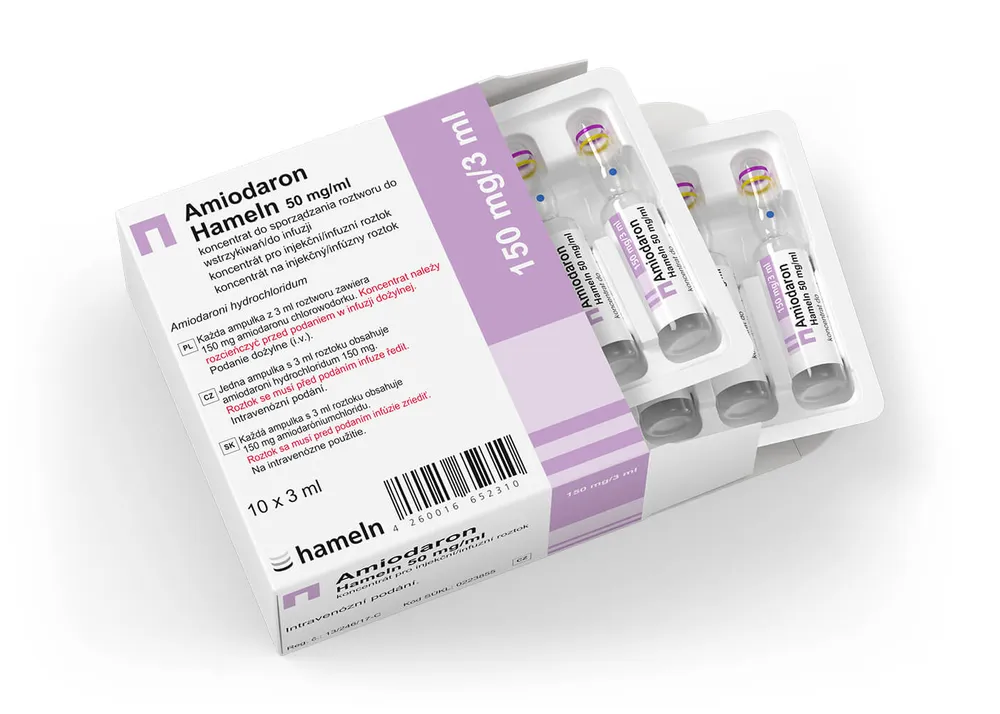
Table of Contents
- Package leaflet: INFORMATION FOR THE USER
- 1. What Amiodaron hameln is and what it is used for
- 2. Important information before using Amiodaron hameln
- 3. How to use Amiodaron hameln
- 4. Possible side effects
- 5. How to store Amiodaron hameln
- 6. Contents of the pack and other information
- Information intended exclusively for medical professionals:
Package leaflet: INFORMATION FOR THE USER
Amiodaron hameln, 50 mg/ml, concentrate for preparation of solution for injection/infusion
Amiodaroni hydrochloridum
Please read carefully the entire leaflet before using this medicine, as it contains
important information for the patient.
- Keep this leaflet, so that you can read it again if necessary.
- If you have any questions, please consult your doctor or pharmacist.
- If you experience any adverse reactions, including any adverse reactions not listed in this leaflet, you must inform your doctor or pharmacist. See section 4.
Table of contents of the leaflet
- What Amiodaron hameln is and what it is used for
- Important information before using Amiodaron hameln
- How to use Amiodaron hameln
- Possible adverse reactions
- How to store Amiodaron hameln
- Contents of the pack and other information
1. What Amiodaron hameln is and what it is used for
Amiodaron hameln is used in the treatment of irregular heart activity, called arrhythmia.
Amiodarone works by controlling the heart's function when it is not working properly.
Amiodaron hameln is administered when rapid action of the drug is required or when tablet administration is not possible.
Your doctor will administer the injection, and your condition will be monitored in hospital or under specialist supervision.
2. Important information before using Amiodaron hameln
When not to use Amiodaron hameln
- if the patient is allergic to amiodarone, iodine, or any of the other ingredients of this medicine (listed in section 6),
- if the patient has a slow heart rate (so-called sinus bradycardia) or irregular heart rhythm (e.g. sinoatrial block, sick sinus syndrome),
- if the patient has other heart disorders without a pacemaker implanted, such as atrioventricular block (a type of conduction disorder in the heart),
- if the patient has thyroid disorders – before administering the medicine, the doctor will perform a thyroid examination,
- if the patient is taking other medicines that may affect heart function (see also section "Amiodaron hameln and other medicines"),
- if the recipient of this medicine is a premature infant or a newborn born at term.
If the patient is on the waiting list for a heart transplant, the doctor may change the treatment approach.
This is because taking amiodarone before heart transplantation has been associated with an
increased risk of life-threatening complications (primary graft dysfunction, PGD), in which the
transplanted heart stops functioning properly within the first 24 hours after surgery.
Amiodaron hameln must not be administered:
- if the patient is pregnant or breastfeeding (the medicine may only be used in life-threatening conditions).
Warnings and precautions
The doctor will closely and regularly monitor the ECG, blood pressure, and liver and thyroid function:
- if the patient has worsening heart function or heart failure,
- if the patient has low blood pressure,
- if the patient has liver disorders,
- if the patient has any lung disorders, including asthma,
- if the patient has any thyroid disorders.
Exercise particular caution when using Amiodarone hydrochloride 50 mg/ml. Consult a doctor,
pharmacist, or nurse if:
- there are any vision problems (these may be symptoms of a condition called optic neuropathy or optic neuritis);
- the recipient of the medicine is an infant or a child under 3 years of age;
- blisters or skin bleeding occur affecting the lips, eyes, mouth, nose, and genital organs; flu-like symptoms and fever (these may be symptoms of a condition called Stevens-Johnson syndrome);
- severe blistering rash occurs, in which layers of skin may peel off, leaving large areas of exposed skin; general malaise, fever, chills, and muscle pain (toxic epidermal necrolysis);
- the patient is currently taking a medicine containing sofosbuvir for the treatment of hepatitis C, as this may cause life-threatening slowing of the heart rate (the doctor may consider alternative treatments; if treatment with amiodarone and sofosbuvir is necessary, additional cardiac monitoring may be required).
Immediately inform the doctor if the patient is taking a medicine containing sofosbuvir for
the treatment of hepatitis C and during treatment experiences:
- slow or irregular heartbeat or arrhythmias,
- shortness of breath or worsening of existing breathlessness,
- chest pain,
- dizziness,
- palpitations,
- fainting or loss of consciousness.
If the above warnings apply to the patient or have applied in the past, consult a doctor.
Amiodaron hameln and other medicines
Inform your doctor or pharmacist about all medicines currently used, recently used, or planned to be used. This is particularly important for the following medicines, which may interact with amiodarone:
- medicines used for irregular heart rhythm (e.g. quinidine, procainamide, disopyramide, and sotalol),
- medicines improving cerebral blood flow (e.g. vinpocetine),
- medicines used in psychiatric disorders (e.g. sultopride, sulpiride, pimozide) and certain types of drugs called phenothiazines (e.g. thioridazine),
- medicines used for gastrointestinal disorders (e.g. cisapride),
- antibiotics used in infections (e.g. moxifloxacin, erythromycin),
- intravenous pentamidine (used in certain types of pneumonia),
- certain antidepressants (e.g. amitriptyline, clomipramine, dosulepin, doxepin, imipramine, lofepramine, nortriptyline, trimipramine, maprotiline),
- medicines used for hay fever, rash, or other allergies, known as antihistamines (e.g. terfenadine),
- medicines used for malaria (e.g. halofantrine),
- sofosbuvir, used in the treatment of hepatitis C.
Not recommended concomitant use
Concomitant use of the following medicines with amiodarone is not recommended:
- medicines used for heart conditions and high blood pressure, known as beta-blockers (e.g. propranolol),
- medicines used for chest pain (angina pectoris) or high blood pressure, known as calcium channel blockers (e.g. diltiazem or verapamil).
Concomitant use requiring caution
Exercise particular caution when using the following medicines together with amiodarone. These medicines may reduce potassium levels in the blood, increasing the risk of life-threatening cardiac arrhythmias:
- laxatives – used for constipation (e.g. bisacodyl, sena),
- corticosteroids – used in inflammatory conditions (e.g. prednisolone),
- tetracosactide – used in the diagnosis of certain hormonal disorders,
- diuretics (water pills), e.g. furosemide,
- intravenous amphotericin – used in fungal infections.
Amiodarone may enhance the effects of the following medicines:
- medicines used to thin the blood (e.g. warfarin) – the doctor will adjust the dose and closely monitor treatment,
- phenytoin – used to treat seizures,
- digoxin – used in heart conditions – the doctor will closely monitor the patient's condition and adjust the digoxin dose,
- flecainide – used for cardiac arrhythmias – the doctor will closely monitor the patient's condition and adjust the flecainide dose,
- medicines used for high cholesterol levels, known as statins (e.g. simvastatin or atorvastatin),
- cyclosporine, tacrolimus, and sirolimus – used to prevent organ transplant rejection,
- fentanyl – used for pain relief,
- lidocaine – a local anesthetic,
- sildenafil – used for erectile dysfunction,
- midazolam and triazolam – used for sedation, e.g. before a medical procedure,
- ergotamine – used for migraine treatment.
Surgical procedures
If a surgical procedure is planned, inform the doctor that the patient is taking amiodarone.
Amiodaron hameln with food and drink
Do not drink grapefruit juice while taking this medicine. Drinking grapefruit juice during amiodarone treatment may increase the risk of adverse effects.
Pregnancy and breastfeeding
The doctor will prescribe Amiodaron hameln during pregnancy only if the benefits of treatment outweigh the risks. Amiodaron hameln may be used during pregnancy only in life-threatening conditions.
Use of Amiodaron hameln is contraindicated during breastfeeding. If amiodarone must be administered to a breastfeeding woman, breastfeeding must be discontinued.
If the patient is pregnant or breastfeeding, suspects she may be pregnant, or plans to have a child, she should consult a doctor or pharmacist before using this medicine.
Driving and operating machinery
Amiodarone may affect the ability to drive and operate machinery. If adverse effects occur, do not drive or operate machinery.
In such a case, consult a doctor.
Amiodaron hameln contains benzyl alcohol
This medicine contains 22.2 mg of benzyl alcohol per ml. It may cause allergic reactions. Administration of benzyl alcohol to young children is associated with a risk of severe adverse effects, including respiratory disorders (so-called "gasping syndrome"). Do not administer to newborns (up to 4 weeks of age). Do not administer to young children (under 3 years of age) for longer than one week without a doctor's or pharmacist's recommendation.
Patients with liver or kidney disease, pregnant women, or those who are breastfeeding (see section 2 – Pregnancy and breastfeeding) should consult a doctor before using this medicine, as large amounts of benzyl alcohol may accumulate in their bodies and cause adverse effects (so-called "metabolic acidosis").
3. How to use Amiodaron hameln
Amiodaron is administered intravenously by a doctor or nurse (as an injection or infusion).
Dosage
The daily dose of Amiodaron hameln depends on the severity of the disease. The doctor will determine the dose and duration of treatment individually for each patient.
Unless otherwise directed by the doctor, the usual dose is 5 mg per kilogram of body weight. The medicine should be injected over at least 3 minutes.
Administration as intravenous injection:
- the administered dose should not exceed 5 mg per kg of body weight,
- the dose should be administered slowly, over at least 3 minutes (unless the medicine is given during resuscitation),
- the doctor should wait at least 15 minutes before administering another injection,
- repeated or continuous administration may cause phlebitis and skin damage at the injection site (surrounding skin may be warm, tender and red) – in such cases, placement of a "central line" by the doctor is recommended.
Administration by intravenous infusion:
- a dose of 5 mg/kg body weight diluted in 250 ml of 5% glucose solution is administered,
- the dose should be given over a period of 20 minutes to 2 hours,
- administration may be repeated 2–3 times per day.
Most adverse reactions occur during treatment when too high a dose of Amiodaron hameln is administered. Therefore, the doctor will give the patient the lowest possible effective dose of Amiodaron hameln. This will help minimize adverse reactions. See also section
"Administration of a higher than recommended dose of Amiodaron hameln".
Adults
The usual dose is 5 mg per kg of body weight, administered over 20 minutes to 2 hours.
Depending on the patient's condition, the doctor may recommend administering 10 mg to 20 mg per kg of body weight within 24 hours.
In life-threatening situations, the doctor may administer 150 mg to 300 mg as a slow injection over at least 3 minutes.
The doctor will monitor the patient's response to Amiodaron hameln and adjust the dose accordingly.
Children and adolescents
Data on efficacy and safety in children are limited. The doctor will determine the appropriate dose.
Elderly patients
As with all patients, the doctor will prescribe the lowest effective dose. The doctor will determine the dose appropriate for the patient and will closely monitor heart rhythm and thyroid function.
The doctor will recommend switching to tablet formulation as soon as possible.
Administration of a higher than recommended dose of Amiodaron hameln
Since the medicine will be administered in a hospital or under medical supervision, it is unlikely that the patient will receive too high a dose.
However, if a higher than recommended dose is administered, the doctor will closely monitor the patient's health condition and, if necessary, provide supportive treatment.
The following symptoms may occur: nausea, vomiting, constipation or excessive sweating, as well as abnormally slow or fast heart rate.
If you have any further questions about the use of this medicine, please consult your doctor or nurse.
4. Possible side effects
Like all medicines, this one can cause side effects, although not everyone experiences them.
Amiodarone hydrochloride 50 mg/ml may remain in the blood for up to one month after treatment has been stopped. During this time, side effects may still occur.
You must stop taking amiodarone hydrochloride 50 mg/ml and contact your doctor,
nurse or pharmacist, or go to hospital immediately if any of the following occur:
Very rare (affects fewer than 1 in 10,000 people):
- allergic reactions (symptoms may include: rash, difficulty swallowing or breathing, swelling of the lips, face, throat or tongue);
- slow heart rate, dizziness, unusual tiredness and breathlessness (this may occur especially in people aged over 65 years or in people who have heart rhythm disorders);
- heart rhythm disturbances (this may lead to myocardial infarction, therefore immediate hospitalisation is required);
- yellowing of the skin or eyes (jaundice), feeling tired or nauseous, loss of appetite, abdominal pain or high temperature (these may be symptoms of liver dysfunction or liver damage, which can be very dangerous);
- difficulty breathing or chest tightness, persistent cough, wheezing, weight loss and fever (this may be due to lung inflammation, which can be very dangerous).
Frequency unknown (cannot be estimated from available data):
- life-threatening heart rhythm disturbances known as torsades de pointes;
- swelling of the skin and mucous membranes (angioedema);
- blistering or peeling of the skin around the lips, eyes, mouth, nose and genital organs, flu-like symptoms and fever (Stevens-Johnson syndrome);
- severe blistering rash, in which layers of skin may peel off, leaving large areas of exposed skin on the body, general malaise, fever, chills and muscle pain (toxic epidermal necrolysis);
- skin inflammation characterised by fluid-filled blisters (bullous dermatitis);
- flu-like symptoms and rash on the face, followed by prolonged rash with high fever, increased liver enzyme activity observed in blood tests, increased number of white blood cells (eosinophilia) and swollen lymph nodes (DRESS syndrome).
If any of the following severe side effects are observed,
treatment with Amiodarone hydrochloride 50 mg/ml must be stopped and medical advice sought immediately – urgent treatment may be required:
Very rare (affects fewer than 1 in 10,000 people):
- central nervous system disorders: headaches (which usually worsen in the morning or after coughing or exertion), nausea, seizures, fainting, visual problems or confusion.
Contact your doctor as soon as possible if the patient experiences any of the
following side effects:
Common (affects less than 1 in 10 people):
- itchy, scaly rashes (rash);
- dizziness, lightheadedness, fainting (may be temporary and caused by low blood pressure).
Frequency unknown (cannot be estimated from available data):
- inflammation of the pancreas, causing severe abdominal and back pain;
- seeing, hearing or feeling things that are not there (hallucinations);
- increased frequency of infections. This may be due to a reduced number of white blood cells (neutropenia);
- significant reduction in the number of white blood cells, increasing the likelihood of infections (agranulocytosis);
- loss of vision in one eye or blurred vision and/or worsening of colour vision. The patient may experience eye pain or tenderness and pain when moving the eyes. (optic neuropathy or optic neuritis);
- extreme restlessness or agitation, weight loss, excessive sweating and inability to tolerate heat (hyperthyroidism);
- overgrowth of tissue in the larger bones of the body (bone marrow granulomas).
Inform your doctor, nurse or pharmacist if any of the following
side effects worsen or persist for more than a few days:
Very common (affects more than 1 in 10 people):
- blurred vision or coloured halos around lights in bright light.
Common (affects less than 1 in 10 people)
- slow heartbeat;
- at the injection or infusion site the following may occur:
- pain,
- redness or discolouration of the skin,
- local soft tissue damage,
- leakage of fluid,
- swelling due to fluid in the skin,
- inflammation or inflammation of blood vessels,
- tissue hardening,
- infection;
- tremor when moving hands or legs;
- decreased sexual drive.
Uncommon (affects less than 1 in 100 people):
- sensation of numbness or weakness, tingling or burning in any part of the body.
Rare (affects less than 1 in 1,000 people):
- hypersensitivity to benzyl alcohol (an excipient).
Very rare (affects less than 1 in 10,000 people):
- changes in liver enzyme activity at the beginning of treatment, detectable in blood tests;
- nausea;
- headache;
- sweating;
- hot flushes;
- malaise, confusion or weakness, nausea, loss of appetite, irritability (these may be symptoms of syndrome of inappropriate antidiuretic hormone secretion (SIADH));
- cardiac conduction disturbances.
Frequency unknown (frequency cannot be estimated from available data):
- life-threatening complication after heart transplantation (primary graft dysfunction), in which the transplanted heart stops functioning properly (see section 2, Warnings and precautions);
- urticaria (itchy, raised rash);
- back pain;
- decreased sexual drive;
- hypothyroidism (extreme tiredness, weakness or exhaustion, weight gain, constipation and muscle pain, sensitivity to low environmental temperatures);
- confusion (delirium).
Reporting of side effects
If any adverse effects occur, including any not listed in this leaflet, inform your doctor, pharmacist or nurse.
Side effects can be reported directly to the
Department of Monitoring Adverse Drug Reactions
of the Office for Registration of Medicinal Products, Medical Devices and Biocidal Products
Al. Jerozolimskie 181C, 02-222 Warsaw
Tel.: +48 22 49 21 301, Fax: +48 22 49 21 309,
Website: https://smz.ezdrowie.gov.pl
Reporting side effects helps to provide more information on the safety of this medicine.
Side effects can also be reported to the marketing authorisation holder.
5. How to store Amiodaron hameln
- The doctor or pharmacist is responsible for storing the Amiodaron hameln medication and for the proper disposal of any unused remnants of Amiodaron hameln.
- Do not store above 25 °C. Do not store in the refrigerator or freeze.
- Keep vials in the outer packaging to protect from light.
- The diluted solution must be used immediately.
- Keep the medicine out of the sight and reach of children.
- Do not use this medicine after the expiry date stated on the label and carton following the abbreviation EXP. The expiry date refers to the last day of the stated month.
- Do not use the medicine if the solution is not clear, contains any solid particles, or if the packaging is damaged.
- For single use only. Any unused solution should be discarded.
6. Contents of the pack and other information
What Amiodaron hameln contains
The active substance is amiodarone hydrochloride.
Each millilitre of concentrate for solution for injection/infusion contains
50 milligrams (mg) of amiodarone hydrochloride, equivalent to 46.9 mg of amiodarone.
1 ampoule containing 3 ml of concentrate contains 150 mg of amiodarone hydrochloride.
One ampoule of Amiodaron hameln diluted according to recommendations in 250 ml of 5% glucose solution
provides a concentration of 0.6 mg/ml of amiodarone hydrochloride.
The other ingredients are: polysorbate 80 (E433), benzyl alcohol, water for injections.
What Amiodaron hameln looks like and contents of the pack
Clear, light yellow, sterile solution.
Pack sizes:
Amiodaron hameln is available in glass ampoules with a capacity of 5 ml containing 3 ml of concentrate for solution for injection/infusion, in packs of 5 or 10 ampoules.
Marketing Authorisation Holder and Manufacturer
Marketing Authorisation Holder:
hameln pharma gmbh
Inselstraße 1
31787 Hameln
Germany
Manufacturers:
HBM Pharma s.r.o.
Sklabinská 30
03680 Martin
Slovak Republic
hameln rds s.r.o.
Horná 36
90001 Modra
Slovak Republic
This medicinal product is authorised in the European Economic Area member states under the following names:
| Austria | Amiodarone hameln 50 mg/ml Concentrate for the preparation of an injection/infusion solution |
| Czech Republic | Amiodarone hameln |
| Bulgaria | Amiodarone hameln 50 mg/ml |
| Denmark | Amiodarone hameln |
| Finland | Amiodarone hameln 50 mg/ml injection/infusion concentrate, for solution |
| Croatia | Amiodarone chloride hameln 50 mg/ml concentrate for injection/infusion solution |
| Netherlands | Amiodarone HCl hameln 50 mg/ml |
| Germany | Amiodarone-hameln 50 mg/ml Concentrate for the preparation of an injection/infusion solution |
| Norway | Amiodarone hameln |
| Poland | Amiodarone hameln |
| Slovakia | Amiodarone hameln 50 mg/ml |
| Romania | Amiodarone hameln 50 mg/ml concentrate for injectable/perfusable solution |
| Slovenia | Amiodarone hameln 50 mg/ml concentrate for injection/infusion solution |
| Sweden | Amiodarone hameln |
| Hungary | Amiodarone hameln 50 mg/ml |
| United Kingdom | Amiodarone Hydrochloride 50 mg/ml Concentrate for Solution for Injection/Infusion |
--------------------------------------------------------------------------------------------------------------
Information intended exclusively for medical professionals:
PREPARATION GUIDELINES:
Amiodarone hameln, 50 mg/ml, concentrate for solution for injection/infusion
- Clear, light yellow, sterile solution.
- pH 3.5 – 4.5.
- For intravenous administration.
There have been reports of crystallization with Amiodarone hameln, 50 mg/ml, concentrate for solution for injection/infusion. Each ampoule should be inspected visually before administration, and only those without crystalline content should be used. Consider using intravenous in-line filters compatible with the infusion set as an additional precautionary measure.
Pharmaceutical incompatibilities
Amiodarone is incompatible with sodium chloride 0.9% (physiological saline) and must only be administered after dilution in 5% glucose solution.
Amiodarone may cause leaching of the plasticizer DEHP (di-2-ethylhexyl phthalate) into the solution when medical devices containing DEHP are used. To minimize exposure to DEHP, amiodarone should be administered using infusion sets that do not contain DEHP, such as those made of polyolefin (PE, PP) or glass. No other substances should be added to the amiodarone infusion solution.
This medicinal product must not be mixed with other medicinal products, except those listed below.
Do not mix other products in the same syringe. Do not administer other drugs in the same infusion line.
If treatment with amiodarone hydrochloride 50 mg/ml concentrate for solution for injection/infusion is to be continued, it should be administered via a separate intravenous infusion line.
Before use, visually inspect the sterile concentrate for clarity, presence of particulate matter, discoloration, and integrity of the container. The solution may only be used if it is clear and the container is intact and undamaged.
Dilution
The medicinal product must be diluted in 5% glucose solution.
Each ampoule should be diluted with up to 250 ml of 5% glucose solution.
Dilutions at lower concentrations are unstable. Amiodarone diluted in 5% glucose solution to a concentration <0.6 mg/ml is unstable. Solutions containing less than 2 ampoules of Amiodarone hameln in 500 ml of 5% glucose are unstable and must not be used.
Dilution must be performed under aseptic conditions. The solution should be inspected visually for particulate matter and discoloration before administration. The solution should only be used if it is clear and free from particles.
Solution stability
The diluted product is physically and chemically stable for 24 hours at 25°C. However, for microbiological reasons, the product should be used immediately after dilution. If not used immediately, the user is responsible for storage conditions and duration prior to use, which should generally not exceed 24 hours at 2–8°C, unless dilution was performed under controlled and validated aseptic conditions.
Storage
Do not store above 25°C. Do not refrigerate or freeze.
Store ampoules in the outer packaging to protect from light.
For single use only. Any unused portions or waste material should be disposed of in accordance with local regulations.