Amiodarone accord
Poland
Table of Contents
- Package leaflet: Information for the patient
- 1. What Amiodaron Accord is and what it is used for
- 2. Important information before using Amiodarone Accord
- 3. How to use Amiodaron Accord
- 4. Possible adverse effects
- 5. How to store Amiodaron Accord
- 6. Contents of the pack and other information
- Information intended exclusively for healthcare professionals
Package leaflet: Information for the patient
Amiodaron Accord, 30 mg/ml, concentrate for solution for injection/infusion
Amiodaroni hydrochloridum
Please read the entire leaflet before use, as it contains important information for the patient.
- Keep this leaflet for future reference.
- If you have any further questions, please consult your doctor, pharmacist, or nurse.
- If you experience any side effects, including any not listed in this leaflet, inform your doctor, pharmacist, or nurse. See section 4.
Table of contents
- What Amiodaron Accord is and what it is used for
- Important information before using Amiodaron Accord
- How to use Amiodaron Accord
- Possible side effects
- How to store Amiodaron Accord
- Contents of the pack and other information
1. What Amiodaron Accord is and what it is used for
Amiodaron Accord contains the active substance amiodarone hydrochloride, which belongs to a group of medicines known as antiarrhythmics. It works by controlling irregular heartbeat (known as arrhythmia).
Amiodaron Accord is used in the treatment of adult patients with:
- severe, symptomatic ventricular tachyarrhythmias;
- symptomatic cardiac rhythm disorders requiring treatment, with rapid heartbeat of atrial origin (supraventricular tachyarrhythmias), such as:
- atrioventricular nodal re-entrant tachycardia,
- supraventricular tachycardia in Wolff-Parkinson-White syndrome, when the heart beats extremely fast, or
- paroxysmal atrial fibrillation (fast or irregular heartbeat).
This indication applies to patients who do not respond to treatment with other antiarrhythmic medicines or in whom other antiarrhythmic medicines are not recommended.
Amiodaron Accord is used when rapid onset of action is required or when oral administration is not possible. This medicine will be administered by a doctor, and the patient's condition will be monitored in a hospital or under the supervision of a specialist.
2. Important information before using Amiodarone Accord
When not to use Amiodarone Accord:
-
if the patient is allergic to amiodarone hydrochloride, iodine, or any of the other ingredients of this medicine (listed in section 6);
-
if the patient has heart problems that may cause slowing of the heartbeat (such as sinoatrial block or sinus bradycardia);
-
if the patient has various types of conduction disorders (high-grade atrioventricular block, bifascicular or trifascicular block, or sinus node disease)
and the patient does not have a cardiac pacemaker implanted; -
if the patient has heart failure or weakened heart muscle (cardiomyopathy);
-
if the patient has thyroid problems or has had thyroid problems in the past;
-
if the patient has severe respiratory insufficiency, circulatory collapse, or severe hypotension (very low blood pressure);
-
if the patient has pre-existing QT interval prolongation (a specific change in the ECG);
-
if the patient has low blood potassium levels (hypokalaemia);
-
if the patient has previously experienced angioedema (a certain type of swelling of the skin and mucous membranes);
-
if the patient is taking MAO inhibitors (certain antidepressants) concomitantly;
-
if the patient is taking other medicines that may cause a specific type of rapid heartbeat (torsade de pointes);
-
if the patient is pregnant, suspects she may be pregnant, or is breastfeeding (unless the physician considers treatment absolutely necessary).
None of the above contraindications apply if amiodarone is used during cardiopulmonary resuscitation (in cases of cardiac and respiratory arrest) due to defibrillation-resistant ventricular fibrillation.
Amiodarone Accord must not be administered to premature infants, newborns, or children under 3 years of age.
Do not use this medicine if any of the above apply to the patient; consult a doctor or nurse.
Warnings and precautions
Amiodarone Accord may only be administered in an intensive care unit and under continuous monitoring (ECG recording and blood pressure monitoring).
Before starting treatment with Amiodarone Accord, discuss with your doctor, pharmacist, or nurse if:
- the patient has mild to moderate hypotension,
- the patient has a weak heart or heart failure,
- the patient has thyroid problems,
- the patient has liver problems,
- the patient is receiving high-dose oxygen therapy or has other lung problems, including asthma,
- the patient is scheduled for surgery under general anaesthesia,
- the patient is elderly,
- the patient is taking a medicine called sofosbuvir, used to treat hepatitis C virus infection.
Initiation of amiodarone treatment for ventricular arrhythmias requires very careful monitoring of heart function and may only be performed when cardiac monitoring equipment is available.
During long-term treatment (e.g. after switching to oral therapy), regular cardiac check-ups should be performed at regular intervals.
During treatment with amiodarone, slowing of the heart rate (bradycardia) may occur. Reduced heart rate may be more pronounced in patients over 65 years of age. Treatment should be discontinued in case of severe bradycardia or heart block.
New arrhythmias or worsening of existing arrhythmias may occur. These usually occur as a result of combination with other medicines or electrolyte disturbances (such as changes in blood potassium levels). In such cases, discontinuation of treatment with this medicine should be considered.
Extreme caution is required in cases of hypotension, severe respiratory insufficiency, severe heart failure, or uncontrolled cardiomyopathy.
If the patient is currently taking a medicine containing sofosbuvir for the treatment of hepatitis C, this should be discussed with a doctor or pharmacist before starting Amiodarone Accord, as it may cause life-threatening slowing of the heart. The treating physician may consider alternative treatment options. If treatment with both amiodarone and sofosbuvir is necessary, additional cardiac monitoring may be required.
Inform the doctor immediately if the patient is taking a medicine containing sofosbuvir for hepatitis C and experiences any of the following during treatment:
- slow or irregular heartbeat or heart rhythm disturbances;
- shortness of breath or worsening of existing breathlessness;
- chest pain;
- dizziness;
- palpitations;
- near-fainting or fainting.
During treatment with amiodarone, there is a risk of developing severe cases of lung inflammation. For this reason, if possible, a chest X-ray and lung function tests should be performed before starting treatment.
Hepatotoxic effects have recently been reported after intravenous administration, which may be more related to the solvent (polysorbate 80) than to the drug itself.
Liver function disturbances may occur both during oral and intravenous administration (within the first 24 hours in the case of intravenous administration). Therefore, amiodarone dosing should be reduced or treatment discontinued if aminotransferase activity (liver function markers) exceeds three times the upper reference limit.
During treatment, the doctor may decide to perform tests: chest X-ray (to rule out respiratory complications), blood tests to measure aminotransferase activity (before starting treatment and regularly during treatment to check liver function) and blood potassium levels.
Inform the doctor if visual disturbances occur: blurred vision, worsening of vision, seeing coloured halos, or a sensation of cloudy vision. If any of these problems occur, the patient should undergo a full eye examination.
General anaesthesia
Caution is advised in patients undergoing general anaesthesia or receiving high-dose oxygen therapy.
Potentially serious complications have been observed when amiodarone is combined with general anaesthesia. Before surgery, inform the anaesthesiologist that the patient is receiving amiodarone.
Skin disorders (severe blistering reactions) such as Stevens-Johnson syndrome or toxic epidermal necrolysis, which may be very serious or even life-threatening, may occur during treatment (see section 4). If symptoms suggestive of Stevens-Johnson syndrome or toxic epidermal necrolysis (progressive skin rash, often with blisters or mucosal ulcers) appear, amiodarone treatment must be stopped immediately.
If blood potassium levels are low, they should be corrected before starting amiodarone treatment.
Amiodarone contains iodine and may interfere with radioactive iodine uptake. However, this does not affect the interpretation of thyroid function tests (free T4, free T3, and TSH).
Thyroid
Due to the risk of hyperthyroidism or hypothyroidism during amiodarone treatment, thyroid function tests should be performed before starting treatment.
These tests should be repeated regularly during treatment and for up to one year after treatment ends, and patients should be monitored for symptoms of hyperthyroidism or hypothyroidism.
The following symptoms may indicate thyroid dysfunction:
Hypothyroidism:
Weight gain, increased sensitivity to cold, fatigue, extreme slowing of the heartbeat (bradycardia) beyond what would be expected from Amiodarone Accord treatment.
Hyperthyroidism:
Weight loss, rapid heartbeat (tachycardia), muscle tremors, nervousness, increased sweating and heat intolerance, recurrence of arrhythmias or angina, heart failure.
Neuromuscular disorders
Amiodarone may cause damage to peripheral nerves and/or muscles (peripheral neuropathy and/or myopathy). These symptoms usually resolve within a few months after stopping treatment. However, in rare cases, they may not be completely reversible.
Protect the skin from sunlight
Avoid direct exposure to sunlight during treatment and for several months after stopping treatment. This also applies to UV radiation and tanning beds.
This is because the skin will be more sensitive to sunlight, and failure to take the following precautions may cause burning, tingling, or severe blistering:
- ensure a sunscreen with a high sun protection factor (SPF) is used,
- always wear a hat and clothing covering arms and legs.
Primary Graft Dysfunction (PGD) after heart transplantation
If the patient is on a waiting list for heart transplantation and is taking amiodarone, there is an increased risk of life-threatening complications (primary graft dysfunction), so the doctor may change the treatment before transplantation. In case of this complication, the transplanted heart stops functioning properly shortly after heart transplantation surgery, and in severe cases, it may be irreversible.
Children and adolescents
The safety and efficacy of amiodarone in children have not been established; therefore, amiodarone is not recommended for use in these patients.
Amiodarone Accord and other medicines
This medicine may alter the response to other medicines; therefore, inform the doctor about all medicines currently or recently taken, including those available without a prescription. The doctor will decide which medicines should be discontinued or whether dosage adjustments are needed.
Due to the long half-life of amiodarone, interactions with other medicines may also occur several months after stopping amiodarone treatment.
Medicines that may cause serious ventricular arrhythmias of the torsades de pointes type
Concomitant treatment with the following medicines that cause torsades de pointes arrhythmias is contraindicated:
- medicines used to control irregular heartbeat, such as quinidine, procainamide, disopyramide, sotalol, and bretylium;
- non-antiarrhythmic medicines such as vinpocetine (used to increase oxygen supply to the brain);
- medicines used for infections (such as intravenous erythromycin, cotrimoxazole, moxifloxacin, or pentamidine);
- certain antipsychotics (calming medicines that reduce anxiety), such as chlorpromazine, levomepromazine, thioridazine, fluphenazine, sulpiride, tiapride, pimozide, haloperidol, amisulpride, and sertindole;
- medicines for other mental disorders (lithium, antidepressants such as doxepin, maprotiline, amitriptyline);
- medicines for hay fever, rash, or other allergies known as antihistamines, e.g. terfenadine, astemizole, mizolastine;
- antimalarial medicines such as quinine, mefloquine, chloroquine, halofantrine;
- MAO inhibitors (certain antidepressants).
Administration of amiodarone together with medicines that prolong the QT interval (prolong the heartbeat) should be based on a careful assessment of risks and benefits for each patient, as the risk of serious ventricular arrhythmias of the torsades de pointes type may be increased. QT interval prolongation should be monitored (ECG test).
Fluoroquinolones: during amiodarone treatment, certain types of antibiotics (fluoroquinolones) should also be avoided.
Medicines that reduce heart rate or cause disturbances in automaticity or conduction:
Concomitant treatment with beta-blockers and calcium channel blockers that reduce heart rate (diltiazem and verapamil) is not recommended.
Concomitant treatment with the following medicines is also not recommended:
Medicines that may cause hypokalaemia:
- Stimulant laxatives that may reduce blood potassium levels and thereby increase the risk of torsades de pointes arrhythmias. Other types of laxatives should be used.
- Extreme caution is required when amiodarone is used concomitantly with diuretics that reduce blood potassium levels, either alone or in combination, systemic corticosteroids, tetracosactide (used in diagnosis of adrenal problems and treatment of ulcerative colitis), and intravenous amphotericin B (an antifungal agent).
Extreme caution is required when combining amiodarone with the following medicines. Dose adjustment of other medicines by the doctor may be necessary:
- oral anticoagulants (blood thinners), e.g. warfarin or phenprocoumon; amiodarone may enhance the effect of these medicines, increasing the risk of bleeding,
- digitalis glycosides, such as digoxin (used in heart failure treatment),
- dabigatran (used to prevent blood clots),
- phenytoin (used in epilepsy),
- flecainide (used in treatment of heart rhythm disorders),
- medicines metabolized by a specific enzyme system (cytochrome P450 3A4)
- cyclosporine (a medicine to prevent transplant rejection)
- fentanyl (a strong painkiller)
- certain cholesterol-lowering medicines (certain statins, e.g. simvastatin, atorvastatin, lovastatin)
- other similar medicines, e.g. tacrolimus and sirolimus (to prevent transplant rejection), lidocaine (a local anaesthetic), sildenafil (used in erectile dysfunction treatment), midazolam and triazolam (sleeping tablets), macrolide antibiotics (clarithromycin), ergotamine, dihydroergotamine (used in migraine), and colchicine (used in gout treatment). Potentially serious complications (acute respiratory failure syndrome) have been observed after concomitant administration with general anaesthesia.
Concomitant use of amiodarone and sofosbuvir-containing regimens is not recommended, as it may lead to severe symptomatic bradycardia (life-threatening slowing of the heartbeat). If concomitant administration cannot be avoided, cardiac monitoring is recommended.
Amiodarone Accord with food, drink, and alcohol
During treatment with this medicine, do not drink grapefruit juice, as it may increase the blood concentration of amiodarone.
Pregnancy, breastfeeding, and fertility
If the patient is pregnant or breastfeeding, suspects she may be pregnant, or plans to have a child, she should consult a doctor or pharmacist before using this medicine.
- The doctor will prescribe Amiodarone Accord only in exceptional cases when the expected benefits outweigh the potential risks during pregnancy. Amiodarone may be used during pregnancy only in life-threatening situations.
- The patient should not become pregnant for at least six months after stopping treatment to avoid exposing the child to amiodarone during early pregnancy.
- The patient should not receive amiodarone during breastfeeding. If the patient receives amiodarone during breastfeeding, breastfeeding should be discontinued, as amiodarone passes into breast milk in significant amounts and may reach effective concentrations in infants.
- After long-term treatment, disturbances in testicular function may occur.
Driving and operating machinery
Amiodarone hydrochloride may affect the ability to drive and operate machinery. Treatment with this medicine requires regular medical monitoring. This medicine, even when used as directed, may alter reaction time to such an extent that it may impair the ability to actively participate in road traffic, operate machinery, or work safely. This may occur particularly at the start of treatment, during dose increases, when changing medication, and in combination with alcohol.
Amiodarone Accord contains benzyl alcohol
This medicine contains 200 mg of benzyl alcohol in each 10 ml pre-filled syringe, equivalent to 20 mg/ml. Benzyl alcohol may cause allergic reactions. Patients with impaired liver or kidney function, and pregnant or breastfeeding women, should consult a doctor or pharmacist, as large amounts of benzyl alcohol may accumulate in the body and cause adverse effects (known as "metabolic acidosis"). Benzyl alcohol is associated with the risk of severe adverse effects, including breathing problems (known as "gasping syndrome") in young children.
3. How to use Amiodaron Accord
The medicine must be diluted before administration.
Treatment will be initiated only under the supervision of a specialist physician. In case of any doubts,
consult your doctor again.
Direct intravenous bolus injection is generally not recommended due to the risk of severe
hypotension and cardiovascular collapse; therefore, intravenous infusion is preferred whenever possible.
Direct intravenous injection should be limited to emergency situations only.
Physicians or healthcare professionals must read the “information for medical professionals” at the
end of this leaflet.
Children and adolescents
The safety and efficacy of amiodarone in children have not been established; therefore, the use of
amiodarone in children is not recommended.
Due to the presence of benzyl alcohol, this medicine is not intended for use in premature infants,
newborns, infants, and children under 3 years of age.
Elderly patients
As with all patients, it is important to use the lowest effective dose. Amiodarone may slow the heart rate,
which may be more pronounced in elderly patients. Your doctor will carefully calculate the appropriate
amiodarone dose and will monitor heart rate and thyroid function more closely.
Use of a higher than recommended dose of Amiodaron Accord
Your doctor will carefully determine the appropriate dose of Amiodaron Accord for you. Therefore, it is
unlikely that a doctor, nurse, or pharmacist would administer too high a dose of this medicine. However,
if you think you have received too high or too low a dose of Amiodaron Accord, inform your doctor, nurse,
or pharmacist immediately.
The following symptoms may occur: dizziness, fainting, vomiting, fatigue, or confusion.
Abnormal slow or fast heartbeat. An overdose of amiodarone may damage the heart and liver.
Missed dose of Amiodaron Accord
Your doctor or nurse will receive instructions regarding administration of this medicine. It is unlikely
that you will miss a prescribed dose. However, if you suspect that a dose has been missed, inform your
doctor or nurse immediately.
Stopping Amiodaron Accord treatment
It is important to continue taking Amiodaron Accord until your doctor decides to discontinue it.
If you stop taking this medicine, irregular heartbeat may return, which could be dangerous.
If you have any further questions about the use of this medicine, please consult your doctor or nurse.
4. Possible adverse effects
Like all medicines, this medicine can cause adverse effects, although they do not occur in everyone.
The following very rare adverse effect may, under certain conditions, seriously threaten life.
Therefore, you should immediately inform your doctor if such an event occurs suddenly or develops with unexpected intensity:
Severe acute hypersensitivity reaction (e.g. anaphylaxis): in such a case, treatment with Amiodarone Accord must be immediately discontinued and appropriate emergency treatment initiated.
Adverse effects resulting from amiodarone use are common, particularly affecting the heart, lungs and liver. Sometimes these symptoms are dose-dependent and resolve after dose reduction.
Other adverse effects
Observed adverse effects are listed according to their frequency of occurrence: very common (may affect more than 1 in 10 people); common (may affect up to 1 in 10 people); uncommon (may affect up to 1 in 100 people); rare (may affect up to 1 in 1,000 people); very rare (may affect up to 1 in 10,000 people); frequency not known (cannot be estimated from available data).
Blood and lymphatic system disorders
- Very rare: reduction in platelet count (thrombocytopenia), anaemia due to increased breakdown of red blood cells or due to impaired blood cell formation.
- Frequency not known: increased susceptibility to infections, which may be caused by a reduction in white blood cell count (neutropenia). Marked reduction in white blood cells, increasing the likelihood of infections (agranulocytosis).
Cardiac disorders
- Common: mild slowing of the heart rate (bradycardia), which varies depending on the administered dose.
- Uncommon: conduction disturbances (sinoatrial block: heart block with impaired conduction from the sinoatrial node to the atrium; atrioventricular block: impaired conduction between atria and ventricles). In isolated cases, cardiac arrest (asystole) has been observed (see section 2 "Warnings and precautions"). Onset or worsening of arrhythmia (changes in heart rhythm), sometimes followed by cardiac arrest.
- Very rare: marked slowing of the heart rate (bradycardia) or cessation of sinoatrial node function, mainly in patients with sinus node dysfunction and/or aged over 65 years.
- Frequency not known: torsades de pointes type arrhythmias (a specific type of rhythm disturbance); isolated cases of ventricular fibrillation or flutter have been reported.
Endocrine disorders
- Common: overproduction of thyroid hormone by the thyroid gland (hyperthyroidism) or insufficient production of thyroid hormone (hypothyroidism). Severe hyperthyroidism has been reported (in isolated cases fatal).
- Very rare: malaise, confusion or weakness, nausea (feeling of needing to vomit), loss of appetite, irritability. This may be a condition known as "syndrome of inappropriate antidiuretic hormone secretion (SIADH)".
Eye disorders
-
Very common: corneal microdeposits on the anterior surface of the eye, usually limited to the area below the pupil, which may cause visual disturbances (blurred vision, seeing coloured halos around light sources). These usually resolve 6–12 months after discontinuation of the medicine.
-
Very rare: optic neuritis, which may lead to blindness (see section 2 "Warnings and precautions").
Gastrointestinal disorders
- Very common: nausea, vomiting, taste disturbances at the beginning of treatment (during loading dose administration), which resolve after dose reduction.
- Uncommon: abdominal pain, bloating, constipation, loss of appetite.
- Frequency not known: sudden onset of acute pancreatitis.
General disorders and administration site conditions
- Common: at the injection site, pain, red spots (erythema), skin swelling due to fluid accumulation, darkening (necrosis), leakage of fluid (extravasation), fluid accumulation (infiltration), inflammation, hardening, phlebitis (vein inflammation, thrombophlebitis), connective tissue inflammation, infection, pigmentary changes.
- Uncommon: fatigue
Hepatobiliary disorders
- Very common: isolated and often moderate increases in aminotransferase activity (liver function-related) at the beginning of treatment. These may return to normal values after dose reduction or even spontaneously.
- Common: acute liver function disturbances with high serum aminotransferase activity and/or yellowing of the skin (jaundice), including liver failure, which may be life-threatening.
- Very rare: chronic liver disease (in isolated cases fatal), liver cirrhosis.
Immune system disorders
- Very rare: severe allergic reaction which may be life-threatening (anaphylactic shock).
- Frequency not known: swelling may also occur due to fluid accumulation under the skin and mucous membranes (Quincke's oedema).
Musculoskeletal and connective tissue disorders
- Common: muscle weakness.
- Frequency not known: back pain.
Renal and urinary disorders
- Rare: transient renal function disturbances.
Nervous system disorders
- Common: muscle tremor (extrapyramidal tremor), nightmares, sleep disturbances.
- Uncommon: peripheral nerve or muscle damage (peripheral sensory neuropathies and/or myopathies), usually reversible after discontinuation of the medicine (see section 2 "Warnings and precautions"), dizziness, coordination problems, sensory disturbances (paraesthesiae).
- Very rare: mild increase in intracranial pressure, cerebellar ataxia (incoordination), headache.
Psychiatric disorders
- Common: decreased libido.
- Frequency not known: confusion state (delirium), seeing, hearing or feeling things that are not there (hallucinations).
Reproductive system disorders
- Very rare: epididymitis, erectile dysfunction.
Respiratory, thoracic and mediastinal disorders
- Common: due to amiodarone's toxic effect on the lungs, lung inflammation may occur (atypical pneumonia as a hypersensitivity reaction [hypersensitivity pneumonitis], alveolar or interstitial pneumonitis), connective tissue proliferation (fibrosis), pleuritis or bronchiolitis (bronchiolitis obliterans organising pneumonia). Isolated fatal cases have been reported. Non-productive cough and dyspnoea are often the first signs of the aforementioned pulmonary toxicity. Additionally, weight loss, fever and fatigue may occur.
- Very rare: serious respiratory complications (adult respiratory distress syndrome), usually observed immediately after surgical procedures, sometimes fatal (possible interaction with high-concentration oxygen). Bronchospasm and/or dyspnoea (apnoea) in cases of severe respiratory failure, mainly in patients with asthma. These usually resolve after discontinuation of treatment.
Skin and subcutaneous tissue disorders
- Very common: increased sensitivity to light (photosensitivity) with increased susceptibility to sunburn, leading to skin redness and rash.
- Common: itchy red rash (exanthema). Long-term amiodarone treatment (after switching to oral therapy) may cause skin discolouration ranging from black-violet to steel-grey (pseudocyanosis), particularly in areas exposed to sunlight. Discolouration will gradually disappear within 1–4 years after discontinuation of the medicine.
- Very rare: sweating, skin redness after radiotherapy, inflammation of subcutaneous fat cells (erythema nodosum), rashes, inflammatory redness and peeling of the skin (exfoliative dermatitis), transient hair loss.
- Frequency not known: urticaria, skin irritation and itching. Life-threatening skin reactions characterised by rash, blisters, peeling and pain (toxic epidermal necrolysis (TEN) / Stevens-Johnson syndrome (SJS), bullous dermatitis, drug rash with eosinophilia and systemic symptoms (DRESS).
Vascular disorders
- Common: low blood pressure (hypotension), usually mild and transient. In cases of overdose or too rapid injection, severe hypotension or collapse may occur.
- Rare: vasculitis.
- Very rare: hot flushes.
Injury, poisoning and procedural complications
- Frequency not known: life-threatening complication after heart transplantation (primary graft dysfunction), in which the transplanted heart fails to function properly (see section 2 "Warnings and precautions").
Investigations
- Very rare: increased blood creatinine concentration.
Other possible adverse effects
Hypersensitivity reactions to benzyl alcohol may rarely occur.
If any adverse effects occur, you should inform your doctor, pharmacist or nurse. This includes any possible adverse effects not listed in this leaflet.
Reporting of adverse effects
If any adverse effects occur, including any not listed in this leaflet, you should inform your doctor, pharmacist or nurse.
Adverse effects can be reported directly to the Department of Monitoring Adverse Drug Reactions of the Office for Registration of Medicinal Products, Medical Devices and Biocidal Products
Al. Jerozolimskie 181C
02-222 Warsaw
Tel.: +48 22 49 21 301
Fax: +48 22 49 21 309
Website: https://smz.ezdrowie.gov.pl
Adverse effects can also be reported to the marketing authorisation holder. Reporting adverse effects helps to gather more information on the safety of the medicine.
5. How to store Amiodaron Accord
Keep this medicine out of the sight and reach of children.
Do not use this medicine after the expiry date stated on the carton and ampoule-syringe after EXP. The expiry date refers to the last day of the stated month.
Do not store above 25°C. Store the ampoule-syringe in the outer packaging to protect from light.
After dilution, chemical and physical stability of the solution has been demonstrated for 3 hours, 48 hours, and 15 minutes at concentrations of 1.2 mg/ml, 2.4 mg/ml, and 15 mg/ml, respectively, at a temperature of 20–25°C.
From a microbiological point of view, the product should be used immediately. If not used immediately, the duration and conditions of storage prior to use are the responsibility of the user.
Do not use this medicine if the container is damaged or if particles/crystals are visible.
For single use only. Any unused portions must be discarded.
Medicines should not be disposed of via wastewater or household waste. Ask your pharmacist how to dispose of medicines no longer required. Such measures will help protect the environment.
6. Contents of the pack and other information
What Amiodaron Accord contains
- The active substance is amiodarone hydrochloride. Each ml of solution contains 30 mg of amiodarone hydrochloride. Each 10 ml pre-filled syringe contains 300 mg of amiodarone hydrochloride.
- The other ingredients are benzyl alcohol, polysorbate 80, and water for injections.
What Amiodaron Accord looks like and contents of the pack
Amiodaron Accord is a clear, colourless to slightly yellow solution contained in a colourless
pre-filled syringe.
Amiodaron Accord is available in packs containing 1 pre-filled syringe.
Marketing Authorisation Holder
Accord Healthcare Polska Sp. z o.o.
ul. Taśmowa 7
02-677 Warszawa
tel: +48 22 577 28 00
Manufacturer/Importer
Accord Healthcare Polska Sp. z o.o.
ul. Lutomierska 50
95-200 Pabianice
Pharmadox Healthcare Limited
KW20A Kordin Industrial Park
Paola, PLA 3000
Malta
Laboratori Fundació Dau
C/ C, 12-14 Pol. Ind.
Zona Franca
08040 Barcelona
Spain
This medicinal product is authorised in the European Economic Area member states under the following names:
| Member State | Medicinal product name |
| Austria | Amiodarone Accord 30 mg/ml concentrate for solution for injection/infusion |
| Czech Republic | Amiodarone Accord |
| Denmark | Amiodarone Accord |
| Finland | Amiodarone Accord |
| Spain | Amiodarona Accord 30 mg/ml concentrate for injectable and perfusion solution |
| Ireland | Amiodarone hydrochloride 30 mg/ml concentrate for solution for injection/infusion |
| Germany | Amiodarone Accord 30 mg/ml concentrate for solution for injection/infusion |
| Norway | Amiodarone Accord |
| Poland | Amiodarone Accord |
| Portugal | Amiodarona Accord |
| Romania | Amiodarone Accord 30 mg/ml concentrate for injectable/infusion solution |
| Sweden | Amiodarone Accord |
| Italy | Amiodarone Accord |
Information intended exclusively for healthcare professionals
Dosage
In the case of an acute attack or initial treatment, the medicinal product may be administered
by intravenous injection or intravenous infusion. Intravenous bolus injection is generally not recommended.
Intravenous infusion is preferred whenever possible.
Intravenous infusion
Initial dose or in case of an attack
The usual recommended dose is 5 mg/kg body weight, administered by intravenous infusion over
20 minutes to 2 hours. The medicinal product must be given as a diluted solution in 250 ml of 5%
dextrose solution.
Therapeutic effect appears within the first few minutes and then gradually diminishes; therefore,
to prolong the effect, administration should be continued as a maintenance infusion.
Maintenance dose
Up to 1200 mg (10–20 mg/kg body weight) as an infusion in 250–500 ml of 5% dextrose per day;
the infusion rate should be adjusted according to the clinical response.
Transition from intravenous to oral administration
As soon as an adequate response has been achieved, oral therapy should be initiated concomitantly,
using the standard loading dose. Amiodaron Accord should be discontinued gradually.
Intravenous bolus injection (see “Special warnings and precautions for use” in SmPC)
In emergency situations, the medicinal product may be administered, at the physician’s discretion,
as a slow intravenous bolus injection of 150–300 mg (5 mg/kg body weight) in 10–20 ml of 5%
dextrose, administered over at least 3 minutes. This should not be repeated within at least 15 minutes,
even if the maximum dose was not administered during the first injection. Patients receiving
amiodarone in this manner must be closely monitored, e.g. in an intensive care unit.
Cardiopulmonary resuscitation in the treatment of refractory ventricular fibrillation
The initial intravenous dose is 300 mg (or 5 mg/kg body weight), diluted in 20 ml of 5% dextrose,
administered as a rapid bolus injection. If ventricular fibrillation persists, an additional dose of
150 mg intravenously (or 2.5 mg/kg body weight) may be considered.
Other medicinal products must not be mixed with amiodarone in the same syringe.
Other medicinal products must not be administered via the same intravenous access.
If prolonged treatment is necessary, it should be continued as an intravenous infusion.
In cases of poisoning and/or severe symptoms, immediate treatment is required.
Neither amiodarone hydrochloride nor its metabolites can be removed by dialysis.
Method of administration
Prior to intravenous administration, amiodarone must be diluted in accordance with the instructions
provided in section 4.2 of the Summary of Product Characteristics (SmPC).
For slow intravenous bolus injections (only in emergency situations), amiodarone must be further diluted
in 10 or 20 ml of 5% dextrose, depending on the dose and indication. For example: in cardiopulmonary
resuscitation, dilute the contents of one syringe (300 mg/10 ml) further with 20 ml of 5% dextrose
(further information, see sections 4.2 and 4.4 of the SmPC).
For single use only.
Only 5% dextrose solution must be used for infusion.
To avoid phlebitis, a central venous catheter should be used during continuous infusion.
Amiodaron Accord is administered only to initiate treatment, for no longer than one week.
Amiodarone is incompatible with saline solution.
Amiodarone may cause leaching of the plasticizer DEHP (di-2-ethylhexyl phthalate) from medical
equipment containing DEHP into the solution. To minimize exposure to DEHP, amiodarone should
be administered using infusion sets that do not contain DEHP.
Do not mix the medicinal product with other medicinal products except those mentioned in the package leaflet.
Instructions for preparation and administration of the medicinal product
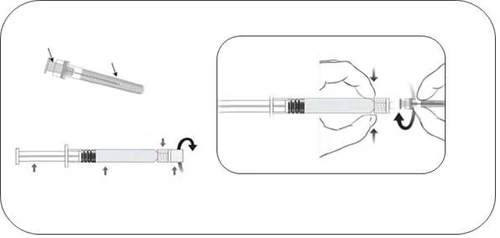
- Remove the glass ampoule-syringe from the packaging and check for any damage.
- Parenteral solutions should be inspected visually for particulate matter and discoloration prior to administration.
- Unscrew the glass cap of the ampoule-syringe by turning it counterclockwise (as shown in Figure 1).
- Attach the needle to the ampoule-syringe by gently connecting the needle hub to the Luer Lock adapter and rotating it one-quarter turn to the right until the needle locks into place (as shown in Figure 2).
- Carefully remove the needle cover by pulling it straight off.
- Dilute (see section 4.2 of SmPC) with 5% dextrose solution according to the instructions for intravenous administration.
Prior to administration by intravenous infusion, Amiodaron Accord must be diluted in accordance with the instructions
in 5% dextrose solution. One ampoule-syringe of Amiodaron Accord should be diluted in 500 ml of 5% dextrose solution
to achieve a concentration of 0.6 mg/ml of amiodarone hydrochloride.
Due to solution stability, concentrations below 0.6 mg/ml should not be used, and no other medicinal products should be added to the infusion fluid.
Disposal
For single use only.
Any unused medicinal product or waste material must be disposed of in accordance with local regulations.