Aminoplasmal paed 10%
Poland
Table of Contents
- Package leaflet: Information for the user
- 1. What Aminoplasmal Paed 10% is and what it is used for
- 2. Important information before using Aminoplasmal Paed 10% in a child
- 3. How to use Aminoplasmal Paed 10%
- 4. Possible adverse reactions
- 5. How to store Aminoplasmal Paed 10%
- 6. Contents of the pack and other information
- Information intended exclusively for medical professionals:
Package leaflet: Information for the user
Aminoplasmal Paed 10%, solution for infusion
For use in children (aged 0–11 years)
amino acids
Please read all of this leaflet carefully before the medicine is administered, as it contains
important information for the patient.
- Keep this leaflet, as you may need to read it again.
- If you have any questions, please consult your doctor or nurse.
- This medicine has been prescribed for a specific child only. Do not pass it on to others. It may harm other individuals, even if their symptoms are the same as the child's.
- If the child experiences any adverse reactions, including any not listed in this leaflet, inform your doctor or nurse. See section 4.
Contents of the leaflet
- What Aminoplasmal Paed 10% is and what it is used for
- Important information before administration of Aminoplasmal Paed 10% to the child
- How to use Aminoplasmal Paed 10%
- Possible side effects
- How to store Aminoplasmal Paed 10%
- Contents of the pack and other information
1. What Aminoplasmal Paed 10% is and what it is used for
Aminoplasmal Paed 10% is a solution administered to the patient intravenously through a small tube (cannula) inserted into a vein (intravenous infusion).
The solution contains amino acids, which are essential for the body's growth and recovery.
This formulation has been designed to meet the specific needs of premature and full-term newborns, infants, and young as well as older children.
It is given when children are unable to take food normally or cannot be fed via a tube inserted into the stomach. At the same time as Aminoplasmal Paed 10%, they may also receive other nutritional components, such as glucose solutions or fat emulsions.
2. Important information before using Aminoplasmal Paed 10% in a child
When not to use Aminoplasmal Paed 10%
- if the child is allergic to any of the active substances or any of the other ingredients of this medicine (listed in section 6);
- if the child has a congenital disorder of protein and amino acid metabolism;
- if the child has severe (i.e. life-threatening) circulatory disorders (shock);
- if the child has insufficient oxygen supply (hypoxia);
- if acidic substances have accumulated in the child's blood (metabolic acidosis);
- if the child has severe liver disease (severe liver failure);
- if the child has severe renal failure and is not adequately treated with artificial kidney or similar therapeutic methods;
- if the child has poorly controlled heart failure with significant circulatory disturbance (decompensated heart failure);
- if fluid has accumulated in the child's lungs (acute pulmonary edema);
- if the child has disturbances in fluid or mineral salt (electrolyte) balance.
Warnings and precautions
When administering to children from preterm infants up to 2 years of age, the solution (in the bag and administration set) must be protected from light until the end of administration.
Exposure of parenteral nutrition solutions containing Aminoplasmal Paed 10% to light, particularly after addition of trace elements and/or vitamins, may lead to the formation of peroxides and other degradation products, which can be minimized by protecting from light.
Before starting treatment with Aminoplasmal Paed 10%, discuss with the doctor or pharmacist if the child:
- has disorders of protein and amino acid metabolism for reasons other than those listed above (see section "When not to use Aminoplasmal Paed 10%");
- has impaired liver or kidney function;
- has heart function disorders;
- has abnormally high serum osmolality.
If there are disturbances in fluid or electrolyte balance, these should be corrected before administration of this medicine. Examples of such disturbances include concurrent deficiency of fluids and electrolytes (hypotonic dehydration), or deficiency of sodium (hyponatremia) or potassium (hypokalemia).
Before and during administration of this solution in children, the doctor will monitor blood electrolyte levels, blood glucose levels, fluid balance, and acid-base balance. Blood protein levels as well as liver and kidney function will also be monitored. For this purpose, blood and urine samples will be collected and analyzed.
Amino acid solutions are only one component of parenteral nutrition. Usually, children receive Aminoplasmal Paed 10% as part of intravenous feeding which also includes non-protein energy supplements (carbohydrate solutions, fat emulsions), essential fatty acids, electrolytes, vitamins, fluids, and trace elements.
Aminoplasmal Paed 10% and other medicines
You must tell the doctor or nurse about all medicines currently or recently taken by the child, as well as any medicines the child plans to take.
Pregnancy and breastfeeding
Aminoplasmal Paed 10% is intended for use only in infants, young children, and older children.
Driving and operating machinery
Not applicable, because Aminoplasmal Paed 10% is intended for use only in infants, young children, and older children.
3. How to use Aminoplasmal Paed 10%
Aminoplasmal Paed 10% is administered by trained medical personnel.
The doctor will carefully adjust the dose based on the child's age, stage of development, and underlying condition.
The administered doses will be:
First day of life: 15 ml per kg body weight per day
From day 2 of life: 25–35 ml per kg body weight per day
Term newborns (aged 0 to 27 days): 15–30 ml per kg body weight per day
Infants and young children (aged 1 month to less than 3 years): 10–25 ml per kg body weight per day
Older children (aged 3 years to less than 12 years): 10–20 ml per kg body weight per day
In children with severe illness, the administered dose may be higher (up to 30 ml per kg body weight per day).
Patients with kidney or liver disease
If the child has liver or kidney disease, doses will be adjusted according to individual needs.
Treatment duration
This medicine may be used for as long as the child requires parenteral nutrition.
Method of administration
This medicine will be administered to the child through a small tube inserted into a vein (intravenous infusion).
When used in children from preterm infants up to 2 years of age, the solution (in the bag and administration set) must be protected from light until administration is completed (see section 2).
Administration of a higher than recommended dose of Aminoplasmal Paed 10%
This is unlikely, as the doctor determines the daily doses for the child.
However, if the child receives a higher than recommended dose of the solution or the solution is infused too rapidly, it may cause nausea, vomiting, chills, or headache.
It may also lead to increased levels of acidic substances (metabolic acidosis) or elevated blood ammonia levels (hyperammonaemia), and loss of amino acids in urine.
Additionally, fluid overload (overhydration), disturbances in mineral salt balance (electrolyte imbalances), and fluid accumulation in the lungs (pulmonary oedema) may occur.
In such cases, the infusion will be stopped and resumed later at a slower rate.
If you have any further doubts regarding the use of this medicine, consult the doctor or nurse.
4. Possible adverse reactions
Like all medicines, this medicine can cause adverse reactions, although not everyone will experience them.
These adverse reactions are not specifically associated with Aminoplasmal Paed 10%, but generally with parenteral nutrition, particularly in the initial phase of treatment.
The following adverse reactions may be serious. If your child experiences any of the
adverse reactions listed below, inform the doctor immediately. The doctor will discontinue
administration of this medicine to your child:
Unknown frequency (cannot be estimated from available data)
- allergic reactions
Other adverse reactions
Not common (may occur in up to 1 in 100 patients)
- vomiting, nausea
Reporting of adverse reactions
If your child experiences any adverse symptoms, including any adverse symptoms not listed in this leaflet, inform the doctor or nurse.
Adverse reactions can be reported directly to the Department of Monitoring Adverse Drug Reactions of the Office for Registration of Medicinal Products, Medical Devices and Biocidal Products
Al. Jerozolimskie 181C
02-222 Warsaw
Tel: + 48 22 49 21 301
Fax: + 48 22 49 21 309
Website: https://smz.ezdrowie.gov.pl
Adverse reactions can also be reported to the marketing authorization holder.
Reporting adverse reactions helps to provide more information on the safety of the medicine.
5. How to store Aminoplasmal Paed 10%
Keep this medicine out of the sight and reach of children.
When used in children aged from preterm infants up to 2 years, the solution (in the bag and administration set) must be protected from light until the end of administration (see section 2).
Do not use this medicine after the expiry date stated on the bottle or label.
The expiry date refers to the last day of the stated month.
No special storage instructions apply for this medicine.
Do not freeze.
After infusion, any remaining solution should not be stored for later use.
6. Contents of the pack and other information
What Aminoplasmal Paed 10% contains
The active substances in this medicine are amino acids.
This medicine contains:
| Amino acids | in 1 ml | in 100 ml | in 250 ml |
| Isoleucine | 5.10 mg | 0.51 g | 1.28 g |
| Leucine | 7.60 mg | 0.76 g | 1.90 g |
| Lysine monohydrate (corresponds to lysine) | 9.88 mg (8.80 mg) | 0.99 g (0.88 g) | 2.47 g (2.20 g) |
| Methionine | 2.00 mg | 0.20 g | 0.50 g |
| Phenylalanine | 3.10 mg | 0.31 g | 0.78 g |
| Threonine | 5.10 mg | 0.51 g | 1.28 g |
| Tryptophan | 4.00 mg | 0.40 g | 1.00 g |
| Valine | 6.10 mg | 0.61 g | 1.53 g |
| Arginine | 9.10 mg | 0.91 g | 2.28 g |
| Histidine | 4.60 mg | 0.46 g | 1.15 g |
| Alanine | 15.90 mg | 1.59 g | 3.98 g |
| Glycine | 2.00 mg | 0.20 g | 0.50 g |
| Aspartic acid | 6.60 mg | 0.66 g | 1.65 g |
| Glutamic acid | 9.30 mg | 0.93 g | 2.33 g |
| Proline | 6.10 mg | 0.61 g | 1.53 g |
| Serine | 2.00 mg | 0.20 g | 0.50 g |
| N-acetyltyrosine (corresponds to tyrosine) | 1.30 mg (1.06 mg) | 0.13 g (0.11 g) | 0.33 g (0.27 g) |
| Acetylcysteine (corresponds to cysteine) | 0.700 mg (0.520 mg) | 0.070 g (0.052 g) | 0.175 g (0.13 g) |
| Taurine | 0.300 mg | 0.030 g | 0.075 g |
| in 1 ml | in 100 ml | in 250 ml | |
| Total amino acid content | 0.1 g | 10 g | 25 g |
| Total nitrogen content | 0.0152 g | 1.52 g | 3.8 g |
| Energy value [kJ/l (kcal/l)] | 1700 (406) |
| Theoretical osmolarity [mOsm/l] | 790 |
| Acidity (titration to pH 7.4) [mmol NaOH/l] | 23 |
| pH | approx. 6.1 |
The other ingredients are: monohydrate citric acid (to adjust pH) and water for injections.
What Aminoplasmal Paed 10% looks like and contents of the pack
Aminoplasmal Paed 10% is a clear, colourless or slightly yellowish solution.
It is supplied in single-chamber plastic bags made of transparent multilayer film (composed of polypropylene, styrene/ethylene/butylene/styrene (SEBS) and polyester ether copolymer).
The inner layer in contact with the solution is made of polypropylene. The bags have a capacity of 100 ml or 250 ml.
The bag is placed in an outer protective packaging. An oxygen-absorbing substance and an oxygen indicator are placed in the space between the bag and the protective packaging; the oxygen indicator is a thermoformed blister containing the oxygen-sensitive dye sodium resorufin; the sachet containing the oxygen-absorbing substance is made of inert material and contains activated iron powder, electrolytic materials and activated carbon (Figure A).
Cartons of 12 bags contain various container sizes.
Pack sizes: 12 x 100 ml and 12 x 250 ml.
Not all pack sizes may be marketed.
Marketing Authorisation Holder and Manufacturer
B. Braun Melsungen AG
Carl-Braun-Straße 1
34212 Melsungen,
Germany
Postal address
34209 Melsungen, Germany
Tel.: +49-5661-71-0
Fax: +49-5661-71-4567
This medicinal product is authorised for marketing in the Member States of the European Economic Area and in the United Kingdom (Northern Ireland) under the following names:
Austria, Germany: Aminoplasmal Paed 10% Infusionslösung
Czech Republic, Denmark, Italy, Norway, Slovakia: Amiped
Luxembourg, Poland: Aminoplasmal Paed 10%
Portugal: Aminoplasmal Paed
Spain: Aminoplasmal Paed 10% solución para perfusión
United Kingdom (Northern Ireland): Aminoplasmal Paediatric 10% Solution for Infusion
Information intended exclusively for medical professionals:
Dosage
Children and adolescents
The dosage guidelines below for age groups are approximate reference values.
Exact doses should be individually adjusted based on age, stage of development, and underlying disease.
Infusion should be initiated at a rate below the target infusion rate, gradually increasing to the target rate over the first hour.
Amino acid administration considered appropriate within parenteral nutrition for most children:
Daily dose for preterm newborns:
First day of life
≥ 1.5 g amino acids/kg body weight ≙ ≥ 15 ml/kg body weight
From the 2nd day of life
2.5–3.5 g amino acids/kg body weight ≙ 25–35 ml/kg body weight
Daily dose for term newborns (aged 0 to 27 days):
1.5–3.0 g/kg body weight ≙ 15–30 ml/kg body weight
Daily dose for infants and young children (aged 1 month to less than 3 years):
2.5 g/kg body weight ≙ 25 ml/kg body weight
Daily dose for older children (aged 3 years to less than 12 years):
1.0–2.0 g/kg body weight ≙ 10–20 ml/kg body weight
Method of administration:
Intravenous use only.
Exclusively for central venous infusion.
When used in children from preterm infants up to 2 years of age, the solution (in bag and administration set) must be protected from light until the end of administration.
Special warnings and precautions for use:
Exposure of parenteral nutrition solutions to light, particularly after addition of trace elements and/or vitamins, may adversely affect clinical outcomes in newborns due to the formation of peroxides and other degradation products. When used in children from preterm infants up to 2 years of age, the medicinal product Aminoplasmal Paed 10% must be protected from light until the end of administration.
Special precautions for disposal and preparation of the medicinal product for use
Containers are for single use only. After use, dispose of the protective packaging, oxygen indicator, oxygen absorber, container, and any unused content.
Before opening the protective packaging, check the color of the oxygen indicator (see Figure A).
Do not use if the oxygen indicator has turned pink. Use only if the oxygen indicator is yellow. The medicinal product must not be used if the solution is not clear, colorless or slightly yellowish, if it contains visible particles, or if the bag or its closure is damaged.
When used in children from preterm infants up to 2 years of age, parenteral nutrition solutions containing the medicinal product Aminoplasmal Paed 10% must be protected from light until the end of administration. Exposure of such solutions to ambient light, especially after addition of trace elements and/or vitamins, leads to the formation of peroxides and other degradation products, which can be minimized by providing light protection.
Use only a sterile infusion set for administration of the medicinal product Aminoplasmal Paed 10%.
If, under conditions of full parenteral nutrition, other nutritional components such as carbohydrates, lipids, vitamins, electrolytes, and trace elements need to be added to this medicinal product, such additions must be performed under strictly aseptic conditions. Mix thoroughly after addition of any additives. Particular attention must be paid to compatibility of additives.
- Glucose: Stability has been demonstrated up to a total concentration of 150 g/l glucose in the mixture.
- Electrolytes:
o Without lipid content: Stability has been demonstrated up to a total concentration of 200 mmol/l sodium + potassium (combined), 5 mmol/l magnesium, and 20 mmol/l calcium in the mixture.
o With lipid content: Stability has been demonstrated up to a total concentration of 200 mmol/l sodium + potassium (combined), 5 mmol/l magnesium, and 10 mmol/l calcium in the mixture. - Lipids: Stability has been demonstrated up to a total concentration of 25 g/l lipid emulsion in the mixture.
- Trace elements and vitamins: Stability has been demonstrated after addition of commercially available multitrace elements and multivitamins (e.g., Peditrace, Vitalipid Infant, Soluvit N) at the standard dose recommended by the respective manufacturer of the micronutrient supplement.
Shelf-life after addition of additives
From a microbiological point of view, the mixture should be administered immediately after preparation. If the mixture is not administered immediately, the responsibility for storage conditions and duration prior to use lies with the user and generally should not exceed 24 hours at 2°C–8°C, unless mixing was performed under controlled and validated aseptic conditions.
For detailed information on this medicinal product, refer to the Summary of Product Characteristics.
Aminoplasmal Paed 10%: Preparation of the medicinal product for use
Figure A: Bag and protective packaging
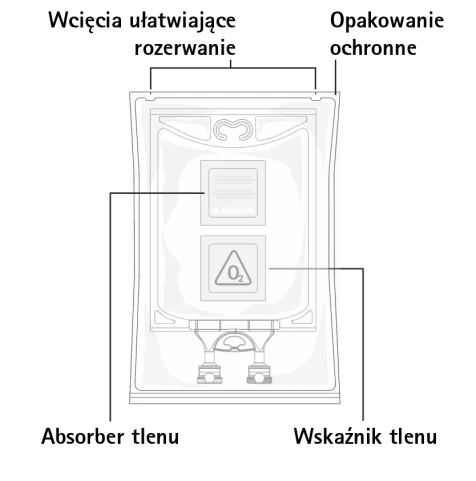
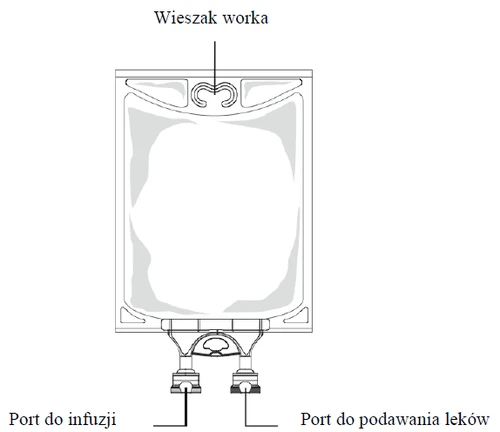
Figure B: Bag
To open:
Remove the bag from the protective packaging by tearing along the slits at the top, and remove the container with solution (Figure 1). Remove the protective packaging, oxygen indicator, and oxygen absorber.
Check for leaks. If a leak is observed,
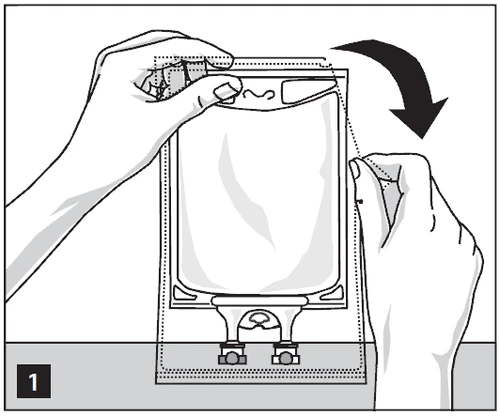
discard the product, as it may no longer be sterile.
To add medication:
The mixture must be prepared under strictly aseptic conditions.
Compatible medications may be added through the medication port (transparent).
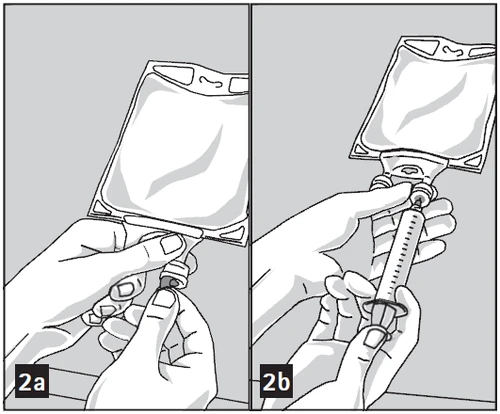
- Prepare the medication port (transparent) by removing the aluminum foil (Figure 2a). Caution: The area beneath the foil of the medication port is sterile.
- Pierce the resealable medication port and inject the additive(s) (Figure 2b).
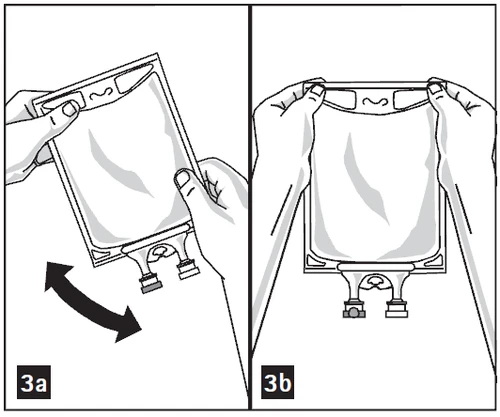
- Mix the solution and medication thoroughly (Figure 3a).
- Prior to piercing, the medication port may be wiped with a disinfectant swab (e.g., isopropyl alcohol).
- Visually inspect the mixture for the presence of particulate matter (Figure 3b).
Preparation for administration:
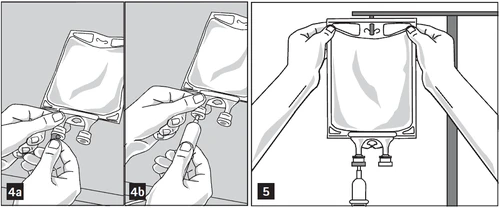
- Remove the aluminum foil from the infusion port (green) at the bottom of the container (Figure 4a) and connect the administration set (Figure 4b): use an infusion set without a vent or close the vent of a vented set. Follow the instructions for use of the infusion set. Caution: The area beneath the foil of the medication port is sterile.
- Hang the bag on an intravenous infusion stand (Figure 5).
Additional information:
The container does not contain polyvinyl chloride, DEHP, or latex.