Ambroxol dr. max
Poland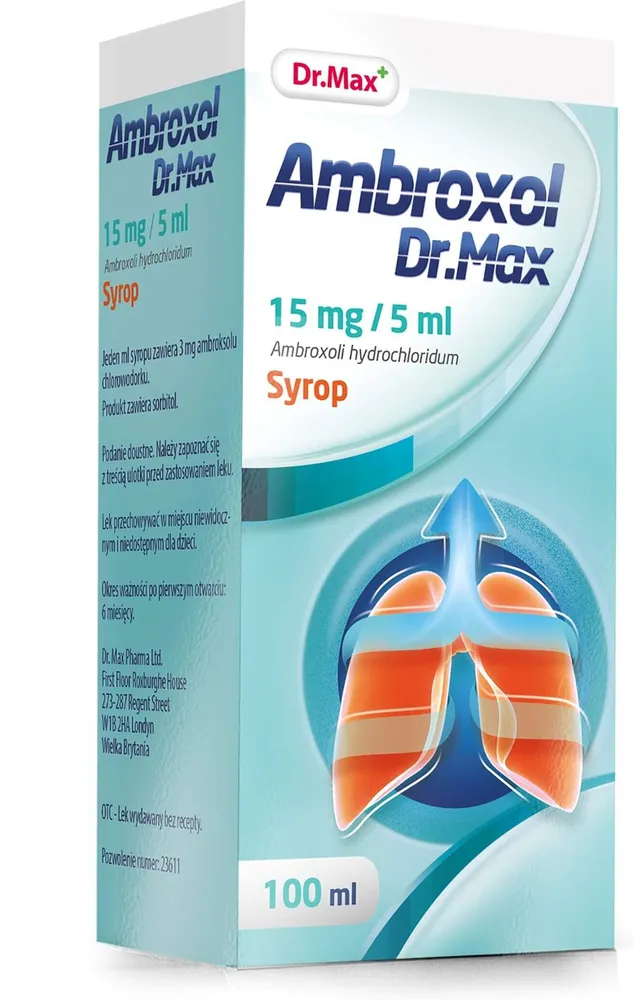
Table of Contents
Package leaflet: Information for the patient
Ambroxol Dr. Max, 15 mg/5 ml, syrup
Ambroxoli hydrochloridum
Please read carefully all the information in this leaflet before taking the medicine, as it contains
important information for the patient.
This medicine should always be taken exactly as described in this patient leaflet or as directed by
your doctor or pharmacist.
- Keep this leaflet so that you can read it again if necessary.
- If you need advice or further information, please consult your pharmacist.
- If you experience any adverse reactions, including any not listed in this leaflet, inform your doctor or pharmacist. See section 4.
- If there is no improvement after 5 days (3 days in children) or if your condition worsens, consult your doctor.
Table of contents:
- What Ambroxol Dr. Max is and what it is used for
- Important information before taking Ambroxol Dr. Max
- How to take Ambroxol Dr. Max
- Possible side effects
- How to store Ambroxol Dr. Max
- Contents of the package and other information
1. What Ambroxol Dr. Max is and what it is used for
This medicine is used in acute and chronic respiratory tract diseases such as: acute recurrent bronchitis, laryngitis and tracheitis, and chronic conditions such as chronic bronchitis and chronic obstructive pulmonary disease (COPD).
Patients with acute respiratory diseases may use this medicine without consulting a doctor. Patients with chronic respiratory diseases should use this medicine for long-term treatment only after consulting a doctor.
Acute respiratory diseases are initially usually accompanied by a dry, irritating cough and even a burning sensation in the chest due to bronchial inflammation, as well as hoarseness due to laryngitis. In the next stage, moist mucus forms and expectoration occurs. Both types of cough—dry, irritating cough and wet, productive cough with mucus expectoration—may occur in chronic diseases.
Ambroxol, the active substance in Ambroxol Dr. Max, increases mucus secretion in the respiratory tract, promotes the formation of pulmonary surfactant (a substance present on the inner surface of lung alveoli), and stimulates ciliary activity, facilitating mucus transport. These actions result in significant mucus liquefaction, improved mucus transport and clearance (mucociliary clearance), thereby facilitating expectoration and relieving cough.
Ambroxol Dr. Max is particularly used in the treatment of children under 12 years of age, but may also be used by adults and adolescents. Ambroxol Dr. Max may be administered to children under 2 years of age only upon prior recommendation by a doctor.
If there is no improvement after 5 days (3 days in children) or if your condition worsens, consult your doctor.
2. Important information before using Ambroxol Dr. Max
When not to use Ambroxol Dr. Max
- if the patient is allergic to ambroxol hydrochloride or any of the other ingredients of this medicine (listed in section 6).
Warnings and precautions
Before starting treatment with Ambroxol Dr. Max, discuss with your doctor or pharmacist:
- if cough has been present for a prolonged period,
- if bronchial asthma is present or if the patient has acute asthma attacks,
- if the patient has diagnosed liver or kidney function disorders,
- if the patient has peptic ulcer disease of the stomach or duodenum.
Severe skin reactions associated with ambroxol use have been reported. If a rash occurs (including lesions on mucous membranes, e.g. in the oral cavity, throat, nose, eyes, genital organs), discontinue use of Ambroxol Dr. Max and contact a doctor immediately.
Ambroxol Dr. Max and other medicines
Inform your doctor or pharmacist about all medicines currently taken, recently taken, or planned to be taken.
Concomitant use of Ambroxol Dr. Max with antibiotics (amoxicillin, cefuroxime, erythromycin) increases antibiotic concentrations in lung tissue, which may be a beneficial effect.
Concomitant use of Ambroxol Dr. Max with antitussive medicines (e.g. codeine) is not recommended, as these medicines suppress the expectoration of liquefied mucus, which may lead to serious airway obstruction.
No clinically significant adverse interactions with other medicines have been reported.
Pregnancy, breastfeeding and fertility
If the patient is pregnant or breastfeeding, suspects she may be pregnant, or is planning to have a child, she should consult a doctor or pharmacist before using this medicine.
Use of Ambroxol Dr. Max syrup during pregnancy, especially during the first three months of pregnancy, is not recommended.
Use of Ambroxol Dr. Max during breastfeeding is not recommended, as ambroxol passes into breast milk.
Driving and operating machinery
Ambroxol Dr. Max has no effect or negligible effect on the ability to drive vehicles and operate machinery.
Ambroxol Dr. Max contains sorbitol
This medicine contains 3500 mg of sorbitol in each 10 ml of syrup, corresponding to 350 mg/ml.
The maximum recommended daily dose (30 ml) contains 10.5 g of sorbitol. Sorbitol is a source of fructose.
If the patient (or his child) has previously been diagnosed with intolerance to certain sugars or hereditary fructose intolerance, a rare genetic disorder in which the patient's body cannot break down fructose, the patient should consult a doctor before taking this medicine or giving it to a child. Sorbitol may cause gastrointestinal discomfort and may have a mild laxative effect.
Ambroxol Dr. Max contains sodium benzoate
This medicine contains 15 mg of sodium benzoate in each 10 ml of syrup, corresponding to 1.5 mg/ml.
Sodium benzoate may increase the risk of jaundice (yellowing of the skin and whites of the eyes) in newborns (up to 4 weeks of age).
Ambroxol Dr. Max contains sodium
This medicine contains less than 1 mmol (23 mg) of sodium per dose, meaning the medicine is considered "sodium-free".
3. How to use Ambroxol Dr.Max
This medicine should always be taken exactly as described in this patient leaflet or as directed by your doctor or pharmacist. If in doubt, consult your doctor or pharmacist.
Recommended dose:
- Adults and adolescents over 12 years of age: 10 ml 3 times daily
- Children aged 6–12 years: 5 ml 2–3 times daily
- Children aged 2–5 years: 2.5 ml 3 times daily
- Children under 2 years of age: 2.5 ml 2 times daily
To measure the correct amount of medicinal product, use the syringe provided in the package.
Administration method:
1
1.


- Press the child-resistant safety cap down (1) and unscrew it counterclockwise (2).
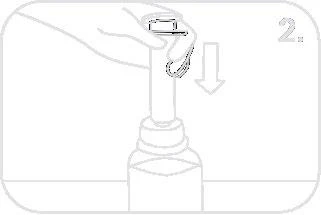
- Insert the dosing syringe into the neck of the bottle.
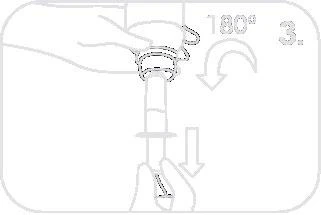
- Invert the bottle with the dosing syringe attached 180°. Then pull the plunger of the dosing syringe downward and draw up the required volume according to the markings on the dosing syringe (ml).
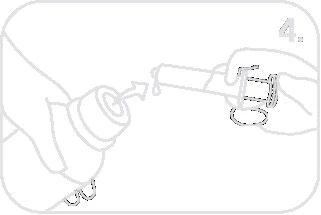
- Return the bottle to an upright position and remove the dosing syringe.
Ambroxol Dr.Max may be administered to children under 2 years of age only upon prior recommendation by a physician.
Ambroxol Dr.Max syrup is intended for oral use only.
Ambroxol Dr.Max syrup may be taken regardless of meals. It is recommended to drink a glass of water after taking the medicine and to maintain adequate fluid intake throughout the day.
The duration of treatment with Ambroxol Dr.Max is determined individually, depending on the indication and type of disease. However, if symptoms of acute respiratory disease do not improve or worsen within 5 days (within 3 days in children), medical advice must be sought.
Do not take the medicine for longer than 10 days without consulting a physician.
Long-term use of Ambroxol Dr.Max in chronic respiratory diseases is possible only after consultation with a physician.
Use of a higher than recommended dose of Ambroxol Dr.Max
If a higher than recommended dose of Ambroxol Dr.Max has been taken, medical advice should be sought from a physician or pharmacist. Specific symptoms of overdose have not been observed in humans so far. Based on cases of accidental overdose and/or reports of improper use, symptoms consistent with the known adverse effects of Ambroxol Dr.Max administered at recommended doses have been observed, which may require symptomatic treatment.
Missed dose of Ambroxol Dr.Max
If a dose has been missed, it should be taken as soon as possible, unless it is almost time for the next dose.
In that case, the missed dose should be skipped and the next dose taken at the usual time. Do not administer a double dose to make up for a missed dose.
If you have any further questions concerning the use of this medicine, consult your physician or pharmacist.
4. Possible adverse reactions
Like all medicines, this medicine can cause adverse reactions, although not everyone will experience them.
Common adverse reactions: may occur in less than 1 in 10 people
- taste disturbances
- sensation of numbness in the throat area
- nausea
- numbness of lips and tongue.
Uncommon adverse reactions: may occur in less than 1 in 100 people
- diarrhoea
- vomiting
- indigestion
- dryness of the oral mucosa
- abdominal pain.
Rare adverse reactions: may occur in less than 1 in 1,000 people
- hypersensitivity reactions
- rash
- urticaria.
Adverse reactions with unknown frequency: frequency cannot be determined from available data
- anaphylactic reactions, including anaphylactic shock, angioedema (rapid swelling of the skin, subcutaneous tissue, mucous membranes or submucosal tissues), and pruritus (itching of the skin)
- severe skin reactions (including erythema multiforme, Stevens-Johnson syndrome, toxic epidermal necrolysis, and acute generalised exanthematous pustulosis)
- dry throat.
Reporting of adverse reactions
If any adverse reactions occur, including any adverse reactions not listed in this leaflet, inform a doctor, pharmacist or nurse. Adverse reactions can be reported directly to the Department of Monitoring of Adverse Drug Reactions of the Office for Registration of Medicinal Products, Medical Devices and Biocidal Products, Al. Jerozolimskie 181C, 02-222 Warsaw, telephone: +48 22 49 21 301, fax: +48 22 49 21 309, website: https://smz.ezdrowie.gov.pl
Adverse reactions can also be reported to the marketing authorisation holder.
Reporting adverse reactions helps provide more information on the safety of this medicine.
5. How to store Ambroxol Dr.Max
Keep this medicine out of the sight and reach of children.
Do not use this medicine after the expiry date stated on the label and carton after EXP.
The expiry date refers to the last day of the stated month.
No special storage instructions apply.
Shelf life after first opening of the bottle: 6 months.
Medicines must not be disposed of via wastewater or household waste. Ask your pharmacist how to dispose of medicines no longer required. Such measures help protect the environment.
6. Contents of the pack and other information
What Ambroxol Dr. Max contains
- The active substance is ambroxol hydrochloride: 3 mg per 1 ml of syrup.
- The other ingredients (excipients) are: sodium benzoate (E 211), sorbitol (E 420), sucralose, hydroxyethylcellulose, citric acid monohydrate (E 330), strawberry flavour 501 440 T (containing propylene glycol and flavouring substances), and purified water.
What Ambroxol Dr. Max looks like and contents of the pack
Ambroxol Dr. Max is a colourless or slightly yellow liquid with a strawberry odour.
Ambroxol Dr. Max syrup is supplied in an amber glass bottle with child-resistant closure, closed with a cap, packed in a cardboard box. Each pack contains a plastic oral syringe.
Bottle sizes: 100 ml, 200 ml.
Not all pack sizes may be marketed.
Marketing Authorisation Holder
Dr. Max Pharma s.r.o.
Na Florenci 2116/15
Nové Město
110 00 Prague 1
Czech Republic
Tel.: (+420) 516 770 199
Manufacturer:
Balkanpharma – Troyan AD
1 Krayrechna Str.
5600 Troyan
Bulgaria
This medicinal product is authorised in the European Economic Area countries under the following names:
Czech Republic Ambroxol Dr.Max 15 mg/5 ml
Poland Ambroxol Dr.Max
Slovakia Ambroxol Dr.Max 15 mg/5 ml syrup