Ambrolytin max
Poland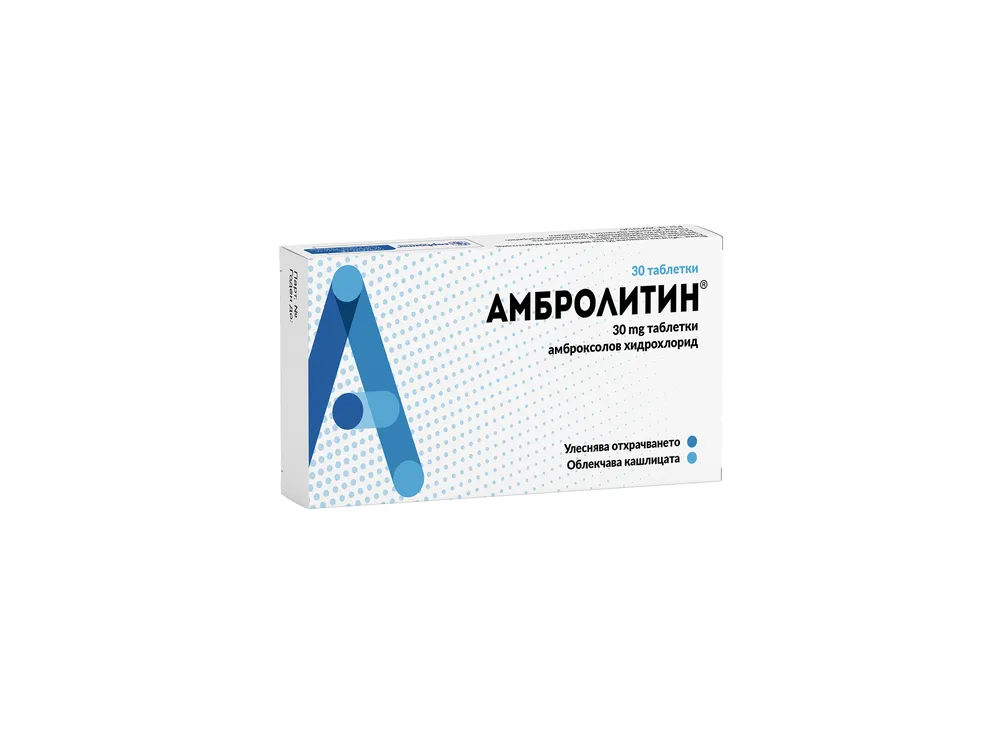
Table of Contents
Package leaflet: Information for the patient
Ambrolytin max, 30 mg, tablets
Ambroxol hydrochloride
Please read the entire leaflet carefully before using the medicine, as it contains
important information for the patient.
This medicine should always be used exactly as described in this patient leaflet or as directed by
the physician or pharmacist.
- Keep this leaflet so that you can read it again if necessary.
- If you need advice or further information, consult your pharmacist.
- If you experience any adverse reactions, including any adverse reactions not listed in this leaflet, inform your doctor. See section 4.
- If there is no improvement after 4 to 5 days, or if your condition worsens, consult your doctor.
Table of contents
- What Ambrolytin max is and what it is used for
- Important information before taking Ambrolytin max
- How to take Ambrolytin max
- Possible side effects
- How to store Ambrolytin max
- Contents of the pack and other information
1. What Ambrolytin max is and what it is used for
Ambrolytin max tablets contain the active substance ambroxol hydrochloride, which liquefies thick mucus in the bronchi produced in various respiratory tract diseases.
Ambrolytin max tablets are used in children over 6 years of age, adolescents and adults to facilitate expectoration and relieve cough in acute and chronic diseases of the bronchi and lungs, in which thick mucus is formed in the airways.
If there is no improvement after 4 to 5 days, or if your condition worsens, consult your doctor.
2. Important information before taking Ambrolytin max
When not to use Ambrolytin max
- if the patient is allergic to ambroxol hydrochloride or any of the other ingredients of this medicine (listed in section 6);
- in children under 6 years of age.
Warnings and precautions
Before starting to take Ambrolytin max, discuss this with your doctor or
pharmacist:
- if the patient has kidney function disorders or severe liver function disorders;
- if the patient has previously suffered from peptic ulcer disease;
- if the patient has bronchial dysfunction and large amounts of secretion (for example, in a condition called primary ciliary dyskinesia).
Severe skin reactions associated with ambroxol hydrochloride have been reported. If a rash occurs (including lesions on mucous membranes, e.g. in the mouth, throat, nose, eyes, genital organs), discontinue use of Ambrolytin max and contact your doctor immediately.
Ambrolytin max and other medicines
Inform your doctor or pharmacist about all medicines currently taken or recently taken, as well as any medicines the patient plans to take.
Concurrent use of Ambrolytin max and antitussive (cough suppressant) medicines is not recommended.
No clinically significant adverse effects have been reported during concomitant use with other medicines.
Pregnancy and breastfeeding
If the patient is pregnant or breastfeeding, suspects she may be pregnant, or is planning to have a child, she should consult her doctor or pharmacist before using this medicine.
Pregnancy
Use of Ambrolytin max is not recommended during pregnancy, especially during the first three months.
Breastfeeding
Use of Ambrolytin max is not recommended in breastfeeding women, as ambroxol hydrochloride passes into breast milk.
Driving and operating machinery
Post-marketing data do not indicate that this medicine affects the ability to drive or operate machinery.
No studies on the effect of the medicine on the ability to drive and operate machinery have been conducted.
Ambrolytin max contains monohydrate lactose
If the patient has previously been diagnosed with intolerance to certain sugars, the patient should consult a doctor before taking this medicine.
3. How to use Ambrolytin max
This medicine should always be used exactly as described in this patient information leaflet or as directed by your doctor or pharmacist. If in doubt, consult your doctor or pharmacist.
Recommended dose:
Adults
1 tablet (30 mg ambroxol) 3 times daily for the first 2–3 days, then 1 tablet (30 mg ambroxol) 2 times daily.
The daily dose may be increased to 2 tablets (60 mg ambroxol) 2 times daily.
Adolescents over 12 years of age
1 tablet (30 mg ambroxol) 3 times daily for the first 2–3 days, then 1 tablet (30 mg ambroxol) 2 times daily.
Children aged 6 to 12 years
½ tablet (15 mg ambroxol) 2–3 times daily.
This dosing regimen is appropriate for the treatment of acute respiratory disorders and for initial treatment of chronic conditions for up to 14 days.
The duration of treatment without consultation with a doctor should not exceed 4–5 days.
Ambrolytin max should be taken after meals, with a sufficient amount of fluid (e.g. water, tea or fruit juice).
If you take more Ambrolytin max than you should
If you take more Ambrolytin max than recommended, consult your doctor or pharmacist immediately. Symptoms of overdose have not been described in humans. Symptoms observed after accidental overdose or improper use are consistent with the known adverse effects of the recommended doses of Ambrolytin max and may require symptomatic treatment.
If you forget to take Ambrolytin max
If you miss a dose, take it as soon as possible. Do not take a double dose to make up for the missed dose. Continue taking the medicine according to the recommended schedule.
If you have any further questions about the use of this medicine, consult your doctor or pharmacist.
4. Possible adverse reactions
Like all medicines, this medicine can cause adverse reactions, although not everyone will experience them.
Common (may occur in less than 1 in 10 people):
- nausea
Uncommon (may occur in less than 1 in 100 people):
- vomiting, diarrhoea, dyspepsia, abdominal pain.
Rare (may occur in less than 1 in 1,000 people):
- hypersensitivity reactions;
- rash, urticaria.
Frequency not known (cannot be estimated from the available data):
- anaphylactic reactions, including anaphylactic shock, angioedema (rapid swelling of the skin, subcutaneous tissue, mucous membranes or submucosal tissues), and pruritus;
- severe skin-related adverse reactions (including erythema multiforme, Stevens-Johnson syndrome, toxic epidermal necrolysis, and acute generalised exanthematous pustulosis).
Reporting of adverse reactions
If any adverse reactions occur, including any adverse reactions not listed in this leaflet, inform a doctor or pharmacist. Adverse reactions can be reported directly to the Department for Monitoring Adverse Drug Reactions of the Office for Registration of Medicinal Products, Medical Devices and Biocidal Products:
Al. Jerozolimskie 181C, 02-222 Warsaw, phone: +48 22 49 21 301, fax: +48 22 49 21 309,
website: https://smz.ezdrowie.gov.pl
Adverse reactions can also be reported to the marketing authorisation holder.
Reporting adverse reactions helps to provide more information on the safety of the medicine.
5. How to store Ambrolytin max
Keep the medicine out of sight and reach of children.
Do not use this medicine after the expiry date stated on the packaging following the abbreviation
"EXP". The expiry date refers to the last day of the specified month.
Do not store above 25°C.
Medicines must not be disposed of via wastewater or household waste. Ask your pharmacist how to dispose of medicines no longer in use. This will help protect the environment.
6. Contents of the pack and other information
What Ambrolytin max contains
The active substance is ambroxol hydrochloride.
Each tablet contains 30 mg of ambroxol hydrochloride.
The other ingredients are: monohydrate lactose; maize starch; colloidal anhydrous silica;
magnesium stearate.
What Ambrolytin max looks like and contents of the pack
Ambrolytin max is white or almost white, round, flat tablets with a diameter of 9 mm, bevelled on both sides, with a score line. The tablet can be divided into equal doses.
Tablets are packed 10 (ten) per PVC/Aluminium or PVC/PVdC/Aluminium blister.
One folding carton contains 2 (two), 3 (three), or 5 (five) blisters and the patient leaflet.
Not all pack sizes may be marketed.
Marketing Authorisation Holder
Sopharma Warszawa Sp. z o.o.
Al. Jerozolimskie 136, 02-305 Warsaw, Poland
Manufacturer
SOPHARMA AD
16, Iliensko Shosse str., 1220 Sofia, Bulgaria
This medicinal product is authorised in the European Economic Area countries under the following names:
Bulgaria: Амбролитин 30 mg таблетки
Estonia: Ambrolytin
Latvia: Ambrolytin 30 mg tabletes
Poland: Ambrolytin max