Ambisome liposomal
Poland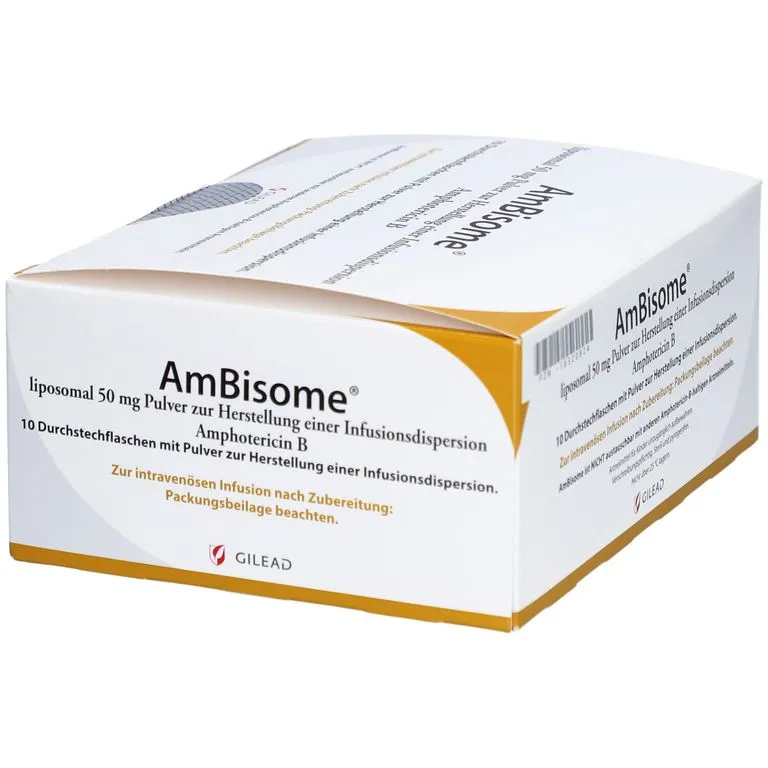
Table of Contents
- Package leaflet: Information for the patient
- 1. What AmBisome liposomal is and what it is used for
- 2. Important information before using AmBisome liposomal
- 3. How to use AmBisome liposomal
- 4. Possible adverse reactions
- 5. How to store AmBisome liposomal
- 6. Contents of the pack and other information
- INFORMATION INTENDED EXCLUSIVELY FOR PROFESSIONAL MEDICAL PERSONNEL
Package leaflet: Information for the patient
AmBisome liposomal
50 mg powder for dispersion for infusion
Amphotericinum B
Amphotericin B liposomal
Please read all of this leaflet carefully before this medicine is administered because it contains
important information for you.
- Keep this leaflet, as you may need to read it again.
- If you have any further questions, please ask your doctor.
- If you experience any side effects, including any not listed in this leaflet, tell your doctor or nurse. See section 4.
Contents of the leaflet
- What AmBisome liposomal is and what it is used for
- Before you are given AmBisome liposomal
- How AmBisome liposomal is given
- Possible side effects
- How to store AmBisome liposomal
- Contents of the pack and other information
1. What AmBisome liposomal is and what it is used for
What AmBisome liposomal is
AmBisome liposomal is an antifungal antibiotic. The active substance in AmBisome
liposomal is amphotericin B in liposomes.
AmBisome liposomal is administered by intravenous infusion (by drip) in hospital by a
doctor or nurse.
Indications for AmBisome liposomal
- Systemic and/or deep fungal infections – affecting one or more internal organs.
- Suspected fungal infection in patients with fever and neutropenia. Neutropenia is a condition in which there is too low a number of white blood cells called neutrophils in the blood. These cells are important in fighting infections. Neutropenia may be a side effect of anticancer treatment. Before administering AmBisome liposomal, your doctor will check whether the fever is caused by bacteria or viruses. You have likely already received at least one antibiotic. Persistent fever despite treatment may be due to a fungal infection.
Infections effectively treated with AmBisome liposomal include: disseminated candidiasis,
aspergillosis, mucormycosis, cryptococcal meningitis, and visceral leishmaniasis.
This medicine should not be used to treat common fungal infections without clinical symptoms,
diagnosed solely on the basis of positive skin tests or serological findings.
2. Important information before using AmBisome liposomal
When not to use AmBisome liposomal
The doctor will not administer AmBisome liposomal
- If the patient has hypersensitivity (allergy) to amphotericin B or any of the other components of AmBisome liposomal, unless in the doctor's opinion there is a life-threatening condition and AmBisome liposomal is the only possible treatment option. The medicine should not be used if the patient has previously experienced a severe anaphylactic or anaphylactoid reaction to AmBisome liposomal – an immediate, life-threatening allergic reaction, which typically manifests as sudden skin redness, itching, nausea and vomiting, swelling of the face, tongue, mouth, and airways, and swelling that often makes breathing difficult.
Warnings and precautions
The doctor will exercise special caution when administering AmBisome liposomal. Please inform the doctor:
- If the patient experiences a severe allergic reaction (anaphylactic), the doctor will recommend discontinuing the infusion (see section 4. "Possible side effects").
- If the patient experiences other reactions that may be related to intravenous infusion, the doctor may decide to reduce the infusion rate and extend the infusion time of AmBisome liposomal (to approximately 2 hours). To treat or prevent infusion-related reactions, the doctor may also administer medications to the patient, such as an antihistamine, a pain reliever, and/or an anti-inflammatory or immunosuppressive agent (see section 4. "Possible side effects").
- If the patient is taking other medicines that may cause kidney damage. See: "AmBisome liposomal and other medicines". AmBisome liposomal may cause kidney damage. The doctor or nurse will take blood samples before and during treatment with AmBisome liposomal to monitor creatinine levels (a substance indicating kidney function) and electrolytes (especially potassium and magnesium) – abnormal levels of these substances may occur in patients with impaired kidney function. This is particularly important if the patient has pre-existing kidney damage or is taking other medicines that may cause kidney damage. Blood samples will also be analyzed for changes in liver function and the body's ability to produce blood cells and platelets.
- If blood test results indicate kidney dysfunction or other significant abnormalities, the doctor may reduce the dose of AmBisome liposomal or discontinue treatment.
- If blood test results show low potassium levels in the patient's blood, the doctor may prescribe potassium supplements to be administered during treatment with AmBisome liposomal.
- If blood test results indicate high potassium levels in the patient's blood. The patient may experience irregular heartbeat, sometimes severe.
- If the patient has recently or is currently receiving white blood cell transfusions. If AmBisome liposomal is administered during or shortly after white blood cell transfusion, sudden, severe pulmonary complications may occur. To reduce the risk of such complications, the doctor will recommend administering the infusions with as long an interval as possible and will monitor the patient's lung function.
- If the patient is undergoing hemodialysis or ultrafiltration due to kidney failure, the doctor will recommend administering AmBisome liposomal after completion of these procedures.
AmBisome liposomal and other medicines
Tell the doctor about all medicines the patient is currently taking or has recently taken, as well as any medicines the patient plans to take.
Medicines that may cause kidney damage
- Immunosuppressive medicines (which weaken the body's natural defense mechanisms), e.g. cyclosporine.
- Certain antibiotics known as aminoglycosides, including gentamicin, neomycin, and streptomycin.
- Pentamidine, a medicine used to treat pneumonia in patients with AIDS and leishmaniasis.
If the patient is taking any of these medicines, tell the doctor. AmBisome liposomal may worsen kidney damage caused by these medicines. If the patient is taking these medicines, the doctor or nurse will regularly take blood samples to monitor kidney function.
Medicines that may cause decreased potassium levels
- Corticosteroids, anti-inflammatory medicines that suppress the immune system.
- Corticotropin (ACTH), a hormone regulating the body's production of corticosteroids in response to stress.
- Diuretics, which increase urine output, including furosemide.
- Cardiac glycosides (medicines derived from foxglove), used in the treatment of heart failure. AmBisome liposomal may exacerbate such side effects of cardiac glycosides as changes in heart rhythm.
- Skeletal muscle relaxants, usually used during surgery, such as tubocurarine. AmBisome liposomal may enhance muscle-relaxing effects. If the patient is taking any of these medicines, tell the doctor.
Other medicines
- Antifungal medicines, e.g. flucytosine. AmBisome liposomal may worsen flucytosine side effects – disturbances in the body's production of new blood cells, which may be detected in blood tests. Certain anticancer medicines, e.g. methotrexate, doxorubicin, carmustine, and cyclophosphamide. Concurrent use with AmBisome liposomal may cause kidney damage, wheezing, breathing difficulties, and hypotension. White blood cell (leukocyte) transfusions may cause sudden, severe pulmonary complications during or shortly after transfusion if the patient has received AmBisome liposomal. The doctor will recommend administering these medicines with as long an interval as possible and will monitor lung function. This will reduce the risk of pulmonary complications. If the patient is taking any of these medicines, tell the doctor.
Pregnancy and breastfeeding
If the patient is pregnant, breastfeeding, suspects she may be pregnant, or is planning to have a child, she should inform the doctor before starting treatment with AmBisome liposomal.
The doctor will prescribe AmBisome liposomal to a pregnant patient only if he or she considers that the benefits of treatment outweigh the potential risks to the patient and her unborn child.
It is not known whether the medicine passes into human milk. When making a decision about breastfeeding during treatment with AmBisome liposomal, the doctor will consider: the potential risks to the child, the benefits of breastfeeding for the child, and the benefits of AmBisome liposomal treatment for the mother.
Driving and operating machinery
No studies have been conducted on the effects on driving and operating machinery.
Some side effects of AmBisome liposomal may affect the ability to drive and operate machinery (see section 4. "Possible side effects"). Patients should not drive or operate machinery if they experience seizures, heart rhythm disturbances, or other adverse symptoms that may impair psychomotor performance.
AmBisome liposomal contains sucrose and sodium
Sucrose
Each vial of AmBisome liposomal contains approximately 900 mg of sucrose (sugar). If the patient has diabetes or has previously been diagnosed with intolerance to certain sugars, he or she should inform the doctor before starting treatment with the medicine.
Sodium
The medicine contains less than 1 mmol (23 mg) of sodium per vial, meaning the medicine is considered "sodium-free".
3. How to use AmBisome liposomal
AmBisome liposomal is intended for administration only by a physician or trained medical personnel. It is administered intravenously (by infusion, i.e. via intravenous drip). AmBisome liposomal must not be administered by any other route.
To prepare the infusion, AmBisome liposomal must first be dissolved in sterile water for injections, then diluted with a glucose-containing solution. Do not mix AmBisome liposomal with saline solutions or with other drugs or electrolytes.
The dosage of AmBisome liposomal is determined individually by the physician for each patient, depending on body weight and indication.
AmBisome liposomal product MUST NOT be used interchangeably with other products containing amphotericin B.
Use in adults
Systemic and/or deep fungal infections – one or more internal organs
Treatment is usually initiated with a daily dose of 3 mg/kg body weight for at least 14 days. The physician may decide to increase the daily dose of the drug to 5 mg/kg body weight.
Mucormycosis
In suspected or confirmed mucormycosis, the initial dose is usually 5 to 10 mg/kg body weight once daily. Patients with central nervous system involvement or organ transplant recipients should receive a dose of 10 mg/kg body weight once daily. The duration of treatment will be determined individually by the physician.
Cryptococcal meningitis
Induction therapy (14 days) with high-dose in HIV-infected patients:
Day 1: single dose of 10 mg/kg body weight of AmBisome liposomal, in combination with flucytosine 100 mg/kg body weight/day and fluconazole 1200 mg/day;
Days 2–14: continue treatment with flucytosine 100 mg/kg body weight/day and fluconazole 1200 mg once daily.
Maintenance therapy:
After the initial 2-week induction phase, patients should receive fluconazole 800 mg daily for 8 weeks, followed by
after 8 weeks: fluconazole 200 mg daily, according to the treating physician's discretion.
Visceral leishmaniasis
Patients with normally functioning immune system: administer 3 mg/kg body weight once daily on days 1–5, 14, and 21.
Immunocompromised patients: administer 4 mg/kg body weight once daily on days 1–5, 10, 17, 24, 31, and 38.
Suspected fungal infections in patients with fever and neutropenia
Treatment is initiated with a daily dose of 3 mg/kg body weight for 10 to 14 days or until resolution of neutropenia.
Use in children and adolescents
AmBisome liposomal has been administered to children aged 1 month to 18 years.
The dosage of AmBisome liposomal for children is calculated similarly to adults, based on body weight in mg/kg. The efficacy and safety of AmBisome liposomal in infants under 1 month of age have not been established.
Use in elderly patients
There is no need to modify the dose or frequency of administration.
Use in patients with renal impairment
AmBisome liposomal has been administered to patients with renal impairment at daily doses of 1 to 5 mg per kilogram of body weight. There is no need to modify the dose or frequency of administration. During treatment with AmBisome liposomal, the physician or nurse will regularly collect blood samples to monitor kidney function.
Duration of infusion
Intravenous infusion usually lasts 30 to 60 minutes, and the patient will be closely monitored during this time. If the dose exceeds 5 mg/kg body weight per day, a 2-hour intravenous infusion is recommended. The recommended concentration of amphotericin B for intravenous infusion is between 0.2 mg/ml and 2 mg/ml.
Administration of a higher than recommended dose of AmBisome liposomal
If the patient suspects that the administered dose of AmBisome liposomal was too high, the physician should be informed immediately.
If you have any further questions about the use of this medicine, please consult your physician.
4. Possible adverse reactions
Like all medicines, this medicine can cause adverse reactions, although not everybody will experience them.
Adverse reactions that may occur during infusion. If a patient experiences a severe
infusion-related reaction, the doctor will stop administration of AmBisome liposomal and will advise
avoiding this medicine in the future.
Very common (may affect more than 1 in 10 people): fever, chills.
Less common infusion-related reactions include: sensation of pressure, chest pain, shortness of breath, bronchospasm causing difficulty in breathing (which may be accompanied by wheezing), skin flushing, rapid heartbeat, hypotension, and musculoskeletal pain (described as joint pain, back pain, or bone pain).
These symptoms usually resolve quickly after stopping the infusion. Such reactions may not occur during subsequent doses of AmBisome liposomal or when the infusion rate is reduced (infusion administered over longer than 2 hours). The doctor may prescribe other medicines to prevent possible infusion-related reactions or to treat their symptoms.
Very common adverse reactions (may affect more than 1 in 10 people)
Feeling tired, confusion, muscle weakness or muscle cramps due to low blood potassium levels.
Nausea or vomiting.
Fever, chills.
Common adverse reactions (may affect up to 1 in 10 people)
Feeling tired, confusion, muscle weakness or muscle cramps due to low blood magnesium, calcium, or sodium levels.
High blood sugar levels.
Headache.
Markedly increased heart rate (tachycardia).
Vasodilation, hypotension, skin flushing.
Shortness of breath.
Diarrhea.
Stomach (abdominal) pain.
Rash.
Chest pain.
Back pain.
Abnormal liver or kidney function test results detected by blood or urine analysis.
High blood potassium levels.
Uncommon adverse reactions (may affect up to 1 in 100 people)
Subcutaneous haemorrhages, unexplained bruising, and prolonged bleeding after injury.
Severe allergic (anaphylactoid) reaction.
Seizures.
Difficulty breathing, possibly accompanied by wheezing.
Frequency not known (frequency cannot be estimated from available data)
Anaemia (reduced number of red blood cells, with symptoms including excessive fatigue, shortness of breath on minimal physical exertion, and pale skin).
Severe allergic (anaphylactic) and hypersensitivity reactions.
Sudden cardiac arrest and cardiac arrhythmias.
Kidney failure or impaired kidney function. Symptoms include fatigue and reduced urine output.
Severe swelling of the lips, eyes, or tongue.
Muscle pain due to breakdown of striated muscle fibres (rhabdomyolysis).
Musculoskeletal pain (described as joint pain, back pain, or bone pain).
Abnormal blood phosphate level test results. A false positive result indicating elevated blood phosphate levels may occur in patients treated with AmBisome liposomal if their samples are analysed using the special PHOSm reagent method.
If a test result indicates high phosphate levels, repeat testing using a different method may be necessary to confirm the result.
Reporting of adverse reactions
If any adverse reactions occur, including any not listed in this leaflet, inform your doctor or nurse. Adverse reactions can be reported directly to the Department of Monitoring Adverse Drug Reactions, Office for Registration of Medicinal Products, Medical Devices and Biocidal Products
Al. Jerozolimskie 181C
02-222 Warsaw
Phone: +48 22 49 21 301
Fax: +48 22 49 21 309
Website: https://smz.ezdrowie.gov.pl.
Adverse reactions can also be reported to the responsible entity.
Reporting adverse reactions helps provide more information on the safety of the medicine.
5. How to store AmBisome liposomal
Keep this medicine out of the sight and reach of children.
Do not use AmBisome liposomal after the expiry date stated on the
packaging.
Store below 25°C. Store in the original packaging.
Do not retain partially used vials for later use.
Further information on storage of the medicinal product can be found at the end of the leaflet,
in section “Information intended exclusively for healthcare professionals”.
6. Contents of the pack and other information
What AmBisome liposomal contains
The active substance is amphotericin B. Each vial contains 50 mg of amphotericin B in liposomes (small lipid particles).
The other components are:
soybean phosphatidylcholine, hydrogenated (HSPC), distearoylphosphatidylglycerol, in the form of sodium salt (DSPG), cholesterol, sucrose, alpha-tocopherol, disodium succinate hexahydrate, sodium hydroxide, hydrochloric acid.
What AmBisome liposomal looks like and contents of the pack
AmBisome liposomal is a sterile, light yellow lyophilisate (freeze-dried powder) for the preparation of a dispersion for infusion. The medicine is supplied in glass vials with a capacity of 15 ml, 20 ml or 30 ml. Each vial contains 50 mg of the active substance, amphotericin B.
The closure consists of a rubber stopper, aluminium seal and plastic flip-off cap.
Each carton contains 1 vial and 1 membrane filter or 10 vials and 10 membrane filters.
Not all pack sizes may be marketed.
Marketing Authorisation Holder
Gilead Sciences Ireland UC
Carrigtohill
County Cork
T45 DP77
Ireland
Manufacturer
Gilead Sciences Ireland UC
IDA Business & Technology Park
Carrigtohill
County Cork
Ireland
For further information about this medicine, please contact the Marketing Authorisation Holder's representative:
Gilead Sciences Poland Sp. z o.o.
ul. Postępu 17A
02-676 Warsaw
tel.: 22 262 87 02
INFORMATION INTENDED EXCLUSIVELY FOR PROFESSIONAL MEDICAL PERSONNEL
READ THE FOLLOWING TEXT CAREFULLY BEFORE PREPARING THE SOLUTION.
DO NOT use AmBisome liposomal interchangeably with other medicinal products containing amphotericin B.
Only appropriately trained personnel should prepare the AmBisome liposomal solution.
The AmBisome liposomal solution must be prepared using Water for Injections (without bacteriostatic agent) and diluted exclusively with glucose infusion solution (5%, 10%, or 20%).
The use of solutions other than those recommended, or solutions containing a bacteriostatic agent (e.g., benzyl alcohol), may cause precipitation of AmBisome liposomal particles from the solution.
Due to INCOMPATIBILITY, do not dissolve AmBisome liposomal in saline solutions, do not dilute it with saline solutions, and do not administer it through an intravenous line previously used for saline solution, unless the intravenous administration line has been flushed with glucose infusion solution. If this is not possible, AmBisome liposomal must be administered through a separate intravenous line.
DO NOT mix AmBisome liposomal with other drugs or electrolytes.
Aseptic techniques must be strictly followed during solution preparation, as neither AmBisome liposomal nor the fluids used for reconstitution and dilution contain preservatives or bacteriostatic agents.
Preparation of a solution containing 50 mg of amphotericin B
- Add 12 ml of sterile Water for Injections to one vial of AmBisome liposomal to obtain a suspension with an amphotericin B concentration of 4 mg/ml.
- IMMEDIATELY after adding water, VIGOROUSLY SHAKE the vial for 30 seconds to ensure a homogeneous AmBisome liposomal suspension. Check whether solid particles are still visible and continue shaking until a uniform suspension is achieved. Do not administer if precipitation of solid foreign particles is observed.
- Calculate the volume of the prepared AmBisome liposomal suspension (4 mg/ml) required for subsequent dilution (see table below).
- The infusion dispersion is obtained by diluting the prepared AmBisome liposomal suspension with glucose infusion solution (5%, 10%, or 20%) in a ratio of one (1) to nineteen (19) parts, resulting in a final concentration within the recommended range of 2.00 mg/ml to 0.20 mg/ml of amphotericin B in liposomes (see table below).
- Using a sterile syringe, withdraw the calculated volume of the prepared AmBisome liposomal suspension. Using the 5 µm filter supplied with the package, inject it into a sterile container containing the calculated volume of glucose infusion solution (5%, 10%, or 20%).
A membrane filter provided in the infusion set may be used for administering the AmBisome liposomal dispersion by intravenous infusion. However, the average pore size of the filter must not be smaller than 1 micron.
Example preparation of AmBisome liposomal dispersion for intravenous infusion at a dose of 3 mg/kg body weight/day in 5% glucose infusion solution
| Body weight [kg] | Number of vials | Dose of AmBisome liposomal product to be withdrawn for further dilution [mg] | Volume of reconstituted AmBisome liposomal product [ml]* | Preparation of solution at concentration 0.2 mg/ml (dilution 1 in 20) | Preparation of solution at concentration 2.0 mg/ml (dilution 1 in 2) | ||
| Required volume of 5% glucose solution [ml] | Total volume of AmBisome liposomal with 5% glucose solution [ml] | Required volume of 5% glucose solution [ml] | Total volume of AmBisome liposomal with 5% glucose solution [ml] | ||||
| 10 | 1 | 30 | 7.5 | 142.5 | 150 | 7.5 | 15 |
| 25 | 2 | 75 | 18.75 | 356.25 | 375 | 18.75 | 37.5 |
| 40 | 3 | 120 | 30 | 570 | 600 | 30 | 60 |
| 55 | 4 | 165 | 41.25 | 783.75 | 825 | 41.25 | 82.5 |
| 70 | 5 | 210 | 52.5 | 997.5 | 1050 | 52.5 | 105 |
| 85 | 6 | 255 | 63.75 | 1211.25 | 1275 | 63.75 | 127.5 |
To one vial of AmBisome liposomal product (50 mg), add 12 ml of water for injections
to obtain a concentration of amphotericin B in liposomes of 4 mg/ml.
Partially used vials must not be stored for subsequent administration to the patient.
Any unused product or waste material should be disposed of in accordance with
local regulations.
Shelf life after reconstitution
Since the product does not contain preservatives, from a microbiological standpoint,
AmBisome liposomal should be used immediately after reconstitution with water or
dilution with glucose solution.
The person administering the medicine is responsible for the storage conditions and duration
after opening and before administration to the patient.
Shelf life of the medicinal product after reconstitution with water for injections:
24 hours at 2°C–8°C, provided the product was reconstituted under controlled and validated aseptic conditions.
The solution may be stored under conditions where its chemical and physical stability has been confirmed, i.e.:
- in glass vials: 24 hours at 25±2°C or up to 7 days at 2°C–8°C;
- in polypropylene syringes: up to 7 days at 2°C–8°C.
Do not store partially used vials for later use.
Shelf life after dilution with glucose solution
Storage in PVC or POE (polyolefin) infusion bags – according to the data in the table below.
Stability of the product after reconstitution with water for injections and after further dilution
with glucose solution (in PVC or polyolefin bags)
| Solvent | Dilution ratio | Concentration of amphotericin B [mg/ml] | Stability at 2ºC–8ºC | Stability at 25±2ºC |
|---|---|---|---|---|
| 5% glucose solution (D5W) | 1 in 2 1 in 8 1 in 20 | 2.0 0.5 0.2 | 7 days 7 days 4 days | 48 hours 48 hours 24 hours |
| 10% glucose solution (D10W) | 1 in 2 | 2.0 | 48 hours | 72 hours |
| 20% glucose solution (D20W) | 1 in 2 | 2.0 | 48 hours | 72 hours |
Store in PVC or POE (polyolefin) infusion bags at 25±2ºC or 2ºC-8ºC. Do not freeze.