Alutard sq
Poland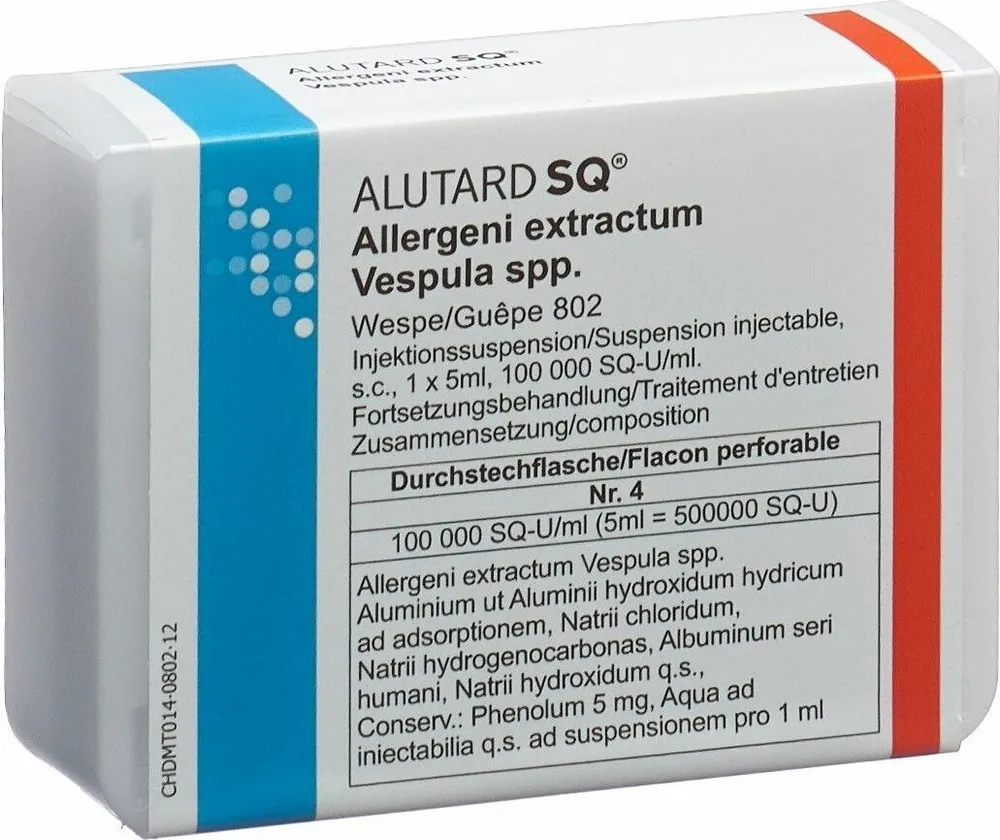
Table of Contents
- Package leaflet: Information for the patient
- 1. What ALUTARD SQ is and what it is used for
- 2. Important information before using ALUTARD SQ
- 3. How to use ALUTARD SQ
- 4. Possible adverse reactions
- 5. How to store ALUTARD SQ
- 6. Contents of the pack and other information
- Information intended exclusively for healthcare professionals:
Package leaflet: Information for the patient
ALUTARD SQ
injection suspension
maintenance treatment: 100 SQ-U/ml, 1000 SQ-U/ml, 10,000 SQ-U/ml, 100,000 SQ-U/ml
maintenance treatment: 100,000 SQ-U/ml
Please read this leaflet carefully before using the medicine, as it contains
important information for the patient.
- Keep this leaflet, so that you can read it again if necessary.
- If you have any doubts, please consult your doctor, pharmacist or nurse.
- This medicine has been prescribed for a specific individual. Do not pass it on to others. The medicine may harm another person, even if their symptoms are the same.
- If any adverse reactions occur, including any possible adverse reactions not listed in this leaflet, inform your doctor, pharmacist or nurse. See section 4.
Table of contents:
- What ALUTARD SQ is and what it is used for
- Important information before using ALUTARD SQ
- How to use ALUTARD SQ
- Possible side effects
- How to store ALUTARD SQ
- Contents of the pack and other information
1. What ALUTARD SQ is and what it is used for
ALUTARD SQ is intended for the treatment of allergic diseases mediated by specific immunoglobulin E (IgE).
2. Important information before using ALUTARD SQ
When not to use ALUTARD SQ
- if the patient is allergic to any of the other ingredients of this medicine (listed in section 6).
- if the patient has an immune system disorder, is taking medicines that suppress the immune system, or has a malignant disease.
- if the patient has recently had an asthma attack and/or asthma symptoms have worsened recently, e.g. increased daytime symptoms, nocturnal awakenings, increased need for medication and/or limitation of daily activities.
You should consult a doctor, even if the above warnings relate to conditions that occurred
in the past.
Warnings and precautions
Before starting treatment with ALUTARD SQ, consult a doctor, pharmacist, or
nurse.
On the day of injection, avoid significant physical exertion, hot baths,
and alcohol consumption.
Before starting treatment with ALUTARD SQ, tell your doctor if:
- Any adverse reaction occurred at the site of the last injection.
- The patient is being treated with tricyclic antidepressants.
- The patient is being treated with monoamine oxidase inhibitors (MAO) for depression or catechol-O-methyltransferase (COMT) inhibitors for Parkinson's disease.
- The patient has chronic heart, lung, or kidney disease.
- The patient is taking ACE inhibitors, e.g. for high blood pressure,
- The patient is taking beta-blockers, e.g. to reduce blood pressure.
- The patient has fever or other signs of infection.
- The patient has experienced symptoms of an allergic reaction, such as: fever, asthma, or rash within the last few days before the injection.
After injection of ALUTARD SQ:
- The patient must remain under medical observation at the healthcare facility for 30 minutes after the injection.
- If symptoms of a severe allergic reaction occur, such as hives, difficulty swallowing or breathing, voice changes, drop in blood pressure, or sensation of a foreign body in the throat, seek immediate medical help.
- If there is a marked worsening of asthma symptoms, seek immediate medical help.
- Before each allergen injection, the doctor should check the volume and date of the previous injection (interval between doses).
- If an allergic reaction occurred after the last injection, inform the doctor, as this may indicate the need for a lower dose (dose reduction).
- Avoid taking other medicines containing aluminium during treatment with ALUTARD SQ, e.g. antacids.
- If the patient has elevated serum tryptase levels and/or has mastocytosis, the risk and severity of adverse reactions may be higher.
- If the patient has mastocytosis, the effectiveness of the treatment may be lower than in the general population of patients allergic to insect venoms.
Children and adolescents
Children aged 5 years and older: data on treatment efficacy in children are limited; however, safety data do not indicate a higher risk than in adults.
Children under 5 years of age: the doctor will carefully assess the need for treatment.
The dose of the injected medicine should be adjusted or the injection postponed in the following cases:
- Occurrence of fever or other signs of infection.
- Occurrence of allergic symptoms within the last 3–4 days.
- Previous occurrence of adverse reactions (local or systemic).
- Exacerbation of atopic dermatitis.
- Receipt of another vaccine.
ALUTARD SQ and other medicines
Tell your doctor about all medicines currently used or recently used, as well as any medicines the patient plans to take.
Inform your doctor about the use of antiallergic medicines such as antihistamines or corticosteroids, as they may adversely affect treatment.
In such cases, the doctor may consider it necessary to adjust the dose of ALUTARD SQ.
When receiving other vaccinations, e.g. prophylactic vaccines, an interval of at least one week should be maintained before and after the injection of ALUTARD SQ.
If undergoing concurrent treatment with allergens other than ALUTARD SQ, injections should be administered sequentially into each arm. Wait at least 30 minutes between consecutive injections.
During treatment with ALUTARD SQ, avoid taking high doses of other medicines containing aluminium, such as certain antacids.
Some medicines may affect the action of adrenaline. Adrenaline is used in the treatment of severe allergic reactions. Therefore, inform your doctor or healthcare professional if you are taking any of the following medicines: beta-blockers used to reduce blood pressure, ACE inhibitors used to treat high blood pressure, monoamine oxidase inhibitors (MAO) used to treat depression, or COMT inhibitors used to treat Parkinson's disease.
ALUTARD SQ with food and drink
On the day of injection, avoid alcohol consumption, as the risk and severity of severe allergic reactions may be increased.
Pregnancy and breastfeeding
Pregnancy
If the patient is pregnant or breastfeeding, suspects she may be pregnant, or is planning to have a child, she should consult a doctor or pharmacist before using this medicine.
Treatment should not be initiated during pregnancy. Women who become pregnant during treatment with this medicine may continue treatment after prior evaluation of general health status and response to previous doses by a physician.
Breastfeeding
It is unknown whether ALUTARD SQ passes into breast milk. If the patient is breastfeeding, she should consult a doctor before starting treatment.
Driving and operating machinery
Treatment with ALUTARD SQ has no effect or has negligible effect on the patient's ability to drive or operate machinery.
ALUTARD SQ contains sodium
This medicine contains less than 1 mmol (23 mg) of sodium per dose, meaning the medicine is considered "sodium-free".
3. How to use ALUTARD SQ
This medicine should always be used as directed by the physician. If in doubt, consult your
doctor or pharmacist.
Method of administration
Before administering ALUTARD SQ, the vial should be slowly inverted 10–20 times. The medicine
should be injected subcutaneously into the upper arm or forearm.
Dosage:
ALUTARD SQ must be administered exclusively in medical facilities under the supervision of a
physician experienced in specific immunotherapy, and only in medical settings where appropriate
medicines and equipment are available for the treatment of potential anaphylactic reactions.
The patient must remain at the medical facility for at least 30 minutes after each injection.
Treatment consists of two phases: a dose-increase phase (during which the dose is gradually
increased) and a maintenance phase (during which a constant dose is administered).
Dosage in both phases is individually determined by the physician, depending on the patient's
tolerance and sensitivity to the allergen.
Dose-increase phase
During the initial phase, the allergen dose is gradually increased until the maximum tolerated
dose is reached. This dose becomes the maintenance dose.
During the initial phase, one injection per week is administered for 13 weeks until the maintenance
dose is achieved.
Maintenance phase (maintenance treatment)
After reaching the maintenance dose, the interval between injections is gradually extended from 1
to 2, 4, and then 6 weeks. Subsequently, treatment continues for 3 years, with injections given
every 6 weeks ± 2 weeks.
Dose reduction:
Maximum diameter of swelling
Children Adults Recommended dose adjustment
< 5 cm < 8 cm Continue increasing dose according to the dosing schedule.
5–7 cm 8–12 cm Repeat the last administered dose.
7–12 cm 12–20 cm Reduce dose to the dose administered before the last one.
12–17 cm > 20 cm Reduce dose to the appropriate dose administered two intervals
prior to the last.
17 cm - Reduce dose to the appropriate dose administered three intervals
prior to the last.
The physician should adjust the dose of ALUTARD SQ in the following situations:
- if more time has elapsed since the last visit than recommended,
- if a severe local reaction occurs at the injection site and persists for more than 6 hours after injection. Such a reaction should be reported to the physician,
- if a severe generalized reaction to the medicine occurs, the physician will consider whether treatment should continue. If treatment is continued, the next dose will be reduced to 10% of the dose that caused the reaction.
Use of a higher than recommended dose of ALUTARD SQ
If an overdose of ALUTARD SQ is accidentally administered, there is an increased risk of
allergic reactions. Therefore, the patient must remain at the medical facility for at least 30 minutes
after injection. If necessary, treatment for any adverse reactions will be provided.
If there are any further doubts regarding the use of this medicine, consult your doctor, pharmacist,
or nurse.
4. Possible adverse reactions
Like any medicine, this medicine can cause adverse reactions, although not everyone will experience them.
Ask your doctor what to do if any adverse reaction occurs.
Contact your doctor immediately if you experience a serious adverse reaction.
Adverse reactions may be an allergic response to the allergen being administered to the patient.
Symptoms of adverse reactions may occur within the first 30 minutes after injection, although they may also appear up to 24 hours after the injection.
Most adverse reactions are mild or moderate in severity; if necessary, they can be treated symptomatically with antihistamines.
Contact your doctor immediately if any of the following symptoms occur, which may indicate the onset of an anaphylactic reaction:
- Sudden swelling of the face, lips or throat
- Difficulty swallowing
- Breathing difficulties
- Hives
- Voice changes
- Worsening of existing asthma
- Nausea, abdominal pain and cramps, vomiting and diarrhoea
- A strong feeling of discomfort
Other possible adverse reactions:
Very common adverse reactions (occurring in more than 1 in 10 people)
- Headache
Common adverse reactions (occurring in more than 1 in 100 but less than 1 in 10 people)
- Dizziness
- Skin tingling sensation
- Eye inflammation or itching
- Wheezing
- Asthma symptoms, shortness of breath, bronchospasm, cough or sneezing
- Throat irritation sensation
- Nasal congestion
- Heartburn
- Skin redness or itching
- Rash
- Hot flushes
- Back pain, joint pain or swelling
- Itching at the injection site
- Feeling of fatigue
Uncommon adverse reactions (occurring in more than 1 in 1,000 but less than 1 in 100 people)
- Sensation of rapid or irregular heartbeat
- Erythema at the injection site
- Chest discomfort
Adverse reactions with unknown frequency
- Allergic reactions, including anaphylactic shock
- Eyelid swelling
- Rapid heartbeat
- Low blood pressure
- Pallor
- Nasal discomfort, nasal congestion or rhinitis
- Throat tightness sensation
- Pain when swallowing or difficulty swallowing
- Foreign body sensation in the throat
- Swelling, hives, skin discoloration, nodules, pain, excessive hair growth and bruising at the injection site
- Feeling of warmth
- Tissue swelling (usually in the lower limbs)
Tell your doctor if the patient experiences any adverse reactions. This is important information for the doctor to determine the optimal dose of the medicine for the patient.
Reporting adverse reactions
If any adverse reactions occur, including any possible adverse reactions not listed in this leaflet, consult your doctor, pharmacist or nurse.
Adverse reactions can be reported directly to the Department of Monitoring of Adverse Drug Reactions at the Office for Registration of Medicinal Products, Medical Devices and Biocidal Products, Al. Jerozolimskie 181 C, PL-02 222 Warsaw, Tel.: + 48 22 49 21 301, Fax: + 48 22 49 21 309, Website: https://smz.ezdrowie.gov.pl
Adverse reactions can also be reported to the marketing authorization holder.
Reporting adverse reactions helps to provide more information on the safety of the medicine.
5. How to store ALUTARD SQ
Keep this medicine out of the sight and reach of children.
Do not use this medicine after the expiry date stated on the container. The expiry date refers to the last day of the stated month.
Store in a refrigerator (2°C - 8°C). Do not freeze.
Keep vials in the outer packaging to protect from light.
After first opening of the vial, the medicine may be used for up to 6 months, provided it is stored as recommended, i.e. in a refrigerator (2°C - 8°C); after this period, the medicine must be discarded.
Medicines must not be disposed of via wastewater or household waste. Ask your pharmacist how to dispose of medicines no longer required. These measures will help protect the environment.
6. Contents of the pack and other information
What Alutard SQ contains
Allergen extracts from Hymenoptera venoms:
801 Bee venom
802 Wasp venom
Induction treatment: 100 SQ-U/ml, 1000 SQ-U/ml, 10 000 SQ-U/ml, 100 000 SQ-U/ml
Maintenance treatment: 100 000 SQ-U/ml
suspension for injection
Excipients:
aluminium hydroxide, hydrated, sodium chloride, sodium bicarbonate, phenol, sodium hydroxide – for pH adjustment, human albumin, water for injections.
What Alutard SQ looks like and contents of the pack
The induction treatment pack contains 4 vials of 5 ml each (from 100 SQ-U/ml to 100 000 SQ-U/ml).
The maintenance treatment pack contains 1 vial of 5 ml (100 000 SQ-U/ml).
Vials made of type I glass with stoppers made of laminated bromobutyl rubber and aluminium caps (different cap colour for each concentration: grey – 100 SQ-U/ml, green – 1 000 SQ-U/ml, gold – 10 000 SQ-U/ml, red – 100 000 SQ-U/ml).
Alutard SQ must be administered by a qualified person (e.g. physician, nurse).
It is recommended that Alutard SQ be stored at a healthcare facility.
Marketing Authorisation Holder and Manufacturer
ALK-Abelló A/S
Bøge Allé 6-8
DK-2970 Hørsholm, Denmark
Manufacturer
ALK-Abelló S.A.
Miguel Fleta 19
E-28037 Madrid
Spain
Information intended exclusively for healthcare professionals:
Treatment with ALUTARD SQ should be administered only by a physician experienced in the use of specific immunotherapy. The patient must be observed for at least 30 minutes after each injection.
During storage, sediment and clear liquid may be observed in the medicinal product. This is a normal phenomenon. The sediment may range in color from white to light brown or greenish.
Before use, the vial should be slowly inverted 10 to 20 times to obtain a uniform suspension. Before administration, the suspension should be inspected visually for particulate matter. If solid particles are visible in the suspension, the product must be discarded.
ALUTARD SQ is administered subcutaneously. The injection should be given either on the side of the distal part of the upper arm or on the dorsal aspect of the proximal forearm.
Under no circumstances must ALUTARD SQ be administered intravenously.
Intravenous administration must be avoided by performing careful aspiration before
injecting the suspension. Aspiration should be repeated every 0.2 ml during injection of the product.
The injection must be administered slowly.
During treatment with ALUTARD SQ, appropriate equipment and medications for managing anaphylactic reactions must be readily available.
Since compatibility studies have not been conducted, this medicinal product must not be mixed with other medicinal products.