Alfuzostad 10 mg
Poland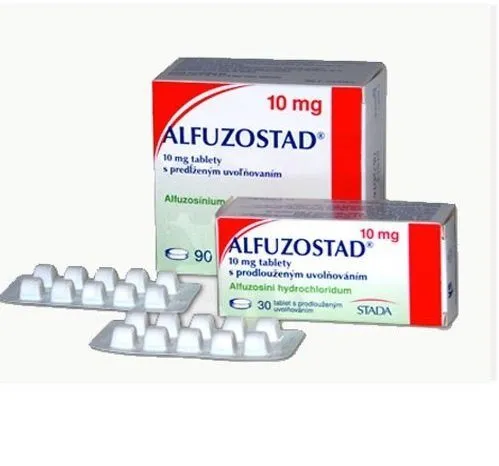
Table of Contents
- Package leaflet: Information for the patient
- 1. What ALFUZOSTAD 10 mg is and what it is used for
- 2. Important information before taking ALFUZOSTAD 10 mg
- 3. How to take ALFUZOSTAD 10 mg tablets
- 4. Possible adverse reactions
- 5. How to store ALFUZOSTAD 10 mg
- 6. Contents of the pack and other information
Package leaflet: Information for the patient
ALFUZOSTAD 10 mg
10 mg prolonged-release tablets
(Alfuzosini hydrochloridum)
Please read the entire leaflet carefully before taking this medicine, as it contains
important information for the patient.
- Keep this leaflet for future reference.
- If you have any further questions, please consult your doctor or pharmacist.
- This medicine has been prescribed for a specific individual. Do not pass it on to others. It may harm them even if their symptoms are the same.
- If you experience any adverse reactions, including any not listed in this leaflet, inform your doctor or pharmacist. See section 4.
Table of contents
- What ALFUZOSTAD 10 mg is and what it is used for
- Important information before taking ALFUZOSTAD 10 mg
- How to take ALFUZOSTAD 10 mg
- Possible side effects
- How to store ALFUZOSTAD 10 mg
- Contents of the pack and other information
1. What ALFUZOSTAD 10 mg is and what it is used for
ALFUZOSTAD 10 mg belongs to a group of medicines called alpha-adrenergic receptor antagonists or alpha-blockers.
This medicine is used to treat moderate to severe urinary symptoms caused by an enlarged prostate gland, a condition also known as benign prostatic hyperplasia. An enlarged prostate gland may cause urinary problems such as frequent and difficult urination, especially at night. Treatment with alpha-blockers causes relaxation of the smooth muscle of the prostate gland and bladder neck. This results in easier urine flow from the bladder.
2. Important information before taking ALFUZOSTAD 10 mg
When not to take ALFUZOSTAD 10 mg:
- if the patient is allergic to alfuzosin, other quinazolines (e.g. terazosin, doxazosin, prazosin) or any of the other ingredients of this medicine (listed in section 6). Symptoms of an allergic reaction may include: rash, swelling of the lips, throat or tongue, difficulty swallowing or breathing.
- if the patient has conditions associated with a significant drop in blood pressure upon changing position to standing,
- if the patient has liver problems,
- if the patient is taking other medicines belonging to alpha-blockers.
Warnings and precautions
Before starting treatment with ALFUZOSTAD 10 mg, discuss this with your doctor or
pharmacist:
- if the patient has significant kidney problems, as the safety of using ALFUZOSTAD 10 mg in such cases has not been established,
- if the patient is taking other medicines used to treat high blood pressure. In such cases, the doctor will regularly monitor the patient's blood pressure, especially at the beginning of treatment;
- blood pressure should be monitored regularly, particularly at the beginning of treatment with this medicine due to the possibility of significant lowering of blood pressure. If the patient experiences a sudden drop in blood pressure caused by changing body position from lying to standing, manifesting as dizziness, weakness or excessive sweating within a few hours after taking ALFUZOSTAD 10 mg, the patient should lie on their back with legs raised until symptoms completely resolve. These symptoms usually last a short time and occur at the beginning of treatment. Usually, there is no need to discontinue treatment;
- in patients who previously experienced a significant drop in blood pressure after using other medicines belonging to the group of alpha-
- blockers. In such cases, the doctor will start treatment with alfuzosin at a low dose and gradually increase the dose;
- if the patient's heart is not functioning properly (acute heart failure);
- if the patient has chest pain (angina pectoris) and is being treated with nitrates, treatment with alfuzosin may increase the risk of low blood pressure. If angina symptoms recur or worsen, the doctor will discontinue treatment with alfuzosin;
- the doctor will decide whether to continue treatment with medicines for chest pain or discontinue treatment with ALFUZOSTAD 10 mg, especially if pain recurs or worsens;
- if the patient is scheduled for eye surgery due to cataract (clouding of the lens), the ophthalmologist must be informed before surgery that the patient is currently taking or has taken ALFUZOSTAD 10 mg. ALFUZOSTAD 10 mg may cause complications during surgery, which the doctor can manage if informed in advance;
- if the patient has heart rhythm disorders or is taking medicines that may cause heart rhythm disturbances (medically known as QT interval prolongation). In such cases, the doctor should evaluate the patient before starting and during treatment with ALFUZOSTAD 10 mg.
ALFUZOSTAD 10 mg and other medicines
Tell your doctor or pharmacist about all medicines the patient is currently taking, has recently taken, or plans to take.
Do not take ALFUZOSTAD 10 mg if the patient is taking other medicines belonging to the group of
alpha-blockers.
ALFUZOSTAD 10 mg and certain medicines may interact with each other. This includes:
- ketoconazole and itraconazole (medicines used to treat fungal infections),
- ritonavir (a medicine used in the treatment of HIV).
ALFUZOSTAD 10 mg may cause a drop in blood pressure if the patient is currently
taking or needs to take any of the following medicines:
- medicines used to treat high blood pressure,
- medicines (nitrates) used to treat symptoms of chest pain (angina),
- medicines administered before surgery (general anaesthesia). In such cases, blood pressure may drop significantly. In the case of surgical procedures, it is essential to inform the doctor that the patient is taking ALFUZOSTAD 10 mg.
ALFUZOSTAD 10 mg with food and drink
ALFUZOSTAD 10 mg should be taken after a meal.
Pregnancy and breastfeeding
These information do not apply, as ALFUZOSTAD 10 mg is used only in men.
Driving and operating machinery
At the beginning of treatment with ALFUZOSTAD 10 mg, a sensation of emptiness in the head,
balance disturbances or weakness may occur. Do not drive motor vehicles or
perform dangerous tasks until the patient knows how their body reacts to
treatment.
ALFUZOSTAD 10 mg contains monohydrate lactose. If the patient has previously been diagnosed with intolerance to certain sugars, the patient should consult their doctor before taking this medicine.
3. How to take ALFUZOSTAD 10 mg tablets
This medicine should always be taken as directed by your doctor or pharmacist. If you have any
doubts, consult your doctor or pharmacist.
The tablet should be swallowed whole. Do not crush, break or chew the tablet, as too much active
substance could be released rapidly into the body, which may increase the risk of adverse effects.
The first dose of the medicine should be taken at bedtime. Subsequently, the tablet should be taken
immediately after a meal, always at the same time of day, with a sufficient amount of liquid. Do not
crush, break or divide the tablets.
Adults
The usual dose is 1 extended-release tablet (10 mg alfuzosin) once daily.
Elderly patients
The usual dose in elderly patients (over 65 years of age) is 1 extended-release tablet (10 mg alfuzosin)
once daily, if a lower initial dose of alfuzosin prescribed by the doctor is well tolerated and a stronger
effect is required.
Patients with renal impairment
The usual dose in patients with mild to moderate renal impairment is 1 extended-release tablet
(10 mg alfuzosin) once daily, if a lower dose is insufficient, depending on the clinical response.
Taking more ALFUZOSTAD 10 mg than recommended
If a patient has taken a large number of ALFUZOSTAD 10 mg tablets, seek immediate medical
advice by contacting a doctor or going to the nearest hospital emergency department. The patient's
blood pressure may drop suddenly, and the patient may experience dizziness or even faint. If the
patient begins to feel dizzy, they should sit or lie down until they feel better.
If you miss a dose of ALFUZOSTAD 10 mg
Do not take a double dose to make up for a missed dose, as this may cause a sudden drop in
blood pressure, especially if the patient is taking other medicines that lower blood pressure. Take the
next tablet at the usual scheduled time.
Stopping ALFUZOSTAD 10 mg
Do not stop taking ALFUZOSTAD 10 mg without first consulting your doctor.
If you have any further questions about the use of this medicine, consult your doctor or pharmacist.
4. Possible adverse reactions
Like all medicines, this medicine can cause adverse reactions, although not everyone will experience them.
In very rare cases (may occur in up to 1 in 10,000 patients), life-threatening reactions known as angioedema have been reported. You must stop taking ALFUZOSTAD 10 mg and seek medical help immediately if symptoms of angioedema occur, such as:
- swelling of the face, tongue or throat
- difficulty swallowing
- hives and breathing difficulties.
Common (may occur in up to 1 in 10 patients):
Fatigue, fainting/dizziness, headache, dizziness (vertigo), significant drop in blood pressure upon standing (especially at the beginning of treatment with too high a dose or when treatment is resumed after a short break), stomach pain, nausea, indigestion, diarrhoea, dry mouth, general malaise, feeling of weakness or illness.
Uncommon (may occur in up to 1 in 100 patients):
Drowsiness, vision problems, faster heartbeat, fainting (especially at the beginning of treatment), sensation of palpitations or racing heart, nasal inflammation, vomiting, rash (hives, urticaria), itching, urinary incontinence, swelling of the ankles and feet, facial flushing (hot flushes), chest pain.
Very rare (may occur in up to 1 in 10,000 patients):
First occurrence, worsening or recurrence of chest pain (angina pectoris), liver damage, swelling of the skin and mucous membranes, especially in the face and around the mouth, prolonged and painful erection (priapism).
Unknown frequency (frequency cannot be estimated from available data):
Low white blood cell count (neutropenia), intraoperative floppy iris syndrome (IFIS), an intraoperative complication occurring during cataract surgery, irregular heart rhythm, liver problems or liver disease (symptoms may include yellowing of the skin or whites of the eyes), low platelet count. Symptoms may include bleeding gums, nosebleeds, bruising, prolonged bleeding from cuts, rash (red spots called petechiae).
Reporting of adverse reactions
If any adverse reactions occur, including any not listed in this leaflet, inform your doctor, pharmacist or nurse. Adverse reactions can be reported directly to the Department of Monitoring Adverse Drug Reactions at the Office for Registration of Medicinal Products, Medical Devices and Biocidal Products
Al. Jerozolimskie 181C
02-222 Warszawa
Tel: +48 22 49 21 301
Fax: +48 22 49 21 309
Website: https://smz.ezdrowie.gov.pl
Adverse reactions can also be reported to the marketing authorisation holder.
Reporting adverse reactions helps provide more information on the safety of this medicine.
5. How to store ALFUZOSTAD 10 mg
Keep the medicine out of sight and reach of children.
Do not store above 30°C.
Do not use ALFUZOSTAD 10 mg after the expiry date stated on the blister pack and carton. The expiry date refers to the last day of the stated month.
Medicines should not be disposed of via the sewage system or household waste. Ask your pharmacist how to dispose of medicines no longer required. This helps protect the environment.
6. Contents of the pack and other information
What Alfuzostad 10 mg contains
The active substance is alfuzosin hydrochloride. One prolonged-release tablet contains 10 mg of alfuzosin hydrochloride.
The other ingredients are: lactose monohydrate, hypromellose, povidone K25, magnesium stearate.
What Alfuzostad 10 mg looks like and contents of the pack
Alfuzostad 10 mg is a white, round, uncoated tablet with a bevelled edge.
Alfuzostad 10 mg is available in blister packs; the pack contains 30 prolonged-release tablets.
Marketing Authorisation Holder and Manufacturer
Marketing Authorisation Holder:
STADA Arzneimittel AG, Stadastrasse 2-18, 61118 Bad Vilbel, Germany
Manufacturer:
STADA Arzneimittel AG, Stadastrasse 2-18, 61118 Bad Vilbel, Germany
STADA Arzneimittel GmbH, Muthgasse 36, 1190 Vienna, Austria
This medicinal product is authorised in the European Economic Area countries under the following names:
AT: Alfuzosin STADA 10 mg - Retardtabletten
CZ: Alfuzostad 10mg tablety s prodlouzenym uvolnovanim
DK: Alfuzosin STADA 10 mg
ES: ALFUZOSINA STADA 10 mg comprimidos de liberación prolongada
HU: Alfuzostad 10 mg retard tablette
IT: Alfuzosina EG 10 mg Compresse a rilascio prolungato
PL: Alfuzostad 10 mg
SE: Alfuzosin Stada 10 mg depottablett