Alexan
Poland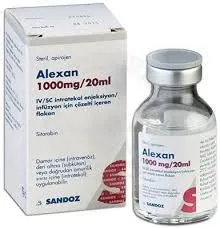
Instructions for Use
Patient Information Leaflet
Alexan, 50 mg/ml, infusion solution
Cytarabinum
Please read this leaflet carefully before using this medicine, as it contains important information for the patient.
- Keep this leaflet for future reference.
- If you have any questions, please consult your doctor, nurse, or pharmacist.
- If you experience any adverse reactions, including any not listed in this leaflet, inform your doctor, nurse, or pharmacist. See section 4.
Table of contents:
- What Alexan is and what it is used for
- Important information before using Alexan
- How to use Alexan
- Possible side effects
- How to store Alexan
- Contents of the package and other information
1. What Alexan is and what it is used for
Alexan is used in the treatment of malignant neoplastic diseases. It may be used as monotherapy or in combination with other antineoplastic agents in initial and maintenance therapy for:
- acute myeloid leukaemias,
- acute lymphoblastic leukaemias,
- leukaemic meningitis (meningeal leukaemic infiltrations),
- malignant non-Hodgkin's lymphomas.
High-dose Alexan is used in the treatment of:
- treatment-resistant non-Hodgkin's lymphomas,
- treatment-resistant acute myeloid leukaemias,
- treatment-resistant acute lymphoblastic leukaemias,
- blast crisis in chronic myeloid leukaemia.
2. Important information before using Alexan
When not to use Alexan
- if the patient is allergic (hypersensitive) to cytarabine or to any of the other ingredients of this medicine (listed in section 6);
- in patients in whom the doctor has diagnosed bone marrow suppression unrelated to tumour disease (with symptoms such as anaemia, reduced number of white blood cells – leukopenia, and reduced number of platelets – thrombocytopenia), unless the doctor decides that treatment is essential for the patient;
- in pregnant women, unless there are strict medical indications and, in the doctor's opinion, the benefits to the mother from using the medicine outweigh the potential risks to the foetus.
Warnings and precautions
Alexan should be administered cautiously and only under the supervision of medical staff specialised in oncology, equipped with tools for regular monitoring of treatment efficacy during and after administration of the medicine. Before using Alexan, discuss with the doctor if the patient:
- has impaired liver or kidney function; this will help the doctor decide whether Alexan is appropriate for the patient;
- has received or is due to receive any vaccination, including live attenuated vaccines;
- is receiving cytarabine concomitantly with intrathecal methotrexate, as in such cases headache, paralysis, coma, and stroke-like symptoms have occurred in children and young adults;
- has acute and/or severe infection;
- has diagnosed gastrointestinal ulcer disease;
- has recently undergone surgery.
During treatment, the doctor will order regular blood tests, liver and kidney function tests, and blood uric acid level measurements.
Toxic effects of high-dose cytarabine
Alexan administered at high doses may cause more severe adverse effects than when given at lower doses. See section 4 "Possible side effects".
Children and adolescents
The safety of using Alexan in infants has not been established.
Alexan with other medicines
Tell your doctor, nurse or pharmacist about all medicines the patient is currently taking or has recently taken, as well as any medicines the patient plans to take, including those available without a prescription. Alexan is often used together with other medicines.
Concomitant use of Alexan with other medicines causing tumour cell breakdown or bone marrow suppression, or with radiotherapy, may sometimes increase their adverse effects. The doctor may decide to adjust their dosages.
Inform the doctor if the patient is taking any of the following medicines:
- medicines containing 5-fluorocytosine (a medicine used to treat fungal infections);
- medicines containing cardiac glycosides (medicines used to treat certain heart conditions);
- gentamicin (an antibiotic used to treat bacterial infections);
- medicines containing cyclophosphamide, vincristine and prednisone (medicines used in cancer treatment regimens);
- intravenous cytarabine administered together with intrathecal methotrexate (due to occurrence of headache, paralysis, coma and stroke-like symptoms in children and young adults after administration of these medicines).
Pregnancy, breastfeeding and effects on fertility
If the patient is pregnant or breastfeeding, suspects she may be pregnant, or is planning to have a child, she should consult her doctor or pharmacist before using this medicine.
Pregnancy
Alexan may cause serious developmental abnormalities in the child. The medicine should not be used during pregnancy unless there are strict medical indications and, in the doctor's opinion, the benefits to the mother from using the medicine outweigh the potential risks to the foetus.
Men and women of reproductive age should use effective contraceptive methods during therapy and for 6 months after completion of treatment in women and 3 months in men.
Breastfeeding
It is not known whether cytarabine passes into human breast milk. Like many other medicines, Alexan may pass into the breast milk of nursing mothers and may cause serious adverse effects in infants. If the patient is breastfeeding, she should contact her doctor, who will decide whether she should continue breastfeeding or discontinue breastfeeding during treatment with Alexan and for at least one week after completion of treatment, or whether to discontinue or withhold cytarabine administration.
Driving and operating machinery
Alexan does not affect psychomotor performance; however, chemotherapy may impair the ability to drive or operate machinery.
If the patient feels unwell and experiences adverse effects (such as vomiting, dizziness or visual disturbances), he or she should not drive or operate machinery.
Alexan contains sodium
The medicine contains 1.28 mg of sodium (the main component of table salt) in 1 ml of solution.
The medicine contains 12.8 mg of sodium in the 10 ml vial. This corresponds to 0.64% of the maximum recommended daily intake of sodium in the adult diet.
The medicine contains 25.6 mg of sodium in the 20 ml vial. This corresponds to 1.28% of the maximum recommended daily intake of sodium in the adult diet.
The medicine contains 51.2 mg of sodium in the 40 ml vial. This corresponds to 2.56% of the maximum recommended daily intake of sodium in the adult diet.
The medicine may be diluted with 0.9% sodium chloride solution. The sodium content originating from the diluent should be taken into account when calculating the total sodium content in the prepared diluted solution. For precise information on the sodium content in the solution used to dilute the medicine, refer to the patient leaflet of the diluent used.
3. How to use Alexan
Alexan may only be administered by medical personnel – it must not be self-administered.
The medicine can be given by intravenous and subcutaneous routes.
The duration of treatment and the daily dose of the medicine will be determined by the attending physician.
The duration of treatment depends on the patient's condition. The physician will monitor the body's response to treatment, the patient's health status, and the duration of therapy.
Information intended for healthcare professionals is provided at the end of this leaflet.
Use of a higher than recommended dose of Alexan
In case of overdose or the occurrence of pronounced adverse reactions, this should be reported to the physician immediately.
The physician will immediately discontinue administration of the medicine. Management will depend on the symptoms: blood transfusion or administration of antibiotics to prevent infections may be necessary.
The physician may decide to use hemodialysis to remove cytarabine from the body.
Missed administration of Alexan
The patient should contact the attending physician as soon as possible to schedule a new administration date.
If there are any further doubts regarding the administration of this medicine, consult the physician or pharmacist.
4. Possible adverse reactions
Like all medicines, this medicine can cause adverse reactions, although not everyone will experience them.
Adverse reactions to Alexan are dose-dependent – the higher the dose, the greater the likelihood of their occurrence. The most common include gastrointestinal symptoms and disturbances in bone marrow function (myelosuppression), and consequently, blood composition disorders.
If any of the following severe adverse reactions occur, seek immediate medical advice:
- severe allergic reaction (anaphylaxis), frequency unknown, with symptoms such as: sudden itchy rash (urticaria), swelling of hands, feet, ankles, face, lips, mouth or throat (which may cause difficulty in breathing), feeling of fainting
- flu-like symptoms, e.g. fever and chills, as they may indicate an infection which could become serious (may occur in more than 1 in 10 people)
- feeling of fatigue and drowsiness, bruising or bleeding more easily than usual following injury. These are symptoms of inadequate production or reduced numbers of red blood cells, white blood cells or platelets (may occur in less than 1 in 10 people).
If any of the following adverse reactions occur, seek medical advice or consult a nurse as soon as possible.
Sometimes the following symptoms may occur together, usually 6 to 12 hours after administration of Alexan:
- malaise with high fever
- bone pain, muscle pain, and occasionally chest pain
- rash
- eye pain
These are symptoms of the so-called cytarabine syndrome, which can be treated. Your doctor may recommend corticosteroids to prevent and treat these symptoms. If corticosteroids prove effective, treatment with Alexan may continue.
Other possible adverse reactions
Very common adverse reactions (may occur in more than 1 in 10 people)
- lung inflammation
- liver damage
- decreased number of reticulocytes
- rash
Common adverse reactions (may occur in less than 1 in 10 people)
- decreased appetite
- high levels of uric acid in the blood, caused by breakdown of tumour cells, which may lead to gout
- conjunctivitis with light sensitivity, burning sensation, visual disturbances, excessive tearing, pain and redness (reversible hemorrhagic conjunctivitis, keratitis)
- indigestion and abdominal pain
- loss of appetite, nausea, vomiting
- diarrhea
- inflammation or ulceration of the mucous membranes of the mouth or anus
- rash, itching, skin redness, formation of large blisters (bullous dermatitis), red spots on the skin
- inflammation of blood vessels
- hair loss (usually reversible)
- kidney dysfunction, difficulty in passing urine
- fever
- inflammation of the vein at the injection site with formation of a blood clot
Uncommon adverse reactions (may occur in less than 1 in 100 people)
- pimples
- pericarditis
- shortness of breath, sore throat
- inflammation or ulceration of the esophagus
- presence of gas-filled cysts located in the intestinal wall (pneumatosis intestinalis)
- severe inflammation of the large intestine (necrotizing colitis)
- peritonitis
- lentigo-like changes (presence of flat, brown spots on the skin)
- skin ulceration and inflammation
- itching
- burning pain in the palms and soles
- muscle and joint pain
Very rare adverse reactions (may occur in less than 1 in 100 people)
- heart rhythm disturbances
- presence of nodules and blisters on palms and soles (neutrophilic eccrine hidradenitis)
- pancreatitis
Adverse reactions occurring with unknown frequency (frequency cannot be estimated from available data)
- infection at the injection site
- liver abscess
- headache or dizziness
- tingling
- nerve inflammation
- jaundice (yellowing of the skin and whites of the eyes)
- decreased heart rate
- hand-foot syndrome (also known as palmar-plantar erythrodysesthesia)
- redness, pain or swelling of the ears, which may occur during or shortly after completion of cytarabine treatment (known as "Ara-C ears")
- inflammation of sweat glands, sometimes causing tender, red skin lesions (known as neutrophilic pustular hidradenitis)
Adverse reactions which may occur during treatment with high-dose Alexan, other than those reported during standard dosing:
- marked decrease in red and white blood cells and platelets, which may last from 15 to 25 days
- personality changes, decreased alertness, speech disturbances, lack of motor control, tremor, involuntary eye movements, headache, confusion, drowsiness, dizziness, coma, seizures; these disorders are reversible in most cases and occur predominantly in elderly patients, patients with impaired kidney or liver function, patients consuming large amounts of alcohol, and patients previously treated with therapies affecting brain function (e.g. radiotherapy)
- conjunctivitis, including light sensitivity, stabbing sensation and visual disturbances; your doctor may recommend prophylactic use of eye drops containing glucocorticosteroids
- perforation of the stomach and intestines, nausea, vomiting
- liver abscess, blood clots in the liver, and pancreatitis
- acute respiratory distress syndrome progressing to pulmonary edema
- breakdown of striated muscle (rhabdomyolysis)
- worsening of heart function due to myocarditis
- absence of sperm production
- absence of menstruation
Adverse reactions reported after intrathecal administration:
- bone marrow suppression, nausea, vomiting
- damage to nervous tissue
- paralysis of arms or legs
- loss of vision
Reporting of adverse reactions
If any adverse reactions occur, including any not listed in this leaflet, inform your doctor, pharmacist or nurse. Adverse reactions can be reported directly to the Department of Monitoring Adverse Drug Reactions, Office for Registration of Medicinal Products, Medical Devices and Biocidal Products: Al. Jerozolimskie 181C, 02-222 Warsaw
Tel: +48 22 49 21 301 / Fax: +48 22 49 21 309 / Website: https://smz.ezdrowie.gov.pl
Adverse reactions can also be reported to the marketing authorization holder.
Reporting adverse reactions helps provide more information on the safety of this medicine.
5. How to store Alexan
Keep the medicine out of the sight and reach of children.
Do not use this medicine after the expiry date stated on the packaging after EXP.
The expiry date refers to the last day of the stated month.
Do not use this medicine if signs of deterioration are observed, such as a change in the solution's colour.
Store below 25°C.
Medicines must not be disposed of via wastewater or household waste. Ask your pharmacist how to dispose of medicines no longer required. Such practices help protect the environment.
6. Contents of the pack and other information
What Alexan contains
The active substance is cytarabine. 1 ml of infusion solution contains 50 mg of cytarabine.
The 10 ml vial contains 500 mg of cytarabine.
The 20 ml vial contains 1000 mg of cytarabine.
The 40 ml vial contains 2000 mg of cytarabine.
Other ingredients: sodium lactate, lactic acid, water for injections.
What Alexan looks like and contents of the pack
Alexan is a clear, colourless solution.
The medicine is available in vials containing 10 ml, 20 ml or 40 ml of infusion solution.
Marketing Authorisation Holder and Manufacturer
EBEWE Pharma Ges.m.b.H. Nfg. KG
Mondseestrasse 11
A-4866 Unterach, Austria
Manufacturer
Fareva Unterach GmbH
Mondseestraße 11
4866 Unterach, Austria
For further information, please contact:
Sandoz Polska Sp. z o.o.
ul. Domaniewska 50 C
02-672 Warsaw
tel. 22 549 15 00
Information intended exclusively for medical professionals
Dosage information
- Induction therapy
The usual dose for induction therapy is 100 to 200 mg/m² of cytarabine per day, administered in most cases as a continuous intravenous infusion or as a rapid infusion over 5 to 10 days.
The duration of treatment depends on clinical and morphological findings (bone marrow examination). Treatment may last up to 7 days, followed by a 7- to 9-day break until bone marrow remission is achieved; then therapy cycles (often limited in number) may continue until remission is achieved or toxic effects occur. Alternatively, treatment may be continued until myelosuppression occurs, which should be considered the threshold of tolerance.
Before repeating therapy cycles (often limited in number), a treatment break of 14 days should be ensured, preferably until normalization of the bone marrow picture is achieved.
-
Maintenance therapy
The usual maintenance dose is 70 to 200 mg/m² of cytarabine per day administered as a rapid intravenous or subcutaneous injection for 5 days, every 4 weeks or once weekly. -
Treatment of non-Hodgkin's lymphoma
Treatment of adults
These cases are usually treated with combination chemotherapy regimens. For example, in the PROMACE-CYTABOM regimen, cytarabine is administered at a dose of 300 mg/m² per day on day 8 of the treatment cycle.
Treatment of children
The use of cytarabine in pediatric non-Hodgkin's lymphoma depends on the stage of disease and its histological type. Cytarabine is used in various treatment protocols and at various doses. Below are dosage recommendations for selected combination therapies considered effective based on current knowledge. Detailed information can be found in appropriate medical literature.
- 150 mg/m² of cytarabine administered as a 1-hour intravenous infusion every 12 hours on days 4 and 5 of therapy, referred to as "part A" or "part AA" (total of 4 intravenous infusions); in combination with other cytotoxic drugs (BMF protocol for B-cell lymphoma in stages II and III or stage IV).
- 75 mg/m² of cytarabine on days 31 to 34, 38 to 41, 45 to 48, and 52 to 55 of induction therapy; in combination with other cytotoxic drugs (BMF protocol for non-B-cell lymphomas in stages I and II).
- High-dose therapy
During high-dose therapy, only diluents without preservatives should be used.
The usual dose of cytarabine in high-dose therapy is 1 to 3 g/m² administered as an intravenous infusion over 1 to 3 hours, given every 12 hours for 4 to 6 days.
- Treatment of leukemias localized within the central nervous system (CNS)
Intrathecal administration
Intrathecal administration of Alexan is recommended at a concentration of 20 mg/ml.
The usual dose of cytarabine is 5 to 30 mg/m² every 2 to 7 days.
The frequency and dosage vary depending on the treatment regimen used. Most commonly, 30 mg/m² is administered once every four days until the cerebrospinal fluid contains no increased number of malignant cells.
If the solution for intrathecal administration needs to be diluted, only 0.9% sodium chloride solution without preservatives should be used.
Storage information after first opening and after dilution
-
Opened vial: The solution should be withdrawn from the vial immediately before use. From a microbiological standpoint, the product should be used immediately. Otherwise, the user is responsible for the storage conditions and duration of the remaining solution in the vial. The remaining solution in the vial after first withdrawal should not be stored for longer than 24 hours at a temperature of 2°C to 8°C, unless the withdrawal was performed under controlled, validated aseptic conditions. In such cases, the solution stored in the refrigerator or at room temperature, with or without exposure to light, maintains physico-chemical stability for up to 28 days.
-
Diluted infusion solution: From a microbiological standpoint, the product should be used immediately. Otherwise, the user is responsible for the storage conditions and duration of the prepared solution. Prepared solutions should not be stored for longer than 24 hours at a temperature of 2°C to 8°C, unless dilution was performed under controlled, validated aseptic conditions. Physico-chemical stability has been demonstrated for up to 28 days for a solution diluted to 0.1 mg/ml in 0.9% NaCl, stored in the refrigerator or at room temperature, with or without exposure to light.
Instructions for preparing the medicinal product for administration
Before administration, Alexan should be diluted with 0.9% sodium chloride solution or 5% glucose solution.
Compatibility of Alexan with 0.9% sodium chloride solution and 5% glucose solution has been studied at concentrations of 0.2–3.2 mg/ml in PVC infusion bags, polyethylene infusion bottles, and perfusion syringes.
If cytarabine comes into contact with the skin, the affected area should be thoroughly rinsed with water and then washed carefully with soap and water. If the solution gets into the eyes, the eyes should be thoroughly rinsed with large amounts of water, and an ophthalmologist should be consulted immediately.
Pregnant women should not handle this medicinal product.
Instructions for disposal of medicinal product waste
Vials and materials used during infusion, including protective gloves, should be disposed of according to the regulations applicable to cytotoxic medicinal products.
In case of spillage or leakage, the solution can be neutralized with a 5% sodium hypochlorite solution. All materials used for this purpose should then be disposed of as described above.
Instructions for managing extravasation
- Immediately stop administration of the medicinal product.
- Replace the infusion line or syringe with a 5 ml disposable syringe and slowly aspirate the extravasated medicinal product. WARNING! Do not apply pressure to the extravasation site.
- Withdraw the needle while continuously aspirating fluid from the extravasation site.
- Inform the physician.
Pharmaceutical incompatibilities
Alexan shows physical incompatibility with heparin, insulin, methotrexate, 5-fluorouracil, nafcillin, oxacillin, benzylpenicillin, and sodium succinate of methylprednisolone.
This page has been machine-translated and may contain inaccuracies. The original data is available in the manufacturing country's language.
Last data check: June 04, 2026 · Data source: Rejestr Produktów Leczniczych (URPL)