Alendronate bluefish
Poland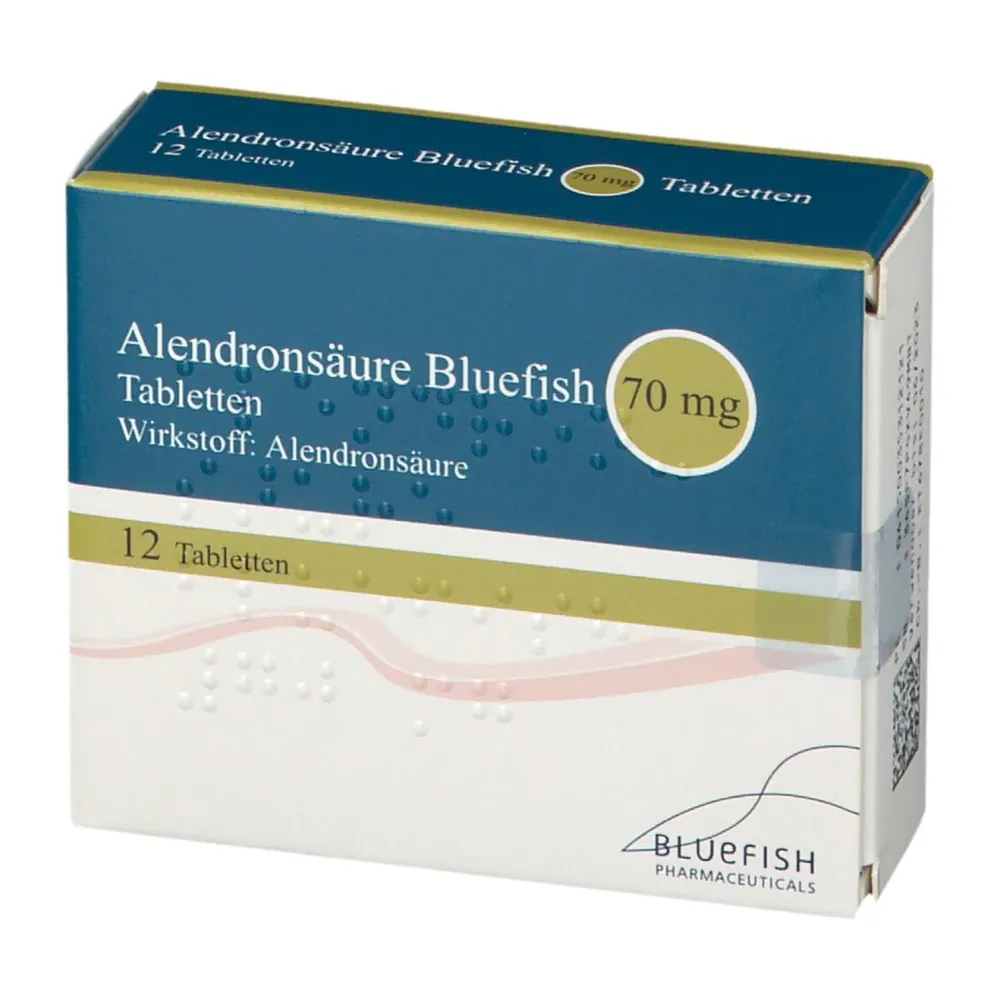
Table of Contents
Package leaflet: Information for the user
Alendronat Bluefish, 70 mg, tablets
Acidum alendronicum
Read the entire leaflet carefully before taking this medicine, because it contains
important information for you.
- Keep this leaflet. You may need to read it again.
- If you have any further questions, ask your doctor or pharmacist.
- This medicine has been prescribed for you personally. Do not pass it on to others. It may harm others, even if their symptoms are the same as yours.
- If you experience any side effects, including any not listed in this leaflet, tell your doctor or pharmacist. See section 4.
Leaflet contents:
- What Alendronat Bluefish is and what it is used for
- What you need to know before taking Alendronat Bluefish
- How to take Alendronat Bluefish
- Possible side effects
- How to store Alendronat Bluefish
- Contents of the pack and other information
1. What Alendronat Bluefish is and what it is used for
The active substance, sodium alendronate trihydrate, belongs to a group of medicines called "bisphosphonates".
Alendronate prevents the loss of bone tissue that occurs in postmenopausal women and helps rebuild lost bone mass. It reduces the risk of vertebral and hip fractures.
Alendronat Bluefish is used to treat the following conditions:
- Postmenopausal osteoporosis.
Osteoporosis is the loss and weakening of bone mass. It commonly affects women after menopause. During menopause, the ovaries stop producing the female hormone estrogen, which helps maintain healthy bones in women. As a result, bone mass is lost and bones become fragile. The earlier a woman experiences menopause, the greater the risk of developing osteoporosis.
In its early stages, osteoporosis is asymptomatic. If left untreated, it may lead to bone fractures. Spinal fractures may be painful but remain unnoticed until they begin to cause a reduction in height. Fractures may occur during normal daily activities such as lifting objects, or due to minor injuries that would not normally cause fractures in healthy bones. Fractures commonly occur in the hip, spine, and wrist, and may not only cause pain but also lead to serious problems such as stooped posture ("dowager's hump") and loss of mobility.
Osteoporosis is a treatable condition, and it is never too late to begin treatment. Alendronat Bluefish not only prevents further bone loss but also restores proper bone density and reduces the risk of vertebral or hip fractures.
Your doctor may recommend not only treatment with Alendronat Bluefish but may also suggest lifestyle changes that can improve your health, for example:
Smoking cessation: Smoking appears to increase the rate of bone loss and therefore may increase the risk of bone fractures.
Exercise: Just like muscles, bones need exercise to stay strong and healthy. Consult your doctor before starting any exercise programme.
Balanced diet: Your doctor may provide advice regarding diet or dietary supplements (especially calcium and vitamin D).
2. Information before using Alendronat Bluefish
If any of the situations listed below apply, consult a doctor or
pharmacist before starting treatment with Alendronat Bluefish, as the medicine may not be
suitable for the patient.
When not to use Alendronat Bluefish
- if the patient is allergic to sodium alendronate trihydrate or any of the other ingredients of this medicine (listed in section 6).
- if the patient has any problems with the oesophagus (the oesophagus is the tube connecting the mouth to the stomach), such as narrowing or difficulty swallowing.
- if the patient is unable to remain in an upright position (standing or sitting) for at least 30 minutes.
- if the doctor has diagnosed low calcium levels in the patient's blood.
If the patient suspects that any of the situations listed above may apply, the medicine should not be
used. The patient should inform their doctor and follow the doctor's advice.
Warnings and precautions
Before starting treatment with Alendronat Bluefish, discuss this with a doctor or
pharmacist.
- if the patient has kidney problems
- if the patient has any allergies
- if the patient has problems with swallowing or digestion
- if the patient has low calcium levels in the blood
- if the patient has gum disease
- if the patient is scheduled for a tooth extraction
- if the doctor has diagnosed the patient with Barrett's oesophagus (a condition involving changes in the cells lining the lower part of the oesophagus)
If any of the following situations apply to the patient, a dental examination should be considered before starting treatment with Alendronat Bluefish:
- If the patient has cancer
- If the patient is undergoing chemotherapy or radiotherapy
- If the patient is taking steroids
- If the patient does not undergo routine dental check-ups
- If the patient has gum disease
- If the patient smokes or has smoked (this may increase the risk of dental problems)
During treatment, appropriate dental prophylaxis should be maintained as recommended by the
doctor and dentist.
Before starting treatment with Alendronat Bluefish, the patient may be referred for a dental check-up.
While taking Alendronat Bluefish, maintaining proper oral hygiene is very important. The patient should attend regular dental check-ups during treatment. The patient should also contact their treating doctor or dentist if any dental or oral problems occur, such as loose teeth, pain or swelling.
Irritation, inflammation or ulceration of the oesophagus (the oesophagus is the tube connecting the mouth to the stomach) may occur, often accompanied by chest pain, heartburn or difficulty and pain when swallowing, especially if the patient does not drink a full glass of water and (or) lies down before 30 minutes have passed after taking Alendronat Bluefish.
The adverse effects listed above may worsen if the patient continues taking Alendronat Bluefish despite an increase in these symptoms.
Children and adolescents
Alendronat Bluefish must not be used in children and adolescents.
Alendronat Bluefish and other medicines
Inform the doctor or pharmacist about all medicines the patient is currently taking or has recently taken, as well as any medicines the patient plans to take.
There is a possibility that calcium supplements, antacids and certain oral medicines taken at the same time as Alendronat Bluefish may interfere with its absorption.
Some anti-rheumatic or pain-relieving medicines, known as non-steroidal anti-inflammatory drugs (NSAIDs) (e.g. aspirin or ibuprofen), may cause gastrointestinal disturbances.
Therefore, caution should be exercised when taking these medicines together with Alendronat Bluefish.
- After taking the medicine, at least 30 minutes must pass before taking any other medicines taken on the same day. Alendronat Bluefish works effectively on an empty stomach. After taking the medicine, at least 30 minutes should pass before taking any other medicine on the same day.
Alendronat Bluefish 70 mg with food and drink
There is a possibility that food and drinks (including mineral water) taken together with Alendronat Bluefish may reduce its effectiveness. Therefore, after taking alendronate, at least 30 minutes should pass before consuming any food or drink.
Pregnancy and breastfeeding
Alendronat Bluefish must not be used during pregnancy or breastfeeding. If the patient is pregnant or breastfeeding, suspects she may be pregnant, or is planning to have a child, she should consult a doctor or pharmacist before using this medicine.
Driving and operating machinery:
Adverse effects (including blurred vision, dizziness and severe bone, muscle or joint pain) have been reported after taking alendronate, which may affect the ability to drive or operate machinery. The reaction to Alendronat Bluefish may vary among individual patients (see section: Possible side effects).
Alendronat Bluefish contains sodium
The medicine contains less than 1 mmol (23 mg) of sodium per tablet, meaning the medicine is considered "sodium-free".
3. How to take Alendronat Bluefish
This medicine should always be taken exactly as prescribed by your doctor or pharmacist. If in doubt,
please consult your doctor or pharmacist.
Your doctor will decide the appropriate dose for you. The duration of treatment will depend on the
type of disease you have. Alendronat Bluefish should always be taken according to your doctor's
instructions. If you have any doubts, please contact your doctor or pharmacist again.
You may previously have been taking alendronate at a dose of 10 mg once daily. One tablet of
Alendronat Bluefish is taken once weekly.
It is very important to follow the instructions given below under points 2, 3, 4 and 5. These
instructions will help Alendronat Bluefish reach the stomach quickly and help reduce the risk of
irritation of the oesophagus.
- Choose a day of the week that best fits your routine. Alendronat Bluefish should be taken once weekly, on the chosen day.
- After getting up in the morning and before taking your first meal, drink or any other medicine, swallow the Alendronat Bluefish tablet with a full glass of plain water only (not less than 200 ml or 7 fluid ounces). Do not chew the tablet or allow it to dissolve in the mouth.
- After taking Alendronat Bluefish, do not lie down — remain in an upright position (standing or sitting upright) for at least 30 minutes after swallowing the tablet, and do not lie down until after you have eaten your first meal of the day.
- Do not take Alendronat Bluefish in the evening before going to bed or in the morning before getting out of bed.
- If you experience difficulty or pain when swallowing, chest pain, or new or worsening heartburn, stop taking Alendronat Bluefish and contact your doctor immediately.
- After taking Alendronat Bluefish, wait at least 30 minutes before taking your first meal, drink, or any other medicine of the day, including antacids, calcium supplements, and vitamins. Alendronat Bluefish works effectively only when taken on an empty stomach.
Taking more Alendronat Bluefish than prescribed:
If you (or anyone else) accidentally take more tablets than prescribed, drink a full glass of milk and
contact your doctor immediately. Do not induce vomiting and do not lie down.
Missing a dose of Alendronat Bluefish:
If you miss a dose, take one tablet the next morning. Do not take a double dose to make up for a
missed dose.
Stopping Alendronat Bluefish:
Before stopping Alendronat Bluefish, always consult your doctor. Alendronat Bluefish is effective in
treating osteoporosis only if the tablets are taken consistently.
If you have any further questions about how to use this medicine, please consult your doctor or
pharmacist.
4. Possible adverse effects
Like all medicines, this medicine can cause adverse effects, although not everyone will experience them.
Very common (may affect more than 1 in 10 people):
- bone, muscle and/or joint pain, sometimes severe
Common (may affect up to 1 in 10 people):
- heartburn, difficulty swallowing, pain when swallowing, oesophageal ulceration (the oesophagus is the tube connecting the mouth to the stomach), which may cause chest pain, heartburn or difficulty or pain when swallowing
- joint swelling
- abdominal pain, stomach discomfort or bloating after meals, constipation, feeling of fullness or flatulence, diarrhoea, passing gas
- hair loss, itching
- headache, dizziness
- fatigue, swelling of the hands or feet
Uncommon (may affect up to 1 in 100 people):
- nausea, vomiting
- irritation or inflammation of the oesophagus (the oesophagus is the tube connecting the mouth to the stomach) or stomach
- black or tar-like stools
- blurred vision, eye pain or redness
- rash, skin redness
- transient flu-like symptoms such as muscle pain, general malaise, sometimes fever, usually at the beginning of treatment
- taste disturbances
Rare (may affect up to 1 in 1,000 people):
- allergic reactions such as hives, facial swelling, swelling of the lips, tongue and/or throat, which may cause difficulty in swallowing or breathing
- symptoms of low blood calcium levels, including muscle cramps and spasms and/or tingling sensations in fingers and around the mouth
- stomach and/or duodenal ulcers (sometimes severe and bleeding)
- narrowing of the oesophagus (the oesophagus is the tube connecting the mouth to the stomach)
- skin rash worsened by sunlight; severe skin reactions
- mouth pain and/or jaw pain, swelling or tenderness in the mouth, sensation of pressure or numbness in the jaw, or loose tooth. These may be symptoms indicating jaw bone damage, usually associated with delayed healing and infection, often following tooth extraction. If any of these symptoms occur, contact your doctor and dentist
- in rare cases, atypical femoral fractures may occur, particularly in patients receiving long-term treatment for osteoporosis. If you experience pain, weakness or discomfort in the thigh, hip or groin area, consult your doctor, as this may be an early sign of a possible femoral fracture
- oral mucosal ulceration if tablets are chewed or sucked
Very rare (may affect up to 1 in 10,000 people):
- If a patient experiences ear pain, ear discharge and/or ear infection, inform the doctor. These may be symptoms of bone tissue damage in the ear.
If any of the listed adverse effects occur, or any other unusual adverse symptoms, inform your doctor or pharmacist immediately. Keeping notes describing the symptoms, when they started and how long they lasted will be helpful. If any adverse effect worsens, or if any adverse effects not listed in this leaflet occur, inform your doctor or pharmacist.
Reporting of adverse effects
If you experience any adverse effects, including any not listed in this leaflet, tell your doctor, pharmacist or nurse. Adverse effects can be reported directly to the Department of Monitoring Adverse Drug Reactions of the Office for Registration of Medicinal Products, Medical Devices and Biocidal Products, Al. Jerozolimskie 181 C, 02-222 Warsaw, Tel.: +48 22 49 21 301, Fax: +48 22 49 21 309, Website: https://smz.ezdrowie.gov.pl
Adverse effects can also be reported to the marketing authorisation holder.
Reporting adverse effects helps provide more information on the safety of this medicine.
5. How to store Alendronat Bluefish
Keep this medicine out of the sight and reach of children.
No special storage conditions are required.
Do not use this medicine after the expiry date stated on the container and carton after "Expiry date". The expiry date refers to the last day of the stated month.
Medicines should not be disposed of via wastewater or household waste. Ask your pharmacist how to dispose of medicines no longer required. These measures will help protect the environment.
6. Contents of the pack and other information
What Alendronat Bluefish contains
- The active substance is alendronic acid. Each tablet contains 70 mg of alendronic acid (equivalent to 91.35 mg of sodium alendronate trihydrate).
- The other ingredients are: microcrystalline cellulose, crospovidone, magnesium stearate.
What Alendronat Bluefish looks like and contents of the pack
Each tablet is white, oval-shaped and flat, with the imprint “70” on one side.
Alendronat Bluefish is available in aluminium/aluminium blister packs containing 4 or 12 tablets.
Marketing Authorisation Holder
Bluefish Pharmaceuticals AB, P.O. Box 49013, 10028, Stockholm, Sweden.
Manufacturer
Bluefish Pharmaceuticals AB, Gävlegatan 22, 113 30, Stockholm, Sweden.
This medicinal product is authorised in the Member States of the European Economic Area under the following names:
| Member State | Medicinal product name |
| Austria | Alendronsäure Bluefish 70 mg tabletten |
| Denmark | Alendronat Bluefish 70 mg tabletter |
| Germany | Alendronsäure Bluefish 70 mg tabletten |
| Finland | Alendronat Bluefish 70 mg tablettia/tabletter |
| Ireland | Alendronic Acid Bluefish Once weekly 70 mg Tablets |
| Iceland | Alendronat Bluefish 70 mg töflur |
| Norway | Alendronat Bluefish 70 mg tabletter |
| Poland | Alendronat Bluefish |
| Sweden | Alendronat Bluefish veckotablett 70 mg |