Aknemycin
Poland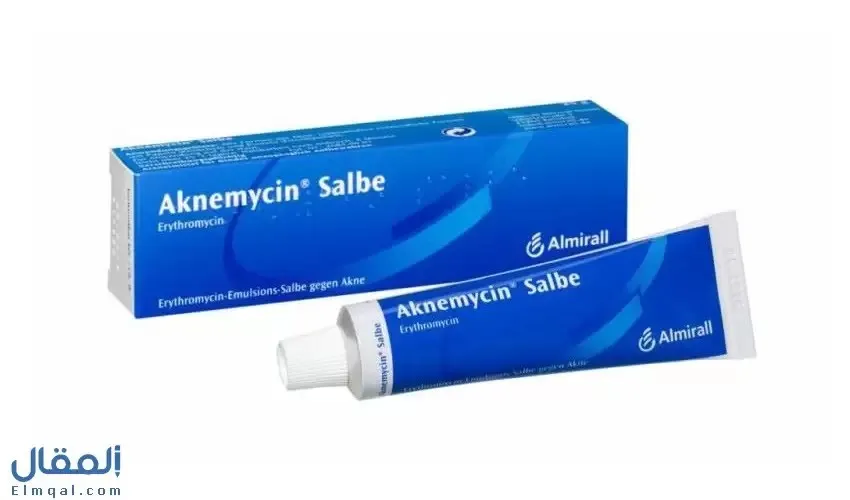
Table of Contents
Package leaflet: Information for the patient
Warning! Keep this leaflet. The information on the immediate packaging is in a foreign language.
Aknemycin (Aknemycin Salbe), 20 mg/g, ointment
Erythromycinum
Aknemycin and Aknemycin Salbe are different brand names for the same medicine.
Please read this leaflet carefully before using the medicine, as it contains
important information for the patient.
- Keep this leaflet, so that you can read it again if necessary.
- If you have any questions, consult your doctor or pharmacist.
- This medicine has been prescribed for a specific individual. Do not pass it on to others. It may harm someone else, even if their symptoms are the same.
- If you experience any adverse reactions, including any not listed in this leaflet, inform your doctor, pharmacist, or nurse. See section 4.
Table of contents of the leaflet:
- What Aknemycin is and what it is used for
- Important information before using Aknemycin
- How to use Aknemycin
- Possible side effects
- How to store Aknemycin
- Contents of the pack and other information
1. What Aknemycin is and what it is used for
Aknemycin ointment contains the active substance – the antibiotic erythromycin. Erythromycin
acts against microorganisms involved in the development of acne vulgaris, particularly
Propionibacterium acnes. In addition, topical erythromycin inhibits the breakdown of sebum
lipids on the skin surface.
Indications
All forms of acne vulgaris, particularly inflammatory forms with papules and pustules.
2. Important information before using Aknemycin
When not to use Aknemycin
- if the patient is allergic to erythromycin or any of the other ingredients of this medicine (listed in section 6);
- during breastfeeding, Aknemycin must not be applied to the area of the breast to avoid contact of the infant with the medicine.
Aknemycin and other medicines
Tell your doctor or pharmacist if the patient is currently taking, has recently taken, or might take any other medicines.
Interactions with other medicines are not known.
Pregnancy and breastfeeding
If the patient is pregnant or breastfeeding, suspects she may be pregnant, or is planning to have a child, she should consult a doctor or pharmacist before using this medicine.
If, in the opinion of the doctor, Aknemycin should be used during breastfeeding, contact between the infant's mouth and the treated skin area must be avoided to prevent oral intake of erythromycin by the infant.
Driving and operating machinery
Aknemycin has no influence on the ability to drive or operate machinery.
Aknemycin ointment contains cetostearyl alcohol and butylhydroxytoluene – components of white soft paraffin.
Cetostearyl alcohol may cause local skin reactions (e.g. contact dermatitis).
Butylhydroxytoluene may cause local skin reactions (e.g. contact dermatitis) or irritation of eyes and mucous membranes.
This medicine contains fragrance oil with allergens. These allergens (benzyl alcohol, benzyl benzoate, benzyl salicylate, cinnamaldehyde, cinnamyl alcohol, citral, citronellol, eugenol, farnesol, geraniol, hydroxycitronellal, isoeugenol, limonene, linalool) may cause allergic reactions.
Benzyl alcohol (a component of the fragrance oil) may cause allergic reactions and mild local irritation.
3. How to use Aknemycin
This medicine should always be used exactly as directed by your doctor or pharmacist. If in doubt,
consult your doctor or pharmacist.
This medicine is for topical application to the skin.
Aknemycin ointment is usually applied to the areas of skin affected by lesions, twice daily (e.g. in the morning and evening).
In most patients, noticeable improvement occurs within 4 weeks of treatment.
The treatment period should not exceed 4 to 6 weeks.
Before applying the ointment, you should:
- Wash the skin with lukewarm water to remove any residue from the previous application.
- Dry the skin thoroughly.
If you feel that the medicine's effect is too strong or too weak, consult your doctor or pharmacist.
Use of more than the recommended dose of Aknemycin
In case of accidental overdose, seek immediate advice from your doctor or pharmacist.
Missing a dose of Aknemycin
Do not use a double dose to make up for a missed dose.
Stopping the use of Aknemycin
If you have any further doubts regarding the use of this medicine, consult your doctor or pharmacist.
4. Possible adverse effects
Like any medicine, Aknemycin ointment for topical use may cause adverse effects, although not everyone experiences them.
Very rarely (in no more than 1 in 10,000 people), mild redness or slight peeling of the epidermis may occur at the beginning of treatment. These symptoms subside with prolonged use of the medicine.
In isolated cases, the above symptoms may occur as part of a hypersensitivity reaction (allergic contact dermatitis).
Prolonged use of the medicine may lead to worsening of lesions due to development of bacterial resistance and (or) to the occurrence of Gram-negative bacterial folliculitis.
If a severe skin reaction occurs in the patient—such as red, scaly rash with subcutaneous nodules and blisters (bullous exanthema)—immediate contact with a physician is required. The frequency of these adverse effects is unknown (cannot be determined from available data).
Reporting adverse effects
If any adverse effects occur, including any not listed in this leaflet, inform your doctor, pharmacist, or nurse.
Adverse effects can be reported directly to the Department of Monitoring Adverse Drug Reactions at the Office for Registration of Medicinal Products, Medical Devices and Biocidal Products:
Al. Jerozolimskie 181C, 02-222 Warsaw
Phone: +48 22 49 21 301
Fax: +48 22 49 21 309
Website: https://smz.ezdrowie.gov.pl
Reporting adverse effects helps to gather more information on the safety of using the medicine.
5. How to store Aknemycin
Keep the medicine out of sight and reach of children.
Do not store above 25°C.
The medicine should be used within 6 months after opening the package.
Do not use the medicine after the expiry date stated on the packaging. The expiry date refers to the last day of the stated month.
Translation of abbreviations appearing on the immediate packaging:
Ch.-B./Verwendbar bis: see tube fold – Batch number/Expiry date: see tube fold
Medicines must not be disposed of via wastewater or household waste. Ask your pharmacist how to dispose of medicines no longer in use. This will help protect the environment.
6. Contents of the packaging and other information
What Aknemycin contains
- The active substance is erythromycin. 1 g of ointment contains 20 mg of erythromycin.
- Other components (excipients) are: titanium dioxide, talc, white soft paraffin (containing butylhydroxytoluene), solid paraffin, liquid paraffin, cetyl-stearyl polyglycol ether phosphate, oleic acid oleyl ester, cetyl alcohol, lauryl polyglycol ether phosphate, sorbitol liquid non-crystallizing, fragrance oil (perfume oil Gardenia PHO/060927, containing: benzyl benzoate, propylene glycol (E 1520), benzyl alcohol, benzyl salicylate, cinnamaldehyde, cinnamyl alcohol, citral, citronellol, eugenol, farnesol, geraniol, hydroxycitronellal, isoeugenol, limonene, linalool), purified water.
What Aknemycin looks like and contents of the pack
Aknemycin is an ointment.
The medicinal product is packed in an aluminium tube with a screw cap made of HDPE, containing 25 g of ointment, placed in a cardboard box.
For further detailed information, please contact the Marketing Authorisation Holder or the parallel importer.
Marketing Authorisation Holder in Germany, country of export:
Almirall Hermal GmbH, Scholtzstraße 3, 21465 Reinbek, Germany
Manufacturer:
Almirall Hermal GmbH, Scholtzstraße 3, 21465 Reinbek, Germany
Parallel importer:
Delfarma Sp. z o.o., ul. Św. Teresy od Dzieciątka Jezus 111, 91-222 Łódź, Poland
Repackaged in:
Delfarma Sp. z o.o., ul. Św. Teresy od Dzieciątka Jezus 111, 91-222 Łódź, Poland
German Marketing Authorisation Number (country of export): 2684.00.01
Parallel Import Licence Number: 73/23