Airflusal forspiro
Poland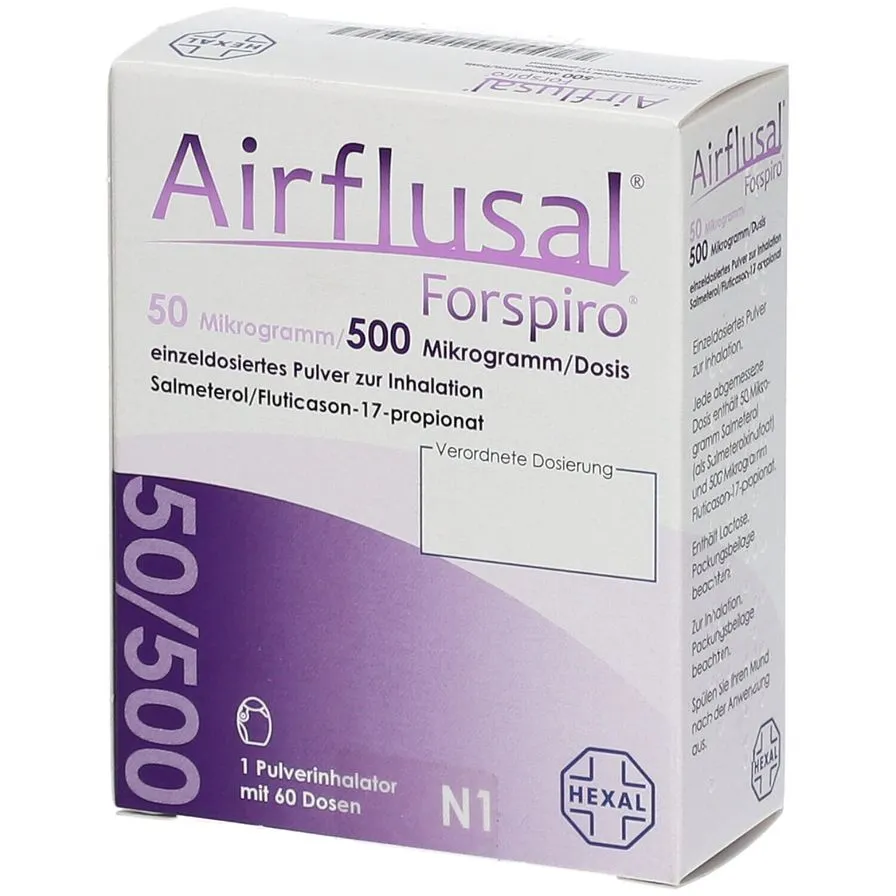
Instructions for Use
Package leaflet: Information for the patient
AirFluSal Forspiro
(50 micrograms + 250 micrograms)/dose, inhalation powder, in divided doses
Salmeterolum + Fluticasoni propionas
Please read the entire leaflet carefully before using the medicine, as it contains important information for the patient.
Keep this leaflet for future reference.
If you have any questions, please consult your doctor or pharmacist.
This medicine has been prescribed for a specific individual. Do not share it with others.
The medicine may harm another person, even if their symptoms are the same.
If you experience any adverse reactions, including those not listed in this leaflet, inform your doctor or pharmacist. See section 4.
Table of contents of the leaflet:
- What AirFluSal Forspiro is and what it is used for
- Important information before using AirFluSal Forspiro
- How to use AirFluSal Forspiro
- Possible side effects
- How to store AirFluSal Forspiro
- Contents of the pack and other information
1. What AirFluSal Forspiro is and what it is used for
AirFluSal Forspiro is used in the treatment of bronchial asthma.
The medicine contains two active substances:
salmeterol: a long-acting bronchodilator
fluticasone: a corticosteroid that reduces swelling and inflammation in the lungs.
2. Important information before using AirFluSal Forspiro
When not to use AirFluSal Forspiro
if the patient is allergic to salmeterol, fluticasone, or to any of the excipients of the medicine
(listed in section 6).
Warnings and precautions
Before using AirFluSal Forspiro, discuss with your doctor or pharmacist if the patient has:
- heart disease, including irregular or rapid heartbeat
- hyperthyroidism
- high blood pressure
- diabetes (AirFluSal Forspiro may increase blood sugar levels)
- low blood potassium levels
- tuberculosis (current or past) or other lung infections
If the patient develops blurred vision or other visual disturbances, inform the doctor immediately.
AirFluSal Forspiro helps prevent breathlessness and wheezing. It is important to remember that this medicine does not work when breathlessness or wheezing has already started.
In case of an acute attack of breathlessness, a fast-acting medicine (such as salbutamol) must be used to quickly dilate the airways.
If asthma symptoms or breathing difficulties worsen, contact the doctor immediately. This may include:
- wheezing
- more frequent chest tightness
- increased need for a fast-acting bronchodilator compared to usual.
In such cases, continue using AirFluSal Forspiro but do not increase the number of inhalations, as the patient's condition may deteriorate, potentially leading to severe illness. Contact the doctor, as additional treatment may be required.
Children and adolescents
AirFluSal Forspiro must not be used in children and adolescents under 18 years of age.
AirFluSal Forspiro and other medicines
Tell your doctor or pharmacist about all medicines the patient is currently taking, has recently taken, or plans to take, including over-the-counter medicines.
The following medicines may interact with AirFluSal Forspiro, affecting each other's action:
- medicines used to treat high blood pressure, heart conditions, or other diseases, containing an active substance ending in "olol" (beta-blockers), such as atenolol, propranolol, and sotalol
- antiviral medicines, including certain drugs used to treat HIV infection, such as ritonavir or cobicistat
Your doctor may need to closely monitor the patient's condition when taking these medicines. - antifungal medicines such as ketoconazole, itraconazole, and erythromycin
- oral or injectable corticosteroids: medicines used to treat inflammation or prevent organ transplant rejection
- diuretics used to treat high blood pressure
- other bronchodilators (such as salbutamol)
- medicines containing xanthine derivatives (commonly used in asthma treatment).
Pregnancy, breastfeeding, and fertility
If the patient is pregnant, breastfeeding, suspects she may be pregnant, or is planning to have a baby, she should consult her doctor or pharmacist before using this medicine. The doctor will decide whether treatment with AirFluSal Forspiro is appropriate during pregnancy.
Driving and using machines
It is unlikely that AirFluSal Forspiro will affect the ability to drive or operate machinery.
AirFluSal Forspiro contains lactose
If the patient has previously been diagnosed with intolerance to certain sugars, consult the doctor before using this medicine.
The amount of lactose contained in the medicine usually does not cause problems in individuals with lactose intolerance.
3. How to use AirFluSal Forspiro
This medicine should always be used exactly as directed by your doctor. If in doubt, consult your
doctor or pharmacist.
Asthma
The recommended dose for adults is:
one inhalation twice daily.
Your doctor will regularly monitor your asthma symptoms.
If your asthma symptoms are well controlled with AirFluSal Forspiro taken twice daily,
your doctor may reduce the dose to once daily:
once in the evening, if symptoms occur at night
once in the morning, if symptoms occur during the day.
Method of administration
AirFluSal Forspiro should be used daily, as directed by your doctor, preferably immediately
before a meal, in the morning and/or evening.
After inhalation, rinse the mouth with water.
Improper or inconsistent use of AirFluSal Forspiro may lead to worsening of respiratory symptoms.
To achieve optimal effectiveness, the medicine should be used daily, even if symptoms are not present.
Instructions for use
Your doctor, nurse, or pharmacist should demonstrate how to use the inhaler and should regularly
check that it is being used correctly.
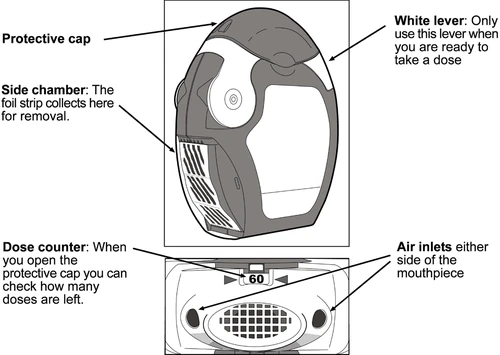
The inhaler contains 60 doses of powder for inhalation in a coiled foil strip (blister strip). It is equipped
with a dose counter indicating the number of doses remaining (from 60 to 0). Numbers indicating the last
10 doses are displayed on a red background.
The inhaler is not refillable – once empty, it should be replaced with a new device.
Before using the inhaler
Open the transparent side chamber cover.
Carefully tear off the entire length of the strip using the serrated edge (as shown in
the illustration). Do not pull or jerk the strip.
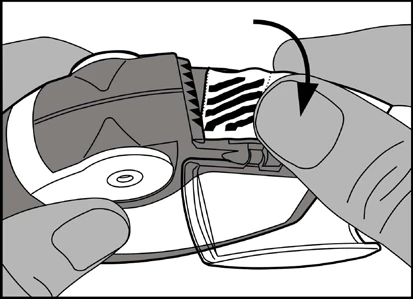
Close the chamber cover and dispose of the used foil strip.
Note:
As the inhaler is used, the side chamber gradually fills with the used foil strip. Foil strips with
black stripes do not contain medicine. At the end, numbered segments of the strip will appear. Do not allow
more than 2 strips to accumulate in the side chamber, as this may block the inhaler. Gently tear off the foil strip (as shown above)
and dispose of it safely.
Using the inhaler
Hold the inhaler in your hands as shown in the illustrations.
1. Opening
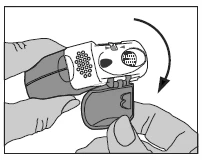
Uncover the mouthpiece by pulling down the protective cap.
Check the dose counter window to see how many doses remain.
2. Preparing the dose
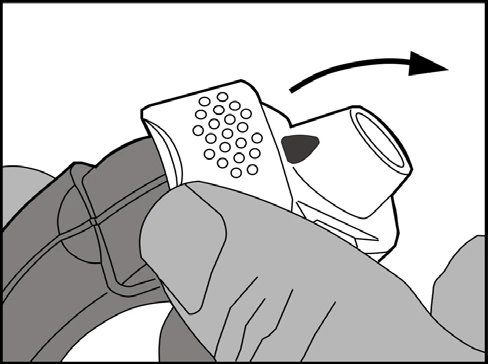
Lift the edge of the white lever. Ensure the side chamber is closed.
Note: The white lever should only be used when the patient is ready to take the dose.
Unnecessary use of the lever will result in loss of medicine doses.

Opening: pull the white lever fully until it clicks (audible click), which will load the dose and display its number in the dose counter.
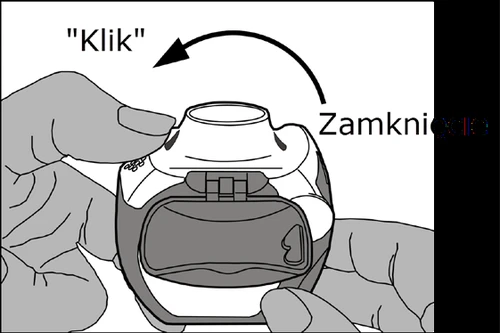
Closing: firmly close the white lever until a click is heard. The inhaler is now ready for immediate use.
3. Inhaling the dose
Away from the mouthpiece, breathe out as fully as possible. Never breathe out directly into
the inhaler, as this may alter the dose of medicine.
Hold the inhaler with the protective cap pointing downwards.
Close lips tightly around the mouthpiece.
Breathe in slowly and deeply through the mouth (not through the nose).
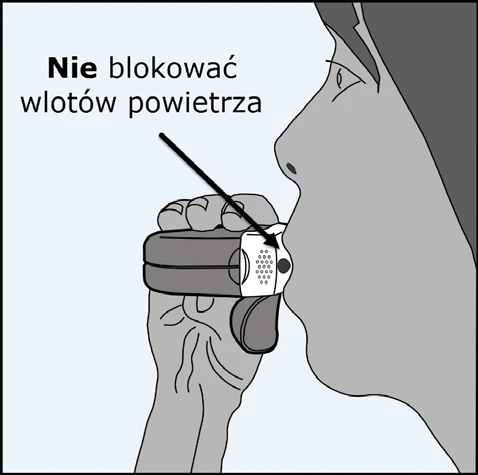
Remove the inhaler from the mouth and hold your breath for 5–10 seconds, or as long as possible
without discomfort.
After this time, breathe out slowly away from the inhaler.
Close the protective cap over the mouthpiece.
Rinse the mouth with water (spit out the water), to help prevent development of oral fungal
infection and hoarseness.
Cleaning
If necessary, wipe the outer part of the mouthpiece with a clean, dry cloth.
Do not disassemble the inhaler for cleaning or for any other purpose!
Do not clean any parts of the inhaler with water or wet wipes, as moisture may alter the dose of medicine!
Never insert needles or other sharp objects into the mouthpiece or any other part of the inhaler, as this may damage it!
Using more than the recommended dose of AirFluSal Forspiro
Contact your doctor or pharmacist.
Symptoms of overdose may include:
dizziness
headache
increased heart rate
muscle weakness
joint pain
tremor
If higher doses have been used for a prolonged period, consult your doctor or pharmacist, as long-term use of higher doses of AirFluSal Forspiro may reduce steroid hormone production by the adrenal glands.
It is important to use the medicine exactly as prescribed by your doctor. Do not increase or decrease the dose without your doctor’s approval.
Missing a dose of AirFluSal Forspiro
Do not use a double dose to make up for a missed dose. Take the next dose at the usual time.
Stopping treatment with AirFluSal Forspiro
Do not stop using or suddenly reduce the dose of AirFluSal Forspiro without your doctor’s approval, as this may worsen breathing problems and, very rarely, cause adverse effects such as:
abdominal pain
feeling of fatigue and loss of appetite, nausea
vomiting and diarrhoea
weight loss
headache or drowsiness
low blood sugar levels
low blood pressure and seizures.
Similar adverse effects may also occur very rarely during infection or in situations of severe stress (e.g. due to fever, injury, serious accident, or surgery). To prevent these symptoms, your doctor may prescribe additional corticosteroids (e.g. prednisolone).
If you have any further questions about the use of this medicine, consult your doctor or pharmacist.
4. Possible adverse effects
Like all medicines, this medicine can cause adverse effects, although they do not occur in everyone.
Allergic reactions: patients may experience sudden breathing difficulties immediately after
using AirFluSal Forspiro. Wheezing, coughing, or shortness of breath may occur, as well as itching, rash (urticaria), and swelling (usually of the face, lips, tongue, or throat), along with a sensation of very rapid heartbeat, fainting, or dizziness (which may lead to falling or loss of consciousness). If any of these symptoms occur, or if they occur suddenly after using AirFluSal Forspiro, a doctor should be contacted immediately. Allergic reactions to AirFluSal Forspiro occur uncommonly (they may affect fewer than 1 in 100 people).
Other possible adverse effects:
Very common (may affect more than 1 in 10 people)
headache (usually resolves during treatment)
increased number of colds in patients with chronic obstructive pulmonary disease (COPD)
Common (may affect fewer than 1 in 10 people)
oral and pharyngeal candidiasis (painful, creamy-yellow lesions), tongue pain, hoarseness, and throat irritation.
Rinsing the mouth with water and immediately spitting it out and/or brushing teeth immediately after each inhalation may be helpful. A doctor may prescribe an antifungal medication to treat candidiasis.
joint pain, swelling of joints, and muscle pain
muscle cramps
In patients with chronic obstructive pulmonary disease (COPD), the following adverse effects have been reported:
pneumonia (lung infection)
If any of the following symptoms occur during treatment with AirFluSal Forspiro, inform your doctor; they may be signs of lung infection:
- increased mucus production
- change in mucus colour
- fever
- chills
- worsening cough
- increased breathing difficulties
bruising and traumatic fractures
sinusitis
low blood potassium levels (which may cause irregular heartbeat, weakness, and/or muscle cramps)
Uncommon (may affect fewer than 1 in 100 people)
very fast heartbeat (tachycardia)
feeling of tremor and fast or irregular heartbeat (palpitations)
These are usually harmless symptoms that resolve during treatment.
feeling of sadness (occurs mainly in children)
increased blood sugar levels
In patients with diabetes, more frequent monitoring of blood glucose levels may be necessary, and the dose of antidiabetic medication may need to be adjusted.
sleep disturbances
chest pain
lens opacity (cataract)
allergic rash
Rare (may affect fewer than 1 in 1000 people)
breathing difficulties or wheezing that worsens immediately after using AirFluSal Forspiro
Stop using AirFluSal Forspiro and contact your doctor immediately.
To help breathing, use a fast-acting bronchodilator by inhalation.
impaired production of certain hormones, especially if the medicine is used at high doses for a prolonged period
Symptoms include:
- slowed growth in children and adolescents
- bone thinning (osteoporosis)
- increased intraocular pressure (glaucoma)
- weight gain
- rounded ("moon-shaped") face (Cushing's syndrome).
The doctor will regularly check whether any of these adverse effects occur and ensure that the patient is using the lowest effective dose.
behavioural changes such as unusual excitability and irritability
These symptoms occur mainly in children.
irregular heartbeat or extra heartbeats
Inform your doctor, but do not stop using AirFluSal Forspiro without medical advice.
fungal infection of the oesophagus, which may cause difficulty swallowing
Frequency not known, but may also occur:
depression or aggression
These symptoms occur mainly in children.
blurred vision
Reporting of adverse effects
If any adverse effects occur, including any not listed in this leaflet, inform your doctor, pharmacist, or nurse. Adverse effects can be reported directly to the Department of Monitoring Adverse Drug Reactions of the Office for Registration of Medicinal Products, Medical Devices and Biocidal Products: Al. Jerozolimskie 181C, 02-222 Warsaw
tel.: +48 22 49 21 301 / fax: +48 22 49 21 309 / website: https://smz.ezdrowie.gov.pl.
Adverse effects can also be reported to the marketing authorisation holder.
Reporting adverse effects helps provide more information on the safety of this medicine.
5. How to store AirFluSal Forspiro
Keep this medicine out of sight and reach of children.
Do not store above 25°C.
Do not use AirFluSal Forspiro after the expiry date stated on the label and carton after EXP. The expiry date refers to the last day of the stated month.
Medicines should not be disposed of via wastewater or household waste. Ask your pharmacist how to dispose of medicines no longer required. These measures will help protect the environment.
6. Contents of the pack and other information
What AirFluSal Forspiro contains
The active substances in this medicine are salmeterol and fluticasone propionate. Each metered dose contains 50 micrograms of salmeterol (as salmeterol xinafoate) and 250 micrograms of fluticasone propionate. This corresponds to the delivered dose containing 45 micrograms of salmeterol (as salmeterol xinafoate) and 233 micrograms of fluticasone propionate.
The other ingredient is monohydrate lactose.
What AirFluSal Forspiro looks like and contents of the pack
A violet plastic inhaler device with a foil blister containing 60 doses of inhalation powder.
Pack sizes: 1 or 2 inhaler devices, each containing 60 doses.
Marketing Authorisation Holder and Manufacturer
Marketing Authorisation Holder
Sandoz GmbH
Biochemiestrasse 10
6250 Kundl, Austria
Manufacturer
Aeropharm GmbH
Francois-Mitterrand-Allee 1
07407 Rudolstadt, Germany
For further information about the medicine and its names in the European Economic Area countries, please contact:
Sandoz Polska Sp. z o.o.
ul. Domaniewska 50C
02-672 Warsaw
tel. +48 22 209 70 00
Similar Medications
-
Airflusal forspiro
Form: powder for inhalation, divided
Active substance Dosage salmeterol xinafoate 50 mcg fluticasone propionate 500 mcg Manufacturer: Aeropharm GmbH
-
Airflusal forspiro
Form: powder for inhalation, divided
Active substance Dosage Salmeterol 50 micrograms/dose Fluticasone propionate 250 micrograms/dose Manufacturer: Sandoz s.r.o.
-
Airflusal forspiro
Form: powder for inhalation, divided
Active substance Dosage Salmeterol 50 micrograms/dose Fluticasone propionate 250 micrograms/dose Manufacturer: Sandoz s.r.o.
-
Airflusal forspiro
Form: powder for inhalation, divided
Active substance Dosage Salmeterol 50 mcg Fluticasone propionate 500 mcg Manufacturer: Sandoz s.r.o.
-
Airflusal forspiro
Form: powder for inhalation, divided
Active substance Dosage salmeterol 50 mcg fluticasone propionate 250 mcg Manufacturer: Sandoz d.d.
-
Airflusal forspiro
Form: powder for inhalation, divided
Active substance Dosage Salmeterol 50 mcg/dose Fluticasone propionate 500 mcg/dose Manufacturer: Sandoz s.r.o.
-
Aurodisc
Form: powder for inhalation, divided
Active substance Dosage salmeterol xinafoate 50 micrograms/dose fluticasone propionate 100 micrograms/dose Manufacturer: APL Swift Services (Malta) Ltd. Oy Medfiles Ltd. SPECIAL PRODUCTS LINE S.p.A.
-
Aurodisc
Form: powder for inhalation, divided
Active substance Dosage salmeterol xinafoate 50 micrograms/dose fluticasone propionate 250 micrograms/dose Manufacturer: APL Swift Services (Malta) Ltd. Oy Medfiles Ltd. SPECIAL PRODUCTS LINE S.p.A.
-
Aurodisc
Form: powder for inhalation, divided
Active substance Dosage salmeterol xinafoate 50 micrograms/dose fluticasone propionate 500 micrograms/dose Manufacturer: APL Swift Services (Malta) Ltd. Oy Medfiles Ltd. SPECIAL PRODUCTS LINE S.p.A.
-
Duexon pro
Form: powder for inhalation, divided
Active substance Dosage salmeterol xinafoate 50 mcg fluticasone propionate 100 mcg Manufacturer: Adamed Pharma S.A.
-
Duexon pro
Form: powder for inhalation, divided
Active substance Dosage salmeterol xinafoate 50 mcg fluticasone propionate 250 mcg Manufacturer: Adamed Pharma S.A.
-
Duexon pro
Form: powder for inhalation, divided
Active substance Dosage salmeterol xinafoate 50 mcg fluticasone propionate 500 mcg Manufacturer: Adamed Pharma S.A.
This page has been machine-translated and may contain inaccuracies. The original data is available in the manufacturing country's language.
Last data check: June 04, 2026 · Data source: Rejestr Produktów Leczniczych (URPL)