Agolek
Poland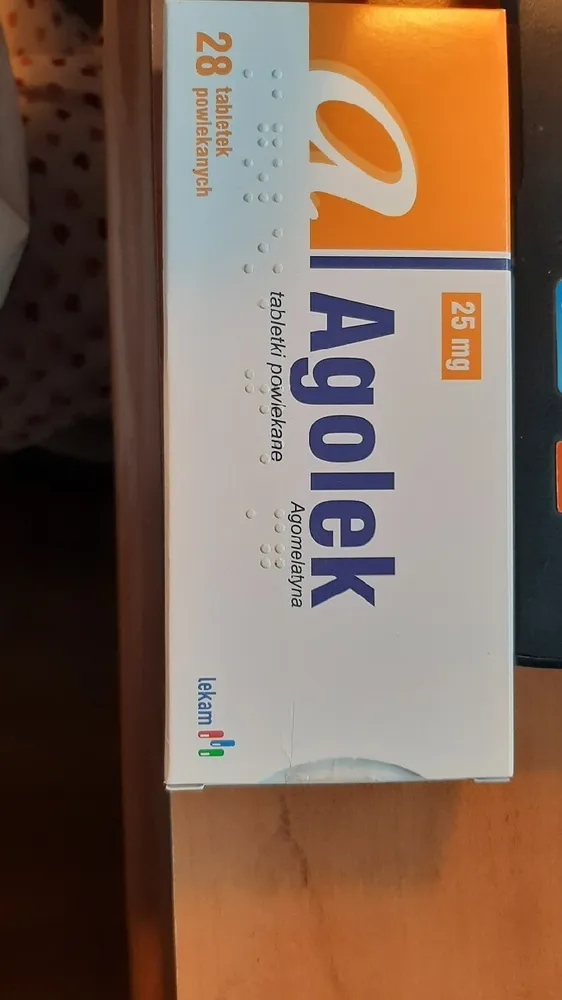
Table of Contents
Package leaflet: Information for the patient
Agolek, 25 mg, coated tablets
Agomelatine
Please read the entire leaflet carefully before taking this medicine, as it contains
important information for the patient.
- Keep this leaflet, as you may need to read it again.
- If you have any questions, please consult your doctor or pharmacist.
- This medicine has been prescribed for a specific individual. Do not pass it on to others. This medicine may harm someone else, even if their symptoms are the same.
- If you experience any adverse reactions, including any not listed in this leaflet, inform your doctor or pharmacist. See section 4.
Table of contents
- What Agolek is and what it is used for
- Important information before taking Agolek
- How to take Agolek
- Possible side effects
- How to store Agolek
- Contents of the pack and other information
1. What Agolek is and what it is used for
Agolek contains the active substance agomelatine. It belongs to a group of medicines known as antidepressants and has been prescribed to treat depression.
Agolek is used in adults.
Depression is a chronic mood disorder that affects daily life. Symptoms of depression vary among individuals but often include profound sadness, feelings of worthlessness, loss of interest in favorite activities, sleep disturbances, feelings of sluggishness or restlessness, and changes in body weight.
Expected benefits from taking Agolek include a reduction in the severity and gradual alleviation of symptoms associated with depression.
2. Important information before using Agolek
When not to use Agolek:
- if the patient is allergic to agomelatine or any of the other ingredients of this medicine (listed in section 6);
- if the patient's liver is not working properly (liver function disorders);
- if the patient is taking fluvoxamine (another medicine used to treat depression) or ciprofloxacin (an antibiotic).
Warnings and precautions
Treatment with Agolek may be inappropriate for several reasons:
- if the patient is taking medicines known to affect the liver. The patient should consult a doctor to find out which medicines are concerned;
- if the patient is obese or overweight, the patient should consult a doctor;
- if the patient has diabetes, the patient should consult a doctor;
if the patient had elevated liver enzyme activity before starting treatment, the doctor will decide whether Agolek is suitable;
- if the patient has bipolar affective disorder and symptoms of mania (excessive excitement and emotional disturbance) have occurred or are developing, the patient should talk to the doctor before starting or continuing treatment with this medicine (see also section 4 „Possible side effects”);
- if the patient suffers from dementia, the doctor will individually assess whether Agolek is appropriate for the patient.
During treatment with Agolek:
What should be done to avoid potential serious liver function disorders
- Before starting treatment, the doctor should check whether the patient's liver is working properly. In some patients, liver enzyme activity in the blood may increase during treatment with Agolek. For this reason, the following testing schedule should be followed:
| before starting treatment or increasing the dose | after approximately 3 weeks | after approximately 6 weeks | after approximately 12 weeks | after approximately 24 weeks | |
| Blood tests | ✓ | ✓ | ✓ | ✓ | ✓ |
Based on these tests, the doctor will decide whether the patient should receive the medicine or
continue treatment with Agolek (see also “How to take Agolek” in section 3).
Be vigilant for symptoms indicating impaired liver function.
- If the patient experiences any of the following signs of liver dysfunction: unusually dark urine, pale stools, yellowing of the skin or eyes (jaundice), pain in the upper right part of the abdomen, unusual fatigue (especially when associated with other symptoms listed above), seek immediate medical advice. The doctor may decide to discontinue treatment with Agolek. The efficacy of Agolek has not been documented in patients aged 75 years and older. For this reason, Agolek should not be used in these patients. Suicidal thoughts and worsening of depression If the patient suffers from depression, they may sometimes experience thoughts of self-harm or suicide. These thoughts may worsen at the beginning of antidepressant treatment, as all such medicines take time to become effective, usually about two weeks, and sometimes longer. The likelihood of such thoughts is higher:
- if the patient previously had suicidal or self-harming thoughts;
- if the patient is a young adult. Clinical trial data have shown an increased risk of suicidal behaviour in young adults (under 25 years of age) with psychiatric disorders treated with antidepressants. If the patient experiences thoughts of self-harm or suicide, they should immediately contact their doctor or go to a hospital. It may be helpful to inform a family member or friend about the depression and ask them to read this leaflet. The patient may ask them to alert them if they notice worsening depression or are concerned about changes in the patient’s behaviour.
Children and adolescents
Agolek is not intended for use in children and adolescents (under 18 years of age).
Agolek and other medicines
Inform your doctor or pharmacist about all medicines the patient is currently taking or has recently taken, as well as any medicines the patient plans to take.
The patient should not take Agolek together with certain medicines (see also “When not to take Agolek” in section 2): fluvoxamine (another medicine used to treat depression), ciprofloxacin (an antibiotic), as they may alter the blood levels of agomelatine.
Remember to inform the doctor if the patient is taking any of the following medicines: propranolol (a beta-blocker used to treat high blood pressure), enoxacin (an antibiotic), or if the patient smokes more than 15 cigarettes per day.
Taking Agolek with alcohol
Drinking alcohol during treatment with Agolek is not recommended.
Pregnancy
During pregnancy, breastfeeding, if pregnancy is suspected, or when planning pregnancy, consult a doctor or pharmacist before using this medicine.
Breastfeeding
Inform the doctor if the patient is breastfeeding or intends to breastfeed, as breastfeeding must be discontinued during treatment with Agolek.
Before taking any medicine, consult a doctor or pharmacist.
Driving and operating machinery
The patient may experience dizziness or drowsiness, which could affect their ability to drive or operate machinery. Before driving or operating machinery, ensure that reactions are normal.
Agolek contains sodium
The medicine contains less than 1 mmol of sodium (23 mg) per tablet; therefore, the medicine is considered "sodium-free".
3. How to take Agolek
This medicine should always be taken as instructed by the doctor or pharmacist. In case of
doubt, consult the doctor or pharmacist.
The recommended dose of Agolek is one tablet (25 mg) in the evening before bedtime. In some
cases, the doctor may prescribe a higher dose (50 mg), which is two tablets taken together
before bedtime.
Duration of treatment
In most patients with depression, Agolek begins to relieve depressive symptoms within two
weeks of starting treatment. The doctor may recommend continuing treatment with Agolek
even after the patient feels better, in order to prevent depression from recurring.
Depression should be treated for a sufficient duration, at least six months, to ensure that
symptoms have resolved.
If the patient has kidney problems, the doctor will perform an individual assessment and decide
whether taking Agolek is safe.
Method of administration
Agolek is intended for oral use. Swallow the tablet with water.
Agolek may be taken with or without food.
How to switch from an SSRI/SNRI antidepressant to Agolek?
If the doctor changes antidepressant therapy from an SSRI (Selective Serotonin Reuptake
Inhibitors) or SNRI (Serotonin Norepinephrine Reuptake Inhibitors) to Agolek, the doctor will
advise the patient on how to discontinue the previous medicine when starting Agolek.
For several weeks, the patient may experience withdrawal symptoms after stopping the
previous medicine, even if the dose is gradually reduced.
Withdrawal symptoms include: dizziness, numbness or tingling sensations, sleep disturbances,
agitation or anxiety, headache, nausea, vomiting, and tremor. These symptoms are usually mild
or moderate and resolve spontaneously within a few days.
When starting Agolek while tapering off the previous antidepressant, possible withdrawal
symptoms should not be mistaken for lack of early efficacy of Agolek.
When initiating treatment with Agolek, the patient should discuss with the doctor the best way
to discontinue the previous antidepressant.
Monitoring of liver function (see also section 2)
To check whether the patient's liver is functioning properly, the doctor will recommend blood
tests before starting treatment, and then periodically during therapy, usually after 3 weeks,
6 weeks, 12 weeks, and 24 weeks.
If the doctor increases the dose to 50 mg, blood tests should be performed at the beginning of
this dose, followed by periodic monitoring during treatment, usually after 3 weeks, 6 weeks,
12 weeks, and 24 weeks. If necessary, the doctor may also recommend further tests later.
Agolek must not be used if the patient's liver is not functioning properly.
Taking more Agolek than recommended
If the patient has taken more Agolek than prescribed, or if, for example, a child has accidentally
ingested the medicine, contact a doctor immediately.
Experience with agomelatine overdose is limited. Reported symptoms include upper abdominal
pain, drowsiness, fatigue, agitation, anxiety, tension, dizziness, cyanosis, or general malaise.
If a dose of Agolek is missed
Do not take a double dose to make up for a missed dose. Take the next dose at the usual time.
Stopping Agolek
Before stopping this medicine, the patient should discuss it with the doctor.
If the patient feels that the effect of Agolek is too strong or too weak, consult the doctor or
pharmacist.
If there are any further doubts regarding the use of this medicine, consult the doctor or
pharmacist.
4. Possible side effects
Like all medicines, this medicine can cause side effects, although not everybody gets them.
Most side effects are mild or moderate. Side effects usually occur during the first two weeks of treatment and are generally transient.
The side effects include:
- very common side effects (may affect more than 1 in 10 people): headache.
- common side effects (may affect up to 1 in 10 people): dizziness, somnolence, difficulty sleeping (insomnia), nausea, diarrhoea, constipation, abdominal pain, back pain, fatigue, anxiety, unusual dreams, increased liver enzyme activity in blood, vomiting, weight gain.
- uncommon side effects (may affect up to 1 in 100 people): migraine, sensation of pins and needles in fingers and toes (paraesthesia), blurred vision, restless legs syndrome (a disorder characterised by an uncontrollable urge to move the legs), tinnitus, excessive sweating, rash, itching, urticaria, restlessness, irritability, agitation, aggressive behaviour, nightmares, mania or hypomania (see also “Warnings and precautions” in section 2), suicidal thoughts or suicidal behaviour, confusion (disorientation), weight loss, muscle pain.
- rare side effects (may affect up to 1 in 1,000 people): severe skin rashes (erythematous rash), facial swelling (oedema), and angioedema (swelling of the face, lips, tongue and/or throat, which may cause difficulty in breathing or swallowing), hepatitis, yellowing of the skin or whites of the eyes (jaundice), liver failure*, hallucinations, inability to remain still (due to physical and mental restlessness), inability to completely empty the bladder. * There have been several reported cases resulting in liver transplantation or death.
Reporting of side effects
If any side effects occur, including any side effects not listed in this leaflet, inform your doctor or pharmacist. Side effects can be reported directly to the Department of Monitoring Adverse Drug Reactions of the Office for Registration of Medicinal Products, Medical Devices and Biocidal Products:
Al. Jerozolimskie 181C
02-222 Warsaw
tel.: + 48 22 49 21 301
fax: + 48 22 49 21 309
Website: https://smz.ezdrowie.gov.pl
Side effects can also be reported to the marketing authorisation holder. Reporting side effects helps provide more information on the safety of this medicine.
5. How to store the medicine Agolek
Keep the medicine out of sight and reach of children.
Do not use this medicine after the expiry date stated on the cardboard box and blister pack. The expiry date refers to the last day of the stated month.
Store in the original packaging to protect from moisture. There are no special storage temperature requirements for this medicine.
Medicines must not be disposed of via wastewater or household waste. Ask your pharmacist how to dispose of medicines no longer in use. This will help protect the environment.
6. Contents of the pack and other information
What Agolek contains
- The active substance is agomelatine. Each coated tablet contains agomelatine with citric acid, equivalent to 25 mg of agomelatine. The other ingredients are:
- Core of the coated tablet: silicified microcrystalline cellulose (microcrystalline cellulose and colloidal anhydrous silica), mannitol, povidone 30, colloidal anhydrous silica, crospovidone (type A), sodium stearyl fumarate, magnesium stearate, stearic acid 50
- Coating: hypromellose 2910/5, macrogol 6000, titanium dioxide (E 171), talc, iron oxide yellow (E 172)
What Agolek looks like and contents of the pack
Agolek 25 mg coated tablets are yellow, oblong, biconvex, with dimensions of 9 x 4.5 mm.
Agolek 25 mg coated tablets are packed in blisters and then placed in a cardboard box with a leaflet.
Pack sizes contain 14, 28, 30, 56, 60, 84 or 90 tablets.
Not all pack sizes may be marketed.
Marketing Authorisation Holder
LEK-AM Sp. z o.o. Pharmaceutical Company
ul. Ostrzykowizna 14 A
05-170 Zakroczym
Tel.: +48 22 785 27 60
Fax: +48 22 785 27 60 ext. 106
Manufacturer
MEDIS International a.s.,
vyrobni zavod Bolatice
Prumyslova 961/16
747 23 Bolatice
Czech Republic
13.01.2023