Aflegan
Poland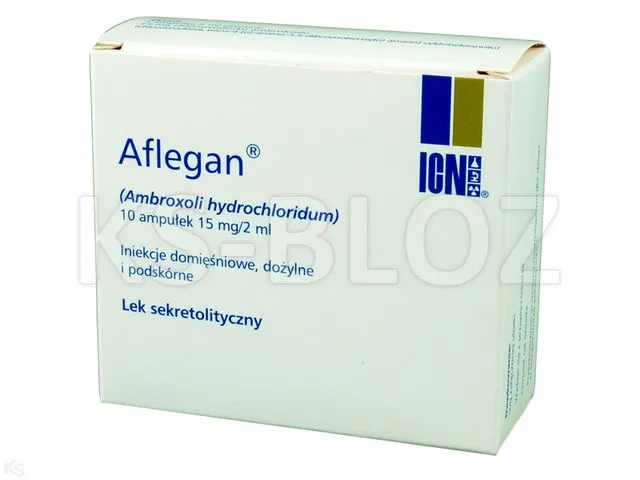
Table of Contents
- Package leaflet: Information for the user
- 1. What Aflegan is and what it is used for
- 2. Information before using Aflegan
- 3. How to use Aflegan
- 4. Possible adverse reactions
- 5. How to store Aflegan
- 6. Contents of the pack and other information
- Information intended exclusively for healthcare professionals:
Package leaflet: Information for the user
Aflegan, 7.5 mg/ml, solution for injection
Ambroxol hydrochloride
Please read all of this leaflet carefully before use, as it contains
important information for the patient.
- Keep this leaflet, as you may need to read it again.
- If you have any further questions, please consult your doctor, pharmacist, or nurse.
- This medicine has been prescribed for a specific individual. Do not share it with others. This medicine may harm another person, even if their symptoms are the same.
- If the patient experiences any adverse reactions, including any not listed in this leaflet, inform the doctor, pharmacist, or nurse. See section 4.
Contents of the leaflet:
- What Aflegan is and what it is used for
- Important information before using Aflegan
- How to use Aflegan
- Possible side effects
- How to store Aflegan
- Contents of the pack and other information
1. What Aflegan is and what it is used for
Aflegan contains the active substance ambroxol hydrochloride – a mucolytic agent. This medicine increases mucus secretion in the respiratory tract and improves its transport, thereby facilitating expectoration and relieving cough.
Aflegan is used to prevent pulmonary complications in patients undergoing intensive medical care after surgery.
2. Information before using Aflegan
When not to use Aflegan:
- if the patient is allergic to ambroxol hydrochloride or any of the other ingredients of this medicine (listed in section 6). Warnings and precautions Before starting to use Aflegan, discuss this with your doctor, pharmacist or nurse.
Be cautious when using Aflegan:
- if the patient has a stomach or duodenal ulcer,
- if the patient has renal impairment or (and) severe liver disease,
- if the patient's cough reflex is impaired or if there are disturbances in ciliary clearance of the bronchi (in such cases there is a risk of mucus accumulation in the airways),
- if the patient has bronchial asthma (Aflegan may initially worsen cough in such cases).
Severe skin reactions associated with ambroxol hydrochloride have been reported.
If a rash occurs (including lesions of mucous membranes, e.g. in the mouth, throat, nose, eyes, genital organs), discontinue Aflegan immediately and contact your doctor without delay.
Note:
After administration of the medicine, coughing should be encouraged to expel the liquefied mucus (alternatively, mucus should be suctioned).
The medicine should not be administered immediately before sleep.
Aflegan with other medicines
Inform your doctor about all medicines currently used or recently used, as well as any medicines planned for future use.
- Ambroxol increases the concentration of antibiotics (amoxicillin, cefuroxime, erythromycin, doxycycline) in lung tissue.
- Cough suppressants (e.g. codeine) inhibit the cough reflex and impair the expectoration of liquefied mucus; therefore, ambroxol should not be used concomitantly with cough suppressants.
- No clinically significant adverse interactions (mutual effects) between ambroxol and other medicines have been demonstrated.
Taking Aflegan with food and drink
Aflegan may be taken regardless of meals.
Pregnancy, breastfeeding and fertility
If the patient is pregnant or breastfeeding, suspects she might be pregnant, or is planning to have a child, she should consult her doctor or pharmacist before using this medicine.
Pregnancy
Use of Aflegan is not recommended during pregnancy, especially during the first trimester.
Breastfeeding
Ambroxol passes into breast milk. Use of Aflegan is not recommended during breastfeeding.
Driving and operating machinery
There is no evidence of the effect of the medicine on the ability to drive or operate machinery.
No studies have been conducted on the effect of Aflegan on the ability to drive or operate machinery.
Aflegan contains sodium.
The medicine contains less than 1 mmol (23 mg) of sodium per ampoule, meaning the medicine is considered "sodium-free".
3. How to use Aflegan
This medicine should always be used according to the doctor's instructions. If in doubt, consult
your doctor.
Recommended dose:
Adults: 15 mg (1 ampoule) 2 to 3 times daily; in severe cases, 30 mg (2 ampoules) 2 to 3
times daily.
Patients with renal function impairment:
In patients with renal insufficiency, the doctor may reduce the dose or prolong the intervals
between doses.
Method of administration:
Aflegan is administered by slow intravenous injection.
The medicine may also be given by intravenous infusion after prior dilution in glucose solution, fructose solution, 0.9% sodium chloride solution, or Ringer's solution.
Aflegan should not be mixed with solutions of pH higher than 6.2, as this may cause cloudiness and precipitation of free base – ambroxol.
Use of a higher than recommended dose of Aflegan
Specific symptoms of ambroxol overdose have not been described in humans so far.
After administration of a higher than recommended dose of Aflegan, symptoms listed in section 4 "Possible side effects" may occur. In such case, contact your doctor immediately. Symptomatic treatment is recommended.
Missed dose of Aflegan
If the next dose is missed at the scheduled time, it should be administered as soon as possible. However, if the time for the next dose is approaching, the missed dose should be skipped. Do not administer a double dose to make up for the missed dose.
Stopping treatment with Aflegan
Discontinuation of Aflegan does not cause adverse effects except for the possible worsening of mucus retention in the bronchi.
If you have any further doubts concerning the use of this medicine, consult your doctor or pharmacist.
4. Possible adverse reactions
Like all medicines, this medicine may cause adverse reactions, although not everyone will experience them.
If any of the following adverse reactions occur, stop taking the medicine and
contact a doctor immediately:
- anaphylactic reactions, including anaphylactic shock, angioedema (rapid swelling of the skin, subcutaneous tissue, mucous membranes or submucosal tissues), and itching
- severe skin reactions (including erythema multiforme, Stevens-Johnson syndrome, toxic epidermal necrolysis, and acute generalised exanthematous pustulosis)
The frequency of the above-mentioned reactions is unknown (cannot be estimated from the available data).
Additionally, the following adverse reactions may occur:
Rare (may affect up to 1 in 1,000 people):
- hypersensitivity reactions
- rash, urticaria
- heartburn, constipation
Very rare (may affect up to 1 in 10,000 people):
- facial swelling, dyspnoea, increased body temperature, chills
Frequency unknown (frequency cannot be estimated from the available data):
- nausea, vomiting, diarrhoea, indigestion, and abdominal pain.
Reporting of adverse reactions
If any adverse symptoms occur, including any adverse symptoms not listed in this leaflet, inform a doctor, pharmacist, or nurse. Adverse reactions can be reported directly to the Department for Monitoring Adverse Reactions to Medicinal Products at the Office for Registration of Medicinal Products, Medical Devices and Biocidal Products:
Al. Jerozolimskie 181C
02-222 Warsaw
Tel.: +48 22 49 21 301
Fax: +48 22 49 21 309
Website: https://smz.ezdrowie.gov.pl
Adverse reactions can also be reported to the marketing authorisation holder.
By reporting adverse reactions, additional information on the safety of this medicine can be collected.
5. How to store Aflegan
Store below 25°C.
Keep the medicine out of the sight and reach of children.
Do not use this medicine after the expiry date stated on the packaging. The expiry date refers to the last day of the stated month.
Medicines must not be disposed of via wastewater or household waste. Ask your pharmacist how to dispose of medicines no longer required. This will help protect the environment.
6. Contents of the pack and other information
What Aflegan contains
- The active substance is ambroxol hydrochloride. 1 ml of injection solution contains 7.5 mg of ambroxol hydrochloride. One ampoule (2 ml solution) contains 15 mg of ambroxol hydrochloride.
- Other components are: sodium chloride, disodium phosphate dodecahydrate, citric acid monohydrate, water for injections.
What Aflegan looks like and contents of the pack
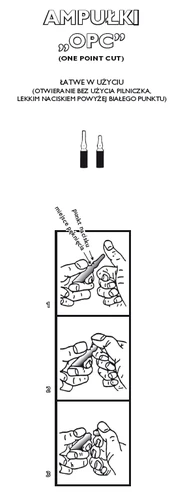
Aflegan is a clear, colourless to slightly yellow solution. The carton pack contains 10 ampoules, each containing 2 ml of injection solution. Orange OPC ampoules have a white ceramic dot and a red identification ring.
Marketing Authorisation Holder:
Bausch Health Ireland Limited
3013 Lake Drive
Citywest Business Campus
Dublin 24, D24PPT3
Ireland
Manufacturer:
Przedsiębiorstwo Farmaceutyczne Jelfa SA
ul. Wincentego Pola 21
58-500 Jelenia Góra
Information intended exclusively for healthcare professionals: