Aerrane
Poland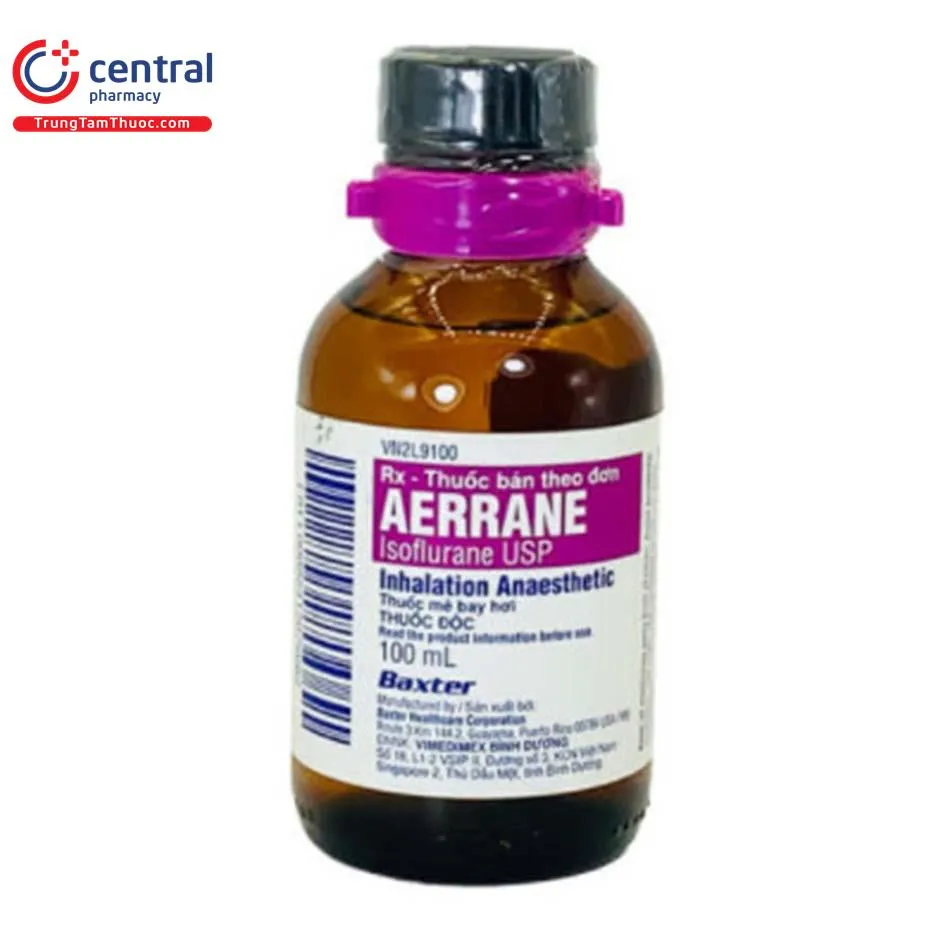
Table of Contents
Package leaflet: Information for the user
AERRANE, 100%, solution for inhalation anaesthetic
Isoflurane
Please read this leaflet carefully before using this medicine, because it contains
important information for the patient.
- Keep this leaflet, so that you can read it again if necessary.
- If you have any questions, please consult your doctor, nurse or pharmacist.
- If you experience any adverse reactions, including any adverse reactions not listed in this leaflet, tell your doctor, pharmacist or nurse. See section 4.
Leaflet contents:
- What AERRANE is and what it is used for
- Important information before using AERRANE
- How to use AERRANE
- Possible side effects
- How to store AERRANE
- Contents of the pack and other information
1. What AERRANE is and what it is used for
AERRANE contains isoflurane. It is used in surgery for general anaesthesia. It is an inhalational anaesthetic (administered to the patient as a vapour to be inhaled).
Inhaling isoflurane vapour induces a deep sleep without pain sensation. It is also used to maintain deep, pain-free sleep (general anaesthesia) during which a surgical procedure can be performed.
2. Important information before using AERRANE
When not to use AERRANE:
- if the patient is allergic (hypersensitive) to isoflurane or other inhaled anaesthetic medicines such as desflurane, sevoflurane, halothane, and enflurane;
- if the patient or a family member has experienced malignant hyperthermia. Malignant hyperthermia occurs when the patient suddenly develops a dangerous increase in body temperature during or shortly after surgery;
- if in the past, the patient experienced the following after anaesthesia with AERRANE or another inhaled anaesthetic (e.g. desflurane, sevoflurane, halothane):
- liver problems,
- jaundice (yellowing of the skin and whites of the eyes),
- unexplained fever,
- increased number of white blood cells – leukocytes (leukocytosis),
- increased number of a specific type of white blood cells – eosinophils (eosinophilia).
AERRANE must not be administered during surgical procedures performed on pregnant women,
during childbirth, or immediately after delivery. However, AERRANE may be used
during caesarean section.
AERRANE should not be used for dental procedures outside
hospitals or outpatient facilities.
If any of the above conditions apply to the patient, inform the
doctor, surgeon, or anaesthesiologist before administration of this medicine.
Warnings and precautions
Before using AERRANE, consult a doctor, nurse, or
pharmacist.
The doctor will exercise particular caution when using this medicine if:
- the patient has impaired cellular function (a condition known as mitochondrial disease).
- the patient has liver diseases such as:
- hepatitis,
- cirrhosis of the liver (replacement of healthy liver tissue with scar tissue), which may occur due to excessive alcohol consumption.
- other liver diseases.
- the patient is at risk of changes in the electrical activity of the heart (prolonged QT interval on ECG), as this may lead to a life-threatening heart rhythm disorder called torsade de pointes.
- the patient recently underwent surgery requiring general anaesthesia with an inhaled anaesthetic.
- the patient has symptoms of illness other than those related to prior surgery, such as: severe headache, nausea, vomiting, acute chest pain, or a condition affecting muscles (neuromuscular disease, e.g. Duchenne muscular dystrophy or myasthenia gravis).
- the patient has bronchospasm (constriction of the airways and narrowing of the respiratory tract, causing coughing, wheezing, or shortness of breath).
- the patient is a child under 2 years of age.
The doctor may need to administer a lower dose of AERRANE to the patient if:
- the patient has low blood volume (hypovolemia),
- the patient has low blood pressure (hypotension),
- the patient is weakened (exhausted).
AERRANE may irritate the mucous membranes of the mouth and
respiratory tract, which may lead to increased salivation and secretion from the trachea
and upper respiratory tract. In children, this may make breathing difficult or cause spasm
of the vocal cord muscles known as laryngospasm (spasm of the voice organ).
The patient receiving AERRANE may experience transient:
- changes in liver function,
- increased blood glucose (sugar) levels,
- decreased blood fat levels – cholesterol,
- changes in blood enzyme activity.
AERRANE may cause malignant hyperthermia (i.e. sudden dangerous increase in body temperature during or shortly after surgery).
Cases of fatal malignant hyperthermia associated with AERRANE have been reported.
The doctor will monitor the patient’s breathing during administration of the medicine, especially if
the patient is receiving other medicines that may affect respiration, such as:
- sedatives (e.g. diazepam, nitrazepam),
- strong painkillers (e.g. opioids such as fentanyl, morphine, and remifentanil).
AERRANE markedly enhances the effect of muscle relaxants (see below).
If any of the above conditions apply to the patient (including a child), contact the doctor, nurse, or pharmacist. A thorough examination of the patient may be necessary, and treatment may need to be changed.
AERRANE and other medicines
Inform the doctor, nurse, or pharmacist about all medicines currently taken or recently taken by the patient, as well as any medicines the patient plans to take. This also includes medicines available without a prescription, including herbal preparations and natural products.
Exercise particular caution when using any of the following medicines concomitantly with AERRANE:
- non-selective MAO inhibitors (monoamine oxidase inhibitors such as phenelzine, isocarboxazid): the doctor will advise discontinuing these medicines 15 days before the planned surgical procedure.
- cardiac medicines – β-sympathomimetics (e.g. isoprenaline) and α- and β-sympathomimetics (e.g. adrenaline, noradrenaline): these may increase heart rate and cause severe cardiac arrhythmias.
- β-adrenolytics (e.g. atenolol, metoprolol): these are cardiac medicines commonly used in the treatment of arterial hypertension.
- isoniazid: used in the treatment of tuberculosis. The doctor will advise discontinuing isoniazid one week before the planned procedure. Do not restart isoniazid until 15 days after surgery.
- indirectly acting sympathomimetic medicines, e.g.:
- amphetamine, amphetamine derivatives (used in the treatment of ADHD – attention deficit hyperactivity disorder),
- appetite suppressants,
- ephedrine and ephedrine derivatives (common ingredients in cough and cold medicines). These medicines may increase the risk of arterial hypertension when used concomitantly with AERRANE. The doctor will advise the patient whether and when to discontinue these medicines.
- muscle relaxants (e.g. suxamethonium, pancuronium, atracurium, vecuronium). These medicines are used during general anaesthesia to relax the patient’s muscles. The anaesthesiologist may need to reduce the dose of these medicines.
- opioids (e.g. morphine, fentanyl, remifentanil): these are strong painkillers commonly used in general anaesthesia.
- calcium antagonists: medicines used in the treatment of arterial hypertension (e.g. felodipine, nicardipine).
If the patient is unsure whether any of the above situations apply, contact the doctor, nurse, or pharmacist before using AERRANE.
AERRANE with food, drink, and alcohol
AERRANE is a medicine that induces and maintains sleep, allowing the patient to undergo surgery. Ask the doctor, surgeon, or anaesthesiologist when and what can be eaten and drunk after waking up. Do not drink alcohol. The doctor will inform the patient when alcohol consumption can be resumed.
Pregnancy and breastfeeding
If the patient is pregnant or breastfeeding, suspects she may be pregnant, or is planning to have a child, she should consult the doctor, surgeon, or anaesthesiologist before using this medicine.
Due to limited data on the use of AERRANE in pregnant women, it should only be administered if the benefits outweigh the risks.
However, lower doses of AERRANE may be used during caesarean section.
As it is unknown whether AERRANE passes into breast milk, breastfeeding should be avoided after surgery when AERRANE has been administered for general anaesthesia.
Driving and operating machinery
Do not drive or operate tools and machinery for at least 24 hours after surgery during which AERRANE was administered. The anaesthetic medicine may affect the patient’s alertness and behaviour, potentially impairing the ability to perform normal daily activities for up to 6 days. The patient should arrange transportation home.
3. How to use AERRANE
AERRANE is ALWAYS administered to the patient by an anaesthetist, who decides on the dose of the medication based on the patient's age, body weight, and type of surgery being performed.
If the patient is a child, close monitoring is required during administration of isoflurane.
Induction of anaesthesia at the beginning of the procedure
Isoflurane is not recommended for use in infants and children for induction of anaesthesia.
Pre-anaesthetic treatment
The anaesthetist may decide to administer to the child a treatment aimed at preventing potential respiratory depression and disturbances in heart rate that may occur with the use of isoflurane.
AERRANE is obtained from liquid isoflurane using a vaporiser. The patient may receive AERRANE in one of two ways:
- before administering AERRANE via a mask, the patient may be given another intravenous anaesthetic to induce sleep. This method of administering AERRANE is used most frequently;
or
- the patient may be asked to inhale isoflurane vapour through a mask to induce sleep. The patient will fall asleep quickly and very easily. This method of administering AERRANE is used less frequently.
After surgery, the anaesthetist will stop administering AERRANE. The patient will wake up within a few minutes.
Overdose of AERRANE
If too much AERRANE has been administered, the administration of the drug will be stopped immediately. The patient will be given pure oxygen. Blood pressure and cardiac function will be closely monitored during the patient's recovery.
If you have any further questions about the use of this medicine, please consult your doctor, pharmacist, or nurse.
4. Possible adverse reactions
Like all medicines, this medicine can cause adverse reactions, although not everyone will experience them.
Most adverse reactions are mild to moderate in severity and short-lived, but some serious adverse reactions may also occur.
If an adult or child patient experiences unusual or unexpected symptoms after surgery, the doctor or anaesthesiologist should be informed IMMEDIATELY.
The most commonly reported adverse reactions are:
- bronchospasm, laryngospasm, causing difficulty in breathing,
- increased blood glucose or potassium levels. Rare cases of irregular heartbeat (arrhythmia) and death in children shortly after surgery have been reported, associated with the use of inhaled anaesthetic agents.
Medical advice should be sought immediately from a doctor, nurse, or pharmacist if any of the following adverse reactions occur, as they may be serious.
Adverse reactions with unknown frequency (i.e. frequency cannot be estimated from available data):
- anaphylactic reactions,
- hypersensitivity,
- contact dermatitis,
- facial swelling,
- rash,
- excitation,
- delirium,
- mood changes, sometimes extreme,
- seizures,
- cognitive impairment,
- cardiac arrhythmias, including life-threatening torsade de pointes,
- abnormal electrocardiogram (ECG), changes in heart rhythm and heart rate,
- cardiac arrest,
- abnormally slow or rapid heartbeat,
- hypotension,
- haemorrhage (uncontrolled bleeding),
- liver damage (hepatic necrosis) or impaired liver function (hepatocellular injury),
- nausea and vomiting,
- slow, shallow breathing (respiratory depression), dyspnoea, wheezing,
- discomfort in the chest,
- increased white blood cell count,
- abnormal levels of certain substances in the blood (increased blood bilirubin, increased blood creatinine, decreased blood urea, decreased cholesterol),
- increased liver enzyme activity,
- increased blood fluoride concentration (resulting from isoflurane breakdown) or increased blood carbon monoxide levels,
- malignant hyperthermia, including high body temperature,
- feeling cold, chills,
- temporary cessation of intestinal muscle activity (intestinal obstruction), causing discomfort, bloating, and vomiting,
- abnormal EEG (electroencephalogram) findings,
- presence of myoglobin (a protein found in muscles) in urine,
- rhabdomyolysis (muscle breakdown).
Reporting of adverse reactions
If any adverse reactions occur, including those not listed in this leaflet, inform your doctor or nurse. Adverse reactions can be reported directly to the Department of Monitoring Adverse Drug Reactions, Office for Registration of Medicinal Products, Medical Devices and Biocidal Products
Al. Jerozolimskie 181C
02-222 Warsaw
Phone: +48 22 49 21 301
Fax: +48 22 49 21 309
Email: [email protected]
Adverse reactions may also be reported to the marketing authorization holder.
Reporting adverse reactions helps to provide more information on the safety of the medicine.
5. How to store AERRANE
Keep this medicine out of the sight and reach of children.
No special precautions for storage are required.
Do not use this medicine after the expiry date stated on the label. The expiry date refers to the last day of the stated month.
Medicines must not be disposed of via wastewater or household waste. Ask your pharmacist how to dispose of medicines no longer in use. Such measures help protect the environment.
6. Contents of the pack and other information
What AERRANE contains
The active substance in AERRANE is isoflurane.
The medicine does not contain any other ingredients.
What AERRANE looks like and contents of the pack
AERRANE is a liquid.
The medicine is supplied in 100 ml and 250 ml amber glass bottles with a screw cap.
Available pack sizes:
1 bottle of 100 ml
1 bottle of 250 ml
6 bottles of 100 ml
6 bottles of 250 ml
Not all pack sizes may be marketed.
Marketing Authorisation Holder and Manufacturer
Marketing Authorisation Holder:
Baxter Polska Sp. z o.o.
ul. Kruczkowskiego 8
00-380 Warszawa
Poland
Manufacturer:
Baxter S.A.
Boulevard René Branquart 80
7860 Lessines
Belgium
For further information, please contact the local representative of the Marketing Authorisation Holder:
Baxter Polska Sp. z o.o.
ul. Kruczkowskiego 8
00-380 Warszawa
Poland
Baxter and Aerrane are trademarks of Baxter International Inc.