Adenosine kabi
Poland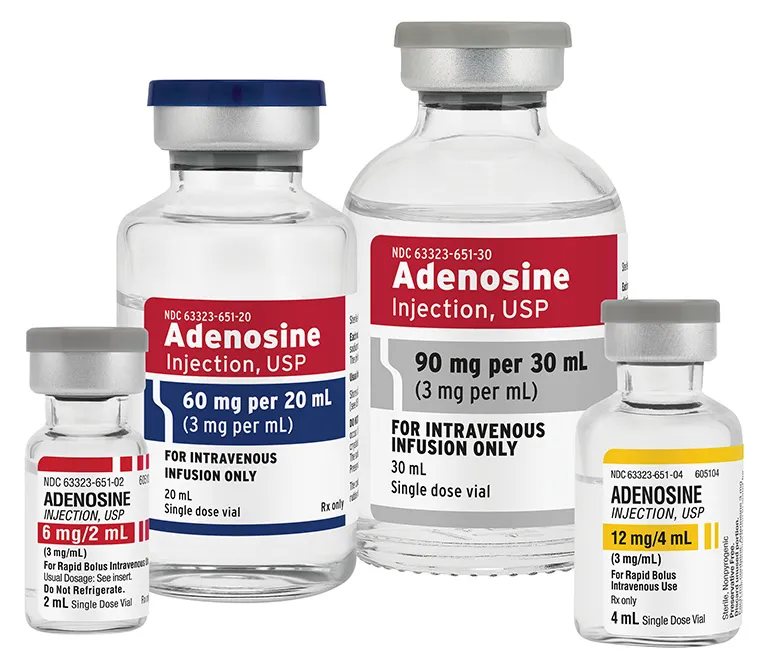
Table of Contents
- Patient Information Leaflet
- 1. What Adenosine Kabi is and what it is used for
- 2. Important information before using Adenosine Kabi
- 3. How to use Adenosine Kabi
- 4. Possible adverse reactions
- 5. How to store Adenosine Kabi
- 6. Contents of the pack and other information
- Information intended exclusively for medical professionals:
Patient Information Leaflet
Adenosine Kabi, 3 mg/ml, solution for injection in ampoule-syringe
Adenosinum
Please read all of this leaflet carefully before this medicine is administered, because it contains
important information for you.
- Keep this leaflet, as you may need to read it again.
- If you have any further questions, please ask your doctor or nurse.
- If you experience any side effects, including any not listed in this leaflet, please inform your doctor or nurse. See section 4.
Leaflet Contents
- What Adenosine Kabi is and what it is used for
- Important information before using Adenosine Kabi
- How to use Adenosine Kabi
- Possible side effects
- How to store Adenosine Kabi
- Contents of the pack and other information
1. What Adenosine Kabi is and what it is used for
Adenosine Kabi contains the active substance adenosine. It belongs to a group of medicines called antiarrhythmics.
Adenosine Kabi works by slowing down electrical impulses between the upper and lower chambers of the heart. This helps slow down a rapid or irregular heartbeat known as arrhythmia.
Adenosine Kabi is indicated for use in adult patients:
- for the diagnosis of the type of arrhythmia (irregular heartbeat) a patient is experiencing;
- for restoring normal heart rhythm in certain types of arrhythmias, known as paroxysmal supraventricular tachycardia or Wolff-Parkinson-White syndrome.
2. Important information before using Adenosine Kabi
When not to use Adenosine Kabi
- if the patient is allergic to adenosine or to any of the other ingredients of this medicine (listed in section 6); symptoms of an allergic reaction include: rash, difficulty swallowing or breathing, swelling of the lips, face, throat or tongue;
- if the patient has heart rhythm disorders and does not have a pacemaker implanted (second- or third-degree atrioventricular block, sick sinus syndrome);
- if the patient has very low blood pressure (severe hypotension);
- if the patient suffers from asthma or has other severe breathing disorders;
- if the patient has a certain type of heart failure in which the heart does not pump enough blood;
- if the patient has long QT syndrome – a rare heart disorder that may lead to rapid heartbeat and fainting;
- if the patient has unstable angina (a condition in which the heart does not receive sufficient blood and oxygen supply), which has not been properly stabilised with treatment;
- if the patient is taking dipyridamole (a medicine used to thin the blood).
Do not use this medicine if any of the above points apply to the patient.
If in any doubt, consult a doctor, nurse or pharmacist before using Adenosine Kabi.
Warnings and precautions
Before starting Adenosine Kabi, tell your doctor or nurse if:
- the patient has low blood volume (hypovolaemia), which is not corrected by appropriate treatment;
- the patient has narrowing of the main left artery supplying blood to the heart (coronary artery stenosis);
- the patient has a heart disease in which electrical impulses in a part of the heart take longer than usual to depolarise and then repolarise (recharge) (prolonged QT interval);
- the patient has narrowing of the carotid artery. This means insufficient blood flow to the brain (cerebrovascular insufficiency);
- the patient has heart disease caused by narrowing of heart valves;
- the patient has a left-to-right shunt of the heart. This means blood flows directly from the left side of the heart to the right;
- the patient has disorders affecting the part of the nervous system called the autonomic nervous system;
- the patient has inflammation of the membrane surrounding the heart (pericarditis) or fluid accumulation around the heart (pericardial effusion);
- the patient has had severe heart failure;
- the patient has recently suffered a heart attack or had a heart transplant within the past year;
- the patient has certain milder heart function disorders (first-degree atrioventricular block or bundle branch block). Symptoms of these conditions may temporarily worsen during treatment with Adenosine Kabi;
- the patient has a certain type of irregular heart rhythm, e.g. the heart beats very fast or irregularly (atrial fibrillation or flutter), particularly involving abnormal electrical activity in the heart (accessory conduction pathway);
- the patient has breathing difficulties (bronchospasm);
- the patient has ever had seizures or convulsions.
If the patient experiences very slow heart rate (severe bradycardia), respiratory failure,
life-threatening heart rhythm disturbances (asystole), severe chest pain (angina pectoris), or very low blood pressure (severe hypotension), adenosine administration must be stopped immediately.
If in doubt whether any of the above warnings apply to the patient, consult a doctor or nurse before using Adenosine Kabi.
Adenosine Kabi and other medicines
Tell your doctor or nurse about all medicines the patient is currently taking or has recently taken, as well as any medicines the patient plans to take, including those available without a prescription.
Adenosine Kabi may affect the action of other medicines. Likewise, other medicines may affect the action of adenosine.
In particular, inform your doctor, nurse or pharmacist if the patient is taking any of the following medicines:
- dipyridamole (a medicine used to thin the blood). Inform the doctor if dipyridamole is being used. The doctor will decide either not to use Adenosine Kabi, or to discontinue dipyridamole for 24 hours before starting Adenosine Kabi, or to reduce the dose of Adenosine Kabi;
- aminophylline or theophylline (medicines used to improve breathing). The doctor will decide not to use these medicines for 24 hours before starting Adenosine Kabi;
- caffeine (sometimes used in the treatment of headaches).
Adenosine Kabi with food and drink
Avoid consuming food and drinks containing caffeine, such as tea, coffee, chocolate and cola, for at least 12 hours before starting Adenosine Kabi.
Pregnancy, breastfeeding and fertility
Consult a doctor before using the medicine if the patient:
- is pregnant, may be pregnant, or suspects she may be pregnant; Adenosine Kabi should not be administered during pregnancy unless absolutely necessary;
- is breastfeeding; Adenosine Kabi should not be administered during breastfeeding.
If the patient is pregnant or breastfeeding, suspects she may be pregnant, or is planning to have a child, she should consult a doctor or pharmacist before using this medicine.
Adenosine Kabi contains sodium
The medicine contains less than 1 mmol (23 mg) of sodium per ml, meaning the medicine is considered "sodium-free".
3. How to use Adenosine Kabi
Method of administration
Adenosine Kabi is administered in a hospital setting.
Adenosine Kabi is given by a doctor or nurse as an intravenous injection.
The doctor will closely monitor heart function and blood pressure during administration of the medicine.
Dosage
If you have any doubts regarding the use and dosage of Adenosine Kabi, please consult your doctor, pharmacist, or nurse.
Adult patients
- The initial dose is 3 mg administered over 2 seconds as a rapid intravenous bolus injection.
- If cardiac function has not improved after the first dose, a second dose is administered. The second dose is 6 mg given as a rapid intravenous bolus injection.
- If cardiac function has not improved after the second dose, a third dose is administered. The third dose is 12 mg given as a rapid intravenous bolus injection.
- Doses greater than 12 mg should not be administered.
Infants and children
Adenosine Kabi in pre-filled syringes is not indicated for use in children.
Elderly patients
The recommended dosage is the same as for adult patients.
Overdose of Adenosine Kabi
Since Adenosine Kabi is administered by a doctor or nurse, it is unlikely that a patient will receive an excessive dose. The doctor will precisely determine the dose to be administered.
In the event that an overdose is administered, the following adverse effects may occur:
- very low blood pressure (severe hypotension);
- slow heart rate (bradycardia);
- disturbances in heart function (asystole). The doctor will monitor cardiac activity during administration.
Adenosine remains in the blood for a very short time. Therefore, any adverse effects resulting from an overdose are likely to resolve quickly once administration is stopped. Occasionally, intravenous administration of drugs such as aminophylline or theophylline may be necessary to counteract the adverse effects.
If you have any further doubts regarding the use of this medicine, please consult your doctor or nurse.
4. Possible adverse reactions
Like all medicines, this medicine can cause adverse reactions, although not everyone will experience them.
Adverse reactions may occur in patients during administration of Adenosine Kabi.
If any of the following adverse reactions become severe, inform the doctor
or nurse, who may decide to discontinue administration of the medicine.
Adverse reactions usually resolve within seconds or minutes after the infusion is stopped, but
you should inform the doctor or nurse if any of these reactions occur.
Very common (affects more than 1 in 10 patients):
- skin flushing with a sensation of warmth;
- slow heart rate (bradycardia);
- missed or extra heartbeats;
- heart block, in which the heart begins to beat more slowly (atrioventricular block);
- severe, life-threatening heart disturbances (asystole) or irregular heartbeat;
- shortness of breath or feeling the need to take a deep breath (dyspnea);
- chest pain or pressure in the chest.
Common (affects less than 1 in 10 patients):
- dizziness or a feeling of emptiness in the head;
- nausea;
- headache;
- abnormal skin sensations, such as burning;
- nervousness.
Uncommon (affects less than 1 in 100 patients):
- blurred vision;
- palpitations, sinus tachycardia;
- metallic taste in the mouth;
- rapid or deeper breathing (hyperventilation);
- feeling of pressure in the head or heavy arms;
- malaise, weakness, or pain;
- sweating.
Very rare (affects less than 1 in 10,000 patients):
- severe shortness of breath or breathing difficulties;
- redness, pain, or swelling at the injection site;
- discomfort during injection;
- increased intracranial pressure;
- very slow, fast, or irregular heartbeat;
- severe bradycardia (very slow heart rate).
Frequency not known (cannot be estimated from available data):
- loss of consciousness or fainting;
- seizures;
- vomiting;
- low blood pressure;
- heart disturbances that may be life-threatening (cardiac arrest);
- cessation of lung function;
- respiratory arrest (inhibition of respiratory function);
- allergic reactions (including facial or throat swelling, and skin reactions such as urticaria or rash);
- coronary artery spasm, which may lead to myocardial infarction;
- myocardial infarction (myocardial ischemia/ST-segment elevation), particularly in patients with narrowed coronary arteries;
- stroke/transient ischemic attack, secondary to the hemodynamic effects of adenosine, including arterial hypotension.
Reporting of adverse reactions
If any adverse reactions occur, including any not listed in this leaflet, inform your doctor, pharmacist, or nurse. Adverse reactions can be reported directly to the Department of Monitoring Adverse Drug Reactions of the Office for Registration of Medicinal Products, Medical Devices and Biocidal Products
Al. Jerozolimskie 181C
02-222 Warsaw
Phone: +48 22 4921301
Fax: +48 22 4921309
Website: https://smz.ezdrowie.gov.pl
Adverse reactions may also be reported to the marketing authorization holder.
Reporting adverse reactions helps provide more information on the safety of the medicine.
5. How to store Adenosine Kabi
This medicine is stored by a doctor, nurse or pharmacist in a safe place, out of sight and
beyond the reach of children.
The medicine should be stored out of sight and reach of children.
Do not use this medicine after the expiry date stated on the carton. The expiry date refers to the last day of the stated month.
Do not store in a refrigerator.
Single-use preparation. The medicine should be used immediately after opening. Any unused
portion of the medicine must be discarded.
Do not use this medicine if solid particles or discoloration of the solution are observed.
If any changes in the appearance of the medicine are noticed, the cartridge-syringe must be discarded.
Medicines must not be disposed of via wastewater or household waste. Ask a pharmacist how to dispose of medicines no longer required. Such measures help protect
the environment.
6. Contents of the pack and other information
What Adenosine Kabi contains
- The active substance is adenosine.
Each 1 ml pre-filled syringe contains 3 mg of adenosine.
Each 2 ml pre-filled syringe contains 6 mg of adenosine.
Each 4 ml pre-filled syringe contains 12 mg of adenosine.
- The other components are: sodium chloride, water for injections.
What Adenosine Kabi looks like and contents of the pack
Adenosine Kabi is a clear, colourless solution for injection.
Adenosine Kabi is available in packs containing 1, 6 or 10 pre-filled syringes.
Not all pack sizes may be marketed.
Marketing Authorisation Holder and Manufacturer
Marketing Authorisation Holder
Fresenius Kabi Polska Sp. z o.o.
Al. Jerozolimskie 134
02-305 Warsaw
Poland
Manufacturer
Fresenius Kabi Austria GmbH
Hafnerstrasse 36
A-8055 Graz
Austria
For further information about this medicinal product, please contact the Marketing Authorisation Holder:
Fresenius Kabi Polska Sp. z o.o.
Al. Jerozolimskie 134
02-305 Warsaw
Poland
Tel: +48 22 345 67 89
This medicinal product is authorised in the European Economic Area and the United Kingdom (Northern Ireland) under the following names:
| Country | Product Name | |--------|--------------| | Belgium | Adenosine Fresenius Kabi 3 mg/ml, solution for injection in a pre-filled syringe | | Denmark | Adenosin Fresenius Kabi | | Spain | Adenosina Kabi 3 mg/ml solución inyectable en jeringa precargada | | Netherlands | Adenosine Fresenius Kabi 3 mg/ml, oplossing voor injectie in een voorgevulde spuit | | Ireland | Adenosine 3 mg/ml solution for injection in pre-filled syringe | | Poland | Adenosine Kabi | | Portugal | Adenosina Kabi | | United Kingdom (Northern Ireland) | Adenosine 3 mg/ml solution for injection in pre-filled syringe | | Italy | Adenosina Kabi |
Information intended exclusively for medical professionals:
Adenosine Kabi, 3 mg/ml, solution for injection in prefilled syringe
For further information, please refer to the Summary of Product Characteristics.
Qualitative and quantitative composition
1 ml of solution contains 3 mg of adenosine.
Each prefilled syringe containing 1 ml of solution contains 3 mg of adenosine.
Each prefilled syringe containing 2 ml of solution contains 6 mg of adenosine.
Each prefilled syringe containing 4 ml of solution contains 12 mg of adenosine.
For a complete list of excipients, see section 6.1 of the Summary of Product Characteristics.
Pharmaceutical form
Solution for injection in prefilled syringe.
Therapeutic indications
Rapid restoration of sinus rhythm in paroxysmal supraventricular tachycardia, including cases with an accessory conduction pathway (Wolff-Parkinson-White syndrome).
Diagnostic use
Aid in the differential diagnosis of supraventricular tachycardia with either wide or narrow QRS complexes. Although adenosine is not effective in the treatment of atrial flutter, atrial fibrillation, or ventricular tachycardia, slowing of conduction through the atrioventricular node facilitates assessment of atrial electrical activity.
Sensitization during intracardiac electrophysiological studies.
Dosage and method of administration
Adenosine Kabi must be administered only in a hospital setting with immediate access to cardiopulmonary resuscitation equipment.
Adenosine Kabi must be administered only with monitoring equipment available for cardiac function. Further doses must not be administered to patients who have developed high-grade atrioventricular block after a given dose of adenosine.
Dosage
Adult patients
Initial dose: 3 mg administered as a rapid intravenous bolus injection (within 2 seconds).
Second dose: if supraventricular tachycardia has not terminated within 1 to 2 minutes after the first dose, administer 6 mg as a rapid intravenous bolus injection.
Third dose: if supraventricular tachycardia has not terminated within 1 to 2 minutes after the second dose, administer 12 mg as a rapid intravenous bolus injection.
Further or higher doses are not recommended.
Children and adolescents
Adenosine Kabi in prefilled syringe is not indicated for use in children.
Elderly patients
Recommended dosage as in adult patients.
Diagnostic dose
The above dosing regimen should be followed until sufficient diagnostic information is obtained.
Method of administration
Adenosine must be administered as a rapid intravenous bolus injection or via an infusion line. If administered via an infusion line, the injection should be made as proximally as possible, followed immediately by a flush of 0.9% sodium chloride solution. If administered into a peripheral vein, a large-bore cannula should be used.
Pharmaceutical data
List of excipients
Sodium chloride
Water for injections
Incompatibilities
Do not mix with other medicinal products, as compatibility has not been studied.
Shelf life
3 years
The medicinal product should be used immediately after opening.
Special precautions for storage
Do not store in the refrigerator.
Type and contents of container
Plastic prefilled syringe with a capacity of 1 ml containing 1 ml of solution (3 mg/1 ml), with a cap and halobutyl rubber stopper; without needle.
Pack sizes:
1 prefilled syringe
6 prefilled syringes
10 prefilled syringes
Plastic prefilled syringe with a capacity of 5 ml containing 2 ml of solution (6 mg/2 ml), with a cap and halobutyl rubber stopper; without needle.
Pack sizes:
1 prefilled syringe
6 prefilled syringes
10 prefilled syringes
Plastic prefilled syringe with a capacity of 5 ml containing 4 ml of solution (12 mg/4 ml), with a cap and halobutyl rubber stopper; without needle.
Pack sizes:
1 prefilled syringe
6 prefilled syringes
10 prefilled syringes
Not all pack sizes may be marketed.
Special precautions for disposal
Do not use this medicinal product if particulate matter or discoloration is observed.
Any unused medicinal product or waste material should be disposed of in accordance with local regulations.
Instructions for use of the prefilled syringe
To administer a 6 mg dose using a 5 ml prefilled syringe containing 4 ml of solution (12 mg adenosine/4 ml), first remove 2 ml of solution from the prefilled syringe before administering the remaining 2 ml to the patient.
Use aseptic technique.
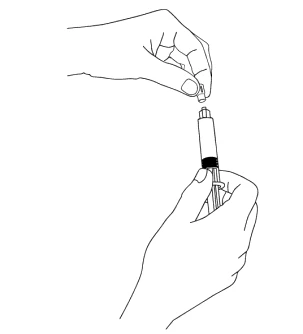
- Remove the cap.
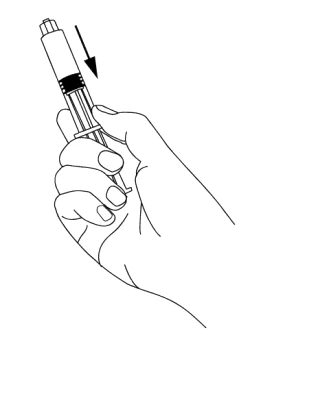
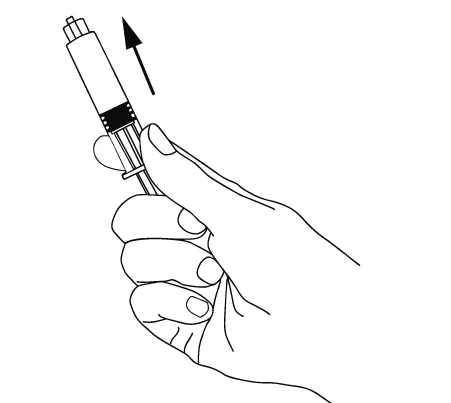
- Holding the syringe, push the plunger upward until fully depressed.
- Pull the plunger downward to remove the air bubble.