Actifed
Poland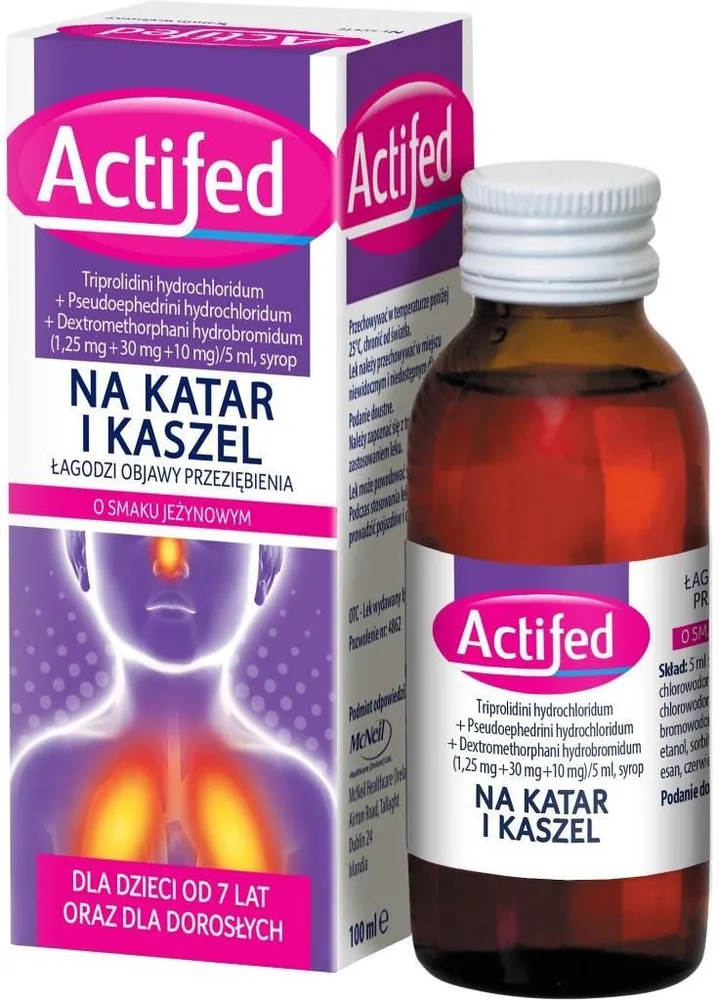
Table of Contents
Patient Information Leaflet
Actifed, (1.25 mg + 30 mg + 10 mg)/5 ml, syrup
Triprolidini hydrochloridum + Pseudoephedrini hydrochloridum + Dextromethorphani hydrobromidum
Please read this leaflet carefully before taking this medicine, as it contains
important information for you.
This medicine should always be taken exactly as described in this patient leaflet or as directed by your
doctor or pharmacist.
- Keep this leaflet so that you can read it again if necessary.
- If you need advice or further information, please consult your pharmacist.
- If you experience any adverse reactions, including any possible side effects not listed in this leaflet, inform your doctor or pharmacist. See section 4.
- If there is no improvement after 3 days, or if you feel worse, you should contact your doctor.
Table of contents
- What Actifed is and what it is used for
- What you need to know before taking Actifed
- How to take Actifed
- Possible side effects
- How to store Actifed
- Contents of the pack and other information
1. What Actifed is and what it is used for
Actifed is a red, raspberry-flavoured, clear syrup.
Actifed contains triprolidine, pseudoephedrine and dextromethorphan. Triprolidine is an antihistamine that reduces swelling of the nasal mucosa, nasal discharge, itching and sneezing. Pseudoephedrine is a decongestant that reduces congestion of the mucous membranes of the upper respiratory tract. Dextromethorphan acts as a cough suppressant by inhibiting the cough centre in the medulla oblongata. As a result of the action of these three active substances, Actifed relieves symptoms of the common cold such as nasal congestion and cough.
Actifed is indicated for the relief of symptoms associated with inflammatory conditions of the upper respiratory tract, where treatment with a nasal decongestant, an antihistamine and a cough suppressant may be beneficial. This medicine is indicated for use in adults and children aged 7 years and older.
2. Information before using Actifed
When not to use Actifed:
- if the patient is allergic to the active substances or to any of the other ingredients of this medicine (listed in section 6);
- if the patient has severe coronary heart disease;
- if the patient has very high blood pressure (severe arterial hypertension) or arterial hypertension that cannot be controlled with medication;
- if the patient has severe acute (sudden) or chronic (long-term) kidney disease or kidney failure;
- if the patient has severe liver failure;
- if the patient is taking or has taken within the last two weeks monoamine oxidase inhibitors (medicines used, among others, in depression);
- if the patient is taking furazolidone (an antibacterial medicine).
Warnings and precautions
Possibility of drug dependence
Cases of misuse and dependence on dextromethorphan have been reported. Special caution is advised when using this medicine in adolescents and young adults, as well as in patients with a history of drug or psychoactive substance abuse.
Use of this medicine may lead to dependence. Therefore, treatment should be short-term.
Before starting to use Actifed, consult a doctor or pharmacist if:
- the patient has heart disease or high blood pressure;
- the patient has thyroid disease, diabetes, increased intraocular pressure, glaucoma, or benign prostatic hyperplasia;
- the patient has impaired liver and/or kidney function;
- the patient has emphysema, chronic bronchitis, acute or chronic bronchial asthma;
- the patient has persistent or chronic cough, such as in asthma or cough with large amounts of phlegm;
- the patient has poor metabolism of the CYP2D6 enzyme;
- the patient is taking certain medicines such as some antidepressants or antipsychotics; Actifed may interact with these, causing changes in mental state (e.g. agitation, hallucinations, stupor) and other symptoms such as body temperature above 38°C, increased heart rate, unstable blood pressure, exaggerated reflexes, muscle rigidity, lack of coordination, and/or gastrointestinal symptoms (e.g. nausea, vomiting, diarrhoea).
Stop using Actifed and contact a doctor immediately or seek medical help if the patient experiences:
- sudden abdominal pain, rectal bleeding, or other symptoms of developing colitis;
- fever with generalized skin redness and blistering rash;
- sudden loss of vision. During treatment with Actifed, reduced blood flow to the optic nerve may occur. See section 4.
Cases of posterior reversible encephalopathy syndrome (PRES) and reversible cerebral vasoconstriction syndrome (RCVS) have been reported following use of medicines containing pseudoephedrine. PRES and RCVS are rare conditions that may involve reduced blood flow to the brain.
If symptoms occur that may indicate PRES or RCVS, stop using Actifed immediately and seek immediate medical help (symptoms, see section 4 "Possible side effects").
Do not consume alcohol while taking Actifed.
This medicine may cause drowsiness.
If symptoms do not improve, worsen, or new symptoms appear, stop using Actifed and consult a doctor.
Actifed with other medicines
Tell your doctor or pharmacist about all medicines the patient is currently taking or has recently taken, as well as any medicines the patient plans to take.
Do not use Actifed with the following medicines:
- monoamine oxidase inhibitors (medicines used, among others, in depression);
- furazolidone (an antibacterial medicine).
Consult a doctor before using Actifed if the patient is taking:
- tricyclic antidepressants;
- medicines that reduce mucosal congestion;
- appetite suppressants;
- psychotropic medicines with amphetamine-like effects;
- blood pressure-lowering medicines such as bretylium, betanidine, guanethidine, debrisoquine, methyldopa, and medicines blocking α- and β-adrenergic receptors;
- sedatives and hypnotics;
- CYP2D6 enzyme inhibitors such as fluoxetine, paroxetine, sertraline, bupropion (antidepressants), quinidine, amiodarone, flecainide, propafenone (antiarrhythmics), terbinafine (antifungal), methadone (analgesic), cinacalcet (calcimimetic), haloperidol, perphenazine, and thioridazine (antipsychotics);
- metoprolol (a medicine used, among others, in hypertension);
- isavuconazole (an antifungal medicine);
- selective serotonin reuptake inhibitors (medicines used, among others, in depression).
Pregnancy and breastfeeding
If the patient is pregnant or breastfeeding, suspects she may be pregnant, or is planning to have a child, she should consult a doctor or pharmacist before using this medicine.
Actifed may be used during pregnancy and breastfeeding only if, in the opinion of the doctor, the benefit to the mother outweighs the potential risk to the fetus or breastfed infant.
Driving and operating machinery
Do not drive or operate machinery while taking Actifed.
This medicine contains 207.8 mg of alcohol (ethanol) in 5 ml of syrup. The amount of alcohol in 5 ml of this medicine is equivalent to less than 6 ml of beer or 3 ml of wine. The small amount of alcohol in this medicine will not cause noticeable effects.
This medicine contains 2.835 g of sucrose in 5 ml of syrup. This should be taken into account in patients with diabetes. If a patient has previously been diagnosed with intolerance to certain sugars, the patient should contact a doctor before taking the medicine.
This medicine contains 1000 mg of sorbitol (70% solution) in 5 ml of syrup, which corresponds to 200 mg/ml.
Sorbitol is a source of fructose. If a patient (adult or child) has previously been diagnosed with intolerance to certain sugars or hereditary fructose intolerance, a rare genetic disorder in which the patient's body cannot break down fructose, the patient should contact a doctor before taking the medicine or giving it to a child.
Sorbitol may cause gastrointestinal discomfort and may have a mild laxative effect.
This medicine contains 5 mg of sodium benzoate in 5 ml of syrup.
This medicine contains methyl hydroxybenzoate and cochineal red.
This medicine may cause allergic reactions (including delayed-type reactions).
This medicine contains less than 1 mmol (23 mg) of sodium in 5 ml of syrup, meaning the medicine is considered "sodium-free".
3. How to use Actifed
This medicine should always be taken exactly as described in this patient leaflet or as directed by a
doctor or pharmacist. If in doubt, consult a doctor or pharmacist.
This medicine is taken orally.
Dosage for adults and children over 12 years of age
10 ml of syrup three or four times daily.
The maximum daily dose is 40 ml.
Dosage for children aged 7 to 12 years
5 ml of syrup three or four times daily.
The maximum daily dose is 20 ml.
Use in children and adolescents
In cases of overdose in children, severe adverse effects, including neurological disturbances, may occur.
Caregivers should not administer doses exceeding the recommended amount.
Actifed syrup is contraindicated in children under 7 years of age.
Dosage in elderly patients
No detailed studies on the effects of Actifed in elderly patients have been conducted, but clinical experience
suggests that the dosage recommended for adults is also appropriate for elderly patients. Special attention
should be paid to kidney and liver function (see sections below: “Dosage in patients with hepatic impairment”,
“Dosage in patients with renal impairment”).
Dosage in patients with hepatic impairment
Experience indicates that the adult recommended dosage is also suitable for patients with mild hepatic
impairment. Caution should be exercised when administering the medicine to patients with mild or
moderate hepatic impairment. Actifed should not be used in patients with severe hepatic impairment.
Dosage in patients with renal impairment
Caution is advised when administering the medicine to patients with moderate renal impairment, especially
in patients with concomitant cardiovascular disease. Actifed should not be used in patients with severe
renal function disorders.
Use of a higher than recommended dose of Actifed
If a patient takes more than the recommended dose of Actifed, the following symptoms may occur:
nausea and vomiting, involuntary muscle contractions, excitation, confusion, drowsiness, disturbances of
consciousness, involuntary rapid eye movements, cardiac disorders (rapid heartbeat), coordination
disturbances, psychosis with visual hallucinations, and increased excitability.
Other symptoms of a significant overdose may include:
- conversion disorders (psychological disturbances), various hallucinations, insomnia, anxiety, psychosis, disorientation,
- clumsiness, reduced level of consciousness, speech disturbances, lethargy, nystagmus, serotonin syndrome (disturbances of consciousness, muscle tremors and contractions, impaired motor coordination, chills, sweating, elevated body temperature, diarrhea, seizures), tremor, sympathomimetic symptoms, including central nervous system stimulation or depression, anticholinergic syndrome (dilated pupils, flushing, fever, dry mouth, urinary retention, decreased bowel sounds),
- pupil constriction or dilation,
- reduced respiratory rate,
- urinary retention, renal failure,
- intestinal ischemic infarction, ischemic colitis,
- palpitations, bradycardia, cardiac arrhythmias, myocardial infarction, arrhythmia, hypertension, hypertensive crisis, intracranial hemorrhage, hypotension,
- muscle damage,
- low blood potassium levels,
- elevated body temperature.
If any of the above symptoms occur, seek immediate medical attention or go to a hospital. The doctor will
take appropriate measures, such as respiratory support and administration of anticonvulsant medications,
if necessary. In justified cases, gastric lavage and urinary catheterization may be required. If deemed
appropriate by the doctor, elimination of pseudoephedrine can be accelerated by administering
urine-acidifying agents or by dialysis.
In cases of dextromethorphan overdose, activated charcoal may be administered to asymptomatic patients
who have ingested an excessive dose of dextromethorphan within the previous hour.
In patients who have taken dextromethorphan and develop sedation or coma, the doctor may consider
administering naloxone. If seizures occur, the doctor may use benzodiazepines, and in case of hyperthermia,
benzodiazepines and external cooling may be applied.
Missed dose of Actifed
Do not take a double dose to make up for a missed dose.
If you have any further doubts regarding the use of this medicine, consult your doctor or pharmacist.
4. Possible adverse reactions
Like all medicines, this medicine can cause adverse reactions, although not everyone will experience them.
Very rare (less than 1 in 10,000 patients): The following have been reported since marketing:
- Stimulation, restlessness, euphoria, hallucinations, visual hallucinations, irritability, psychomotor agitation, insomnia,
- Cerebrovascular stroke, headache, dizziness, paresthesia (unpleasant sensations, most commonly tingling, numbness, or changes in skin temperature), excessive psychomotor activity, drowsiness, tremor,
- Heart rhythm disturbances, myocardial infarction, palpitations, tachycardia,
- Epistaxis (nosebleed),
- Abdominal discomfort, abdominal pain, ischemic colitis (see section Warnings and precautions), diarrhea, vomiting, nausea,
- Sudden occurrence of localized skin and/or mucosal swelling, rash, erythematous rash, itching, urticaria, pustular lesions accompanied by swelling and redness, and fever,
- Painful urination, urinary retention,
- Fatigue,
- Drug hypersensitivity, allergic reactions,
- Decreased appetite,
- Increased blood pressure.
Frequency unknown (frequency cannot be estimated from available data)
- Severe conditions affecting cerebral blood vessels, known as posterior reversible encephalopathy syndrome (PRES) and reversible cerebral vasoconstriction syndrome (RCVS). Treatment with Actifed should be stopped immediately and immediate medical help should be sought if symptoms indicating posterior reversible encephalopathy syndrome (PRES) or reversible cerebral vasoconstriction syndrome (RCVS) occur. These include:
- sudden, severe headache,
- nausea,
- vomiting,
- confusion,
- seizures,
- visual disturbances.
- Reduced blood flow in the optic nerve (ischemic optic neuropathy).
- Sudden fever, skin redness, or numerous small pustules (possible symptoms of acute generalized exanthematous pustulosis - AGEP) may occur within the first 2 days of Actifed treatment. See section 2.
If any of these symptoms occur, Actifed treatment should be discontinued and a doctor should be contacted or immediate medical help should be sought.
Reporting of adverse reactions
If any adverse reactions occur, including any possible adverse reactions not listed in this leaflet, inform a doctor, pharmacist, or nurse. Adverse reactions can be reported directly to the Department of Monitoring Adverse Drug Reactions of the Office for Registration of Medicinal Products, Medical Devices and Biocidal Products:
Al. Jerozolimskie 181C, 02-222 Warsaw, phone: 22 49-21-301, fax: 22 49-21-309,
website: https://smz.ezdrowie.gov.pl.
Adverse reactions can also be reported to the marketing authorization holder.
Reporting adverse reactions helps to provide more information on the safety of the medicine.
5. How to store Actifed
Store below 25°C. Protect from light.
Keep the medicine in a place invisible and out of reach of children.
Do not use this medicine after the expiry date stated on the packaging. The expiry date refers to the last day of the stated month.
Medicines must not be disposed of via wastewater or household waste. Ask your pharmacist how to dispose of medicines no longer required. These measures help protect the environment.
6. Contents of the pack and other information
What Actifed contains
- The active substances in this medicine are: triprolidine hydrochloride, pseudoephedrine hydrochloride, dextromethorphan hydrobromide. 5 ml of syrup contains: 1.25 mg triprolidine hydrochloride, 30 mg pseudoephedrine hydrochloride, 10 mg dextromethorphan hydrobromide.
- Other ingredients are: sorbitol solution 70%, sucrose, sodium benzoate, methyl hydroxybenzoate, carmine red, ethanol 96%, raspberry flavour (containing ethanol 96%, cinnamaldehyde, d-limonene), levomenthol, vanillin, purified water.
What Actifed looks like and contents of the pack
Actifed is a red syrup with a raspberry flavour.
The pack consists of an amber glass bottle containing 100 ml of syrup, placed in a cardboard box together with a double-ended measuring spoon with 2.5 ml and 5 ml markings.
Marketing Authorisation Holder and Manufacturer
Marketing Authorisation Holder
McNeil Healthcare (Ireland) Limited
Office 5, 6 & 7, Block 5
High Street, Tallaght
Dublin 24, D24 YK8N
Ireland
Manufacturer
Delpharm Orléans
5, avenue de Concyr
45071 Orléans Cedex 2
France
For further information, please contact:
email: [email protected]