Acti-trin
Poland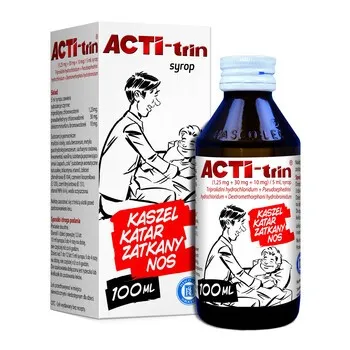
Table of Contents
Patient Information Leaflet
ACTI-trin
(1.25 mg + 30 mg + 10 mg)/5 ml, syrup
Triprolidini hydrochloridum + Pseudoephedrini hydrochloridum + Dextromethorphani
hydrobromidum
Please read this leaflet carefully before using the medicine, as it contains important
information for the patient.
This medicine should always be used exactly as described in this patient leaflet or as directed by
a doctor or pharmacist.
- Keep this leaflet for future reference.
- If advice or further information is needed, please consult a pharmacist.
- If any adverse reactions occur, including any possible adverse reactions not listed in this leaflet, inform a doctor or pharmacist. See section 4.
- If there is no improvement after 3 days or if symptoms worsen, consult a doctor.
Table of Contents
- What ACTI-trin is and what it is used for
- Important information before taking ACTI-trin
- How to take ACTI-trin
- Possible side effects
- How to store ACTI-trin
- Contents of the pack and other information
1. What ACTI-trin is and what it is used for
ACTI-trin contains three active substances: triprolidine, pseudoephedrine, and dextromethorphan.
Triprolidine in combination with pseudoephedrine suppresses the sneezing reflex, reduces nasal discharge, and relieves other cold symptoms.
Pseudoephedrine additionally reduces swelling and congestion of the nasal mucosa, thereby improving nasal airflow.
Dextromethorphan acts as a cough suppressant.
ACTI-trin is used for symptomatic treatment of inflammatory conditions of the upper respiratory tract (influenza, common cold, and other upper respiratory tract infections) associated with cough, nasal mucosal swelling, and watery nasal discharge.
2. Important information before using ACTI-trin
When not to use ACTI-trin:
- if the patient is allergic to the active substances or any of the other ingredients of this medicine (listed in section 6);
- during treatment with monoamine oxidase inhibitors (MAOIs) (such as iproniazid, phenelzine, isocarboxazid, tranylcypromine, clorgyline, selegiline, toloxatone, amiflamine, moclobemide, lazabemide) and for 2 weeks after discontinuation of MAO inhibitors;
- in bronchial asthma;
- in severe liver failure;
- if the patient has severe acute (sudden) or chronic (long-term) kidney disease or renal failure;
1/5
- in respiratory insufficiency;
- in cough with abundant mucus production and cough associated with bronchial asthma;
- if the patient has very high blood pressure (severe hypertension) or hypertension that cannot be controlled with medication;
- in severe ischemic heart disease;
- in cystic fibrosis;
- in pregnant and breastfeeding women;
- in children under 7 years of age.
Warnings and precautions
Use of this medicine may lead to dependence. Therefore, treatment should be short-term.
Before taking ACTI-trin, consult a doctor or pharmacist:
- if the patient is taking certain antidepressant or antipsychotic medicines – ACTI-trin may interact with them, causing changes in mental state (e.g. agitation, hallucinations, coma) and other symptoms such as body temperature above 38°C, increased heart rate, unstable blood pressure, exaggerated reflex responses, muscle rigidity, lack of coordination, and/or gastrointestinal symptoms (e.g. nausea, vomiting, diarrhoea).
Special caution is required when using ACTI-trin syrup:
- if symptoms persist beyond 3 days despite treatment, or if the infection is accompanied by fever, headache, rash, contact a doctor;
- do not take the medicine within 14 days of stopping treatment with monoamine oxidase inhibitors (such as iproniazid, phenelzine, isocarboxazid, tranylcypromine, clorgyline, selegiline, toloxatone, amiflamine, moclobemide, lazabemide);
- while taking ACTI-trin, do not use medicines that depress the central nervous system – sedatives and hypnotics, do not drink alcohol or consume medicines containing alcohol;
- in patients with hyperthyroidism, benign prostatic hyperplasia, glaucoma, heart disease, increased intraocular pressure, diabetes, arterial hypertension.
Cases of posterior reversible encephalopathy syndrome (PRES) and reversible cerebral vasoconstriction syndrome (RCVS) have been reported after using medicines containing pseudoephedrine.
PRES and RCVS are rare conditions that may be associated with reduced blood flow to the brain.
If symptoms occur that may indicate PRES or RCVS, stop using ACTI-trin immediately and seek immediate medical help (symptoms, see section 4 “Possible side effects”).
Consult a doctor, even if the above warnings relate to conditions that occurred in the past.
Children
This medicine is contraindicated in children under 7 years of age.
Use of ACTI-trin in patients with liver function disorders
This medicine should be used with caution in patients with liver disease.
ACTI-trin with other medicines
Tell your doctor or pharmacist about all medicines currently or recently taken, as well as any medicines you plan to take.
ACTI-trin syrup used concomitantly with monoamine oxidase inhibitors intensifies their effect and may cause collapse, coma, high fever, and increased blood pressure (see sections: “When not to use ACTI-trin” and “Warnings and precautions”).
2/5
Concomitant use of ACTI-trin syrup and central nervous system depressants (hypnotics and sedatives) and anticholinergic medicines or medicines with anticholinergic activity (antispasmodics acting on smooth muscles used in functional intestinal disorders, obstructive bronchitis, bronchial asthma, bradycardia, Parkinson's disease) may intensify their effects.
The effect of blood pressure-lowering medicines such as bretylium, betanidine, guanethidine, debrisoquin, methyldopa, and α- and β-adrenergic receptor blockers may be weakened by the action of pseudoephedrine contained in ACTI-trin.
Concurrent administration of ACTI-trin syrup and quinidine may inhibit hepatic metabolism of dextromethorphan contained in the medicine, increasing its serum concentration and thereby intensifying adverse effects.
Concomitant use of ACTI-trin syrup with other sympathomimetic stimulants, such as nasal decongestants, tricyclic antidepressants, appetite suppressants, psychotropic medicines with amphetamine-like effects, may occasionally cause increased blood pressure (see sections: “When not to use ACTI-trin” and “Warnings and precautions”).
While using ACTI-trin, do not take other medicines containing alcohol or consume alcoholic beverages.
Pregnancy and breastfeeding
If the patient is pregnant or breastfeeding, suspects she may be pregnant, or is planning to have a child, she should consult a doctor or pharmacist before using this medicine.
Studies determining the combined effect of the active substances on pregnancy have not been conducted.
Therefore, ACTI-trin should not be used in pregnant women.
The active substances pass into breast milk; therefore, the medicine should not be used in breastfeeding women.
ACTI-trin contains ethanol
The medicine contains 4.58% v/v ethanol (alcohol), i.e. up to 181 mg per dose (5 ml syrup), equivalent to 4.58 ml of beer or 1.91 ml of wine per dose. It is harmful for individuals with alcohol-related disorders.
The presence of alcohol should be taken into account when administering to children and individuals in high-risk groups, such as patients with liver disease or epilepsy.
ACTI-trin contains sodium benzoate
The medicine contains 3.02 mg of sodium benzoate in 5 ml of syrup.
ACTI-trin contains methyl parahydroxybenzoate
The medicine may cause allergic reactions (possible delayed-type reactions).
ACTI-trin contains liquid maltitol
If the patient has previously been diagnosed with intolerance to certain sugars, the patient should consult a doctor before taking the medicine.
Driving and operating machinery
This medicine may impair the ability to drive vehicles due to possible drowsiness and dizziness. While using ACTI-trin, do not drive vehicles or operate machinery.
3. How to use ACTI-trin
This medicine should always be taken exactly as described in the patient leaflet or as directed by a doctor or pharmacist. If in doubt, consult a doctor or pharmacist.
The medicine is taken orally.
3/5
Adults and children over 12 years: 10 ml of syrup 3 to 4 times daily, no more frequently than every 6 hours.
Children from 7 to 12 years: 5 ml of syrup 3 to 4 times daily, no more frequently than every 6 hours.
A dosing spoon or cup is supplied with the packaging for administering the medicine.
Children
In cases of overdose in children, serious adverse effects may occur, including neurological disturbances. Caregivers should not administer a dose higher than recommended.
Taking more than the recommended dose of ACTI-trin
If a patient takes more than the recommended dose of ACTI-trin, the following symptoms may occur:
nausea and vomiting, involuntary muscle contractions, agitation, confusion, drowsiness, disturbances of consciousness, involuntary rapid eye movements, cardiac disorders (rapid heartbeat), coordination disturbances, psychosis with visual hallucinations, and increased excitability.
Other symptoms of severe overdose may include: coma, severe respiratory depression, and seizures.
Additional symptoms of overdose: dizziness, irritability, disorientation, auditory hallucinations, sleep disturbances, psychomotor agitation, weakness, reduced muscle tone, dryness of the skin and mucous membranes, hypertension, elevated body temperature, and difficulty urinating.
If any of the above symptoms occur, seek immediate medical advice or go to hospital.
Missed dose of ACTI-trin
Take the missed dose as soon as possible. Do not take a double dose to make up for a missed dose.
4. Possible adverse reactions
Like all medicines, this medicine can cause adverse reactions, although not everybody will experience them.
You must immediately stop using ACTI-trin and seek immediate medical help if symptoms indicating posterior reversible encephalopathy syndrome (PRES) or reversible cerebral vasoconstriction syndrome (RCVS) occur. These include:
- sudden, severe headache,
- nausea,
- vomiting,
- confusion,
- seizures,
- visual disturbances.
Very rarely (less than 1 in 10,000 patients taking the medicine), the following have been observed: low mood, fatigue, restlessness, dizziness, sleep disorders, drowsiness, anxiety, hallucinations, heart rhythm disorders (tachycardia), nausea, vomiting, constipation or diarrhoea, dryness of the mucous membranes of the mouth and nasopharynx, urinary retention and painful urination (particularly in men with symptoms of prostate enlargement), itchy or non-itchy rash, urticaria.
Frequency unknown (cannot be estimated from available data): severe disorders affecting blood vessels in the brain, known as posterior reversible encephalopathy syndrome (PRES) and reversible cerebral vasoconstriction syndrome (RCVS).
Reporting of adverse reactions
If any adverse reactions occur, including any adverse reactions not listed in this leaflet, inform your doctor or pharmacist. Adverse reactions can be reported directly to the Department for Monitoring Adverse Drug Reactions at the Office for Registration of Medicinal Products, Medical Devices and Biocidal Products:
Al. Jerozolimskie 181C, 02-222 Warsaw
4/5
Tel: +48 22 49 21 301, Fax: +48 22 49 21 309
Website: https://smz.ezdrowie.gov.pl
Adverse reactions can also be reported to the Marketing Authorisation Holder.
Reporting adverse reactions helps provide more information on the safety of the medicine.
5. How to store ACTI-trin
Store below 25 °C. Keep in the original packaging to protect from light.
Keep the medicine out of the sight and reach of children.
Do not use this medicine after the expiry date stated on the packaging. The expiry date refers to the last day of the stated month.
Medicines must not be disposed of via wastewater or household waste. Ask your pharmacist how to dispose of medicines no longer required. This will help protect the environment.
6. Contents of the package and other information
What ACTI-trin contains
- The active substances in the medicine are triprolidine, pseudoephedrine and dextromethorphan. 5 ml of syrup contains: 1.25 mg triprolidine hydrochloride, 30 mg pseudoephedrine hydrochloride and 10 mg dextromethorphan hydrobromide.
- The other ingredients (excipients) are: liquid maltitol, sodium benzoate, methyl parahydroxybenzoate, sodium saccharin, levomenthol, vanillin, flavouring agent improving taste and smell “cola” (natural flavouring substances, triacetin, ethanol), ethanol 96% (v/v), purified water.
What ACTI-trin looks like and contents of the pack
The medicine is a syrup, packed in a brown glass bottle with an aluminium or polyethylene cap, in a cardboard box together with a dosing spoon or dosing cup.
1 bottle contains 100 ml of syrup.
Marketing Authorisation Holder and Manufacturer
"PRZEDSIĘBIORSTWO PRODUKCJI FARMACEUTYCZNEJ HASCO-LEK" S.A.
51-131 Wrocław, ul. Żmigrodzka 242 E
Medicine Information
tel.: (22) 742 00 22
e-mail: [email protected]
5/5