Aceklik
Poland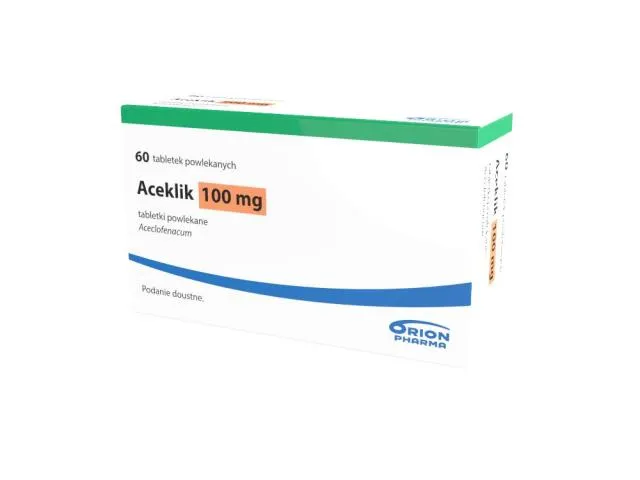
Table of Contents
Package leaflet: Information for the user
Aceklik, 100 mg, coated tablets
Aceclofenacum
Please read the entire leaflet carefully before using this medicine, as it contains important information for the patient.
- Keep this leaflet, as you may need to read it again.
- If you have any doubts, consult your doctor or pharmacist.
- This medicine has been prescribed for a specific individual. Do not share it with others. This medicine may harm other people, even if their symptoms are the same.
- If the patient experiences any adverse reactions, including any not listed in this leaflet, inform your doctor or pharmacist. See section 4.
Table of contents
- What Aceklik is and what it is used for
- Important information before taking Aceklik
- How to take Aceklik
- Possible side effects
- How to store Aceklik
- Contents of the pack and other information
1. What Aceklik is and what it is used for
Aceklik contains the active substance called aceclofenac. It belongs to a group of medicines known as non-steroidal anti-inflammatory drugs (NSAIDs).
Aceklik is used to relieve pain and inflammation in patients with:
- Osteoarthritis (degenerative joint disease). This condition commonly occurs in people over 50 years of age and causes degeneration of cartilage and bone tissue within the joint.
- An autoimmune disease causing chronic joint inflammation (rheumatoid arthritis).
- Inflammation of the spinal joints, which may lead to fusion of the vertebrae (ankylosing spondylitis).
2. Important information before using Aceklik
When not to use Aceklik:
- if the patient is allergic to aceclofenac or any of the other ingredients of this medicine (listed in section 6)
- if the patient is allergic to acetylsalicylic acid or any other NSAIDs (such as ibuprofen, naproxen or diclofenac)
- if the patient has previously experienced any of the following symptoms after taking acetylsalicylic acid or another NSAID:
- asthma attack
- bronchospasm
- nasal congestion, itching and (or) sneezing (nasal irritation)
- raised, red rash with circular lesions, possibly causing itching, stinging or burning
- severe allergic reaction (anaphylactic shock). Symptoms include difficulty breathing, wheezing, unusual pain and vomiting
- if the patient has previously had, currently has, or suspects having stomach ulcers or gastrointestinal bleeding
- if the patient has severe kidney disease
- if the patient has been diagnosed with or suspected of having liver failure
- if the patient is pregnant or breastfeeding (unless the doctor considers administration of the drug necessary)
- if the patient has active bleeding or coagulation disorders
- if the patient has heart and (or) cerebrovascular disease, e.g. if the patient has had a myocardial infarction, stroke, transient ischemic attack (TIA), or arterial embolism in the heart or brain, or has undergone surgery to unblock or bypass blocked vessels (bypass surgery)
- if the patient has current or previous circulatory disorders (peripheral arterial disease)
Aceklik is not recommended for use in children.
Warnings and precautions
Before starting to take Aceklik, discuss with your doctor:
- if the patient has any kidney or liver disease, tendency to fluid retention in the body, or if the patient is being treated with diuretics
- if the patient has any of the following gastrointestinal disorders:
- inflammatory bowel disease (ulcerative colitis)
- chronic inflammatory bowel disease (Crohn's disease)
- peptic ulcer, bleeding or perforation
- blood disorders
- if the patient has asthma or other breathing difficulties
- if the patient has a blood disorder known as porphyria
- if the patient has chickenpox or shingles, avoid using this medicine, as there is a risk of rare, serious skin infections associated with taking aceclofenac
- if the patient has recently undergone major surgery
- if the patient is elderly (the doctor should prescribe the lowest effective dose for the shortest possible duration).
Hypersensitivity reactions may occur, and very rarely, severe allergic reactions (see
section 4 "Possible side effects"). The risk is higher during the first month
of treatment. The use of Aceklik should be discontinued at the first signs of
skin rash, mucosal lesions or any symptoms of hypersensitivity.
Use of medicines such as Aceklik may be associated with an increased risk of heart attack
("myocardial infarction").
Before starting aceclofenac, inform your doctor if:
- the patient smokes
- the patient has diabetes
- the patient has angina pectoris, blood clots, high blood pressure, elevated cholesterol or triglyceride levels in the blood.
Adverse effects may be minimized by using the lowest effective dose
for the shortest possible duration.
The risk associated with taking the medicine is more likely with
high doses and long-term treatment.
Do not exceed the recommended dose or duration of treatment.
Aceklik and other medicines
Tell your doctor or pharmacist about all medicines the patient is currently taking or has recently taken, as well as any medicines the patient plans to take.
The patient should inform the doctor if taking:
- medicines used to treat depression (selective serotonin reuptake inhibitors) or bipolar disorder (lithium)
- medicines used to treat heart failure and cardiac arrhythmias (cardiac glycosides)
- medicines used to treat high blood pressure (antihypertensives)
- quinolone antibiotics
- medicines used to increase urine output (diuretics)
- medicines that prevent blood clotting (anticoagulants), such as warfarin, heparin
- methotrexate, used in the treatment of cancer and autoimmune diseases
- mifepristone, used to induce abortion
- any steroids (estrogens, androgens or glucocorticoids)
- medicines that suppress the immune system (cyclosporine or tacrolimus)
- medicines used to treat HIV (zidovudine)
- medicines that lower blood sugar levels (antidiabetic drugs)
- any other NSAIDs (acetylsalicylic acid, ibuprofen, naproxen), including cyclooxygenase-2 inhibitors.
Aceklik with food and drink
Aceklik should preferably be taken during or after a meal.
Pregnancy and breastfeeding
If the patient is pregnant or breastfeeding, suspects she may be pregnant, or is planning to have a
child, she should consult her doctor or pharmacist before using this medicine.
Pregnancy
Inform your doctor if the patient plans to become pregnant or has difficulty conceiving.
NSAIDs may impair fertility.
Aceklik must not be used during the last 3 months of pregnancy, as it may harm the unborn child or cause complications during delivery. Aceklik may cause kidney and heart problems in the unborn child. It may increase the tendency to bleeding in both the mother and her child and may delay or prolong labour. Aceklik should not be used during the first 6 months of pregnancy unless the doctor considers it absolutely necessary. If use of the medicine is necessary during this period or when planning pregnancy, the lowest possible dose should be used for the shortest possible duration. Aceklik used for longer than a few days beyond the 20th week of pregnancy may cause kidney problems in the unborn child, leading to low levels of amniotic fluid surrounding the baby (oligohydramnios) or narrowing of a blood vessel (ductus arteriosus) in the baby's heart. If the patient requires treatment for longer than a few days, the doctor may recommend additional monitoring tests.
Breastfeeding
Aceklik should not be used during breastfeeding. It is not known whether this medicine passes into breast milk. Taking this medicine during breastfeeding is not recommended unless the doctor considers it necessary.
Driving and operating machinery
If the patient experiences dizziness, drowsiness, fatigue or any visual disturbances after taking Aceklik, the patient should not drive or operate machinery.
Excipients
This medicine contains less than 1 mmol (23 mg) of sodium per tablet, meaning the medicine is considered "sodium-free".
3. How to take Aceklik
This medicine should always be taken exactly as directed by your doctor. Your doctor will prescribe the lowest effective dose for the shortest possible duration in order to minimize side effects. If in doubt, consult your doctor or pharmacist.
The recommended daily dose for adults is 200 mg (two 100 mg Aceklik tablets). One 100 mg tablet should be taken in the morning and the second in the evening.
The tablet should be swallowed whole with a large amount of water, during or after a meal. Do not crush or chew the tablet.
Do not exceed the recommended daily dose.
Elderly patients
Serious adverse reactions (listed in section 4, "Possible side effects") occur more frequently in elderly patients.
If your doctor prescribes Aceklik, you will receive the lowest effective dose for the shortest possible duration.
Taking more Aceklik than recommended
If you accidentally take too many Aceklik tablets, contact your doctor immediately or go to the nearest hospital emergency department. Take this leaflet or the Aceklik packaging with you so that medical staff know which medicine you have taken.
If you miss a dose of Aceklik
If you miss a dose, there is no cause for concern. Simply take the next dose at the usual time.
Do not take a double dose to make up for a missed dose.
Stopping Aceklik
Do not stop taking Aceklik unless your doctor advises you to do so.
If you have any further questions about the use of this medicine, consult your doctor or pharmacist.
4. Possible adverse effects
Like all medicines, this medicine can cause adverse effects, although not everyone will experience them.
You must stop taking the medicine and seek medical help immediately if the patient experiences any of the following adverse effects:
-
severe allergic reaction (anaphylactic shock). Symptoms may develop rapidly and can be life-threatening if not treated immediately, and may include: fever, difficulty breathing, wheezing, abdominal pain, vomiting, swelling of the face and throat.
-
severe skin rashes such as Stevens-Johnson syndrome and toxic epidermal necrolysis. These conditions are potentially life-threatening, develop rapidly, and involve formation of large blisters and skin peeling. The rash may also appear in the mouth, throat, or eyes. This is usually accompanied by fever, headache, and joint pain.
-
meningitis. Symptoms include high fever, headache, vomiting, red, blotchy rash, neck stiffness, light sensitivity or intolerance.
-
blood in the stool (faeces)
-
black, tarry stools. Vomiting blood or dark particles that look like coffee grounds.
-
medicines such as Aceklik may be associated with a small increased risk of heart attack ("myocardial infarction") or stroke.
-
kidney failure.
You must stop taking the medicine and contact your doctor if you experience:
- indigestion or heartburn
- abdominal pain (stomach ache) or other unusual stomach symptoms
- blood disorders such as reduced production of certain blood cells (bone marrow suppression), abnormal breakdown of red blood cells called haemolytic anaemia, low iron levels in the blood, low white blood cell count, low platelet count, increased potassium levels in the blood which may irritate blood vessels causing an inflammatory condition called vasculitis. These disorders may cause extreme tiredness, shortness of breath, joint pain, recurring infections, and skin bruising.
If any of the following adverse effects worsen, or if the patient experiences any adverse effects not listed in this leaflet, inform your doctor or pharmacist.
Common ( may affect up to 1 in 10 people ):
- dizziness
- nausea
- diarrhoea
- increased liver enzyme activity in blood.
Uncommon ( may affect up to 1 in 100 people ):
- gas (bloating)
- inflammation or irritation of the stomach lining (gastritis)
- constipation
- vomiting
- mouth ulcers
- itching
- rash
- skin inflammation
- raised, red rash with round lesions that may cause itching, stinging, or burning (urticaria)
- increased urea levels in blood
- increased creatinine levels in blood.
Rare ( may affect up to 1 in 1000 people ):
- low iron levels in blood
- hypersensitivity (allergic reaction)
- vision disorders
- heart failure
- hypertension
- shortness of breath
- gastrointestinal bleeding
- stomach and intestinal ulcers
Very rare ( may affect up to 1 in 10,000 people ):
- depression
- unusual dreams
- insomnia
- tingling, prickling, or numbness of the skin
- uncontrollable trembling (shivers)
- drowsiness
- headache
- taste disturbances in the mouth
- sensation of spinning while standing still
- ringing in the ears (tinnitus)
- loud or rapid heartbeat (palpitations)
- hot flushes
- difficulty breathing
- inflammation of the mouth
- perforation of the stomach wall, colon, or intestine
- exacerbation of ulcerative colitis and Crohn's disease
- pancreatitis
- hepatitis
- spontaneous bleeding into the skin (appearing as a rash)
- blisters
- fluid retention and oedema
- fatigue
- leg cramps
- increased alkaline phosphatase activity in blood
- weight gain.
Other adverse effects reported for this type of medicine (NSAIDs) include:
- hallucinations
- confusion
- blurred vision, partial or complete loss of vision
- eye pain during eye movement
- worsening of asthma
- skin reaction to sunlight
- kidney inflammation
- general malaise
In isolated cases during chickenpox, severe skin infections have been observed.
Reporting of adverse effects
If any adverse effects occur, including any not listed in this leaflet, inform your doctor or pharmacist. Adverse effects can be reported directly to the Department of Monitoring Adverse Drug Reactions at the Office for Registration of Medicinal Products, Medical Devices and Biocidal Products,
Al. Jerozolimskie 181C, 02-222 Warsaw, tel.: +48 22 49 21 301, fax: +48 22 49 21 309,
Website: https://smz.ezdrowie.gov.pl
Adverse effects can also be reported to the marketing authorisation holder.
Reporting adverse effects helps to provide more information on the safety of the medicine.
5. How to store Aceklik
Keep this medicine out of sight and reach of children.
Do not use this medicine after the expiry date stated on the carton and blister pack after "EXP". The expiry date refers to the last day of the stated month.
No special storage instructions apply for this medicine.
Medicines must not be disposed of via wastewater or household waste. Ask your pharmacist how to dispose of medicines no longer required. Such measures help protect the environment.
6. Contents of the pack and other information
What Aceklik contains
- The active substance is aceclofenac. Each tablet contains 100 mg of aceclofenac.
- The other ingredients are: microcrystalline cellulose, sodium croscarmellose, copovidone K28, talc, colloidal anhydrous silica, glycerol distearate (type I). The tablet coating contains hypromellose 2910 - 5 mPas, microcrystalline cellulose, titanium dioxide (E 171), polyglycolized stearate (type I).
What Aceklik looks like and contents of the pack
A white, round, biconvex coated tablet with a diameter of 8 mm and a height of 4 mm.
Aceklik is available in blister packs, in cardboard boxes containing 20, 30, 40, 50, 60, 70, 80, 90, 100 or 180 tablets.
Not all pack sizes may be marketed.
Marketing Authorisation Holder
Orion Corporation
Orionintie 1
02200 Espoo
Finland
Manufacturer/Importer
Orion Corporation, Orion Pharma
Orionintie 1
02200 Espoo
Finland
Orion Corporation, Orion Pharma
Joensuunkatu 7
24100 Salo
Finland
For further information about this medicine, please contact the local representative of the Marketing Authorisation Holder:
Orion Pharma Poland Sp. z o.o.
[email protected]
This medicinal product is authorised in the European Economic Area countries under the following names:
Lithuania: Aceclofenac Orion
Poland: Aceklik