Acecardin
Poland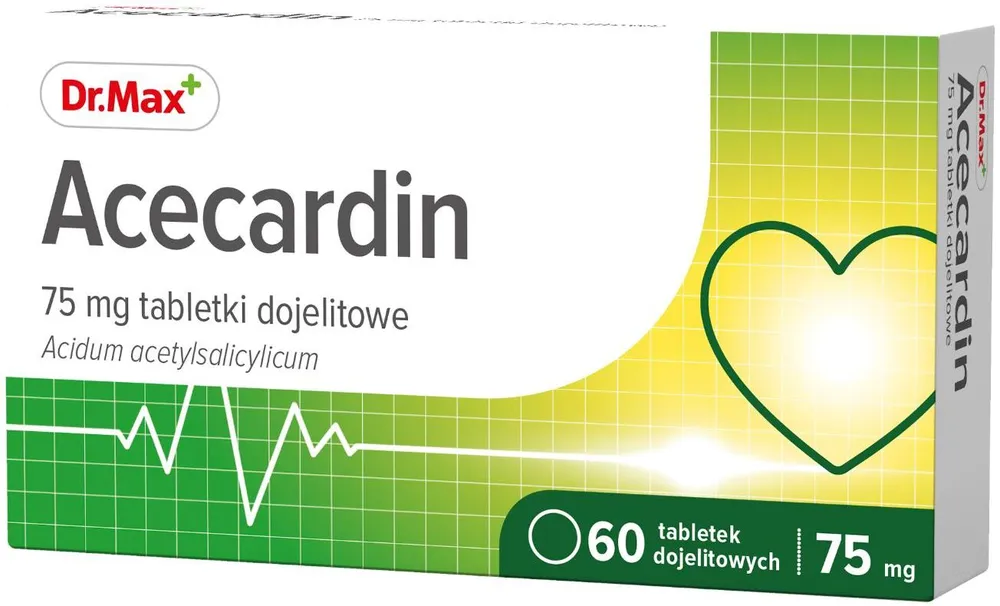
Table of Contents
- Patient Information Leaflet
- 1. What Acecardin is and what it is used for
- 2. Important information before using Acecardin
- 3. How to use Acecardin
- 4. Possible adverse effects
- 5. How to store Acecardin
- 6. Contents of the pack and other information
- Information intended exclusively for medical professionals
Patient Information Leaflet
Acecardin, 75 mg, enteric-coated tablets
Acetylsalicylic acid
Please read this leaflet carefully before taking this medicine because it contains important information for you.
You should always take this medicine exactly as described in this patient leaflet or as your doctor or pharmacist has instructed.
- Keep this leaflet so that you can read it again if necessary.
- If you need advice or further information, consult your pharmacist.
- If you experience any side effects, including any not listed in this leaflet, inform your doctor, pharmacist, or nurse. See section 4.
- If your symptoms do not improve or if you feel worse, you should consult your doctor.
Leaflet Contents
- What Acecardin is and what it is used for
- What you need to know before taking Acecardin
- How to take Acecardin
- Possible side effects
- How to store Acecardin
- Contents of the pack and other information
1. What Acecardin is and what it is used for
Acecardin contains the active substance acetylsalicylic acid, which inhibits platelet aggregation (clumping). This medicine is intended for long-term, prophylactic use in diseases associated with a risk of thrombus and embolus formation in blood vessels.
Acecardin is used:
- to prevent myocardial infarction in individuals at high risk,
- to prevent recurrent myocardial infarction,
- in acute myocardial infarction or suspected acute myocardial infarction,
- in unstable angina pectoris,
- following surgical or interventional procedures on blood vessels, e.g. coronary artery bypass grafting, coronary angioplasty,
- to prevent transient ischaemic attacks and ischaemic stroke, as well as after such events,
- in patients with symptomatic peripheral arterial disease,
- to prevent coronary thrombosis in patients with multiple risk factors,
- to prevent venous thrombosis and pulmonary embolism in patients who are immobilized for prolonged periods.
2. Important information before using Acecardin
When not to use Acecardin:
- if the patient is allergic to acetylsalicylic acid, other salicylates or any of the other ingredients of this medicine (listed in section 6),
- if the patient has an increased tendency to bleeding or coagulation disorders (e.g. haemophilia, thrombocytopenia), or if the patient is being treated simultaneously with anticoagulant medicines (e.g. coumarin derivatives, heparin),
- if the patient has peptic ulcer disease of the stomach and/or duodenum,
- if the patient has severe renal, hepatic or cardiac insufficiency,
- if the patient has previously experienced asthma attacks after taking acetylsalicylic acid or other non-steroidal anti-inflammatory drugs (symptoms: shortness of breath, wheezing),
- if the patient is in the last three months of pregnancy, doses greater than 100 mg per day must not be used (see section "Pregnancy, breastfeeding and fertility"),
- if the patient is taking methotrexate (a medicine used in cancer treatment) at doses of 15 mg per week or higher,
- in children under 12 years of age with viral infections (e.g. influenza or chickenpox), due to the risk of liver and brain damage (Reye's syndrome).
Warnings and precautions
Before starting to use Acecardin, discuss this with your doctor or pharmacist:
- if the patient is allergic to anti-inflammatory or anti-rheumatic drugs (e.g. naproxen) or other allergenic substances,
- if the patient suffers from asthma, chronic respiratory diseases, or has nasal polyps,
- if the patient has a history of peptic ulcer disease of the stomach or intestines,
- if the patient has impaired kidney and/or liver function, as there is a risk of increased adverse effects of the medicine,
- do not use Acecardin for at least 5 days before a planned surgical procedure (including minor procedures such as tooth extraction),
- if the patient is taking oral antidiabetic sulfonylurea drugs, due to the risk of enhanced hypoglycaemic effect (reduced blood glucose concentration), or if the patient is taking antihypertensive drugs,
- if the patient is taking ibuprofen simultaneously,
- in patients with juvenile rheumatoid arthritis and/or systemic lupus erythematosus and impaired liver function, as salicylate toxicity may increase; liver function should be monitored in these patients,
- in cases of uterine bleeding, excessive menstrual bleeding, use of intrauterine contraceptive devices, arterial hypertension, or heart failure,
- if the patient has glucose-6-phosphate dehydrogenase deficiency (a rare inherited disorder),
- during the first and second trimesters of pregnancy,
- during breastfeeding,
- if the patient is taking metamizole simultaneously, as it may reduce the inhibitory effect of acetylsalicylic acid on platelet aggregation.
Children and adolescents
Acecardin must not be used in children under 12 years of age.
Acecardin with other medicines
Inform your doctor or pharmacist about all medicines the patient is currently taking, has recently taken, or plans to take.
Do not use Acecardin simultaneously with:
- methotrexate at doses of 15 mg per week or higher.
Use of Acecardin together with the following medicines requires special caution and prior consultation with a doctor:
- other non-steroidal anti-inflammatory drugs, including salicylates,
- ibuprofen,
- anticoagulant medicines (heparin, coumarin derivatives),
- medicines used in gout (e.g. probenecid, benzbromarone),
- antidiabetic medicines – oral (e.g. tolbutamide, glibenclamide) and insulin,
- medicines that inhibit platelet aggregation (e.g. ticlopidine),
- medicines used to treat depression and anxiety (e.g. fluoxetine, paroxetine),
- diuretics (e.g. furosemide),
- systemic glucocorticoids,
- antihypertensive medicines (e.g. enalapril, captopril),
- valproic acid (an antiepileptic medicine),
- methotrexate at doses less than 15 mg per week,
- digoxin (a cardiac medicine),
- thrombolytic medicines (e.g. streptokinase, alteplase),
- acetazolamide.
Use of Acecardin in patients with impaired liver and/or kidney function
In patients with impaired liver and/or kidney function, there is a risk of increased adverse effects; therefore, dose adjustment may be necessary depending on the severity of hepatic and/or renal insufficiency.
Acecardin is contraindicated in cases of severe liver and/or kidney failure.
Use of Acecardin in elderly patients
Particular caution is required in elderly patients (over 65 years of age), and treatment should be under medical supervision due to the increased risk of adverse effects in this age group.
Taking Acecardin with food, drink and alcohol
The medicine should be taken during or after a meal.
Alcohol may increase the risk of gastrointestinal adverse effects.
Pregnancy, breastfeeding and fertility
If the patient is pregnant or breastfeeding, suspects she may be pregnant, or is planning to have a child, she should consult her doctor or pharmacist before using this medicine.
Pregnancy
If the patient continues or starts treatment with Acecardin during pregnancy as advised by a doctor, she should take Acecardin exactly as directed and should not exceed the recommended dose.
Pregnancy – third trimester
Doses of Acecardin greater than 100 mg per day should not be used if the patient is in the last three months of pregnancy, as this may harm the unborn child or cause complications during delivery. Use of Acecardin may cause disturbances in kidney and heart function in the unborn child. This may affect the tendency to bleeding in both the mother and her child, and may cause delay or prolongation of labour.
If the patient uses Acecardin in low doses (up to 100 mg per day inclusive), strict obstetric monitoring in accordance with the doctor's recommendations is required.
Pregnancy – first and second trimesters
Acecardin should not be used during the first 6 months of pregnancy unless the doctor considers its use absolutely necessary and recommends it. If treatment is necessary during this period or when trying to conceive, the lowest effective dose should be used for the shortest possible time. Acecardin taken for longer than a few days from the 20th week of pregnancy may cause kidney dysfunction in the unborn child, which may lead to low levels of amniotic fluid surrounding the baby (oligohydramnios), or narrowing of a blood vessel (ductus arteriosus) in the baby's heart. If treatment longer than a few days is necessary, the doctor may recommend additional monitoring.
Breastfeeding
Acetylsalicylic acid passes into breast milk in small amounts. Consult your doctor before using this medicine.
Short-term use of the medicine by a breastfeeding woman does not pose a major risk to the breastfed infant. However, breastfeeding is not recommended during long-term use of high doses of acetylsalicylic acid.
Fertility
Information on the effect of this medicine on fertility is limited or unavailable.
Driving and using machines
This medicine has no influence on the ability to drive or operate machinery.
Acecardin contains lactose
If the patient has been previously diagnosed with intolerance to certain sugars, the patient should consult a doctor before taking this medicine.
Acecardin contains sodium
This medicine contains less than 1 mmol (23 mg) of sodium per tablet, i.e. it is considered "sodium-free".
3. How to use Acecardin
This medicine should always be taken exactly as described in this patient leaflet or as directed by your doctor or pharmacist. If in doubt, consult your doctor or pharmacist.
Acecardin is available in a 75 mg dosage. Your doctor will recommend the appropriate dose for you and will specify the duration of treatment.
The medicine should be taken orally, preferably during or after a meal, with water.
The recommended dose is: 1–2 tablets of 75 mg per day.
In acute myocardial infarction or in patients with suspected acute myocardial infarction, the initial loading dose is: a single dose of 300 mg (4 tablets of 75 mg) of acetylsalicylic acid to achieve rapid inhibition of platelet aggregation. The tablets should be chewed thoroughly to accelerate absorption!
Taking more than the recommended dose of Acecardin
If you take more than the recommended dose, seek immediate advice from your doctor or pharmacist. In cases of severe poisoning, the patient must be taken immediately to a hospital emergency department.
Overdose in elderly individuals and young children (taking higher than recommended doses or accidental poisoning) requires special attention, as it may lead to death in these patient groups.
After an overdose of acetylsalicylic acid, symptoms may include nausea, vomiting, rapid breathing, and tinnitus.
Other observed symptoms include hearing loss, visual disturbances, headache, motor agitation, drowsiness and coma, seizures, and hyperthermia (body temperature above normal). In severe poisonings, disturbances in acid-base and water-electrolyte balance occur (metabolic acidosis and dehydration).
Missing a dose of Acecardin
If you miss a dose, take the next dose at the scheduled time. Do not take a double dose to make up for a missed dose.
If you have any further doubts about the use of this medicine, consult your doctor or pharmacist.
4. Possible adverse effects
Like all medicines, this medicine can cause adverse effects, although not everyone will experience them.
Treatment should be discontinued and immediate medical advice sought if the patient develops
first signs of hypersensitivity (e.g. swelling of the face, lips, tongue, or throat causing
difficulty in breathing or swallowing) or if bleeding occurs, such as gastrointestinal bleeding
(symptoms: black stools), or haemorrhage. The physician will then assess the severity of symptoms and decide on
further management.
Following administration of acetylsalicylic acid, the following have been reported:
Common (in 1 to 10 out of 100 people):
- gastrointestinal disturbances (dyspepsia, nausea, vomiting) and abdominal pain.
Uncommon (in 1 to 10 out of 10,000 people):
- inflammation of the stomach and intestines, gastric and (or) duodenal ulceration;
- transient disturbances in liver function.
Uncommon or rare:
- severe bleeding such as gastrointestinal haemorrhage (symptoms: black stools), cerebral haemorrhage (particularly in patients with uncontrolled arterial hypertension and (or) when administered concomitantly with anticoagulant drugs).
Haemorrhage may lead to acute or chronic anaemia due to blood loss and (or) iron deficiency anaemia (symptoms: fatigue, pallor).
Rare (less than 1 in 10,000 people):
- severe allergic reactions, including anaphylactic shock (symptoms: swelling of the face, eyelids, tongue, and larynx, marked decrease in blood pressure, and disturbances in heart rhythm and breathing);
- disturbances in kidney function;
- decreased blood glucose concentration.
In addition, the following have been observed:
- dizziness and tinnitus (symptoms of overdose);
- hypersensitivity reactions: rash, urticaria, angioedema, pruritus, cardiac and respiratory disorders (including asthma);
- increased risk of bleeding, prolonged bleeding time;
- perioperative haemorrhage, bruising, bleeding (from nose, genitourinary tract, gums).
If any adverse effect worsens or if any adverse effects not listed in this leaflet occur, inform a doctor or pharmacist.
Reporting of adverse effects
If any adverse effects occur, including those not listed in this leaflet, inform a doctor or pharmacist. Adverse effects can be reported directly to the Department of Monitoring Adverse Drug Reactions, Office for Registration of Medicinal Products, Medical Devices and Biocidal Products, Al. Jerozolimskie 181C, 02-222 Warsaw, tel.: +48 22 49 21 301, fax: +48 22 49 21 309, website: https://smz.ezdrowie.gov.pl
Adverse effects can also be reported to the marketing authorization holder.
Reporting adverse effects helps to provide more information on the safety of the medicine.
5. How to store Acecardin
The medicine should be stored in a place inaccessible and out of sight of children.
Store below 25°C.
Do not use this medicine after the expiry date stated on the carton and blister after: EXP.
The expiry date refers to the last day of the stated month.
Medicines must not be disposed of via wastewater or household waste. Ask your pharmacist how to properly dispose of medicines no longer required. Such measures help protect the environment.
6. Contents of the pack and other information
What Acecardin contains
- The active substance is acetylsalicylic acid. Each tablet contains 75 mg of acetylsalicylic acid.
- The other ingredients are: microcrystalline cellulose; powdered cellulose; pregelatinized starch; stearic acid; hypromellose; lactose monohydrate; macrogol 3350; triacetin; methacrylic acid and ethyl acrylate copolymer type A; talc; triethyl citrate; sodium hydrogen carbonate; colloidal anhydrous silica; sodium lauryl sulfate.
What Acecardin looks like and contents of the pack
Acecardin 75 mg are white to cream-colored, enteric-coated, round, biconvex tablets with a diameter of 6 mm.
The pack contains 15, 30, 60, 90 or 120 enteric-coated tablets in PVC/PVDC/Aluminum blisters, packed in a cardboard box.
Marketing Authorisation Holder and Manufacturer
Marketing Authorisation Holder:
Dr. Max Pharma s.r.o.
Na Florenci 2116/15
Nové Město
110 00 Prague 1
Czech Republic
tel.: (+420) 516 770 199
Manufacturer:
Laboratorium Galenowe Olsztyn Sp. z o.o.
ul. Spółdzielcza 25 A
11-001 Dywity
(logo of the Marketing Authorisation Holder) Dr. Max Pharma s.r.o.
Information intended exclusively for medical professionals
Instructions for management in case of overdose:
The patient should be transferred to a hospital emergency department.
There is no specific antidote.
Treatment of overdose:
- Induce vomiting or perform gastric lavage (to reduce drug absorption). This procedure is effective within 3–4 hours after drug ingestion, and in cases of poisoning with a very large dose, even up to 10 hours.
- Administer activated charcoal as an aqueous suspension (dose of 50–100 g in adults, and 30–60 g in children) to reduce absorption of acetylsalicylic acid.
- In case of hyperthermia, reduce body temperature by maintaining a low ambient temperature and applying cool compresses.
- Closely monitor disturbances in water-electrolyte balance and promptly correct them.
- To accelerate renal excretion of acetylsalicylic acid and in the treatment of acidosis, administer intravenous sodium bicarbonate. Maintain urine pH at 7.0–7.5.
- In very severe poisonings, when acid-base disturbances cannot be corrected by conservative treatment, and in cases of concomitant renal failure, hemodialysis or peritoneal dialysis should be performed. Dialysis effectively removes acetylsalicylic acid from the body and facilitates correction of acid-base and water-electrolyte imbalances.
- In cases of prolonged prothrombin time, administer vitamin K.
- Do not use drugs that depress the central nervous system, such as barbiturates, due to the risk of respiratory acidosis and coma.
- In patients with respiratory disturbances, ensure supply of fresh air and administer oxygen. If necessary, perform endotracheal intubation and apply assisted ventilation.
- In case of shock, apply standard anti-shock measures.