Acebutolol gedeon richter
Poland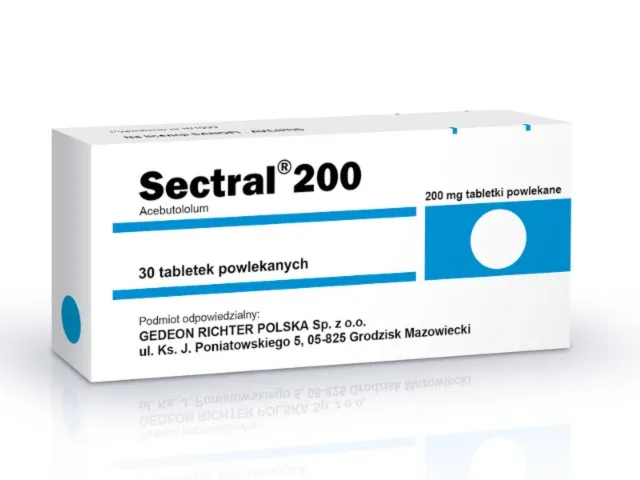
Table of Contents
- Package leaflet: Information for the patient
- 1. What Acebutolol Gedeon Richter is and what it is used for
- 2. Important information before using Acebutolol Gedeon Richter
- 3. How to use Acebutolol Gedeon Richter
- 4. Possible adverse reactions
- 5. How to store Acebutolol Gedeon Richter
- 6. Contents of the pack and other information
Package leaflet: Information for the patient
ACEBUTOLOL GEDEON RICHTER, 200 mg, film-coated tablets
ACEBUTOLOL GEDEON RICHTER, 400 mg, film-coated tablets
Acidum ascorbicum
Please read carefully all of this leaflet before taking this medicine because it contains
important information for you.
- Keep this leaflet. You may need to read it again.
- If you have any further questions, ask your doctor or pharmacist.
- This medicine has been prescribed for you only. Do not pass it on to others. It may harm them, even if their symptoms are the same as yours.
- If you experience any side effects, including any not listed in this leaflet, tell your doctor or pharmacist. See section 4.
Contents of the leaflet
- What Acebutolol Gedeon Richter is and what it is used for
- What you need to know before taking Acebutolol Gedeon Richter
- How to take Acebutolol Gedeon Richter
- Possible side effects
- How to store Acebutolol Gedeon Richter
- Contents of the pack and other information
1. What Acebutolol Gedeon Richter is and what it is used for
Acebutolol Gedeon Richter belongs to a group of medicines known as beta-adrenergic blocking agents (beta-blockers).
The main effects of Acebutolol Gedeon Richter are: reduction of heart rate (especially during physical exertion) and lowering of blood pressure in patients with hypertension.
Acebutolol Gedeon Richter also has antiarrhythmic properties.
Acebutolol Gedeon Richter is a cardioselective (heart-selective) beta-adrenergic blocking agent. It primarily inhibits the response to stimulation of β₁-adrenergic receptors located in the heart, while having less affinity for β₂-adrenergic receptors located, among others, in the bronchial walls and peripheral arteries.
Acebutolol Gedeon Richter has the ability to partially stimulate cardiac beta-adrenergic receptors, also known as intrinsic sympathomimetic activity (ISA). In resting patients, this provides a balancing effect against the negative dromotropic (slowing of electrical impulse conduction in the heart's conduction system) and negative inotropic (reduced force of myocardial contraction) effects of the administered drug, thus reducing the risk of conduction disturbances and heart failure.
Acebutolol Gedeon Richter counteracts the effects of excessive levels of catecholamines in the blood (mainly adrenaline and noradrenaline) under stress conditions.
Acebutolol Gedeon Richter is used for:
- Treatment of hypertension (Acebutolol Gedeon Richter may be used as monotherapy or in combination therapy);
- Treatment of coronary artery disease;
- Long-term treatment of certain cardiac arrhythmias: supraventricular (tachycardia, atrial flutter and atrial fibrillation, nodal tachycardia) and ventricular (ventricular tachycardia).
2. Important information before using Acebutolol Gedeon Richter
When not to use Acebutolol Gedeon Richter
Do not use Acebutolol Gedeon Richter if the patient has:
- hypersensitivity to the active substance, other beta-blocking agents, or any of the other ingredients of this medicine (listed in section 6);
- second- or third-degree atrioventricular block in patients without a pacemaker;
- sick sinus syndrome;
- sinoatrial block;
- marked bradycardia (< 50 beats per minute);
- cardiogenic shock;
- severe forms of bronchial asthma and chronic obstructive pulmonary disease;
- uncompensated heart failure;
- vasospastic angina (Prinzmetal's type);
- severe peripheral circulatory disorders;
- untreated phaeochromocytoma;
- metabolic acidosis;
- gluten intolerance due to the presence of wheat starch.
Children and adolescents
Acebutolol Gedeon Richter must not be used in children.
Warnings and precautions
Bronchial asthma and chronic obstructive pulmonary disease
Acebutolol Gedeon Richter has less bronchoconstrictive effect than other beta-blocking agents known as non-selective. Nevertheless, the medicine should only be used in patients with bronchial asthma and chronic obstructive pulmonary disease when absolutely necessary.
Bronchoconstriction induced by beta-blockers is at least partially reversible by administration of an appropriate bronchodilator (usually in the form of a pressurized inhaler).
Heart failure
In patients with compensated heart failure, the medicine should be used with caution and under strict medical supervision.
Bradycardia
If the patient's resting heart rate is less than 45–50 beats per minute and symptoms of bradycardia (e.g. visual disturbances, dizziness, fainting) occur, the daily dose of Acebutolol Gedeon Richter should be reduced by the physician.
First-degree atrioventricular block
Acebutolol Gedeon Richter should be used with caution in first-degree atrioventricular block, as it slows cardiac conduction and may worsen the symptoms of this block.
Peripheral circulatory disorders
Acebutolol Gedeon Richter may worsen symptoms of ischemia caused by peripheral arterial insufficiency, for example in: Raynaud's disease and syndrome, Buerger's disease, other inflammatory arterial diseases, and widespread atherosclerotic changes in peripheral arteries in patients who smoke or have diabetes. The medicine should be used with caution in these conditions. If ischemic symptoms worsen, contact a physician.
Phaeochromocytoma
In patients with phaeochromocytoma, treatment with Acebutolol Gedeon Richter may be initiated only after prior pharmacological blockade of alpha-adrenergic receptors.
Hyperthyroidism
Caution should be exercised when using Acebutolol Gedeon Richter in patients with hyperthyroidism, as the medicine may mask symptoms of the disease.
Renal function disorders
Caution should be exercised when using Acebutolol Gedeon Richter in patients with severe renal impairment. In patients with impaired renal function, the dose should be adjusted by the physician according to the laboratory parameter of renal function – creatinine clearance – while maintaining once-daily dosing.
Diabetes
At the beginning of treatment with Acebutolol Gedeon Richter, it should be remembered that the medicine may mask symptoms of hypoglycemia, particularly tachycardia (resting heart rate over 100 beats/minute), palpitations, and excessive sweating, and may increase the risk of severe hypoglycemia; therefore, blood glucose levels should be monitored more frequently.
Psoriasis
Acebutolol Gedeon Richter may be used in patients with psoriasis after careful consideration of the benefits and risks of such treatment. Worsening of psoriatic symptoms and psoriasiform skin reactions have been reported after administration of beta-blocking agents.
Hypersensitivity reactions
Acebutolol Gedeon Richter and other beta-blocking agents may exacerbate hypersensitivity reactions. Particular caution is advised in patients who have previously experienced such reactions, for example in connection with iodinated contrast media (used in certain X-ray examinations) or after administration of flecainide.
General anesthesia
Acebutolol Gedeon Richter increases the risk of hypotension (arterial blood pressure below 100/60 mm Hg) in patients undergoing general anesthesia. Discontinuation of the medicine 48 hours before general anesthesia is recommended. Inform the anesthesiologist that the patient is taking Acebutolol Gedeon Richter.
Sportsmen
Acebutolol Gedeon Richter contains an active substance that may lead to positive results in anti-doping controls conducted by certain sports federations and authorities.
Consult a physician even if the above warnings refer to conditions that occurred in the past.
Acebutolol Gedeon Richter with other medicines
Inform your doctor or pharmacist about all medicines currently or recently taken, as well as any medicines planned for use.
Medicines that must not be used together with Acebutolol Gedeon Richter, or whose combined use requires special attention:
-
flecainide, amiodarone. Amiodarone and flecainide must not be used in combination with Acebutolol Gedeon Richter;
-
class I antiarrhythmic drugs (such as disopyramide) used concomitantly with Acebutolol Gedeon Richter may cause disturbances in cardiac automaticity (prolonged atrioventricular conduction) and increase the risk of bradycardia (slowing of heart function). These medicines must not be used in combination with Acebutolol Gedeon Richter;
-
calcium antagonists. Concomitant use of Acebutolol Gedeon Richter with calcium antagonists increases the risk of bradycardia (slowing of heart function);
-
verapamil. Verapamil must not be used simultaneously or within a short interval (a few days) with Acebutolol Gedeon Richter;
-
other calcium antagonists, including diltiazem. Particular caution is required when using other calcium antagonists (especially diltiazem, which may increase the risk of depression) concomitantly with Acebutolol Gedeon Richter.
Medicines that should be used cautiously with Acebutolol Gedeon Richter:
- inhaled agents used in general anesthesia. Before planned surgical procedures under general anesthesia, inform the anesthesiologist that the patient is taking Acebutolol Gedeon Richter;
- baclofen. Baclofen enhances the blood pressure-lowering effect of Acebutolol Gedeon Richter;
- insulin and antidiabetic medicines. When Acebutolol Gedeon Richter is used concomitantly with insulin or antidiabetic medicines, dose reduction of these medicines may be necessary. A reduced effect of certain antidiabetic medicines (e.g. glibenclamide) has also been observed when used together with Acebutolol Gedeon Richter;
- lidocaine. Acebutolol Gedeon Richter increases lidocaine blood levels. This may require appropriate dose reduction of Acebutolol Gedeon Richter by the physician;
- iodinated contrast media. Use of iodinated contrast media (used in certain X-ray examinations) is not recommended in patients taking Acebutolol Gedeon Richter due to increased risk of hypersensitivity reactions;
- tacrine. When tacrine is used concomitantly with Acebutolol Gedeon Richter, increased risk of bradycardia (reduced heart rate) should be anticipated;
- non-steroidal anti-inflammatory drugs (e.g. ibuprofen, naproxen, ketoprofen, diclofenac). These drugs reduce the antihypertensive effect of Acebutolol Gedeon Richter;
- certain antidepressants, barbiturates, and certain antipsychotics. These medicines may cause hypotension. When used concomitantly with Acebutolol Gedeon Richter, they increase the risk of orthostatic hypotension (sudden drop in blood pressure upon changing position from lying or sitting to standing). Inform the physician about use of these medicines before starting treatment with Acebutolol Gedeon Richter;
- monoamine oxidase inhibitors. Concomitant use of monoamine oxidase inhibitors and high doses of Acebutolol Gedeon Richter may result in elevated blood pressure;
- clonidine. Concomitant use of clonidine and Acebutolol Gedeon Richter is associated with increased risk of bradycardia (reduced heart rate);
- methylxanthines (e.g. theophylline, aminophylline) and β-adrenergic agonists (salbutamol, fenoterol). Acebutolol Gedeon Richter acts antagonistically to methylxanthines and β-adrenergic agonists used in bronchospasm. Higher doses of these medicines may be required to achieve the desired effect;
- systemic corticosteroids. Systemic administration of corticosteroids reduces the antihypertensive effect of Acebutolol Gedeon Richter;
- digoxin. Digoxin used in combination with Acebutolol Gedeon Richter increases the possibility of marked bradycardia (heart rate below 50
beats/minute).
- fingolimod (used in the treatment of multiple sclerosis). At the beginning of concomitant treatment, the physician will closely monitor the patient due to the risk of bradycardia.
Acebutolol Gedeon Richter with food and drink
The medicine is taken orally. It is recommended to take the medicine during meals. The tablet should be swallowed whole with water, without chewing.
Pregnancy and breastfeeding
If the patient is pregnant, breastfeeding, suspects she may be pregnant, or plans to become pregnant, she should consult a physician or pharmacist before using this medicine.
Acebutolol Gedeon Richter must not be used during pregnancy.
Beta-blocking agents may reduce blood flow to the placenta, which may lead to premature delivery, lower than expected birth weight, intrauterine fetal death, and miscarriage.
Acebutolol Gedeon Richter passes into breast milk in significant amounts. Breastfeeding women must not take Acebutolol Gedeon Richter.
Driving and operating machinery
Acebutolol Gedeon Richter has a minor influence on the ability to drive and operate machinery.
The medicine may cause dizziness and fatigue in treated patients. If these symptoms occur, do not drive or operate machinery.
Acebutolol Gedeon Richter contains lactose.
If the patient has previously been diagnosed with intolerance to certain sugars, the patient should consult a physician before taking this medicine.
Acebutolol Gedeon Richter contains wheat starch.
Each tablet of Acebutolol Gedeon Richter 200 mg, coated tablets, contains no more than 132 micrograms of gluten.
Each tablet of Acebutolol Gedeon Richter 400 mg, coated tablets, contains no more than 118 micrograms of gluten.
This medicine contains very small amounts of gluten (derived from wheat starch). Therefore, it is very unlikely to cause problems in patients with celiac disease.
Patients with wheat allergy (other than celiac disease) must not use this medicine.
3. How to use Acebutolol Gedeon Richter
This medicine should always be used as directed by your doctor or pharmacist. If in doubt,
consult your doctor or pharmacist.
The most commonly used dosage for arterial hypertension is:
- recommended daily dose: 1 tablet (400 mg) in the morning with breakfast, or 1 tablet (200 mg) twice daily – in the morning and evening;
- maximum daily dose: 800 mg per day, given in two divided doses.
The most commonly used dosage for coronary heart disease is:
- initial dose: 1 tablet (400 mg) in the morning with breakfast, or 1 tablet (200 mg) twice daily – in the morning and evening;
- maintenance therapy: 600 mg (3 tablets of 200 mg) per day. In severe forms of angina pectoris, the daily dose is 900 mg, administered in three divided doses.
The maximum daily dose is 1200 mg.
The most commonly used dosage for cardiac arrhythmias is:
- 400 mg (1 tablet) to 1200 mg (3 tablets) per day.
Administration method
Tablets should be taken during a meal, at the same time each day, swallowed whole with water.
Taking the medicine at the same time each day helps prevent missed doses.
If you feel that the effect of Acebutolol Gedeon Richter is too strong or too weak, consult your doctor.
Overdose of Acebutolol Gedeon Richter
If more than the recommended dose has been taken, contact your doctor immediately or go to hospital.
Show the doctor the medicine packaging.
In case of overdose with Acebutolol Gedeon Richter, the patient may develop severe bradycardia (below 50 heartbeats/minute) (heart rate may become very slow or the heart may stop) or arterial hypotension (blood pressure below 100/60 mmHg). Other symptoms of overdose include: shock, atrioventricular block, sinoatrial block and other conduction disorders, pulmonary edema, disturbances of consciousness, bronchospasm, hypoglycemia (decreased blood glucose concentration below normal range), and in rare cases hyperkalemia (increased blood potassium concentration).
Missed dose of Acebutolol Gedeon Richter
If you have missed a dose and less than 8 hours have passed since the scheduled time of administration, take the missed dose as soon as possible within the same day. If more than 8 hours have passed since the scheduled time, take the next prescribed dose at the scheduled time.
Do not take a double dose to make up for a missed dose.
Do not stop taking Acebutolol Gedeon Richter abruptly, especially in patients with coronary heart disease. The dose should be gradually reduced over 1–2 weeks, and if necessary, the treatment regimen should be changed to prevent worsening of coronary heart disease.
4. Possible adverse reactions
Like all medicines, this medicine can cause adverse reactions, although not everyone will experience them.
The adverse reactions associated with the use of Acebutolol Gedeon Richter are listed below.
If a side effect in this leaflet is described as occurring:
frequently – this means it occurs in at least 1 in 100 but less than 1 in 10 patients treated;
rarely – this means it occurs in at least 1 in 10,000 but less than 1 in 1,000 patients treated;
very rarely – this means it occurs in fewer than 1 in 10,000 patients treated, including isolated cases;
frequency not known – this means the frequency cannot be estimated from the available data.
Severe adverse reactions occur rarely (bradycardia of significant degree has been most commonly observed).
Other severe adverse reactions include: bronchospasm, severe pneumonia, heart failure.
Among other adverse reactions, gastrointestinal and nervous system disorders are most common (headache, dizziness, insomnia).
Frequently observed:
- headache, dizziness, insomnia;
- nausea, vomiting, abdominal pain;
- bradycardia (slowing of heart rate), hypotension (arterial blood pressure below 100/60 mmHg);
- cold extremities (feeling of cold feet);
- shortness of breath;
- asthenia (weakness);
- decreased libido;
- skin itching.
Rarely observed:
- bloating, diarrhoea, constipation;
- disturbances in cardiac conduction, chest pain, oedema (mainly feet and lower legs), heart failure;
- onset or worsening of symptoms of Raynaud's syndrome, onset or worsening of intermittent claudication (limb pain during walking, forcing the patient to stop frequently);
- rhinitis and pharyngitis, sneezing, bronchospasm, pneumonia;
- nightmares, hallucinations, disorientation, psychosis and depression;
- decreased tear production (which may make wearing contact lenses difficult);
- hepatitis;
- urticaria, rash, lupus erythematosus, worsening of psoriasis symptoms and psoriasiform eruptions;
- muscle and joint pain, back pain;
- urinary disorders;
- hypoglycaemia (blood glucose concentration below 50 mg/dl), presence of antinuclear antibodies.
Very rarely observed:
- systemic lupus erythematosus.
Adverse reactions with unknown frequency:
- sinoatrial block (heartbeats may become very slow or the heart may stop). This may occur particularly in patients over 65 years of age or in patients with other cardiac rhythm disorders;
- increased liver enzyme activity, liver damage, mainly affecting liver cells;
- hair loss (alopecia).
If any of the above rare and serious symptoms underlined with a line occur, treatment with the medicine must be stopped immediately and you should contact your doctor or go to hospital.
Reporting of adverse reactions
If any adverse reactions occur, including any adverse reactions not listed in this leaflet, inform your doctor or pharmacist. Adverse reactions can be reported directly to the Department of Monitoring of Adverse Drug Reactions, Office for Registration of Medicinal Products, Medical Devices and Biocidal Products
Al. Jerozolimskie 181C
02-222 Warsaw
Tel.: + 48 22 49 21 301
Fax: + 48 22 49 21 309
Website: https://smz.ezdrowie.gov.pl
Adverse reactions can also be reported to the marketing authorization holder.
Reporting adverse reactions helps provide more information on the safety of this medicine.
5. How to store Acebutolol Gedeon Richter
Keep this medicine out of the sight and reach of children.
Store below 25°C.
Do not use this medicine after the expiry date stated on the packaging following "EXP". The expiry date refers to the last day of the indicated month.
Medicines must not be disposed of via wastewater or household waste. Ask your pharmacist how to dispose of medicines no longer required. Such measures help protect the environment.
6. Contents of the pack and other information
What Acebutolol Gedeon Richter contains
- The active substance is acebutolol in the form of acebutolol hydrochloride. Each Acebutolol Gedeon Richter 200 mg, film-coated tablet contains 200 mg of acebutolol as acebutolol hydrochloride. Each Acebutolol Gedeon Richter 400 mg, film-coated tablet contains 400 mg of acebutolol as acebutolol hydrochloride.
- The other ingredients are: wheat starch, lactose monohydrate, talc, colloidal anhydrous silica, povidone K-30, magnesium stearate, hypromellose, macrogol 20000.
What Acebutolol Gedeon Richter looks like and contents of the pack
Acebutolol Gedeon Richter 200 mg, film-coated tablets
White-cream, round, biconvex film-coated tablets, 12 mm in diameter, with the imprint "200" on one side and a division line on the other side. The division line on the tablet is intended only to facilitate breaking the tablet for easier swallowing and does not ensure division into equal doses.
Acebutolol Gedeon Richter 400 mg, film-coated tablets
Light cream to cream, round, biconvex film-coated tablets, 12 mm in diameter, with the imprint "400" on one side and a division line on the other side. The division line on the tablet is intended only to facilitate breaking the tablet for easier swallowing and does not ensure division into equal doses.
Acebutolol Gedeon Richter is packed in blisters made of aluminium/PVC foil contained in
Marketing Authorisation Holder and Manufacturer
GEDEON RICHTER POLSKA Sp. z o.o.
ul. Ks. J. Poniatowskiego 5
05-825 Grodzisk Mazowiecki
tel.: (22) 755 50 81
For further information about the medicinal product, please contact:
GEDEON RICHTER POLSKA Sp. z o.o.
ul. Ks. J. Poniatowskiego 5
05-825 Grodzisk Mazowiecki
Tel. +48 (22) 755 96 48
[email protected]
((marketing authorisation holder's logo))
((pharmacode))