Acc classic
Poland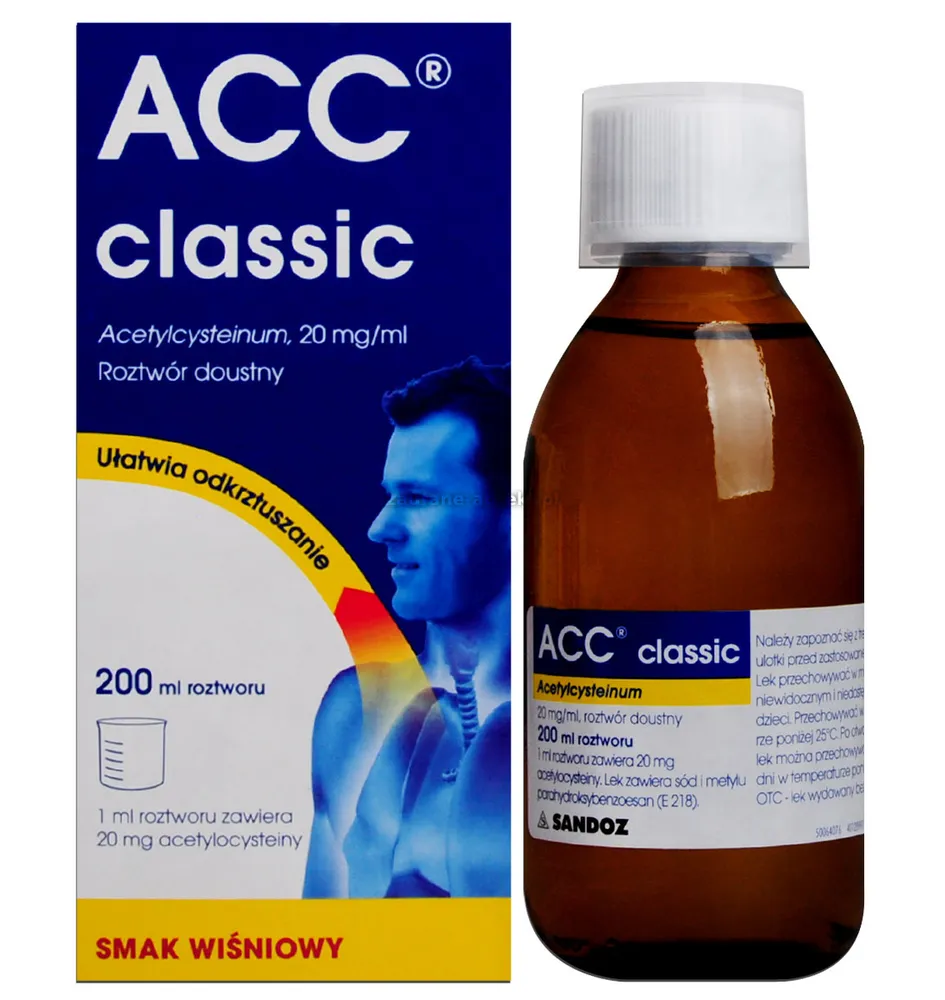
Table of Contents
Package leaflet: information for the patient
ACC classic, 20 mg/ml, oral solution
Acetylcysteinum
Please read the entire leaflet carefully before using this medicine, because it contains
important information for the patient.
This medicine should always be used exactly as described in this patient leaflet or as directed by
the doctor or pharmacist.
- Keep this leaflet so that you can read it again if necessary.
- If you need advice or further information, please consult your pharmacist.
- If you experience any adverse reactions, including any possible adverse reactions not listed in this leaflet, inform your doctor or pharmacist. See section 4.
- If there is no improvement or if you feel worse after 4 to 5 days, consult your doctor.
Table of contents:
- What ACC classic is and what it is used for
- Important information before taking ACC classic
- How to take ACC classic
- Possible side effects
- How to store ACC classic
- Contents of the pack and other information
1. What ACC classic is and what it is used for
ACC classic contains the active substance acetylcysteine, a medicine which primarily reduces
the viscosity of bronchial secretions and facilitates expectoration.
ACC classic is used short-term as a mucolytic agent to liquefy respiratory secretions and
facilitate their expectoration in patients with symptoms of upper respiratory tract infections.
2. Important information before using ACC classic
When not to use ACC classic
- if the patient is allergic to acetylcysteine, methyl parahydroxybenzoate, or any of the other ingredients of ACC classic (listed in section 6). Allergic reactions may include: itching, urticaria, rash, bronchospasm (shortness of breath), rapid heartbeat, and low blood pressure. If any of these symptoms occur, discontinue use of ACC classic immediately and contact a doctor.
- if the patient has active peptic ulcer disease of the stomach or duodenum.
- if the patient is experiencing an acute asthmatic episode (exacerbation of bronchial asthma or chronic obstructive pulmonary disease).
Do not use this medicine in children under 3 years of age.
Warnings and precautions
Before using ACC classic, consult a doctor or pharmacist if:
- the patient has had or currently has bronchial asthma (as the medicine may cause bronchospasm and shortness of breath). A patient with bronchial asthma must be under strict medical supervision during treatment. If bronchospasm occurs, discontinue the medicine immediately and seek medical help without delay;
- the patient has previously been diagnosed with peptic ulcer disease, especially if taking other medicines that irritate the mucous membranes of the gastrointestinal tract;
- the patient currently has or has previously had respiratory insufficiency;
- the patient has difficulty expectorating (respiratory physiotherapy may be necessary – your doctor will provide information on this);
- the patient has been diagnosed with histamine intolerance (prolonged use of the medicine may lead to symptoms of intolerance such as headache, nasal discharge, itching);
- the patient is elderly (over 65 years of age).
If skin or mucous membrane reactions occur during treatment, discontinue use of the medicine and consult a doctor immediately (see section 4).
Children and adolescents
Due to the active ingredient content, ACC classic should not be used in children under 3 years of age.
Mucolytic medicines (which liquefy respiratory secretions and reduce their viscosity) may cause narrowing (obstruction) or blockage of the airways in children under 2 years of age due to physiological characteristics of the respiratory tract and limited ability to expectorate in this age group. Therefore, mucolytic medicines should not be used in children under 2 years of age.
ACC classic with other medicines
Inform your doctor or pharmacist about all medicines currently taken or recently taken, as well as any medicines planned for future use.
Do not take ACC classic simultaneously with cough suppressants, as they reduce the cough reflex and may hinder the expectoration of secretions liquefied by ACC classic.
Acetylcysteine (the active substance in ACC classic) may reduce the effectiveness of certain antibiotics (especially semi-synthetic penicillins, tetracyclines, cephalosporins, and aminoglycosides). To prevent this, ACC classic should be taken at least 2 hours after taking an antibiotic. This does not apply to antibiotics such as cefixime, loracarbef, amoxicillin, doxycycline, erythromycin, thiamphenicol, and cefuroxime. If in doubt, consult your doctor.
ACC classic may enhance the effect of nitroglycerin and other nitrates (medicines used in cardiovascular diseases and ischemic heart disease). When these medicines are used together, the doctor will monitor whether the patient develops hypotension. Headache may occur. If the patient is taking nitroglycerin or another similarly acting nitrate medicine, medical advice should be sought before taking ACC classic.
Large amounts of activated charcoal may reduce the effectiveness of ACC classic.
Mixing ACC classic with solutions containing other medicines is not recommended.
Effect of ACC classic on laboratory tests
If the patient is scheduled for blood or urine salicylate testing or urine ketone testing, inform the doctor and medical staff that the patient is taking ACC classic.
ACC classic with food and drink
Take the medicine after meals. During treatment, drink an adequate amount of fluids (at least 1.5 litres daily).
Pregnancy and breastfeeding
If the patient is pregnant or breastfeeding, suspects she may be pregnant, or is planning to have a child, she should consult a doctor or pharmacist before using this medicine.
The medicine contains benzyl alcohol (see section "Benzyl alcohol").
ACC classic may be used during pregnancy and breastfeeding only if considered necessary by a doctor.
Driving and operating machinery
The effect of ACC classic on the ability to drive or operate machinery is unknown.
ACC classic contains sodium, sodium benzoate, methyl parahydroxybenzoate, benzyl alcohol, and propylene glycol
Sodium
The medicine contains 4.8 mg of sodium (main component of table salt) in 1 ml of oral solution. This corresponds to 0.24% of the maximum recommended daily sodium intake in the adult diet.
Sodium benzoate (E 211)
The medicine contains 1.95 mg of sodium benzoate in 1 ml of oral solution.
Methyl parahydroxybenzoate (E 218)
The medicine contains a preservative (methyl parahydroxybenzoate). It may cause allergic reactions (delayed-type reactions are possible, meaning allergy symptoms may appear several hours or even days after administration).
Benzyl alcohol
The medicine contains less than 0.1 mg of benzyl alcohol (cherry flavour component) in 1 ml of oral solution.
Benzyl alcohol may cause allergic reactions. Administration of benzyl alcohol to young children is associated with the risk of serious adverse effects, including breathing disorders (so-called "gasping syndrome"). Pregnant or breastfeeding women should consult a doctor before using the medicine, as large amounts of benzyl alcohol may accumulate in their bodies and cause adverse effects (metabolic acidosis). Patients with liver or kidney disease should consult a doctor before using the medicine, as large amounts of benzyl alcohol may accumulate in their bodies and cause adverse effects (metabolic acidosis).
Propylene glycol (E 1520)
The medicine contains 1.33 mg of propylene glycol (E 1520) (cherry flavour component) in 1 ml of oral solution.
3. How to use ACC classic
This medicine should always be taken exactly as described in this patient leaflet or as directed by your doctor or pharmacist. If in doubt, consult your doctor or pharmacist.
ACC classic can be administered orally using the oral syringe supplied in the package (5 ml capacity) or the dosing cup (10 ml capacity).
Unless otherwise prescribed by a doctor, the usual dose is:
Children aged 3 to 6 years
5 ml of solution two or three times daily (200 mg to 300 mg of acetylcysteine per day in 2 or 3 divided doses).
Children aged 7 to 14 years
10 ml of solution twice daily (400 mg of acetylcysteine per day in 2 divided doses).
Do not exceed a dose of 4 syringes (or 2 dosing cups) per day.
Adults and adolescents over 14 years of age
10 ml of solution two or three times daily (400 mg to 600 mg of acetylcysteine per day in 2 or 3 divided doses).
ACC classic should not be used in children under 3 years of age.
Do not use ACC classic for longer than 4 to 5 days without medical advice.
Method of administration
Take the medicine after meals.
Do not mix ACC classic with solutions containing other medicines.
Do not take before bedtime due to difficulty in expectorating the liquefied mucus during sleep. The last dose of ACC classic should be taken no later than 4 hours before bedtime.
Administration using the syringe:
- Open the child-resistant bottle by pressing the cap with your hand and turning it to the left.
- Press the provided perforated connector firmly into the neck of the bottle. If the connector cannot be fully inserted, place the protective cap over it and twist to secure. The connector links the syringe to the bottle and should remain in the bottle neck.
- Push the syringe plunger fully in until it stops.
- Carefully turn the bottle upside down, pull back the syringe plunger, and draw the recommended volume of solution (in millilitres) into the syringe. If air bubbles are visible in the solution, empty the syringe back into the bottle and refill slowly. If the required volume exceeds 5 ml, refill the syringe as needed.
- Turn the bottle back upright and remove the syringe from the perforated connector.
- The solution can be administered directly from the syringe to the child or transferred to a spoon before administration. When administering from the syringe, the child should remain in an upright sitting position. It is best to empty the syringe slowly, directing the tip towards the inside of the cheek.
- Close the bottle tightly immediately after use.
After each use, rinse the dosing syringe thoroughly by drawing water into it and expelling it several times.
Avoid prolonged contact of the oral solution ACC classic with metals and rubber.
Note: After first opening, the medicine may be stored at a temperature below 25°C for no longer than 11 days.
Accidental overdose of ACC classic
If you take more medicine than recommended, consult your doctor or pharmacist immediately.
Gastrointestinal symptoms such as nausea, vomiting, and diarrhoea may occur.
Missed dose of ACC classic
If you are taking the medicine regularly and realize you missed a dose shortly after the scheduled time, take it as soon as possible. If it is almost time for the next dose, take the next dose at the usual time. Do not take a double dose to make up for a missed dose.
If you have any further doubts about the use of this medicine, consult your doctor or pharmacist.
4. Possible adverse reactions
Like all medicines, this medicine can cause adverse reactions, although not everyone will experience them.
If any of the symptoms listed below occur in a patient, discontinue use of
the medicine ACC classic immediately and seek medical help at once:
anaphylactic or anaphylactoid reaction (a type of sudden allergic reaction)
with symptoms such as sudden wheezing, difficulty breathing or dizziness, swelling of the eyelids, face, lips or throat, urticaria, itching;
angioedema (a severe allergic reaction) with swelling of the skin and (or) mucous membranes, e.g. in the face, limbs, joints;
skin and mucous membrane lesions, which may be accompanied by fever and joint pain;
bronchospasm (sudden shortness of breath).
Uncommon adverse reactions (may occur in fewer than 1 in 100 people):
hypersensitivity reactions (allergic reactions)
headache
tinnitus
rapid heartbeat (tachycardia)
low blood pressure
nausea, vomiting, diarrhoea, abdominal pain, stomatitis
urticaria, rash, itching, angioedema
fever
Rare adverse reactions (may occur in fewer than 1 in 1000 people):
dyspepsia
dyspnoea, bronchospasm
Very rare adverse reactions (may occur in fewer than 1 in 10,000 people):
anaphylactic or anaphylactoid reaction up to anaphylactic shock (see above)
severe reaction affecting the skin and mucous membranes, which may indicate Stevens-Johnson syndrome or toxic epidermal necrolysis (see above)
bleeding
Adverse reactions occurring with unknown frequency (frequency cannot be estimated from available data):
facial swelling
Reporting of adverse reactions
If any adverse reactions occur, including any not listed in this leaflet, inform your doctor, pharmacist or nurse. Adverse reactions can be reported directly to the Department of Monitoring Adverse Drug Reactions of the Office for Registration of Medicinal Products, Medical Devices and Biocidal Products: Al. Jerozolimskie 181C, 02-222 Warsaw
tel.: + 48 22 49 21 301, fax: + 48 22 49 21 309, website: https://smz.ezdrowie.gov.pl
Adverse reactions can also be reported to the marketing authorization holder.
Reporting adverse reactions helps to provide more information on the safety of this medicine.
5. How to store ACC classic
Keep the medicine out of the sight and reach of children.
Do not use this medicine after the expiry date stated on the carton and label following: EXP.
The expiry date refers to the last day of the stated month.
Store below 25°C.
The shelf life of the medicine after first opening the bottle is 11 days when stored
below 25°C.
Medicines must not be disposed of via wastewater or household waste. Ask your
pharmacist how to dispose of medicines no longer required. Such measures help protect
the environment.
6. Contents of the packaging and other information
What ACC classic contains
- The active substance is acetylcysteine. 1 ml of oral solution contains 20 mg of acetylcysteine.
- Other components of the medicine are: sodium carmellose, methyl 4-hydroxybenzoate (E 218), sodium benzoate (E 211), sodium edetate, sodium hydroxide (10% aqueous solution), sodium saccharin, purified water, cherry flavour (containing, among others, benzyl alcohol and propylene glycol (E 1520)).
What ACC classic looks like and contents of the pack
ACC classic is a clear, slightly viscous oral solution with a cherry flavour.
The medicine is available in amber glass bottles with a polypropylene screw cap with a sealing collar, packed in a cardboard box containing 100 or 200 ml of oral solution.
A polypropylene measuring cup (marked for 2.5, 5 and 10 ml) or a polypropylene syringe with a plunger made of HDPE (for measuring 5 ml of the medicine) is supplied with the packaging.
Marketing Authorisation Holder and Manufacturer
Marketing Authorisation Holder
Sandoz GmbH
Biochemiestrasse 10
A-6250 Kundl, Austria
Manufacturer
Salutas Pharma GmbH
Otto-von-Guericke-Allee 1
39179 Barleben, Germany
For further information, please contact:
Sandoz Polska Sp. z o.o.
ul. Domaniewska 50 C
02-672 Warsaw
tel. 22 209 70 00