Acatar zatoki tablets
Poland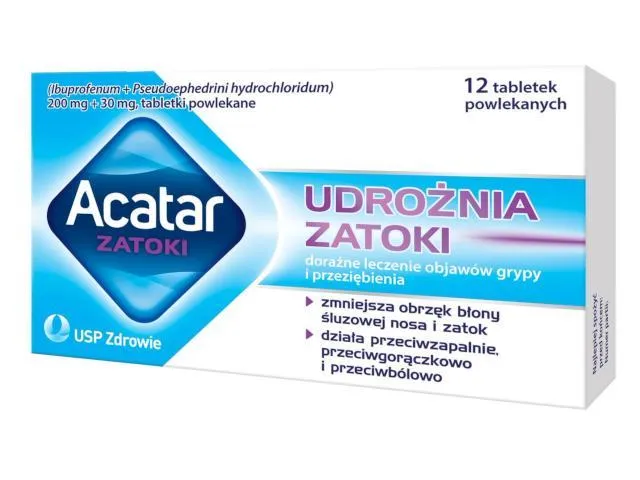
Table of Contents
Package leaflet: Information for the patient
ACATAR ZATOKI TABS
200 mg + 6.1 mg, Film-coated tablets
(Ibuprofenum + Phenylephryni hydrochloridum)
Please read the entire leaflet carefully before using the medicine, as it contains
important information for the patient.
This medicine should always be taken exactly as described in the patient leaflet or as directed by a
physician or pharmacist.
- Keep this leaflet, as you may need to read it again.
- If you need advice or further information, consult your pharmacist.
- If you experience any adverse reactions, including any possible side effects not listed in this leaflet, inform your doctor or pharmacist. See section 4.
- If there is no improvement after 3 days, or if your condition worsens, contact your doctor.
Table of contents
- What Acatar Zatoki Tabs is and what it is used for
- Important information before taking Acatar Zatoki Tabs
- How to take Acatar Zatoki Tabs
- Possible side effects
- How to store Acatar Zatoki Tabs
- Contents of the pack and other information
1. What Acatar Zatoki Tabs is and what it is used for
Acatar Zatoki Tabs is a combination medicine containing two active substances: ibuprofen (a non-steroidal anti-inflammatory drug, NSAID) and phenylephrine hydrochloride (a nasal decongestant).
Acatar Zatoki Tabs has analgesic, anti-inflammatory, and antipyretic effects.
It constricts blood vessels, reduces congestion and swelling of the nasal and sinus mucosa, decreases mucus secretion, clears the airways, and facilitates breathing. It helps clear the nose and paranasal sinuses.
Indications
For short-term use to relieve symptoms of nasal and paranasal sinus congestion accompanied by headache, pain associated with sinus congestion, and fever due to influenza or common cold.
If there is no improvement after 3 days, or if your condition worsens, contact your doctor.
2. Important information before using Acatar Zatoki Tabs
When not to use Acatar Zatoki Tabs:
- If the patient is allergic to the active substances or to any of the other ingredients of this medicine (listed in section 6).
- In patients who have previously experienced allergic reactions such as asthma, rhinitis, angioedema or urticaria after taking acetylsalicylic acid or other NSAIDs.
1/8
- In patients taking monoamine oxidase inhibitors (MAO inhibitors) used to treat hypotension, depression, or within 14 days after discontinuation of such treatment.
- If the patient has any of the following conditions:
- active or recurrent gastric or duodenal ulcer or gastrointestinal bleeding,
- previous gastrointestinal bleeding or perforation after use of NSAIDs,
- intracranial or other bleeding,
- severe liver, kidney or heart failure,
- coronary artery disease,
- hypertension,
- unexplained hematological disorders,
- bleeding disorders,
- diabetes,
- pheochromocytoma,
- narrow-angle glaucoma,
- hyperthyroidism,
- benign prostatic hyperplasia.
- During pregnancy and breastfeeding.
- In children under 12 years of age.
Warnings and precautions
If the patient has any of the following diseases or symptoms, they should consult a doctor before starting treatment with Acatar Zatoki Tabs to discuss appropriate management.
- Systemic lupus erythematosus or mixed connective tissue disease.
- Allergic reactions after taking acetylsalicylic acid.
- Gastrointestinal disorders or chronic inflammatory bowel diseases (ulcerative colitis, Crohn's disease).
- Impaired kidney or liver function.
- Blood disorders (e.g. hereditary intermittent porphyria, platelet disorders).
- Active or past asthma or allergic conditions – bronchospasm may occur after taking the medicine.
- Respiratory insufficiency. Conditions in which the patient is taking other medicines (especially anticoagulants, diuretics, cardiac drugs, corticosteroids).
- Varicella (chickenpox). In exceptional cases, use of the medicine during chickenpox may lead to serious complications such as skin or soft tissue infections.
- Caution is advised in dehydrated patients due to increased risk of worsening kidney function.
- Skin reactions. Severe skin reactions associated with use of Acatar Zatoki Tabs have been reported. If any skin rash, mucosal lesions, blisters or other signs of allergy appear, the patient must stop taking Acatar Zatoki Tabs immediately and seek urgent medical help, as these may be early symptoms of a very serious skin reaction. See section 4.
2/8
Use of anti-inflammatory/pain-relieving medicines such as ibuprofen may be associated with a small increased risk of heart attack or stroke, particularly when used at high doses. Do not exceed the recommended dose or duration of treatment.
Before using Acatar Zatoki Tabs, the patient should discuss treatment with a doctor or pharmacist if:
- the patient has heart diseases such as heart failure, angina (chest pain), history of heart attack, coronary artery bypass surgery, peripheral arterial disease (poor blood circulation in legs due to narrowed or blocked arteries), or history of stroke (including mini-stroke or transient ischemic attack - TIA); the patient has hypertension, diabetes, high cholesterol levels, family history of heart disease or stroke, or is a smoker; the patient has an infection – see below, section titled "Infections".
Avoid concomitant use with NSAIDs, including selective cyclooxygenase-2 inhibitors.
Infections
Acatar Zatoki Tabs may mask symptoms of infection such as fever and pain. Therefore, Acatar Zatoki Tabs may delay initiation of appropriate treatment for infection and consequently increase the risk of complications. This has been observed in bacterial pneumonia and bacterial skin infections associated with chickenpox. If the patient takes this medicine during an ongoing infection and symptoms persist or worsen, immediate medical advice should be sought.
Warnings and precautions regarding adverse effects that may occur during treatment with Acatar Zatoki Tabs – see also section 4. Possible side effects.
Worsening of headache
Prolonged use of any pain-relieving medicine for headache may worsen the headache. If this occurs or is suspected, treatment should be discontinued and medical advice sought. In patients with frequent or daily headaches despite (or because of) regular use of headache medicines, medication-overuse headache should be suspected.
Lowest effective dose
To minimize the risk of adverse effects, always use the lowest effective dose. Use of doses higher than recommended may increase the risk of adverse effects.
Elderly patients
In elderly patients, there is an increased risk of gastrointestinal adverse effects, especially bleeding and perforation, which may be fatal.
Children
This medicine must not be given to children under 12 years of age.
Acatar Zatoki Tabs and other medicines
Tell your doctor or pharmacist about all medicines currently or recently taken, or those planned for future use.
Acatar Zatoki Tabs may affect the action of other medicines or other medicines may affect the action of Acatar Zatoki Tabs. Such medicines include, for example:
3/8
- other NSAIDs, including acetylsalicylic acid (aspirin) – may increase the risk of adverse effects, especially gastrointestinal,
- anticoagulant medicines (i.e. blood thinners/preventing clot formation, such as aspirin/acetylsalicylic acid in low dose, warfarin, ticlopidine); risk of bleeding may increase,
- blood pressure-lowering medicines (ACE inhibitors such as captopril, beta-blockers such as atenolol-containing medicines, angiotensin II receptor antagonists such as losartan, diuretics such as indapamide) – their effect may be weakened and kidney failure may worsen,
- digoxin (a cardiac medicine), phenytoin (an antiepileptic), lithium (used in manic-depressive illness and depression) – their blood concentration may increase,
- certain potassium-sparing diuretics – blood potassium concentration may increase,
- glucocorticosteroids – increased risk of gastrointestinal ulcers or bleeding,
- certain antidepressants (selective serotonin reuptake inhibitors) – increased risk of bleeding,
- methotrexate (used in certain cancers and rheumatic diseases) – its toxicity may increase,
- oral antidiabetic medicines – blood glucose levels should be monitored,
- immunosuppressive medicines (cyclosporine, tacrolimus) – increased risk of kidney damage,
- zidovudine (used in treatment of AIDS) – increased risk of joint bleeding or bleeding leading to swelling in patients with hemophilia,
- probenecid and sulfinpyrazone – may prolong the effect of ibuprofen,
- antifungal medicines (voriconazole, fluconazole) – blood concentration of ibuprofen may increase and dose reduction of ibuprofen may be necessary,
- monoamine oxidase inhibitors (medicines used to treat depression, e.g. selegiline) and for two weeks after stopping them,
- phenylephrine or pseudoephedrine (medicines used for symptomatic treatment of rhinitis, i.e. nasal congestion),
- indomethacin (a pain-relieving and anti-inflammatory medicine used in rheumatic diseases),
- β-adrenergic receptor antagonists (medicines used in hypertension and circulatory diseases) – blood pressure may increase significantly (occurrence of so-called hypertensive crisis),
- guanethidine, mecamylamine or reserpine (medicines used to treat hypertension) – their antihypertensive effect may be reduced.
Other medicines may also interact with or be affected by treatment with Acatar Zatoki Tabs. Therefore, always consult a doctor or pharmacist before using Acatar Zatoki Tabs with other medicines.
Acatar Zatoki Tabs with food or alcohol
Food does not significantly affect absorption of the medicine.
If the patient consumes alcohol while taking this medicine, the likelihood of adverse effects increases.
Pregnancy, breastfeeding and effects on fertility
If the patient is pregnant or breastfeeding, suspects she may be pregnant, or plans to become pregnant, she should consult a doctor or pharmacist before using this medicine.
Use of Acatar Zatoki Tabs during pregnancy and breastfeeding is contraindicated.
4/8
Ibuprofen may cause disturbances in female fertility as it inhibits the synthesis of prostaglandins – hormones involved in reproductive processes. This effect is reversible and resolves after discontinuation of therapy. It is unlikely that occasional use of Acatar Zatoki Tabs would reduce the chance of conception; however, if a woman has difficulty conceiving, she should consult a doctor before using the medicine.
Driving and operating machinery
During treatment, caution should be exercised when driving a vehicle or operating machinery. Ibuprofen may rarely cause dizziness and fatigue.
The medicine contains tartrazine (E 102) and sucrose
Tartrazine (E 102) may cause allergic reactions.
One tablet contains 31.66 mg of sucrose. If the patient has previously been diagnosed with intolerance to certain sugars, the patient should contact a doctor before taking the medicine.
The medicine contains less than 1 mmol (23 mg) of sodium per tablet, meaning the medicine is considered "sodium-free".
3. How to use Acatar Zatoki Tabs
This medicine should always be taken exactly as described in the patient information leaflet or as advised by your doctor or pharmacist. If in doubt, consult your doctor or pharmacist.
Take orally.
Recommended dose
Adults and adolescents over 12 years of age: 2 tablets 3 times daily (every 8 hours). At least a 4-hour interval should be maintained between doses. Do not exceed 6 tablets per day.
Use the lowest effective dose for the shortest duration necessary to relieve symptoms. If symptoms of infection (such as fever and pain) persist or worsen, consult your doctor immediately (see section 2).
If it is necessary to use the medicine for longer than 3 days or if the patient's condition worsens, contact your doctor.
Use in children
This medicine should not be given to children under 12 years of age.
Taking more than the recommended dose of Acatar Zatoki Tabs
If a patient takes more than the recommended dose of Acatar Zatoki Tabs or if a child accidentally ingests the medicine, always consult a doctor or go to the nearest hospital for assessment of potential health risks and advice on necessary actions.
Symptoms may include nausea, stomach pain, vomiting (possibly with blood), headache, tinnitus, disorientation, and nystagmus. After a large overdose, drowsiness, chest pain, palpitations, loss of consciousness, seizures (mainly in children), weakness, dizziness, blood in urine, feeling cold, and breathing difficulties may occur.
Excessive stimulation, coma, and rarely low blood pressure and loss of consciousness may also occur following significant overdose. Severe poisoning may be associated with metabolic disturbances (acidosis), reduced blood coagulation, acute kidney or liver failure. Exacerbation of bronchial asthma may also occur.
If less than one hour has passed since the overdose, inducing vomiting (or gastric lavage) or administering activated charcoal is recommended. Specialist treatment may be necessary to maintain vital functions.
5/8
If you have any further doubts about using this medicine, consult your doctor or pharmacist.
4. Possible adverse reactions
Like any medicine, this medicine can cause adverse reactions, although not everyone experiences them.
If the severe adverse reactions described below occur during treatment with Acatar Zatoki Tabs,
treatment must be discontinued and medical advice must be sought immediately.
Severe adverse reactions occur very rarely (less frequently than in 1 out of 10,000 patients
receiving the medicine):
- Worsening of inflammatory conditions associated with infection (e.g. necrotizing fasciitis) related to the use of non-steroidal anti-inflammatory drugs. The physician will decide whether anti-infective treatment (e.g. antibiotics) is necessary.
- Symptoms of aseptic meningitis, such as neck stiffness, headache, nausea, vomiting, fever, or disturbances in consciousness, mainly in patients with autoimmune disorders (systemic lupus erythematosus, mixed connective tissue disease).
- Blood cell production disorders: initial symptoms include fever, sore throat, superficial oral mucosal ulcers, flu-like symptoms, fatigue, bleeding (e.g. bruising, petechiae, purpura, nosebleeds). Do not treat these symptoms with painkillers or antipyretics!
- Severe generalized hypersensitivity reactions. These may include facial swelling, tongue swelling, laryngeal edema with airway obstruction, respiratory failure, rapid heartbeat, drop in blood pressure, up to life-threatening anaphylactic shock. Immediate medical assistance may be required.
- Palpitations, heart failure, myocardial infarction. If acute chest pain occurs, discontinue the medicine and seek medical advice immediately.
- Esophagitis, pancreatitis, formation of diaphragm-like intestinal strictures. If acute abdominal pain, tarry stools or bloody vomiting occur, discontinue the medicine and seek medical advice immediately.
- Reduced urine output and development of edema, particularly in patients with hypertension or renal insufficiency, nephrotic syndrome, interstitial nephritis possibly leading to acute renal failure. These may be the first signs of kidney damage or kidney failure.
Other adverse reactions that may occur during treatment with Acatar Zatoki Tabs
Adverse reactions occurring frequently (in 1 to 10 out of 100 patients taking the medicine)
- Heartburn, abdominal pain, nausea, vomiting, bloating with gas release, diarrhea, constipation, digestive disturbances, loss of appetite, minor gastrointestinal bleeding, which may exceptionally lead to anemia.
Adverse reactions occurring uncommonly (in 1 to 10 out of 1,000 patients taking the medicine)
- Hypersensitivity reactions with skin rash and itching, including episodes of breathlessness (possibly associated with low blood pressure).
- Headache, dizziness, insomnia, restlessness, irritability, and fatigue.
- Visual disturbances.
- Gastrointestinal ulcers, possibly with bleeding and perforation, ulcerative stomatitis, exacerbation of colitis and Crohn's disease, gastritis.
6/8
Adverse reactions occurring rarely (in 1 to 10 out of 10,000 patients taking the medicine)
- Hypersensitivity reactions, ranging from itching and skin rash to anaphylactic shock symptoms and bronchospasm.
- Increased blood pressure, rapid heartbeat, cardiac arrhythmias, palpitations, pallor.
- Tinnitus.
- Renal papillary necrosis, increased serum uric acid levels.
Adverse reactions occurring very rarely (less than 1 in 10,000 patients taking the medicine)
- Psychotic reactions, depression, anxiety, agitation, tremors, nervousness, insomnia, irritability, dizziness, headache, hallucinations.
- Hypertension.
- Liver function disorders, particularly during prolonged use, liver failure, acute hepatitis.
- Severe skin reactions: erythema multiforme, Stevens-Johnson syndrome, toxic epidermal necrolysis; in exceptional cases, during varicella virus infection, severe skin infections and soft tissue complications may occur.
Adverse reactions occurring with unknown frequency (cannot be estimated from available data)
- Urinary retention.
- Red, scaly rash with subcutaneous nodules and blisters, mainly located in skin folds, trunk, and upper limbs, accompanied by fever at the beginning of treatment (acute generalized exanthematous pustulosis). If such symptoms occur, discontinue Acatar Zatoki Tabs and seek immediate medical help. See also section 2.
- Skin becomes sensitive to light.
Severe skin reactions known as DRESS syndrome may occur. Symptoms of DRESS syndrome include: skin rash, fever, lymphadenopathy, and increased eosinophil count (a type of white blood cell).
When the medicine is used on an occasional basis, adverse reactions occur rarely.
In elderly patients, the risk of adverse reactions associated with ibuprofen use is higher than in younger patients. The frequency and severity of adverse reactions can be minimized by using the lowest effective dose for the shortest possible duration.
Reporting of adverse reactions
If any adverse effects occur, including those not listed in this leaflet, consult a doctor or pharmacist.
Adverse reactions can be reported directly to the Department of Monitoring Adverse Reactions of Medicinal Products, Office for Registration of Medicinal Products, Medical Devices and Biocidal Products
Al. Jerozolimskie 181C
02-222 Warsaw
Phone: +48 22 49 21 301
Fax: +48 22 49 21 309
Website: https://smz.ezdrowie.gov.pl
Adverse reactions can also be reported to the marketing authorization holder.
7/8
Reporting adverse reactions helps to provide more information on the safety of the medicine.
5. How to store Acatar Zatoki Tabs
Keep the medicine at a temperature below 25°C.
Store in the original packaging to protect from light.
Keep out of sight and reach of children.
Do not use this medicine after the expiry date stated on the cardboard box and primary packaging (month/year). The blister labelling indicates: EXP – expiry date, LOT – batch number.
6. Contents of the pack and other information
What Acatar Zatoki Tabs contains
The active substances in the medicine are: ibuprofen and phenylephrine hydrochloride. Each film-coated tablet contains 200 mg of ibuprofen and 6.1 mg of phenylephrine hydrochloride.
Other components: calcium hydrogen phosphate dihydrate, sodium croscarmellose, powdered cellulose, talc, simethicone, colloidal anhydrous silica, sucrose, calcium carbonate, Macrogol 6000, povidone K90, Macrogol 4000, Green Spruce Food Colourant 83270-DO (sodium sulphate (E 514), tartrazine (E 102), brilliant blue (E 133)), titanium dioxide (E 171), shellac, cocoa butter.
What Acatar Zatoki Tabs looks like and contents of the pack
Green, round, biconvex tablets.
Packaging: Blister packs made of PVC/PVDC/Aluminium containing 6, 12, 16 or 24 film-coated tablets, in a cardboard carton.
Not all pack sizes may be marketed.
Marketing Authorisation Holder and Manufacturer
US Pharmacia Sp. z o.o.
Ziębicka 40 Street, 50-507 Wrocław, Poland
For further information, please contact:
USP Zdrowie Sp. z o.o.
Poleczki 35 Street
02-822 Warsaw, Poland
Tel. +48 (22) 543 60 00
8/8