Acatar care
Poland
Table of Contents
Package leaflet: Information for the patient
Acatar Care
0.5 mg/mL, nasal spray, solution
Oxymetazolini hydrochloridum
Please read the entire leaflet carefully before using this medicine, as it contains
important information for the patient.
This medicine should always be used exactly as described in this patient leaflet or as directed by
your doctor or pharmacist.
- Keep this leaflet, as you may need to read it again.
- If you need advice or further information, please consult your pharmacist.
- If you experience any adverse reactions, including any possible side effects not listed in this leaflet, inform your doctor or pharmacist. See section 4.
- If there is no improvement or if your condition worsens after 5 to 7 days, consult your doctor.
Table of contents
- What Acatar Care is and what it is used for
- Important information before using Acatar Care
- How to use Acatar Care
- Possible side effects
- How to store Acatar Care
- Contents of the pack and other information
1. What Acatar Care is and what it is used for
Acatar Care contains oxymetazoline hydrochloride as the active substance, which acts as a vasoconstrictor. Administration of Acatar Care reduces swelling of the inflamed mucous membrane and suppresses excessive secretion, thereby facilitating free nasal breathing. Reduction of nasal mucosal congestion also opens and widens the drainage pathways of the paranasal sinuses and unblocks the Eustachian tubes. This helps in the removal of secretions and supports recovery from bacterial infection.
Compared to physiological saline solution, Acatar Care shortens the average duration of acute rhinitis (nasal congestion, runny nose, sneezing, malaise) from 6 to 4 days.
Acatar Care is indicated for mucosal oedema occurring in acute rhinitis, vasomotor rhinitis, allergic rhinitis, sinusitis, Eustachian tube inflammation, and otitis media.
The effect of oxymetazoline lasts up to 12 hours. In clinical studies, onset of action was observed on average after 25 seconds.
Acatar Care contains hyaluronic acid in the form of sodium salt as an excipient, which protects and moisturizes the nasal mucosa.
Acatar Care does not contain preservatives.
2. Important information before using Acatar Care
1/6
When not to use Acatar Care
- if the patient has atrophic rhinitis (chronic inflammation of the nasal mucosa with crust formation);
- if the patient is allergic to the active substance or to any of the other ingredients of this medicine (listed in section 6);
- if the patient has undergone surgery performed via the nose, e.g. pituitary gland removal or surgery involving exposure of the dura mater (brain surgery performed via the nose or mouth).
Acatar Care may be used with particular caution and only after careful consideration by the physician of benefit versus risk in the following cases:
- treatment with monoamine oxidase inhibitors (MAO inhibitors) and other medicines which may increase blood pressure;
- increased intraocular pressure, particularly in angle-closure glaucoma;
- severe cardiovascular diseases (e.g. ischemic heart disease, arterial hypertension);
- pheochromocytoma;
- metabolic disorders (e.g. hyperthyroidism, diabetes mellitus).
Warnings and precautions
The effectiveness of nasal decongestants may decrease (tachyphylaxis) due to prolonged use or overdose. This may lead to the need for increasingly higher doses or more frequent administration, which in turn may result in chronic, continuous use of the medicine. In cases of prolonged use or abuse, the medicine should be discontinued immediately.
Chronic, continuous use may lead to breathing difficulties caused by reactive hyperemia of the nasal mucosa (rebound congestion) and chronic drug-induced rhinitis (rhinitis medicamentosa), as well as atrophy of the nasal mucosa or atrophic rhinitis (rhinitis sicca). Rebound congestion and tachyphylaxis should resolve after discontinuation of the medicine.
Similarly, abuse of topically applied nasal medicines may lead to atrophy of the mucosa and reactive hyperemia with drug-induced rhinitis (rhinitis medicamentosa).
Prolonged use beyond the recommended duration or overdose should be avoided.
Children and adolescents
Acatar Care is intended for use in children and adolescents above 6 years of age.
Acatar Care and other medicines
Inform your doctor or pharmacist about all medicines currently taken or recently used, as well as any medicines planned for use.
Concomitant use of medicines containing oxymetazoline, such as Acatar Care, with certain antidepressants, including MAO inhibitors such as tranylcypromine, tricyclic or tetracyclic antidepressants, may lead to increased blood pressure.
Pregnancy and breastfeeding
If the patient is pregnant or breastfeeding, suspects she may be pregnant, or is planning to become pregnant, she should consult a doctor or pharmacist before using this medicine.
Caution should be exercised when using this medicine during pregnancy or breastfeeding. The recommended dose should not be exceeded.
Driving and operating machinery
When oxymetazoline is used for prolonged periods or in doses higher than recommended, systemic effects affecting the cardiovascular system and central nervous system may occur.
2/6
In such cases, the ability to drive motor vehicles and operate mechanical equipment may be impaired.
3. How to use Acatar Care
This medicine should always be used exactly as described in this patient information leaflet or as advised
by your doctor or pharmacist. If in doubt, consult your doctor or pharmacist.
Acatar Care is intended for nasal use only (including in cases of eustachian tube inflammation and
middle ear infection).
The medicine package should be used by only one person.
Acatar Care may only be used in adults and children above 6 years of age.
Do not use this medicine in infants and children up to 6 years of age.
Adults and children above 6 years of age
1 spray dose of Acatar Care into each nostril 2 to 3 times daily.
Do not use the medicine for longer than 5 to 7 days.
Instructions for use of the medicine
Before first use, press the pump several times to ensure full dosing.
Keep your head in an upright position (do not tilt it backward) and insert the applicator tip into the
nostril, without completely blocking the nasal passage.
Direct the nozzle away from the nasal septum (the wall between the nostrils) — that is, in the right
nostril aim toward the right eye, and in the left nostril toward the left eye.
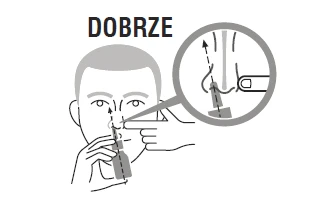
Then press the spray pump quickly and firmly while simultaneously inhaling gently through the nose.
Do not spray the aerosol directly onto the nasal septum, as this may damage the nasal mucosa.
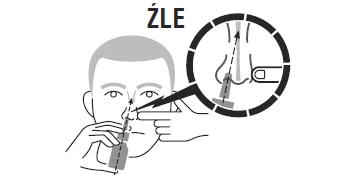
After use, clean the spray nozzle. Using the spray nozzle by more than one person may contribute to
the spread of infection.
Use of a higher than recommended dose of Acatar Care
3/6
In case of overdose or accidental ingestion by mouth, the following symptoms may occur: pupil dilation,
nausea, vomiting, cyanosis (bluish discoloration of the skin and mucous membranes), fever, muscle
spasms, tachycardia (increased heart rate), cardiac arrhythmias, circulatory collapse (sudden worsening
of blood circulation), cardiac arrest, increased blood pressure, pulmonary edema (fluid accumulation
in the lungs causing, among others, shortness of breath), respiratory disturbances, and psychiatric
disorders.
Additionally, central nervous system depression, drowsiness, decreased body temperature, bradycardia
(slowed heart rate), sudden drop in blood pressure as seen in shock, apnea, and coma may occur.
If a higher than recommended dose of Acatar Care has been used, contact a doctor immediately.
Missed dose of Acatar Care
Do not use a double dose to make up for a missed dose.
If you have any doubts regarding the use of this medicine, consult your doctor or pharmacist.
4. Possible adverse effects
Like all medicines, this medicine can cause adverse effects, although not everyone will experience them.
The frequency of occurrence of adverse effects has been classified as follows:
Common (may occur in up to 1 in 10 people): burning or dryness of the nasal mucosa,
sneezing, especially in sensitive patients.
Uncommon (may occur in up to 1 in 100 people): systemic symptoms such as
palpitations, increased heart rate and elevated blood pressure occurring after
local (intranasal) administration of the medicine.
Rare (may occur in up to 1 in 1,000 people): headache, insomnia or fatigue.
In rare cases, after the effect of the medicine wears off, there may be a worsening of nasal mucosal swelling (so-called rebound congestion).
Prolonged or frequent use, as well as use of higher than recommended doses of Acatar Care,
may lead to rebound congestion with drug-induced rhinitis.
Such an effect may occur as early as after 5–7 days of treatment and, if the medicine continues to be used,
may lead to permanent damage to the nasal mucosa.
Long-term use or abuse of oxymetazoline may also lead to reduced effectiveness of the medicine (tachyphylaxis) (frequency unknown – frequency cannot be estimated based on available data).
If any of the adverse effects worsen or if any adverse effects not listed in this leaflet occur, inform your doctor or pharmacist.
Reporting of adverse effects
If any adverse effects occur, including any not listed in this leaflet, tell your doctor or pharmacist. Adverse effects can be reported directly to the Department of Monitoring of Adverse Drug Reactions of the Office for Registration of Medicinal Products, Medical Devices and Biocidal Products,
Al. Jerozolimskie 181C, 02-222 Warsaw,
tel.: + 48 22 49 21 301, fax: + 48 22 49 21 309
Website: https://smz.ezdrowie.gov.pl.
4/6
Adverse effects can also be reported to the marketing authorization holder.
Reporting adverse effects helps to provide more information on the safety of the medicine.
5. How to store Acatar Care
Keep this medicine out of sight and reach of children.
There are no special storage requirements for this medicinal product.
The shelf life of Acatar Care after first opening the container is 12 months.
Do not use Acatar Care after the expiry date stated on the packaging.
The expiry date refers to the last day of the stated month.
Medicines must not be disposed of via wastewater or household waste. Ask your pharmacist how to dispose of medicines no longer required. This will help protect the environment.
6. Contents of the pack and other information
What Acatar Care contains
The active substance is oxymetazoline hydrochloride. 1 mL of solution contains 0.5 mg of
oxymetazoline hydrochloride.
The other ingredients are: glycerol 85%, sodium citrate, citric acid monohydrate, sodium hyaluronate,
hydrochloric acid 25% (for pH adjustment), sodium hydroxide (for pH adjustment), water for injections.
One 45 microlitre spray dose contains 22.5 micrograms of oxymetazoline hydrochloride.
What Acatar Care looks like and contents of the pack
A clear, colourless solution.
HDPE bottle containing 15 mL of solution, with a dosing pump made of HDPE, LDPE/PP, PTFE/PET (in an APF system) and a cap made of LDPE, in a cardboard box.
Marketing Authorisation Holder
US Pharmacia Sp. z o.o.
ul. Ziębicka 40
50-507 Wrocław
Manufacturer
Lomapharm GmbH
Langes Feld 5
Emmerthal, Niedersachsen, 31860,
Germany
For further information, please contact:
USP Zdrowie Sp. z o.o.
ul. Poleczki 35
02-822 Warsaw
5/6
tel. +48 (22) 543 60 00
6/6