Acard
Poland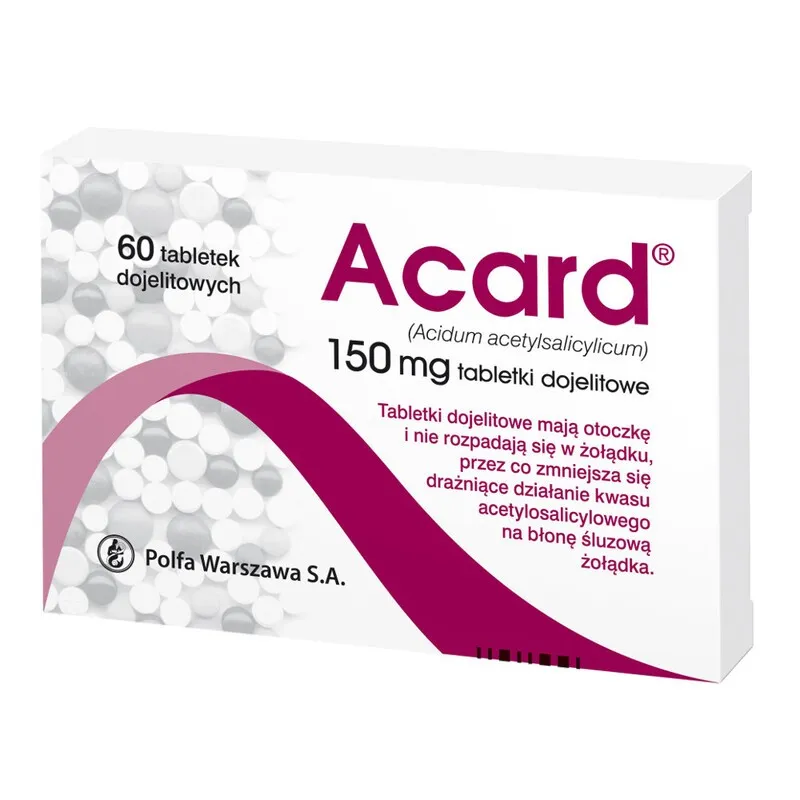
Table of Contents
Package leaflet: Information for the patient
Warning! Keep the leaflet. Information on the immediate packaging in a foreign language.
ACARD (АКАРД)
75 mg, enteric-coated tablets
Acetylsalicylic acid
ACARD and АКАРД are the same brand names of the same medicine written in Polish and Bulgarian.
Please read this leaflet carefully before using the medicine, as it contains important information for the patient.
This medicine should always be used exactly as described in this patient leaflet or as directed by the doctor or pharmacist.
- Keep this leaflet, as you may need to read it again.
- If you need advice or further information, please consult your pharmacist.
- If you experience any adverse reactions, including any possible side effects not listed in this leaflet, inform your doctor, pharmacist, or nurse. See section 4.
- If there is no improvement or if you feel worse, contact your doctor.
Leaflet contents
- What ACARD is and what it is used for
- Important information before taking ACARD
- How to take ACARD
- Possible side effects
- How to store ACARD
- Contents of the pack and other information
1. What ACARD is and what it is used for
ACARD contains acetylsalicylic acid, which inhibits platelet aggregation (clumping).
This medicine is intended for long-term, prophylactic use in diseases associated with risk of thrombus and embolus formation in blood vessels.
ACARD is used:
- for prevention of myocardial infarction in high-risk individuals;
- in acute myocardial infarction or suspected acute myocardial infarction;
- in unstable angina pectoris;
- for prevention of recurrent myocardial infarction;
- after surgical or interventional procedures on blood vessels, e.g. coronary artery bypass grafting, coronary angioplasty;
- for prevention of transient ischemic attacks and ischemic stroke, as well as after such events;
- in patients with obstructive peripheral atherosclerosis;
- for prevention of coronary thrombosis in patients with multiple risk factors;
- for prevention of venous thrombosis and pulmonary embolism in patients who are immobilized for prolonged periods.
2. Important information before using the medicine ACARD
When not to use ACARD
- if the patient is allergic to acetylsalicylic acid, other salicylates, or any of the other ingredients of this medicine (listed in section 6);
- if the patient has increased tendency to bleeding or disorders of blood coagulation;
- if the patient has peptic ulcer of the stomach and/or duodenum;
- if the patient has severe kidney or liver problems (severe renal or hepatic insufficiency);
- if the patient has previously experienced asthma attacks after taking acetylsalicylic acid or other anti-inflammatory medicines (symptoms: shortness of breath, wheezing);
- if the patient is in the third trimester of pregnancy (last three months of pregnancy);
- if the patient is taking methotrexate (a medicine used in cancer treatment) at doses of 15 mg per week or higher;
- in children under 12 years of age with viral infections (e.g. influenza or varicella), due to the risk of liver and brain damage (Reye's syndrome).
Warnings and precautions
Before starting to take ACARD, discuss this with your doctor or pharmacist:
- if the patient is allergic to anti-inflammatory and antirheumatic medicines (e.g. naproxen) or other allergenic substances – see section "When not to use ACARD";
- if the patient suffers from asthma, chronic respiratory diseases, or has nasal polyps;
- if the patient has a history of peptic ulcer disease of the stomach or intestines;
- if the patient has a congenital deficiency of glucose-6-phosphate dehydrogenase (a rare inherited disorder);
- if the patient has been diagnosed with severe heart failure;
- if the patient has impaired kidney and/or liver function, as there is a risk of worsening of adverse effects of the medicine.
- Do not use ACARD for at least 5 days before a planned surgical procedure (including minor procedures, e.g. tooth extraction).
ACARD and other medicines
Tell your doctor or pharmacist about all medicines the patient is currently taking or has recently taken, as well as any medicines the patient plans to take.
- Do not take ACARD simultaneously with:
- methotrexate at doses of 15 mg per week or higher;
- ibuprofen.
- ACARD may be used together with the following medicines only after consultation with a doctor:
- anticoagulants (e.g. acenocoumarol, warfarin, heparin);
- other non-steroidal anti-inflammatory drugs, including salicylates;
- medicines used in gout (e.g. probenecid, benzbromarone);
- antidiabetic medicines – oral (e.g. tolbutamide, glibenclamide) and insulin;
- antiplatelet agents (e.g. ticlopidine);
- medicines used in the treatment of depression and anxiety (e.g. fluoxetine, paroxetine);
- diuretics (e.g. furosemide);
- systemic glucocorticoids;
- antihypertensive medicines (e.g. enalapril, captopril);
- valproic acid (an antiepileptic medicine);
- methotrexate at doses less than 15 mg per week;
- digoxin (a cardiac medicine).
- Metamizole (a substance with analgesic and antipyretic effects) may reduce the effect of acetylsalicylic acid on platelet aggregation (clumping of blood cells and clot formation) when these medicines are used together. Therefore, caution should be exercised when using metamizole in patients receiving acetylsalicylic acid.
- Alcohol may increase the risk of gastrointestinal adverse effects caused by acetylsalicylic acid.
Pregnancy and breastfeeding
If the patient is pregnant or breastfeeding, suspects she may be pregnant, or is planning to have a child, she should consult a doctor or pharmacist before using this medicine.
ACARD may be used during the first 6 months of pregnancy only after consultation with a doctor.
Use of this medicine during the last three months of pregnancy is contraindicated, as it may cause complications in the mother and the child.
Short-term use of the medicine by a breastfeeding woman does not pose a major risk to the breastfed infant. However, breastfeeding is not recommended during long-term use of high doses of acetylsalicylic acid.
Driving and operating machinery
ACARD has no effect on the ability to drive or operate machinery.
ACARD 75 mg contains sodium
The medicine contains less than 1 mmol (23 mg) of sodium per dose, meaning the medicine is considered "sodium-free".
3. How to use ACARD medicine
This medicine should always be taken exactly as described in the patient leaflet or as directed by a doctor or pharmacist.
Consult a doctor before starting treatment with ACARD.
ACARD medicine is available in two strengths: 75 mg and 150 mg. The doctor will recommend the appropriate dose for the individual patient and determine the duration of treatment.
Administer orally.
- The usual recommended dose is: 1 tablet (75 mg) once daily. Enteric-coated tablets should be taken after a meal – swallowed whole with a small amount of water. The enteric-coated tablet of ACARD has a special coating and does not dissolve in the stomach, thereby reducing the irritating effect of acetylsalicylic acid on the gastric mucosa.
- In acute myocardial infarction or suspected acute myocardial infarction:
single dose of 4 enteric-coated tablets (300 mg). The tablets should be thoroughly chewed to accelerate absorption.
Note: in acute myocardial infarction or suspected acute myocardial infarction, enteric-coated tablets may be used only when uncoated acetylsalicylic acid tablets are not available.
Taking more ACARD medicine than recommended
In case of overdose, contact a doctor immediately. In cases of severe poisoning, the patient must be taken to hospital without delay.
Early signs of poisoning include: tinnitus, hyperventilation, fever, nausea, vomiting, visual disturbances, headache, dizziness, confusion, and skin rashes.
In more severe cases, the following may occur: delirium, tremor, dyspnea, excessive sweating, agitation, coma.
If a dose of ACARD is missed
Do not take a double dose to make up for the missed dose. Take the next dose at the usual time.
Stopping ACARD medicine
If there are any further questions about the use of this medicine, consult a doctor or pharmacist.
4. Possible adverse reactions
Like all medicines, this medicine can cause adverse reactions, although not everyone will experience them.
Treatment should be discontinued and immediate medical advice sought if the patient develops
first signs of hypersensitivity (e.g. swelling of the face, lips, tongue, throat causing
difficulty in breathing or swallowing) or if bleeding occurs, e.g. gastrointestinal bleeding (symptoms: black stools), or haemorrhage. The physician will then assess the severity of
symptoms and decide on further management.
Following the use of acetylsalicylic acid, the following have been reported:
Common (in 1 to 10 out of 100 people):
- Dyspeptic symptoms (heartburn, nausea, vomiting) and abdominal pain.
Uncommon (in 1 to 10 out of 10,000 people):
- Inflammation of the stomach and intestines, gastric and (or) duodenal ulcer disease;
- Transient disturbances in liver function.
Uncommon or rare:
- Severe bleeding such as gastrointestinal haemorrhage (symptoms: black stools), cerebral haemorrhage (particularly in patients with uncontrolled arterial hypertension and (or) when administered concomitantly with anticoagulant drugs). Haemorrhage may lead to acute or chronic anaemia due to blood loss and (or) iron deficiency anaemia (symptoms: weakness, pallor).
Rare (less than 1 in 10,000 people):
- Severe allergic reactions, including anaphylactic shock (symptoms: swelling of the face, eyelids, tongue and larynx, marked drop in blood pressure, and disturbances in heart rhythm and breathing);
- Renal function disorders;
- Decreased blood glucose concentration.
Additionally reported:
- Dizziness and tinnitus (symptoms of overdose);
- Hypersensitivity reactions: rash, urticaria, angioedema, pruritus, cardiac and respiratory disorders (including asthma);
- Increased risk of bleeding, prolonged bleeding time;
- Perioperative haemorrhage, bruising, bleeding (from nose, urinary or genital tract, gums).
Reporting of adverse reactions
If any adverse reactions occur, including any not listed in this leaflet, inform your doctor, pharmacist or nurse. Adverse reactions can also be reported directly to the Department of Monitoring of Adverse Drug Reactions of the Office for Registration of Medicinal Products, Medical Devices and Biocidal Products:
Al. Jerozolimskie 181C, 02-222 Warsaw
Tel: +48 22 49 21 301, Fax: +48 22 49 21 309
Website: https://smz.ezdrowie.gov.pl
Reporting adverse reactions helps provide more information on the safety of this medicine.
5. How to store ACARD
Keep the medicine out of the sight and reach of children.
Do not store above 25°C. Store in the original packaging to protect from moisture.
Do not use ACARD after the expiry date stated on the packaging.
The expiry date refers to the last day of the stated month.
Medicines should not be disposed of via wastewater or household waste. Ask your pharmacist how to dispose of medicines no longer required. This will help protect the environment.
6. Contents of the package and other information
What ACARD contains
- The active substance is acetylsalicylic acid. Each enteric-coated tablet contains 75 mg of acetylsalicylic acid.
- The other ingredients are: cellulose powder, corn starch, sodium carboxymethyl starch (type C); coating: hypromellose, triethyl citrate, simethicone emulsion, Acryl Eze-White: copolymer of methacrylic acid and ethyl acrylate (1:1), talc, titanium dioxide (E 171), colloidal anhydrous silica, sodium hydrogen carbonate, sodium lauryl sulfate.
What ACARD looks like and contents of the pack
ACARD tablets are white or almost white, heart-shaped, biconvex, with a smooth surface.
The pack contains 30, 60, 90 or 120 enteric-coated tablets.
For further detailed information, please contact the marketing authorisation holder or the parallel importer.
Marketing Authorisation Holder in Bulgaria, country of export:
Polpharma S.A. Pharmaceutical Works
Pelplińska 19, 83-200 Starogard Gdański, Poland
Manufacturer:
Polpharma S.A. Pharmaceutical Works
Pelplińska 19, 83-200 Starogard Gdański, Poland
Polpharma S.A. Pharmaceutical Works
Production Branch in Nowa Dęba
Metalowca 2, 39-460 Nowa Dęba, Poland
Parallel Importer:
Delfarma Sp. z o.o.
Św. Teresy od Dzieciątka Jezus 111
91-222 Łódź, Poland
Repackaged in:
Delfarma Sp. z o.o.
Św. Teresy od Dzieciątka Jezus 111
91-222 Łódź, Poland
Marketing Authorisation Number in Bulgaria, country of export: 20170037
Parallel Import Licence Number: 387/22