Zynlonta
Italy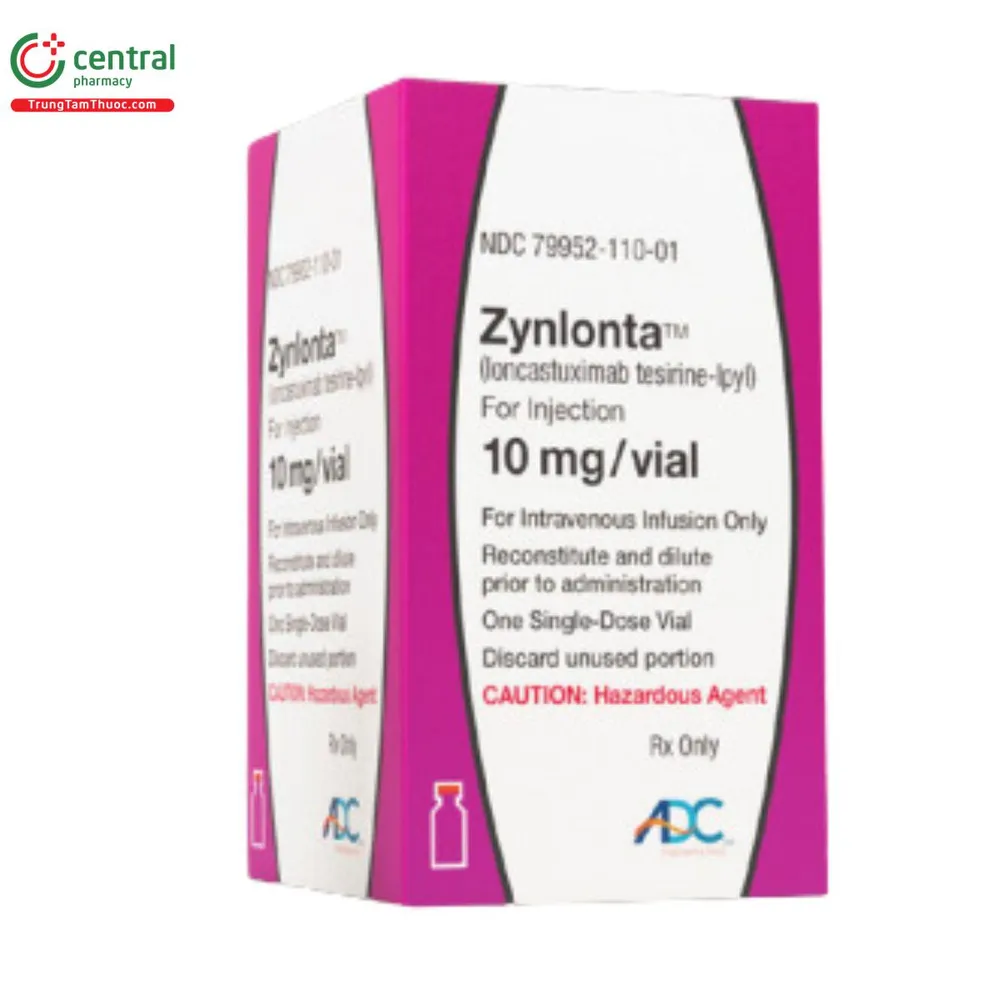
Table of Contents
- Package leaflet: Information for the patient
- Zynlonta 10 mg powder for concentrate for solution for infusion
- 1. What Zynlonta is and what it is used for
- 2. What you should know before being given Zynlonta
- 3. How Zynlonta is administered
- 4. Possible side effects
- 5. How to store Zynlonta
- 6. Package contents and other information
- The following information is intended exclusively for healthcare professionals:
Package leaflet: Information for the patient
Zynlonta 10 mg powder for concentrate for solution for infusion
loncastuximab tesirine
This medicinal product is subject to additional monitoring. This will allow rapid identification of new safety information. You can help by reporting any side effects you experience while taking this medicine. See the end of section 4 for information on how to report side effects.
Please read this leaflet carefully before you are given this medicine because it contains important information for you.
- Keep this leaflet. You may need to read it again.
- If you have any questions, ask your doctor or nurse.
- If you experience any side effects, including those not listed in this leaflet, contact your doctor or nurse. See section 4.
Contents of this leaflet
- What Zynlonta is and what it is used for
- What you need to know before you are given Zynlonta
- How Zynlonta is administered
- Possible side effects
- How to store Zynlonta
- Contents of the pack and other information
1. What Zynlonta is and what it is used for
Zynlonta is a cancer medicine containing the active substance loncastuximab tesirine.
Zynlonta is used to treat adults with a type of cancer called diffuse large B-cell lymphoma (DLBCL) when:
- the cancer has returned (relapsed) after two or more treatments, or
- it has not responded to previous treatment (refractory).
Diffuse large B-cell lymphoma is a cancer that develops from a type of white blood cells called B lymphocytes (also known as B cells).
Speak to your doctor or nurse if you have any questions about how Zynlonta works or why it has been prescribed for you.
How does Zynlonta work?
Loncastuximab tesirine consists of two parts: an antibody (a protein designed to recognize and bind to a specific target) and a cytotoxic agent (a medicine capable of killing cells, including cancer cells). The antibody in this medicine binds to CD19, a protein found on the surface of B cells. When the antibody binds to these cells, including cancer cells, the medicine enters the cells and kills them.
2. What you should know before being given Zynlonta
Do not administer Zynlonta if you are allergic to loncastuximab tesirine or to any of the other
components of this medicine (listed in section 6).
Warnings and precautions
Talk to your doctor or nurse before receiving Zynlonta:
- if you have or have recently had an active infection
- if you have liver problems; symptoms may include yellowing of the skin and eyes (jaundice). Your doctor will monitor you for possible side effects during treatment
- if you are pregnant or planning a pregnancy. Zynlonta may be harmful to the unborn baby (for further information, see section “Pregnancy, breastfeeding and fertility”).
Contact your doctor or nurse immediately if you experience any of the following serious side
effects.
Infections
Serious infections, including those that may lead to death, have occurred in people treated with Zynlonta.
Contact your doctor or nurse immediately if you develop new or worsening signs or symptoms of
infection listed in section 4 under “Serious side effects”.
Fluid retention
During treatment with Zynlonta, your body may retain an excessive amount of fluid. This effect can be
serious. Contact your doctor or nurse immediately if you experience any signs or symptoms of fluid
retention listed in section 4 under “Serious side effects”. Your doctor will provide appropriate treatment
for fluid retention. If you have severe swelling, your doctor may temporarily stop treatment until the
swelling resolves.
Contact your doctor or nurse immediately if you experience a sudden weight gain during treatment
with Zynlonta, or if you develop new or worsening swelling of the face, limbs, or joints (edema), or
dizziness (a symptom of low blood pressure). These could be symptoms of a condition called capillary
leak syndrome, which causes blood to leak from small blood vessels in the body.
Low blood cell counts (platelets, red blood cells, and white blood cells)
Low levels of certain blood cells (low blood cell counts) can be serious or severe. Your doctor or nurse
will regularly monitor your blood cell counts during treatment with Zynlonta. Contact your doctor or
nurse immediately if you experience any signs or symptoms of infection listed in section 4 under
“Serious side effects”. A low blood cell count may be responsible for the infection.
Skin reactions
Severe skin reactions have occurred in people treated with Zynlonta. Exposure to sunlight (even through
window or car glass) may cause severe sunburn. It is important to use sunscreen products and wear
protective clothing to prevent sunburn. Contact your doctor or nurse immediately if you develop new
or worsening severe skin reactions. Signs and symptoms are listed in section 4 under “Possible side
effects”.
Children and adolescents
This medicine must not be given to children and adolescents under 18 years of age, as there is no
information available on its use in this age group.
Other medicines and Zynlonta
Tell your doctor if you are taking, have recently taken, or might take any other medicine.
Contraception (men and women)
Women of childbearing potential must use effective contraception during treatment with Zynlonta and
for 10 months after the last dose.
Men with partners of childbearing potential must use effective contraception during treatment with
Zynlonta and for 7 months after the last dose. Speak to your doctor about effective contraceptive
measures.
Pregnancy
You must avoid becoming pregnant while taking this medicine. Contact your doctor immediately if
you become pregnant or suspect you are pregnant during treatment with Zynlonta. Your doctor may
perform a pregnancy test before starting treatment with Zynlonta.
Breastfeeding
Do not breastfeed during treatment and for 3 months after the last dose. It is not known whether
Zynlonta passes into breast milk.
Fertility
Zynlonta may cause fertility problems in men, which could affect their ability to father a child. You may
wish to ask about sperm preservation before starting treatment. For more information, speak to your
doctor.
Driving and using machines
Zynlonta has no effect or has a negligible effect on the ability to drive and use machines. However, if you
experience infusion-related reactions or feel tired, weak, or dizzy (see section 4), do not drive, ride a
bicycle, or operate tools or machinery until you feel better. See section 4 for further information on side
effects.
Zynlonta contains polysorbates
This medicine contains 0.4 mg of polysorbate 20 per vial, equivalent to 0.2 mg/mL. Polysorbates may
cause allergic reactions. Inform your doctor if you have known allergies.
3. How Zynlonta is administered
Zynlonta is administered under the supervision of a physician experienced in this type of treatment.
It is given into a vein by intravenous infusion (infusion) over 30 minutes.
The dose of the medicine depends on body weight. The usual starting dose is 0.15 mg per kg
of body weight.
The recommended dose for each treatment cycle is shown in the table below.
| Recommended dose | Cycle |
| 0.15 mg per kg every 21 days | 1st cycle |
| 0.15 mg per kg every 21 days | 2nd cycle |
| 0.075 mg per kg every 21 days | from the 3rd cycle onwards |
The doctor may reduce the dose if serious adverse reactions occur.
Concomitant administration of dexamethasone with Zynlonta
During treatment with Zynlonta, you will also receive another medicine called dexamethasone to reduce treatment-related adverse reactions.
You will receive 4 mg of dexamethasone orally or intravenously twice daily for three days, starting the day before Zynlonta treatment.
If you do not receive dexamethasone the day before treatment, this medicine must be administered at least 2 hours before administration of Zynlonta.
How often Zynlonta is administered
Zynlonta is generally administered every 3 weeks (on day 1 of a 21-day cycle).
- Before each infusion, your doctor will administer medications to reduce the likelihood of adverse reactions.
- The doctor may interrupt, delay, or adjust the dose of Zynlonta if you experience serious adverse reactions (see section 4, Possible side effects).
- The doctor will perform regular blood tests to monitor for potential adverse reactions to Zynlonta.
- The doctor will determine the number of treatment cycles you require.
If you receive more Zynlonta than you should
Since the infusion is administered by a doctor or other trained healthcare professional, overdose is unlikely. If you accidentally receive an excessive amount of the medicine, the doctor will monitor you closely and provide additional treatment if necessary.
If you miss a dose of Zynlonta
If you miss a dose of Zynlonta, it should be administered as soon as possible. The next scheduled dose may be rescheduled to occur 21 days after the missed dose.
The 21-day interval between doses must be maintained.
If you stop Zynlonta treatment
Do not stop treatment prematurely without discussing it with your doctor.
Treatment of lymphoma with Zynlonta usually requires several infusions. The number of infusions you receive will depend on your response to treatment. Even if you notice an improvement in symptoms, continue Zynlonta therapy until your doctor decides to discontinue treatment.
If treatment is stopped too early, symptoms may return.
If you have any questions about the use of this medicine, consult your doctor or nurse.
4. Possible side effects
Like all medicines, this medicine can cause side effects, although not everybody gets them. The following side effects have been reported with this medicine:
Serious side effects
Infections
Severe infections, including infections that can be fatal, have occurred in patients treated with Zynlonta. Contact your doctor or nurse immediately if you experience any of the following signs and symptoms:
- fever
- chills
- flu-like symptoms (cough, fatigue or weakness, body aches)
- severe headache
- cuts or scratches accompanied by redness, warmth, swelling, or pain
Fluid retention
During treatment with Zynlonta, your body may retain an excessive amount of fluid. This effect can be serious. Swelling may occur in various parts of the body, including hands, feet (very common), and abdomen (common), or around internal organs such as the heart (common) and lungs (very common).
Contact your doctor or nurse immediately if you experience any of the following signs and symptoms:
- chest pain (common)
- difficulty breathing (very common)
- swelling in any part of the body (very common)
Low blood cell count
A low count of blood cells (very common) can be serious or severe. Your doctor or nurse will regularly monitor your blood cell counts during treatment with Zynlonta. Contact your doctor or nurse immediately if you notice bruising or bleeding, or any of the signs and symptoms of infection listed above.
Skin reactions
Skin reactions (common) have occurred in patients treated with Zynlonta. Some may be severe. Contact your doctor or nurse immediately if you develop new or worsening serious skin reactions, including:
- sensitivity to sunlight, including sunburn-like reactions such as peeling and irritation after light exposure
- rash accompanied by itching
- blistering of the skin
- dark spots on the skin
- irritation, swelling, pain, and/or skin lesions at the injection site
Other side effects
Contact your doctor or nurse if you experience any of the following side effects:
Very common: may affect more than 1 in 10 people
- fatigue and paleness
- abnormalities in blood tests indicating:
o low levels of neutrophils, a type of white blood cell that fights infections, sometimes with fever
o low platelet count, which may lead to bleeding and bruising
o liver problems - loss of appetite
- nausea or vomiting
- diarrhoea
- stomach ache
- constipation
- skin redness
- rash
- itching
Common: may affect up to 1 in 10 people
- lung infection, including bronchitis or pneumonia
- severe systemic infection (sepsis)
- nose and throat infection
- rash characterized by a flat, red area covered with small raised bumps
- muscle pain
- joint pain
- back and neck pain
- pain in arms and legs
- lack of energy
Uncommon: may affect less than 1 in 100 people
- raised, pus-filled nodules on the skin
- limb disorders
- muscle and bone disorders
- inflammation of the membrane surrounding the heart
Not known: frequency cannot be estimated from the available data
- spider veins (broken blood vessels near the skin surface)
- blisters
- rash consisting of tiny/small fluid-filled blisters
- small red or purple spots appearing on the skin, often starting on the legs and slowly spreading to other parts of the body, usually without associated pain, itching, or swelling (cutaneous collagen vascular disease)
Reporting of side effects
If you experience any side effect, including those not listed in this leaflet, talk to your doctor or pharmacist. You can also report side effects directly through the national reporting system listed in Appendix V. By reporting side effects, you can help provide more information on the safety of this medicine.
5. How to store Zynlonta
Zynlonta is stored by the doctor and pharmacist at the hospital or clinic where treatment is being administered.
The doctor, pharmacist, or nurse is responsible for the storage of this medicinal product and for the proper disposal of any unused residues. The following information is intended for healthcare professionals.
Keep this medicine out of the sight and reach of children.
Do not use this medicine after the expiry date stated on the carton and vial after "Exp". The expiry date refers to the last day of that month.
Store in a refrigerator (2 ℃ – 8 ℃). Do not freeze.
Keep the vial in the outer packaging to protect the medicine from light.
The reconstituted solution and the diluted infusion solution must not be frozen or exposed to direct sunlight.
Zynlonta is a cytotoxic medicinal product. Appropriate special handling and disposal measures must be followed.
The doctor or pharmacist is responsible for the proper disposal of any unused residues of Zynlonta. This will help protect the environment.
6. Package contents and other information
What Zynlonta contains
- The active substance is loncastuximab tesirine. Each vial contains 10 mg of loncastuximab tesirine. After reconstitution, each mL contains 5 mg of loncastuximab tesirine.
- The other components are: L-histidine, L-histidine monohydrochloride, polysorbate 20 (E 432), sucrose (see section 2 “Zynlonta contains polysorbates”).
Description of the appearance of Zynlonta and contents of the pack
This medicine appears as a white or almost white powder in the form of a compact mass. It is supplied in a
glass vial and is for single use only. The powder must be reconstituted and diluted before infusion.
Each pack contains 1 vial.
Marketing Authorisation Holder
Swedish Orphan Biovitrum AB (publ)
SE-112 76 Stockholm
Sweden
Manufacturer
Swedish Orphan Biovitrum AB (publ)
Norra Stationsgatan 93
113 64 Stockholm
Sweden
This medicinal product has been granted a marketing authorisation “under exceptional circumstances”. This means that further data on this medicinal product are required.
The European Medicines Agency will review new information on this medicinal product at least annually, and this patient information leaflet will be updated if necessary.
Other sources of information
More detailed information on this medicinal product is available on the website of the European Medicines Agency: https://www.ema.europa.eu/ .
The following information is intended exclusively for healthcare professionals:
Appropriate handling and disposal procedures for antineoplastic medicinal products must be followed.
Reconstitution of the concentrate powder
- Reconstitute each vial of concentrate powder using 2.2 mL of sterile water for injection, directing the stream against the inner wall of the vial to achieve a final concentration of 5 mg/mL.
- Gently rotate the vial until the powder is completely dissolved. Do not shake.
- Inspect the reconstituted solution for the presence of particulate matter and discoloration. The solution should be clear or slightly opalescent, colourless or pale yellow. Do not use the reconstituted solution if it shows discoloration, cloudiness, or visible particles.
- Discard any unused vial after reconstitution if the recommended storage time has been exceeded.
Dilution into an intravenous infusion bag
- Withdraw the required volume of reconstituted solution from the vial using a sterile syringe. Discard any residue remaining in the vial.
- Add the volume of reconstituted Zynlonta solution needed for the calculated dose to a 50 mL intravenous infusion bag containing 5% glucose.
- Gently mix the contents of the intravenous infusion bag by slowly inverting it. Do not shake.
- No incompatibilities have been observed between Zynlonta and intravenous infusion bags made of polyvinyl chloride (PVC), polyolefin (PO), or PAB (ethylene and propylene copolymer).
- Zynlonta must be administered through a dedicated infusion line equipped with an in-line or add-on sterile, pyrogen-free filter with low protein binding capacity (pore size 0.2 or 0.22 micrometers) and a catheter.
Reconstituted solution
From a microbiological standpoint, the reconstituted solution should be used immediately. If not used immediately, the user is responsible for the storage time and conditions prior to use, which must not exceed 4 hours under refrigeration (2 °C–8 °C) or 4 hours at room temperature (20 °C–25 °C), unless reconstitution occurs under controlled and validated aseptic conditions. Chemical and physical stability of the reconstituted solution has been demonstrated for up to 4 hours under refrigeration (2 °C–8 °C) or 4 hours at room temperature (20 °C–25 °C).
Diluted solution
From a microbiological standpoint, the infusion solution should be used immediately after preparation. If not used immediately, the user is responsible for the storage time and conditions prior to use, which must not exceed 24 hours under refrigeration (2 °C–8 °C) or 8 hours at room temperature (20 °C–25 °C), unless dilution occurs under controlled and validated aseptic conditions. Chemical and physical stability of the infusion solution after preparation has been demonstrated for up to 24 hours at room temperature (20 °C–25 °C).
ANNEX IV
SCIENTIFIC CONCLUSIONS AND REASONS FOR THE CHANGE IN THE TERMS OF THE
MARKETING AUTHORISATION(S)
Scientific conclusions
Taking into account the assessment of the Pharmacovigilance Risk Assessment Committee (PRAC) of the Periodic Safety Update Report(s) (PSUR) for loncastuximab tesirine, the scientific conclusions of the PRAC are as follows:
In light of available data on cutaneous collagen vascular disease from clinical studies and the literature, including some cases with a compatible temporal relationship, and considering a plausible mechanism of action and similar adverse reactions caused by other antibody-drug conjugates, the PRAC considers that a causal relationship between loncastuximab tesirine and cutaneous collagen vascular disease constitutes at least a reasonable possibility. The PRAC concluded that the product information for medicinal products containing loncastuximab tesirine should be amended accordingly.
In light of available data on capillary leak syndrome from toxicology studies, clinical studies, the literature, and spontaneous reports, including some cases with a compatible temporal relationship, and considering a plausible mechanism of action, the PRAC considers that a warning regarding the potential for capillary leak syndrome should be included in the product information for loncastuximab tesirine to inform treating physicians and patients about this condition. The PRAC concluded that the product information for medicinal products containing loncastuximab tesirine should be amended accordingly.
Having reviewed the PRAC's recommendation, the Committee for Human Medicinal Products (CHMP) agrees with the general conclusions and rationale of the recommendation.
Reasons for the change in the terms of the marketing authorisation(s)
Based on the scientific conclusions regarding loncastuximab tesirine, the CHMP considers that the benefit-risk balance of the medicinal product(s) containing loncastuximab tesirine remains favourable, subject to the proposed amendments to the product information.
The CHMP recommends a change to the terms of the marketing authorisation(s).