Zolsketil pegylated liposomal
Italy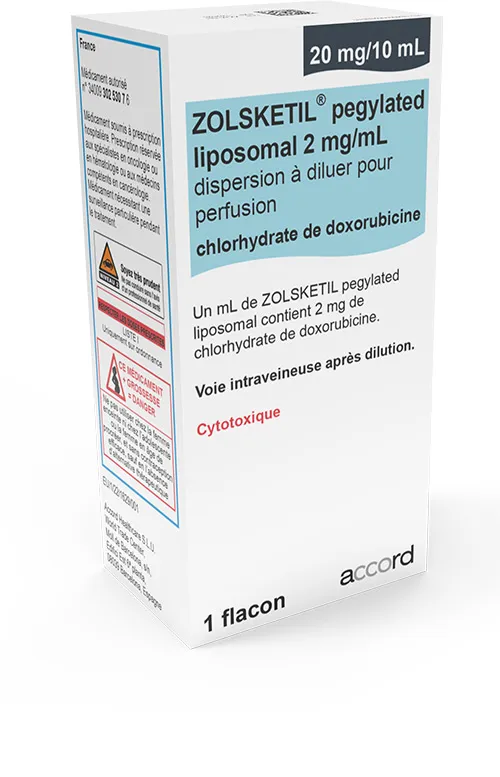
Table of Contents
- Patient Information Leaflet
- ZOLSKETIL pegylated liposomal 2 mg/mL concentrate for dispersion for
- 1. What ZOLSKETIL pegylated liposomal is and what it is used for
- 2. What you need to know before taking ZOLSKETIL pegylated liposomal
- 3. How to take ZOLSKETIL pegylated liposomal
- 4. Possible side effects
- 5. How to store ZOLSKETIL pegylated liposomal
- 6. Package contents and other information
Patient Information Leaflet
ZOLSKETIL pegylated liposomal 2 mg/mL concentrate for dispersion for
infusion
doxorubicin hydrochloride
Please read this leaflet carefully before using this medicine as it contains
important information for you.
- Keep this leaflet. You may need to read it again.
- If you have any questions, ask your doctor or pharmacist.
- This medicine has been prescribed for you only. Do not give it to others, even if their symptoms are the same as yours, as it may be harmful.
- If you experience any side effects, including those not listed in this leaflet, inform your doctor or pharmacist. See section 4.
Contents of this leaflet
- What ZOLSKETIL pegylated liposomal is and what it is used for
- What you need to know before using ZOLSKETIL pegylated liposomal
- How to use ZOLSKETIL pegylated liposomal
- Possible side effects
- How to store ZOLSKETIL pegylated liposomal
- Contents of the pack and other information
1. What ZOLSKETIL pegylated liposomal is and what it is used for
ZOLSKETIL pegylated liposomal is an antitumour agent.
ZOLSKETIL pegylated liposomal is used to treat breast cancer in patients
at risk of heart problems. ZOLSKETIL pegylated liposomal is also used to treat
ovarian cancer. It is used to kill tumour cells, reduce tumour size, delay tumour growth, and prolong survival.
ZOLSKETIL pegylated liposomal is also used in combination with another medicine,
bortezomib, for the treatment of multiple myeloma (a blood cancer) in patients who have
received at least one prior therapy.
ZOLSKETIL pegylated liposomal is also used to improve Kaposi's sarcoma, including flattening, fading, and reduction in tumour size. Other symptoms of Kaposi's sarcoma, such as swelling around the tumour, may also improve or disappear.
ZOLSKETIL pegylated liposomal contains a substance capable of interacting with cells to selectively kill tumour cells. Doxorubicin hydrochloride, contained in ZOLSKETIL
pegylated liposomal, is enclosed within very small spheres called pegylated liposomes, which help deliver the medicine from the bloodstream to tumour tissue rather than to healthy tissue.
2. What you need to know before taking ZOLSKETIL pegylated liposomal
Do not take ZOLSKETIL pegylated liposomal
- if you are allergic to doxorubicin hydrochloride, peanuts, or soy, or to any of the other ingredients of this medicine (listed in section 6).
Warnings and precautions
Inform your doctor about the following conditions:
- if you are being treated for heart or liver problems;
- if you have diabetes, as ZOLSKETIL pegylated liposomal contains sugar, which may require adjustment of your diabetes treatment;
- if you have Kaposi's sarcoma and have had your spleen removed;
- if you notice mouth ulcers, color changes, or any other problems in your mouth;
- if your bone marrow is not producing enough blood cells;
- if you have a tumor causing the bone marrow to produce abnormal blood cells;
- if you experience painful, red, macular skin rashes;
- if there is leakage of fluid or vesicant medicines from the vein into surrounding tissue;
- if you have hand-foot syndrome (redness, swelling, and blisters [fluid-filled sacs between the upper layers of the skin] on the palms of the hands and soles of the feet).
Techniques to prevent and treat hand-foot syndrome include:
- when possible, immerse hands and/or feet in a basin of cold water (e.g., while watching television, reading, or listening to the radio);
- keep hands and feet uncovered (no gloves, socks, etc.);
- stay in cool environments;
- take cold baths during hot periods;
- avoid vigorous exercises that may cause trauma to the feet (e.g., running);
- avoid exposing the skin to very hot water (e.g., hot tubs, saunas);
- avoid tight-fitting or high-heeled shoes.
Pyridoxine (vitamin B6):
- vitamin B6 is available without a prescription;
- take 50–150 mg daily, starting at the first signs of redness or tingling.
Interstitial lung disease, including fatal cases, has been observed in patients treated with pegylated liposomal doxorubicin. Symptoms of interstitial lung disease include cough and shortness of breath, sometimes accompanied by fever, not caused by physical activity. Seek immediate medical attention if you experience symptoms that may indicate interstitial lung disease.
Children and adolescents
ZOLSKETIL pegylated liposomal must not be used in children and adolescents, as it is not known how the medicine affects them.
Other medicines and ZOLSKETIL pegylated liposomal
Inform your doctor or pharmacist:
- if you are taking or have recently taken any other medicines, including those without a prescription;
- about all cancer treatments you are currently receiving or have previously received, as particular caution is required with treatments that reduce white blood cell counts, since this medicine may further decrease white blood cell numbers. If you are unsure about previous treatments or medical conditions, discuss them with your doctor.
Pregnancy and breastfeeding
Ask your doctor or pharmacist for advice before taking this medicine.
Since the active substance of ZOLSKETIL pegylated liposomal, doxorubicin hydrochloride, may cause harm to the unborn child, it is important to inform your doctor if you think you may be pregnant.
Women must avoid becoming pregnant and use effective contraception during treatment with ZOLSKETIL pegylated liposomal and for eight months after stopping treatment.
Men must use effective contraception during treatment with ZOLSKETIL pegylated liposomal and for six months after stopping treatment to prevent their partner from becoming pregnant.
Because doxorubicin hydrochloride may be harmful to infants, women must stop breastfeeding before starting treatment with ZOLSKETIL pegylated liposomal. Healthcare professionals recommend that women with HIV infection should not breastfeed under any circumstances to prevent transmission of HIV.
Driving and using machines
Do not drive or operate tools or machinery if you feel tired or drowsy following treatment with ZOLSKETIL pegylated liposomal.
ZOLSKETIL pegylated liposomal contains soybean oil and sodium
ZOLSKETIL pegylated liposomal contains soybean oil. If you are allergic to peanuts or soy, do not use this medicine.
ZOLSKETIL pegylated liposomal contains less than 1 mmol (23 mg) of sodium per dose, i.e., essentially "sodium-free".
3. How to take ZOLSKETIL pegylated liposomal
ZOLSKETIL pegylated liposomal is a unique formulation. The medicine must not be
used interchangeably with other formulations containing doxorubicin hydrochloride.
How much ZOLSKETIL pegylated liposomal is administered
For the treatment of breast cancer or ovarian cancer, ZOLSKETIL pegylated
liposomal will be administered at a dose of 50 mg per square metre of your body surface area
(based on height and body weight). This dose is repeated every 4 weeks for as long as the
disease does not progress and you are able to tolerate the treatment.
For the treatment of multiple myeloma, if you have previously received at least one prior therapy,
ZOLSKETIL pegylated liposomal will be administered at a dose of 30 mg per square metre of
your body surface area (based on height and body weight) via a 1-hour intravenous infusion given
immediately after the bortezomib infusion on day 4 of the 3-week bortezomib treatment regimen. The dose will be repeated for as long as you achieve a satisfactory response and tolerate the treatment.
For the treatment of Kaposi's sarcoma, ZOLSKETIL pegylated liposomal will be administered at
a dose of 20 mg per square metre of your body surface area (based on height and body weight). The dose is repeated every 2 or 3 weeks for 2 or 3 months; thereafter it will be repeated as needed to maintain improvement in your condition.
How ZOLSKETIL pegylated liposomal is administered
ZOLSKETIL pegylated liposomal will be administered to you by a doctor via intravenous infusion (drip). Depending on the dose and indication, the infusion will last from 30 minutes to more than one hour (90 minutes).
If you take more ZOLSKETIL pegylated liposomal than you should
Acute overdose worsens adverse effects such as mouth ulcers or reduction in the number of white blood cells and platelets in the blood. Treatment will consist of administering antibiotics, platelet transfusions, use of factors that stimulate white blood cell production, and symptomatic treatment of mouth ulcers.
If you have any doubts about the use of this product, consult your doctor or pharmacist.
4. Possible side effects
Like all medicines, this medicine can cause side effects, although not everyone gets them.
The following reactions may occur during infusion of ZOLSKETIL pegylated liposomal:
- severe allergic reaction which may include swelling of the face, lips, mouth, tongue or throat; difficulty swallowing or breathing; itchy rash (urticaria)
- inflammation and narrowing of the airways in the lungs, leading to cough, wheezing and shortness of breath (asthma)
- hot flushes, sweating, chills or fever
- chest pain or discomfort
- back pain
- high or low blood pressure
- rapid heartbeat
- seizures (convulsions)
Leakage of the infused liquid from the vein into the surrounding tissues may occur. If the infusion causes you discomfort or pain while receiving a dose of ZOLSKETIL pegylated liposomal, inform your doctor immediately.
Contact your doctor immediately if you notice any of the following serious side effects:
- fever, feeling of tiredness or presence of bruising or bleeding (very common)
- redness, swelling, peeling or tenderness, mainly in the hands or feet (hand-foot syndrome). These effects have been observed very commonly and may sometimes be severe. In severe cases, these effects may interfere with certain daily activities and may last up to 4 weeks or longer before resolving completely. Your doctor may delay the start and/or reduce the dose of the next treatment (see below for techniques to prevent and treat hand-foot syndrome)
- mouth sores, severe diarrhoea or vomiting or nausea (very common)
- infections (common, including lung infections (pneumonia) or infections that may affect vision)
- shortness of breath (common)
- severe stomach pain (common)
- marked weakness (common)
- severe allergic reaction which may include swelling of the face, lips, mouth, tongue or throat; difficulty swallowing or breathing; itchy rash (urticaria) (uncommon)
- cardiac arrest (heart stops beating), heart failure in which the heart does not pump enough blood to the rest of the body, causing shortness of breath and possibly swollen legs (uncommon)
- blood clot travelling to the lungs causing chest pain and shortness of breath (uncommon)
- swelling, warmth or tenderness in the soft tissues of the legs, sometimes with pain worsening when standing or walking (rare)
- severe or potentially life-threatening skin rash with blisters and skin peeling, particularly around the mouth, nose, eyes and genital organs (Stevens-Johnson syndrome) or over most of the body (toxic epidermal necrolysis) (rare)
Other side effects
Between infusions, the following side effects may occur:
Very common (may affect more than 1 in 10 people):
- decrease in the number of white blood cells, which may increase the risk of infections. In rare cases, having a low number of white blood cells may lead to a serious infection. Anaemia (reduction in red blood cells) may cause tiredness, and a decrease in the number of platelets in the blood may increase the risk of bleeding. Due to potential changes in blood cells, you will have regular blood tests
- reduced appetite
- constipation
- skin rashes, including skin redness, allergic skin rashes, rashes with redness or raised areas on the skin
- hair loss
- pain, including muscle pain, chest muscle pain, joint pain, pain in arms or legs
- feeling extremely tired
Common (may affect up to 1 in 10 people):
- infections, including severe infection throughout the body (sepsis), lung infections, herpes zoster virus infections (shingles), a type of bacterial infection (Mycobacterium avium complex infection), urinary tract infections, fungal infections (including candidiasis and oral candidiasis), hair follicle infections, throat infection or irritation, infection or irritation of the nose, sinuses or throat (cold)
- low number of a type of white blood cells (neutrophils) with fever
- severe weight loss and muscle wasting, insufficient amount of water in the body (dehydration), low levels of potassium, sodium or calcium in the blood
- feeling confused, anxiety, depression, difficulty sleeping
- nerve damage, which may cause tingling, numbness, pain or loss of pain sensation, nerve pain, unusual skin sensations (such as tingling or crawling sensations), reduced sensation and sensitivity, especially in the skin
- altered sense of taste, headache, feeling extremely drowsy with low energy, dizziness
- eye inflammation (conjunctivitis)
- rapid heartbeat
- high or low blood pressure, hot flushes
- shortness of breath, which may be caused by physical activity, nosebleeds, cough
- inflammation of the lining of the stomach and oesophagus, painful mouth ulcers, indigestion, difficulty swallowing, mouth pain, dry mouth
- skin problems, including scaly or dry skin, skin redness, blisters or ulcers (urticaria) on the skin, itching, dark spots on the skin
- excessive sweating
- muscle spasms or muscle pain
- pain, including muscle, bone or back pain
- pain during urination
- allergic reaction to the medicine infusion, flu-like illness, chills, inflammation of the linings of cavities and passages inside the body such as nose, mouth, trachea, feeling weak, general feeling of being unwell, swelling due to fluid accumulation in the body, swollen hands, ankles or feet
- decrease in body weight
When ZOLSKETIL pegylated liposomal is used alone, some of these side effects are less likely, and some do not occur at all.
Uncommon (may affect up to 1 in 100 people):
-
herpes simplex virus infections (cold sores or genital herpes), fungal infection
-
low number of all types of blood cells, increased number of "platelets" (cells that help blood to clot)
-
allergic reaction
-
high level of potassium in the blood, low level of magnesium in the blood
-
nerve damage affecting more than one part of the body
-
seizures (convulsions), fainting
-
unpleasant or painful sensation, especially on touch, drowsiness
-
blurred vision, watery eyes
-
sensation of speed or irregularity of heartbeat (palpitations), heart muscle disease, heart damage
-
tissue damage (necrosis) at the injection site, inflammation of veins causing swelling and pain, dizziness when sitting or standing up
-
chest discomfort
-
flatulence, inflamed gums (gingivitis)
-
skin problems or rashes, including skin cracking or peeling, allergic skin rashes, painful ulcers or urticaria on the skin, skin depigmentation, changes in natural skin colour (pigmentation), small red or purple spots caused by bleeding under the skin, nail problems, acne
-
muscle weakness
-
breast pain
-
irritation or pain at the injection site
-
facial swelling, high body temperature
-
return of symptoms (such as inflammation, redness or pain) in an area of the body previously irradiated with radiotherapy or previously damaged by a chemotherapy injection into a vein
Rare (may affect up to 1 in 1,000 people): -
infection occurring in people with a weakened immune system
-
low number of blood cells produced in the bone marrow
-
inflamed retina, which may cause changes in vision or blindness
-
abnormal heart rhythm, abnormal heart tracing on ECG (electrocardiogram) and possibly slow heartbeat, heart condition affecting heartbeat and rhythm, bluish colour of the skin and mucous membranes due to low oxygen levels in the blood
-
dilation of blood vessels
-
sensation of tightness in the throat
-
swollen and painful tongue, painful ulcers on the lips
-
skin rash with fluid-filled blisters
-
vaginal infection, redness of the scrotum
-
problems with linings of cavities and passages inside the body, such as nose, mouth or trachea
-
abnormal liver function tests, increased level of "creatinine" in the blood
Not known (frequency cannot be estimated from the available data)
- rapidly developing blood cancer affecting blood cells (acute myeloid leukaemia), bone marrow disease affecting blood cells (myelodysplastic syndrome), tumour of the mouth or lips
- cough and shortness of breath, sometimes accompanied by fever, not caused by physical activity (interstitial lung disease)
Reporting of side effects
If you experience any side effect, including those not listed in this leaflet, talk to your doctor or nurse. You can also report side effects directly via the national reporting system listed in Annex V.
Reporting side effects can help provide more information on the safety of this medicine.
5. How to store ZOLSKETIL pegylated liposomal
Keep this medicine out of the sight and reach of children.
Do not use this medicine after the expiry date stated on the label and carton.
Store in a refrigerator (2 °C – 8 °C). Do not freeze.
After dilution:
Chemical and physical in-use stability has been demonstrated for 24 hours at temperatures between
2 °C and 8 °C.
From a microbiological standpoint, the product should be used immediately. If not used immediately,
the conditions and duration of storage of the diluted solution prior to use are the responsibility of the user
and must not exceed 24 hours when stored at temperatures between 2 °C and 8 °C. Partially used vials must be discarded.
Do not use this medicine if you notice any precipitate or other types of particles.
Do not dispose of any medicine via wastewater or household waste. Ask your pharmacist how to dispose of medicines you no longer use. This will help protect the environment.
6. Package contents and other information
What ZOLSKETIL pegylated liposomal contains
- The active substance is doxorubicin hydrochloride. One mL of ZOLSKETIL pegylated liposomal contains 2 mg of doxorubicin hydrochloride in a pegylated liposomal formulation.
- The other components are hydrogenated soybean phosphatidylcholine, N-(carbonyl-methoxy polyethylene glycol-2000)-1,2-distearoyl-sn-glycero-3-phosphoethanolamine, sodium salt (MPEG 2000-DSPE), cholesterol, ammonium sulfate, histidine, sucrose, water for injections, concentrated hydrochloric acid (for pH adjustment), sodium hydroxide (for pH adjustment). See section 2.
ZOLSKETIL pegylated liposomal 2 mg/mL: vials providing a volume of 10 mL (20 mg) or 25 mL (50 mg).
Description of the appearance of ZOLSKETIL pegylated liposomal and contents of the package
This medicine is a translucent red dispersion contained in a clear glass vial. ZOLSKETIL pegylated liposomal is available in single glass vials or packs of 10 vials.
Not all pack sizes may be marketed.
Marketing Authorization Holder
Accord Healthcare S.L.U.
World Trade Center, Moll de Barcelona, s/n,
Edifici Est 6ª planta,
08039, Barcelona, Spain
Manufacturer
Accord Healthcare Polska Sp. z o.o.
ul. Lutomierska 50, Pabianice, 95-200
Poland
Accord Healthcare B.V.
Winthontlaan 200, Utrecht, 3526KV
The Netherlands
More detailed information on this medicine is available on the website of the European Medicines Agency http://www.ema.europa.eu .
The following information is intended exclusively for physicians and healthcare professionals (see section 3):
ZOLSKETIL pegylated liposomal dispersion must be handled with care. Gloves must be worn. If ZOLSKETIL pegylated liposomal comes into contact with skin or mucous membranes, wash thoroughly with soap and water immediately. ZOLSKETIL pegylated liposomal must be handled and disposed of according to the precautions recommended for other antineoplastic medicinal products.
Determine the dose of ZOLSKETIL pegylated liposomal to be administered (based on the recommended dose and the patient's body surface area). Withdraw the correct volume of ZOLSKETIL pegylated liposomal using a sterile syringe. Procedures must be carried out under strict aseptic conditions, as ZOLSKETIL pegylated liposomal does not contain preservatives or bacteriostatic agents. Prior to administration, the correct dose of ZOLSKETIL pegylated liposomal must be diluted in 50 mg/mL (5%) glucose solution for intravenous infusion. For doses < 90 mg, dilute ZOLSKETIL pegylated liposomal in 250 mL; for doses ≥ 90 mg, dilute ZOLSKETIL pegylated liposomal in 500 mL.
To reduce the risk of infusion-related reactions, the initial dose should be administered at a rate not exceeding 1 mg/min. If no infusion reaction occurs, subsequent infusions of ZOLSKETIL pegylated liposomal may be administered over 60 minutes.
In the clinical study program for breast cancer, the following modification of the infusion schedule was permitted for patients who experienced an infusion reaction: 5% of the total dose was administered slowly over the first 15 minutes. If tolerated without reaction, the infusion rate was doubled for the next 15 minutes. If tolerated, the infusion was completed within the following hour, resulting in a total infusion time of 90 minutes.
If the patient shows early symptoms or signs of an infusion reaction, immediately stop the infusion, administer appropriate premedications (antihistamines and/or short-acting corticosteroids), and resume the infusion at a slower rate.
The use of diluents other than 50 mg/mL (5%) glucose solution for intravenous infusion, or the presence of any bacteriostatic agent such as benzyl alcohol, may cause precipitation of ZOLSKETIL pegylated liposomal.
It is recommended to connect the infusion line containing ZOLSKETIL pegylated liposomal to the side port of an intravenous infusion line delivering 50 mg/mL (5%) glucose solution.
The infusion may be administered through a peripheral vein. Do not use in-line filters.
ANNEX IV
SCIENTIFIC CONCLUSIONS AND REASONS FOR THE CHANGE IN THE TERMS OF THE
MARKETING AUTHORISATION(S)
Scientific conclusions
Taking into account the evaluation by the Pharmacovigilance Risk Assessment Committee (PRAC) of the Periodic Safety Update Report(s) (PSUR) for doxorubicin, the scientific conclusions of the Committee for Human Medicinal Products (CHMP) are as follows:
In light of the available data on interstitial lung disease from the literature and spontaneous reports, including in some cases a close temporal association, the PRAC considers that a causal relationship between pegylated liposomal doxorubicin and interstitial lung disease is at least a reasonable possibility. The PRAC concluded that the product information for medicinal products containing pegylated liposomal doxorubicin should be updated accordingly.
The CHMP agrees with the PRAC's scientific conclusions.
Reasons for the change in the terms of the marketing authorisation(s)
Based on the scientific conclusions regarding doxorubicin, the CHMP considers that the benefit-risk balance of the medicinal product(s) containing doxorubicin remains unchanged, subject to the proposed amendments to the product information.
The CHMP recommends the variation of the terms of the marketing authorisation(s).