Zolium
Italy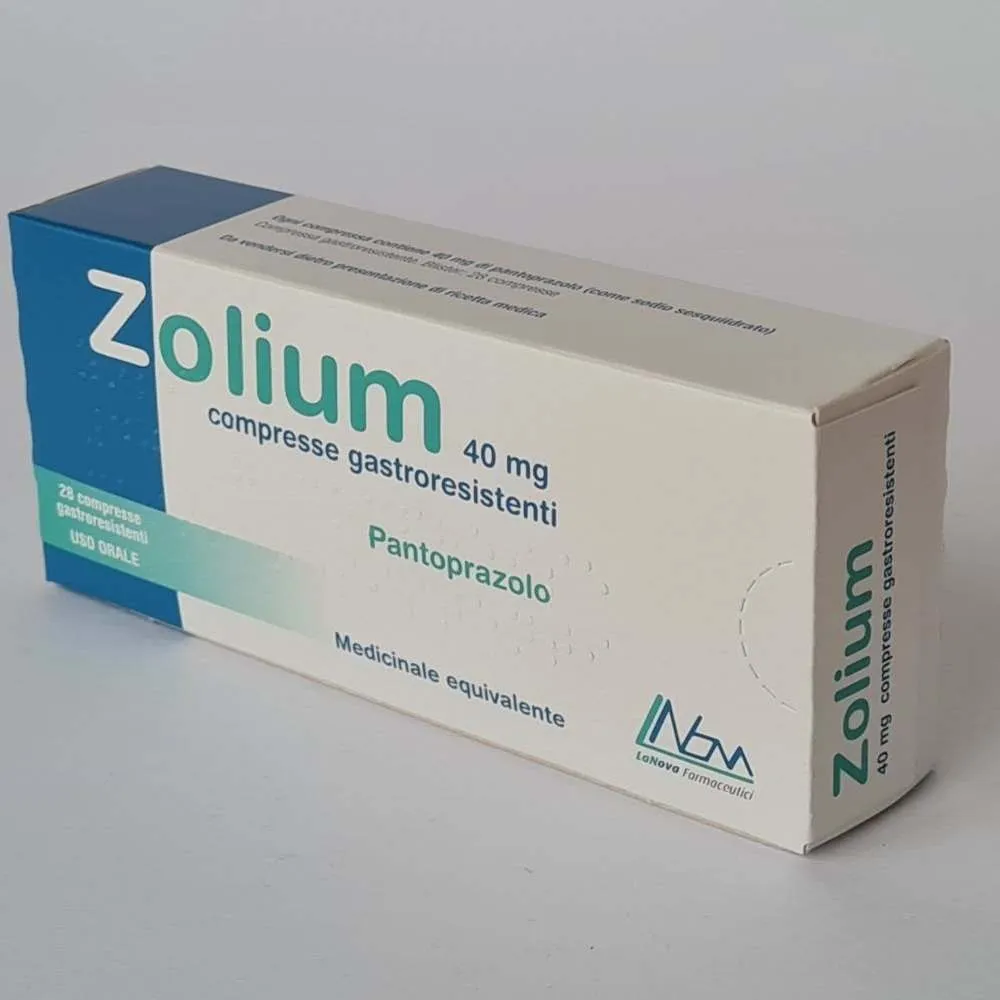
Table of Contents
- Package leaflet: Information for the patient
- ZOLIUM 20 mg gastro-resistant tablets
- 1. What ZOLIUM is and what it is used for
- 2. What you need to know before taking ZOLIUM
- 3. How to take ZOLIUM
- 4. Possible side effects
- 5. How to store ZOLIUM
- 6. Package contents and other information
- Patient Information Leaflet
- ZOLIUM 40mg gastro-resistant tablets
- 1. What ZOLIUM is and what it is used for
- 2. What you need to know before taking ZOLIUM
- 3. How to take ZOLIUM
- 4. Possible side effects
- 5. How to store ZOLIUM
- 6. Package contents and other information
Package leaflet: Information for the patient
ZOLIUM 20 mg gastro-resistant tablets
Equivalent medicine
Please read this leaflet carefully before taking this medicine because it contains
important information for you.
- Keep this leaflet. You may need to read it again.
- If you have any questions, ask your doctor, pharmacist or nurse.
- This medicine has been prescribed for you only. Never give it to other people, even if their symptoms are the same as yours, because it could be dangerous.
- If you experience any side effect, including those not listed in this leaflet, talk to your doctor or pharmacist. See section 4.
Contents of this leaflet:
- What ZOLIUM is and what it is used for
- What you need to know before taking ZOLIUM
- How to take ZOLIUM
- Possible side effects
- How to store ZOLIUM
- Contents of the pack and other information
1. What ZOLIUM is and what it is used for
ZOLIUM is a selective "proton pump inhibitor", a medicine that reduces the amount of
acid produced in the stomach. It is used to treat acid-related diseases of the
stomach and intestine.
ZOLIUM is used for:
Adults and adolescents aged 12 years and older:
- Treatment of symptoms (e.g. heartburn, acid regurgitation, pain on swallowing) associated with gastroesophageal reflux disease caused by acid reflux from the stomach.
- Long-term treatment of reflux esophagitis (inflammation of the esophagus accompanied by acid regurgitation from the stomach) and prevention of its recurrence.
Adults:
- Prevention of duodenal and gastric ulcers caused by non-steroidal anti-inflammatory drugs (NSAIDs, for example, ibuprofen) in at-risk patients who require continuous treatment with NSAIDs.
2. What you need to know before taking ZOLIUM
Do not take ZOLIUM
- if you are allergic to pantoprazole or to any of the other ingredients of this medicine (listed in section 6).
- if you are allergic to medicines containing other proton pump inhibitors.
Warnings and precautions
Talk to your doctor, pharmacist, or nurse before taking ZOLIUM.
- If you have severe liver problems. Inform your doctor if you have previously had liver issues. Your doctor will arrange for more frequent monitoring of your liver enzymes, especially if you are taking ZOLIUM for long-term treatment. If your liver enzymes increase, treatment must be discontinued.
- If you require ongoing treatment with NSAIDs and are taking ZOLIUM because you are at increased risk of developing gastric and intestinal complications. Any increased risk will be assessed based on your individual risk factors, such as age (65 years or older), history of gastric or duodenal ulcers, or gastrointestinal bleeding.
- If you have low body reserves or risk factors for vitamin B12 deficiency and are undergoing long-term treatment with pantoprazole. As with all agents that reduce acidity, pantoprazole may lead to reduced absorption of vitamin B12.
- If you are taking a medicine containing atazanavir (for the treatment of HIV infection) at the same time as pantoprazole, please consult your doctor for specific advice.
- Taking a proton pump inhibitor such as ZOLIUM, particularly for longer than one year, may slightly increase your risk of fractures of the hip, wrist, or spine. Inform your doctor if you have osteoporosis or if you are taking corticosteroids (which may increase the risk of osteoporosis). Inform your doctor immediately if you notice any of the following symptoms:
- unintentional weight loss
- recurrent vomiting
- difficulty swallowing
- blood in vomit
- you are pale and feel weak (anaemia)
- blood in stools
- severe and/or persistent diarrhoea, as ZOLIUM has been associated with a modest increase in infectious diarrhoea episodes.
- fatigue, confusion, involuntary muscle contractions, seizures, dizziness, and increased heart rate.
Your doctor may decide that you need certain tests to rule out malignancy, as pantoprazole may relieve symptoms of cancer and could delay diagnosis. If your symptoms persist despite treatment, further investigations should be considered.
If you are taking ZOLIUM for long-term treatment (more than 1 year), your doctor will likely schedule regular check-ups. You must report any new or unusual symptoms or circumstances at every medical visit.
Other medicines and ZOLIUM
Inform your doctor or pharmacist if you are taking, have recently taken, or might take any other medicines. This is particularly important if you are taking any of the following:
- Medicines such as ketoconazole, itraconazole, and posaconazole (used to treat fungal infections) or erlotinib (used for certain types of cancer), as ZOLIUM may prevent these and other medicines from working properly.
- Warfarin and fenprocoumon, which affect blood clotting. You may need additional monitoring.
- Atazanavir (used to treat HIV infection).
- Methotrexate (used to treat rheumatoid arthritis, psoriasis, and cancer) – if you are taking methotrexate, your doctor may temporarily discontinue treatment with ZOLIUM.
Pregnancy and breastfeeding
There are insufficient adequate data on the use of pantoprazole in pregnant women.
Excretion in human breast milk has been reported.
If you are pregnant, suspect you may be pregnant, planning to become pregnant, or breastfeeding, consult your doctor or pharmacist before taking this medicine.
If you are pregnant, suspect you may be pregnant, planning to become pregnant, or breastfeeding, you should only use this medicine if your doctor considers the benefit to you greater than the potential risk to the foetus or infant.
Consult your doctor or pharmacist before taking any medicine.
Driving and using machines
If you experience side effects such as dizziness or visual disturbances, you must not drive or operate machinery.
3. How to take ZOLIUM
Take this medicine exactly as your doctor has told you. If you are unsure, consult your doctor or pharmacist.
When and how should you take ZOLIUM?
Take the tablets one hour before a meal. Do not chew or crush the tablets; swallow them whole with a glass of water.
Unless otherwise instructed by your doctor, the usual dose is:
Adults and adolescents aged 12 years and older:
For the treatment of symptoms associated with gastro-esophageal reflux disease (e.g. heartburn, acid regurgitation, pain on swallowing):
The usual dose is one tablet daily. This dose usually provides relief within 2–4 weeks – and at most within a further 4 weeks. Your doctor will advise you on how long to continue taking the medicine. After that, any recurrence of symptoms can be managed by taking one tablet a day as needed.
For long-term treatment and prevention of relapse of reflux esophagitis:
The usual dose is one tablet daily. If the disease recurs, your doctor may double the dose, in which case you may take ZOLIUM 40 mg tablets, one tablet daily. After healing, the dose may be reduced back to one 20 mg tablet daily.
Adults:
Prevention of duodenal and gastric ulcers in patients requiring continuous treatment with NSAIDs:
The usual dose is one tablet daily.
Special patient groups:
- If you have severe liver problems, you must not take more than one 20 mg tablet per day.
- Children under 12 years: These tablets are not recommended for use in children under 12 years of age.
If you take more ZOLIUM than you should
Inform your doctor or pharmacist. Symptoms of overdose are not known.
If you forget to take ZOLIUM
Do not take a double dose to make up for the missed dose. Take your next dose at the usual time.
If you stop taking ZOLIUM
Do not stop treatment with these tablets without first consulting your doctor or pharmacist.
If you have any questions about the use of this medicine, ask your doctor or pharmacist.
4. Possible side effects
Like all medicines, this medicine can cause side effects, although not everybody gets them.
If you experience any of the following side effects, stop treatment with these
tablets immediately and consult your doctor or contact the nearest hospital emergency
department:
- Severe allergic reactions (uncommon frequency; affects 1 in 10,000 users): swelling of the tongue and/or throat, difficulty swallowing, hives, breathing difficulties, allergic swelling of the face (Quincke's oedema/angioedema), severe dizziness with very rapid heartbeat and profuse sweating.
- Serious skin disorders (frequency not known): appearance of skin blisters and rapid deterioration of general condition, erosion (including mild bleeding) of eyes, nose, mouth/lips or genitals (Stevens-Johnson syndrome, Lyell's syndrome, erythema multiforme), and sensitivity to light.
- Other serious disorders (frequency not known): yellowing of the skin or whites of the eyes (severe liver cell damage, jaundice), or fever, rash and swelling of the kidneys sometimes painful, with pain when urinating and lower back pain (severe kidney inflammation).
Other possible side effects include:
- Uncommon (affects 1 to 10 users in 1,000): headache; dizziness; diarrhoea; nausea, vomiting; abdominal distension and flatulence (gas); constipation; dry mouth; abdominal pain and feeling unwell; skin rashes, exanthema, rash, itching; feeling of weakness, fatigue or general malaise; sleep disturbances; fractures of the hip, wrist or spine.
- Rare (affects 1 to 10 users in 10,000): distortion or complete loss of taste; visual disturbances such as blurred vision; urticaria; joint pain; muscle pain; weight changes; increased body temperature; swelling of the extremities (peripheral oedema); allergic reactions; depression; breast enlargement in men.
- Very rare (affects less than 1 in 10,000 users): disorientation.
- Not known (frequency cannot be estimated from available data): hallucinations, confusion (especially in patients with prior experience of these symptoms); paresthesia; decreased levels of sodium in the blood; inflammation of the large intestine causing persistent watery diarrhoea. If you have been treated with ZOLIUM for more than 3 months, your blood magnesium levels may decrease. Low magnesium levels may present as fatigue, involuntary muscle contractions, disorientation, seizures, dizziness, or reduced heart rate. If you develop any of these symptoms, inform your doctor immediately. Low magnesium levels may also lead to reduced levels of potassium or calcium in the
blood. Your doctor may decide to perform regular blood tests to monitor your magnesium levels. Muscle spasms as a consequence of electrolyte disturbances.
Side effects identified through blood tests:
- Uncommon (affects 1 to 10 users in 1,000): increased liver enzymes.
- Rare (affects 1 to 10 users in 10,000): increased bilirubin; increased blood lipids; sudden drop in circulating granular white blood cells associated with high fever.
- Very rare (affects less than 1 in 10,000 users): reduced platelet count which may cause increased bleeding or bruising; reduced white blood cell count which may lead to more frequent infections; concomitant abnormal reduction in red blood cells, white blood cells, and platelets.
Reporting of side effects
If you experience any side effect, including those not listed in this leaflet, talk to your doctor or pharmacist. You can also report side effects directly via the national reporting system at https://www.aifa.gov.it/content/segnalazioni-reazioni-avverse. By reporting side effects, you can help provide more information on the safety of this medicine.
5. How to store ZOLIUM
Keep this medicine out of the sight and reach of children.
Do not use this medicine after the expiry date stated on the label, carton, and blister after EXP. The expiry date refers to the last day of that month.
This medicine does not require any special storage conditions.
Do not dispose of any medicine via wastewater or household waste. Ask your pharmacist how to dispose of medicines you no longer use. This will help protect the environment.
6. Package contents and other information
What ZOLIUM contains
- The active substance is pantoprazole. Each gastro-resistant tablet contains 20 mg of pantoprazole (as sodium pantoprazole sesquihydrate).
- The other components are:
Tablet core: mannitol, anhydrous sodium carbonate, sodium starch glycolate (type A), basic butyl methacrylate copolymer (Eudragit E PO), calcium stearate.
Coating: Opadry white OY-D-7233 (hypromellose, titanium dioxide E171, talc, macrogol 400, sodium lauryl sulfate).
Enteric coating: Kollicoat MAE 30 DP yellow (methacrylic acid-ethyl acrylate copolymer dispersion, propylene glycol, iron oxide yellow (E172), titanium dioxide E171, talc).
Description of the appearance of ZOLIUM and contents of the pack
Gastro-resistant tablet, light yellow in colour, elliptical, biconvex.
Pack:
Blister: 14 tablets.
Marketing Authorization Holder
Lanova Farmaceutici S.r.l.
Via Conca d’Oro, 212
00141- Rome
Italy
Manufacturers
Actavis Ltd.
BLB016 Bulebel Industrial Estate
Zejtun ZTN 3000
Malta
Actavis ehf,
Reykjavíkurvegur 78
220 Hafnarfjörður
Iceland
Balkanpharma – Dupnitsa AD
3 Samokovsko Schosse Str.
Dupnitsa 2600
Bulgaria
This medicinal product is authorized in the European Economic Area countries under the following names:
Italy ZOLIUM
This leaflet was last updated on:
Patient Information Leaflet
ZOLIUM 40mg gastro-resistant tablets
Generic medicine
Please read this leaflet carefully before taking this medicine because it contains
important information for you.
- Keep this leaflet. You may need to read it again.
- If you have any questions, ask your doctor, pharmacist or nurse.
- This medicine has been prescribed for you only. Never give it to other people, even if their symptoms are the same as yours, because it could be harmful.
- If you experience any adverse reaction, including those not listed in this leaflet, contact your doctor or pharmacist. See section 4.
Contents of this leaflet:
- What ZOLIUM is and what it is used for
- What you need to know before taking ZOLIUM
- How to take ZOLIUM
- Possible side effects
- How to store ZOLIUM
- Package contents and other information
1. What ZOLIUM is and what it is used for
ZOLIUM is a selective "proton pump inhibitor," a medicine that reduces the amount of acid produced in the stomach. It is used for the treatment of acid-related diseases of the stomach and intestine.
ZOLIUM is used for:
Adults and adolescents aged 12 years and older:
- Gastroesophageal reflux disease (oesophagitis). An inflammation of the oesophagus (the tube connecting the throat to the stomach), accompanied by regurgitation of gastric acid.
Adults:
- Infection caused by a bacterium called Helicobacter pylori in patients with duodenal ulcer and gastric ulcer, in combination with two antibiotics (eradication therapy). The aim is to eliminate the bacteria in order to reduce the likelihood of these ulcers recurring.
- Stomach and duodenal ulcers.
- Zollinger-Ellison syndrome and other conditions in which excessive acid is produced in the stomach.
2. What you need to know before taking ZOLIUM
Do not take ZOLIUM
- if you are allergic to pantoprazole or to any of the other ingredients of this medicine (listed in section 6).
- if you are allergic to medicines containing other proton pump inhibitors.
Warnings and precautions
Talk to your doctor, pharmacist, or nurse before taking ZOLIUM.
- If you have severe liver problems. Inform your doctor if you have previously had liver problems. Your doctor may arrange for more frequent monitoring of your liver enzymes, especially if you are taking ZOLIUM for long-term treatment. If your liver enzymes increase, treatment should be discontinued.
- If you have low body reserves or risk factors for vitamin B12 deficiency and are undergoing long-term treatment with pantoprazole. As with all agents that reduce acidity, pantoprazole may lead to reduced absorption of vitamin B12.
- If you are simultaneously taking a medicine containing atazanavir (for the treatment of HIV infection), please consult your doctor for specific advice.
- Taking a proton pump inhibitor such as ZOLIUM, particularly for more than one year, may slightly increase your risk of hip, wrist, or spine fracture. Inform your doctor if you have osteoporosis or are taking corticosteroids (which can increase the risk of osteoporosis).
Inform your doctor immediately if you notice any of the following symptoms:
- unintentional weight loss
- recurrent vomiting
- difficulty swallowing
- blood in vomit
- you are pale and feel weak (anemia)
- blood in stools
- severe and/or persistent diarrhoea, as ZOLIUM has been associated with a slight increase in episodes of infectious diarrhoea.
- fatigue, confusion, involuntary muscle twitching, seizures, dizziness, and increased heart rate.
Your doctor may decide that you need certain tests to rule out malignancy, since pantoprazole can also relieve symptoms of cancer and may therefore delay diagnosis. If your symptoms persist despite treatment, further investigations should be considered.
If you are taking ZOLIUM for long-term treatment (more than 1 year), your doctor will likely schedule regular check-ups. You must report any new or unusual symptoms or circumstances at every medical visit.
Other medicines and ZOLIUM
Inform your doctor or pharmacist if you are taking, have recently taken, or might take any other medicines. This is particularly important if you are taking any of the following medicines:
- Medicines such as ketoconazole, itraconazole, and posaconazole (used to treat fungal infections) or erlotinib (used for certain types of cancer), as ZOLIUM may prevent these and other medicines from working properly.
- Warfarin and phenprocoumon, which affect blood clotting. You may require additional monitoring.
- Atazanavir (used to treat HIV infection).
- Methotrexate (used to treat rheumatoid arthritis, psoriasis, and cancer) – if you are taking methotrexate, your doctor may temporarily discontinue treatment with ZOLIUM.
Pregnancy and breastfeeding
There are insufficient data on the use of pantoprazole in pregnant women.
Excretion in human breast milk has been reported.
If you are pregnant, suspect you may be pregnant, plan to become pregnant, or are breastfeeding, consult your doctor or pharmacist before taking this medicine.
If you are pregnant, suspect you may be pregnant, plan to become pregnant, or are breastfeeding, you should use this medicine only if your doctor considers the benefit to you greater than the potential risk to the fetus or infant.
Ask your doctor or pharmacist for advice before taking any medicine.
Driving and using machines
If you experience adverse effects such as dizziness or visual disturbances, you must not drive or operate machinery.
3. How to take ZOLIUM
Always take this medicine exactly as instructed by your doctor. If you have any doubts, consult your doctor or pharmacist.
When and how should you take ZOLIUM?
Take the tablets one hour before a meal, without chewing or crushing them, swallowing them whole with a little water.
Unless otherwise instructed by your doctor, the usual dose is:
Adults and adolescents aged 12 years and older:
For the treatment of reflux esophagitis
The usual dose is one tablet per day. Your doctor may instruct you to increase the dose to two tablets per day. The treatment period for reflux esophagitis is usually between 4 and 8 weeks. Your doctor will tell you how long to take the medicine.
Adults:
For the treatment of an infection caused by a bacterium called Helicobacter pylori in patients with duodenal ulcer and gastric ulcer, in combination with two antibiotics (Eradication therapy).
One tablet twice daily, plus two antibiotic tablets—amoxicillin or clarithromycin and metronidazole (or tinidazole)—each to be taken twice daily together with the pantoprazole tablet. Take the first pantoprazole tablet in the morning, one hour before breakfast, and the second one hour before the evening meal. Follow your doctor's instructions and make sure to read the package leaflet for these antibiotics. The usual treatment duration is one or two weeks.
For the treatment of gastric and duodenal ulcers.
The usual dose is one tablet per day. After consulting your doctor, the dose may be doubled.
Your doctor will tell you how long to take the medicine. The treatment period for gastric ulcers usually lasts between 4 and 8 weeks. The treatment period for duodenal ulcers is generally between 2 and 4 weeks.
For long-term treatment of Zollinger-Ellison syndrome and other conditions in which excessive stomach acid is produced.
The recommended initial dose is usually two tablets per day.
Take both tablets one hour before a meal. Subsequently, your doctor may adjust the dosage depending on the amount of gastric acid produced. If more than two tablets per day are prescribed, the tablets should be taken twice daily.
If your doctor prescribes a daily dosage of more than four tablets, they will tell you exactly when to stop taking the medicine.
Special patient groups
- If you have renal problems or moderate to severe liver problems, you must not take ZOLIUM for Helicobacter pylori eradication.
- If you suffer from severe liver problems, you must not take more than one 20 mg pantoprazole tablet per day (tablets containing 20 mg of pantoprazole are available for this purpose).
- Children under 12 years of age. These tablets are not recommended for use in children under 12 years of age.
If you take more ZOLIUM than you should
Consult your doctor or pharmacist. Symptoms of overdose are not known.
If you forget to take ZOLIUM
Do not take a double dose to make up for the forgotten dose. Take your next dose at the usual scheduled time.
If you stop taking ZOLIUM
Do not stop treatment with these tablets without first consulting your doctor or pharmacist.
If you have any doubts about how to use ZOLIUM, consult your doctor or pharmacist.
4. Possible side effects
Like all medicines, this medicine can cause side effects, although not everybody gets them.
If you experience any of the following side effects, stop treatment with this medicine immediately,
contact your doctor, or go to the nearest hospital emergency department:
- Severe allergic reactions (uncommon frequency; affects 1 in 10,000 users): swelling of the tongue and/or throat, difficulty swallowing, hives, breathing difficulties, allergic facial swelling (Quincke's edema/angioedema), severe dizziness with very rapid heartbeat and profuse sweating.
- Serious skin disorders (frequency not known): appearance of skin blisters and rapid deterioration of your general condition, erosion (including mild bleeding) of eyes, nose, mouth/lips or genitals (Stevens-Johnson syndrome, Lyell's syndrome, erythema multiforme), and light sensitivity.
- Other serious disorders (frequency not known): yellowing of the skin or whites of the eyes (severe liver cell damage, jaundice), or fever, skin rash and kidney enlargement sometimes painful, with pain during urination and lower back pain (severe kidney inflammation).
Other possible side effects include:
- Uncommon (affects from 1 to 10 in 1,000 users): headache; dizziness; diarrhoea; nausea, vomiting; abdominal distension and flatulence (gas); constipation; dry mouth; abdominal pain and feeling unwell; skin rashes, exanthema, rash, itching; feeling of weakness, fatigue or general malaise; sleep disorders; hip, wrist or spine fracture.
- Rare (affects from 1 to 10 in 10,000 users): distortion or complete loss of taste sensation; visual disturbances such as blurred vision; urticaria; joint pain; muscle pain; weight changes; increased body temperature; swelling of the extremities (peripheral oedema); allergic reactions; depression; breast enlargement in men.
- Very rare (affects less than 1 in 10,000 users): disorientation.
- Not known (frequency cannot be estimated from the available data): hallucinations, confusion (especially in patients with prior experience of these symptoms); paresthesia; decreased levels of sodium in the blood; inflammation of the large intestine, causing persistent watery diarrhoea.
If you have been treated with ZOLIUM for more than 3 months, your blood magnesium levels may decrease. Low magnesium levels may present as fatigue, involuntary muscle contractions, disorientation, seizures, dizziness, or slowed heart rate. If you develop any of these symptoms, inform your doctor immediately. Low magnesium levels may also lead to reduced levels of potassium or calcium in the blood. Your doctor may decide to perform regular blood tests to monitor your magnesium levels. Muscle spasms as a consequence of electrolyte imbalances.
Side effects identified through blood tests:
- Uncommon (affects from 1 to 10 in 1,000 users): increased liver enzymes.
- Rare (affects from 1 to 10 in 10,000 users): increased bilirubin; increased blood lipids; sudden drop in circulating granular white blood cells associated with high fever.
- Very rare (affects less than 1 in 10,000 users): reduced platelet count, which may cause increased bleeding or bruising; reduced white blood cell count, which may lead to more frequent infections; concomitant abnormal reduction in red blood cells, white blood cells, and platelets.
Reporting of side effects
If you experience any side effect, including those not listed in this leaflet, talk to your doctor, pharmacist or nurse. You can also report side effects directly via the national reporting system at https://www.aifa.gov.it/content/segnalazioni-reazioni-avverse. By reporting side effects, you can help provide more information on the safety of this medicine.
5. How to store ZOLIUM
Keep this medicine out of the sight and reach of children.
Do not use this medicine after the expiry date stated on the packaging after "Exp".
The expiry date refers to the last day of that month.
This medicine does not require any special storage conditions.
Do not dispose of medicines via wastewater or household waste. Ask your pharmacist how to
dispose of medicines you no longer use. This will help protect the environment.
6. Package contents and other information
What ZOLIUM contains
- The active substance is pantoprazole. Each gastro-resistant tablet contains 40 mg of pantoprazole (as pantoprazole sodium sesquihydrate).
- The other components are: Tablet core: mannitol, anhydrous sodium carbonate, sodium starch glycolate (type A), basic butyl methacrylate copolymer (Eudragit E PO), calcium stearate. Coating: Opadry white OY-D-7233 (hypromellose, titanium dioxide E171, talc, macrogol 400, sodium lauryl sulfate). Enteric coating: Kollicoat MAE 30 DP yellow (methacrylic acid-ethyl acrylate copolymer dispersion, propylene glycol, iron oxide yellow (E172), titanium dioxide E171, talc).
Description of the appearance of ZOLIUM and packaging contents
Gastro-resistant tablet, dark yellow in colour, elliptical, biconvex.
Packaging:
Blister: 14 tablets
Marketing Authorization Holder
Lanova Farmaceutici S.r.l.
Via Conca d’Oro, 212
00141 - Roma
Italy
Manufacturers
Actavis Ltd.
BLB016 Bulebel Industrial Estate
Zejtun ZTN 3000
Malta
Actavis ehf,
Reykjavíkurvegur 78
220 Hafnarfjörður
Iceland
Balkanpharma – Dupnitsa AD
3 Samokovsko Schosse Str.
Dupnitsa 2600
Bulgaria
This medicinal product is authorized in the European Economic Area Member States
under the following names:
Italy: ZOLIUM
This leaflet was last updated on: