Zilbrysq
Italy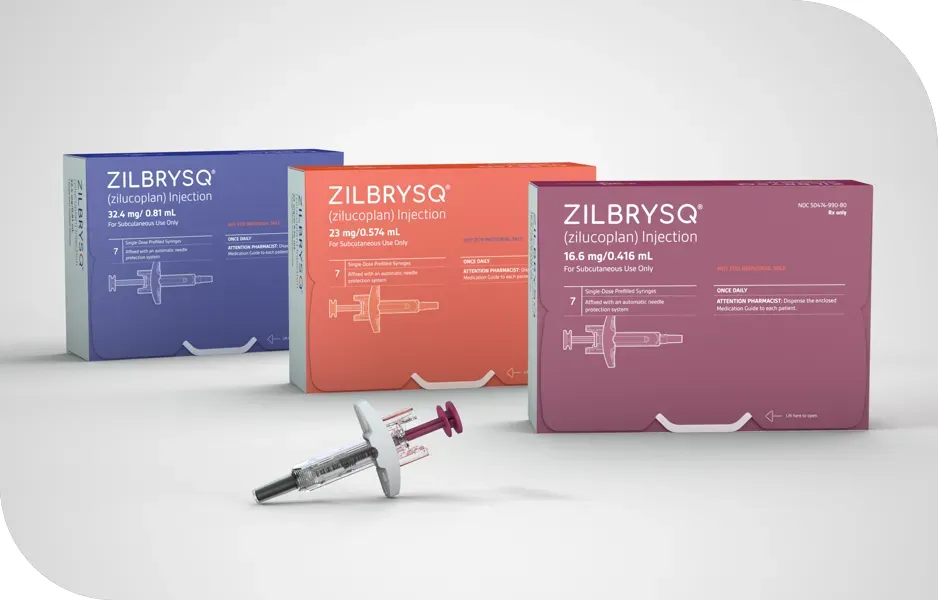
Table of Contents
- Package leaflet: Information for the patient
- Zilbrysq 16.6 mg solution for injection in pre-filled syringe, 23 mg solution for injection in pre-filled syringe, 32.4 mg solution for injection in pre-filled syringe
- 1. What Zilbrysq is and what it is used for
- 2. What you need to know before using Zilbrysq
- 3. How to use Zilbrysq
- 4. Possible side effects
- 5. How to store Zilbrysq
- 6. Package contents and other information
- Instructions for use of Zilbrysq injectable solution in prefilled syringe
- 1. Step 1: Preparing the injection
- 2. Step 2: Choose the injection site and prepare the injection
- 3. Step 3: Inject Zilbrysq
Package leaflet: Information for the patient
Zilbrysq 16.6 mg solution for injection in pre-filled syringe, 23 mg solution for injection in pre-filled syringe, 32.4 mg solution for injection in pre-filled syringe
zilucoplan
This medicinal product is subject to additional monitoring. This will allow for rapid identification of new safety information. You can help by reporting any side effects you experience while taking this medicine. See the end of section 4 for information on how to report side effects.
Please read this leaflet carefully before using this medicine because it contains important information for you.
- Keep this leaflet. You may need to read it again.
- If you have any questions, ask your doctor, pharmacist, or nurse.
- This medicine has been prescribed for you only. Do not give it to other people, even if their symptoms are the same as yours, as it may be harmful.
- If you experience any side effect, including those not listed in this leaflet, contact your doctor, pharmacist, or nurse. See section 4.
Contents of this leaflet
- What Zilbrysq is and what it is used for
- What you need to know before using Zilbrysq
- How to use Zilbrysq
- Possible side effects
- How to store Zilbrysq
- Contents of the pack and other information
1. What Zilbrysq is and what it is used for
Zilbrysq contains the active substance zilucoplan. Zilucoplan binds to and blocks a protein in the body known as complement protein C5, which is part of the immune system (the body's natural defenses). By blocking this protein, zilucoplan prevents the body's immune system from attacking and destroying the connections between nerves and muscles, thereby improving disease symptoms.
Zilbrysq is used in combination with standard therapy to treat adult patients with generalised myasthenia gravis (gMG), an autoimmune disease causing muscle weakness. It is used in adults whose immune system produces antibodies against a protein called the acetylcholine receptor, located on muscle cells. In patients with gMG, muscles can be attacked and damaged by the immune system, leading to profound muscle weakness, impaired mobility, shortness of breath, extreme fatigue, difficulty swallowing, and significant impairment of daily activities.
Zilbrysq may reduce disease symptoms and improve quality of life.
2. What you need to know before using Zilbrysq
Do not use Zilbrysq
- if you are allergic to zilucoplan or to any of the other ingredients of this medicine (listed in section 6).
- if you have not been vaccinated against meningococcal infection. See section Warnings and precautions.
- if you have a meningococcal infection.
Warnings and precautions
Alert for meningococcal infections and other Neisseria infections
Since Zilbrysq inhibits the body’s natural defenses against infections, its use may increase your risk of infections caused by Neisseria meningitidis, such as meningococcal infection (a serious infection of the membranes surrounding the brain and spinal cord and/or a bloodstream infection), as well as other infections caused by Neisseria bacteria, such as gonorrhoea.
Talk to your doctor before taking Zilbrysq to ensure you receive vaccination against Neisseria meningitidis, the organism that causes meningococcal infection, at least 2 weeks before starting treatment. If you cannot be vaccinated 2 weeks before starting treatment, your doctor will prescribe antibiotics to reduce the risk of infection for up to 2 weeks after receiving the first vaccine dose. Make sure your meningococcal vaccinations are up to date. You should be aware that vaccination may not always prevent this type of infection.
If you are at risk of gonorrhoea (a sexually transmitted bacterial infection), consult your doctor before taking this medicine.
Symptoms of meningococcal infection
Because it is important to quickly identify and treat meningococcal infections in patients receiving Zilbrysq, you will be given a card to carry with you at all times, listing the specific signs and symptoms of a possible meningococcal infection. It also contains information for healthcare professionals who may not be familiar with Zilbrysq. This card is called the:
“Patient Alert Card”. You will also be given a patient/caregiver guide containing additional information about Zilbrysq.
You must contact your doctor immediately if you experience any of the following symptoms:
- Headache accompanied by additional symptoms such as nausea (feeling unwell), vomiting, fever, and neck or back stiffness
- Fever with or without a rash
- Sensitivity to light
- Confusion/drowsiness
- Muscle pain with flu-like symptoms
Treatment of meningococcal infection during travel
If you are travelling to an area where you cannot contact your doctor or will not temporarily have access to medical care, your doctor may prescribe an antibiotic against Neisseria meningitidis for you to carry with you. If you experience any of the symptoms described above, you must take the antibiotic treatment as prescribed. Note that you must consult a doctor as soon as possible, even if you feel better after taking the antibiotic treatment.
Children and adolescents
Do not administer this medicine to children under 18 years of age. Zilbrysq has not been studied in this age group.
Other medicines and Zilbrysq
Inform your doctor or pharmacist if you are using, have recently used, or might use any other medicines.
Pregnancy, breastfeeding and fertility
If you are pregnant, suspect you may be pregnant, planning to become pregnant, or breastfeeding, consult your doctor or pharmacist before taking this medicine.
There is uncertainty about the effects Zilbrysq may have on the unborn child; therefore, do not use this medicine if you are pregnant or think you might be pregnant unless specifically recommended by your doctor.
It is not known whether Zilbrysq is excreted in human breast milk. There may be a risk to newborns/infants.
A decision should be made whether to discontinue breastfeeding or discontinue Zilbrysq therapy, taking into account the benefit of breastfeeding for the child and the benefit of therapy for the woman.
Driving and use of machines
It is unlikely that Zilbrysq will affect the ability to drive vehicles or operate machinery.
Zilbrysq contains sodium
This medicine contains less than 1 mmol (23 mg) of sodium per pre-filled syringe, i.e., essentially ‘sodium-free’.
3. How to use Zilbrysq
At least 2 weeks before starting treatment with Zilbrysq, your doctor will give you a meningococcal infection vaccine if you have not previously received it or if your vaccination has expired.
If you cannot be vaccinated at least 2 weeks before starting treatment with Zilbrysq,
your doctor will prescribe antibiotics to reduce the risk of infection for up to 2 weeks after receiving
the first vaccine dose.
Before starting treatment, you should also discuss with your doctor whether you need any other vaccines.
After adequate training, your doctor will allow you to self-inject Zilbrysq.
Use this medicine exactly as instructed by your doctor. If you have any doubts, consult your doctor.
The dose you receive will depend on your body weight. Always administer the daily dose at approximately the same time each day.
The following table indicates the total daily dose of Zilbrysq based on your body weight:
| Body weight | Dose | Number of pre-filled syringes (by color) |
| < 56 kg | 16.6 mg | 1 (RUBY RED) |
| from ≥ 56 to < 77 kg | 23 mg | 1 (ORANGE) |
| ≥ 77 kg | 32.4 mg | 1 (DARK BLUE) |
How Zilbrysq is administered
You and your doctor or nurse will decide whether you can self-administer this medicine. Do not inject yourself with this medicine unless you have been trained to do so by a healthcare professional. Another person may also administer the injections to you after receiving the necessary instructions.
Zilbrysq will be administered as a subcutaneous injection (an injection under the skin). It can be injected under the skin of the abdominal area, the front of the thighs, or the upper back of the arms. Injections in the upper back of the arms should only be given by another person. Injection sites should be rotated, and injections must not be administered in areas where the skin is tender, bruised, red, hardened, or where there are scars or stretch marks.
It is important to read the instructions for use at the end of this leaflet for detailed information on how to use Zilbrysq.
If you use more Zilbrysq than you should
If you think you have accidentally received more Zilbrysq than prescribed, contact your doctor for advice.
If you forget to use Zilbrysq
If you have not injected your dose at the usual time or have missed a dose, inject it as soon as you remember, then continue with your next dose at the normal time the following day. Do not administer more than one dose per day.
If you stop using Zilbrysq
Stopping or interrupting treatment with Zilbrysq may cause symptoms to return. Talk to your doctor before stopping Zilbrysq. Your doctor will discuss with you the possible side effects and risks. Your doctor may also wish to monitor you closely.
If you have any questions about the use of this medicine, ask your doctor, pharmacist, or nurse.
4. Possible side effects
Like all medicines, this medicine can cause side effects, although not everybody gets them.
Very common (may affect more than 1 in 10 people)
- Reactions at the injection site, such as bruising, pain, itching, and nodule formation.
- Nasal and throat infections.
Common (may affect up to 1 in 10 people)
- Diarrhoea
- Increased levels of pancreatic enzymes (amylase, lipase) observed in blood tests.
- Morphea (a condition causing discoloured and hardened skin areas).
Uncommon (may affect up to 1 in 100 people)
- Increased eosinophils (a type of white blood cells) observed in blood tests.
Reporting of side effects
If you experience any side effect, including those not listed in this leaflet, talk to your doctor, pharmacist or nurse.
You can also report side effects directly via the national reporting system referred to in Annex V.
Reporting side effects can help provide more information on the safety of this medicine.
5. How to store Zilbrysq
Keep this medicine out of the sight and reach of children.
Do not use this medicine after the expiry date which is stated on the label of the syringe and on the outer packaging after Exp. The expiry date refers to the last day of that month.
Store in a refrigerator (2 °C – 8 °C).
Do not freeze.
Keep the pre-filled syringe in the outer packaging to protect it from light.
The pre-filled syringe of Zilbrysq may be stored at room temperature in the original packaging at temperatures up to 30 °C for a single period not exceeding 3 months. Once Zilbrysq has been removed from the refrigerator, it must not be returned to the refrigerator. The product must be disposed of if not used within 3 months, or when the expiry date is reached, whichever occurs first.
Do not dispose of any medicine via wastewater or household waste. Ask your pharmacist how to dispose of medicines you no longer use. This will help protect the environment.
6. Package contents and other information
What Zilbrysq contains
- The active substance is: zilucoplan.
- The other components are: sodium dihydrogen phosphate monohydrate, disodium phosphate (anhydrous), sodium chloride, water for injections (see section 2, Zilbrysq contains sodium).
Description of the appearance of Zilbrysq and contents of the pack
Zilbrysq is an injectable solution in a pre-filled syringe (injection), from clear to slightly
opalescent and colourless, free from visible particles.
Zilbrysq 16.6 mg solution for injection in pre-filled syringe
Each pre-filled syringe with a RUBY RED plunger contains sodium zilucoplan equivalent to
16.6 mg of zilucoplan in 0.416 mL.
Zilbrysq 23 mg solution for injection in pre-filled sy游戏副本
Instructions for use of Zilbrysq injectable solution in prefilled syringe
Read ALL the instructions below before using Zilbrysq
Before use
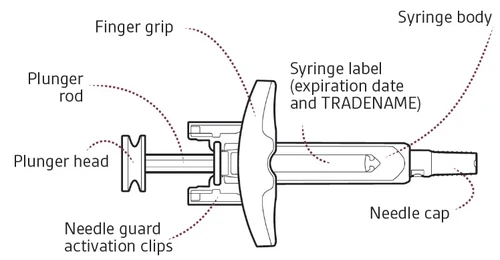
After use
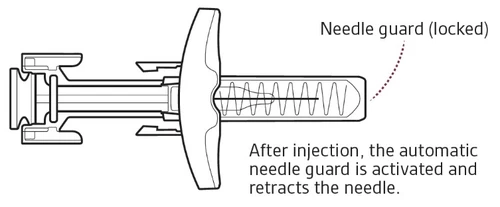
Important information:
- Your healthcare provider must show you how to properly prepare and inject Zilbrysq before you use it for the first time.
- Contact your healthcare provider if you or the person assisting you has any questions about how to correctly inject Zilbrysq.
Do not use this medicine and return it to the pharmacy:
- if the prefilled syringe has been dropped
Follow the instructions below each time you use Zilbrysq
1. Step 1: Preparing the injection
a) If the pre-filled syringes are stored in the refrigerator: for a more comfortable
injection: Remove 1 pre-filled syringe of Zilbrysq from the refrigerator and allow it to sit on a
flat surface at room temperature for 30–45 minutes before injecting. Do not heat in any other way. Return the remaining syringes in the pack to the refrigerator and proceed to Step b) below.
If the pre-filled syringes are stored at room temperature: Remove 1 pre-filled syringe of Zilbrysq from the packaging. Any remaining syringes from the pack must not be returned to the refrigerator once stored at room temperature.
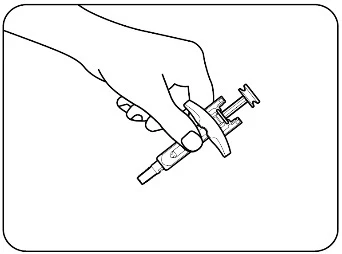
When removing a syringe from the outer packaging, hold the barrel of the syringe (Figure A).
Do not touch the plunger or the needle cap. Never touch the needle shield activation clips, as this may cause premature activation of the needle safety shield.
Figure A
b) Place the following items on a flat, well-lit work surface, such as a table
- 1 pre-filled syringe of Zilbrysq
- 1 alcohol wipe (not supplied)
- 1 cotton ball or gauze pad (not supplied)
- 1 adhesive bandage (not supplied)
- 1 sharps disposal container (not supplied). See Step 4 for instructions on how to dispose of the empty syringe.
c) Inspect the pre-filled syringe
- Check the pre-filled syringe for any damage (see Figure “Before use”). Do not use the pre-filled syringe if any parts appear cracked, leaking, or broken. Do not use the syringe if the needle cap is damaged, missing, or not securely attached to the pre-filled syringe.
- Do not remove the needle cap from the pre-filled syringe until you are ready to perform the injection.
- Do not use if the liquid has ever been frozen (even if thawed).
- Check the expiration date on the syringe label.
- Examine the medicine inside the pre-filled syringe. The solution should be clear to slightly opalescent and colorless. It is normal to see air bubbles in the syringe. Do not use the medicine if it is cloudy, discolored, or contains particles.
- Check the dose on the label. Do not use if the dose does not match the prescribed dose.
2. Step 2: Choose the injection site and prepare the injection
a) Choose the injection site
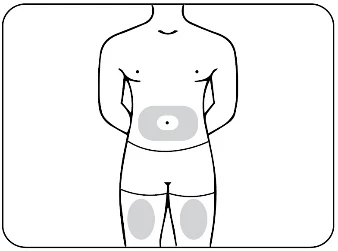
Choose an injection site from the following areas (Figure B):
- The stomach (abdomen), except for a 5 cm area around the navel
- The front of the thighs
- The back of the upper arms (only if someone else is administering the injection)
Figure B
- Abdomen and thighs
- The back of the upper arms (only if the injection is given by someone else)
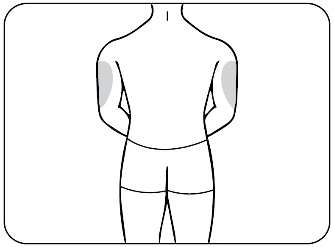
Select a different site for each injection. If you wish to reuse the same general area, make sure it is at least 2.5 cm away from the previous injection site.
Do not inject Zilbrysq into an area that is tender, red, bruised, hard, scarred, or has stretch marks.
b) Wash your hands thoroughly with soap and water, and dry them with a clean towel.
c) Prepare the skin
- Clean the injection site with an alcohol wipe.
- Allow the skin to dry for 10 seconds before injecting.
- Do not touch the injection site again before giving the injection.
3. Step 3: Inject Zilbrysq
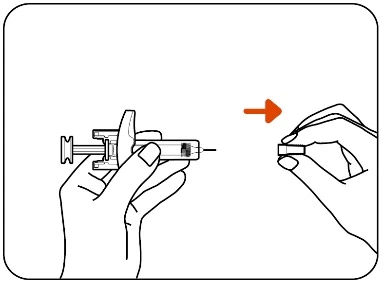
a) Remove the needle cap (Figure C)
Hold the Zilbrysq pre-filled syringe body in one hand and remove the needle cap with the other hand (Figure C).
Dispose of the needle cap in household waste or in a sharps container (see step 4).
- Do not touch the needle and do not let the needle touch anything.
- Never recap the needle to avoid injury.
- Do not attempt to remove any air bubbles from the syringe. Air bubbles will not affect the dose and will not harm you. This is normal. You may proceed with the injection.
Figure C
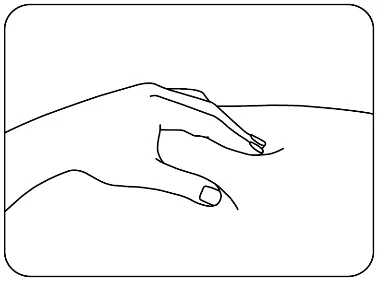
b) Pinch the injection site
With your other hand, pinch the cleaned area of skin and hold it firmly (Figure D).
Figure D
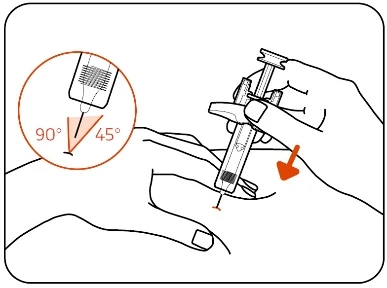
c) Insert the needle
Insert the entire needle into the pinched skin at an angle between 45° and 90° (Figure E).
- Never pull back the plunger, as this may break the syringe.
- Do not touch the needle shield activation clips.
Figure E
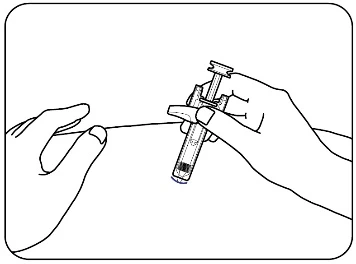
d) Release the pinched skin
Once the needle is fully inserted, hold the pre-filled syringe in place and release the pinched skin (Figure F).
- Do not reinsert the needle into the skin if the needle comes out when releasing the skin, as this may bend or break the needle and damage tissue. In this case, discard the syringe into a sharps container and use a new syringe to administer the injection.
Figure F
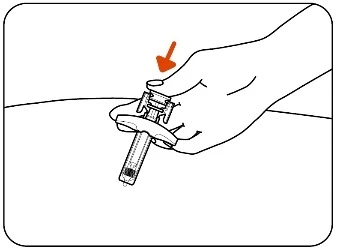
e) Inject the medicine
Push the plunger all the way down, keeping the grip pressed, to inject all the medicine (Figure G). All the medicine has been injected when you can no longer push the plunger further.
Figure G
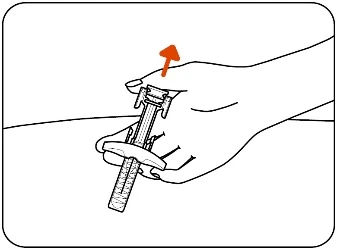
f) Release the plunger
Slowly release the plunger by lifting your thumb. After a complete injection, the needle safety shield will cover the needle and you may hear a click (Figure H).
Figure H
g) Examine the injection site
Press a cotton ball or gauze pad over the injection site and hold for 10 seconds.
Do not rub the injection site. Mild bleeding may occur; this is normal. If needed, apply a bandage.
Step 4:
Immediately dispose of the used syringe in a sharps container.
Always keep the sharps disposal container out of reach of children.