Ziihera
Italy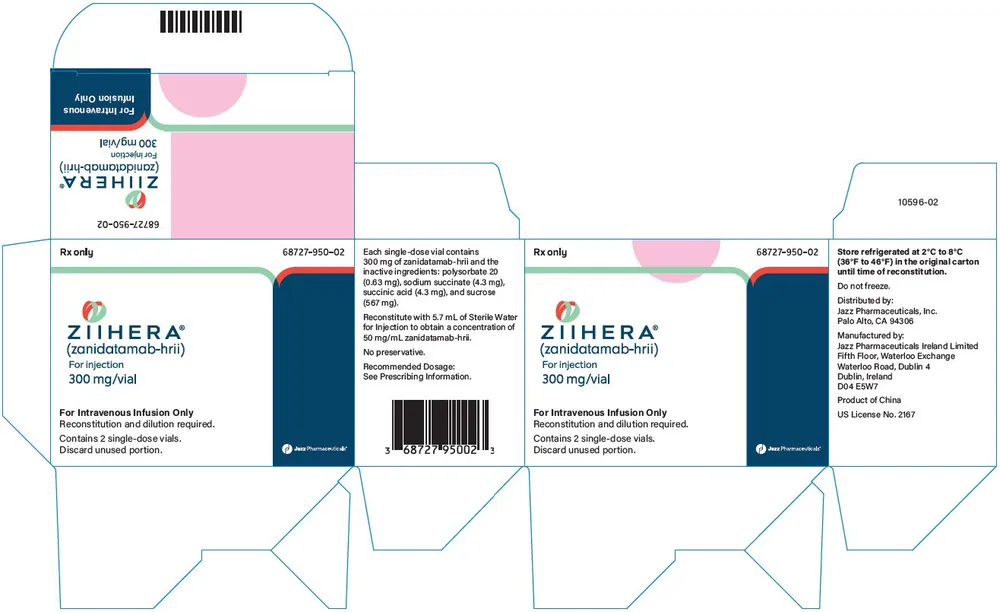
Table of Contents
- Package leaflet: Information for the user
- Ziihera 300 mg powder for concentrate for solution for infusion
- 1. What Ziihera is and what it is used for
- 2. What you should know before being given Ziihera
- 3. How Ziihera will be administered to you
- 4. Possible side effects
- 5. How to store Ziihera
- 6. Package contents and other information
Package leaflet: Information for the user
Ziihera 300 mg powder for concentrate for solution for infusion
zanidatamab
▼Medicinal product subject to additional monitoring. This will allow for rapid identification of new safety information. You can help by reporting any side effects you experience while taking this medicinal product. See the end of section 4 for information on how to report side effects.
Please read this leaflet carefully before you are given this medicine because it contains important information for you.
- Keep this leaflet. You may need to read it again.
- If you have any questions, ask your doctor.
- If you experience any side effects, including those not listed in this leaflet, tell your doctor. See section 4.
Contents of this leaflet
- What Ziihera is and what it is used for
- What you need to know before you are given Ziihera
- How Ziihera will be administered to you
- Possible side effects
- How to store Ziihera
- Contents of the pack and other information
1. What Ziihera is and what it is used for
How Ziihera works
Ziihera is a medicine that contains the active substance zanidatamab. Zanidatamab is a bispecific antibody that binds to specific proteins or antigens on tumor cells. It recognizes and binds to a protein called human epidermal growth factor receptor 2 (HER2). HER2 is found in high amounts on the surface of certain tumor cells and stimulates their growth. When zanidatamab binds to HER2 on tumor cells, it slows down or stops their growth and may kill them.
What Ziihera is used for
Ziihera is used in adults with biliary tract cancer, a cancer of the structures that store and transport bile. It is used when the cancer:
- has high levels of the HER2 protein on its surface (also known as 'HER2-positive');
- cannot be surgically removed (non-resectable) and has spread to surrounding tissues (locally advanced) or to other parts of the body (metastatic); and
- has come back or worsened after previous chemotherapy treatment.
2. What you should know before being given Ziihera
Ziihera must not be given to you if:
- You are allergic to zanidatamab or to any of the other ingredients of this medicine (listed in section 6).
If you are unsure whether you are allergic, consult your doctor or nurse before receiving Ziihera.
Warnings and precautions
Speak to your doctor or nurse before receiving Ziihera, or during treatment, if any of the following symptoms occur before or during treatment with Ziihera:
- Shortness of breath,
- Cough,
- Feeling of fatigue,
- Swelling of the ankles or legs,
- Irregular heartbeat,
- Sudden weight gain,
- Dizziness, or
- Loss of consciousness.
These could be symptoms of reduced left ventricular ejection fraction, a condition in which the heart does not pump blood effectively enough. Before starting treatment with Ziihera, your doctor will check your heart function. For further information on signs of heart problems to watch for, see section 4 “Serious side effects”.
Infusion reactions
Ziihera is administered via an intravenous infusion (into a vein). Infusion reactions may occur. If necessary, your doctor or nurse will monitor you for any adverse effects during and after the infusion. If you experience a serious reaction, your doctor may stop treatment with Ziihera. For further information on infusion reactions to watch for during and after the infusion, see section 4 “Serious side effects”.
Children and adolescents
Ziihera is not recommended for children or adolescents. It has not been evaluated in this age group.
Other medicines and Ziihera
Inform your doctor or nurse if you are taking, have recently taken, or might take any other medicines.
Pregnancy and breastfeeding
Inform your doctor or nurse before starting treatment if you are pregnant, suspect you may be pregnant, are planning a pregnancy, or are breastfeeding.
Ziihera could be harmful to the unborn baby. Your doctor will inform you of the risks to the baby associated with taking Ziihera during pregnancy or breastfeeding. If you are able to become pregnant, you must use an effective method of contraception (birth control) during treatment and for 4 months after stopping treatment with Ziihera. Ask your doctor which contraceptive methods are best for you. Inform your doctor immediately if you become pregnant during treatment with Ziihera or within 4 months after stopping treatment.
It is not known whether Ziihera passes into breast milk. Ask your doctor whether you can breastfeed during treatment with Ziihera and for 4 months after treatment, as it could be harmful to the baby. Your doctor will weigh the benefits of breastfeeding for the baby against the benefits of treatment with this medicine for you.
Driving and using machines
After receiving Ziihera, you may feel fatigued. If so, do not drive or operate tools or machinery.
Ziihera contains sodium
Ziihera contains less than 1 mmol (23 mg) of sodium per dose unit, i.e., essentially ‘sodium-free’.
Ziihera contains polysorbate 20
Ziihera contains 0.63 mg of polysorbate 20 in each vial, equivalent to 0.105 mg/mL.
Polysorbates may cause allergic reactions. Inform your doctor if you have known allergies.
3. How Ziihera will be administered to you
Ziihera may be administered to you by a doctor or nurse in a hospital or clinic.
- It is given as an intravenous infusion (through a vein) once every two weeks.
- The dose you receive depends on your body weight and will be calculated by your doctor.
- The duration of the infusion may differ between the first dose and subsequent doses, depending on your tolerance to infusions.
- The number of infusions you will receive depends on either your disease's response to treatment or how well you tolerate the treatment.
- Before each infusion, your doctor or nurse may give you medications to help prevent infusion-related reactions. These may include antihistamines (medicines to reduce allergic reactions), corticosteroids (medicines to treat pain and inflammation), and antipyretics (medicines to reduce fever). These will be given 30 to 60 minutes before the infusion starts.
If you miss an appointment
If you forget or miss an appointment for Ziihera, contact your doctor or nurse as soon as possible to reschedule.
If you stop treatment with Ziihera
Do not stop treatment with this medicine without first talking to your doctor. It is important that you receive all the infusions recommended by your healthcare provider.
If you have any questions about how to use this medicine, speak with your doctor or nurse.
4. Possible side effects
Like all medicines, this medicine can cause side effects, although not everybody gets them. If you experience any side effect, including those not listed in this leaflet, tell your doctor.
Some side effects could be serious. If you notice any of the following side effects, tell your doctor or nurse immediately:
Very common (may affect more than 1 in 10 people)
- Infusion reactions. Reactions can be mild or more severe. Symptoms may include feeling unwell (nausea), fever, chills, feeling tired, headache, loss of appetite, joint and muscle pain, and hot flushes.
Common (may affect up to 1 in 10 people)
-
Reduced ejection fraction. This medicine may cause heart problems that reduce the heart's ability to pump blood. Symptoms include shortness of breath,
cough, feeling tired, swelling of the ankles or legs, irregular heartbeat, sudden weight gain, feeling dizzy or fainting.
Other side effects
The frequency and severity of side effects may vary depending on the dose administered.
If you experience any of the following effects, contact your doctor or nurse:
Very common (may affect more than 1 in 10 people) -
diarrhoea
-
stomach (abdominal) pain
-
feeling unwell (nausea)
-
vomiting
-
feeling tired (fatigue)
-
reduced appetite
-
rash
-
low red blood cell levels (anaemia), shown by blood tests
-
abnormal liver function, shown by blood tests
Uncommon (may affect up to 1 in 100 people)
- chest symptoms, such as dry cough or shortness of breath (pneumonitis)
If you experience any of the side effects listed above after treatment with Ziihera, you must contact your doctor immediately and inform them that you are being treated with Ziihera.
Reporting of side effects
If you experience any side effect, including those not listed in this leaflet, contact your doctor. You can also report side effects directly via the national reporting system listed in Annex V. By reporting side effects, you can help provide more information on the safety of this medicine.
5. How to store Ziihera
Ziihera will be stored by healthcare professionals at the hospital or clinic where your treatment is administered. The following information is intended exclusively for healthcare professionals.
- Keep this medicine out of the sight and reach of children.
- Do not use Ziihera after the expiry date stated on the carton and on the label of the vial after "Exp./EXP.". The expiry date refers to the last day of that month.
- Store in a refrigerator (2 °C - 8 °C). Do not freeze.
- The diluted solution must be used immediately after preparation.
Medicines must not be disposed of via wastewater. Unused medicines will be disposed of by the pharmacist. This will help protect the environment.
6. Package contents and other information
What Ziihera contains
- The active substance is zanidatamab.
- One vial of powder for concentrate for solution for infusion contains 300 mg of zanidatamab. After reconstitution, a 6 mL solution from one vial contains 50 mg/mL of zanidatamab.
- The other components are polysorbate 20 (E432), disodium succinate, succinic acid (E363), sucrose and water for injections (see section 2).
Description of the appearance of Ziihera and contents of the pack
Ziihera is a white lyophilised powder supplied in a glass vial with a stopper and a tamper-evident cap.
A carton contains 1 or 2 vials. Not all pack sizes may be marketed.
Marketing Authorisation Holder and Manufacturer
Jazz Pharmaceuticals Ireland Ltd
5th Floor, Waterloo Exchange
Waterloo Road
Dublin 4
D04 E5W7
Ireland
This medicinal product has been granted a marketing authorisation “under conditional approval”. This means that additional data on this medicinal product are required.
The European Medicines Agency will review new information on this medicinal product at least annually, and this package leaflet will be updated as necessary.
Other sources of information
More detailed information on this medicinal product is available on the website of the European Medicines Agency: https://www.ema.europa.eu. In addition, links to other websites on rare diseases and related therapeutic treatments are provided.
ANNEX IV
CONCLUSIONS OF THE EUROPEAN MEDICINES AGENCY ON THE GRANTING OF THE
MARKETING AUTHORISATION UNDER CONDITIONAL APPROVAL
Conclusions of the European Medicines Agency on:
- Granting of a marketing authorisation under conditional approval
Following assessment of the application for marketing authorisation, the Committee for Medicinal Products for Human Use (CHMP) considers that the benefit-risk balance is favourable and recommends granting a marketing authorisation under conditional approval, as further described in the European Public Assessment Report (EPAR).