Ziagen
Italy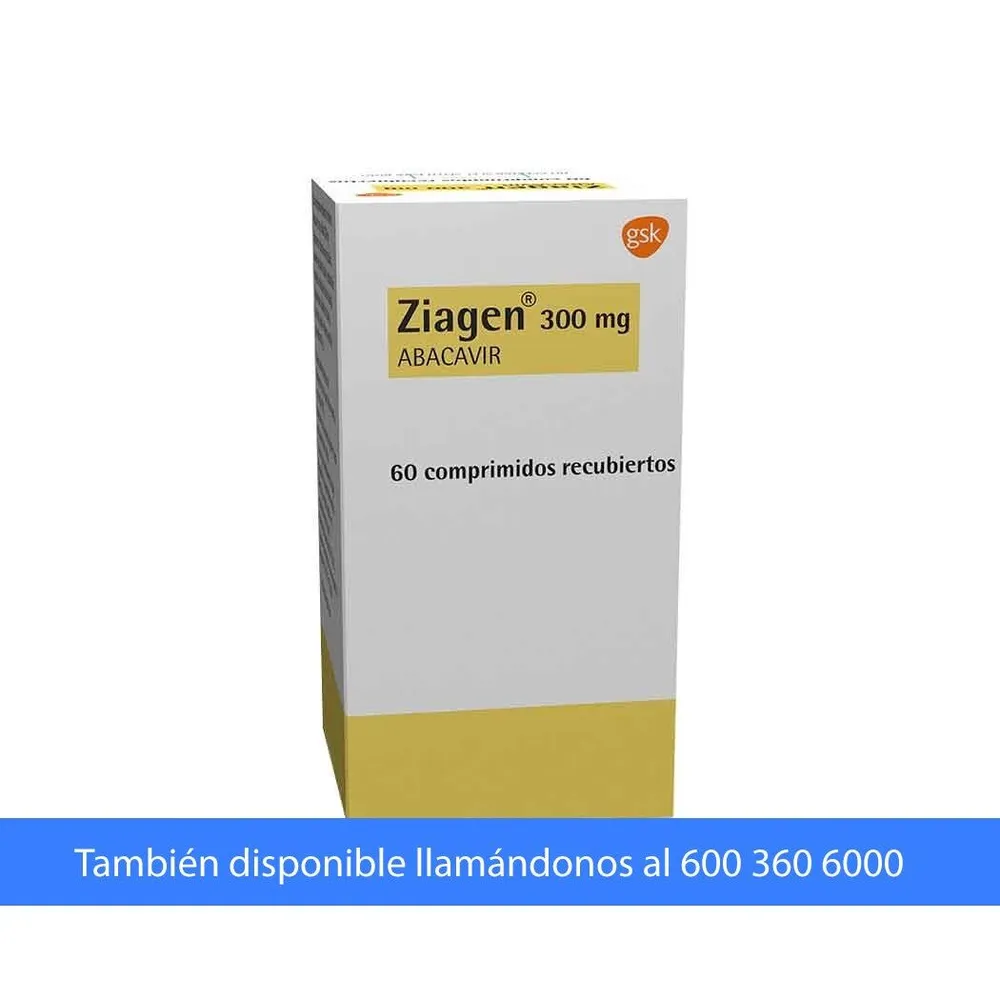
Table of Contents
- Package Leaflet: Information for the User
- Ziagen 300 mg Film-coated Tablets
- 1. What Ziagen is and what it is used for
- 2. What you need to know before taking Ziagen
- 3. How to take Ziagen
- 4. Possible side effects
- 5. How to store Ziagen
- Package Leaflet: Information for the User
- Ziagen 20 mg/ml oral solution
- 1. What Ziagen is and what it is used for
- 2. What you should know before taking Ziagen
- 3. How to take Ziagen
- 4. Possible side effects
- 5. How to store Ziagen
- 6. Package contents and other information
Package Leaflet: Information for the User
Ziagen 300 mg Film-coated Tablets
abacavir
Please read this leaflet carefully before taking this medicine because it contains
important information for you.
- Keep this leaflet. You may need to read it again.
- If you have any questions, consult your doctor or pharmacist.
- This medicine has been prescribed for you only. Do not pass it on to other people, even if their symptoms are the same as yours, because it may be harmful.
- If you experience any side effect, including those not listed in this leaflet, consult your doctor or pharmacist. See section 4.
IMPORTANT – Hypersensitivity reactions
Ziagen contains abacavir (which is also the active substance in medicines such as Kivexa,
Triumeq, and Trizivir). Some people taking abacavir may develop a hypersensitivity reaction
(a severe allergic reaction), which can be life-threatening if they continue taking abacavir-containing medicines.
Please read carefully all information under 'Hypersensitivity reactions' in the box in section 4.
The Ziagen pack includes an Alert Card to remind you and healthcare professionals about abacavir hypersensitivity. Remove this card and always carry it with you.
Contents of this leaflet:
- What Ziagen is and what it is used for
- What you need to know before taking Ziagen
- How to take Ziagen
- Possible side effects
- How to store Ziagen
- Contents of the pack and other information
1. What Ziagen is and what it is used for
Ziagen is used to treat HIV (Human Immunodeficiency Virus) infection.
Ziagen contains the active substance abacavir. Abacavir belongs to a group of antiretroviral medicines
called nucleoside analogue reverse transcriptase inhibitors (NRTIs).
Ziagen does not completely cure HIV infection; it reduces the amount of virus in the body and keeps it
at low levels. In addition, it increases the number of CD4 cells in the blood. CD4 cells are a type of
white blood cells important in helping the body fight infection.
Not all people respond to treatment with Ziagen in the same way. Your doctor will monitor how well
the treatment is working.
2. What you need to know before taking Ziagen
Do not take Ziagen:
-
if you are allergic ( hypersensitive ) to abacavir (or to any other medicine containing abacavir –
such as Trizivir, Triumeq or Kivexa ), or to any of the other ingredients of this
medicine (listed in section 6).
Read carefully all the information about hypersensitivity reactions in section 4.
Talk to your doctor if you think this applies to you.
Be especially careful with Ziagen
Some people taking Ziagen for HIV treatment are at higher risk of
serious side effects. You should be aware of these additional risks: -
if you have moderate or severe liver disease
-
if you have had liver disease, including hepatitis B or C
-
if you are severely overweight (especially if you are a woman)
-
if you have severe kidney disease. Tell your doctor if any of these conditions apply to you.
You may need additional monitoring, including blood tests, while taking this medicine.
See section 4 for further information.
Abacavir hypersensitivity reactions
Even patients who do not have the HLA-B*5701 gene can still develop a hypersensitivity reaction
(a severe allergic reaction).
Read carefully all the information about hypersensitivity reactions in section 4 of this leaflet.
Risk of cardiovascular events
It cannot be ruled out that abacavir may be associated with an increased risk of cardiovascular events.
Tell your doctor if you have cardiovascular problems, if you are a smoker, or if you have conditions that increase the risk of cardiovascular disease, such as high blood pressure or diabetes.
Do not stop taking Ziagen unless your doctor advises you to do so.
Pay attention to important symptoms
Some people taking medicines for HIV infection develop other conditions which may be serious. You should be aware of important signs and symptoms so that you can remain vigilant while taking Ziagen.
Read the information under 'Other possible side effects of combination HIV therapy' in section 4 of this leaflet.
Other medicines and Ziagen
Tell your doctor or pharmacist if you are taking any other medicine, or have recently taken any, including herbal preparations or other medicines purchased without prescription. Remember to inform your doctor or pharmacist if you start taking a new medicine while on Ziagen treatment.
Some medicines interact with Ziagen
These include:
- phenytoin, used to treat epilepsy. Tell your doctor if you are taking phenytoin. Your doctor may need to monitor you while you are taking Ziagen.
- methadone, used as a heroin substitute. Abacavir increases the rate at which methadone is eliminated from the body. If you are taking methadone, you will be monitored for any withdrawal symptoms. It may be necessary to adjust your methadone dose. Tell your doctor if you are taking methadone.
- riociguat, used to treat high blood pressure in the blood vessels (pulmonary arteries) carrying blood from the heart to the lungs. Your doctor may need to reduce the dose of riociguat, as abacavir can increase blood levels of riociguat.
Pregnancy
Ziagen is not recommended during pregnancy. Ziagen and similar medicines may cause side effects in unborn children. If you have taken Ziagen during pregnancy, your doctor may arrange regular blood tests and other diagnostic examinations to monitor your baby's development. In children whose mothers took NRTIs during pregnancy, the benefit of protection against HIV has outweighed the risk of side effects.
Breast-feeding
Breast-feeding is not recommended for HIV-positive women because HIV infection can be transmitted to the child through breast milk. A small amount of the components of Ziagen may also pass into breast milk.
If you are breast-feeding or considering breast-feeding, you must discuss this with your doctor as soon as possible.
Driving and using machines
Do not drive and do not operate machinery unless you feel well.
Important information about some of the other ingredients in Ziagen tablets
This medicine contains less than 1 mmol (23 mg) of sodium per dosage unit, i.e. it is essentially 'sodium-free'.
3. How to take Ziagen
Always take this medicine exactly as your doctor has told you. Check with your
doctor or pharmacist if you are unsure.
Swallow the tablets with water. Ziagen may be taken with or without food.
If you are unable to swallow the tablet, you may break it up and mix it with a small amount of food
or drink, then take the entire dose immediately.
Stay in regular contact with your doctor.
Ziagen helps control your condition. You must take it every day to prevent the condition from worsening. You may still develop other infections and illnesses related to HIV infection.
Keep in regular contact with your doctor and do not stop taking Ziagen without consulting your doctor.
Dosage
Adults, adolescents and children weighing at least 25 kg
The recommended dose of Ziagen is 600 mg daily. This may be taken either as one 300 mg tablet twice daily, or as two 300 mg tablets once daily.
Children aged one year and older, weighing less than 25 kg:
The dose to be administered depends on the child's body weight. The recommended dose is:
-
Children weighing at least 20 kg and less than 25 kg: The recommended dose of Ziagen is 450 mg daily. This may be taken either as 150 mg (half a tablet) in the morning and 300 mg (one full tablet) in the evening, or as 450 mg (one and a half tablets) once daily, as advised by the doctor.
-
Children weighing at least 14 kg and less than 20 kg: The recommended dose of Ziagen is 300 mg daily. This may be taken either as 150 mg (half a tablet) twice daily, or as 300 mg (one full tablet) once daily, as advised by the doctor.
The tablet may be divided into equal doses.
An oral solution (abacavir 20 mg/ml) is also available for the treatment of children over three months of age weighing less than 14 kg, or for patients requiring a lower dose than usual, or for patients unable to take tablets.
If you take more Ziagen than you should
If you accidentally take too much Ziagen, inform your doctor or pharmacist or contact the nearest hospital emergency department for further advice.
If you forget to take Ziagen
If you forget to take a dose, take it as soon as you remember. Then continue your treatment as before. Do not take a double dose to make up for a forgotten dose.
It is important to take Ziagen regularly, as taking it at irregular intervals may increase the risk of developing a hypersensitivity reaction.
If you have stopped taking Ziagen
If you have stopped taking Ziagen for any reason – particularly because you thought you were experiencing side effects or other illnesses:
talk to your doctor before starting to take it again. Your doctor will assess whether your symptoms were related to a hypersensitivity reaction. If your doctor suspects that your symptoms may have been due to a hypersensitivity reaction, you will be told never to take Ziagen or any other medicine containing abacavir again (e.g., Triumeq, Trizivir or Kivexa). It is important that you follow this advice.
If your doctor advises restarting Ziagen, you will be asked to take the first doses in a setting where you can receive immediate medical attention if needed.
4. Possible side effects
During HIV therapy, an increase in weight and in blood levels of lipids and glucose may occur.
This is partly related to the recovery of health status and lifestyle, and, in the case of blood lipids,
sometimes to the HIV medicines themselves. Your doctor will monitor these changes.
Like all medicines, this medicine can cause side effects, although not everybody gets them.
During HIV treatment, it may be difficult to determine whether a symptom is a side effect of Ziagen,
of other medicines you are taking, or of the HIV disease itself. For this reason, it is very important
to inform your doctor about any changes in your health status.
Even patients who do not carry the HLA-B*5701 gene may still develop a hypersensitivity
reaction (a severe allergic reaction), described in this leaflet in a section titled ‘Hypersensitivity
reactions’.
It is very important to read and understand the information about this serious reaction.
During combination therapy for HIV, both the side effects listed below for Ziagen and other
conditions may occur.
It is important to read the information in another section of this leaflet titled ‘Other possible side
effects of combination therapy for HIV’.
Hypersensitivity reactions
Ziagen contains abacavir (which is also the active substance in Trizivir, Triumeq and Kivexa).
Abacavir can cause a serious allergic reaction known as a hypersensitivity reaction.
Such hypersensitivity reactions have been observed more frequently in people taking medicines
containing abacavir.
Who is at risk of these reactions?
Any person taking Ziagen may develop a hypersensitivity reaction to abacavir, which could be life-
threatening if Ziagen is continued.
You are more likely to develop this reaction if you carry a gene called HLA-B*5701 (but you may
still have this reaction even if you do not have this gene). Before being prescribed Ziagen, you must
undergo a test to detect the presence of this gene. If you know you carry this gene, inform your doctor
before taking Ziagen. In a clinical study, among 100 patients treated with abacavir who did not have
the HLA-B*5701 gene, approximately 3 to 4 patients experienced a hypersensitivity reaction.
What are the symptoms?
The most common symptoms are:
- fever (high temperature) and rash.
Other common symptoms include:
- nausea, vomiting, diarrhoea, abdominal pain (stomach pain), severe tiredness.
Other symptoms may include:
muscle or joint pain, swelling of the neck, shortness of breath, sore throat, cough, occasional headache,
eye inflammation (conjunctivitis), mouth ulcers, low blood pressure, tingling or numbness in the hands
or feet.
When do these reactions occur?
Hypersensitivity reactions may start at any time during treatment with Ziagen, but are most likely
within the first 6 weeks of treatment.
If you are caring for a child being treated with Ziagen, it is important that you understand the
information about this hypersensitivity reaction. If the child shows the symptoms described below,
it is essential that you follow the instructions provided.
Contact your doctor immediately:
1) if you develop a rash OR
2) if you develop symptoms from at least 2 of the following groups:
- fever
- shortness of breath, sore throat, or cough
- nausea or vomiting, diarrhoea or abdominal pain
- severe tiredness, body aches, or general feeling of being unwell.
Your doctor may advise you to stop taking Ziagen.
If you have stopped taking Ziagen
If you have stopped taking Ziagen due to a hypersensitivity reaction, YOU MUST NEVER TAKE
Ziagen AGAIN, or any other medicine containing abacavir (e.g., Trizivir, Triumeq or Kivexa). If
you do, within a few hours your blood pressure may drop dangerously, which could lead to death.
If you have stopped taking Ziagen for any reason – particularly if you thought you were experiencing
side effects or other illnesses:
talk to your doctor before restarting it. Your doctor will assess whether your symptoms were related
to a hypersensitivity reaction. If your doctor suspects that your symptoms may have been due to a
hypersensitivity reaction, you will be told never to take Ziagen or any other medicine containing
abacavir again (e.g., Trizivir, Triumeq or Kivexa). It is important that you follow this advice.
Hypersensitivity reactions have occasionally occurred in patients restarting abacavir-containing
medicines, even if they had previously experienced only one of the symptoms listed on the Warning
Card before stopping the medicine.
Very rarely, patients who previously took abacavir-containing medicines without any signs of
hypersensitivity have later developed a hypersensitivity reaction when restarting these medicines.
If your doctor advises restarting Ziagen, you will be asked to take the first doses in a setting where you
can receive immediate medical care if needed.
If you are hypersensitive to Ziagen, you must return all unused Ziagen tablets for safe disposal.
Ask your doctor or pharmacist for advice.
The Ziagen package includes a Warning Card to remind you and medical personnel about
hypersensitivity reactions. Detach this card and keep it with you at all times.
Common side effects
These may affect up to 1 in 10 patients:
- hypersensitivity reaction
- nausea
- headache
- vomiting
- diarrhoea
- loss of appetite
- tiredness, lack of energy
- fever
- rash
Rare side effects
These may affect up to 1 in 1,000 patients:
- inflammation of the pancreas ( pancreatitis )
Very rare side effects
These may affect up to 1 in 10,000 patients:
- rash, with blister-like spots resembling small targets (a dark centre surrounded by a pale area with a dark ring around the edge) ( erythema multiforme )
- widespread rash with blisters and peeling of the skin, especially around the mouth, nose, eyes and genitals ( Stevens-Johnson syndrome ), and a more severe form causing skin peeling over more than 30% of the body surface ( toxic epidermal necrolysis )
- lactic acidosis (excess lactic acid in the blood)
If you notice any of these symptoms, contact your doctor urgently.
If you experience side effects
Tell your doctor or pharmacist if any of the side effects become severe or troublesome, or if you
notice any side effect not listed in this leaflet.
Other possible side effects of combination therapy for HIV
Combination therapy including Ziagen may lead to the development of other conditions during HIV
treatment.
Symptoms of infection and inflammation
Old infections may flare up again
People with advanced HIV infection (Acquired Immunodeficiency Syndrome - AIDS) have a weakened
immune system and are more likely to develop serious infections (opportunistic infections). When
these people start treatment, previously hidden infections may flare up, causing signs and symptoms of
inflammation. These symptoms are likely due to immune reconstitution, whereby the body starts to
fight these infections. Symptoms usually include fever, plus some of the following:
- headache
- stomach pain
- difficulty breathing
In rare cases, as the immune system strengthens, it may also attack the body's healthy tissues
( autoimmune disorders ). Symptoms of autoimmune disorders may appear many months after starting
HIV treatment. Symptoms may include:
- palpitations (fast or irregular heartbeat) or tremor
- hyperactivity (agitation and excessive movement)
- weakness starting in the hands and feet and spreading towards the trunk
If you notice any symptoms of infection while taking Ziagen:
inform your doctor immediately. Do not take any other medicines for infection without medical
advice.
You may have bone problems
Some people receiving combination antiretroviral therapy for HIV infection develop a condition called
osteonecrosis. As a result of this condition, part of the bone tissue dies due to reduced blood supply to
the bone. People may be more likely to develop this condition if they:
- have been on combination therapy for a long time
- are also taking anti-inflammatory medicines called corticosteroids
- consume alcohol
- have a very weak immune system
- are overweight
Signs of osteonecrosis include:
- stiffness in the joints
- pain (especially in the hip, knee or shoulder)
- difficulty moving
If you notice any of these symptoms: inform your doctor.
Reporting of side effects
If you experience any side effects, including those not listed in this leaflet, talk to your doctor or
pharmacist. You can also report side effects directly via the national reporting system listed in
Annex V. By reporting side effects, you can help provide more information on the safety of this
medicine.
5. How to store Ziagen
Keep this medicine out of the sight and reach of children.
Do not use this medicine after the expiry date stated on the packaging. The expiry date refers to the last day of that month.
Do not store above 30°C.
Do not dispose of any medicine via wastewater or household waste. Ask your pharmacist how to dispose of medicines you no longer use. This will help protect the environment.
6. Package contents and other information
What Ziagen contains
The active substance in each film-coated, divisible tablet of Ziagen is 300 mg of abacavir (as sulfate).
The excipients are: microcrystalline cellulose, sodium starch glycolate, magnesium stearate and anhydrous colloidal silica, in the tablet core. The tablet coating contains triacetin, methylhydroxypropylcellulose, titanium dioxide, polysorbate 80 and yellow iron oxide.
Description of the appearance of Ziagen and pack contents
Ziagen film-coated tablets are yellow, capsule-shaped, and divisible, with ‘GX 623’ imprinted on both sides. They are supplied in cartons containing blisters of 60 tablets.
Marketing Authorisation Holder: ViiV Healthcare BV,
Van Asch van Wijckstraat 55H, 3811 LP Amersfoort, The Netherlands
Manufacturer: Delpharm Poznań Spółka Akcyjna, ul. Grunwaldzka 189, 60-322 Poznan, Poland.
For further information on this medicine, please contact the local representative of the Marketing Authorisation Holder:
België/Belgique/Belgien Lietuva
ViiV Healthcare srl/bv ViiV Healthcare BV
Tél/Tel: + 32 (0) 10 85 65 00 Tel: + 370 80000334
България Luxembourg/Luxemburg
ViiV Healthcare BV ViiV Healthcare srl/bv
Teл.: + 359 80018205 Belgique/Belgien
Tél/Tel: + 32 (0) 10 85 65 00
Česká republika Magyarország
GlaxoSmithKline s.r.o. ViiV Healthcare BV
Tel: + 420 222 001 111 Tel.: + 36 80088309
[email protected]
Danmark Malta
GlaxoSmithKline Pharma A/S ViiV Healthcare BV
Tlf: + 45 36 35 91 00 Tel: + 356 80065004
[email protected]
Deutschland Nederland
ViiV Healthcare GmbH ViiV Healthcare BV
Tel.: + 49 (0)89 203 0038-10 Tel: + 31 (0) 33 2081199
[email protected]
Eesti Norge
ViiV Healthcare BV GlaxoSmithKline AS
Tel: + 372 8002640 Tlf: + 47 22 70 20 00
[email protected]
Ελλάδα
GlaxoSmithKline Μονοπρόσωπη A.E.B.E.
Τηλ: + 30 210 68 82 100
Österreich
GlaxoSmithKline Pharma GmbH
Tel: + 43 (0)1 97075 0
[email protected]
España Polska
Laboratorios ViiV Healthcare, S.L. GSK Services Sp. z o.o.
Tel: +34 900 923 501 Tel.: + 48 (0)22 576 9000
[email protected]
France Portugal
ViiV Healthcare SAS VIIVHIV HEALTHCARE, UNIPESSOAL, LDA
Tél.: + 33 (0)1 39 17 6969 Tel: + 351 21 094 08 01
[email protected] [email protected]
România
Hrvatska ViiV Healthcare BV
ViiV Healthcare BV Tel: + 40 800672524
Tel: + 385 800787089
Ireland Slovenija
GlaxoSmithKline (Ireland) Limited ViiV Healthcare BV
Tel: + 353 (0)1 4955000 Tel: + 386 80688869
Ísland Slovenská republika
Vistor hf. ViiV Healthcare BV
Sími: +354 535 7000 Tel: + 421 800500589
Italia Suomi/Finland
ViiV Healthcare S.r.l GlaxoSmithKline Oy
Tel: + 39 (0)45 7741600 Puh/Tel: + 358 (0)10 30 30 30
Κύπρος Sverige
ViiV Healthcare BV GlaxoSmithKline AB
Τηλ: + 357 80070017 Tel: + 46 (0)8 638 93 00
[email protected]
Latvija United Kingdom (Northern Ireland)
ViiV Healthcare BV ViiV Healthcare BV
Tel: + 371 80205045 Tel: + 44 (0)800 221441
[email protected]
More detailed information on this medicine is available on the European Medicines Agency website: http://www.ema.europa.eu
Package Leaflet: Information for the User
Ziagen 20 mg/ml oral solution
abacavir
Please read this leaflet carefully before taking this medicine, as it contains
important information for you.
- Keep this leaflet. You may need to read it again.
- If you have any questions, consult your doctor or pharmacist.
- This medicine has been prescribed for you only. Do not give it to other people, even if their symptoms are the same as yours, as it may be harmful.
- If you experience any adverse reactions, including those not listed in this leaflet, contact your doctor or pharmacist. See section 4.
IMPORTANT – Hypersensitivity reactions
Ziagen contains abacavir (which is also the active substance in medicines such as Kivexa,
Triumeq and Trizivir). Some people taking abacavir may develop a hypersensitivity reaction (a severe allergic reaction), which can be life-threatening if treatment with abacavir-containing medicines is continued.
Please read carefully all the information provided under 'Hypersensitivity reactions' in the box in section 4.
The Ziagen package includes an Alert Card to remind you and healthcare professionals about abacavir hypersensitivity. Remove this card and always carry it with you.
Contents of this leaflet:
- What Ziagen is and what it is used for
- What you need to know before taking Ziagen
- How to take Ziagen
- Possible side effects
- How to store Ziagen
- Contents of the pack and other information
1. What Ziagen is and what it is used for
Ziagen is used to treat HIV (Human Immunodeficiency Virus) infection.
Ziagen contains the active substance abacavir. Abacavir belongs to a group of antiretroviral medicines
called nucleoside analogue reverse transcriptase inhibitors (NRTIs).
Ziagen does not completely cure HIV infection; it reduces the amount of virus in the body and keeps it at low levels. In addition, it increases the number of CD4 cells in the blood. CD4 cells are
a type of white blood cells important in helping the body fight infection.
Not all people respond to treatment with Ziagen in the same way. Your doctor will monitor the effectiveness of the treatment.
2. What you should know before taking Ziagen
Do not take Ziagen:
- if you are allergic ( hypersensitive ) to abacavir (or to any other medicine containing abacavir –
such as Triumeq, Trizivir or Kivexa ), or to any of the other ingredients of this
medicine (listed in section 6).
Read carefully all information about hypersensitivity reactions in section 4.
Contact your doctor if you think this applies to you.
Take special care with Ziagen
Some people taking Ziagen for HIV treatment are at higher risk of serious side effects. You need to be aware of these additional risks:
- if you have moderate or severe liver disease
- if you have had liver disease, including hepatitis B or C
- if you are severely overweight (especially if you are a woman)
- if you have severe kidney disease. Inform your doctor if any of these conditions apply to you. You may need additional monitoring, including blood tests, while taking this medicine. See section 4 for further information.
Hypersensitivity reactions to abacavir
Even patients who do not carry the HLA-B*5701 gene may still develop a hypersensitivity reaction (a severe allergic reaction).
Read carefully all information about hypersensitivity reactions in section 4 of this leaflet.
Risk of cardiovascular events
It cannot be ruled out that abacavir may be associated with an increased risk of cardiovascular events.
Inform your doctor if you have cardiovascular problems, if you are a smoker, or if you suffer from conditions that increase the risk of cardiovascular disease, such as high blood pressure or diabetes.
Do not stop taking Ziagen unless your doctor advises you to do so.
Be aware of important symptoms
Some people taking medicines for HIV infection develop other conditions which may be serious. You should be informed about important signs and symptoms so that you can remain vigilant while taking Ziagen.
Read the information under 'Other possible side effects of combination HIV therapy' in section 4 of this leaflet.
Other medicines and Ziagen
Inform your doctor or pharmacist if you are taking any other medicine, or if you have recently taken any, including herbal preparations or other medicines purchased without prescription. Remember to inform your doctor or pharmacist if you start taking a new medicine during treatment with Ziagen.
Some medicines interact with Ziagen
These include:
- phenytoin, used to treat epilepsy. Inform your doctor if you are taking phenytoin. Your doctor may need to monitor you while you are taking Ziagen.
- methadone, used as a heroin substitute. Abacavir increases the rate at which methadone is eliminated from the body. If you are taking methadone, you will be monitored for any withdrawal symptoms. Your methadone dose may need to be adjusted. Inform your doctor if you are taking methadone.
- riociguat, used to treat high blood pressure in the blood vessels (pulmonary arteries) carrying blood from the heart to the lungs. Your doctor may need to reduce the dose of riociguat, as abacavir may increase blood levels of riociguat.
Pregnancy
Ziagen is not recommended during pregnancy. Ziagen and similar medicines may cause side effects in unborn children. If you have taken Ziagen during pregnancy, your doctor may request regular blood tests and other diagnostic examinations to monitor your baby's development. In children whose mothers took NRTIs during pregnancy, the benefit of protection against HIV has outweighed the risk of side effects.
Breast-feeding
Breast-feeding is not recommended for HIV-positive women because HIV infection can be transmitted to the infant through breast milk. A small amount of the components of Ziagen may also pass into breast milk.
If you are breast-feeding or considering breast-feeding, you must discuss this with your doctor as soon as possible.
Driving and using machines
Do not drive and do not operate machinery unless you feel well.
Important information about some of the other ingredients in Ziagen oral solution
This medicine contains the sweetener sorbitol (approximately 5 g in each 15 ml dose), which may have a mild laxative effect. Do not take medicines containing sorbitol if you have hereditary fructose intolerance. The caloric value of sorbitol is 2.6 kcal/g.
Ziagen also contains preservatives ( parahydroxybenzoates ) which may cause allergic reactions (which may occur with delay).
This medicine contains less than 1 mmol (23 mg) of sodium per dose unit, i.e., it is essentially ‘sodium-free’.
Ziagen oral solution contains 50 mg/ml of propylene glycol. When taken according to dosage recommendations, each 15 ml dose contains approximately 750 mg of propylene glycol.
- If the child is under 5 years of age, talk to your doctor or pharmacist before administering this medicine, especially if the child is taking other medicines containing propylene glycol or alcohol.
- If you are pregnant or breast-feeding, do not take this medicine unless otherwise recommended by your doctor. Your doctor may carry out additional monitoring during treatment.
- If you have liver or kidney disease, do not take this medicine unless otherwise recommended by your doctor. Your doctor may carry out additional monitoring during treatment.
3. How to take Ziagen
Always take this medicine exactly as instructed by your doctor. Check with your
doctor or pharmacist if you are unsure. Ziagen may be taken with or without food.
Stay in regular contact with your doctor.
Ziagen helps control your condition. You need to take it every day to prevent the disease from worsening.
You may still develop other infections and illnesses related to HIV infection.
Stay in contact with your doctor, and do not stop taking Ziagen without consulting your doctor.
Dosage
Adults, adolescents and children weighing at least 25 kg
The recommended dose of Ziagen is 600 mg (30 ml) per day. This may be taken either as
300 mg (15 ml) twice daily or as 600 mg (30 ml) once daily.
Children from three months of age weighing less than 25 kg
The dose depends on the child's body weight. The recommended dose is 8 mg/kg twice daily or
16 mg/kg once daily, up to a maximum total daily dose of 600 mg.
How to measure and take the medicine
Use the oral dosing syringe provided in the package to measure the dose accurately. When completely filled,
the syringe holds 10 ml of solution.
- Remove the plastic wrapper from the syringe/dosing adapter.
- Remove the cap from the bottle. Keep it safe.
- Remove the adapter from the syringe.
- Hold the bottle firmly. Insert the plastic adapter into the top of the bottle.
- Insert the syringe firmly into the adapter.
- Turn the bottle upside down.
- Pull back the plunger of the syringe until the syringe contains the first portion of the full dose.
- Return the bottle to an upright position. Remove the syringe from the adapter.
- Place the syringe into the mouth, positioning the tip against the inside of the cheek. Slowly push the plunger, allowing time for swallowing. Do not push too hard and do not inject the liquid at the back of the throat, as this may cause choking.
- Clean the syringe thoroughly each time after emptying.
- Repeat steps 5 to 10 in the same manner until the entire dose has been taken. For example, if your dose is 30 ml, you must take 3 full syringes of medicine.
- After the full dose has been taken, wash the syringe thoroughly with clean water. Allow it to dry completely before using it again.
- Close the bottle securely with the cap, leaving the adapter in place.
If you take more Ziagen than you should
If you accidentally take too much Ziagen, inform your doctor or pharmacist or contact the nearest hospital emergency department for further advice.
If you forget to take Ziagen
If you forget to take a dose, take it as soon as you remember. Then continue your treatment as before.
Do not take a double dose to make up for a missed dose.
It is important to take Ziagen regularly, as taking it at irregular intervals may increase the risk of a hypersensitivity reaction.
If you have stopped taking Ziagen
If you have stopped taking Ziagen for any reason – particularly because you thought you were experiencing side effects or other illnesses:
Talk to your doctor before starting to take it again. Your doctor will assess whether your symptoms were related to a hypersensitivity reaction. If your doctor suspects that your symptoms may have been due to a hypersensitivity reaction, you will be advised never to take Ziagen or any other medicine containing abacavir (e.g., Trizivir, Triumeq or Kivexa) again. It is important that you follow this advice.
If your doctor advises restarting Ziagen, you will be asked to take the first doses in a setting where you can receive immediate medical assistance if needed.
4. Possible side effects
During HIV therapy, an increase in weight and in blood levels of lipids and glucose may occur. This is partly related to the recovery of health status and lifestyle, and in the case of blood lipids, sometimes to the HIV medicines themselves. Your doctor will monitor these changes.
Like all medicines, this medicine can cause side effects, although not everyone gets them.
During HIV treatment, it may be difficult to determine whether a symptom is an unwanted effect of Ziagen or of other medicines you are taking, or an effect of HIV disease itself. For this reason, it is very important to inform your doctor about any changes in your health status.
Even patients who do not carry the HLA-B*5701 gene may still develop a hypersensitivity reaction (a severe allergic reaction), described in this leaflet in a section titled 'Hypersensitivity reactions'.
It is very important to read and understand the information about this serious reaction.
When combination therapy for HIV is used, both the side effects listed below for Ziagen and other conditions may occur.
It is important to read the information elsewhere in this leaflet under the section 'Other possible side effects of combination therapy for HIV'.
Hypersensitivity reactions
Ziagen contains abacavir (which is also the active ingredient in Kivexa, Triumeq and Trizivir). Abacavir can cause a serious allergic reaction known as a hypersensitivity reaction.
Such hypersensitivity reactions have been observed more frequently in people taking medicines containing abacavir.
Who is at risk of these reactions?
Any person taking Ziagen could develop a hypersensitivity reaction to abacavir, which could be life-threatening if Ziagen is continued.
You are more likely to develop this reaction if you carry a gene called HLA-B*5701 (but you may still experience this reaction even if you do not have this gene). Before Ziagen is prescribed for you, you must undergo a test to detect the presence of this gene. If you know you carry this gene, inform your doctor before taking Ziagen.
In a clinical study, among 100 patients treated with abacavir who did not carry the HLA-B*5701 gene, approximately 3 to 4 patients experienced a hypersensitivity reaction.
What are the symptoms?
The most common symptoms are:
- fever (high temperature) and rash.
Other common symptoms include:
- nausea, vomiting, diarrhoea, abdominal pain (stomach pain), severe tiredness.
Additional symptoms include:
muscle or joint pain, neck swelling, shortness of breath, sore throat, cough, occasional headache, eye inflammation (conjunctivitis), mouth ulcers, low blood pressure, tingling or numbness in hands or feet.
When do these reactions occur?
Hypersensitivity reactions may start at any time during treatment with Ziagen, but are more likely during the first 6 weeks of treatment.
If you are caring for a child being treated with Ziagen, it is important that you understand the information about this hypersensitivity reaction. If the child shows the symptoms described below, it is essential that you follow the instructions provided.
Contact your doctor immediately:
1) if you develop a rash OR
2) if you develop symptoms from at least 2 of the following groups:
- fever
- shortness of breath, sore throat, or cough
- nausea or vomiting, diarrhoea or abdominal pain
- severe tiredness or body aches, or general feeling of being unwell.
Your doctor may advise you to stop taking Ziagen.
If you have stopped taking Ziagen
If you have stopped taking Ziagen due to a hypersensitivity reaction, YOU MUST NEVER TAKE ZIAGEN AGAIN, or any other medicine containing abacavir (e.g., Trizivir, Triumeq or Kivexa). If you do, within a few hours your blood pressure could drop dangerously low, which could lead to death.
If you have stopped taking Ziagen for any reason—especially because you thought you were experiencing side effects or other illnesses:
talk to your doctor before restarting it. Your doctor will assess whether your symptoms were related to a hypersensitivity reaction. If your doctor suspects that your symptoms may have been due to a hypersensitivity reaction, you will be told never to take Ziagen or any other medicine containing abacavir again (e.g., Trizivir, Triumeq or Kivexa). It is important that you follow this advice.
Sometimes hypersensitivity reactions have occurred in patients who restarted abacavir-containing medicines but who, prior to stopping the medicine, had experienced even just one of the symptoms listed on the Warning Card.
Very rarely, patients who previously took abacavir-containing medicines without any hypersensitivity symptoms have later developed a hypersensitivity reaction when restarting these medicines.
If your doctor advises restarting Ziagen, you will be asked to take the first doses in a setting where you can receive immediate medical assistance if needed.
If you are hypersensitive to Ziagen, you must return all unused Ziagen oral solution for safe disposal. Ask your doctor or pharmacist for advice.
The Ziagen package includes a Warning Card to remind you and medical personnel about hypersensitivity reactions. Detach this card and keep it with you at all times.
Common side effects
These may affect up to 1 in 10 patients:
- hypersensitivity reaction
- nausea
- headache
- vomiting
- diarrhoea
- loss of appetite
- fatigue, lack of energy
- fever
- rash
Rare side effects
These may affect up to 1 in 1,000 patients:
- inflammation of the pancreas (pancreatitis)
Very rare side effects
These may affect up to 1 in 10,000 patients:
- skin rash with blister-like spots resembling small targets (a dark spot in the centre surrounded by a pale area with a dark ring around the edge) (erythema multiforme)
- widespread rash with blisters and peeling of the skin, especially around the mouth, nose, eyes and genitals (Stevens-Johnson syndrome), and a more severe form causing skin peeling over more than 30% of the body surface (toxic epidermal necrolysis)
- lactic acidosis (excess lactic acid in the blood)
If you notice any of these symptoms, contact your doctor urgently.
If you experience side effects
Tell your doctor or pharmacist if any of the side effects become severe or troublesome, or if you notice any side effect not listed in this leaflet.
Other possible side effects of combination therapy for HIV
Combination therapy including Ziagen may lead to the development of other conditions during HIV treatment.
Symptoms of infection and inflammation
Old infections may flare up again
People with advanced HIV infection (Acquired Immunodeficiency Syndrome—AIDS) have a weakened immune system and are more likely to develop serious infections (opportunistic infections). When such patients start treatment, previously hidden infections may flare up, causing signs and symptoms of inflammation. These symptoms are likely due to immune reconstitution, whereby the body begins to fight these infections. Symptoms generally include fever, along with some of the following:
- headache
- stomach pain
- difficulty breathing
In rare cases, as the immune system strengthens, it may also attack the body's healthy tissues (autoimmune disorders). Symptoms of autoimmune disorders may appear many months after starting treatment for HIV infection. Symptoms may include:
- palpitations (rapid or irregular heartbeat) or tremor
- hyperactivity (excessive agitation and movement)
- weakness starting in the hands and feet and spreading towards the trunk.
If you notice any symptoms of infection while taking Ziagen:
inform your doctor immediately. Do not take any other medicines for infection without consulting your doctor.
You may have bone problems
Some people receiving combination antiretroviral therapy for HIV infection develop a condition called osteonecrosis. As a result of this condition, part of the bone tissue dies due to reduced blood supply to the bone. People may be more likely to develop this condition if they:
- have been on combination therapy for a long time
- are also taking anti-inflammatory medicines called corticosteroids
- consume alcoholic beverages
- have a very weak immune system
- are overweight.
Signs of osteonecrosis include:
- stiffness of the joints
- pain (especially in the hip, knee or shoulder)
- difficulty moving
If you notice any of these symptoms: inform your doctor.
Reporting of side effects
If you experience any side effects, including those not listed in this leaflet, talk to your doctor or pharmacist. You can also report side effects directly via the national reporting system listed in Annex V. By reporting side effects, you can help provide more information on the safety of this medicine.
5. How to store Ziagen
Keep this medicine out of the sight and reach of children.
Do not use this medicine after the expiry date stated on the pack. The expiry date refers to the last day of that month.
Do not store above 25°C.
Discard the oral solution two months after first opening.
Do not dispose of any medicine via wastewater or household waste. Ask your pharmacist how to dispose of medicines you no longer use. This will help protect the environment.
6. Package contents and other information
What Ziagen contains
The active substance in Ziagen oral solution is 20 mg of abacavir (as sulfate) per ml of solution.
The excipients are: sorbitol 70% (E420), sodium saccharin, sodium citrate, anhydrous citric acid, methyl
p-hydroxybenzoate (E218), propyl p-hydroxybenzoate (E216), propylene glycol (E1520),
maltodextrin, lactic acid, glyceryl triacetate, artificial strawberry/banana flavour, purified water,
sodium hydroxide and/or hydrochloric acid for pH adjustment.
Description of the appearance of Ziagen and contents of the pack
Ziagen oral solution is a clear to yellowish liquid, which may darken towards brown over time, with a strawberry/banana odour. It is supplied in cartons containing a white polyethylene bottle with child-resistant closure. The bottle contains 240 ml (20 mg abacavir/ml) of solution.
The pack includes an oral dosing syringe of 10 ml and a plastic adapter for the bottle.
Marketing Authorisation Holder: ViiV Healthcare BV,
Van Asch van Wijckstraat 55H, 3811 LP Amersfoort, The Netherlands
Manufacturer: ViiV Healthcare Trading Services UK Limited, 12 Riverwalk, Citywest Business
Campus, Dublin 24, Ireland
For further information on this medicinal product, please contact the local representative of the Marketing Authorisation Holder:
België/Belgique/Belgien Lietuva
ViiV Healthcare srl/bv ViiV Healthcare BV
Tél/Tel: + 32 (0) 10 85 65 00 Tel: + 370 80000334
България Luxembourg/Luxemburg
ViiV Healthcare BV ViiV Healthcare srl/bv
Teл.: + 359 80018205 Belgique/Belgien
Tél/Tel: + 32 (0) 10 85 65 00
Česká republika Magyarország
GlaxoSmithKline s.r.o. ViiV Healthcare BV
Tel: + 420 222 001 111 Tel.: + 36 80088309
[email protected]
Danmark Malta
GlaxoSmithKline Pharma A/S ViiV Healthcare BV
Tlf: + 45 36 35 91 00 Tel: + 356 80065004
[email protected]
Deutschland Nederland
ViiV Healthcare GmbH ViiV Healthcare BV
Tel.: + 49 (0)89 203 0038-10 Tel: + 31 (0) 33 2081199
[email protected]
Eesti Norge
ViiV Healthcare BV GlaxoSmithKline AS
Tel: + 372 8002640 Tlf: + 47 22 70 20 00
[email protected]
Ελλάδα Österreich
GlaxoSmithKline Μονοπρόσωπη A.E.B.E. GlaxoSmithKline Pharma GmbH
Τηλ: + 30 210 68 82 100 Tel: + 43 (0)1 97075 0
[email protected]
España Polska
Laboratorios ViiV Healthcare, S.L. GSK Services Sp. z o.o.
Tel: +34 900 923 501 Tel.: + 48 (0)22 576 9000
[email protected]
France Portugal
ViiV Healthcare SAS VIIVHIV HEALTHCARE, UNIPESSOAL, LDA
Tél.: + 33 (0)1 39 17 6969 Tel: + 351 21 094 08 01
[email protected] [email protected]
Hrvatska România
ViiV Healthcare BV ViiV Healthcare BV
Tel: + 385 800787089 Tel: + 40 800672524
Ireland Slovenija
GlaxoSmithKline (Ireland) Limited ViiV Healthcare BV
Tel: + 353 (0)1 4955000 Tel: + 386 80688869
Ísland Slovenská republika
Vistor hf. ViiV Healthcare BV
Sími: +354 535 7000 Tel: + 421 800500589
Italia Suomi/Finland
ViiV Healthcare S.r.l GlaxoSmithKline Oy
Tel: + 39 (0)45 7741600 Puh/Tel: + 358 (0)10 30 30 30
Κύπρος Sverige
ViiV Healthcare BV GlaxoSmithKline AB
Τηλ: + 357 80070017 Tel: + 46 (0)8 638 93 00
[email protected]
Latvija United Kingdom (Northern Ireland)
ViiV Healthcare BV ViiV Healthcare BV
Tel: + 371 80205045 Tel: + 44 (0)800 221441
[email protected]
More detailed information on this medicinal product is available on the European Medicines Agency website: http://www.ema.europa.eu