Zetia
Italy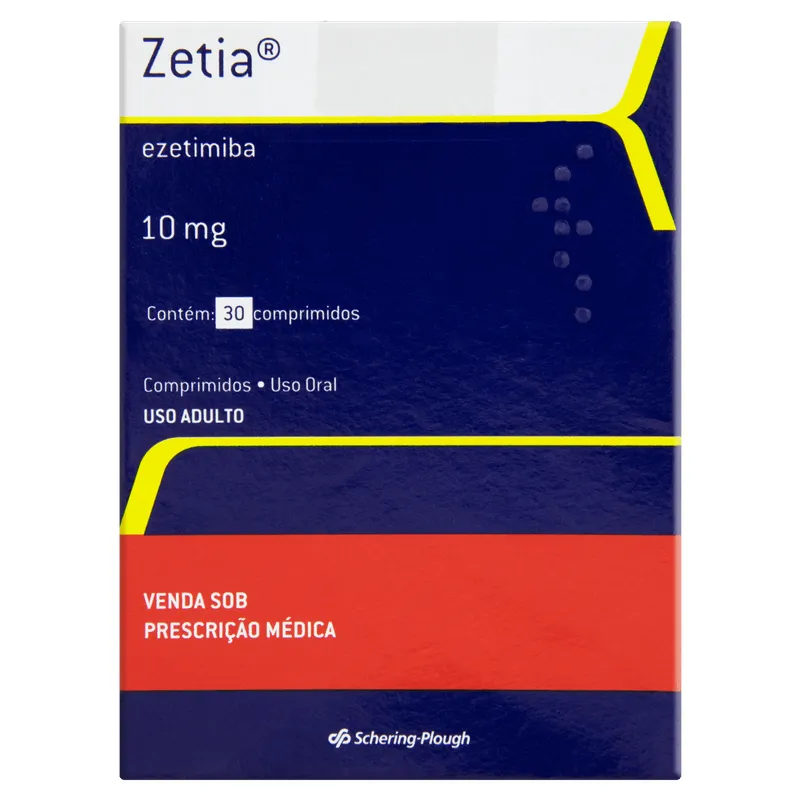
Table of Contents
Package leaflet: Information for the patient
ZETIA 10 mg tablets
ezetimibe
Please read this leaflet carefully before you start taking this medicine because it contains important information for you.
- Keep this leaflet. You may need to read it again.
- If you have any questions, ask your doctor or pharmacist.
- This medicine has been prescribed for you only. Do not give it to others, even if their symptoms are the same as yours, because it may be harmful.
- If you experience any side effects, including those not listed in this leaflet, talk to your doctor or pharmacist. See section 4.
Contents of this leaflet:
- What ZETIA is and what it is used for
- What you need to know before taking ZETIA
- How to take ZETIA
- Possible side effects
- How to store ZETIA
- Contents of the pack and other information
1. What ZETIA is and what it is used for
ZETIA is a medicine used to reduce elevated cholesterol levels.
ZETIA lowers levels of total cholesterol, "bad" cholesterol (LDL cholesterol), and fats known as
triglycerides in the blood. ZETIA also increases levels of "good" cholesterol (HDL cholesterol).
Ezetimibe, the active ingredient in ZETIA, works by reducing the absorption of cholesterol in the
gastrointestinal tract.
The cholesterol-lowering effect of ZETIA adds to that provided by statins, a group of medicines that work by reducing the body's own production of cholesterol.
Cholesterol is one of several fatty substances found in the bloodstream. Total cholesterol is
composed mainly of LDL cholesterol and HDL cholesterol.
LDL cholesterol is often called "bad" cholesterol because it can accumulate in the walls of arteries,
forming plaques. Over time, this plaque buildup can lead to narrowing of the arteries. This narrowing can slow or block blood flow to vital organs such as the heart and brain. This blockage of blood flow can cause a heart attack or stroke.
HDL cholesterol is often called "good" cholesterol because it helps prevent bad cholesterol from
accumulating in the arteries and protects against heart disease.
Triglycerides are another type of fat in the blood that may increase the risk of heart disease.
It is used in patients who cannot control their cholesterol levels by reducing cholesterol through diet alone. You must follow a cholesterol-lowering diet while taking this medicine.
ZETIA is used in addition to your cholesterol-lowering diet if you have:
- elevated blood cholesterol levels (primary hypercholesterolemia [heterozygous familial and non-familial])
- together with a statin, when your cholesterol level is not adequately controlled with a statin alone
- alone, when treatment with statins is not appropriate or not tolerated
- an inherited disease (homozygous familial hypercholesterolemia) that increases cholesterol levels in the blood. You will also be prescribed a statin, and you may be given additional treatment
- an inherited disease (homozygous sitosterolemia, also known as phytosterolemia) – which increases levels of plant sterols in the blood. If you have heart disease, ZETIA, when used together with cholesterol-lowering medicines called statins, reduces the risk of heart attack, stroke, surgical procedures to improve blood flow to the heart, or hospitalization for chest pain.
ZETIA does not help with weight loss.
2. What you should know before taking ZETIA
If ZETIA has been prescribed together with a statin, please read the package leaflet of that specific prescribed medicine.
Do not take ZETIA if:
- you are allergic (hypersensitive) to ezetimibe or to any of the other ingredients of this medicine (see section 6. Contents of the pack and other information).
Do not take ZETIA together with a statin if:
- you currently have liver problems;
- you are pregnant or breastfeeding.
Warnings and precautions
Talk to your doctor or pharmacist before taking ZETIA.
- Tell your doctor about all medical conditions you have, including allergies.
- Your doctor should perform a blood test before starting treatment with ZETIA together with a statin. This is to check how your liver is functioning.
- Your doctor may also ask you to have blood tests to monitor liver function after you start taking ZETIA together with a statin.
If you have moderate or severe liver problems, use of ZETIA is not recommended.
The safety and efficacy of ZETIA when administered in combination with certain cholesterol-lowering medicines, the fibrates, have not been established.
Children and adolescents
Do not give this medicine to children and adolescents (6 to 17 years of age), unless prescribed by a specialist, due to limited data on safety and efficacy.
Do not give this medicine to children under 6 years of age, as there is no information available for this age group.
Other medicines and ZETIA
Inform your doctor or pharmacist if you are taking, have recently taken, or might take any other medicines. In particular, tell your doctor if you are taking a medicine containing any of the following active substances:
- cyclosporine (often used in patients who have had an organ transplant)
- medicines containing active substances that prevent blood clotting, such as warfarin, phenprocoumon, acenocoumarol or fluindione (anticoagulants)
- colestyramine (also used to lower cholesterol), as it may alter the effectiveness of ZETIA
- fibrates (also used to lower cholesterol).
Pregnancy and breastfeeding
Do not take ZETIA together with a statin if you are pregnant, suspect you may be pregnant, or are planning a pregnancy. If you become pregnant while taking ZETIA together with a statin, you must stop both treatments immediately and contact your doctor.
There is no experience with the use of ZETIA without a statin during pregnancy. If you are pregnant, consult your doctor for appropriate advice before using ZETIA.
Do not take ZETIA together with a statin while breastfeeding, as it is not known whether both medicines pass into human milk. ZETIA, even when taken alone without a statin, must not be used during breastfeeding. Consult your doctor for appropriate advice.
Ask your doctor or pharmacist for advice before taking any medicine.
Driving and using machines
ZETIA is not expected to affect your ability to drive or operate machinery. However, you should be aware that some people may experience dizziness after taking ZETIA.
ZETIA contains lactose
ZETIA tablets contain a sugar called lactose. If your doctor has diagnosed you with an intolerance to certain sugars, consult him/her before taking this medicine.
3. How to take ZETIA
Take this medicine exactly as your doctor has told you. Continue taking your other cholesterol-lowering medicines unless your doctor specifically tells you to stop. If you are unsure, consult your doctor or pharmacist.
- Before starting ZETIA, you must follow a cholesterol-lowering diet.
- You must continue this cholesterol-lowering diet while taking ZETIA.
The recommended dose is one 10 mg ZETIA tablet once daily, taken by mouth.
You may take ZETIA at any time of day, with or without food.
If your doctor has prescribed ZETIA together with a statin, the two medicines may be taken at the same time. In this case, refer to the dosing instructions provided in the package leaflet of the other prescribed medicine.
If your doctor has prescribed ZETIA together with another cholesterol-lowering medicine containing the active substance colestyramine or any other medicine containing bile acid sequestrants, you must take ZETIA at least 2 hours before or 4 hours after taking the bile acid sequestrant.
If you take more ZETIA than you should
Contact your doctor or pharmacist immediately.
If you forget to take ZETIA
Do not take a double dose to make up for the forgotten tablet. Simply take your next dose at the usual time the following day.
If you stop taking ZETIA
Consult your doctor or pharmacist, as your cholesterol levels may rise again.
If you have any doubts about how to use this medicine, consult your doctor or pharmacist.
4. Possible side effects
Like all medicines, this medicine can cause side effects, although not everybody will experience them.
The following terms are used to describe how often the side effects have been reported:
- Very common (may affect more than 1 in 10 people)
- Common (may affect up to 1 in 10 people)
- Uncommon (may affect up to 1 in 100 people)
- Rare (may affect up to 1 in 1,000 people)
- Very rare (may affect up to 1 in 10,000 people, including isolated cases)
Contact your doctor immediately if you experience unexplained muscle pain, tenderness, or weakness.
This is because, in rare cases, muscle problems, including damage to muscle tissue leading to kidney
damage, can be serious and potentially life-threatening.
Allergic reactions have been reported with the common use of this medicine, including swelling of the face,
lips, tongue, and/or throat, which may cause difficulty in breathing or swallowing (requiring immediate treatment).
When used alone, the following side effects have been reported:
Common: abdominal pain; diarrhoea; flatulence; feeling of fatigue.
Uncommon: increases in liver function laboratory tests (transaminases) or muscle function tests (CK); cough;
indigestion; heartburn; nausea; joint pain; muscle spasms; neck pain; decreased appetite; pain; chest pain;
hot flushes; high blood pressure.
In addition, when the medicine is used together with a statin, the following side effects have been reported:
Common: increases in liver function laboratory tests (transaminases); headache; muscle pain; muscle tenderness or weakness.
Uncommon: tingling sensation; dry mouth; itching; rash; urticaria; back pain; muscle weakness; pain in arms and legs; unusual tiredness or weakness; swelling, especially of the hands and feet.
When used together with fenofibrate, the following side effect has been reported:
Common: abdominal pain.
In addition, with general use of the medicine, the following side effects have been reported:
dizziness; muscle pain; liver problems; allergic reactions including rash and urticaria; raised red rash, sometimes with target-like lesions (erythema multiforme); muscle pain, tenderness or weakness; damage to muscle tissue; gallstones or inflammation of the gallbladder (which may cause abdominal pain, nausea, vomiting); inflammation of the pancreas, often accompanied by severe abdominal pain; constipation; reduction in blood cell count, which may cause bruising/bleeding (thrombocytopenia); tingling sensation; depression; unusual tiredness or weakness; shortness of breath.
Reporting of side effects
If you experience any side effect, including those not listed in this leaflet, talk to your doctor or pharmacist.
You can also report side effects directly via the national reporting system at https://www.aifa.gov.it/content/segnalazioni-reazioni-avverse.
By reporting side effects, you can help provide more information on the safety of this medicine.
5. How to store ZETIA
- Keep this medicine out of the sight and reach of children.
- Do not use this medicine after the expiry date stated on the carton or container after "EXP". The expiry date refers to the last day of that month.
- Do not store ZETIA above 30°C.
Blister packs: store in the original container.
Bottles: keep bottles tightly closed. These measures will help protect the medicine from moisture.
Do not dispose of any medicine via wastewater or household waste. Ask your pharmacist how to dispose of medicines you no longer use. This will help protect the environment.
6. Package contents and other information
What ZETIA contains
-
- The active substance is ezetimibe. Each tablet contains 10 mg of ezetimibe.
-
- The other ingredients are: monohydrate lactose, microcrystalline cellulose, povidone, sodium croscarmellose, sodium lauryl sulfate, magnesium stearate.
Description of the appearance of ZETIA and package contents
ZETIA tablets are white or almost white, capsule-shaped, with "414" engraved on one side.
Pack sizes:
7, 10, 14, 20, 28, 30, 50, 98, 100 or 300 tablets in press-through blisters or unit-dose blisters with peel-open foil;
84 or 90 tablets in press-through blisters;
50, 100 or 300 tablets in unit-dose press-through blisters;
100 tablets in bottles.
Not all pack sizes may be marketed.
Marketing Authorization Holder and Manufacturer
Marketing Authorization Holder
Neopharmed Gentili S.p.A.
Via San Giuseppe Cottolengo, 15 – 20143 Milano
Italy
Manufacturer
SP Labo N.V., Industriepark 30 – Zone A
B-2220 Heist-op-den-Berg, Belgium
This medicinal product is authorized under the name ZETIA in Italy and ZIENT in Germany.