Zetamicin
Italy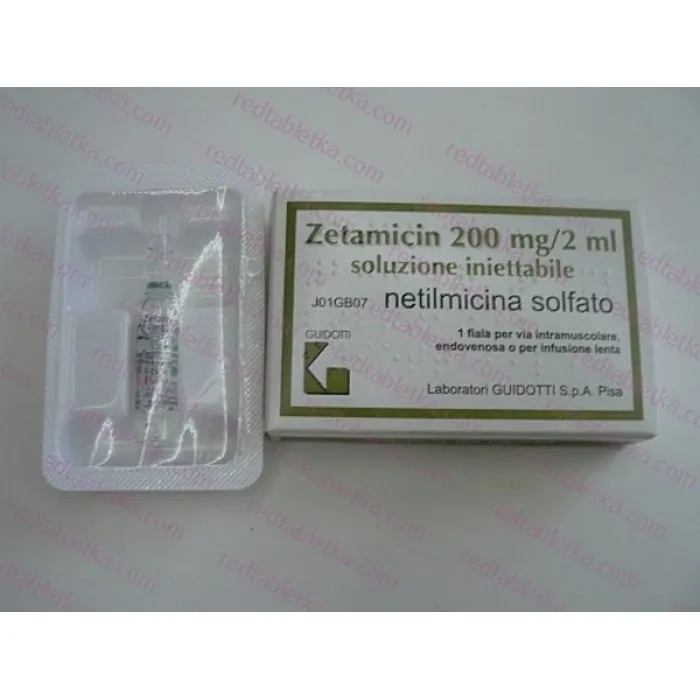
Table of Contents
- Package leaflet: Information for the user
- ZETAMICIN 15 mg/1.5 ml injection solution, 100 mg/ml injection solution, 150 mg/1.5 ml injection solution, 200 mg/2 ml injection solution, 300 mg/3 ml injection solution
- 1. What ZETAMICIN is and what it is used for
- 2. What you should know before taking ZETAMICIN
- 3. How to take ZETAMICIN
- 4. Possible side effects
- 5. How to store ZETAMICIN
- 6. Package contents and other information
Package leaflet: Information for the user
ZETAMICIN 15 mg/1.5 ml injection solution, 100 mg/ml injection solution, 150 mg/1.5 ml injection solution, 200 mg/2 ml injection solution, 300 mg/3 ml injection solution
Netilmicin sulfate
Please read all of this leaflet carefully before you are given this medicine because it contains important information for you.
- Keep this leaflet. You may need to read it again.
- If you have any questions, ask your doctor or pharmacist.
- This medicine has been prescribed for you only. Do not give it to others, even if they have the same symptoms as yours, as it may be harmful.
- If you experience any side effects, including those not listed in this leaflet, tell your doctor or pharmacist. See section 4.
Contents of this leaflet:
- What ZETAMICIN is and what it is used for
- What you need to know before you are given ZETAMICIN
- How ZETAMICIN is given
- Possible side effects
- How to store ZETAMICIN
- Contents of the pack and other information
1. What ZETAMICIN is and what it is used for
ZETAMICIN contains the active substance netilmicin sulfate and is an antibacterial agent administered via routes that allow the drug to reach the entire body (systemic use), belonging to a class of medicines known as aminoglycosides, used to treat certain bacterial infections.
ZETAMICIN is indicated in adults, children, and newborns, including premature infants, for the treatment of:
- Infections of the membrane surrounding the lungs (pleura) and of the lungs themselves (pleuro-pulmonary infections), infections affecting the bronchi (bronchitis), bronchi and lungs (bronchopneumonia), pleura (pleurisy), and accumulation of pus-filled fluid in a body cavity (empyema).
- Kidney and genitourinary tract infections: bladder infections (cystitis), infections of the cavity where urine produced by the kidney collects, called the renal pelvis or calyx (pyelitis), upper urinary tract infections (cystopyelitis and pyelonephritis), kidney stone formation accompanied by infection (infected calculi), infections of the duct carrying urine from the bladder, called the urethra (urethritis), prostate infections (prostatitis), infections of the seminal vesicles (vesiculitis).
- Surgical infections: infections occurring at the surgical site during the period between hospitalization and the immediate postoperative phase (perioperative infections), inflammation of the peritoneal cavity (peritonitis), accumulation of pus in a closed cavity due to inflammation (abscesses), progression of abscesses involving pus drainage and spread into surrounding tissues (phlegmons), infections and inflammations affecting both bone and the corresponding medullary cavity (osteomyelitis), post-traumatic infections, infections of bones or soft tissues, infected wounds and burns.
- Obstetric and gynecological infections: uterine inflammation (metritis), infectious inflammatory diseases of the pelvic region surrounding the uterus (parametritis), fallopian tube inflammation (salpingitis), inflammation of ovaries and fallopian tubes (salpingo-oophoritis), pelvic peritoneum inflammation (pelvi-peritonitis), spontaneous abortion caused by uterine infection (septic abortion), inflammatory processes affecting the mammary gland (mastitis).
- Conditions characterized by the presence of bacteria in areas and tissues of the body normally free of germs (septic states): transient presence of bacteria in the bloodstream (bacteremia), the body's response to an infectious state due to the presence of germs in the blood (septicemia), septicemia complicated by widespread formation of abscesses (septopyemia).
- Stomach and intestinal infections (gastro-enteric infections) and biliary tract infections caused by microorganisms susceptible to the action of netilmicin (netilmicin-sensitive).
ZETAMICIN has also proven effective in treating infections caused by microorganisms resistant to other drugs similar to netilmicin (other aminoglycoside antibiotics); therefore, it is recommended as initial therapy for infections caused by Gram-negative bacteria such as external ear inflammation (external otitis), superficial skin layer infections (folliculitis) caused by Pseudomonas aeruginosa, and bladder infections (cystitis) caused by enterobacteria such as Escherichia coli, Proteus, Enterobacter, whether suspected or confirmed. The decision to continue treatment with ZETAMICIN should be based on laboratory tests assessing the microorganism's sensitivity to the antibiotic (antibiogram), the patient's clinical response, and the drug's tolerability.
In life-threatening infections, ZETAMICIN may be administered in combination with a beta-lactam type antibiotic, even before in vitro sensitivity results are available. If the infection is suspected to also involve microorganisms that do not require oxygen to grow and multiply (anaerobes), appropriate combination therapy with antibacterial agents active against these microorganisms should be initiated.
Consult your doctor if you do not feel better or if you feel worse during and/or after treatment.
2. What you should know before taking ZETAMICIN
Do not take ZETAMICIN
- If you are allergic to the active substance, to other aminoglycosides, or to any of the other ingredients of this medicine (listed in section 6).
- If you have previously experienced episodes of allergy or severe toxic reactions to medicines belonging to the same group as netilmicin (aminoglycosides).
Injectable solutions of ZETAMICIN 100 mg/ml, 150 mg/1.5 ml, 200 mg/2 ml and 300 mg/3 ml must not be administered to children under two years of age due to the presence of benzyl alcohol (see section “Children and adolescents”).
Warnings and precautions
Talk to your doctor or pharmacist before taking ZETAMICIN.
During treatment with aminoglycosides, your doctor should evaluate any potential toxic effects of therapy, particularly in children and elderly patients, who are at higher risk.
Administration of netilmicin has been associated with mild kidney toxicity (nephrotoxicity). However, as with other aminoglycosides, renal function must be closely monitored during therapy. The risk of nephrotoxic adverse effects may increase especially if you have impaired renal function, are treated with higher doses or for longer durations than recommended (more than 7–10 days), or if you are elderly or pediatric.
Assessment of renal function and serum electrolytes (through blood tests):
- Is recommended at the beginning of treatment and periodically during prolonged ZETAMICIN treatment (more than 7–10 days) or when treatment may require higher doses than those recommended based on age, weight, or presumed renal function.
- Is mandatory periodically in adults and children receiving ZETAMICIN for more than 7–10 days for the treatment of serious infections or who may receive higher doses than recommended according to age, weight, or presumed renal function.
Use ZETAMICIN with caution:
- If you have previously experienced kidney damage or if you have normal renal function but require higher doses and/or longer treatment durations (more than 7–10 days) than recommended. In such cases, hearing loss and symptoms such as dizziness, imbalance, or lightheadedness (vestibular dysfunction) may occur, although ototoxicity with netilmicin has been observed rarely and less frequently than with other aminoglycosides. In these cases, monitoring of renal function is important, including assessment of serum creatinine levels if necessary.
- If you have neuromuscular disorders such as diseases characterized by muscle weakness (myasthenia gravis), parkinsonism, or botulinum intoxication in children (infant botulism), since aminoglycosides may theoretically worsen muscle weakness due to their paralyzing effect on voluntary muscles (curare-like effect at neuromuscular junctions).
- If you have extensive burns; in such cases, aminoglycoside blood concentrations may decrease. During ZETAMICIN therapy, monitoring is recommended:
- Of antibiotic blood concentrations, when possible. Your doctor will adjust the dosage to ensure adequate netilmicin blood levels and avoid potentially toxic levels (see section 3 “How to take ZETAMICIN”). Excessively high and/or low blood concentrations may increase the risk of renal toxicity and damage to the nerve transmitting balance and hearing signals from the ear to the brain (eighth cranial nerve). In patients with extensive burns, aminoglycoside blood concentrations may be reduced. Determination of these concentrations is therefore important in such patients to adjust dosing appropriately.
- Of renal function and the eighth cranial nerve, especially if you have known or suspected impaired renal function, both at the start and during therapy. Monitoring involves checking for symptoms such as dizziness, involuntary rhythmic eye movements (nystagmus), tinnitus (ringing in the ears), or hearing loss, which may indicate a problem. In fact, as with other aminoglycosides, changes in renal or eighth cranial nerve function may rarely begin only after treatment has ended.
- Of urine, to detect decreased specific gravity, increased protein excretion, and presence of cells or casts.
- Of blood urea nitrogen (BUN), which provides information on kidney and liver function, serum creatinine, and assessment of renal function (creatinine clearance), especially if you are elderly and may have reduced renal function that may not be evident from routine tests.
- Of hearing, especially in high-risk patients, preferably by audiogram (a graph showing hearing ability for each ear).
- Of renal, vestibular, and auditory functions if you are elderly, if you are receiving high-dose ZETAMICIN for prolonged periods, or if you have reduced renal function. Frequent monitoring is advised in these cases.
The presence of ototoxicity or nephrotoxicity requires dose adjustment or discontinuation of treatment.
During treatment, you must remain well hydrated.
Treatment with netilmicin may lead to a new infection superimposed on an existing one (superinfection) caused by germs not responsive to treatment (insensitive). In such cases, consult your doctor, who will determine whether to discontinue treatment and initiate appropriate therapy. In some adults and children treated with netilmicin, a kidney disease (Fanconi-like syndrome) has been observed, characterized by amino acids in the urine (aminoaciduria) and increased blood acidity (metabolic acidosis) (see section 4 “Possible side effects”).
Very rarely, following the use of aminoglycosides including netilmicin, cases of severe drug-allergy-induced skin diseases (Stevens-Johnson syndrome and toxic epidermal necrolysis) have been reported (see section 4 “Possible side effects”).
When applied topically or used for local irrigation of a wound or sore, the water content in the medicine may lead to significant absorption of the drug through the body surface, potentially causing neurotoxic or nephrotoxic effects; therefore, the potential toxic effects of antibiotics administered in this way must be considered.
Children and adolescents
Children may be particularly at risk, and careful clinical monitoring is therefore advised. Renal function and serum electrolytes should be periodically assessed at the beginning and during therapy in children treated with ZETAMICIN for more than 7–10 days for serious infections or who may receive higher doses than recommended based on age, weight, or presumed renal function.
Injectable solutions of ZETAMICIN 100 mg/ml, 150 mg/1.5 ml, 200 mg/2 ml and 300 mg/3 ml must not be administered to children under two years of age due to the presence of benzyl alcohol (see below).
Other medicines and ZETAMICIN
Inform your doctor or pharmacist if you are taking, have recently taken, or might take any other medicines.
As with other aminoglycosides, avoid concomitant administration of ZETAMICIN with other potentially nephrotoxic and/or neurotoxic medicines, whether administered systemically or locally, simultaneously or sequentially. Concomitant use of ZETAMICIN and other potentially nephrotoxic drugs increases the risk of nephrotoxicity. These substances include antibiotics such as: aminoglycosides, vancomycin, polymyxin B and colistin; antineoplastics such as: platinum compounds, high-dose methotrexate and ifosfamide; certain antiviral drugs (pentamidine, foscarnet, aciclovir, ganciclovir, adefovir, cidofovir, tenofovir); systemic antifungals such as amphotericin B; immunosuppressive agents such as cyclosporine or tacrolimus; and contrast media used in radiology and magnetic resonance imaging (iodine-based contrast agents).
If such combinations are necessary, renal function must be closely monitored with appropriate laboratory tests. Other factors that may increase the risk of nephrotoxicity include dehydration and advanced age.
Avoid taking diuretics (medicines that increase urine production) such as furosemide or ethacrynic acid together with ZETAMICIN, as these may themselves be ototoxic. Moreover, when administered intravenously, diuretics may increase aminoglycoside toxicity by altering antibiotic concentrations in blood and tissues.
This product must not be mixed in the same syringe with other medicines (see section 3 “How to take ZETAMICIN”).
Although neuromuscular blockade and respiratory paralysis have not been reported in human clinical studies, these effects have occurred in animals given netilmicin at doses considerably higher than those recommended for clinical use. Therefore, the possibility of such effects should be considered, especially when aminoglycosides are administered together with neuromuscular blocking agents used during surgery (e.g., succinylcholine, tubocurarine, decamethonium), anaesthetics, or massive blood transfusions containing citrate (used as an anticoagulant to slow or stop blood coagulation). In such cases, blockade can be reversed with calcium salts or neostigmine.
Cross-allergenicity has been demonstrated among aminoglycosides (i.e., allergic reactions to chemically similar substances).
Concomitant administration of an aminoglycoside antibiotic and a beta-lactam antibiotic (penicillins or cephalosporins) may cause mutual and significant inactivation. Even when administered via different routes, reduced plasma levels of the aminoglycoside may occur, which may have important clinical consequences in patients with severe renal impairment.
Pregnancy, breastfeeding and fertility
If you are pregnant, think you may be pregnant, planning a pregnancy, or breastfeeding, consult your doctor or pharmacist before taking this medicine.
Pregnancy
Aminoglycoside antibiotics cross the placenta and may harm the fetus if administered to pregnant women. Cases of irreversible bilateral congenital deafness have been reported in children whose mothers received aminoglycosides, including netilmicin, during pregnancy.
If ZETAMICIN is administered during pregnancy or if you become pregnant while taking ZETAMICIN, you should be informed of the potential risk to the fetus.
Breastfeeding
Studies in breastfeeding women have shown that a small amount of ZETAMICIN is excreted in breast milk. Due to the potential for serious adverse reactions, a decision must be made whether to discontinue breastfeeding or to discontinue therapy.
Driving and using machines
ZETAMICIN does not affect the ability to drive vehicles or operate machinery.
ZETAMICIN contains sulfites: sulfites may rarely cause severe hypersensitivity reactions and bronchospasm.
ZETAMICIN contains less than 1 mmol (23 mg) of sodium per vial, i.e., essentially “sodium-free”.
ZETAMICIN 100 mg/ml solution for injection, ZETAMICIN 150 mg/1.5 ml solution for injection,
ZETAMICIN 200 mg/2 ml solution for injection, ZETAMICIN 300 mg/3 ml solution for injection
contain benzyl alcohol.
ZETAMICIN 100 mg/ml solution for injection contains 10 mg of benzyl alcohol per vial, equivalent to 10 mg/1 mL.
ZETAMICIN 150 mg/1.5 ml solution for injection contains 15 mg of benzyl alcohol, equivalent to 15 mg/1.5 mL.
ZETAMICIN 200 mg/2 ml solution for injection contains 20 mg of benzyl alcohol, equivalent to 20 mg/2 mL.
ZETAMICIN 300 mg/3 ml solution for injection contains 30 mg of benzyl alcohol, equivalent to 30 mg/3 mL.
Benzyl alcohol may cause allergic reactions.
Benzyl alcohol has been associated with a risk of serious adverse effects, including respiratory problems (gasping syndrome), in young children. Do not administer to neonates up to 4 weeks of age unless otherwise recommended by your doctor.
Do not use for more than one week in young children (under 3 years of age) unless otherwise recommended by your doctor or pharmacist.
Consult your doctor or pharmacist if you are pregnant or breastfeeding. Large amounts of benzyl alcohol may accumulate in the body and cause adverse effects (such as metabolic acidosis).
Consult your doctor or pharmacist if you have liver or kidney disease. Large amounts of benzyl alcohol may accumulate in the body and cause adverse effects (such as metabolic acidosis).
3. How to take ZETAMICIN
Take this medicine exactly as directed by your doctor or pharmacist.
If you have any doubts, consult your doctor or pharmacist.
ZETAMICIN can be administered either intramuscularly (into the muscle) or intravenously (into the vein): the dosage is the same.
Intravenous and intramuscular administration
It is recommended for patients with infectious disease due to persistent presence of bacteria in the blood (septicemia) or in shock, and is preferred in patients with inability of the heart to supply oxygen-rich blood to the body (congestive heart failure), blood disorders (hematological disorders), severe burns, and reduced muscle mass. In adults, the single dose may be diluted in 50–200 mL of compatible solutions (see below). The infusion duration should be between 30 minutes and two hours.
ZETAMICIN may also be administered by slow intravenous injection, either directly or through an infusion set (also known as an infusion pump), delivering the drug over a period of 3 to 5 minutes.
ZETAMICIN must not be mixed in the same syringe or intravenous bottle with other drugs (see "Warnings and precautions").
ZETAMICIN is physically compatible without loss of activity with the following parenteral solutions (solutions that can be introduced into the body via a needle):
- Sodium chloride 0.9% (physiological saline);
- Dextrose 5% – 10%;
- Ringer's solution and Ringer lactate;
- Isolyte P, M, E with dextrose 5%;
- Travert 10% with Electrolyte No. 2 – No. 3;
- Dextran 40 10% and dextrose 5%;
- Dextrose 5% in Polysal;
- Sterile water for injection.
In these solutions, ZETAMICIN at a concentration of 0.8 mg/mL is stable for 48 hours at room temperature.
Patients with normal renal function
The recommended dosage of ZETAMICIN is as follows:
| TOTAL DOSE | SINGLE DOSE | |
| Adults | 4-6 mg/kg/day | 1.3-2 mg/kg every 8 hours or 2-3 mg/kg every 12 hours or 4.5 mg/kg every 24 hours |
For adults weighing between 50 and 90 kg, a dose of 100–150 mg every 8 hours, or 150–200 mg every 12 hours, or 300 mg every 24 hours is recommended for non-severe systemic infections (affecting multiple parts of the body). Generally, the lower dose is indicated for urinary tract infections, while the higher dose is used for systemic infections.
In any case, the dosage must be adjusted according to the severity of the infection and the patient's condition.
For uncomplicated urinary tract infections, a dosage regimen of 3 mg/kg/day as a single daily dose may be sufficient (e.g., 150 or 200 mg daily for an adult patient).
In life-threatening infections, doses of up to 2.5 mg/kg every 8 hours may be administered in adults, reducing to 2 mg/kg as soon as possible, usually within 48 hours.
The usual duration of treatment is 7–14 days for all patients, although prolonged treatment may be necessary in complicated infections.
Although prolonged therapy with ZETAMICIN is well tolerated, in patients treated for periods longer than those recommended, monitoring of renal, vestibular, and auditory function is advised (see section "Warnings and precautions").
During treatment with ZETAMICIN, monitoring of antibiotic blood concentrations is recommended whenever possible. The physician should adjust the dosage to ensure adequate levels of netilmicin in the blood and to avoid potentially toxic levels. It is recommended to adjust the dosage to prevent prolonged netilmicin blood concentrations exceeding 16 µg/ml (micrograms/ml), and to avoid further administrations until the minimum blood levels fall within the range of 0.5 to 2 µg/ml (micrograms/ml) at the recommended doses. Minimum concentrations above 4 µg/ml (micrograms/ml) should be avoided.
Patients with impaired renal function
Dosage must be adjusted according to the degree of renal impairment.
Based on blood creatinine values, the physician may adjust the dosage regimen in individual cases using one of the following methods:
Prolonging the interval between doses, calculated as for patients with normal renal function.
The interval between doses should be calculated as follows:
Interval in hours between doses = blood creatinine level (mg/100 ml) × 8
For example: a 60 kg patient with a blood creatinine level of 3 mg/100 ml should receive 60 mg × 2 = 120 mg (2 mg/kg) every 24 hours (3 × 8).
Reducing the dose, after an initial dose calculated as for a patient with normal renal function:
Reduced dose every 8 hours = Initial dose (mg/kg) / Blood creatinine level (mg/100 ml)
The above dosage regimens are intended as guidance when blood concentration data for netilmicin are not available. Otherwise, individual doses of ZETAMICIN, using doses appropriate for patients with normal renal function, should be administered when blood levels are ≤ 3 µg/ml (0.003 mg/ml).
Haemodialysis (renal replacement therapy)
In dialysis patients, the amount of netilmicin removed from the blood varies depending on several factors, including the dialysis method used.
An 8-hour haemodialysis session may reduce ZETAMICIN serum concentrations by 63%. The recommended dose at the end of each dialysis session is 2 mg/kg for adults and 2–2.5 mg/kg for children.
Combination therapy
ZETAMICIN, when used in combination with other antibiotics, should be administered at full doses (i.e., dose reduction is not required).
Use in children and adolescents
Patients with normal renal function
The recommended dosage of ZETAMICIN is as follows:
| TOTAL DOSE | SINGLE DOSE | |
| Preterm and full-term newborns up to 1 week of life | 6 mg/kg/day | 3 mg/kg every 12 hours |
| Infants and newborns beyond 1 week of life | 7.5–9 mg/kg/day | 2.5–3 mg/kg every 8 hours or 3.75–4.5 mg/kg every 12 hours |
| Children | 6–7.5 mg/kg/day | 2–2.5 mg/kg every 8 hours or 3–3.75 mg/kg every 12 hours |
The usual duration of treatment is 7–14 days, although a longer treatment period may be necessary in complicated infections.
Although prolonged therapy with ZETAMICIN is well tolerated, patients treated for periods longer than those recommended should have their renal, vestibular, and auditory functions monitored (see "Warnings and precautions").
ZETAMICIN must not be mixed in the same syringe or intravenous infusion bottle with other drugs (see section "Warnings and precautions").
If you take more ZETAMICIN than you should
In case of overdose or onset of toxic reactions, contact your doctor immediately. In such cases, hemodialysis may be required, which allows rapid removal of netilmicin from the blood. The percentage of removal is considerably lower with peritoneal dialysis.
In neonates, blood transfusions may be performed.
These procedures are particularly important in patients with renal impairment.
If you forget to use ZETAMICIN
Do not take a double dose to make up for the missed dose.
If you stop using ZETAMICIN the symptoms of the infection for which you took the medicine may reappear.
If you have any doubts about the use of this medicine, consult your doctor or pharmacist.
4. Possible side effects
Like all medicines, this medicine can cause side effects, although not everybody gets them.
The following side effects may occur with the use of ZETAMICIN:
- Nephrotoxicity. Renal side effects, usually mild in nature, have occasionally been reported after administration of netilmicin. These may be indicated by the presence in urine of casts, cells or proteins, or by increased blood urea nitrogen, non-protein nitrogen, or serum creatinine levels, or by reduced urinary output (oliguria). These effects, which are often reversible, occur more frequently in elderly patients, in patients with a history of renal impairment, and in patients treated for prolonged periods or with doses higher than recommended.
- Neurotoxicity. Unlike other aminoglycosides, the incidence of balance disorders (vestibular) and hearing disorders (cochlear) with ZETAMICIN is very low. Vestibular dysfunction may be transient and reversible. Cochlear dysfunction, which has been rarely reported, is usually irreversible. These effects are more common in patients with a history of renal impairment and in patients treated with high doses and/or for prolonged periods. Significant loss of body water (dehydration), concomitant administration of diuretic drugs such as ethacrynic acid or furosemide, or prior exposure to other ototoxic drugs are additional factors that may increase the risk of aminoglycoside-induced ototoxicity. Symptoms of aminoglycoside-induced ototoxicity are mostly transient and may include a sensation of unsteadiness, vertigo, tinnitus, ringing in the ears, and decreased or lost hearing (hearing loss) particularly affecting high tones. Complete deafness has never been reported. Some patients with previous ototoxic reactions to other aminoglycosides have been treated with ZETAMICIN without further adverse effects. The risk of toxic reactions is low in patients with normal renal function who do not receive ZETAMICIN at higher than recommended doses or for longer than recommended periods.
Other reactions rarely observed and probably related to the use of netilmicin include:
- Skin rash and skin lesions (exanthema).
- Itching, allergic or anaphylactic reactions.
- Altered sensation in limbs or other body parts (paraesthesia).
- Chills, fever, headache, malaise, disorientation.
- Visual disturbances, depression, confusion.
- Anorexia, vomiting, abdominal pain, fluid retention, diarrhoea.
- Excessive salivation (sialorrhoea), inflammation of the mouth mucosa (stomatitis).
- Increased heart rate (tachycardia), low blood pressure, palpitations.
- Increased blood sugar levels (hyperglycaemia), occasional increase in the enzyme measured to detect or monitor liver and bone diseases (alkaline phosphatase), transient increases in liver function indicators (SGOT or SGPT), sometimes with mild enlargement of the liver (mild hepatomegaly), abnormal liver function test results, increased blood bilirubin levels (bilirubinemia), increased potassium levels, decreased haemoglobin, white blood cells and platelets, elevated blood eosinophil count (eosinophilia), reduced production by the bone marrow of blood cells, particularly red blood cells (anaemia), prolonged prothrombin time (a substance involved in the repair process of damaged blood vessels), reduced white blood cells in the blood (leucopenia), reduced granulocytes in the blood (granulocytopenia), increased platelet count (thrombocytosis), severe reduction in circulating granulocytes in the blood (agranulocytosis), usually reversible (see "Warnings and precautions").
Very rarely, severe skin reactions caused by an allergic reaction to certain medicines (Stevens-Johnson syndrome and toxic epidermal necrolysis) have been reported following the use of aminoglycosides, including netilmicin.
Although the local tolerance of ZETAMICIN is generally high, occasional cases of pain at the injection site or localized reactions have been reported.
Following the instructions provided in this leaflet reduces the risk of side effects.
Additional side effects in children and adolescents
The side effects listed above may occur in both adults and children or adolescents.
Reporting of side effects
If you experience any side effect, including those not listed in this leaflet, talk to your doctor or pharmacist. You can also report side effects directly via the national reporting system at the following website:
https://www.aifa.gov.it/content/segnalazioni-reazioni-avverse
By reporting side effects, you can help provide more information on the safety of this medicine.
5. How to store ZETAMICIN
Keep this medicine out of the sight and reach of children.
Do not use this medicine after the expiry date stated on the pack.
The expiry date refers to the last day of that month.
Do not dispose of any medicine via wastewater or household waste. Ask your pharmacist how to
dispose of medicines you no longer use. This will help protect the environment.
6. Package contents and other information
What ZETAMICIN contains
ZETAMICIN 15 mg/1.5 ml solution for injection
1 vial contains:
Active substance: netilmicin sulfate 22.72 mg (equivalent to 15 mg anhydrous netilmicin).
Other components: sodium metabisulfite, anhydrous sodium sulfite, sodium chloride, water for
injections.
ZETAMICIN 100 mg/ml solution for injection
1 vial contains:
Active substance: netilmicin sulfate 151.51 mg (equivalent to 100 mg anhydrous netilmicin).
Other components: sodium metabisulfite, anhydrous sodium sulfite, sodium edetate, benzyl alcohol, water for injections.
ZETAMICIN 150 mg/1.5 ml solution for injection
1 vial contains:
Active substance: netilmicin sulfate 227.26 mg (equivalent to 150 mg anhydrous netilmicin).
Other components: sodium metabisulfite, anhydrous sodium sulfite, sodium edetate, benzyl alcohol, water for injections.
ZETAMICIN 200 mg/2 ml solution for injection
1 vial contains:
Active substance: netilmicin sulfate 303.02 mg (equivalent to 200 mg anhydrous netilmicin).
Other components: sodium metabisulfite, anhydrous sodium sulfite, sodium edetate, benzyl alcohol, water for injections.
ZETAMICIN 300 mg/3 ml solution for injection
1 vial contains:
Active substance: netilmicin sulfate 454.53 mg (equivalent to 300 mg anhydrous netilmicin).
Other components: sodium metabisulfite, anhydrous sodium sulfite, sodium edetate, benzyl alcohol, water for injections.
Description of the appearance of ZETAMICIN and contents of the pack
Solution for injection for intramuscular and intravenous administration.
ZETAMICIN 15 mg/1.5 ml clear solution for injection. 1 colorless glass vial.
ZETAMICIN 100 mg/ml clear solution for injection. 1 colorless glass vial.
ZETAMICIN 150 mg/1.5 ml clear solution for injection. 1 colorless glass vial.
ZETAMICIN 200 mg/2 ml clear solution for injection. 1 colorless glass vial.
ZETAMICIN 300 mg/3 ml clear solution for injection. 1 colorless glass vial.
Marketing Authorization Holder
A. Menarini Industrie Farmaceutiche Riunite s.r.l. - Via Sette Santi 3, Florence.
Sales Licensee: Laboratori Guidotti S.p.A. – Pisa
Manufacturer
A. Menarini Manufacturing Logistics and Services s.r.l., via Sette Santi, 3 – Florence (IT).