Zerinoactiv
Italy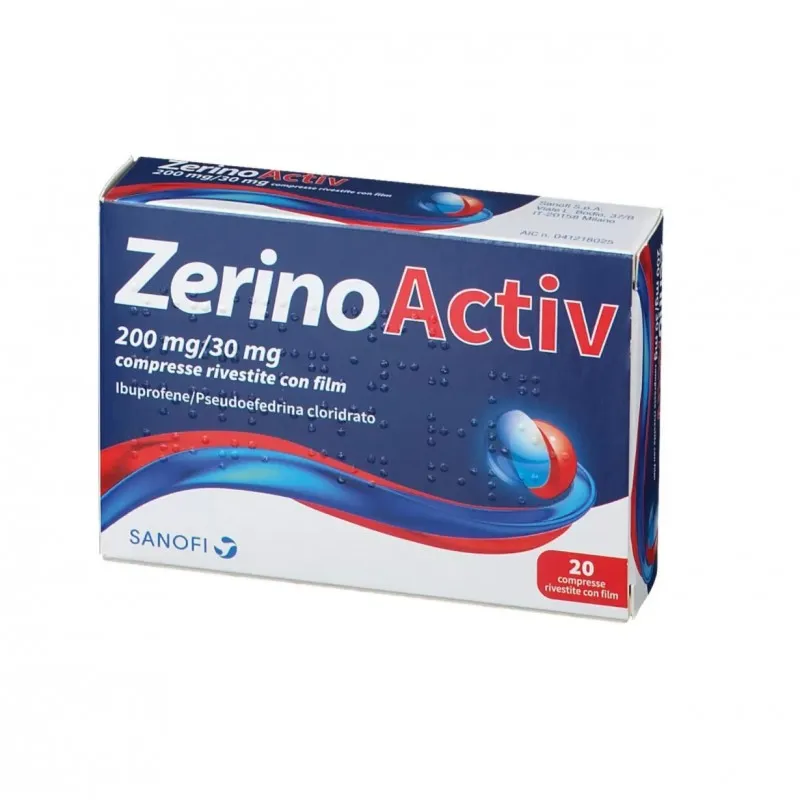
Table of Contents
- PACKAGE LEAFLET: INFORMATION FOR THE USER
- ZERINOACTIV 200 mg/30 mg film-coated tablets
- 1. What ZERINOACTIV is and what it is used for
- 2. What you need to know before taking ZERINOACTIV
- 3. How to take ZERINOACTIV
- 4. Possible side effects
- 5. How to store ZERINOACTIV
- 6. Package contents and other information
PACKAGE LEAFLET: INFORMATION FOR THE USER
ZERINOACTIV 200 mg/30 mg film-coated tablets
Ibuprofen/pseudoephedrine hydrochloride
Please read this leaflet carefully before taking this medicine as it contains
important information for you.
Always take this medicine exactly as described in this leaflet or as your doctor or pharmacist has instructed.
- Keep this leaflet. You may need to read it again.
- If you need more information or advice, consult your pharmacist.
- If you experience any side effects, including those not listed in this leaflet, consult your doctor or pharmacist. See section 4.
- Consult your doctor if you do not notice improvement or if your symptoms worsen after 5 days.
Contents of this leaflet:
- What ZERINOACTIV is and what it is used for
- What you need to know before taking ZERINOACTIV
- How to take ZERINOACTIV
- Possible side effects
- How to store ZERINOACTIV
- Contents of the pack and other information
1. What ZERINOACTIV is and what it is used for
ZERINOACTIV film-coated tablets contain two active substances: ibuprofen and pseudoephedrine.
Ibuprofen belongs to a class of medicines called non-steroidal anti-inflammatory drugs (NSAIDs). NSAIDs provide relief by reducing pain and lowering fever. Pseudoephedrine belongs to a class of medicines called vasoconstrictors, which act on the blood vessels inside the nose to relieve nasal congestion.
ZERINOACTIV film-coated tablets are indicated for the symptomatic treatment of nasal congestion associated with headache and/or fever in adults and adolescents over the age of 15 who suffer from the common cold.
You should take this combination only if you have a stuffy nose accompanied by pain or fever. If you have only one of these symptoms, consult your pharmacist or doctor regarding the use of ibuprofen or pseudoephedrine alone.
Consult your doctor if you do not feel better or if you feel worse after 5 days.
2. What you need to know before taking ZERINOACTIV
Do not take ZERINOACTIV
- If you are allergic to ibuprofen or pseudoephedrine hydrochloride, or to any of the other ingredients of this medicine (listed in section 6).
- If you have previously experienced an allergic reaction, or asthma, skin rash, runny or itchy nose, or facial swelling while taking this product, ibuprofen, acetylsalicylic acid (aspirin), or other similar medicines.
- If you have a history of recurrent gastric or duodenal ulcer, or gastrointestinal bleeding related to previous treatment with NSAIDs.
- If you suffer from severe liver disease.
- If you suffer from severe acute (sudden) or chronic (long-term) kidney disease or renal failure.
- If you have heart problems (e.g., coronary artery disease).
- If you have very high blood pressure (severe hypertension) or uncontrolled hypertension with medication.
- If you have a history of seizures (epileptic fits).
- If you suffer from blood disorders of unknown origin affecting blood cell production.
- If you suffer from increased intraocular pressure (closed-angle glaucoma).
- If you have difficulty urinating due to prostate problems.
- If you have been diagnosed with systemic lupus erythematosus (SLE), a disease affecting the immune system that causes joint pain, skin changes, and other problems.
- If you are taking:
- other oral or nasal decongestants (vasoconstrictors) (e.g., phenylpropanolamine, phenylephrine, ephedrine, xylometazoline, or oxymetazoline);
- antidepressant medicines such as non-selective monoamine oxidase inhibitors (known as MAOIs, e.g., iproniazide), or have taken them within the last 14 days.
- If you suffer from significant dehydration due to vomiting, diarrhoea, or insufficient fluid intake.
- If you are between the 28th and 40th week of pregnancy (third trimester of pregnancy).
Warnings and precautions
You should discuss treatment with your doctor or pharmacist before taking ZERINOACTIV:
- if you suffer from asthma; use of this medicine may trigger an asthma attack;
- if you have a history of gastrointestinal disorders (e.g., hiatal hernia, gastrointestinal bleeding, peptic or duodenal ulcer) or chronic inflammatory bowel diseases (ulcerative colitis, Crohn’s disease);
- if you have heart problems including heart attack, angina (chest pain), or a history of heart attack, coronary bypass surgery, peripheral arterial disease (poor circulation in legs or feet due to narrowed or blocked arteries), or any type of stroke (including ‘mini-stroke’ or “TIA”, transient ischaemic attack);
- if you have high blood pressure, diabetes, high cholesterol, a family history of heart disease or stroke, or if you are a smoker;
- if you suffer from hyperthyroidism (overactive thyroid);
- if you have systemic lupus erythematosus (connective tissue disease), mixed connective tissue disease, or congenital porphyria metabolism disorder;
- if you are taking medicines that interact with ZERINOACTIV; see list below;
- if you have an infection – see section “Infections” below.
- if you develop a skin rash or skin symptoms, stop taking ibuprofen immediately, consult a doctor immediately, and inform the doctor that you are taking this medicine.
Anti-inflammatory/pain-relieving medicines such as ibuprofen may be associated with a
slight increase in the risk of heart attack or stroke, especially when used at high doses.
Do not exceed the recommended dose or duration of treatment.
Signs of an allergic reaction to this medicine, including breathing difficulties, swelling of the face and neck (angioedema), and chest pain, have been reported with ibuprofen. Stop taking ZERINOACTIV immediately and contact your doctor or emergency medical services if you notice any of these signs.
Skin reactions
Serious skin reactions have been reported with ibuprofen treatment, including exfoliative dermatitis, erythema multiforme, Stevens-Johnson syndrome, toxic epidermal necrolysis, drug reaction with eosinophilia and systemic symptoms (DRESS), and acute generalized exanthematous pustulosis (AGEP). Stop using ZERINOACTIV and contact your doctor immediately if you notice any of the symptoms related to these serious skin reactions described in section 4.
Sudden abdominal pain or rectal bleeding may occur with ZERINOACTIV due to inflammation of the colon (ischaemic colitis). If you develop these gastrointestinal symptoms, stop taking ZERINOACTIV and contact your doctor or seek immediate medical assistance. See section 4.
Very rarely, serious skin reactions have been reported when using NSAIDs. Patients appear to be at higher risk at the beginning of treatment; onset of the reaction occurs in most cases within the first month of treatment. Stop taking ZERINOACTIV and contact your doctor or seek immediate medical attention if you develop a skin rash or mucosal lesions.
Infections
ZERINOACTIV may mask symptoms of infections such as fever and pain. Therefore, ZERINOACTIV may delay appropriate treatment of the infection, potentially increasing the risk of complications. This has been observed in bacterial pneumonia and bacterial skin infections associated with chickenpox. If you take this medicine while having an infection and infection symptoms persist or worsen, seek medical advice immediately.
During chickenpox infection, it is advisable to avoid using this medicine.
In patients with systemic lupus erythematosus and mixed connective tissue diseases, there may be an increased risk of aseptic meningitis or hepatitis.
Prolonged use of any type of painkiller for headache may worsen the condition. If you experience frequent or daily headaches despite (or because of) regular use of headache medicines, consult your doctor before taking another painkiller. Treatment should be discontinued if medication-overuse headache is diagnosed.
Contact your doctor if long-term treatment with ibuprofen is required, as liver and kidney function, as well as blood parameters, should be monitored regularly.
Regular use of painkillers, particularly combinations of different analgesic medicines, may lead to permanent kidney damage with risk of renal failure (analgesic nephropathy). This risk may be increased during physical exertion associated with salt loss and dehydration. Therefore, such use should be avoided.
Cases of reversible posterior encephalopathy syndrome (PRES) and reversible cerebral vasoconstriction syndrome (RCVS) have been reported following the use of medicines containing pseudoephedrine. PRES and RCVS are rare conditions that may result in reduced blood flow to the brain. Stop using ZERINOACTIV immediately and seek immediate medical assistance if you develop symptoms that could indicate PRES or RCVS (see section 4 "Possible side effects" for symptoms).
ZERINOACTIV may cause reduced blood flow to the optic nerve.
If sudden vision loss occurs, stop taking ZERINOACTIV and seek immediate medical advice from your doctor or a healthcare facility. See section 4.
Interference with blood tests
Pseudoephedrine may potentially interfere with certain blood diagnostic tests.
You must inform your doctor that you are taking this medicine if you undergo a blood test.
Children and adolescents
ZERINOACTIV must not be given to children under 15 years of age.
There is a risk of kidney damage in adolescents who are dehydrated.
Other medicines and ZERINOACTIV
Inform your doctor or pharmacist if you are taking, have recently taken, or might take any other medicines.
ZERINOACTIV may affect or be affected by other medicines. For example:
- medicines with anticoagulant effects (i.e., substances that thin the blood and prevent clotting, e.g., aspirin/acetylsalicylic acid, warfarin, ticlopidine);
- medicines that lower blood pressure (ACE inhibitors such as captopril, beta-blockers such as atenolol, angiotensin II receptor antagonists such as losartan).
Some other medicines may also affect or be affected by treatment with ZERINOACTIV. Therefore, always consult your doctor or pharmacist before using ZERINOACTIV with other medicines.
In particular, inform your doctor or pharmacist if you are taking:
- antiplatelet agents and oral anticoagulants (blood thinners/prevent clotting, e.g., acetylsalicylic acid, warfarin, ticlopidine);
- other NSAIDs, including high-dose acetylsalicylic acid;
- cardiac glycosides (e.g., digoxin);
- corticosteroids;
- injectable heparin;
- certain antidepressants (e.g., lithium, selective serotonin reuptake inhibitors (SSRIs), monoamine oxidase A inhibitors (MAOIs));
- high-dose methotrexate (more than 20 mg per week);
- quinolone antibiotics (used to treat a wide range of infections);
- cyclosporine, tacrolimus, and trimethoprim;
- medicines for the treatment of hypertension (high blood pressure);
- any medicine for migraine (including ergot alkaloid derivatives) or methylphenidate;
- zidovudine (a medicine for the treatment of HIV/AIDS);
- preparations containing Ginkgo biloba;
- CYP2C9 inhibitors (e.g., voriconazole, fluconazole);
- mifepristone (for termination of pregnancy).
ZERINOACTIV must not be used in combination with:
- other vasoconstrictors used as nasal decongestants, administered orally or nasally (e.g., phenylpropanolamine, phenylephrine, and ephedrine);
- non-selective monoamine oxidase inhibitors (MAOIs) (e.g., iproniazide), prescribed for the treatment of certain depressive disorders.
Administration of pseudoephedrine may cause an acute hypertensive response in the
perioperative period. Therefore, discontinue treatment with ZERINOACTIV several days before surgery and inform the anaesthetist.
ZERINOACTIV with food, drinks and alcohol
Film-coated tablets must not be taken with alcoholic beverages.
Pregnancy, breastfeeding and fertility
Do not take ZERINOACTIV during the last three months of pregnancy, as it may harm the fetus or cause problems during delivery. It may cause kidney and heart problems in the fetus. It may affect your tendency to bleed and that of your baby, and delay or prolong labour beyond expected duration. You must not take ZERINOACTIV during the first six months of pregnancy unless strictly necessary and advised by your doctor. If treatment is needed during this period or while trying to conceive, the lowest effective dose for the shortest possible time should be used.
From the 20th week of pregnancy, if taken for more than a few days, ZERINOACTIV may cause kidney problems in the fetus, which may lead to reduced levels of amniotic fluid surrounding the baby (oligohydramnios) or narrowing of a blood vessel (ductus arteriosus) in the baby’s heart. If treatment for more than a few days is required, your doctor may recommend additional monitoring.
ZERINOACTIV is contraindicated during the third trimester of pregnancy.
Athletes
For those engaged in sports: using the medicine without therapeutic need constitutes doping and may lead to a positive anti-doping test.
Driving and using machines
ZERINOACTIV may cause dizziness and/or blurred vision and may therefore temporarily affect your ability to drive and use machinery.
ZERINOACTIV contains lactose and sodium
If your doctor has diagnosed you with an intolerance to certain sugars, contact him before taking this medicine.
This medicine contains less than 1 mmol (23 mg) of sodium per tablet, i.e., it is essentially “sodium-free”.
3. How to take ZERINOACTIV
Take this medicine exactly as stated in this leaflet or as instructed by your doctor or pharmacist. If you have any doubts, consult your doctor or pharmacist.
This product should only be used for short treatment periods. The lowest effective dose for the shortest duration necessary to relieve symptoms should be used. If you have an infection, contact your doctor immediately if symptoms (such as fever and pain) persist or worsen (see section 2). Do not take this product for more than 5 days unless otherwise prescribed by your doctor.
The recommended dose is:
Adults and adolescents aged 15 years and over: 1 film-coated tablet every 6 hours, if needed. In case of more severe symptoms, take 2 film-coated tablets every 6 hours, if needed.
Do not exceed the maximum daily dose of 6 film-coated tablets per day (equivalent to 1200 mg of ibuprofen and 180 mg of pseudoephedrine hydrochloride).
The film-coated tablets must be taken whole, without chewing, with a glass of water, preferably during meals.
Use in children and adolescents
ZERINOACTIV must not be administered to children and adolescents under 15 years of age.
If use of the medicine is required for more than 3 days in adolescents, or if symptoms worsen, a doctor must be consulted.
If you take more ZERINOACTIV than you should
If you have taken more ZERINOACTIV than you should, or if your child has accidentally taken this medicine, always contact a doctor or the nearest hospital for advice regarding the risk and recommendations on actions to take.
Symptoms may include nausea, stomach ache, vomiting (possibly with traces of blood), headache, tinnitus, confusion, and uncontrolled eye movements. At high doses, drowsiness, chest pain, palpitations, loss of consciousness, seizures (especially in children), weakness and dizziness, blood in the urine, feeling cold, and breathing difficulties have been reported.
4. Possible side effects
Like all medicines, ZERINOACTIV can cause side effects, although not everyone experiences them.
Stop taking ZERINOACTIV immediately and consult your doctor immediately if you experience any of the following conditions:
- Signs of intestinal bleeding such as: bright red stools (faeces), black stools, vomiting blood or dark particles resembling coffee grounds.
- Signs of a severe allergic reaction such as: severe skin rashes, peeling or flaking of the skin or formation of blisters, facial swelling, unexplained shortness of breath, difficulty breathing, easy bruising.
- flat, red, target-shaped or circular rashes on the trunk, often with central blisters, skin peeling, ulcers in the mouth, throat, nose, genitals, and eyes. These serious skin reactions may be preceded by fever and flu-like symptoms (exfoliative dermatitis, erythema multiforme, Stevens-Johnson syndrome, toxic epidermal necrolysis).
- Widespread rash, high body temperature, and swollen lymph nodes (DRESS syndrome).
- Widespread, red, scaly rash with bumps under the skin and blisters, accompanied by fever. Symptoms usually appear at the beginning of treatment (acute generalized exanthematous pustulosis).
Frequency "not known"
- serious conditions affecting the brain's blood vessels known as reversible posterior encephalopathy syndrome (PRES) and reversible cerebral vasoconstriction syndrome (RCVS). Stop treatment with ZERINOACTIV immediately and seek urgent medical attention if you develop symptoms that could indicate reversible posterior encephalopathy syndrome (PRES) or reversible cerebral vasoconstriction syndrome (RCVS). These include:
- sudden, severe headache
- nausea
- vomiting
- confusion
- seizures
- changes in vision
- Inflammation of the colon due to insufficient blood supply (ischemic colitis).
- Reduced blood flow to the optic nerve (ischemic optic neuropathy). Stop using ZERINOACTIV if you develop these symptoms and contact your doctor immediately. See also section 2.
Inform your doctor if you experience any of the following side effects, if they worsen, or if you notice any side effects not listed here.
Common (affects 1 to 10 users in 100):
- indigestion, heartburn, abdominal pain, nausea, vomiting, flatulence, diarrhoea, constipation.
Uncommon (affects 1 to 10 users in 1,000):
- headache, dizziness, difficulty sleeping, restlessness, irritability, or fatigue;
- visual disturbances;
- gastric or intestinal ulcers, sometimes with bleeding and perforation, worsening of colitis and Crohn's disease;
- skin rashes.
Rare (affects 1 to 10 users in 10,000):
- tinnitus (ringing in the ears);
- kidney damage.
Very rare (affects less than 1 user in 10,000):
- problems with blood cell production, which may lead to easy bruising or increased susceptibility to infections;
- severe allergic reactions;
- psychotic reactions and depression;
- high blood pressure, palpitations, heart attack;
- inflammation of blood vessels (vasculitis);
- liver damage;
- severe skin reactions;
- kidney damage or difficulty urinating.
Not known (frequency cannot be estimated from available data)
- increased sensitivity of the skin to sunlight
- Seizures (fits), drowsiness, tremors
- Thirst, chest pain, physical weakness, or lack of energy
- Difficulty completely emptying the bladder
- Fixed drug eruption (such as round or oval patches of redness and swelling of the skin), itching.
- Chest pain, which may be a sign of a potentially serious allergic reaction called Kounis syndrome.
Reporting of side effects
If you experience any side effects, including those not listed in this leaflet, talk to your doctor or pharmacist. You can also report side effects directly via the national reporting system at
https://www.aifa.gov.it/content/segnalazioni-reazioni-avverse . By reporting side effects, you can help provide more information on the safety of this medicine.
5. How to store ZERINOACTIV
Keep this medicine out of the sight and reach of children.
Do not use this medicine after the expiry date stated on the carton or blister pack after (Exp.). The expiry date refers to the last day of that month.
Store below 25°C.
Store in the original packaging. Keep the blister pack in the outer packaging.
Do not dispose of any medicine via wastewater or household waste. Ask your pharmacist how to dispose of medicines you no longer use. This will help protect the environment.
6. Package contents and other information
What ZERINOACTIV contains
The active substances are ibuprofen 200 mg and pseudoephedrine hydrochloride 30 mg.
The other components are:
Core
monohydrate lactose
microcrystalline cellulose
sodium starch glycolate (type A)
anhydrous colloidal silica
magnesium stearate
Coating
polyvinyl alcohol
titanium dioxide (E 171)
macrogol 3350
talc
Description of the appearance of ZERINOACTIV and package contents
ZERINOACTIV is a white, round, film-coated tablet.
A pack contains 10 or 20 film-coated tablets.
Marketing Authorization Holder and Manufacturer
Marketing Authorization Holder:
Zentiva Italia S.r.l.
Via P. Paleocapa, 7 – 20121 Milan
Italy
Manufacturer:
Przedsiebiorstwo Produkcji Farmaceutycznej Hasco – Lek S.A.,
Żmigrodzka 242 E, 51-131 Wroclaw
Poland
This medicinal product is authorized in the Member States of the European Economic Area under the following names
- Austria: BoxaGrippal 200 mg/30 mg Filmtabletten
- Germany: BoxaGrippal Erkältungstabletten 200 mg/30 mg Filmtabletten
- Italy: ZERINOACTIV 200 mg/30 mg film-coated tablets
- Portugal: Bisolgripal 200 mg + 30 mg film-coated tablets