Zemcelpro
ItalyTable of Contents
- Package leaflet: Information for the patient
- Zemcelpro ≥ 0.23×10 viable CD34+ cells/mL / ≥ 0.53×10 viable CD3+ cells/mL dispersion
- 1. What Zemcelpro is and what it is used for
- 2. What you should know before being given Zemcelpro
- 3. How Zemcelpro is administered
- 4. Possible side effects
- 5. How to store Zemcelpro
- 6. Package contents and other information
- The following information is intended exclusively for healthcare professionals:
Package leaflet: Information for the patient
Zemcelpro ≥ 0.23×10 viable CD34+ cells/mL / ≥ 0.53×10 viable CD3+ cells/mL dispersion
for infusion
dorocubicel/unexpanded CD34- cells

This medicinal product is under additional monitoring. This will allow for rapid identification of new safety information. You can help by reporting any side effects you experience while taking this medicine. See the end of section 4 for information on how to report side effects.
Please read this leaflet carefully before receiving this medicine because it contains important information.
- Keep this leaflet. You may need to read it again.
- If you have any questions, ask your doctor.
- If you experience any side effects, including those not listed in this leaflet, tell your doctor. See section 4.
Contents of this leaflet
- What Zemcelpro is and what it is used for
- What you need to know before you are given Zemcelpro
- How Zemcelpro is administered
- Possible side effects
- How to store Zemcelpro
- Contents of the pack and other information
1. What Zemcelpro is and what it is used for
Zemcelpro is a blood-based cellular therapy. This medicinal product has been specifically manufactured
for you from human haematopoietic stem cells (blood cells that can develop into any other type of blood
cell) obtained from donated umbilical cord blood. The medicinal product contains both the active
substance dorocubicel and unmodified donor cells (called CD34- cells).
Zemcelpro is used to treat adults with blood cancers who require a haematopoietic stem cell transplant
after chemotherapy and who do not have a suitable donor.
How Zemcelpro works
The haematopoietic stem cells in this medicinal product are modified and multiplied in the laboratory.
This ensures they function optimally for your treatment. Before receiving this medicinal product, you
will be given chemotherapy to destroy cancer cells in the blood. When Zemcelpro is administered, the
new stem cells from this medicinal product will replace your own stem cells. This will help your immune
system (the body's natural defences) to protect you from developing blood cancers or to fight them.
If you have any questions about how Zemcelpro works or why it has been prescribed for you, please consult your doctor.
2. What you should know before being given Zemcelpro
Do not be given Zemcelpro if:
- you are allergic to any of the components of this medicine (listed in section 6);
- you are unable to tolerate adequate chemotherapy treatment prior to receiving Zemcelpro.
Warnings and precautions
Zemcelpro is specially manufactured for you using blood cells from a donor and must be administered exclusively to you.
Before you are given Zemcelpro, tell your doctor if:
- you notice worsening symptoms of your cancer (such as fever, feeling weak, bleeding gums, or bruising);
- you have signs of infection (such as fever, cough, chills, or sore throat).
Your doctor will monitor your lungs, heart, blood pressure, and blood to assess your general health status and whether your leukemia (blood cancer) is worsening.
During or after administration of Zemcelpro
Tell your doctor or nurse immediately if you experience any of the following:
- Chest tightness, cough, difficulty swallowing, dizziness, rapid heartbeat, swelling, rash, itching, or breathing difficulties during or after using this medicine. These may be symptoms of severe allergic reactions or infusion-related reactions that may require discontinuation or interruption of treatment (see section 3 - How Zemcelpro is administered).
- Fever, which may be a sign of infection. Measure your temperature twice daily for 3–4 weeks after treatment with Zemcelpro. If your temperature is high, contact your doctor immediately, as some infections can be life-threatening.
- Diarrhea, fever, rash, unexplained weight gain, or yellowing of the eyes or skin (jaundice). These may be symptoms of serious conditions called graft-versus-host disease (GvHD) or engraftment syndrome. These conditions can potentially be fatal and may require additional treatment.
- General feeling of illness, swollen glands, weight loss, or yellowing of the skin and eyes. These may be signs of a secondary tumor, such as post-transplant lymphoproliferative disorder. Your doctor may perform further tests.
- Shortness of breath, chest pain, fever, or blood in sputum may be signs of pulmonary alveolar haemorrhage (PAH). PAH can be life-threatening and may require additional treatment.
- Shortness of breath, cough, and fever may be signs of pneumonia (lung inflammation). Pneumonia, including cryptogenic organizing pneumonia (COP) and idiopathic pulmonary syndrome (IPS), can be life-threatening and may require additional treatment.
- Recurrent infections may be signs of hypogammaglobulinemia, which may require additional treatment.
- Jaundice, liver tenderness (under the right ribs), fluid accumulation in the abdomen, and sudden weight gain may be signs of veno-occlusive disease, which may require specific treatment.
- Vomiting, bloody diarrhea, stomach pain, fever, chills, and headache may be signs of haemolytic-uraemic syndrome (HUS).
- Severe or frequent bleeding or infections may be signs of graft failure, a potentially life-threatening condition requiring specific attention.
Zemcelpro is manufactured from donated human blood. Some human blood-derived products have transmitted certain viruses (such as HIV, hepatitis B or C) or may theoretically carry risks associated with the donor (e.g. malignant tumors or genetic diseases) to recipients, although the risk is low. Both human donors and donated blood are tested for viruses to minimize the risk of transmission. If you have any concerns about this risk, speak to your doctor.
Your doctor will regularly monitor your blood counts after administration of Zemcelpro, as you may experience a reduction in blood cells and other blood components.
Speak to your doctor before considering donating blood, organs, tissues, or cells.
Children and adolescents
Zemcelpro is not recommended for use in children and adolescents under 18 years of age. This is due to limited experience in this age group.
Other medicines and Zemcelpro
Before you are given Zemcelpro, tell your doctor if you are taking, have recently taken, or might take any other medicines, including live vaccines and over-the-counter medications. This is because other medicines may affect the mechanism or mode of action of Zemcelpro.
Pregnancy and breastfeeding
Zemcelpro is not recommended during pregnancy or breastfeeding.
If you are pregnant, suspect you may be pregnant, are planning a pregnancy, or are breastfeeding, consult your doctor before receiving this medicine.
The effects of Zemcelpro during pregnancy are unknown. This medicine may harm the fetus or newborn/infant.
- If you become pregnant or suspect you are pregnant after treatment with this medicine, contact your doctor immediately.
- If you are a woman of childbearing potential, you will undergo a pregnancy test before starting treatment. Zemcelpro should only be administered if the test result confirms you are not pregnant.
It is not known whether this medicine passes into breast milk. This medicine may harm the breastfed infant.
Contraception
Men and women of childbearing potential who have received Zemcelpro should use effective contraceptive methods. Discuss this with your doctor.
Driving and operating machinery
It is not known whether Zemcelpro affects your ability to drive or operate machinery. Medicines used in combination with Zemcelpro may cause fatigue or reduce alertness. During this initial period, refrain from driving vehicles and performing hazardous occupations or activities, such as operating heavy or potentially dangerous machinery.
Zemcelpro contains sodium, potassium, and dimethyl sulfoxide (DMSO)
This medicine contains 477 mg of sodium per dose, equivalent to 24% of the maximum daily recommended sodium intake for an adult. You must be closely monitored during the infusion period.
This medicine contains less than 1.3 mmol (50 mg) of potassium per dose, meaning it is essentially “potassium-free”.
This medicine also contains DMSO, which may cause severe hypersensitivity reactions.
3. How Zemcelpro is administered
Zemcelpro is administered to you by a doctor at a qualified transplant center.
Zemcelpro is a single-dose treatment. Before you are given Zemcelpro, your doctor will prescribe a type of treatment called a conditioning regimen to prepare your body for the stem cell transplant.
Within the 30–60 minutes prior to the administration of Zemcelpro, you may be given additional medicines. This is done to help prevent infusion reactions and fever (see section 2 – What you should know before you are given Zemcelpro). These additional medicines may include antipyretics (to prevent fever), histamine antagonists (to prevent allergic reactions), and antiemetics (to prevent nausea and vomiting). They may also include corticosteroids to reduce the likelihood of an infusion reaction.
How Zemcelpro is administered to you
- The doctor will verify that the patient identifiers on the infusion bags containing Zemcelpro match your personal information.
- Your doctor will administer this medicine as an intravenous infusion (drip) through a tube.
- You will receive from 1 to 4 bags containing the active substance (dorocubicel, composed of cells cultured and expanded in the laboratory). This is the expanded component, followed by 4 bags of unmodified donor cells (the non-expanded component). The infusion time varies, but each bag usually takes less than 15 minutes to infuse.
- During the infusion, the doctor will monitor you for difficulty breathing or dizziness (possible symptoms of an allergic reaction) (see section 2 – What you should know before you are given Zemcelpro). In some cases, the infusion with Zemcelpro may be paused.
After administration of Zemcelpro
As part of the transplant procedure, you will be given a medicine to reduce the risk of graft-versus-host disease (GvHD), a complication that occurs when cord blood stem cells recognize the patient’s body as foreign and attack it.
Initially, this medicine may be administered through a central venous catheter (a thin tube inserted into a large vein, also known as a central line), and later switched to an oral tablet when you are able to take medication by mouth.
You will also be given a medicine to help your blood cells recover as quickly as possible and to signal the bone marrow to produce white blood cells, which are necessary to fight and prevent infections. This medicine will be administered through the central line or by subcutaneous injection the day after Zemcelpro administration. You will continue to receive it daily until your white blood cell levels have recovered.
Before and after administration of Zemcelpro
Your doctor will recommend hospitalization during the week prior to the infusion to allow you to receive the conditioning regimen, as well as for 3–4 weeks after the administration of Zemcelpro. After hospital discharge, your doctor will ask you to attend periodic follow-up visits. This will allow the doctor to monitor whether the treatment is working and to assist you if any side effects occur.
If you miss an appointment, contact your doctor or hospital as soon as possible to reschedule.
4. Possible side effects
Like all medicines, this medicine can cause side effects, although not everyone will experience them. Before starting treatment, your doctor will discuss with you the risks associated with using this medicine.
Contact your doctor immediately if you experience any of the following serious side effects after receiving Zemcelpro infusion.
Very common: may affect more than 1 in 10 people
- Abnormally low number of lymphocytes (lymphopenia), a type of white blood cells. This may increase the risk of infection
- Reduced number of red blood cells (anaemia). Signs include pale skin, weakness, and shortness of breath
- Abnormally low number of neutrophils (neutropenia), a type of white blood cells. This may increase the risk of infection
- Low platelet count, components that help blood to clot (thrombocytopenia). Signs include excessive or prolonged bleeding and bruising
- Low white blood cell count (leucopenia)
- Abnormally low neutrophil count with fever (febrile neutropenia)
- Graft-versus-host disease (a condition in which transplanted cells attack the body's own cells). Symptoms include rash, nausea, vomiting, diarrhoea, including blood in the stool
- Frequent and persistent infections due to decreased antibodies in the blood (hypogammaglobulinaemia)
- Engraftment syndrome (a complication of stem cell transplantation). Symptoms include cough, fever, shortness of breath, rash
- Infections caused by bacteria
- Infections caused by viruses
- Pneumonia (lung infection), causing shortness of breath, chest pain, fever, cough
- High blood pressure (hypertension)
Other possible side effects
Other side effects are listed below. If these side effects become serious or severe, contact your doctor immediately.
Common: may affect up to 1 in 10 people
- Diarrhoea
- Nausea
- Mouth ulcers, bleeding in the mouth, gum inflammation (stomatitis)
- Abdominal pain
- Fever (pyrexia)
- Fatigue
- Liver condition blocking blood vessels (hepatic veno-occlusive disease). Symptoms include jaundice, liver tenderness (under the ribs on the right side), fluid in the abdomen, weight gain
- Infections caused by a fungus
- Abnormal blood test results [low CD34 lymphocyte count, reduced CD4 lymphocytes, low immunoglobulin levels (reduced immunoglobulins)]
- Elevated liver enzymes in the blood (increased alanine aminotransferase, increased aspartate aminotransferase). These are signs that the liver may not be functioning normally
- Reduced appetite
- High blood sugar levels (hyperglycaemia)
- Low blood levels of potassium (hypokalaemia) and phosphorus (hypophosphataemia). These are signs that the kidneys may not be functioning normally
- Bone pain
- Muscle weakness
- Uncontrolled high levels of white blood cells (post-transplant lymphoproliferative disorder). Possible signs include swollen lymph nodes, fever, night sweats, weight loss, fatigue, general malaise
- Headache
- Acute kidney injury. Signs indicating that the kidneys are not working properly include little or no urine production, swelling of the legs and feet, shortness of breath, confusion, nausea
- Bladder inflammation leading to bleeding (haemorrhagic cystitis). Symptoms include blood in the urine, blood clots in the urine, painful urination, fever, urgency or inability to urinate
- Lung inflammation [cryptogenic organising pneumonia (COP) or pneumonia]. Symptoms include shortness of breath, dry cough, fever, fatigue, loss of appetite
- Nosebleeds (epistaxis)
- Bleeding in the lungs (pulmonary alveolar haemorrhage or PAH). Symptoms include cough, fever, chest pain, coughing up blood
- Blockage of blood flow in the lungs (pulmonary embolism). Signs include sudden shortness of breath, chest pain, anxiety, fever, cough
- Skin rash (maculopapular rash)
- Damage to the smaller blood vessels (microangiopathy). Symptoms include chest pain, discomfort, shortness of breath, fatigue
- Transplant failure (graft failure). Symptoms include bleeding or severe or frequent infections
- Vomiting, diarrhoea with blood, stomach pain, fever, chills, and headache may be signs of haemolytic-uraemic syndrome (HUS)
Uncommon: may affect up to 1 in 100 people
- Tiredness or weakness, pale skin, and tendency to bruise or bleed may be signs of low blood cells or small blood clots (autoimmune haemolytic anaemia, cytopenia, thrombotic microangiopathy)
- Chest pain, irregular heartbeat, heart inflammation, or weakness and shortness of breath (angina pectoris, atrial fibrillation, atrial flutter, pericarditis, right ventricular dysfunction)
- Frequent infections, fatigue, and tendency to bruise or bleed may indicate bone marrow failure or presence of abnormal cell genes (aplasia, cytogenetic abnormality)
- Hearing loss (hypoacusis)
- Fatigue or weakness and strong salt cravings may be signs of low levels of hormone produced by the gland above the kidneys (adrenal insufficiency)
- Abdominal pain or cramps, diarrhoea or constipation, weight loss or poor appetite may be signs of intestinal problems (anal stenosis, colitis, enterocolitis, jejunal perforation, malabsorption, intestinal pneumatosis)
- Swelling, fatigue, and irritation of the mouth/intestinal mucosa (generalised oedema, malaise, mucosal inflammation)
- Yellow eyes (jaundice) and dark urine may be signs of hyperbilirubinaemia
- Changes in blood tests or lung or heart function (increased blood bilirubin, decreased blood bilirubin, reduced carbon monoxide diffusion capacity, positive CMV test, prolonged QT interval on electrocardiogram, reduced haemoglobin, reduced neutrophil count)
- Thirst or dry mouth, dizziness or confusion, headache or nausea may indicate low body fluid levels or low salt levels in the blood (dehydration, hyponatraemia)
- Death of skin or muscle tissue (soft tissue necrosis)
- Sudden weakness or numbness, difficulty speaking or understanding, and confusion may indicate stroke or brain function problems (cerebrovascular stroke, encephalopathy)
- Confusion, disorientation, or repetitive thoughts/behaviours (delirium, obsessive-compulsive disorder)
- Swelling, reduced urine output, and high blood pressure may be signs of small clots damaging the kidneys (renal-limited thrombotic microangiopathy)
- Shortness of breath, chest pain, or cough may indicate lung inflammation, fluid accumulation, or lung collapse [idiopathic pneumonia syndrome (IPS), pulmonary infiltration, pneumothorax]
- Redness and inflammation of the skin, itching or burning sensation, and rash may be signs of eczema, acneiform dermatitis, pruritus
- Complete or partial surgical removal of the colon (colectomy)
- Dizziness, fatigue, blurred vision, and localised swelling, nodules, or bruising may be signs of unspecified low blood pressure disorders, haematoma, hypotension, orthostatic hypotension
Reporting of side effects
If you experience any side effect, including those not listed in this leaflet, speak to your doctor. You can also report side effects directly via the national reporting system listed in Annex V. Reporting side effects can help provide more information on the safety of this medicine.
5. How to store Zemcelpro
The following information is intended for healthcare professionals only.
Do not use this medicinal product after the expiry date stated on the infusion bag label following Exp.
Store and transport at a temperature below -150 °C. Do not thaw the product until ready for use. Use within 1 hour after thawing. Once thawed, the product must not be refrozen.
Do not use this medicinal product if the infusion bags are damaged or show signs of leakage.
This medicinal product contains human blood cells. Follow local guidelines for the handling of biological waste from used medicinal products or waste derived from such medicinal products.
6. Package contents and other information
What Zemcelpro contains
Zemcelpro is a therapy based on allogeneic cryopreserved hematopoietic stem and progenitor cells, containing two cellular components, namely the expanded and non-expanded components, both derived from the same patient-specific cord blood unit (CBU).
- The expanded component, named dorocubicel, consists of expanded CD34+ cells and is composed of the CD34+ fraction expanded ex vivo in the presence of UM171. This component is supplied in up to four bags containing at least 0.23×10 viable CD34+ cells/mL suspended in dimethyl sulfoxide (DMSO) solution.
- The non-expanded component, i.e., non-expanded CD34- cells, consists of the CD34- fraction, in which CD3+ cells represent the active fraction. This component is supplied in four bags containing at least 0.53×10 viable CD3+ cells/mL suspended in dimethyl sulfoxide (DMSO) solution. The other ingredients are human serum albumin solution, dimethyl sulfoxide, sodium chloride, potassium chloride (E508), sodium gluconate (E576), sodium acetate (E262) and magnesium chloride (E511). See section 2, “Zemcelpro contains sodium, potassium and dimethyl sulfoxide (DMSO)”.
Description of the appearance of Zemcelpro and contents of the pack
Zemcelpro is a cellular dispersion for intravenous infusion.
The expanded CD34+ cell component is a cellular dispersion ranging from colourless to slightly yellow.
The non-expanded CD34- cell component is a reddish cellular dispersion.
Zemcelpro is supplied as a single treatment dose comprising up to eight (8) infusion bags of 20 mL each, including four (4) bags of non-expanded CD34- cells and up to four (4) bags of dorocubicel.
Marketing authorisation holder and manufacturer
Cordex Biologics International Inc.
5 Floor, Block E, Iveagh Court
Harcourt Road
Dublin, Ireland
Tel. 353 1 905 3140
E-mail: [email protected]
This medicinal product has been granted a conditional marketing authorisation. This means that additional data on this medicinal product are required. The European Medicines Agency will review new information on this medicinal product at least annually and this patient information leaflet will be updated as necessary.
Other sources of information
More detailed information on this medicinal product is available on the European Medicines Agency website: https://www.ema.europa.eu
The following information is intended exclusively for healthcare professionals:
Precautions to be taken before handling or administration of the
medicinal product
Zemcelpro must be transported within the facility in closed, non-fragile, and leak-proof containers.
Zemcelpro must be transported in a container that maintains the product at a temperature below -150 °C and must be handled using appropriate gloves and protective clothing.
This medicinal product contains human blood cells. Healthcare professionals handling Zemcelpro must take appropriate precautions (wearing gloves, protective clothing, and protective eyewear) to avoid potential transmission of infectious diseases.
Pre-administration preparation
Zemcelpro consists of two (2) components of allogeneic hematopoietic cells:
- Dorocubicel (expanded CD34+ cells)
- Non-expanded CD34- cells
Confirmation of the number of dorocubicel bags (from 1 to 4 bags) and the number of non-expanded CD34- cell bags (always 4 bags) to be administered must be based on the prescription specified in the Release for Infusion Certificate (RfIC). The RfIC includes both components.
Dorocubicel must be infused first, followed by the non-expanded CD34- cells. It is recommended to administer the non-expanded CD34- cells on the same day as dorocubicel, but not later than the following day.
Coordinate the timing of thawing and infusion of Zemcelpro as follows: confirm in advance the patient’s availability for infusion and adjust the start time of thawing Zemcelpro so that it is available for infusion when the patient is ready.
Thawing
Before thawing Zemcelpro, confirm the patient’s identity and the number of bags to be administered according to the Release for Infusion Certificate (RfIC). Thaw all prescribed dorocubicel bags before the non-expanded CD34- cell bags. Thaw one (1) bag at a time.
Before thawing the next bag, ensure that the previous bag has been safely administered.
Figure 1. Zemcelpro storage container
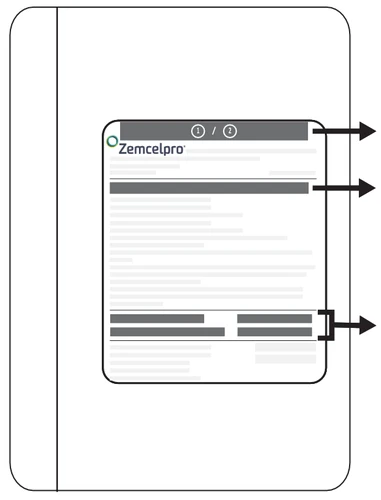
Order of thawing
Before or after
Cellular component identity
Dorocubicel or
Non-expanded CD34- cells
Patient-specific identifier
Recipient ID
CBU ID
Patient date of birth
Patient ABO/Rh group
- Remove the storage container from the cryocontainer. Confirm i) the patient’s identity using the patient identifiers on the container and ii) the identity of the cellular component (dorocubicel or non-expanded CD34- cells) (Figure 1).
- After verifying the container, immediately remove the infusion bag from the container. Confirm i) the patient’s identity using the patient identifiers on the infusion bag and ii) the identity of the cellular component (dorocubicel or non-expanded CD34- cells) (Figure 2).
- Before thawing, inspect the infusion bag(s) for any signs of breakage or cracks. If a bag is compromised, do not infuse its contents.
- Immediately place the infusion bag, still in its sealed wrapper, into a 37 °C water bath. Once a semi-liquid consistency is reached, begin gently massaging the bag until all crystalline ice is dissolved. Complete thawing takes approximately 2–5 minutes per bag.
- Remove the bag from the water bath. Once thawed, the infusion bag must be infused as rapidly as possible. Zemcelpro has been shown to be stable between 15 °C and 30 °C for up to one hour. Do not dilute, wash, or sample Zemcelpro before infusion.
- Unless prepared at the patient’s bedside, transport the product at room temperature in a closed container/bag to the patient to protect the product during transport.
Do not infuse Zemcelpro if the infusion bag is damaged, leaking, or otherwise appears compromised.
Administration
To complete a single dose of Zemcelpro, the prescribed number of dorocubicel bags (from 1 to 4 bags) and non-expanded CD34- cell bags (always 4 bags) must be infused. The total number of infusion bags to be administered must be confirmed against the patient-specific information on the RfIC.
Dorocubicel must be infused first, followed by the non-expanded CD34- cells. It is recommended to administer the non-expanded CD34- cells on the same day as dorocubicel, but not later than the following day.
If dorocubicel is not administered, the non-expanded CD34- cells must not be infused to avoid unwanted immune reactions.
In case of infusion reaction, it is recommended to suspend the infusion and initiate supportive therapy if necessary (see section 4.4).
Do not dilute, wash, or sample Zemcelpro before infusion.
For intravenous use only. A central venous access is recommended for the infusion of Zemcelpro.
Figure 2. Zemcelpro infusion bag
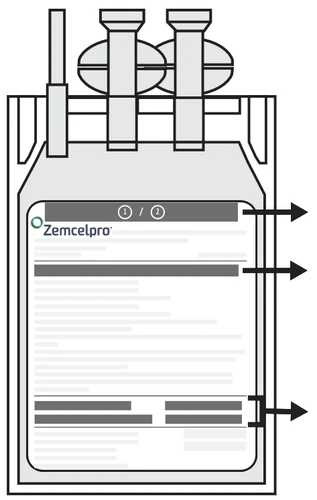
Order of administration
Before or after
Cellular component identity
Dorocubicel or
Non-expanded CD34- cells
Patient-specific identifier
Recipient ID
CBU ID
Patient date of birth
Patient ABO/Rh group
-
Prepare infusion materials. Use a latex-free tubing with a standard infusion filter (170–260 µm). DO NOT use a leukocyte depletion filter.
-
Confirm i) the patient’s identity using the patient identifiers on the bag and ii) the identity of the cellular component (dorocubicel or non-expanded CD34- cells) (Figure 2).
-
Remove the wrapper and inspect the contents of the thawed infusion bag for visible cellular aggregates. If visible aggregates are present, gently mix the bag contents; disperse small aggregates of cellular material with gentle manual mixing. Any remaining aggregates can be effectively removed by filtration prior to infusion.
-
The thawed and inspected bag must be infused promptly at approximately 10–20 mL per minute via gravity flow. Zemcelpro is stable at 15–30 °C for up to 1 hour after completion of thawing.
- Prime the tubing before infusion with 9 mg/mL (0.9%) sodium chloride solution for injection.
- Infuse the entire contents of the infusion bag (20 mL per bag).
- Flush the infusion bag twice with 10–30 mL of 9 mg/mL (0.9%) sodium chloride solution for injection using “back priming” to ensure all cells are infused into the patient.
-
The infusion procedure must be repeated for the remaining bags. Before thawing and infusing the next bag, ensure that the previous bag has been safely administered.
Do not infuse Zemcelpro if the infusion bag is damaged, leaking, or otherwise appears compromised.
Measures to be taken in case of accidental exposure
Follow local guidelines for handling human-derived materials in case of accidental exposure. Surfaces and materials that may have come into contact with Zemcelpro must be decontaminated with an appropriate disinfectant.
Precautions for disposal of the medicinal product
Unused medicinal product and all materials that have come into contact with Zemcelpro (solid and liquid waste) must be handled and disposed of as potentially infectious waste in accordance with local guidelines for handling human-derived materials.
ANNEX IV
CONCLUSIONS ON THE GRANTING OF THE MARKETING AUTHORISATION
SUBJECT TO CONDITIONS
PRESENTED BY THE EUROPEAN MEDICINES AGENCY
Conclusions presented by the European Medicines Agency on:
- Marketing authorisation subject to conditions
Following assessment of the marketing authorisation application, the Committee for Medicinal Products for Human Use (CHMP) considers that the benefit-risk balance is favourable and recommends granting a marketing authorisation subject to conditions, as further described in the European Public Assessment Report (EPAR).