Zelboraf
Italy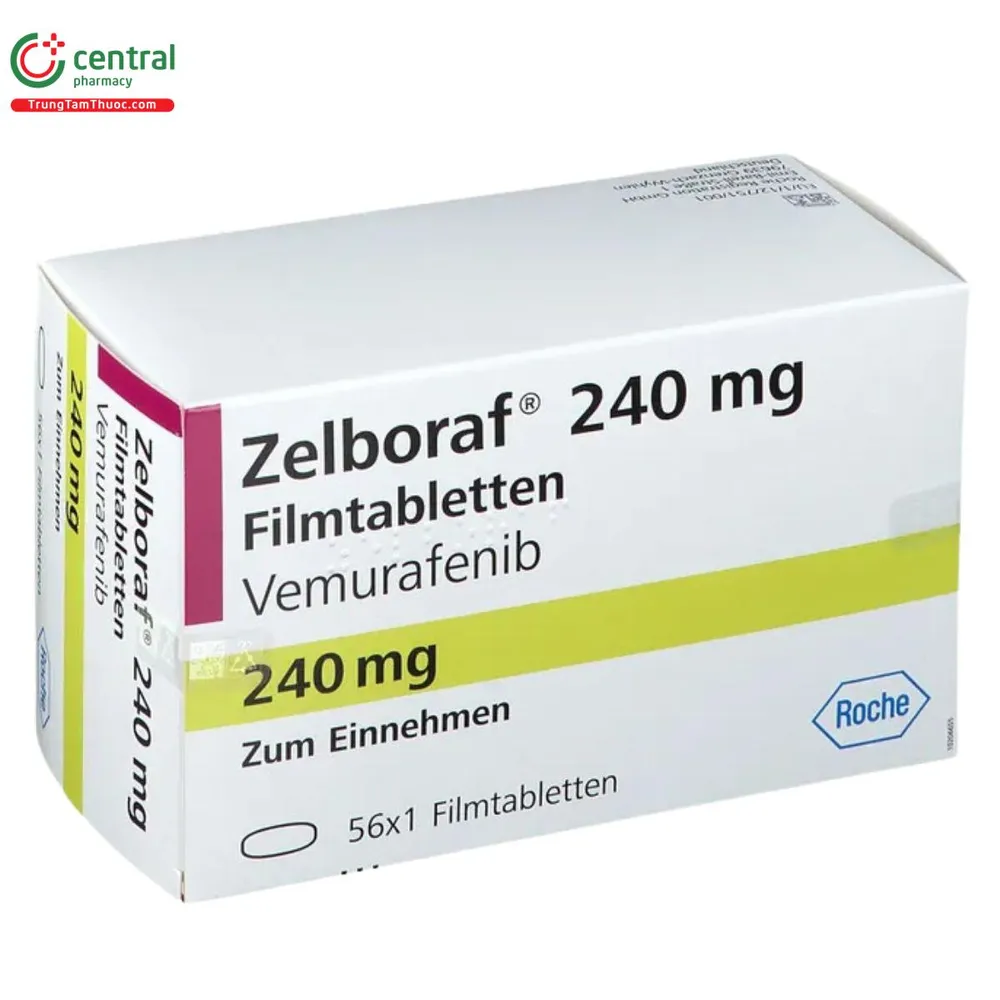
Table of Contents
Patient Information Leaflet: Information for the User
Zelboraf 240 mg film-coated tablets
Vemurafenib
Please read all of this leaflet carefully before taking this medicine because it contains
important information for you.
- Keep this leaflet. You may need to read it again.
- If you have any questions, ask your doctor.
- This medicine has been prescribed for you only. Do not give it to other people, even if they have the same symptoms as you, because it may be harmful.
- If you experience any side effects, including those not listed in this leaflet, tell your doctor. See section 4.
Contents of this leaflet:
- What Zelboraf is and what it is used for
- What you need to know before taking Zelboraf
- How to take Zelboraf
- Possible side effects
- How to store Zelboraf
- Contents of the pack and other information
1. What Zelboraf is and what it is used for
Zelboraf is an anticancer medicine that contains the active substance vemurafenib. It is used to treat
adult patients with melanoma that has spread to other parts of the body or that cannot be removed
by surgery.
It can only be used in patients whose tumour has a specific change (mutation) in the "BRAF" gene.
This change may have contributed to the development of melanoma.
Zelboraf targets the proteins produced by this altered gene and slows down or stops the progression of
the tumour.
2. What you should know before taking Zelboraf
Do not take Zelboraf
- if you are allergic to vemurafenib or to any of the other ingredients of this medicine (listed in section 6 of this leaflet). Symptoms of allergic reactions may include swelling of the face, lips or tongue, difficulty breathing, skin rash, or feeling faint.
Warnings and precautions
Talk to your doctor before taking Zelboraf.
Allergic reactions
- Severe allergic reactions may occur during treatment with Zelboraf. Stop taking Zelboraf and seek immediate medical help if you experience any symptoms of an allergic reaction, such as swelling of the face, lips or tongue, difficulty breathing, skin rash, or feeling faint.
Severe skin reactions
- Severe skin reactions may occur during treatment with Zelboraf. Stop taking Zelboraf and contact your doctor immediately if you develop a skin rash accompanied by any of the following symptoms: blisters on the skin, blisters or sores in the mouth, skin peeling, fever, redness or swelling of the face, hands or soles of the feet.
Previous tumours
- Inform your doctor if you have had a tumour other than melanoma, as Zelboraf may cause progression of certain types of tumours.
Radiation therapy reactions
- Inform your doctor if you are currently undergoing or are about to receive radiation therapy, as Zelboraf may worsen side effects related to radiation treatment.
Heart problems
- Inform your doctor if you have a heart condition, such as an abnormality in the heart's electrical activity known as "QT interval prolongation". Your doctor will perform tests to check that your heart is functioning properly, both before and during treatment with Zelboraf. If necessary, your doctor may decide to temporarily or permanently discontinue treatment.
Eye problems
- You should have your eyes examined by your doctor during treatment with Zelboraf. Immediately inform your doctor if you experience eye pain, swelling or redness, blurred vision, or any other changes in vision during treatment.
Musculoskeletal and connective tissue disorders
- Inform your doctor if you notice any unusual thickening of the palms of your hands, with inward bending of the fingers, or any unusual thickening of the soles of your feet that may be painful.
Skin examinations before, during and after treatment
- If you notice any changes in your skin during treatment with this medicine, discuss them with your doctor as soon as possible.
- Regularly during treatment, and for up to 6 months after treatment, your doctor should examine your skin to check for a type of tumour called “cutaneous squamous cell carcinoma”.
- This lesion usually appears on sun-damaged skin, remains localized, and can be treated by surgical removal.
- If your doctor detects this type of skin tumour, they will treat it or refer you to another doctor for treatment.
- In addition, your doctor should examine your head, neck, mouth, and lymph nodes, and perform regular CT scans. This is a precautionary measure in case a squamous cell carcinoma develops internally. Genital examinations (for women) and anal examinations are also recommended before and at the end of treatment.
- During treatment with Zelboraf, you may develop new melanoma lesions. These are usually surgically removed, and patients continue treatment. Monitoring of such lesions is performed as described above for cutaneous squamous cell carcinoma.
Kidney or liver problems
- Inform your doctor if you have kidney or liver problems, as they may affect the activity of Zelboraf. Your doctor will also perform blood tests to monitor liver and kidney function before you start taking Zelboraf and during treatment.
Sun protection
- While taking Zelboraf, you may become more sensitive to sunlight and may experience sunburn, even severe sunburn. During treatment, avoid exposing your skin to direct sunlight.
- If you need to go out in the sun:
- wear clothing that protects your skin, including covering your head, face, arms and legs
- use lip balm and broad-spectrum sunscreen (with a sun protection factor SPF of at least 30, reapplied every 2–3 hours).
- This will help protect you from sunburn.
Children and adolescents
Zelboraf should be avoided in children and adolescents. The effects of Zelboraf in individuals under 18 years of age are unknown.
Other medicines and Zelboraf
Before starting treatment, inform your doctor if you are taking, have recently taken, or might take any other medicines (including those purchased without prescription at a pharmacy, supermarket, or health store). This is very important, as taking multiple medicines at the same time may strengthen or weaken their effects.
In particular, inform your doctor if you are taking:
- Medicines known to affect heart rhythm:
- Medicines for heart rhythm disorders (e.g., quinidine, amiodarone)
- Medicines for depression (e.g., amitriptiline, imipramine)
- Medicines for bacterial infections (e.g., azithromycin, clarithromycin)
- Medicines for nausea and vomiting (e.g., ondansetron, domperidone).
- Medicines that are mainly eliminated by metabolizing proteins called CYP1A2 (e.g., caffeine, olanzapine, theophylline), CYP3A4 (e.g., some oral contraceptives), or CYP2C8.
- Medicines that affect a protein called P-gp or BCRP (e.g., verapamil, cyclosporine, ritonavir, quinidine, itraconazole, gefitinib).
- Medicines that may be affected by a protein called P-gp (e.g., aliskiren, colchicine, digoxin, everolimus, fexofenadine) or by a protein called BCRP (e.g., methotrexate, mitoxantrone, rosuvastatin).
- Medicines that stimulate metabolizing proteins called CYP3A4 or a metabolic process called glucuronidation (e.g., rifampicin, rifabutin, carbamazepine, phenytoin, or St. John’s wort).
- Medicines that strongly inhibit the CYP3A4 enzyme (e.g., ritonavir, saquinavir, telithromycin, ketoconazole, itraconazole, voriconazole, posaconazole, nefazodone, atazanavir).
- A medicine used to prevent blood clotting called warfarin.
- A medicine called ipilimumab, another medicine used to treat melanoma. The combination of this medicine with Zelboraf should be avoided due to increased risk of liver toxicity. If you are taking any of these medicines (or are unsure), consult your doctor before taking Zelboraf.
Pregnancy and breastfeeding
- Use an effective method of contraception during treatment and for at least 6 months after treatment ends. Zelboraf may reduce the effectiveness of some oral contraceptives. Inform your doctor if you are taking an oral contraceptive.
- The use of Zelboraf during pregnancy is not recommended unless your doctor considers the benefit to the mother to outweigh the risk to the unborn child. There is no information on the safety of Zelboraf in pregnant women. Inform your doctor if you are pregnant or planning to become pregnant.
- It is not known whether components of Zelboraf pass into breast milk. Breastfeeding is not recommended during treatment with Zelboraf.
If you are pregnant, breastfeeding, suspect you may be pregnant, or are planning to become pregnant, consult your doctor before taking this medicine.
Driving and using machines
The side effects of Zelboraf may affect your ability to drive or operate machinery. Be cautious about fatigue or vision problems, which may impair your ability to drive.
Important information about some ingredients of Zelboraf
This medicine contains less than 1 mmol of sodium (23 mg) per tablet, i.e. it is essentially “sodium-free”.
3. How to take Zelboraf
Take this medicine exactly as directed by your doctor. If you have any doubts, consult your doctor.
How many tablets to take
- The recommended dose is 4 tablets, taken twice daily (for a total of 8 tablets).
- Take 4 tablets in the morning and then 4 tablets in the evening.
- If you experience side effects, your doctor may decide to continue treatment but reduce your dose. Always take Zelboraf exactly as instructed by your doctor.
- If you vomit, continue taking Zelboraf as usual and do not take an extra dose.
Taking the tablets
- Do not routinely take Zelboraf on an empty stomach.
- Swallow the tablets whole with a glass of water. Do not chew or crush the tablets.
If you take more Zelboraf than you should
If you take more Zelboraf than you should, inform your doctor immediately. Taking too much Zelboraf may increase the likelihood and severity of side effects. Cases of overdose with Zelboraf have not been reported.
If you forget to take Zelboraf
- If you forget a dose and there are more than 4 hours until your next dose, take the missed dose as soon as you remember. Then take your next dose at the usual time.
- If there are less than 4 hours until your next dose, skip the missed dose. Then take your next dose at the usual time.
- Do not take a double dose to make up for a forgotten dose.
If you stop taking Zelboraf
It is important that you continue taking Zelboraf for the entire duration prescribed by your doctor.
If you have any questions about how to use this medicine, speak to your doctor.
4. Possible side effects
Like all medicines, Zelboraf can cause side effects, although not everybody gets them.
Severe allergic reactions
If you experience any of the following:
- swelling of the face, lips or tongue
- difficulty breathing
- rash
- feeling faint
Call a doctor immediately. Do not take Zelboraf again before speaking with a doctor.
In patients treated with radiation therapy, before, during or after Zelboraf treatment, a worsening of radiation therapy side effects may occur. This may affect the area treated with radiation, such as the skin, esophagus, bladder, liver, rectum and lungs.
Contact your doctor immediately if any of the following symptoms occur:
- rash, blisters, peeling or skin discoloration
- shortness of breath, possibly accompanied by cough, fever or chills (pneumonitis)
- difficulty or pain when swallowing, chest pain, heartburn or acid reflux (esophagitis).
Contact your doctor immediately if you notice any changes in your skin.
The side effects listed below are categorized by frequency:
Very common (may occur in more than 1 in 10 people):
- Rash, itching, dry or scaly skin
- Skin problems, including warts
- A type of skin cancer (cutaneous squamous cell carcinoma)
- Palmar-plantar erythrodysesthesia (redness, peeling or blisters on the palms of the hands and soles of the feet)
- Sunburn, increased sensitivity to sunlight
- Loss of appetite
- Headache
- Change in taste sensation
- Diarrhea
- Constipation
- Feeling unwell (nausea), vomiting
- Hair loss
- Muscle or joint pain, musculoskeletal pain
- Pain in the extremities
- Back pain
- Feeling of tiredness (fatigue)
- Dizziness
- Fever
- Swelling, usually in the legs (peripheral edema)
- Cough
Common (may occur in up to 1 in 10 people):
- Types of skin cancer (basal cell carcinoma, new primary melanoma)
- Thickening of the tissue under the palm of the hand, which may cause fingers to bend inward; may become disabling if severe
- Inflammation of the eye (uveitis)
- Bell’s palsy (a form of facial paralysis, often reversible)
- Tingling or burning sensation in hands and feet
- Joint inflammation
- Inflammation of hair follicles
- Weight loss
- Inflammation of blood vessels
- Nerve problems that may cause pain, loss of sensation and/or muscle weakness (peripheral neuropathy)
- Changes in liver function tests (increased ALT, alkaline phosphatase and bilirubin)
- Changes in the heart's electrical activity (prolongation of QT interval)
- Inflammation of subcutaneous fat tissue
- Abnormal kidney blood tests (increased creatinine)
- Changes in liver function tests (increased GGT)
- Decrease in white blood cells in the blood (neutropenia)
- Reduction in platelets in the blood (thrombocytopenia)
- Painful mouth or mouth ulcers, inflammation of mucous membranes (stomatitis)
Uncommon (may occur in up to 1 in 100 people):
- Allergic reactions that may include facial swelling and difficulty breathing
- Blockage of blood flow in part of the eye (retinal vein occlusion)
- Inflammation of the pancreas
- Changes in liver laboratory tests or liver damage, including severe liver injury where the liver is so damaged it cannot fully perform its functions
- A type of cancer (non-cutaneous squamous cell carcinoma)
- Thickening of deep tissues under the soles of the feet, which may become disabling if severe
Rare (may occur in up to 1 in 1,000 people):
- Progression of certain pre-existing RAS-mutant tumors (chronic myelomonocytic leukemia, pancreatic adenocarcinoma)
- A type of severe skin reaction characterized by rash accompanied by fever and inflammation of internal organs such as the liver and kidneys
- Inflammatory disease mainly affecting the skin, lungs and eyes (sarcoidosis)
- Types of kidney damage characterized by inflammation (acute interstitial nephritis) or damage to the kidney tubules (acute tubular necrosis).
Reporting of side effects
If you experience any side effect, including those not listed in this leaflet, contact your doctor or pharmacist. You may also report side effects directly via the national reporting system listed in Annex V.
By reporting side effects, you can help provide more information on the safety of this medicine.
5. How to store Zelboraf
Keep this medicine out of the sight and reach of children.
Do not use Zelboraf after the expiry date which is stated on the carton and blister after Exp. The expiry
date refers to the last day of that month.
Store in the original packaging to protect the medicine from moisture.
Do not dispose of any medicine via wastewater or household waste. Ask your pharmacist how to
dispose of medicines you no longer use. This will help protect the environment.
6. Package contents and other information
What Zelboraf contains
- The active substance is vemurafenib. Each film-coated tablet contains 240 milligrams (mg) of vemurafenib (as vemurafenib co-precipitate with hypromellose acetate succinate).
- The other components are:
- tablet core: Colloidal anhydrous silica, sodium croscarmellose, hydroxypropylcellulose, and magnesium stearate
- film coating: Red iron oxide, macrogol 3350, polyvinyl alcohol, talc, and titanium dioxide.
Description of the appearance of Zelboraf and package contents
The Zelboraf 240 mg film-coated tablets are pinkish-white to orange-white in colour.
They are oval-shaped, with the inscription “VEM” printed on one side.
They are available in perforated aluminium blisters, divisible into single doses, in packs of 56 x 1 tablet.
Marketing Authorization Holder
Roche Registration GmbH
Emil-Barell-Strasse 1
79639 Grenzach-Wyhlen
Germany
Manufacturer
Roche Pharma AG
Emil-Barell-Strasse 1
D-79639
Grenzach-Wyhlen
Germany
For further information on this medicinal product, please contact the local representative of the Marketing Authorization Holder:
België/Belgique/Belgien Lietuva
N.V. Roche S.A. UAB “Roche Lietuva”
Tél/Tel: +32 (0) 2 525 82 11 Tel: +370 5 2546799
България Luxembourg/Luxemburg
Рош България ЕООД (See/siehe Belgique/Belgien)
Тел: +359 2 818 44 44
Česká republika Magyarország
Roche s. r. o. Roche (Magyarország) Kft.
Tel: +420 - 2 20382111 Tel: +36 - 1 279 4500
Danmark Malta
Roche Pharmaceuticals A/S (c/o Renju Unit)
Tlf: +45 - 36 39 99 99
Deutschland Nederland
Roche Pharma AG Roche Nederland B.V.
Tel: +49 (0) 7624 140 Tel: +31 (0) 348 438050
Eesti Norge
Roche Eesti OÜ Roche Norge AS
Tel: + 372 - 6 177 380 Tlf: +47 - 22 78 90 00
Ελλάδα Österreich
Roche (Hellas) A.E. Roche Austria GmbH
Τηλ: +30 210 61 66 100 Tel: +43 (0) 1 27739
España Polska
Roche Farma S.A. Roche Polska Sp.z o.o.
Tel: +34 - 91 324 81 00 Tel: +48 - 22 345 18 88
France Portugal
Roche Roche Farmacêutica Química, Lda
Tél: +33 (0) 1 47 61 40 00 Tel: +351 - 21 425 70 00
Hrvatska România
Roche d.o.o. Roche România S.R.L.
Tel: +385 1 4722 333 Tel: +40 21 206 47 01
Ireland Slovenija
Roche Products (Ireland) Ltd. Roche farmacevtska družba d.o.o.
Tel: +353 (0) 1 469 0700 Tel: +386 - 1 360 26 00
Ísland Slovenská republika
Roche Pharmaceuticals A/S Roche Slovensko, s.r.o.
c/o Icepharma hf Tel: +421 - 2 52638201
Sími: +354 540 8000
Italia Suomi/Finland
Roche S.p.A. Roche Oy
Tel: +39 - 039 2471 Puh/Tel: +358 (0) 10 554 500
Kύπρος Sverige
Γ.Α.Σταμάτης & Σια Λτδ. Roche AB
Τηλ: +357 - 22 76 62 76 Tel: +46 (0) 8 726 1200
Latvija United Kingdom (Northern Ireland)
Roche Latvija SIA Roche Products (Ireland) Ltd.
Tel: +371 - 6 7039831 Tel: +44 (0) 1707 366000
More detailed information on this medicinal product is available on the website of the European Medicines Agency: http://www.ema.europa.eu.