Zaltrap
Italy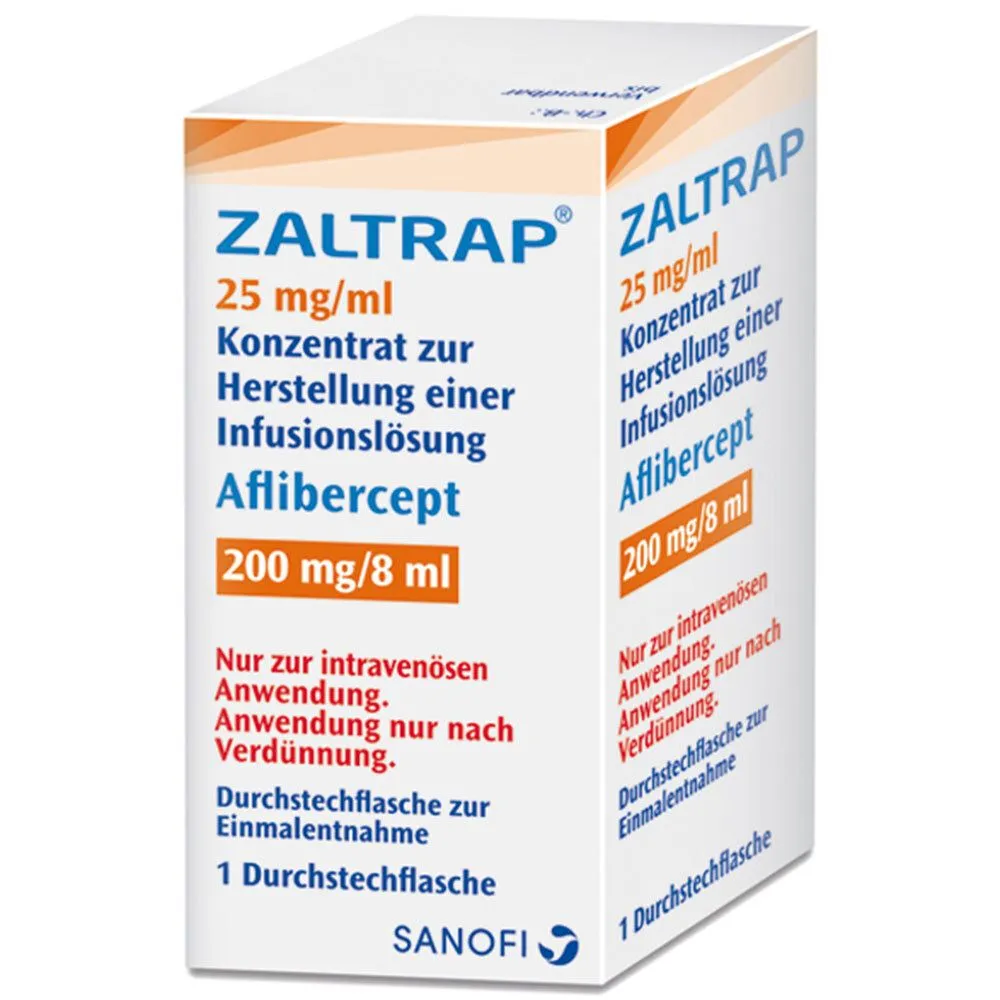
Table of Contents
- Package leaflet: Information for the user
- ZALTRAP 25 mg/ml concentrate for solution for infusion
- 1. What ZALTRAP is and what it is used for
- 2. What you should know before using ZALTRAP
- 3. How ZALTRAP is administered
- 4. Possible side effects
- 5. How to store ZALTRAP
- 6. Package contents and other information
- The following information is intended exclusively for healthcare professionals:
Package leaflet: Information for the user
ZALTRAP 25 mg/ml concentrate for solution for infusion
aflibercept
Please read all of this leaflet carefully before you start taking this medicine because it contains important information for you.
- Keep this leaflet. You may need to read it again or provide it to healthcare professionals in the future.
- If you have any questions, ask your doctor, pharmacist or nurse.
- If you experience any side effects, including those not listed in this leaflet, talk to your doctor, pharmacist or nurse. See section 4.
Contents of this leaflet
- What ZALTRAP is and what it is used for
- What you need to know before receiving ZALTRAP
- How ZALTRAP is given
- Possible side effects
- How to store ZALTRAP
- Contents of the pack and other information
1. What ZALTRAP is and what it is used for
What ZALTRAP is and how it works
ZALTRAP contains the active substance aflibercept, a protein that works by preventing the formation of new blood vessels within the tumour. To grow, a tumour needs nutrients and oxygen present in the blood. By inhibiting the development of blood vessels, ZALTRAP helps to stop or slow down tumour growth.
What ZALTRAP is used for
ZALTRAP is a medicine used in adults to treat advanced colorectal cancer (cancer of the colon and rectum, parts of the large intestine). It is given in combination with other medicines known as "chemotherapy", which include "5-fluorouracil", "folinic acid", and "irinotecan".
2. What you should know before using ZALTRAP
Do not use ZALTRAP
- if you are allergic to aflibercept or to any of the other ingredients of this medicine (listed in section 6);
- in the eyes, as it may cause severe damage.
Please also read the package leaflet of any other medicines ("chemotherapy") included in your treatment regimen to determine whether they are suitable for your condition. If you have any doubts, ask your doctor, pharmacist, or nurse whether there are other reasons why you should not use these medicines.
Warnings and precautions
Talk to your doctor, pharmacist, or nurse before receiving ZALTRAP and during treatment if any of the following apply:
- if you experience bleeding during or after treatment (see section 4), or if you feel extreme fatigue, weakness, dizziness, or notice changes in the color of your stools; if excessive bleeding occurs, your doctor will discontinue treatment with ZALTRAP, as ZALTRAP may increase the risk of bleeding.
- if you have oral or dental problems, such as poor dental health, gum disease, or if a dental extraction is planned, particularly if you have previously been treated with a bisphosphonate (a medicine used to treat or prevent bone disorders). A side effect called osteonecrosis of the jaw (severe deterioration of the bone tissue in the jaw) has been reported in cancer patients treated with ZALTRAP. It is advisable to have a dental examination before starting treatment with ZALTRAP. During treatment with ZALTRAP, it is important to maintain good oral hygiene (including regular tooth brushing) and to have regular dental check-ups. If you wear dentures, ensure they fit properly. If you have previously or are currently receiving intravenous bisphosphonates, dental procedures or oral surgery (such as tooth extractions) should be avoided. Inform your doctor about any dental treatment, and also inform your dentist that you are being treated with ZALTRAP. Contact your doctor and dentist immediately during and after treatment with ZALTRAP if you experience any problems in the mouth or teeth, such as loose teeth, pain or swelling, failure of sores to heal, or discharge, as these may be signs of osteonecrosis of the jaw.
- if you have inflammatory bowel diseases, such as infection of a section of the intestinal wall (also known as "diverticulitis"), gastric ulcer, or colitis; ZALTRAP may increase the risk of intestinal wall perforation. If this occurs, your doctor will discontinue treatment with ZALTRAP.
- if you have "fistulas," i.e., abnormal tubular connections between internal organs and the skin or other tissues. If you develop such abnormal connections during therapy, your doctor will discontinue treatment with ZALTRAP.
- if you have high blood pressure. ZALTRAP may increase blood pressure (see section 4), so your doctor may need to monitor your blood pressure and adjust your antihypertensive therapy or the dose of ZALTRAP. It is essential to inform your doctor, pharmacist, or nurse if you have heart problems, as increased blood pressure may worsen them.
- if you have or have had an aneurysm (a weakened and bulging blood vessel wall) or a tear in the wall of a blood vessel.
- if you experience shortness of breath (dyspnea) during physical activity or when lying down, excessive fatigue, or swelling in the legs, which may be signs of heart failure.
- if you notice symptoms of a blood clot (see section 4). Symptoms of a blood clot may vary depending on where it occurs (e.g., lungs, legs, heart, or brain), but may include chest pain, cough, shortness of breath, or difficulty breathing. Other symptoms may include swelling in one or both legs, pain or tenderness in one or both legs, changes in skin color or temperature in the affected legs, or visible veins. You may also experience sudden numbness or weakness in the face, arms, or legs. Additional symptoms may include mental confusion, vision problems, difficulty walking, loss of coordination or balance, or speech difficulties or slurred speech. If you experience any of these symptoms, contact your doctor immediately, as they will treat the symptoms and discontinue ZALTRAP therapy.
- if you have kidney problems (protein in urine); your doctor will monitor your kidney function and may need to adjust the dose of ZALTRAP.
- if your white blood cell count is too low. ZALTRAP may reduce the number of white blood cells in the blood, so your doctor will monitor your white blood cell count and may prescribe additional medicines to increase white blood cell levels. If your white blood cell count is low, your doctor may decide to delay treatment.
- if you have severe or prolonged diarrhea, nausea, or vomiting; these conditions may cause significant loss of body fluids (i.e., "dehydration"). Your doctor may decide to prescribe other medicines and/or administer fluids intravenously.
- if you have a history of allergies; treatment with ZALTRAP may cause severe allergic reactions (see section 4). Your doctor may need to treat the allergic reaction or discontinue treatment with ZALTRAP.
- if you have had a tooth extraction or any surgical procedure within the last 4 weeks, if you are planning to undergo dental or medical surgery, or if you have unhealed post-surgical wounds. Your doctor may temporarily suspend treatment before and after surgery.
- if you have seizures; if you notice changes in vision or confusion, your doctor may discontinue treatment with ZALTRAP.
- if you are 65 years of age or older and have diarrhea, dizziness, weakness, weight loss, or severe loss of body fluids (i.e., "dehydration"). Your doctor will need to monitor you closely.
- if your ability to perform daily activities is limited or worsened during treatment. Your doctor will need to monitor you closely.
If any of the above conditions apply to you (or if you have any doubts), talk to your doctor, pharmacist, or nurse before using ZALTRAP and during treatment.
During treatment, your doctor will perform a series of tests to monitor your body functions and assess the effects of the medicine. These tests may include blood and urine analyses, X-rays, other imaging techniques, and/or additional tests.
ZALTRAP is administered by intravenous infusion ("intravenously") for the treatment of advanced colorectal cancer. ZALTRAP must not be injected into the eyes, as it may cause severe damage.
Children and adolescents
This medicine is not intended for use in children or adolescents under 18 years of age, as the safety and efficacy of ZALTRAP in children and adolescents have not been established.
Other medicines and ZALTRAP
Inform your doctor, pharmacist, or nurse if you are taking, have recently taken, or might take any other medicines. This includes medicines obtained without a prescription and herbal remedies.
Pregnancy, breastfeeding, and fertility
ZALTRAP must not be used during pregnancy unless your doctor determines that the benefits of treatment outweigh the potential risks to you or the fetus.
If you are a woman of childbearing potential, you must use effective contraception methods (see section "Contraception" below for details on female contraception). This medicine may be harmful to the fetus because it can prevent the formation of new blood vessels.
If you are breastfeeding, contact your doctor before taking this medicine, as it is not known whether the medicine passes into breast milk.
ZALTRAP may have harmful effects on male and female fertility. If you plan to have children, contact your doctor.
Contraception
Women of childbearing potential must use effective contraceptive methods:
- during treatment with ZALTRAP, and
- for 3 months after the last dose of treatment.
Driving and using machines
This medicine may cause side effects that impair vision, concentration, and reaction time. If this occurs, do not drive or operate tools or machinery.
ZALTRAP contains sodium
This medicine contains up to 22 mg of sodium (a main component of table salt) per vial. This corresponds to 1.1% of the maximum daily dietary intake recommended for an adult.
3. How ZALTRAP is administered
ZALTRAP is administered by a doctor or a nurse experienced in the use of "chemotherapy".
The administration is carried out by intravenous infusion ("intravenous infusion").
ZALTRAP must not be injected into the eyes as it may cause severe damage.
Before administration, the medicine must be diluted. Practical information on the handling and administration of ZALTRAP for doctors, nurses, and pharmacists can be found in this leaflet.
Dose and frequency of treatment
- The intravenous infusion lasts approximately one hour.
- You will receive an infusion every 2 weeks.
- The recommended dose is 4 mg per kilogram of body weight. Your doctor will determine the correct dose.
- Your doctor will decide the frequency of administration and whether any dose adjustments are necessary.
ZALTRAP is administered in combination with other chemotherapy medicines, including "5-fluorouracil", "folic acid", and "irinotecan". Your doctor will determine the appropriate doses for these other chemotherapy medicines.
Treatment will continue as long as your doctor considers there is clinical benefit and the level of side effects remains acceptable.
If you have any questions about the use of this medicine, please consult your doctor, pharmacist, or nurse.
4. Possible side effects
Like all medicines, this medicine can cause side effects, although not everybody gets them.
The side effects listed below occurred when ZALTRAP was used in combination with chemotherapy.
Serious side effects
If you notice any of the following serious side effects, contact your doctor immediately to receive urgent medical treatment:
-
Bleeding: Very common (may affect more than 1 in 10 people) – Includes nosebleeds or potentially severe bleeding in the intestine or other parts of the body, which may be life-threatening. Symptoms may include extreme tiredness, weakness and/or dizziness, or changes in the colour of your stools.
-
Pain in the mouth, teeth and/or jaw, swelling or sores that do not heal in the mouth or jaw, discharge, numbness or a feeling of heaviness in the jaw, or loose teeth: Uncommon (may affect up to 1 in 100 people). These symptoms could be signs of severe deterioration of the jawbone tissue (osteonecrosis). Inform your doctor and dentist immediately if these symptoms occur during treatment with ZALTRAP or even after stopping treatment.
-
Perforation of the intestine (also known as "gastrointestinal perforation"): Uncommon (may affect up to 1 in 100 people) – This refers to a hole developing in the walls of the stomach, esophagus, intestine, or other internal organs. This side effect can be fatal. Symptoms may include stomach pain, vomiting, fever, or chills.
-
Fistulas, i.e. abnormal tubular connections between internal organs and skin or other tissues: Common (may affect up to 1 in 10 people) – These abnormal tubular connections may develop, for example, between the intestine and the skin. Depending on their location, they may sometimes be accompanied by pus discharge. If in doubt, contact your doctor.
-
Heart failure: Uncommon (may affect up to 1 in 100 people) – Signs may include shortness of breath when lying down or during physical activity, excessive fatigue, or swelling in the legs.
-
High blood pressure (also known as "hypertension"): Very common (may affect more than 1 in 10 people) – This may develop or worsen. If blood pressure is not monitored, it may lead to stroke, heart failure, or kidney failure. Your doctor must monitor your blood pressure throughout the entire treatment.
-
Blockage of arteries caused by a blood clot (also known as "arterial thromboembolism"): Common (may affect up to 1 in 10 people) – This may cause stroke or heart attack. Symptoms may include chest pain or tightness, sudden numbness or weakness in the face, arms, or legs. Other symptoms may include mental confusion, vision problems, difficulty walking, loss of coordination or balance, difficulty speaking, or slurred speech.
-
Blockage of veins caused by a blood clot (also known as "venous thromboembolism"): Common (may affect up to 1 in 10 people) – This may include blood clots in the lungs and legs. Symptoms may include chest pain, cough, shortness of breath, difficulty breathing, or coughing up blood. Other symptoms include swelling of one or both legs, pain or tenderness in one or both legs when standing or walking, warm skin on the affected leg, redness or discolouration of the skin on the affected leg, or visible veins.
-
Protein in the urine (also called "proteinuria"): Very common (may affect more than 1 in 10 people) – This is frequently detected during tests. It may include swelling of the feet or the entire body and may be related to kidney disease.
-
Low white blood cell count (also called "neutropenia"): Very common (may affect more than 1 in 10 people) – This may lead to serious infections. During treatment, your doctor will prescribe regular blood tests to monitor your white blood cell count. You may also be prescribed a medicine called "G-CSF" to help prevent complications if your white blood cell count becomes too low. Symptoms of infection include fever, chills, burning during urination, and muscle pain. You should check your temperature frequently while taking this medicine.
-
Diarrhoea and dehydration: Very common (may affect more than 1 in 10 people) for diarrhoea and Common (may affect up to 1 in 10 people) for dehydration – Severe diarrhoea and vomiting may cause excessive loss of fluids ("dehydration") and body salts (electrolytes). Symptoms may include dizziness, especially when moving from a sitting to a standing position. Hospitalization may be required for treatment. Your doctor may prescribe medicines to stop or treat diarrhoea and vomiting.
-
Allergic reactions: Common (may affect up to 1 in 10 people) – These may occur within minutes of the infusion. Symptoms of an allergic reaction may include rash or itching, skin redness, dizziness or fainting, shortness of breath, chest or throat pain, or facial swelling. Inform your doctor or nurse immediately if you experience any of these symptoms during or shortly after a ZALTRAP infusion.
-
Wounds that heal slowly or do not heal: Uncommon (may affect up to 1 in 100 people) – This occurs when a surgical wound has difficulty healing or staying closed, or when a healed wound reopens. Your doctor will suspend the medicine for at least 4 weeks before any planned surgery and until the wound has completely healed.
-
A side effect affecting the nervous system (called "posterior reversible encephalopathy syndrome" or PRES): Uncommon (may affect up to 1 in 100 people) – Signs may include headache, vision changes, confusion, or seizures with or without high blood pressure.
Speak to your doctor immediately if you notice any of the side effects listed above.
Other side effects include:
Very common (may affect up to 1 in 10 people)
- sudden drop in white blood cell count (leucopenia)
- sudden drop in specific cells that help blood to clot (thrombocytopenia)
- loss of appetite
- headache
- nosebleeds
- voice changes, such as hoarseness
- difficulty breathing
- painful mouth ulcers
- stomach pain
- swelling and numbness of hands and feet associated with chemotherapy ("palmar-plantar erythrodysesthesia syndrome")
- feeling tired or weak
- weight loss
- kidney problems with increased creatinine (an indicator of kidney function)
- liver problems with increased liver enzymes.
Common (may affect up to 1 in 10 people)
- urinary tract infection
- inflammation inside the nose and upper throat
- mouth or throat pain
- runny nose
- haemorrhoids, bleeding, or pain during defecation
- inflammation inside the mouth
- toothache
- changes in skin colour.
Uncommon (may affect up to 1 in 100 people)
- increased protein in the urine, increased blood cholesterol, and swelling due to fluid retention (oedema) (this condition is also called "nephrotic syndrome")
- blood clot in very small blood vessels (also known as "thrombotic microangiopathy").
Not known (frequency cannot be estimated from the available data)
Dilation and weakening of the wall of a blood vessel or a tear in the wall of a blood vessel (aneurysms and arterial dissections).
Reporting of side effects
If you experience any side effect, including those not listed in this leaflet, talk to your doctor, pharmacist, or nurse. You can also report side effects directly via the national reporting system listed in Annex V.
By reporting side effects, you can help provide more information on the safety of this medicine.
5. How to store ZALTRAP
Keep this medicine out of the sight and reach of children.
Do not use this medicine after the expiry date stated on the outer packaging and on the label of the vial following the word EXP. The expiry date refers to the last day of the month indicated.
Store in a refrigerator (2°C - 8°C).
Keep in the original packaging to protect the medicine from light.
Information on storage and on when to use ZALTRAP after dilution and preparation for administration is provided in the "Practical information for healthcare professionals on the preparation and handling of ZALTRAP 25 mg/ml concentrate for solution for infusion" at the end of this leaflet.
Do not use ZALTRAP if you notice the presence of particles or any change in colour of the medicine in the vial or infusion bag.
Do not dispose of medicines via wastewater or household waste. Ask your pharmacist how to dispose of medicines you no longer use. This will help protect the environment.
6. Package contents and other information
What ZALTRAP contains
- The active substance is aflibercept. One ml of concentrate contains 25 mg of aflibercept. A 4 ml vial of concentrate contains 100 mg of aflibercept. An 8 ml vial of concentrate contains 200 mg of aflibercept.
- The excipients are: sucrose, sodium chloride, sodium citrate dihydrate, citric acid monohydrate, polysorbate 20, disodium hydrogen phosphate heptahydrate, sodium dihydrogen phosphate monohydrate, sodium hydroxide and/or hydrochloric acid, and water for injections.
Description of the appearance of ZALTRAP and contents of the pack
ZALTRAP is a sterile concentrate for solution for infusion. The concentrate is a clear, colourless to pale yellow solution.
- 4 ml of concentrate in a 5 ml clear borosilicate glass vial (Type I), sealed with a flanged stopper and a flip-off cap, sealed with a tamper-evident seal. The pack contains 1 vial or 3 vials.
- 8 ml of concentrate in a 10 ml clear borosilicate glass vial (Type I), sealed with a flanged stopper and a flip-off cap, sealed with a tamper-evident seal. The pack contains 1 vial.
Not all pack sizes may be marketed.
Marketing Authorisation Holder
Sanofi Winthrop Industrie
82 avenue Raspail
94250 Gentilly
France
Manufacturer
Sanofi-Aventis Deutschland GmbH
Industriepark Hoechst
65926 Frankfurt am Main
Germany
For further information about this medicinal product, please contact the local representative of the Marketing Authorisation Holder:
België/Belgique/Belgien Lietuva
Sanofi Belgium Swixx Biopharma UAB
Tel/Tel: +32 (0)2 710 54 00 Tel: +370 5 236 91 40
България Luxembourg/Luxemburg
Swixx Biopharma EOOD Sanofi Belgium
Тел.: +359 (0)2 4942 480 Tél/Tel: +32 (0)2 710 54 00 (Belgique/Belgien)
Česká republika Magyarország
sanofi-aventis, s.r.o. SANOFI-AVENTIS zrt.
Tel: +420 233 086 111 Tel.: +36 1 505 0050
Danmark Malta
Sanofi A/S Sanofi S.r.l.
Tlf: +45 45 16 70 00 Tel: +39 02 39394275
Deutschland Nederland
Sanofi-Aventis Deutschland GmbH Sanofi B.V.
Tel: +31 (0)20 245 4000
Tel.: 0800 52 52 010
Tel. from abroad: +49 69 305 21 131
Eesti Norge
Swixx Biopharma OÜ sanofi-aventis Norge AS
Tel: +372 640 10 30 Tlf: +47 67 10 71 00
Ελλάδα Österreich
sanofi-aventis Μονοπρόσωπη ΑΕΒΕ sanofi-aventis GmbH
Τηλ: +30 210 900 16 00 Tel: +43 1 80 185 – 0
España Polska
sanofi-aventis, S.A. sanofi-aventis Sp. z o.o.
Tel: +34 93 485 94 00 Tel.: +48 22 280 00 00
France Portugal
Sanofi Winthrop Industrie Sanofi - Produtos Farmacêuticos, Lda.
Tél: 0 800 222 555 Tel: +351 21 35 89 400
From abroad: +33 1 57 63 23 23
Hrvatska România
Swixx Biopharma d.o.o. Sanofi Romania SRL
Tel: +385 1 2078 500 Tel: +40 (0) 21 317 31 36
Ireland Slovenija
sanofi-aventis Ireland Ltd. T/A SANOFI Swixx Biopharma d.o.o.
Tel: +353 (0) 1 403 56 00 Tel: +386 1 235 51 00
Ísland Slovenská republika
Vistor hf. Swixx Biopharma s.r.o.
Sími: +354 535 7000 Tel: +421 2 208 33 600
Italia Suomi/Finland
Sanofi S.r.l. Sanofi Oy
Tel: 800536389 Puh/Tel: +358 (0) 201 200 300
Κύπρος Sverige
C.A. Papaellinas Ltd. Sanofi AB
Τηλ: +357 22 741741 Tel: +46 (0)8 634 50 00
Latvija United Kingdom (Northern Ireland)
Swixx Biopharma SIA sanofi-aventis Ireland Ltd. T/A SANOFI
Tel: +371 6 616 47 50 Tel: +44 (0) 800 035 2525
Other sources of information
More detailed information on this medicinal product is available on the website of the European Medicines Agency: http://www.ema.europa.eu
The following information is intended exclusively for healthcare professionals:
PRACTICAL INFORMATION FOR HEALTHCARE PROFESSIONALS
ON THE PREPARATION AND HANDLING OF THE CONCENTRATE FOR
INFUSION SOLUTION ZALTRAP 25 mg/ml
This information supplements sections 3 and 5 for the user.
It is important to read the entire content of this procedure before preparing this infusion solution.
ZALTRAP is a sterile, preservative-free, and pyrogen-free concentrate; therefore, the infusion solution must be prepared by a healthcare professional using safe handling practices and aseptic technique.
Caution must be exercised when handling ZALTRAP, and containment devices, personal protective equipment (e.g., gloves), and preparation procedures should be considered.
Preparation of the infusion solution
- Visually inspect the ZALTRAP vial before use. The concentrated solution must be clear and free from particles.
- Based on the required dose for the patient, withdraw the necessary volume of ZALTRAP concentrate from the vial. More than one vial may be required to prepare the infusion solution.
- Dilute to the required administration volume with 0.9% sodium chloride solution or 5% glucose infusion solution. The final concentration of the intravenous infusion solution of ZALTRAP must remain within the range of 0.6 mg/ml – 8 mg/ml of aflibercept.
- Use DEHP-containing PVC infusion bags or polyolefin infusion bags.
- Prior to administration, the diluted solution must be visually inspected for the presence of particles and any change in color. If discoloration or particles are observed, the reconstituted solution must be discarded.
- ZALTRAP is supplied in a single-use vial. Do not re-puncture the vial after initial puncture. Any unused concentrate must be discarded.
Stability after dilution in the infusion bag
Physical and chemical in-use stability has been demonstrated for 24 hours at 2°C – 8°C and for 8 hours at 25°C.
From a microbiological standpoint, the infusion solution should be used immediately.
If not used immediately, storage times and conditions prior to use are the responsibility of the user and normally should not exceed 24 hours at 2–8°C, unless dilution has been carried out under controlled and validated aseptic conditions.
Method of administration
ZALTRAP must be administered only as an intravenous infusion over 1 hour. Due to its hyperosmolarity (1000 mOsmol/kg), the ZALTRAP concentrate must not be administered as a bolus or by intravenous injection. ZALTRAP must not be administered as an intravitreal injection (see section 2 of the Summary of Product Characteristics).
Each vial of concentrate for infusion solution is for single use (single dose).
Diluted solutions of ZALTRAP must be administered using an infusion set containing a 0.2 micron polyethersulfone filter.
Infusion sets must be made of one of the following materials:
- polyvinyl chloride (PVC) containing di-(2-ethylhexyl) phthalate (DEHP)
- PVC without DEHP containing trioctyl trimellitate (TOTM)
- polypropylene
- PVC coated with polyethylene
- polyurethane
Do not use filters made of polyvinylidene fluoride (PVDF) or nylon.
Disposal
Any unused medicinal product or waste material must be disposed of in accordance with local regulations.