Yasnoro
ItalyTable of Contents
- Package leaflet: Information for the user
- Yasnoro 5 mg orodispersible tablets, 10 mg orodispersible tablets
- 1. What Yasnoro is and what it is used for
- 2. What you need to know before taking Yasnoro
- 3. How to take Yasnoro
- 4. Possible side effects
- 5. How to store Yasnoro
- 6. Package contents and other information
Package leaflet: Information for the user
Yasnoro 5 mg orodispersible tablets, 10 mg orodispersible tablets
Donepezil hydrochloride
Generic medicine
Please read all of this leaflet carefully before you start taking this medicine because it contains important information for you.
- Keep this leaflet. You may need to read it again.
- If you have any questions, ask your doctor or pharmacist.
- This medicine has been prescribed for you only. Do not give it to other people, even if their symptoms are the same as yours, as it may be harmful.
- If you experience any side effects, including those not listed in this leaflet, talk to your doctor or pharmacist. See section 4.
Contents of this leaflet:
- What Yasnoro is and what it is used for
- What you need to know before taking Yasnoro
- How to take Yasnoro
- Possible side effects
- How to store Yasnoro
- Contents of the pack and other information
1. What Yasnoro is and what it is used for
Donepezil belongs to a group of medicines called "cholinesterase inhibitors".
Yasnoro is used to treat the symptoms of dementia in people who have been diagnosed with mild to moderate Alzheimer's disease.
2. What you need to know before taking Yasnoro
Do not take Yasnoro:
- if you are allergic to donepezil hydrochloride, to piperidine derivatives, or to any of the excipients of this medicine (listed in section 6).
Warnings and precautions
Tell your doctor or pharmacist before taking Yasnoro if you have:
- stomach or duodenal ulcers
- epileptic seizures or convulsions
- heart disorders (especially irregular or very slow heartbeat)
- asthma or other long-term lung diseases
- liver problems or hepatitis
- difficulty urinating or mild kidney problems
- any involuntary or abnormal movements of the tongue, face, or body (extrapyramidal symptoms). Yasnoro may induce or worsen extrapyramidal symptoms.
If you are about to undergo surgery requiring general anaesthesia, you must inform your doctor and anaesthetist that you are taking Yasnoro, as this medicine may affect the amount of anaesthetic required.
Yasnoro can be used in patients with kidney disease or mild to moderate liver disease.
Inform your doctor immediately if you have kidney or liver disease. Patients with severe liver disease must not take Yasnoro.
In cases of unexplained hepatic dysfunction, your doctor may consider discontinuing treatment with Yasnoro.
Other medicines and Yasnoro
Inform your doctor or pharmacist if you are taking, have recently taken, or might take any other medicines, including those without a prescription.
This also applies to any medicines you may take occasionally in the future while continuing Yasnoro treatment, as they may weaken or strengthen the effects of Yasnoro.
In particular, inform your doctor if you are taking any of the following types of medicines:
- other medicines for Alzheimer's disease, such as galantamine
- painkillers or treatments for arthritis, such as aspirin, non-steroidal anti-inflammatory drugs (NSAIDs) like ibuprofen or sodium diclofenac
- anticholinergic medicines, such as tolterodine
- antibiotics, such as erythromycin and rifampicin
- antifungal medicines, such as itraconazole and ketoconazole
- antidepressants, such as fluoxetine
- anticonvulsants, such as phenytoin and carbamazepine
- medicines for heart conditions, such as quinidine and beta-blockers (propranolol and atenolol)
- muscle relaxants, such as succinylcholine
- general anaesthetics
- over-the-counter medicines, such as herbal remedies
Yasnoro with food, drinks, and alcohol
Food does not affect the action of Yasnoro.
Do not drink alcohol during treatment with Yasnoro, as alcohol may reduce its effectiveness.
Pregnancy, breastfeeding, and fertility
If you are pregnant, think you might be pregnant, are planning a pregnancy, or are breastfeeding, consult your doctor or pharmacist before taking this medicine.
Do not take Yasnoro if you are pregnant.
Do not breastfeed while taking Yasnoro.
Driving and using machines
Alzheimer's disease may impair your ability to drive or operate machinery. Therefore, you should not engage in these activities unless your doctor confirms it is safe for you to do so.
Additionally, this medicine may cause fatigue, dizziness, and muscle cramps. If you experience any of these symptoms, you must not drive or operate machinery.
Yasnoro contains:
- Aspartame (E951): This medicine contains a source of phenylalanine. It may be harmful if you have phenylketonuria.
- Glucose (dextrose), sucrose, and sorbitol (E420): If your doctor has diagnosed you with an intolerance to certain sugars, contact your doctor before taking this medicine.
3. How to take Yasnoro
Take this medicine exactly as directed by your doctor or pharmacist. If you
have any doubts, ask your doctor or pharmacist.
Inform your doctor or pharmacist about your caregiver. Your caregiver will
help you take the medicine as prescribed.
Usually, treatment starts with 5 mg of donepezil hydrochloride taken every evening before bedtime.
After one month, your doctor may instruct you to take 10 mg of donepezil hydrochloride every evening before
bedtime.
Yasnoro orodispersible tablets are fragile. They must not be pushed through the aluminium foil of the blister
as this may damage them. Do not handle the tablets with wet hands, as they may break. Remove a tablet from the packaging as follows:
- Hold the blister at the edges and separate one tablet cavity from the rest of the blister by gently pulling along the perforations around it.
- Pull the edge of the foil and remove the aluminium foil.
- Tip the tablet into your hand.
- Place the tablet on your tongue immediately after removing it from the packaging.
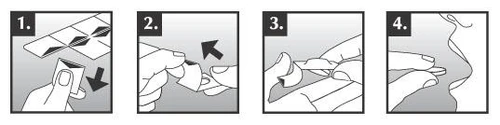
Within a few seconds, the tablet will begin to disintegrate in the mouth and can then be swallowed with or without water. The mouth must be empty before placing the tablet on the tongue.
Your prescribed tablet dose may change depending on the duration of treatment and your doctor's recommendations. The maximum recommended dose is 10 mg taken every evening.
If you have kidney problems, no dose adjustment is necessary.
If you have liver problems, your doctor may adjust the dose according to your needs (see section 2, “Warnings and precautions”).
Do not stop taking the tablets unless your doctor tells you to do so.
You will need to visit your doctor periodically to monitor your treatment and assess your symptoms.
Use in children and adolescents
Yasnoro is not recommended for use in children and adolescents (under 18 years of age).
If you take more Yasnoro than you should
DO NOT take more than one tablet per day. Contact your doctor immediately if you take more
donepezil than prescribed. If you cannot contact your doctor, go immediately to the hospital Emergency Department.
Always take the tablets and the package with you to hospital so that the doctors know what you have taken.
Symptoms of overdose include: nausea, vomiting, excessive salivation,
sweating, slowed heart rate, low blood pressure (dizziness or lightheadedness when standing),
breathing difficulties, loss of consciousness, and seizures or convulsions.
If you forget to take Yasnoro
Do not take a double dose to make up for a forgotten dose.
If you forget to take a tablet, take one tablet the next day at your usual time.
Inform your doctor if you have forgotten to take Yasnoro for several days. Your doctor will advise you on how to resume treatment.
If you stop taking Yasnoro
Do not stop taking the tablets unless your doctor tells you to. If you stop taking
Yasnoro, the benefits of treatment will gradually disappear.
If you have any questions about the use of this medicine, consult your doctor or pharmacist.
4. Possible side effects
Like all medicines, this medicine can cause side effects, although not everybody gets them.
You must inform your doctor immediately if you experience any of the serious side effects listed below.
You may require urgent medical treatment.
- Fever with muscle stiffness, sweating, or reduced level of consciousness (a condition called "Neuroleptic Malignant Syndrome") (may affect up to 1 in 10,000 people).
- Weakness, muscle weakness or muscle pain, especially if you also feel unwell, have high fever, or dark-coloured urine. These symptoms could be due to abnormal muscle breakdown, which can be life-threatening and may lead to kidney problems (a condition called rhabdomyolysis) (may affect less than 1 in 10,000 people).
- Liver damage, for example hepatitis. Symptoms of hepatitis include feeling unwell or malaise, loss of appetite, general feeling of being unwell, fever, itching, yellowing of the skin and whites of the eyes, and dark-coloured urine (may affect up to 1 in 1,000 people).
- Gastric or duodenal ulcers. Symptoms of ulcers include stomach pain and discomfort (indigestion) between the navel and the breastbone (may affect up to 1 in 100 people).
- Bleeding in the stomach or intestine. This may cause black, tarry stools or visible rectal bleeding (may affect up to 1 in 100 people).
- Seizures or convulsions (may affect up to 1 in 100 people).
Other possible side effects include:
Very common (may affect more than 1 in 10 people):
- diarrhoea,
- nausea (feeling unwell),
- headache.
Common (may affect up to 1 in 10 people):
- common cold,
- loss of appetite,
- hallucinations (seeing or hearing things that are not really there),
- unusual dreams including nightmares,
- agitation,
- aggressive behaviour,
- fainting,
- dizziness,
- difficulty sleeping (insomnia),
- vomiting (feeling unwell),
- stomach discomfort,
- skin rash,
- itching,
- muscle cramps,
- urinary incontinence,
- fatigue,
- pain,
- accidents (patients may be more prone to falls and accidental injuries).
Uncommon (may affect up to 1 in 100 people):
-
slowing of the heart rate,
-
slight increases in serum levels of a muscle enzyme (creatine kinase).
Rare (may affect up to 1 in 1,000 people): -
stiffness, tremor or uncontrolled movements, especially of the face and tongue but also of the limbs (extrapyramidal symptoms),
-
disturbances in the heart's electrical conduction system (sinoatrial block, atrioventricular block).
Reporting of side effects
If you experience any side effect, including those not listed in this leaflet, talk to your doctor or pharmacist.
You can also report side effects directly via the national reporting system at www.aifa.gov.it/content/segnalazioni-reazioni-avverse.
By reporting side effects, you can help provide more information on the safety of this medicine.
5. How to store Yasnoro
Keep this medicine out of the sight and reach of children.
Do not use this medicine after the expiry date stated on the label after "EXP.". The expiry date refers to the last day of that month.
Store in the original blister pack to protect from moisture.
This medicine does not require any special storage temperature conditions.
Do not dispose of medicines via wastewater or household waste. Ask your pharmacist how to dispose of medicines you no longer use. This will help protect the environment.
6. Package contents and other information
What Yasnoro contains
- The active substance of Yasnoro is donepezil hydrochloride. Yasnoro 5 mg: Each orodispersible tablet contains 5.22 mg of donepezil hydrochloride monohydrate, equivalent to 5 mg of donepezil hydrochloride. Yasnoro 10 mg: Each orodispersible tablet contains 10.43 mg of donepezil hydrochloride monohydrate, equivalent to 10 mg of donepezil hydrochloride.
- The other components are: mannitol (E421), microcrystalline cellulose, low-substituted hydroxypropylcellulose, maltodextrin, dextrose, sucrose, arabic gum, sorbitol (E420), banana flavour, aspartame (E951), calcium silicate and magnesium stearate.
Description of the appearance of Yasnoro and package contents
The orodispersible tablets are white, round, with bevelled edges.
The orodispersible tablets are available in boxes of 10, 28, 30, 50, 56, 60, 84, 90, 98 and 100 tablets in blisters.
Not all pack sizes may be marketed.
Marketing Authorization Holder
KRKA, d.d., Novo mesto, Šmarješka cesta 6, 8501 Novo mesto, Slovenia
Local representative in Italy:
KRKA Farmaceutici Milano S.r.l., Viale Achille Papa 30, 20149 Milano, Italy
Responsible manufacturers for batch release
KRKA, d.d., Novo mesto, Šmarješka cesta 6, 8501 Novo mesto, Slovenia
TAD Pharma GmbH, Heinz-Lohmann-Strasse 5, 27472 Cuxhaven, Germany
This medicinal product is authorised in the European Economic Area countries with the following names:
| Member State | Trade name |
| Czech Republic | Donepezil Krka |
| Italy | Yasnoro |
| Spain | Yasnal |
| United Kingdom | Donepezil hydrochloride |
| Greece | Niritos |