Xyzal
Italy
Table of Contents
- Package leaflet: Information for the patient
- Xyzal 5 mg film-coated tablets
- 1. What Xyzal is and what it is used for
- 2. What you need to know before taking Xyzal
- 3. How to take Xyzal
- 4. Possible side effects
- 5. How to store Xyzal
- 6. Package contents and other information
- Patient information leaflet
- Xyzal 5 mg/ml oral drops, solution
- 1. What Xyzal is and what it is used for
- 2. What you need to know before taking Xyzal
- 3. How to take Xyzal
- 4. Possible side effects
- 5. How to store Xyzal
- 6. Package contents and other information
- Package leaflet: information for the patient
- Xyzal 0.5 mg/ml oral solution
- 1. What Xyzal is and what it is used for
- 2. What you need to know before taking Xyzal
- 3. How to take Xyzal
- 4. Possible side effects
- 5. How to store Xyzal
- 6. Package contents and other information
Package leaflet: Information for the patient
Xyzal 5 mg film-coated tablets
For adults and children from 6 years of age
levocetirizine dihydrochloride
Please read this leaflet carefully before taking this medicine because it contains important information for you.
- Keep this leaflet. You may need to read it again.
- If you have any questions, ask your doctor or pharmacist.
- This medicine has been prescribed for you only. Do not give it to other people, even if their symptoms are the same as yours, as it may be harmful.
- If you experience any side effects, including those not listed in this leaflet, contact your doctor or pharmacist. See section 4.
Contents of this leaflet:
- What Xyzal is and what it is used for
- What you need to know before taking Xyzal
- How to take Xyzal
- Possible side effects
- How to store Xyzal
- Contents of the pack and other information
1. What Xyzal is and what it is used for
The active substance of Xyzal is levocetirizine dihydrochloride.
Xyzal is an antiallergic medicinal product.
For the treatment of signs of disease (symptoms) associated with:
- allergic rhinitis (including persistent allergic rhinitis);
- chronic urticaria (chronic idiopathic urticaria)
2. What you need to know before taking Xyzal
Do not take Xyzal
- if you are allergic to levocetirizine dihydrochloride, cetirizine, hydroxyzine, or any of the other ingredients of this medicine (listed in section 6).
- if you have severe kidney disease requiring dialysis.
Warnings and precautions
Talk to your doctor or pharmacist before taking Xyzal.
Consult your doctor if you may have difficulty emptying your bladder (in conditions such as
spinal cord injury or enlarged prostate).
Consult your doctor if you have epilepsy or are at risk of seizures, as the use of Xyzal may
worsen seizures.
If you are due to have an allergy test, ask your doctor whether you should stop taking Xyzal a few
days before the test. This medicine may alter the results of allergy testing.
Children
Xyzal is not recommended for children under 6 years of age, as the film-coated tablets do not allow for dose adjustment.
Other medicines and Xyzal
Inform your doctor or pharmacist if you are currently taking, have recently taken, or might take any other medicines.
Xyzal with food, drinks and alcohol
Caution is advised when Xyzal is taken together with alcohol or other substances acting on the brain.
In sensitive individuals, taking Xyzal together with alcohol or other substances acting on the brain may cause further reduction in alertness and impaired performance.
Xyzal may be taken with or without food.
Pregnancy, breastfeeding and fertility
If you are pregnant, think you may be pregnant, are planning to become pregnant, or are breastfeeding, consult your doctor or pharmacist before taking this medicine.
Driving and using machines
Some patients may experience drowsiness, fatigue, or weakness during treatment with Xyzal. Caution is advised when driving or operating machinery until you know how this medicine affects you. However, specific studies conducted in healthy volunteers have not detected any reduction in alertness, reaction ability, or driving capacity after taking levocetirizine at the recommended dose.
Xyzal contains lactose
If your doctor has diagnosed you with an intolerance to certain sugars, contact him/her before taking this medicine.
3. How to take Xyzal
Take this medicine exactly as directed by your doctor or pharmacist. If you have
any doubts, consult your doctor or pharmacist.
The recommended dose for adults and children aged 6 years and older is one tablet daily.
Special dosage instructions for specific populations:
Renal and hepatic impairment
Patients with impaired renal function may be given a lower dose according to
the severity of their kidney disease; in children, the dose will be selected based on body weight. The dose will
be determined by the doctor.
Patients with severe renal disease requiring dialysis must not take Xyzal.
Patients with impaired liver function alone should take the prescribed usual dose.
For patients with both impaired liver and kidney function, a lower dose may be given depending on the severity of the
kidney disease; in children, the dose will also be selected based on body weight. The dose will be determined by the doctor.
Patients aged ≥ 65 years
No dose adjustment is necessary in elderly patients, provided their renal function is
normal.
Use in children
Xyzal tablets are not recommended for children under 6 years of age.
How and when should you take Xyzal?
For oral use only.
The tablets should be swallowed whole with water and may be taken with or without food.
How long should you take Xyzal?
The duration of treatment depends on the type, duration and course of your condition and will be determined by
your doctor.
If you take more Xyzal than you should
Taking more Xyzal than recommended may cause drowsiness in adults. Children may initially show signs of
excitement and restlessness, followed by drowsiness.
If you think you have taken too much Xyzal, inform your doctor, who will decide what actions need to be taken.
If you forget to take Xyzal
If you forget to take Xyzal or take a lower dose than prescribed by your doctor, do not take a double
dose to make up for the missed dose. Take the next dose at the scheduled time.
If you stop taking Xyzal
Stopping treatment with Xyzal should not have negative effects. However, if you discontinue treatment with
Xyzal, you may rarely experience itching (intense pruritus), even if this symptom was not present before
treatment initiation. This symptom may resolve spontaneously. In some cases, the symptom may be severe and
treatment may need to be restarted. This symptom should resolve once treatment is resumed.
If you have any questions about using this medicine, consult your doctor or pharmacist.
4. Possible side effects
Like all medicines, this medicine can cause side effects, although not everybody gets them.
Common: may affect up to 1 in 10 people
Dry mouth, headache, fatigue, and drowsiness/somnolence.
Uncommon: may affect up to 1 in 100 people
Weakness and abdominal pain.
Not known: frequency cannot be estimated from the available data
Other side effects that have been reported include palpitations, increased heart rate, seizures, tingling sensations, dizziness, syncope (fainting), tremor, dysgeusia (altered sense of taste), sensation of spinning or movement, visual disturbances, blurred vision, oculogyric crisis (eyes with uncontrollable circular movements), pain or difficulty urinating, inability to completely empty the bladder, edema, itching, rash, urticaria (skin swelling, redness, and itching), skin rash, shortness of breath, weight gain, muscle pain, joint pain, aggressive or agitated behavior, hallucination, depression, insomnia, recurring thoughts of suicide or self-harm, nightmares, hepatitis, abnormal liver function, vomiting, increased appetite, nausea, and diarrhea.
Itching (intense pruritus) following discontinuation of treatment.
Stop taking Xyzal at the first signs of a hypersensitivity reaction and contact your doctor immediately.
Symptoms of a hypersensitivity reaction may include: swelling of the mouth, tongue, face and/or throat, difficulty breathing or swallowing (chest tightness or wheezing), urticaria, sudden drop in blood pressure which may lead to collapse or shock, which can be fatal.
Reporting of side effects
If you experience any side effect, including those not listed in this leaflet, talk to your doctor or pharmacist.
You can also report side effects directly via the national reporting system at: https://www.aifa.gov.it/content/segnalazioni-reazioni-avverse.
By reporting side effects, you can help provide more information on the safety of this medicine.
5. How to store Xyzal
Keep this medicine out of the sight and reach of children.
Do not use this medicine after the expiry date stated on the inner label and on the carton after
Exp. The expiry date refers to the last day of that month.
This medicine requires no special storage conditions.
Do not dispose of medicines via wastewater or household waste. Ask your pharmacist how to dispose of medicines you no longer use. This will help protect the environment.
6. Package contents and other information
What Xyzal contains
- The active substance is levocetirizine dihydrochloride. Each film-coated tablet contains 5 mg of levocetirizine dihydrochloride.
- The excipients are microcrystalline cellulose, lactose monohydrate, anhydrous colloidal silica, magnesium stearate, hypromellose (E464), titanium dioxide (E171) and macrogol 400.
Description of the appearance of Xyzal and contents of the pack
The film-coated tablets are white or almost white, oval-shaped, with a "Y" logo on one side.
They are supplied in blisters containing 1, 2, 4, 5, 7, 10, 2 x 10, 10 x 10, 14, 15, 20, 21, 28, 30, 40, 50, 60, 70, 90 and 100 tablets.
Not all pack sizes may be marketed.
Marketing Authorisation Holder and Manufacturer
Marketing Authorisation Holder
UCB Pharma S.p.A., Via Varesina 162, 20156 Milan, Italy
Manufacturers
Aesica Pharmaceuticals S.r.l., Via Praglia 15, 10044 Pianezza (TO), Italy
UCB Pharma Ltd, 208 Bath Road, Slough, Berkshire, SL1 3 WE, United Kingdom
Phoenix Pharma Polska Sp. z o.o., ul. Rajdowa 9, Konotopa, 05-850 Ożarów Mazowiecki, Poland
ExtractumPharma Co. Ltd., 6413 Kunfehértó, IV. körzet 6., Hungary
UCB Pharma GmbH, Alfred-Nobel-Straße 10, 40789 Monheim, Germany
UCB Pharma B.V., Hoge Mosten 2 A1, 4822 NH, Breda, The Netherlands
UCB Pharma AS, Haakon VIIs gate 6, NO-0161 Oslo, Norway
UCB Nordic A/S, Edvard Thomsens Vej 14, DK-2300 København S, Denmark
UCB Pharma SA, Chemin Du Foriest 1, Braine-L'alleud, 1420, Belgium
This medicinal product is authorised in the European Economic Area countries under the following names:
Austria: Xyzall
Belgium: Xyzall
Cyprus: Xyzal
Denmark: Xyzal
Estonia: Xyzal
Finland: Xyzal
France: Xyzall
Germany: Xusal
Greece: Xozal
Ireland: Xyzal
Italy: Xyzal
Latvia: Xyzal
Lithuania: Xyzal
Luxembourg: Xyzall
Malta: Xyzal
Norway: Xyzal
The Netherlands: Xyzal
Poland: Xyzal
Portugal: Xyzal
United Kingdom: Xyzal
Czech Republic: Xyzal
Slovakia: Xyzal
Slovenia: Xyzal
Spain: Xazal
Hungary: Xyzal 5 mg filmtabletta
Patient information leaflet
Xyzal 5 mg/ml oral drops, solution
For adults and children from the age of 2 years
levocetirizine dihydrochloride
Please read this leaflet carefully before taking this medicine because it contains important information for you.
- Keep this leaflet. You may need to read it again.
- If you have any questions, consult your doctor or pharmacist.
- This medicine has been prescribed for you only. Do not give it to others, even if their symptoms are the same as yours, as it may be harmful.
- If you experience any adverse reaction, including those not listed in this leaflet, consult your doctor or pharmacist. See section 4.
Contents of this leaflet
- What Xyzal is and what it is used for
- What you need to know before taking Xyzal
- How to take Xyzal
- Possible side effects
- How to store Xyzal
- Contents of the pack and other information
1. What Xyzal is and what it is used for
The active substance of Xyzal is levocetirizine dihydrochloride.
Xyzal is an antiallergic medicine.
It is used to treat the signs of illness (symptoms) associated with:
- allergic rhinitis (including perennial allergic rhinitis);
- chronic urticaria (chronic idiopathic urticaria).
2. What you need to know before taking Xyzal
Do not take Xyzal
- if you are allergic to levocetirizine dihydrochloride, cetirizine, hydroxyzine, or any of the other ingredients of this medicine (listed in section 6).
- if you have severe kidney disease requiring dialysis.
Warnings and precautions
Talk to your doctor or pharmacist before taking Xyzal.
Consult your doctor if you may have difficulty emptying your bladder (in conditions such as:
spinal cord injury or enlarged prostate).
Consult your doctor if you have epilepsy or are at risk of seizures, as the use of Xyzal may
cause worsening of seizures.
If you need to undergo an allergy test, ask your doctor whether you should stop taking Xyzal several
days before the test. This medicine may alter the results of allergy testing.
Children
The use of Xyzal is not recommended in infants and children under 2 years of age.
Other medicines and Xyzal
Inform your doctor or pharmacist if you are taking, have recently taken, or might take any
other medicines.
Xyzal with food, drinks and alcohol
Caution is advised when taking Xyzal together with alcohol or other substances acting on the brain.
In sensitive individuals, concomitant use of Xyzal and alcohol or other substances acting on the brain
may cause further reduction in alertness and impairment of performance.
Xyzal may be taken with or without food.
Pregnancy, breastfeeding and fertility
If you are pregnant, think you might be pregnant or are planning to become pregnant, or if you are breastfeeding,
please consult your doctor or pharmacist before taking this medicine.
Driving and using machines
Some patients treated with Xyzal may experience drowsiness, fatigue, and weakness.
Caution is advised when driving vehicles or operating machinery until you know how this medicine affects you.
However, specific studies conducted in healthy volunteers have not shown any reduction in alertness, reaction ability, or driving capacity following administration of levocetirizine at the recommended dose.
Xyzal contains methyl parahydroxybenzoate and propyl parahydroxybenzoate
Methyl parahydroxybenzoate (E 218) and propyl parahydroxybenzoate (E 216) may cause allergic reactions (including delayed reactions).
Xyzal contains sodium
This medicine contains less than 1 mmol (23 mg) of sodium per ml, i.e. essentially "sodium-free".
Xyzal contains propylene glycol
This medicine contains 350 mg of propylene glycol per each ml of solution (equivalent to 20 drops), which corresponds to 6.03 mg/kg/day for adults and 19.44 mg/kg/day for children under 6 years of age.
3. How to take Xyzal
Take this medicine exactly as directed by your doctor or pharmacist. If you have
any doubts, consult your doctor or pharmacist.
The recommended dose is:
- Adults and adolescents aged 12 years and older: 20 drops once daily.
Special dosage instructions for specific populations:
Renal and hepatic impairment
Patients with impaired renal function may be given a lower dose according to
the severity of their kidney disease; in children, the dose will also be selected based on body weight; the
dose will be determined by the doctor.
Patients with severe renal disease requiring dialysis must not take Xyzal.
Patients with impaired liver function alone should take the usual prescribed dose.
Patients with both impaired liver and kidney function may be given a lower dose according to
the severity of their kidney disease; in children, the dose will also be selected based on body weight; the
dose will be determined by the doctor.
Patients aged ≥ 65 years
No dose adjustment is necessary in elderly patients, provided their renal function is
normal.
Use in children
Children aged between 6 and 12 years: 20 drops once daily.
Children aged between 2 and 6 years: 5 drops twice daily.
Xyzal is not recommended for infants and children under 2 years of age.
How and when should you take Xyzal?
For oral use only.
Xyzal may be taken with or without food.
The drops should be poured into a spoon or diluted in water and taken orally.
If using dilution, especially when administering to children, consider that the volume
of water to which the drops are added should be proportionate to the amount of liquid the patient is able to
swallow. The diluted solution should be taken immediately.
When counting drops, the bottle must be held vertically (upside down).
If the flow of drops stops and the correct amount has not been dispensed, return the bottle to
an upright position, then turn it upside down again and continue counting the drops.
How long should you take Xyzal?
The duration of treatment depends on the type, duration and course of your condition and is determined by
your doctor.
If you take more Xyzal than you should
Taking more Xyzal than recommended may cause drowsiness in adults.
Children may initially show signs of excitement and restlessness, followed by drowsiness.
If you think you have taken too much Xyzal, inform your doctor, who will decide what actions should
be taken.
If you forget to take Xyzal
If you forget to take Xyzal or take a lower dose than prescribed, do not take a double
dose to make up for the missed dose. Take the next dose at the scheduled time.
If you stop taking Xyzal
Stopping treatment should not have negative effects. However, if you discontinue treatment with
Xyzal, itching (intense pruritus) may rarely occur, even if this symptom was not present before
starting treatment. This symptom may resolve spontaneously. In some cases, the symptom may
be intense and it may be necessary to restart treatment. This symptom should resolve when
treatment is resumed.
If you have any questions about how to use this medicine, consult your doctor or pharmacist.
4. Possible side effects
Like all medicines, this medicine can cause side effects, although not everyone gets them.
Common: may affect up to 1 in 10 people
Dry mouth, headache, fatigue and drowsiness/sleepiness
Uncommon: may affect up to 1 in 100 people
Weakness and abdominal pain
Not known: frequency cannot be estimated from the available data
Other side effects reported include palpitations, increased heart rate, seizures, tingling sensations, dizziness, syncope, tremor, dysgeusia (altered sense of taste), sensation of spinning or movement, visual disturbances, blurred vision, oculogyric crisis (eyes with uncontrollable circular movements), pain or difficulty urinating, inability to completely empty the bladder, edema, itching, rash, urticaria (swelling, redness and itching of the skin), skin eruption, shortness of breath, weight gain, muscle pain, joint pain, aggressive or agitated behavior, hallucinations, depression, insomnia, recurring suicidal thoughts or ideation, nightmares, hepatitis, abnormal liver function, vomiting, increased appetite, nausea and diarrhea.
Itching (intense pruritus) following discontinuation of treatment.
Stop taking Xyzal immediately at the first signs of hypersensitivity reaction and contact your doctor immediately. Symptoms of hypersensitivity reaction may include: swelling of the mouth, tongue, face and/or throat, difficulty breathing or swallowing (chest tightness or wheezing), urticaria, sudden drop in blood pressure which may lead to collapse or shock, which can be fatal.
Reporting of side effects
If you experience any side effects, including those not listed in this leaflet, talk to your doctor or pharmacist. You can also report side effects directly via the national reporting system at https://www.aifa.gov.it/content/segnalazioni-reazioni-avverse. By reporting side effects, you can help provide more information on the safety of this medicine.
5. How to store Xyzal
Keep this medicine out of the sight and reach of children.
Do not use this medicine after the expiry date stated on the label and the carton after Exp.
The expiry date refers to the last day of the month.
Store in the original packaging to protect the medicine from light.
Do not use more than three months after first opening.
Do not dispose of any medicine via wastewater or household waste. Ask your pharmacist how to dispose of
medicines no longer in use. This will help protect the environment.
6. Package contents and other information
What Xyzal contains
- The active substance is levocetirizine dihydrochloride. Each ml (equivalent to 20 drops) contains 5 mg of levocetirizine dihydrochloride.
- The other components are sodium acetate trihydrate, acetic acid, propylene glycol, methyl parahydroxybenzoate (E218), propyl parahydroxybenzoate (E216), glycerol 85%, sodium saccharin and purified water.
Description of the appearance of Xyzal and contents of the pack
The oral drops, solution, are a clear solution ranging from colourless to slightly yellowish-brown, supplied
in an amber glass bottle fitted with a dropper made of natural low-density polyethylene and a white closure cap made of polypropylene with child-resistant closure.
Pack sizes: 10 ml, 15 ml and 20 ml.
Not all pack sizes may be marketed.
Marketing Authorisation Holder and Manufacturer
Marketing Authorisation Holder
UCB Pharma S.p.A., Via Varesina 162, 20156 Milano, Italy
Manufacturer
Aesica Pharmaceuticals S.r.l., Via Praglia 15, 10044 Pianezza (TO), Italy
UCB Pharma Ltd, 208 Bath Road, Slough, Berkshire, SL1 3 WE, United Kingdom
UCB Pharma GmbH, Alfred-Nobel-Straße 10, 40789 Monheim, Germany
UCB Pharma AS, Haakon VIIs gate 6, NO-0161 Oslo, Norway
UCB Nordic A/S, Edvard Thomsens Vej 14, DK-2300 København S, Denmark
UCB Pharma SA, Chemin Du Foriest 1, Braine-L'alleud, 1420, Belgium
This medicinal product is authorised in the Member States of the European Economic Area under the following names:
Belgium: Xyzall
Denmark: Xyzal
Finland: Xyzal
France: Xyzall
Germany: Xusal
Greece: Xozal
Ireland: Xyzal
Italy: Xyzal
Luxembourg: Xyzall
Norway: Xyzal
Portugal: Xyzal
Spain: Xazal
Package leaflet: information for the patient
Xyzal 0.5 mg/ml oral solution
For adults and children from 2 years of age
levocetirizine dihydrochloride
Please read this entire leaflet carefully before taking this medicine, as it contains important information for you.
- Keep this leaflet. You may need to read it again.
- If you have any questions, consult your doctor or pharmacist.
- This medicine has been prescribed for you only. Do not give it to others, even if their symptoms are the same as yours, as it could be harmful.
- If you experience any adverse reactions, including those not listed in this leaflet, consult your doctor or pharmacist. See section 4.
Contents of this leaflet:
- What Xyzal is and what it is used for
- What you need to know before taking Xyzal
- How to take Xyzal
- Possible side effects
- How to store Xyzal
- Package contents and other information
1. What Xyzal is and what it is used for
The active substance of Xyzal is levocetirizine dihydrochloride.
Xyzal is an antiallergic medicine.
For the treatment of signs of disease (symptoms) associated with:
- allergic rhinitis (including persistent allergic rhinitis);
- chronic urticaria (chronic idiopathic urticaria).
2. What you need to know before taking Xyzal
Do not take Xyzal
- if you are allergic to levocetirizine dihydrochloride, cetirizine, hydroxyzine, or to any of the other ingredients of this medicine (listed in section 6).
- if you have severe kidney disease requiring dialysis.
Warnings and precautions
Talk to your doctor or pharmacist before taking Xyzal.
Consult your doctor if you may have difficulty emptying your bladder (in conditions such as spinal cord injury or enlarged prostate).
Consult your doctor if you have epilepsy or are at risk of seizures, as the use of Xyzal may worsen seizures.
If you are due to have an allergy test, ask your doctor whether you should stop taking Xyzal a few days before the test. This medicine may affect the results of allergy testing.
Children
Xyzal is not recommended for use in infants and children under 2 years of age.
Other medicines and Xyzal
Tell your doctor or pharmacist if you are taking, have recently taken, or might take any other medicines.
Xyzal with food, drinks and alcohol
Caution is advised when taking Xyzal together with alcohol or other substances acting on the brain.
In sensitive individuals, taking Xyzal together with alcohol or other substances acting on the brain may cause further reduction in alertness and impairment of performance.
Xyzal may be taken with or without food.
Pregnancy, breastfeeding and fertility
If you are pregnant, think you may be pregnant, planning to become pregnant, or are breastfeeding, consult your doctor or pharmacist before taking this medicine.
Driving and using machines
Some patients may experience drowsiness, fatigue, or weakness after treatment with Xyzal. Caution is advised when driving or operating machinery until you know how this medicine affects you. However, specific studies conducted in healthy volunteers have not shown any reduction in alertness, reaction ability, or driving capacity following levocetirizine at the recommended dose.
Xyzal contains sodium, liquid maltitol, methyl parahydroxybenzoate and propyl parahydroxybenzoate
- This medicine contains less than 1 mmol (23 mg) of sodium per ml, i.e. essentially "sodium-free".
- This medicine contains liquid maltitol. If your doctor has diagnosed you with an intolerance to certain sugars, contact them before taking Xyzal.
- Methyl parahydroxybenzoate (E 218) and propyl parahydroxybenzoate (E 216) may cause allergic reactions (including delayed reactions).
3. How to take Xyzal
Take this medicine exactly as instructed by your doctor or pharmacist. If you have
any doubts, consult your doctor or pharmacist.
The recommended dose is:
Adults and adolescents aged 12 years and older: 10 ml of solution once daily.
Special dosage instructions for specific populations:
Renal and hepatic impairment
A lower dose may be given to patients with impaired renal function, according to the severity of their kidney disease. In children, the dose will also be selected based on body weight; the dose will be determined by the doctor.
Patients with severe renal disease requiring dialysis must not take Xyzal.
Patients who have only impaired hepatic function should take the usual prescribed dose.
For patients with both impaired hepatic and renal function, a lower dose may be given depending on the severity of renal disease, and in children, the dose will also be selected based on body weight; the dose will be determined by the doctor.
Elderly patients aged ≥ 65 years
No dose adjustment is necessary in elderly patients, provided their renal function is normal.
Use in children
Children aged 6 to 12 years: 10 ml of solution once daily.
Children aged 2 to 6 years: 2.5 ml of solution twice daily.
Administration of Xyzal is not recommended in infants and children under 2 years of age.
When and how should you take Xyzal?
For oral use only.
An oral dosing syringe is provided with the package. The solution may be taken undiluted or diluted in a glass of water.
Xyzal may be taken with or without food.
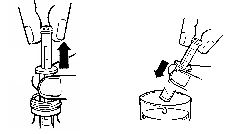
Instructions for using the oral dosing syringe
Insert the oral dosing syringe into the bottle and pull the plunger to the mark corresponding to the prescribed dose in millilitres (ml). For use in children under 6 years of age, the daily dose of 5 ml is measured by withdrawing 2.5 ml of solution from the bottle twice daily (take great care when referring to the graduated scale on the syringe).
Remove the oral dosing syringe from the bottle and empty its contents into a spoon or into a glass of water by pushing the plunger. The medicine should be taken orally immediately after dilution.
Rinse the plunger with water after each use.
How long should you take Xyzal?
The duration of treatment depends on the type, duration and course of your condition and will be determined by your doctor.
If you take more Xyzal than you should
Taking more Xyzal than recommended may cause drowsiness in adults. Children may initially show signs of excitement and restlessness, followed by drowsiness.
If you think you have taken too much Xyzal, inform your doctor, who will decide what actions need to be taken.
If you forget to take Xyzal
If you forget to take Xyzal or take a lower dose than prescribed, do not take a double dose to make up for the missed dose. Take the next dose at the scheduled time.
If you stop taking Xyzal
Stopping treatment with Xyzal should not have negative effects. However, if you discontinue Xyzal, you may rarely experience itching (intense pricking sensation), even if this symptom was not present before starting treatment. This symptom may resolve spontaneously. In some cases, the symptom may be intense and it may be necessary to restart treatment. This symptom should resolve once treatment is resumed.
If you have any questions about how to use this medicine, consult your doctor or pharmacist.
4. Possible side effects
Like all medicines, this medicine can cause side effects, although not everyone experiences them.
Common: may affect up to 1 in 10 people
Dry mouth, headache, fatigue and drowsiness/somnolence
Uncommon: may affect up to 1 in 100 people
Weakness and abdominal pain
Not known: frequency cannot be estimated from the available data
Other side effects have been reported such as palpitations, increased heart rate, seizures, tingling, dizziness, syncope, tremor, dysgeusia (altered sense of taste), sensation of spinning or movement, visual disturbances, blurred vision, oculogyric crisis (eyes with uncontrollable circular movements), pain or difficulty urinating, inability to completely empty the bladder, edema, itching, rash, urticaria (swelling, redness and itching of the skin), skin rash, shortness of breath, weight gain, muscle pain, joint pain, aggressive or agitated behaviour, hallucination, depression, insomnia, recurring suicidal thoughts or ideation, nightmares, hepatitis, abnormal liver function, vomiting, increased appetite, nausea and diarrhoea.
Itching (intense pruritus) following discontinuation of treatment.
Stop taking Xyzal at the first signs of a hypersensitivity reaction and contact your doctor immediately.
Symptoms of a hypersensitivity reaction may include: swelling of the mouth, tongue, face and/or throat, difficulty breathing or swallowing (chest tightness or wheezing), urticaria, sudden drop in blood pressure which may lead to collapse or shock, which can be fatal.
Reporting of side effects
If you experience any side effect, including those not listed in this leaflet, consult your doctor or pharmacist. You can also report side effects directly via the national reporting system at https://www.aifa.gov.it/content/segnalazioni-reazioni-avverse.
By reporting side effects, you can help provide more information on the safety of this medicine.
5. How to store Xyzal
Keep this medicine out of the sight and reach of children.
Do not use this medicine after the expiry date stated on the label and carton after "Exp.".
The expiry date refers to the last day of the month.
This medicine requires no special storage conditions.
Do not use more than three months after first opening.
Do not dispose of medicines via wastewater or household waste. Ask your pharmacist how to dispose of medicines you no longer use. This will help protect the environment.
6. Package contents and other information
What Xyzal contains
- The active substance is levocetirizine dihydrochloride. 1 ml of oral solution contains 0.5 mg of levocetirizine dihydrochloride.
- The other components are: sodium acetate trihydrate, glacial acetic acid, methyl parahydroxybenzoate (E218), propyl parahydroxybenzoate (E216), glycerol 85%, maltitol liquid (E965), sodium saccharin, fruit flavour (triacetin (E1518), benzaldehyde, orange essence, vanillin, ethyl butyrate,
orange essence concentrate, isoamyl acetate, allyl hexanoate, gamma-undecalactone, citral,
geraniol, citronellol, alpha tocopherol (E307)), purified water.
Description of the appearance of Xyzal and contents of the pack
The oral solution is a clear, colourless solution contained in a glass bottle closed with a white polypropylene child-resistant cap. The solution bottle is supplied in a cardboard box together with an oral dosing syringe.
Pack sizes: 75 ml, 150 ml and 200 ml.
Not all pack sizes may be marketed.
Marketing Authorisation Holder and Manufacturer
Marketing Authorisation Holder
UCB Pharma S.p.A., Via Varesina 162, 20156 Milan, Italy
Manufacturers
Aesica Pharmaceuticals S.r.l., Via Praglia 15, 10044 Pianezza (TO), Italy
UCB Pharma Limited, 208 Bath Road, Slough, Berkshire, SL1 3WE, United Kingdom
Phoenix Pharma Polska Sp. z o.o., ul. Rajdowa 9, Konotopa, 05-850 Ożarów Mazowiecki, Poland
ExtractumPharma Co. Ltd., 6413 Kunfehértó, IV. körzet 6., Hungary
UCB Pharma GmbH, Alfred-Nobel-Straße 10, 40789 Monheim, Germany
UCB Pharma B.V., Hoge Mosten 2 A1, 4822 NH, Breda, The Netherlands
UCB Pharma AS, Haakon VIIs gate 6, NO-0161 Oslo, Norway
UCB Nordic A/S, Edvard Thomsens Vej 14, DK-2300 Copenhagen S, Denmark
UCB Pharma SA, Chemin Du Foriest 1, Braine-L'alleud, 1420, Belgium
This medicinal product is authorised in the European Economic Area countries under the following
names:
Belgium: Xyzall
Cyprus: Xyzal
Denmark: Xyzal
Estonia: Xyzal
Finland: Xyzal
France: Xyzall
Germany: Levocetirizin Saft
Greece: Xozal
Ireland: Xyzal
Italy: Xyzal
Latvia: Xyzal
Lithuania: Xyzal
Luxembourg: Xyzall
Malta: Xyzal
Norway: Xyzal
The Netherlands: Xyzal
Poland: Xyzal
Portugal: Xyzal
United Kingdom: Xyzal
Czech Republic: Xyzal
Slovakia: Xyzal 0.5 mg/ml peroralny roztok
Slovenia: Xyzal
Spain: Xazal
Hungary: XYZAL 0.5 mg/ml belsőleges oldat