Xyrem
Italy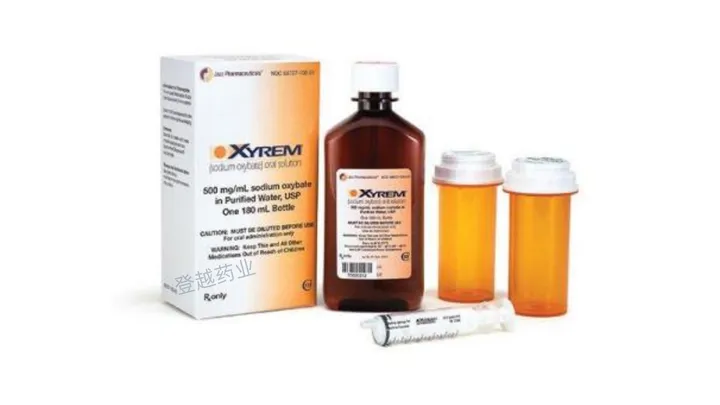
Table of Contents
PACKAGE LEAFLET: INFORMATION FOR THE USER
Xyrem 500 mg/ml oral solution
Sodium oxybate
Please read all of this leaflet carefully before you start using this medicine because it contains important information for you.
- Keep this leaflet. You may need to read it again.
- If you have any questions, ask your doctor or pharmacist.
- This medicine has been prescribed for you only. Do not pass it on to other people, even if their symptoms are the same as yours, as it may be harmful.
- If you experience any side effects, including those not listed in this leaflet, tell your doctor or pharmacist. See section 4.
Contents of this leaflet:
- What Xyrem is and what it is used for
- What you need to know before taking Xyrem
- How to take Xyrem
- Possible side effects
- How to store Xyrem
- Contents of the pack and other information
1. WHAT XYREM IS AND WHAT IT IS USED FOR
Xyrem contains the active substance sodium oxybate. Xyrem acts by stabilizing nighttime sleep,
although its exact mechanism of action is unknown.
Xyrem is used for the treatment of narcolepsy with cataplexy in adults, adolescents, and children aged 7 years and older.
Narcolepsy is a sleep disorder that may include sudden sleep attacks during normal waking hours, as well as cataplexy, sleep paralysis, hallucinations, and poor-quality sleep.
Cataplexy is the sudden onset of muscle weakness or paralysis without loss of consciousness, triggered by a sudden emotional reaction such as anger, fear, joy, laughter, or surprise.
2. WHAT YOU SHOULD KNOW BEFORE TAKING XYREM
Do not take Xyrem
- if you are allergic to sodium oxybate or to any of the other ingredients of this medicine (listed in section 6);
- if you have succinic semialdehyde dehydrogenase deficiency (a rare metabolic disorder);
- if you suffer from major depression;
- if you are being treated with opioid or barbiturate medicines.
Warnings and precautions
Talk to your doctor or pharmacist before taking Xyrem:
- if you have respiratory or lung problems (especially if you are obese), as Xyrem may cause breathing difficulties;
- if you currently have or have previously had depression, suicidal thoughts, anxiety, psychosis (a mental disorder that may cause hallucinations, incoherent speech, or disorganized and agitated behavior), or bipolar disorder;
- if you have heart failure, high blood pressure (hypertension), or liver or kidney problems, as your dose may need to be adjusted;
- if you have previously abused medicines;
- if you have epilepsy, as the use of Xyrem is not recommended in this condition;
- if you have porphyria (an uncommon metabolic disorder).
If any of these apply to you, tell your doctor before taking Xyrem.
If, while taking Xyrem, you experience bedwetting and incontinence (either urinary or fecal), confusion, hallucinations, sleepwalking episodes, or abnormal thoughts, you must inform your doctor immediately. Although these side effects are not common, when they do occur, they are usually mild to moderate in severity.
If you are elderly, your doctor will closely monitor your condition to assess whether Xyrem is producing the desired effects.
Xyrem has a well-known potential for abuse. Cases of dependence have occurred following illicit use of sodium oxybate.
Before starting and during treatment with this medicine, your doctor will ask you whether you have ever abused medicines.
Children and adolescents
Xyrem may be taken by adolescents and children aged 7 years and older with a minimum body weight of 15 kg.
Xyrem must not be taken by children under 7 years of age or under 15 kg body weight.
In children and adolescents, the doctor will regularly monitor body weight.
During the period when the doctor is adjusting the dose, which may last several weeks, the parent/caregiver must carefully monitor the child's breathing during the first 2 hours after administration of sodium oxybate, to detect any possible respiratory changes, such as brief periods of breathing cessation during sleep, noisy breathing, or bluish discoloration of the lips and face. If any respiratory changes are observed, seek immediate medical assistance and inform the doctor as soon as possible.
If any adverse reactions occur after the first dose, the second dose must not be administered. In the absence of adverse reactions, the second dose may be given. The second dose must not be administered earlier than 2.5 hours or later than 4 hours after the first dose.
If you or your child experience or notice unpleasant sensations, especially feeling very sad or losing interest in life, it is important to inform the doctor or caregiver.
Other medicines and Xyrem
Tell your doctor or pharmacist if you are taking, have recently taken, or might take any other medicines.
In particular, Xyrem must not be taken together with medicines that induce sleep or medicines that reduce the activity of the central nervous system (the central nervous system is the part of the body related to the brain and spinal cord).
Also inform your doctor or pharmacist if you are taking any of the following types of medicines:
- medicines that increase central nervous system activity
- antidepressants
- medicines that may be metabolized similarly by the body (e.g., valproate, phenytoin, or ethosuccimide used to treat epilepsy)
- topiramate used to treat epilepsy
If you are taking valproate, your daily dose of Xyrem will need to be adjusted, as it may lead to interactions with valproate (see section 3).
Xyrem and alcohol
You must not drink alcohol while taking Xyrem, as its effects may be increased.
Pregnancy and breastfeeding
If you are pregnant, suspect you may be pregnant, planning to become pregnant, or breastfeeding, consult your doctor or pharmacist before taking this medicine.
Very few women have taken Xyrem during pregnancy, and some of them experienced spontaneous abortions. The risk of taking Xyrem during pregnancy is unknown; therefore, the use of Xyrem is not recommended in pregnant women or in women planning pregnancy.
Patients taking Xyrem must not breastfeed, as it is known that Xyrem passes into breast milk. Changes in sleep patterns have been observed in infants breastfed by exposed mothers.
Driving and using machines
Xyrem will affect your ability to drive or operate tools or machinery. Do not drive, operate tools or machinery, or perform any activity that is dangerous or requires mental alertness for at least 6 hours after taking Xyrem. When you first start taking Xyrem, and until you know whether this medicine causes you daytime drowsiness, exercise extreme caution when driving, operating complex machinery, or performing any other activity that could be dangerous or require full attention.
Regarding pediatric patients, doctors, parents, or caregivers should consider that the waiting time before performing activities requiring quick reflexes, motor coordination, or any activity that could pose a physical risk may exceed 6 hours, depending on individual sensitivity.
Xyrem contains sodium
This medicine contains 182.24 mg of sodium (a key component of table salt) per gram. This corresponds to 9.11% of the maximum recommended daily dietary intake of sodium for an adult.
Talk to your doctor or pharmacist if you need 2 g or more of sodium oxybate (Xyrem) per day for a prolonged period, especially if you have been advised to follow a low-sodium diet.
3. HOW TO TAKE XYREM
Take this medicine exactly as prescribed by your doctor or pharmacist. If
you have any doubts, consult your doctor or pharmacist.
To prepare Xyrem doses, it is essential to use only the syringe provided in the package.
The Xyrem syringe has two different measurement scales, one of which may be more suitable
than the other, depending on the dose prescribed by your doctor. By checking each scale,
you will identify the one showing the exact mark for your dose.
Adults - Administration of Xyrem alone
- The recommended initial dose for adults is 4.5 g daily, administered in two separate doses of 2.25 g each.
- Your doctor may gradually increase your dose up to a maximum of 9 g daily, administered in two separate doses of 4.5 g each.
- Take Xyrem orally twice every night.
- Take the first dose at bedtime and the second dose between 2.5 and 4 hours later. You may need to set an alarm to ensure you wake up to take the second dose.
- Food reduces the amount of Xyrem absorbed by the body. Therefore, it is best to take Xyrem at the same time each night, 2–3 hours after eating.
- Prepare both doses before going to bed.
- Take the doses within 24 hours of preparation.
Adolescents and children aged 7 years and older, with a minimum body weight of 15 kg - Administration of Xyrem alone
For adolescents and children aged 7 years and older with a minimum body weight of 15 kg, your doctor
will determine the appropriate dose based on body weight.
Your doctor will calculate the correct dose for you. Do not exceed the dose prescribed for you.
Adults - Administration of Xyrem with valproate
If you are taking valproate together with Xyrem, your doctor will adjust the dose of Xyrem.
- The recommended initial dose of Xyrem for adults when used with valproate is 3.6 g daily, administered in two separate doses of 1.8 g each.
- Take the first dose at bedtime and the second dose between 2.5 and 4 hours later.
Adolescents and children aged 7 years and older, with a minimum body weight of 15 kg - Administration of Xyrem with valproate
If you are taking valproate together with Xyrem, your doctor will adjust the dose of Xyrem.
Liver or kidney problems
- If you have kidney problems, consider following a diet low in sodium (salt). If you have liver problems, the initial dose should be halved. Your doctor may gradually increase the dose.
Instructions for diluting Xyrem
The following instructions explain how to prepare Xyrem. Please read the instructions carefully
and follow them step by step. Do not allow children to prepare Xyrem.
To assist you, the Xyrem package contains a medicine bottle, an oral dosing syringe (with two
different measurement scales), and two dosing cups with child-resistant caps.
Step 1
- Remove the bottle cap by pushing down while
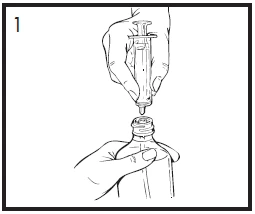
turning the cap counterclockwise (to the left).
- After removing the cap, place the bottle upright on a flat surface.
- The bottle opening is sealed with a plastic laminate that must be removed before first use.
- Holding the bottle upright, insert the provided adapter firmly into the neck of the bottle. This step is required only the first time the bottle is opened. The adapter can then remain on the bottle for all subsequent uses.
Step 2
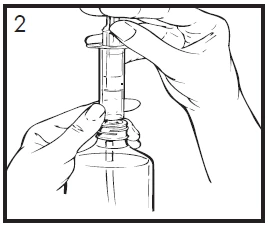
- Insert the tip of the dosing syringe into the center opening of the bottle and press firmly downward.
- While holding the bottle and syringe with one hand, draw the prescribed dose into the syringe by pulling the plunger with the other hand. NOTE: The medicine will not flow into the syringe if the bottle is not held upright.
Step 3
- Remove the syringe from the center opening of the
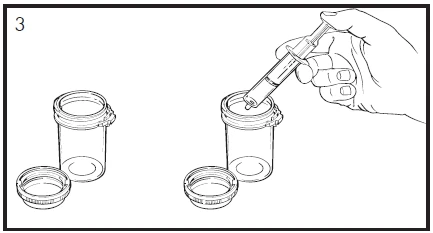
bottle.
- Transfer the medicine from the syringe into one of the provided dosing cups by pressing the plunger. Repeat this procedure for the second dosing cup.
- Then add approximately 60 ml of water to each dosing cup (60 ml corresponds to about 4 tablespoons).
Step 4
- Place the provided caps onto the dosing cups and turn each cap
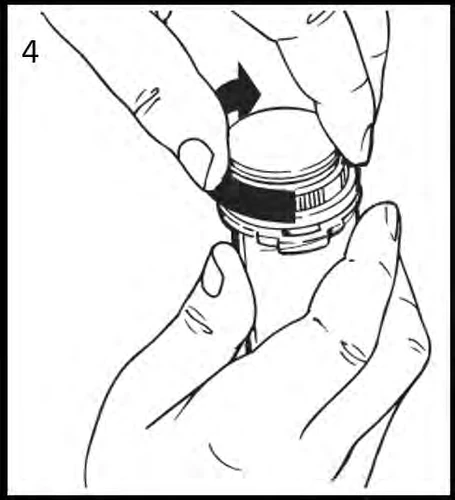
clockwise (to the right) until you hear a click, ensuring the child-resistant safety closure is securely closed.
(Warning: The dosing cup cap is reversible, and proper child-resistant closure is only ensured when you hear the click.)
- Rinse the syringe with water.
- Just before going to sleep:
- Adult patients should place the second dose near the bed.
- For adolescents and children aged 7 years and older, the parent or caregiver must not leave the second dose near the child’s bed or within the child’s reach.
- You may need to set an alarm to wake up and take the second dose, no sooner than 2.5 hours and no later than 4 hours after the first dose.
After:
o Remove the cap from the first dosing cup by pressing down on the child-resistant cap and turning the cap counterclockwise (to the left).
o Sit up in bed and drink the entire first dose, then close the cup and lie down immediately. If the child sleeps more than 8 hours but less than 12 hours, the first dose may be administered 1–2 hours after the child has fallen asleep.
- When you wake up, or when waking the child 2.5 to 4 hours later, remove the cap from the second dosing cup. While sitting up in bed, drink the entire second dose immediately before lying down again to continue sleeping. Close the second cup afterward.
If you feel that the effect of Xyrem is too strong or too weak, contact your doctor or pharmacist.
If you take more Xyrem than you should
Symptoms of Xyrem overdose may include agitation, confusion, difficulty moving, breathing difficulties, blurred vision, excessive sweating, headache, vomiting, decreased level of consciousness leading to coma and seizures, excessive thirst, muscle cramps, and weakness.
If you take more Xyrem than prescribed, or take it accidentally, seek immediate emergency medical help. You must bring the medicine bottle with its label, even if empty.
If you forget to take Xyrem
If you forget to take the first dose, take it as soon as you remember, then continue as previously described. If you forget to take the second dose, skip it and do not take Xyrem again until the next night. Do not take a double dose to make up for the missed dose.
If you have any doubts about taking a dose of Xyrem
If you have any uncertainty regarding dose administration, do not administer another dose to avoid the risk of overdose.
If you stop taking Xyrem
You should continue taking Xyrem for as long as your doctor has instructed. If you discontinue the medicine, you may experience a return of cataplexy attacks and may develop insomnia, headache, anxiety, dizziness, sleep disturbances, sleepiness, hallucinations, and abnormal thoughts.
If you stop treatment with Xyrem for more than 14 consecutive days, you must consult your doctor, as you will need to restart Xyrem at a reduced dose.
If you have any questions about the use of this medicine, consult your doctor or pharmacist.
4. POSSIBLE ADVERSE EFFECTS
Like all medicines, this medicine can cause adverse effects, although not everyone experiences them. These are generally mild to moderate.
Adults – Most common side effects observed in clinical studies (occurring in 10% - 20% of patients):
- dizziness
- nausea
- headache.
Contact your doctor immediately if you notice any of these adverse effects.
Children and adolescents – Most common side effects observed in a clinical study:
- bedwetting (18.3%)
- nausea (12.5%)
- vomiting (8.7%)
- weight loss (8.7%)
- decreased appetite (6.7%)
- headache (5.8%)
- dizziness (5.8%)
- suicidal thoughts (1%)
- mental discomfort (loss of touch with reality) (1%).
Contact your doctor immediately if you notice any of these adverse effects.
Adverse effects in adults and children are the same. Contact your doctor immediately if you notice any of the following adverse effects:
Very common (may affect more than 1 in 10 people):
- nausea
- dizziness
- headache.
Common (may affect up to 1 in 10 people):
- sleep disorders, including insomnia, abnormal dreams, sleep paralysis, drowsiness, nightmares, sleepwalking, bedwetting, excessive daytime sleepiness, difficulty falling asleep during the middle of the night
- feeling of drunkenness, tremor, confusion/disorientation, blurred vision, balance disorders, falls, sensation of spinning (vertigo)
- awareness of heartbeat, increased blood pressure, breathing difficulties
- vomiting, stomach pain, diarrhoea
- anorexia, decreased appetite, weight loss
- weakness, fatigue, sedation
- sweating
- depression
- muscle cramps, swelling
- joint pain, back pain
- attention disorders, reduced sensitivity especially to touch, abnormal tactile sensation, altered taste
- anxiety, nervousness
- urinary incontinence
- snoring, nasal congestion
- skin rash
- sinusitis
- inflammation of the nose and throat.
Uncommon (may affect up to 1 in 100 people):
- psychosis (a mental disorder that may include hallucinations, disorganized or incoherent speech, and agitated behaviour)
- paranoia, abnormal thoughts, hallucinations, agitation, suicide attempt
- difficulty falling asleep, restless legs
- memory loss
- myoclonus (involuntary muscle contractions)
- involuntary loss of faeces
- hypersensitivity.
Not known (frequency cannot be estimated from the available data):
- seizures
- decreased depth or frequency of breathing, brief interruption of breathing during sleep
- urticaria
- suicidal thoughts, delirium, thoughts of committing violent acts (including harming others)
- irritability, aggression
- euphoria
- panic attack
- mania/bipolar disorder
- dry mouth, dehydration
- facial swelling (angioedema)
- bruxism (teeth grinding and jaw clenching)
- pollakiuria/urinary urgency (increased need to urinate)
- tinnitus (noise in the ears such as ringing or buzzing)
- sleep-related eating disorder
- increased appetite
- loss of consciousness
- dyskinesia (e.g. abnormal, uncontrolled limb movements)
- dandruff
- increased sexual desire
- nocturia (repeated need to urinate during the night)
- sensation of suffocation.
Contact your doctor immediately if you notice any of the adverse effects listed above.
Reporting of adverse effects
If you experience any adverse effect, including those not listed in this leaflet, inform your doctor or pharmacist. You may also report adverse effects directly via the national reporting system listed in Annex V.
By reporting adverse effects, you can help provide more information on the safety of this medicine.
5. HOW TO STORE XYREM
Keep this medicine out of the sight and reach of children.
Do not use this medicine after the expiry date stated on the bottle after (Exp.). The expiry date refers to the last day of the month.
After dilution in the dosing syringes, the preparation must be used within 24 hours.
After opening the Xyrem bottle, any unused content remaining after 90 days from opening must be discarded.
Do not dispose of medicines in wastewater or household waste. Ask your pharmacist how to dispose of medicines no longer required. This will help protect the environment.
6. PACK CONTENT AND OTHER INFORMATION
What Xyrem contains
- The active substance is sodium oxybate. Each ml contains 500 mg of sodium oxybate.
- The other ingredients are purified water, malic acid and sodium hydroxide.
Description of the appearance of Xyrem and pack contents
Xyrem is supplied in an amber plastic bottle of 240 ml containing 180 ml of oral solution and is
closed with a child-resistant closure cap. When supplied, there is a seal made of a plastic-coated
laminate under the cap at the mouth of the bottle. Each pack contains one bottle, a bottle adapter, a
plastic syringe dosing device and two dosing cups with child-resistant closure caps.
Xyrem is a solution ranging from clear to slightly opalescent.
Marketing Authorisation Holder
UCB Pharma S.A., Allée de la Recherche 60, B-1070 Bruxelles, Belgium
Manufacturer
UCB Pharma S.A., Chemin du Foriest, B-1420 Braine l'Alleud, Belgium
You should have received from your doctor an Information Package for Xyrem, which includes a leaflet on how to take Xyrem, an information sheet with frequently asked questions patients may have, and a patient alert card. For further information about this medicine, please contact the local representative of the Marketing Authorisation Holder:
België/Belgique/Belgien Lietuva
UCB Pharma SA/NV UCB Pharma Oy Finland
Tel/Tél: +32 / (0)2 559 92 00 Tel: + 358 9 2514 4221 (Suomija)
България Luxembourg/Luxemburg
Ю СИ БИ България ЕООД UCB Pharma SA/NV
Teл.: + 359 (0) 2 962 30 49 Tél/Tel: +32 / (0)2 559 92 00
Česká republika Magyarország
UCB s.r.o. UCB Magyarország Kft.
Tel: + 420 221 773 411 Tel.: + 36-(1) 391 0060
Danmark Malta
UCB Nordic A/S Pharmasud Ltd.
Tlf: + 45 / 32 46 24 00 Tel: +356 / 21 37 64 36
Deutschland Nederland
UCB Pharma GmbH UCB Pharma B.V.
Tel: + 49 /(0) 2173 48 4848 Tel.: +31 / (0)76-573 11 40
Eesti Norge
UCB Pharma Oy Finland UCB Nordic A/S
Tel: + 358 9 2514 4221 (Soome) Tel: +45 / 32 46 24 00
Ελλάδα Österreich
UCB Α.Ε. UCB Pharma GmbH
Τηλ: +30 / 2109974000 Tel: + 43 (0) 1 291 80 00
España Polska
UCB Pharma, S.A. UCB Pharma Sp. z o.o.
Tel: + 34 / 91 570 34 44 Tel.: + 48 22 696 99 20
France Portugal
UCB Pharma S.A. UCB Pharma (Produtos Farmacêuticos), Lda
Tél: + 33 / (0)1 47 29 44 66 Tel: + 351 / 21 302 5300
Hrvatska România
Medis Adria d.o.o. UCB Pharma Romania S.R.L.
Tel: +385 (0) 1 230 34 46 Tel: +40 21 300 29 04
Ireland Slovenija
UCB (Pharma) Ireland Ltd. Medis, d.o.o.
Tel: + 353 / (0)1-46 37 395 Tel: + 386 1 589 69 00
Ísland Slovenská republika
Vistor hf. UCB s.r.o., organizačná zložka
Tel: +354 535 7000 Tel: + 421 (0) 2 5920 2020
Italia Suomi/Finland
UCB Pharma S.p.A. UCB Pharma Oy Finland
Tel: + 39 / 02 300 791 Puh/ Tel: + 358 9 2514 4221
Κύπρος Sverige
Lifepharma (Z.A.M.) Ltd UCB Nordic A/S
Τηλ: + 357 22 34 74 40 Tel: + 46 / (0) 40 29 49 00
Latvija United Kingdom (Northern Ireland)
UCB Pharma Oy Finland UCB (Pharma) Ireland Ltd.
Tel: + 358 9 2514 4221 (Somija) Tel: + 353 / (0)1-46 37 395
Other sources of information
More detailed information on this medicine is available on the website of the European Medicines Agency: http://www.ema.europa.eu/