Xtandi
Italy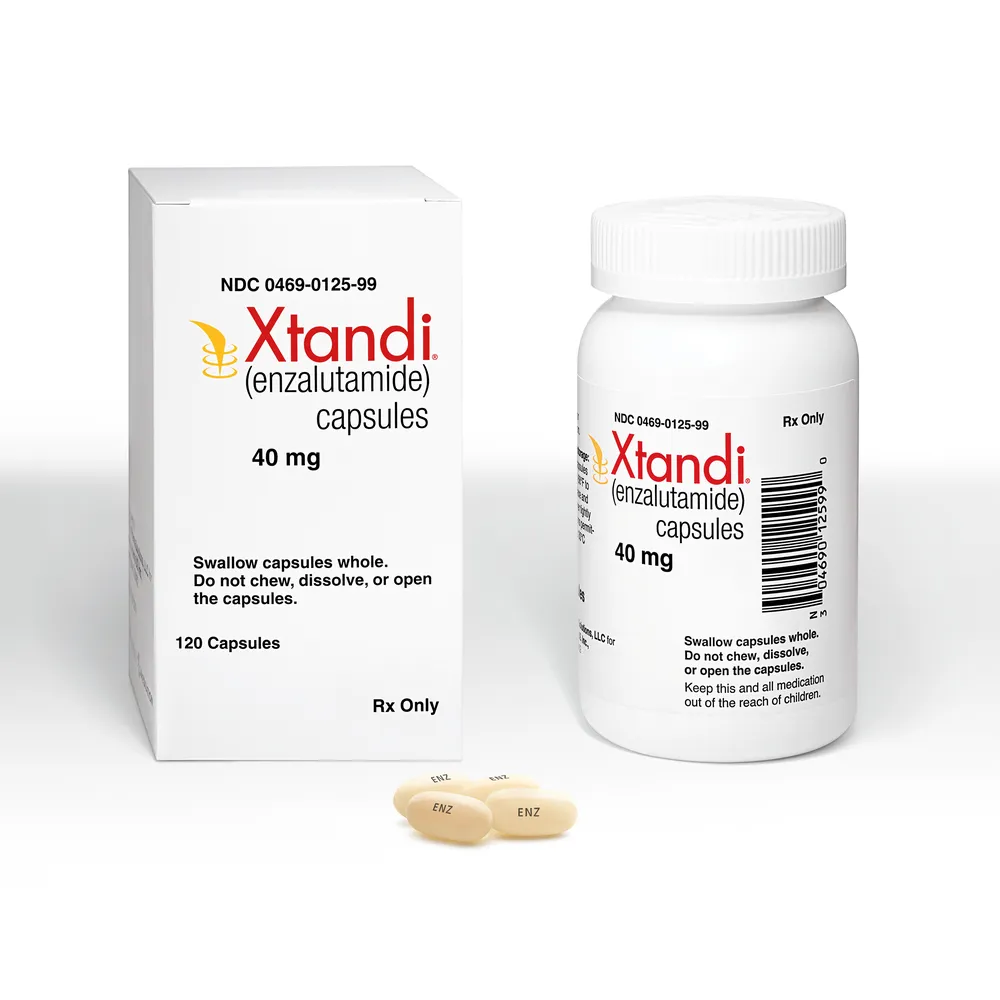
Table of Contents
- Package leaflet: Information for the patient
- Xtandi 40 mg soft capsules
- 1. What Xtandi is and what it is used for
- 2. What you should know before taking Xtandi
- 3. How to take Xtandi
- 4. Possible side effects
- 5. How to store Xtandi
- 6. Package contents and other information
- Package leaflet: information for the patient
- Xtandi 40 mg film-coated tablets, 80 mg film-coated tablets
- 1. What Xtandi is and what it is used for
- 2. What you need to know before taking Xtandi
- 3. How to take Xtandi
- 4. Possible side effects
- 5. How to store Xtandi
- 6. Package contents and other information
Package leaflet: Information for the patient
Xtandi 40 mg soft capsules
enzalutamide
Please read this leaflet carefully before taking this medicine because it contains
important information for you.
- Keep this leaflet. You may need to read it again.
- If you have any questions, ask your doctor.
- This medicine has been prescribed for you only. Do not give it to others, even if their symptoms are the same as yours, as it may be harmful.
- If you experience any side effect, including those not listed in this leaflet, talk to your doctor. See section 4.
Contents of this leaflet
- What Xtandi is and what it is used for
- What you need to know before taking Xtandi
- How to take Xtandi
- Possible side effects
- How to store Xtandi
- Contents of the pack and other information
1. What Xtandi is and what it is used for
Xtandi contains the active substance enzalutamide. Xtandi is used to treat adult men
with prostate cancer:
- That no longer responds to hormonal therapy or surgical treatment to reduce testosterone. Or
- That has spread to other parts of the body and still responds to hormonal therapy or surgical treatment to reduce testosterone. Or
- Who have previously undergone prostate removal or radiotherapy and have a rapidly rising PSA, but the cancer has not spread to other parts of the body and still responds to hormonal therapy to reduce testosterone.
How Xtandi works
Xtandi is a medicine that works by blocking the activity of hormones called androgens (such as
testosterone). By blocking androgens, enzalutamide stops the growth and division of prostate cancer cells.
2. What you should know before taking Xtandi
Do not take Xtandi
- if you are allergic to enzalutamide or to any of the other ingredients of this medicine (listed in section 6)
- if you are pregnant or could become pregnant (see "Pregnancy, breastfeeding and fertility").
Warnings and precautions
Seizures
Seizure episodes have been reported in 6 out of 1,000 patients treated with Xtandi and in fewer than 3 out of 1,000 patients treated with placebo (see ‘Other medicines and Xtandi’ below and section 4, ‘Possible side effects’).
If you are taking a medicine that may cause seizures or increase the risk of seizures (see 'Other medicines and Xtandi', below).
If you experience a seizure during treatment:
Contact your doctor as soon as possible. Your doctor may decide that you should stop taking Xtandi.
Posterior reversible encephalopathy syndrome (PRES)
Rare cases of PRES, a rare reversible condition affecting the brain, have been reported in patients treated with Xtandi. If you experience seizures, worsening headache, confusion, blindness or other vision problems, contact your doctor immediately (see also section 4 ‘Possible side effects’).
Risk of new tumours (secondary primary tumours)
New (secondary) tumours, including bladder and colon cancer, have been reported in patients treated with Xtandi.
Contact your doctor as soon as possible if you notice signs of gastrointestinal bleeding, blood in your urine, or if you frequently feel a strong urge to urinate while taking Xtandi.
Swallowing difficulties related to the product formulation
Cases of patients experiencing difficulty swallowing this medicine, including choking incidents, have been reported. Swallowing difficulties and choking incidents were more commonly observed in patients taking the capsules and may be related to the larger size of the product. Swallow the capsules whole with sufficient water.
If you have difficulty swallowing large capsules or have a history of dysphagia, you may have difficulty swallowing Xtandi capsules and may be at risk of choking. An alternative may be taking Xtandi tablets; consult your doctor.
Talk to your doctor before taking Xtandi:
- if you have previously developed severe skin rash, skin peeling, blisters and/or mouth ulcers after taking Xtandi or other medicines
- if you are taking medicines to prevent blood clots (e.g. warfarin, acenocoumarol, clopidogrel)
- if you are using a chemotherapy medicine such as docetaxel
- if you have liver problems
- if you have kidney problems.
Tell your doctor if you have any of the following conditions:
Any heart or blood vessel disorder, including heart rhythm problems (arrhythmias), or if you are being treated with medicines for these conditions. The risk of heart rhythm problems may increase with the use of Xtandi.
If you are allergic to enzalutamide, you may develop skin rash or swelling of the face, tongue, lips or throat. If you are allergic to enzalutamide or to any of the other ingredients of this medicine, do not take Xtandi.
Severe skin rash, skin peeling, blisters and/or mouth ulcers, including Stevens-Johnson syndrome, have been reported in association with Xtandi treatment. Stop using Xtandi and contact your doctor immediately if you notice any of the symptoms associated with these serious skin reactions described in section 4.
If you are in any of the conditions listed above or if you are unsure, talk to your doctor before taking this medicine.
Children and adolescents
This medicine must not be used in children and adolescents.
Other medicines and Xtandi
Tell your doctor if you are taking, have recently taken, or might take any other medicines. You should know the names of the medicines you are taking. Keep a list of them to show your doctor when a new medicine is prescribed. Do not start or stop any treatment without first talking to the doctor who prescribed Xtandi for you.
Tell your doctor if you are taking any of the following medicines. When taken together with Xtandi, these medicines may increase the risk of seizures:
- certain medicines used to treat asthma and other respiratory diseases (e.g. aminophylline, theophylline)
- medicines used to treat certain psychiatric disorders such as depression and schizophrenia (e.g. clozapine, olanzapine, risperidone, ziprasidone, bupropion, lithium, chlorpromazine, mesoridazine, thioridazine, amitriptyline, desipramine, doxepin, imipramine, maprotiline, mirtazapine)
- certain medicines used to treat pain (e.g. meperidine)
Tell your doctor if you are taking any of the following medicines. These medicines may affect the action of Xtandi, or Xtandi may affect the action of these medicines:
This includes, for example, certain medicines used to:
- lower cholesterol (e.g. gemfibrozil, atorvastatin, simvastatin)
- treat pain (e.g. fentanyl, tramadol)
- treat cancer (e.g. cabazitaxel)
- treat epilepsy (e.g. carbamazepine, clonazepam, phenytoin, primidone, valproate)
- treat certain psychiatric disorders such as severe anxiety or schizophrenia (e.g. diazepam, midazolam, haloperidol)
- treat sleep disorders (e.g. zolpidem)
- treat heart conditions or lower blood pressure (e.g. bisoprolol, digoxin, diltiazem, felodipine, nicardipine, nifedipine, propranolol, verapamil)
- treat severe inflammatory conditions (e.g. dexamethasone, prednisolone)
- treat HIV infections (e.g. indinavir, ritonavir)
- treat bacterial infections (e.g. clarithromycin, doxycycline)
- treat thyroid disorders (e.g. levothyroxine)
- treat gout (e.g. colchicine)
- treat stomach disorders (e.g. omeprazole)
- prevent heart disease or stroke (e.g. dabigatran etexilate)
- prevent organ rejection (e.g. tacrolimus)
Xtandi may interfere with certain medicines used to treat heart rhythm problems (e.g. quinidine, procainamide, amiodarone and sotalol) or may increase the risk of heart rhythm problems when used together with certain medicines [e.g. methadone (used to relieve pain and in drug detoxification programs), moxifloxacin (an antibiotic), antipsychotics (used for severe mental illnesses)].
Tell your doctor if you are taking any of the medicines listed above. It may be necessary to adjust the dose of Xtandi or of any other medicine you are taking.
Pregnancy, breastfeeding and fertility
Xtandi is not intended for use in women. This medicine can cause harm to the unborn child or
- potential pregnancy loss if taken by pregnant women. It must not be taken by women who are pregnant, could become pregnant, or are breastfeeding.
- This medicine may affect male fertility.
- If you have sexual intercourse with a woman who could become pregnant, use a condom and another effective contraceptive method during treatment and for 3 months after stopping treatment. If you have sexual intercourse with a pregnant woman, use a condom to protect the unborn child.
- If the person caring for the patient is a woman, see section 3 “How to take Xtandi” for instructions on use and handling.
Driving and using machines
Xtandi may have a moderate effect on the ability to drive and use machines. Seizures have been reported in patients taking Xtandi.
If you are at high risk of seizures, discuss this with your doctor.
Xtandi contains sorbitol
This medicine contains 57.8 mg of sorbitol (a type of sugar) per soft capsule.
3. How to take Xtandi
Take this medicine exactly as your doctor has told you. If you are unsure, consult your doctor.
The usual dose is 160 mg (four soft capsules), taken once daily at the same time each day.
Taking Xtandi
- Swallow the soft capsules whole with a sufficient amount of water.
- Do not chew, crush, or open the soft capsules before swallowing.
- Xtandi may be taken with or without food.
- Xtandi should not be handled by anyone other than the patient or their caregiver. Women who are pregnant or who could become pregnant must not handle damaged or opened Xtandi capsules without wearing protective covering, such as gloves.
Your doctor may prescribe other medicines to be taken during treatment with Xtandi.
If you take more Xtandi than you should
If you take more soft capsules than prescribed, stop taking Xtandi and contact your doctor immediately. You may be at increased risk of seizures or other adverse effects.
If you forget to take Xtandi
- If you forget to take Xtandi at your usual time, take your usual dose as soon as you remember.
- If you forget to take Xtandi for an entire day, take your usual dose the next day.
- If you forget to take Xtandi for more than one day, speak to your doctor immediately.
- Do not take a double dose to make up for the missed dose.
If you stop taking Xtandi
Do not stop taking this medicine unless instructed by your doctor.
If you have difficulty swallowing large capsules or have a history of dysphagia
Enzalutamide soft capsules must not be administered to patients who have difficulty swallowing large capsules or who have dysphagia. It is recommended to use enzalutamide tablets instead.
If you have difficulty swallowing large capsules or have a history of dysphagia, you may have trouble swallowing Xtandi capsules and may be at risk of choking. An alternative may be taking Xtandi tablets; please consult your doctor.
If you have any questions about the use of this medicine, consult your doctor.
4. Possible side effects
Like all medicines, this medicine can cause side effects, although not everyone experiences them.
Seizures
Seizure episodes have been reported in 6 out of 1,000 patients treated with Xtandi and in fewer than 3 out of 1,000 patients treated with placebo.
The risk of seizures is higher if you take a dose of this medicine greater than the recommended dose, if you take other medicines, or if you are at increased risk of seizures.
If you experience a seizure, contact your doctor as soon as possible. Your doctor may decide that you should stop taking Xtandi.
Reversible posterior encephalopathy syndrome (PRES)
Rare cases of PRES have been reported in patients treated with Xtandi (up to 1 in 1,000 people may be affected), a rare reversible condition affecting the brain. If you experience seizures, worsening headache, confusion, blindness, or other vision problems, contact your doctor immediately.
Other possible side effects include:
Very common side effects (may affect more than 1 in 10 people)
Fatigue, falls, bone fractures, hot flushes, high blood pressure
Common side effects (may affect up to 1 in 10 people)
Headache, anxiety, dry skin, itching, memory disorders, blockage of the heart arteries (ischaemic heart disease), breast enlargement in men (gynaecomastia), nipple pain, breast tenderness, symptoms of restless legs syndrome (an uncontrollable urge to move part of the body, usually the legs), reduced concentration, forgetfulness, altered sense of taste, difficulty thinking clearly
Uncommon side effects (may affect up to 1 in 100 people)
Hallucinations, low white blood cell count, increased levels of liver enzymes in blood tests (a sign of liver problems)
Side effects of unknown frequency (frequency cannot be estimated from the available data)
Muscle pain, muscle cramps, muscle weakness, back pain, changes in electrocardiogram (ECG) (QT prolongation), difficulty swallowing this medicine, including choking, stomach discomfort including feeling unwell (nausea), skin reaction causing red spots or patches on the skin which may look like a target or "bull's eye", with a dark red center surrounded by rings of lighter red (erythema multiforme), or another serious skin reaction presenting as flat reddish spots on the trunk, often target-shaped or circular, frequently with central blisters, skin peeling, mouth, throat, nose, genital, or eye ulcers, which may be preceded by fever and flu-like symptoms (Stevens-Johnson syndrome), skin rash, malaise (vomiting), swelling of the face, lips, tongue, and/or throat, reduced number of blood platelets (increased risk of bleeding or bruising), diarrhoea, reduced appetite.
Reporting of side effects
If you experience any side effects, including those not listed in this leaflet, talk to your doctor. You can also report side effects directly via the national reporting system listed in Annex V. By reporting side effects, you can help provide more information on the safety of this medicine.
5. How to store Xtandi
Keep this medicinal product out of the sight and reach of children.
Do not use this medicinal product after the expiry date stated on the cardboard container and
on the carton after Exp. The expiry date refers to the last day of that month.
This medicinal product does not require any special storage conditions.
Do not take soft capsules that are leaking liquid, are damaged, or show signs of tampering.
Do not dispose of any medicinal product via wastewater or household waste. Ask your pharmacist how
to dispose of medicines no longer required. This will help protect the environment.
6. Package contents and other information
What Xtandi contains
- The active substance is enzalutamide. Each soft capsule contains 40 mg of enzalutamide.
- The other components of the soft capsule are caprylic/capric glycerides macrogol-8, butylated hydroxyanisole (E320), and butylated hydroxytoluene (E321).
- The components of the soft capsule shell are gelatin, sorbitol and sorbitan solution (see section 2), glycerol, titanium dioxide (E171), and purified water.
- The ink components are: iron oxide black (E172) and polyvinyl acetate phthalate.
Description of the appearance of Xtandi and the contents of the pack
- Xtandi soft capsules are oblong, soft capsules, white to off-white in colour (approximately 20 mm x 9 mm), imprinted with "ENZ" on one side.
- Each pack contains 112 soft capsules in 4 blisters/pouches, each containing 28 soft capsules.
Marketing Authorisation Holder
Astellas Pharma Europe B.V.
Sylviusweg 62
2333 BE Leiden
The Netherlands
Manufacturer
Delpharm Meppel B.V.
Hogemaat 2
7942 JG Meppel
The Netherlands
For further information about this medicinal product, please contact the local representative of the Marketing Authorisation Holder:
België/Belgique/Belgien Lietuva
Astellas Pharma B.V. Branch Astellas Pharma d.o.o.
Tél/Tel: + 32 (0)2 5580710 Tel: +370 37408681
България
Luxembourg/Luxemburg
Астелас Фарма ЕООД
Astellas Pharma B.V. Branch
Tel: + 359 2 862 53 72
Belgique/Belgien
Tél/Tel: + 32 (0)2 5580710
Česká republika
Magyarország
Astellas Pharma s.r.o.
Astellas Pharma Kft.
Tel: + 420 221 401 500
Tel.: + 36 1 577 8200
Danmark Malta
Astellas Pharma a/s Astellas Pharmaceuticals AEBE
Tlf.: + 45 43 430355 Tel: + 30 210 8189900
Deutschland Nederland
Astellas Pharma GmbH Astellas Pharma B.V.
Tel: + 49 (0)89 454401 Tel: + 31 (0)71 5455745
Eesti Norge
Astellas Pharma d.o.o. Astellas Pharma
Tel: + 372 6056014 Tlf: + 47 66 76 46 00
Österreich
Ελλάδα
Astellas Pharma Ges.m.b.H.
Astellas Pharmaceuticals AEBE Tel: + 43 (0)1 8772668
Tel: + 30 210 8189900
España Polska
Astellas Pharma S.A. Astellas Pharma Sp.z.o.o.
Tel: + 34 91 4952700 Tel.: + 48 225451 111
France Portugal
Astellas Pharma S.A.S. Astellas Farma, Lda.
Tél: + 33 (0)1 55917500 Tel: + 351 21 4401300
Hrvatska România
Astellas d.o.o. S.C. Astellas Pharma SRL
Tel: + 385 1 670 01 02 Tel: + 40 (0)21 361 04 95
Ireland Slovenija
Astellas Pharma Co. Ltd. Astellas Pharma d.o.o.
Tel: + 353 (0)1 4671555 Tel: + 386 14011 400
Ísland Slovenská republika
Vistor Astellas Pharma s.r.o.,
Sími: + 354 535 7000 Tel: + 421 2 4444 2157
Italia Suomi/Finland
Astellas Pharma S.p.A. Astellas Pharma
Tel: + 39 (0)2 921381 Puh/Tel: + 358 (0)9 85606000
Κύπρος
Sverige
Ελλάδα
Astellas Pharma AB
Astellas Pharmaceuticals AEBE
Tel: + 46 (0)40-650 15 00
Tel: + 30 210 8189900
Latvija
Astellas Pharma d.o.o.
Tel: + 371 67619365
More detailed information on this medicinal product is available on the European Medicines Agency website: http://www.ema.europa.eu.
Package leaflet: information for the patient
Xtandi 40 mg film-coated tablets, 80 mg film-coated tablets
enzalutamide
Please read this leaflet carefully before taking this medicine because it contains important information for you.
- Keep this leaflet. You may need to read it again.
- If you have any questions, ask your doctor.
- This medicine has been prescribed for you only. Do not give it to other people, even if their symptoms are the same as yours, because it could be harmful.
- If you experience any adverse reactions, including those not listed in this leaflet, contact your doctor. See section 4.
Contents of this leaflet
- What Xtandi is and what it is used for
- What you need to know before taking Xtandi
- How to take Xtandi
- Possible side effects
- How to store Xtandi
- Contents of the pack and other information
1. What Xtandi is and what it is used for
Xtandi contains the active substance enzalutamide. Xtandi is used to treat adult men
with prostate cancer:
- That no longer responds to hormonal therapy or surgical treatment to reduce testosterone. Or
- That has spread to other parts of the body and responds to hormonal therapy or surgical treatment to reduce testosterone. Or
- For those who have previously undergone prostatectomy or radiotherapy and have a rapidly rising PSA, but the cancer has not spread to other parts of the body and responds to hormonal therapy to reduce testosterone.
How Xtandi works
Xtandi is a medicine that works by blocking the activity of hormones called androgens (such as
testosterone). By blocking androgens, enzalutamide stops the growth and division of prostate cancer
cells.
2. What you need to know before taking Xtandi
Do not take Xtandi
- if you are allergic to enzalutamide or to any of the other ingredients of this medicine (listed in section 6)
- if you are pregnant or could become pregnant (see "Pregnancy, breastfeeding and fertility").
Warnings and precautions
Seizures
Seizure events have been reported in 6 out of 1,000 patients treated with Xtandi and in fewer than 3 out of 1,000 patients treated with placebo (see 'Other medicines and Xtandi' below and section 4, 'Possible side effects').
If you are taking a medicine that may cause seizures or increase the risk of seizures (see 'Other medicines and Xtandi', below).
If you experience a seizure during treatment:
Contact your doctor as soon as possible. Your doctor may decide that you should stop taking Xtandi.
Posterior Reversible Encephalopathy Syndrome (PRES)
Rare cases of PRES, a rare reversible condition affecting the brain, have been reported in patients treated with Xtandi. If you have seizures, worsening headache, confusion, blindness, or other vision problems, contact your doctor immediately (see also section 4 'Possible side effects').
Risk of new tumours (secondary primary tumours)
New (secondary) tumours, including bladder and colon cancer, have been reported in patients treated with Xtandi.
Contact your doctor as soon as possible if you notice signs of gastrointestinal bleeding, blood in your urine, or if you frequently feel a strong urge to urinate while taking Xtandi.
Swallowing difficulties related to the product formulation
Cases of patients experiencing difficulty swallowing this medicine, including choking incidents, have been reported. Swallowing difficulties and choking incidents have been observed more frequently in patients taking the capsules and may be related to the larger size of the product. Swallow the tablets whole with sufficient water.
Talk to your doctor before taking Xtandi:
- if you have previously developed severe skin rash or skin peeling, blisters, and/or mouth ulcers after taking Xtandi or other medicines
- if you are taking medicines to prevent blood clots (e.g. warfarin, acenocoumarol, clopidogrel)
- if you are using a chemotherapy medicine such as docetaxel
- if you have liver problems
- if you have kidney problems.
Inform your doctor if you have any of the following conditions:
Any heart or blood vessel disorder, including heart rhythm problems (arrhythmias), or if you are being treated with medicines for these conditions. The risk of heart rhythm problems may increase with the use of Xtandi.
If you are allergic to enzalutamide, you may develop skin rash or swelling of the face, tongue, lips, or throat. If you are allergic to enzalutamide or to any of the other ingredients of this medicine, do not take Xtandi.
Serious skin rash or skin peeling, blisters and/or mouth ulcers, including Stevens-Johnson syndrome, have been reported in association with Xtandi treatment. Stop using Xtandi and contact your doctor immediately if you notice any of the symptoms associated with these serious skin reactions described in section 4.
If you are in any of the conditions listed above or are unsure, talk to your doctor before taking this medicine.
Children and adolescents
This medicine must not be used in children and adolescents.
Other medicines and Xtandi
Tell your doctor if you are taking, have recently taken, or might take any other medicines. You should know the names of the medicines you are taking. Keep a list of them to show your doctor when you are prescribed a new medicine. Do not start or stop any treatment without first discussing it with the doctor who prescribed Xtandi for you.
Tell your doctor if you are taking any of the following medicines. If taken together with Xtandi, these medicines may increase the risk of seizures:
- certain medicines used to treat asthma and other respiratory diseases (e.g. aminophylline, theophylline)
- medicines used to treat certain psychiatric disorders such as depression and schizophrenia (e.g. clozapine, olanzapine, risperidone, ziprasidone, bupropion, lithium, chlorpromazine, mesoridazine, thioridazine, amitriptyline, desipramine, doxepin, imipramine, maprotiline, mirtazapine)
- certain medicines used to treat pain (e.g. meperidine)
Tell your doctor if you are taking any of the following medicines. These medicines may affect the action of Xtandi, or Xtandi may affect the action of these medicines:
For example, certain medicines used to:
- lower cholesterol (e.g. gemfibrozil, atorvastatin, simvastatin)
- treat pain (e.g. fentanyl, tramadol)
- treat cancer (e.g. cabazitaxel)
- treat epilepsy (e.g. carbamazepine, clonazepam, phenytoin, primidone, valproate)
- treat certain psychiatric disorders such as severe anxiety or schizophrenia (e.g. diazepam, midazolam, haloperidol)
- treat sleep disorders (e.g. zolpidem)
- treat heart diseases or reduce blood pressure (e.g. bisoprolol, digoxin, diltiazem, felodipine, nicardipine, nifedipine, propranolol, verapamil)
- treat serious inflammatory conditions (e.g. dexamethasone, prednisolone)
- treat HIV infections (e.g. indinavir, ritonavir)
- treat bacterial infections (e.g. clarithromycin, doxycycline)
- treat thyroid disorders (e.g. levothyroxine)
- treat gout (e.g. colchicine)
- treat stomach disorders (e.g. omeprazole)
- prevent heart disease or stroke (e.g. dabigatran etexilate)
- prevent organ rejection (e.g. tacrolimus)
Xtandi may interfere with certain medicines used to treat heart rhythm problems (e.g. quinidine, procainamide, amiodarone, sotalol) or may increase the risk of heart rhythm problems when used with certain medicines [e.g. methadone (used to relieve pain and in drug detoxification programmes), moxifloxacin (an antibiotic), antipsychotics (used for serious mental illnesses)].
Inform your doctor if you are taking any of the medicines listed above. It may be necessary to adjust the dose of Xtandi or of any other medicine you are taking.
Pregnancy, breastfeeding and fertility
- Xtandi is not intended for use in women. This medicine may cause harm to the unborn child or potential pregnancy loss if taken by pregnant women. It must not be taken by women who are pregnant, could become pregnant, or are breastfeeding with breast milk.
- This medicine may affect male fertility.
- If you have sexual intercourse with a woman who could become pregnant, use a condom and another effective method of contraception during treatment and for 3 months after stopping treatment. If you have sexual intercourse with a pregnant woman, use a condom to protect the unborn child.
- If the person caring for the patient is a woman, see section 3 “How to take Xtandi” for instructions on use and handling.
Driving and using machines
Xtandi may have a moderate effect on the ability to drive and use machines. Seizures have been reported in patients taking Xtandi.
If you are at high risk of seizures, discuss this with your doctor.
Xtandi contains sodium
This medicine contains less than 1 mmol (less than 23 mg) of sodium per film-coated tablet, i.e., essentially 'sodium-free'.
3. How to take Xtandi
Take this medicine exactly as your doctor has instructed you. If you have any doubts, consult your doctor.
The usual dose is 160 mg (four 40 mg film-coated tablets or two 80 mg film-coated tablets), taken once daily at the same time each day.
Taking Xtandi
- Swallow the tablets whole with a sufficient amount of water.
- Do not cut, crush, or chew the tablets before swallowing.
- Xtandi may be taken with or without food.
- Xtandi must not be handled by anyone other than the patient or their caregiver. Pregnant women or women who could become pregnant must not handle broken or damaged Xtandi tablets without wearing protective gloves.
Your doctor may prescribe other medicines for you to take during treatment with Xtandi.
If you take more Xtandi than you should
If you take more tablets than prescribed, stop taking Xtandi and contact your doctor immediately. You may be at increased risk of seizures or other adverse effects.
If you forget to take Xtandi
- If you forget to take Xtandi at your usual time, take your regular dose as soon as you remember.
- If you forget to take Xtandi for an entire day, take your usual dose the next day.
- If you forget to take Xtandi for more than one day, speak to your doctor immediately.
- Do not take a double dose to make up for a forgotten dose.
If you stop taking Xtandi
Do not stop taking this medicine unless instructed by your doctor.
If you have any questions about how to use this medicine, ask your doctor.
4. Possible side effects
Like all medicines, this medicine can cause side effects, although not everyone gets them.
Seizures
Seizures have been reported in 6 out of 1,000 patients treated with Xtandi and in fewer than 3 out of 1,000 patients treated with placebo.
The risk of seizures is higher if you take a dose of this medicine greater than the recommended dose, if you take other medicines, or if you have an increased risk of seizures beyond the normal.
If you experience a seizure, contact your doctor as soon as possible. Your doctor may decide that you should stop treatment with Xtandi.
Reversible posterior encephalopathy syndrome (PRES)
Rare cases of PRES (up to 1 in 1,000 people may be affected) have been reported in patients treated with Xtandi, a rare reversible condition affecting the brain. If you have seizures, worsening headaches, confusion, blindness or other vision problems, contact your doctor immediately.
Other possible side effects are:
Very common side effects (may affect more than 1 in 10 people)
Fatigue, falls, bone fractures, hot flushes, high blood pressure
Common side effects (may affect up to 1 in 10 people)
Headache, anxiety, dry skin, itching, memory disturbances, blockage of the heart arteries (ischaemic heart disease), breast enlargement in men (gynaecomastia), nipple pain, breast tenderness, symptoms of restless legs syndrome (an uncontrollable urge to move part of the body, usually the legs), reduced concentration, forgetfulness, altered sense of taste, difficulty thinking clearly
Uncommon side effects (may affect up to 1 in 100 people)
Hallucinations, low white blood cell count, increased liver enzyme levels in blood tests (a sign of liver problems)
Side effects of unknown frequency (frequency cannot be estimated from the available data)
Muscle pain, muscle cramps, muscle weakness, back pain, changes in the electrocardiogram (ECG) (QT prolongation), difficulty swallowing this medicine, including choking, stomach discomfort including feeling unwell (nausea), skin reaction causing red spots or patches on the skin which may look like a target or "bull's eye", with a dark red centre surrounded by rings of lighter red (erythema multiforme), or another serious skin reaction presenting with flat reddish spots on the trunk, target-like or circular, often with central blisters, skin peeling, mouth, throat, nose, genital, and eye ulcers, which may be preceded by fever and flu-like symptoms (Stevens-Johnson syndrome), skin rash, feeling unwell (vomiting), swelling of the face, lips, tongue and/or throat, reduced number of blood platelets (increased risk of bleeding or bruising), diarrhoea, reduced appetite.
Reporting of side effects
If you experience any side effect, including those not listed in this leaflet, talk to your doctor. You can also report side effects directly via the national reporting system listed in Annex V. By reporting side effects, you can help provide more information on the safety of this medicine.
5. How to store Xtandi
Keep this medicine out of the sight and reach of children.
Do not use this medicine after the expiry date stated on the cardboard container and
on the carton after "Exp". The expiry date refers to the last day of that month.
This medicine does not require any special storage conditions.
Do not dispose of medicines via wastewater or household waste. Ask your pharmacist how
to dispose of medicines you no longer use. This will help protect the environment.
6. Package contents and other information
What Xtandi contains
The active substance is enzalutamide.
Each 40 mg film-coated tablet contains 40 mg of enzalutamide.
Each 80 mg film-coated tablet contains 80 mg of enzalutamide.
The other components of the film-coated tablets are:
- Tablet core: Hypromellose acetate succinate, microcrystalline cellulose, anhydrous colloidal silica, sodium croscarmellose, magnesium stearate
- Tablet coating: Hypromellose, talc, macrogol 8000, titanium dioxide (E171), yellow iron oxide (E172).
Description of the appearance of Xtandi and contents of the pack
Xtandi 40 mg film-coated tablets are yellow, round, film-coated tablets with "E 40" engraved on them. Each package contains 112 tablets in 4 blisters/pouches, each containing 28 tablets.
Xtandi 80 mg film-coated tablets are yellow, oval, film-coated tablets with "E 80" engraved on them. Each package contains 56 tablets in 4 blisters/pouches, each containing 14 tablets.
Marketing Authorization Holder
Astellas Pharma Europe B.V.
Sylviusweg 62
2333 BE Leiden
The Netherlands
Manufacturer
Delpharm Meppel B.V.
Hogemaat 2
7942 JG Meppel
The Netherlands
For further information about this medicinal product, please contact the local representative of the Marketing Authorization Holder:
België/Belgique/Belgien
Astellas Pharma B.V. Branch
Tél/Tel: + 32 (0)2 5580710
Lietuva
Astellas Pharma d.o.o.
Tel: +370 37408681
България
Астелас Фарма ЕООД
Тел.: + 359 2 862 53 72
Luxembourg/Luxemburg
Astellas Pharma B.V. Branch Belgique/Belgien
Tél/Tel: + 32 (0)2 5580710
Česká republika
Astellas Pharma s.r.o.
Tel: + 420 221 401 500
Magyarország
Astellas Pharma Kft.
Tel.: + 36 1 577 8200
Danmark
Astellas Pharma a/s
Tlf.: + 45 43 430355
Malta
Astellas Pharmaceuticals AEBE
Tel: + 30 210 8189900
Deutschland
Astellas Pharma GmbH
Tel: + 49 (0)89 454401
Nederland
Astellas Pharma B.V.
Tel: + 31 (0)71 5455745
Eesti
Astellas Pharma d.o.o.
Tel: + 372 6056014
Norge
Astellas Pharma
Tlf: + 47 66 76 46 00
Österreich
Astellas Pharma Ges.m.b.H.
Tel: + 43 (0)1 8772668
Ελλάδα
Astellas Pharmaceuticals AEBE
Τηλ: + 30 210 8189900
España
Astellas Pharma S.A.
Tel: + 34 91 4952700
Polska
Astellas Pharma Sp.z.o.o.
Tel.: + 48 225451 111
France
Astellas Pharma S.A.S.
Tél: + 33 (0)1 55917500
Portugal
Astellas Farma, Lda.
Tel: + 351 21 4401300
Hrvatska
Astellas d.o.o.
Tel: + 385 1 670 01 02
România
S.C. Astellas Pharma SRL
Tel: + 40 (0)21 361 04 95
Ireland
Astellas Pharma Co. Ltd.
Tel: + 353 (0)1 4671555
Slovenija
Astellas Pharma d.o.o.
Tel: + 386 14011 400
Ísland
Vistor
Sími: + 354 535 7000
Slovenská republika
Astellas Pharma s.r.o.
Tel: + 421 2 4444 2157
Italia
Astellas Pharma S.p.A.
Tel: + 39 (0)2 921381
Suomi/Finland
Astellas Pharma
Puh/Tel: + 358 (0)9 85606000
Κύπρος
Astellas Pharmaceuticals AEBE
Τηλ: + 30 210 8189900
Sverige
Astellas Pharma AB
Tel: + 46 (0)40-650 15 00
Latvija
Astellas Pharma d.o.o.
Tel: + 371 67619365
More detailed information on this medicinal product is available on the website of the European Medicines Agency: http://www.ema.europa.eu.