Xigduo
Italy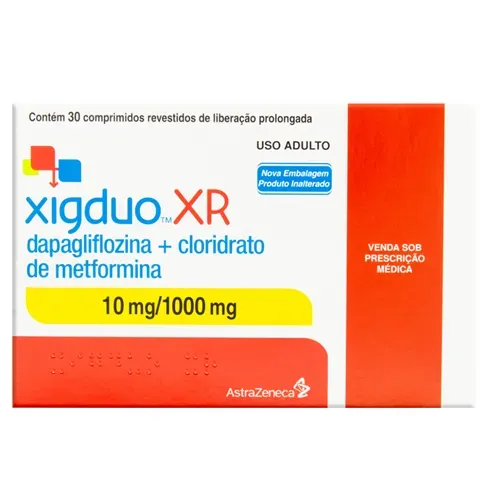
Table of Contents
- Package leaflet: Information for the patient
- Xigduo 5 mg/850 mg film-coated tablets, 5 mg/1,000 mg film-coated tablets
- 1. What Xigduo is and what it is used for
- 2. What you need to know before taking Xigduo
- 3. How to take Xigduo
- 4. Possible side effects
- 5. How to store Xigduo
- 6. Package contents and other information
Package leaflet: Information for the patient
Xigduo 5 mg/850 mg film-coated tablets, 5 mg/1,000 mg film-coated tablets
dapagliflozin/metformin hydrochloride
Please read all of this leaflet carefully before you start taking this medicine because it contains important information for you.
- Keep this leaflet. You may need to read it again.
- If you have any questions, ask your doctor, pharmacist, or nurse.
- This medicine has been prescribed for you only. Do not give it to other people, even if they have the same symptoms as yours, as it may be harmful.
- If you experience any side effect, including those not listed in this leaflet, talk to your doctor or pharmacist. See section 4.
Contents of this leaflet
- What Xigduo is and what it is used for
- What you need to know before taking Xigduo
- How to take Xigduo
- Possible side effects
- How to store Xigduo
- Contents of the pack and other information
1. What Xigduo is and what it is used for
This medicine contains two different active substances called dapagliflozin and metformin. Both belong to a class of medicines known as oral antidiabetics. These are medicinal products taken by mouth for diabetes.
Xigduo is used for a type of diabetes called "type 2 diabetes" in adult patients (18 years of age and older), which usually occurs with increasing age. If you have type 2 diabetes, your pancreas does not produce enough insulin or your body is unable to use the insulin it produces properly. This leads to high levels of sugar (glucose) in the blood.
- Dapagliflozin works by removing excess sugar from the body through the urine and reduces the amount of sugar in the blood. This may also help prevent heart disease.
- Metformin works mainly by reducing glucose production in the liver.
To treat diabetes:
- This medicine must be taken together with diet and exercise.
- This medicine is used when diabetes cannot be controlled with other medicines used to treat diabetes.
- Your doctor may instruct you to take this medicine alone or together with other medicines to treat diabetes, which may include another oral medicine and/or an injectable medicine, such as insulin or a GLP-1 receptor agonist (which helps your body increase insulin production when blood sugar levels are high).
- If you are already taking dapagliflozin and metformin as separate tablets, your doctor may ask you to switch to this medicine. To avoid overdose, do not continue taking separate dapagliflozin and metformin tablets while taking Xigduo.
It is important to continue following your doctor's, pharmacist's, or nurse's advice regarding diet and exercise.
2. What you need to know before taking Xigduo
Do not take Xigduo
- if you are allergic to dapagliflozin, metformin, or any of the other ingredients of this medicine (listed in section 6).
- if you have had diabetic coma.
- if you have uncontrolled diabetes associated, for example, with severe hyperglycaemia (high blood glucose levels), nausea, vomiting, diarrhoea, rapid weight loss, lactic acidosis (see below “Risk of lactic acidosis”) or ketoacidosis. Ketoacidosis is a condition in which substances called “ketone bodies” accumulate in the blood and may lead to diabetic pre-coma. Symptoms include stomach pain, rapid and deep breathing, drowsiness, and breath with an unusually fruity odour.
- if you have severely reduced kidney function.
- if you have a severe infection.
- if your body has lost a lot of fluid (dehydration), for example due to prolonged or severe diarrhoea, or if you have repeatedly vomited.
- if you recently had a heart attack or heart failure, or have serious circulation problems or difficulty breathing.
- if you have liver problems.
- if you drink alcohol excessively (either daily or occasionally) (see section “Xigduo and alcohol”).
Do not take this medicine if any of the conditions listed above apply to you.
Warnings and precautions
Risk of lactic acidosis
Xigduo may cause a very rare but very serious side effect called lactic acidosis,
particularly if your kidneys are not functioning properly. The risk of developing lactic acidosis is higher
in the presence of uncontrolled diabetes, severe infections, prolonged fasting or alcohol consumption, dehydration
(see below for further information), liver problems, or any other medical condition
characterized by reduced oxygen supply to part of the body (such as severe heart disease).
If you have any of the medical conditions described above, consult your doctor for further instructions.
Temporarily stop taking Xigduo if you develop a medical condition that
may be associated with dehydration (significant loss of body fluids), such as severe vomiting, diarrhoea,
fever, heat exposure, or if you are drinking less fluid than usual. Contact your doctor for further
instructions.
If you experience any of the symptoms of lactic acidosis, stop taking Xigduo and contact
your doctor or the nearest hospital immediately, as lactic acidosis can lead to coma.
Symptoms of lactic acidosis include:
- vomiting
- stomach ache (abdominal pain)
- muscle cramps
- a general feeling of illness associated with severe fatigue
- difficulty breathing
- reduced body temperature and slower heart rate
Lactic acidosis is a medical emergency and must be treated in hospital.
Contact your doctor, pharmacist, or nurse before taking Xigduo, and during
treatment:
- if you have “type 1 diabetes” – the type of diabetes that usually starts when you are young and your body does not produce insulin. Xigduo must not be used to treat this medical condition.
- if you experience rapid weight loss, nausea or vomiting, stomach pain, excessive thirst, rapid and deep breathing, confusion, drowsiness, or unusual tiredness, sweet-smelling breath, sweet or metallic taste in the mouth, or a different odour of urine or sweat, contact your doctor or the nearest hospital immediately. These symptoms may be signs of diabetic ketoacidosis, a rare but serious condition that can sometimes be life-threatening, caused by diabetes due to increased levels of “ketone bodies” in the urine or blood, detectable by laboratory tests. The risk of developing diabetic ketoacidosis may be increased by prolonged fasting, excessive alcohol intake, dehydration, sudden reduction in insulin dose, or increased insulin requirement due to major surgery or severe illness.
- if you have kidney problems. Your doctor will check your kidney function.
- if you have very high blood glucose levels that may dehydrate you (excessive loss of body fluids). Possible signs of dehydration are listed in section 4. Inform your doctor before starting this medicine if you have any of these signs.
- if you are taking medicines to lower blood pressure (antihypertensives) and have previously had low blood pressure (hypotension). More information is provided below in section “Other medicines and Xigduo”.
- if you frequently get urinary tract infections. This medicine may cause urinary tract infections, and your doctor may wish to monitor you more frequently. Your doctor may consider temporarily changing your treatment if you develop a serious infection.
If you are scheduled for major surgery, you must stop taking Xigduo
during the procedure and for a certain period afterwards. Your doctor will decide when
you should stop and when you should resume treatment with Xigduo.
It is important to regularly check your feet and follow any other foot care advice provided by
healthcare professionals.
If any of the above conditions apply to you (or you are unsure), inform your doctor, pharmacist, or nurse
before taking this medicine.
Contact your doctor immediately if you notice a combination of symptoms such as pain, tenderness,
redness, or swelling of the genitals or the area between the genitals and the anus, accompanied by fever or a general feeling of being unwell. These symptoms may indicate a rare but serious and potentially life-threatening infection called necrotizing fasciitis of the perineum or Fournier’s gangrene, which destroys subcutaneous tissue. Fournier’s gangrene must be treated immediately.
Kidney function
During treatment with Xigduo, your doctor will check your kidney function at least once
a year, or more frequently if you are elderly and/or if kidney function worsens.
Glucose in urine
Due to the mechanism of action of this medicine, urine tests will show the presence of
sugar during treatment with this medicine.
Children and adolescents
This medicine is not recommended for children and adolescents under 18 years of age, as it has not
been studied in these patients.
Other medicines and Xigduo
If you are scheduled to receive an injection of iodinated contrast medium into the bloodstream, for example
for an X-ray, you must stop taking Xigduo before or during the injection. Your
doctor will decide when you should stop and when you should resume treatment with Xigduo.
Inform your doctor if you are taking, have recently taken, or might take any other
medicine. You may need to check your blood glucose and kidney function more frequently, or your doctor may decide to adjust the dose of Xigduo. It is particularly
important to mention the following:
- if you are taking medicines that increase urine production (diuretics).
- if you are taking other medicines that lower blood sugar levels, such as insulin or a “sulphonylurea” medicine. Your doctor may consider reducing the dose of these other medicines to prevent excessively low blood sugar levels (hypoglycaemia).
- if you are taking lithium, because Xigduo may reduce the amount of lithium in your blood.
- if you are taking cimetidine, a medicine used to treat stomach problems.
- if you are taking bronchodilators (beta-2 agonists) used to treat asthma.
- if you are taking corticosteroids (used to treat inflammatory diseases such as asthma and arthritis) administered orally, by injection, or by inhalation.
- if you are taking medicines used to treat pain and inflammation (NSAIDs and COX-2 inhibitors, such as ibuprofen and celecoxib).
- if you are taking certain medicines to treat high blood pressure (ACE inhibitors and angiotensin II receptor antagonists).
Xigduo and alcohol
Avoid excessive alcohol consumption during treatment with Xigduo, as this may increase the
risk of lactic acidosis (see section “Warnings and precautions”).
Pregnancy and breastfeeding
If you are pregnant, think you may be pregnant, planning a pregnancy, or breastfeeding, consult your doctor or pharmacist before taking this medicine. You must stop taking this medicine if you become pregnant, as Xigduo is not recommended during the second and third trimesters of pregnancy (last six months). Ask your doctor how best to manage your blood sugar during pregnancy.
Inform your doctor if you plan to breastfeed or are currently breastfeeding before taking this medicine. Do not use this medicine if you are breastfeeding. Metformin passes into breast milk in small amounts. It is not known whether dapagliflozin passes into breast milk.
Driving and using machines
This medicine does not affect or affects negligibly the ability to drive or use machines. However, taking this medicine with other medicines that lower blood sugar levels, such as insulin or a “sulphonylurea” medicine, may cause excessively low blood sugar (hypoglycaemia), which can cause symptoms such as weakness, dizziness, increased sweating, rapid heartbeat, vision disturbances, or difficulty concentrating, and may impair your ability to drive or use machines. Do not drive or operate tools or machinery if you start experiencing these symptoms.
Sodium content
This medicine contains less than 1 mmol (23 mg) of sodium per dose, i.e. essentially ‘sodium-free’.
3. How to take Xigduo
Take this medicine exactly as your doctor has told you. If you are unsure, consult your doctor or pharmacist.
How much to take
- The dose of this medicine you should take depends on your condition and on the doses of metformin and/or dapagliflozin and metformina single tablets you are already taking. Your doctor will tell you exactly which dose of this medicine you should take.
- The recommended dose is one tablet twice daily.
Taking Xigduo
- Swallow the tablet whole with half a glass of water.
- Take the tablet with food. This helps reduce the risk of stomach-related side effects.
- Take the tablet twice daily: one in the morning (breakfast) and one in the evening (dinner).
Your doctor may prescribe this medicine together with other medicines to lower your blood sugar levels. These may be oral medicines or injectable treatments, such as insulin or a GLP-1 receptor agonist. Remember to take these other medicines exactly as your doctor has instructed. This will help you achieve the best possible health outcomes.
Diet and exercise
Even while taking this medicine, diet and exercise are still necessary to manage diabetes. It is therefore important to follow the advice of your doctor, pharmacist, or nurse regarding diet and physical activity. In particular, if you are already following a diabetic diet or a weight-control diet, continue it while taking this medicine.
If you take more Xigduo than you should
If you take more Xigduo tablets than prescribed, you may develop lactic acidosis. Symptoms of lactic acidosis include feeling unwell or generally ill, vomiting, stomach pain, muscle cramps, severe fatigue, or difficulty breathing. If this occurs, immediate hospital treatment may be necessary, as lactic acidosis can lead to coma. Stop taking this medicine immediately and contact your doctor or the nearest hospital immediately (see section 2). Take the medicine with you.
If you forget to take Xigduo
If you forget a dose, take it as soon as you remember. If you do not remember until it is time for your next dose, skip the missed dose and continue with your regular dosing schedule. Do not take a double dose of this medicine to make up for the missed dose.
If you stop taking Xigduo
Do not stop taking this medicine without first talking to your doctor. Without this medicine, your blood sugar levels may increase.
If you have any doubts about how to use this medicine, ask your doctor, pharmacist, or nurse.
4. Possible side effects
Like all medicines, this medicine can cause side effects, although not everyone gets them.
Stop taking Xigduo and contact your doctor immediately if you experience any of the following
serious or potentially serious side effects:
- Lactic acidosis, very rarely observed (may affect up to 1 in 10,000 people). Xigduo can cause a very rare but very serious side effect called lactic acidosis (see section 2 “Warnings and precautions”). If this occurs, you must stop taking Xigduo and seek immediate medical attention at your doctor’s office or nearest hospital, as lactic acidosis can lead to coma.
Contact your doctor or the nearest hospital immediately if you experience any of the following side effects:
- Diabetic ketoacidosis, which occurs rarely (may affect up to 1 in 1,000 people). Symptoms of diabetic ketoacidosis include (see also section 2 “Warnings and precautions”):
- increased levels of “ketone bodies” in urine or blood
- rapid weight loss
- nausea or vomiting
- stomach pain
- excessive thirst
- rapid and deep breathing
- confusion
- unusual drowsiness or fatigue
- sweet-smelling breath, sweet or metallic taste in the mouth, or a different smell in urine or sweat. This can occur regardless of blood sugar levels. Your doctor may decide to temporarily or permanently discontinue treatment with Xigduo.
- Necrotizing fasciitis of the perineum or Fournier’s gangrene, a serious infection of the soft tissues of the genitals or the area between the genitals and the anus, very rarely observed.
Stop taking Xigduo and contact your doctor as soon as possible if you notice any of the following
serious or potentially serious adverse events:
- Urinary tract infections, commonly observed (may affect up to 1 in 10 people). Symptoms of a severe urinary tract infection include:
- fever and/or chills
- burning sensation when urinating
- back or side pain. Although uncommon, if you see blood in your urine, contact your doctor immediately.
Contact your doctor as soon as possible if you experience any of the following side effects:
- Low blood sugar levels (hypoglycaemia), very commonly observed (may affect more than 1 in 10 people) – when taking this medicine with a sulphonylurea or other medicines that lower blood sugar levels, such as insulin. Symptoms of low blood sugar include:
- trembling, sweating, strong feeling of anxiety, rapid heartbeat
- feeling of hunger, headache, vision changes
- mood changes or feeling confused. Your doctor will advise you on how to treat low blood sugar levels and what to do if any of the symptoms listed above occur. If you experience symptoms of low blood sugar, eat sugar cubes, a sugary snack, or drink fruit juice. If possible, check your blood sugar level and rest.
Other side effects include:
Very common
- nausea, vomiting
- diarrhoea or stomach ache
- loss of appetite
Common
- genital infections (thrush) of the penis or vagina (signs may include irritation, itching, abnormal discharge, or unusual odour)
- back pain
- difficulty urinating, increased amount of urine, or increased urge to urinate more frequently
- changes in cholesterol or blood fat levels (detected by blood tests)
- increase in haematocrit (the proportion of blood volume occupied by red blood cells) (detected by blood tests)
- decreased creatinine renal clearance (detected by blood tests) at the beginning of treatment
- altered taste
- dizziness
- skin rash
- low or reduced vitamin B levels in the blood: symptoms may include extreme tiredness (fatigue), sore and red tongue (glossitis), tingling (paraesthesia), or pale or yellowish skin. Your doctor may order tests to determine the cause of these symptoms, as some may also be caused by diabetes or other unrelated health conditions.
Uncommon (may affect up to 1 in 100 people)
- excessive loss of body fluids (dehydration, signs may include very dry or sticky mouth, little or no urine, or rapid heartbeat)
- thirst
- constipation
- waking up at night to urinate
- dry mouth
- weight loss
- increased creatinine levels (detected by blood tests) at the beginning of treatment
- increased urea levels (detected by laboratory tests)
Very rare
- abnormalities in liver function tests, inflammation of the liver (hepatitis)
- skin redness (erythema), itching, or itchy rash (urticaria)
- inflammation of the kidneys (tubulo-interstitial nephritis)
Reporting of side effects.
If you experience any side effects, including those not listed in this leaflet, please consult your
doctor, pharmacist, or nurse. You can also report side effects directly through the national reporting
system listed in Annex V. By reporting side effects, you can help provide more information on the safety of this medicine.
5. How to store Xigduo
Keep this medicine out of the sight and reach of children.
Do not use this medicine after the expiry date which is stated on the blister and carton after “Exp.”.
The expiry date refers to the last day of that month.
This medicine does not require any special storage conditions.
Do not dispose of medicines via wastewater or household waste. Ask your pharmacist how to
dispose of medicines you no longer use. This will help protect the environment.
6. Package contents and other information
What Xigduo contains
- The active substances are dapagliflozin and metformin hydrochloride (metformin HCl). Each film-coated tablet (tablet) of Xigduo 5 mg/850 mg contains dapagliflozin propanediol monohydrate, equivalent to 5 mg of dapagliflozin, and 850 mg of metformin hydrochloride. Each film-coated tablet (tablet) of Xigduo 5 mg/1,000 mg contains dapagliflozin propanediol monohydrate, equivalent to 5 mg of dapagliflozin, and 1,000 mg of metformin hydrochloride.
- The other components are:
- tablet core: hydroxypropylcellulose (E463), microcrystalline cellulose (E460(i)), magnesium stearate (E470b), sodium starch glycolate (type A).
- film coating: polyvinyl alcohol (E1203), macrogol 3350 (E1521), talc (E553b), titanium dioxide (E171), yellow iron oxide (E172), red iron oxide (E172) (only in Xigduo 5 mg/850 mg).
Description of the appearance of Xigduo and pack contents
- Xigduo 5 mg/850 mg are brown, oval-shaped film-coated tablets (9.5 x 20 mm). They are marked with “5/850” on one side and “1067” on the other side.
- Xigduo 5 mg/1,000 mg are yellow, oval-shaped film-coated tablets (10.5 x 21.5 mm). They are marked with “5/1000” on one side and “1069” on the other side.
Xigduo 5 mg/850 mg film-coated tablets and Xigduo 5 mg/1,000 mg film-coated tablets
are available in commerce in PVC/PCTFE/Alu blisters. Packs contain 14, 28, 56 and 60
film-coated tablets in non-perforated blisters, 60x1 film-coated tablets in unit-dose perforated
blister packs, and a multipack containing 196 (2 packs of 98) film-coated tablets in non-perforated
blisters.
Not all pack sizes may be marketed.
Marketing Authorisation Holder
AstraZeneca AB
SE-151 85 Södertälje
Sweden
Manufacturer
AstraZeneca AB
Gärtunavägen
SE-152 57 Södertälje
Sweden
For further information on this medicinal product, please contact the local representative of the
Marketing Authorisation Holder:
België/Belgique/Belgien Lietuva
AstraZeneca S.A./N.V. UAB AstraZeneca Lietuva
Tel: +32 2 370 48 11 Tel: +370 5 2660550
България Luxembourg/Luxemburg
АстраЗенека България ЕООД AstraZeneca S.A./N.V.
Тел.: +359 (2) 44 55 000 Tél/Tel: +32 2 370 48 11
Česká republika Magyarország
AstraZeneca Czech Republic s.r.o. AstraZeneca Kft.
Tel: +420 222 807 111 Tel.: +36 1 883 6500
Danmark Malta
AstraZeneca A/S Associated Drug Co. Ltd
Tlf.: +45 43 66 64 62 Tel: +356 2277 8000
Deutschland Nederland
AstraZeneca GmbH AstraZeneca BV
Tel: +49 40 809034100 Tel: +31 85 808 9900
Eesti Norge
AstraZeneca AstraZeneca AS
Tel: +372 6549 600 Tlf: +47 21 00 64 00
Ελλάδα Österreich
AstraZeneca A.E. AstraZeneca Österreich GmbH
Τηλ: +30 2 106871500 Tel: +43 1 711 31 0
España Polska
AstraZeneca Farmacéutica Spain, S.A. AstraZeneca Pharma Poland Sp. z o.o.
Tel: +34 91 301 91 00 Tel.: +48 22 245 73 00
France Portugal
AstraZeneca AstraZeneca Produtos Farmacêuticos, Lda.
Tél: +33 1 41 29 40 00 Tel: +351 21 434 61 00
Hrvatska România
AstraZeneca d.o.o. AstraZeneca Pharma SRL
Tel: +385 1 4628 000 Tel: +40 21 317 60 41
Ireland Slovenija
AstraZeneca Pharmaceuticals (Ireland) DAC AstraZeneca UK Limited
Tel: +353 1609 7100 Tel: +386 1 51 35 600
Ísland Slovenská republika
Vistor hf. AstraZeneca AB, o.z.
Sími: +354 535 7000 Tel: +421 2 5737 7777
Italia Suomi/Finland
AstraZeneca S.p.A. AstraZeneca Oy
Tel: +39 02 00704500 Puh/Tel: +358 10 23 010
Κύπρος Sverige
Αλέκτωρ Φαρµακευτική Λτδ AstraZeneca AB
Τηλ: +357 22490305 Tel: +46 8 553 26 000
Latvija United Kingdom (Northern Ireland)
SIA AstraZeneca Latvija AstraZeneca UK Ltd
Tel: +371 67377100 Tel: +44 1582 836 836
This Patient Information Leaflet has been updated
Other sources of information
More detailed information on this medicinal product is available on the website of the European Medicines Agency: https://www.ema.europa.eu
ANNEX IV
SCIENTIFIC CONCLUSIONS AND REASONS FOR THE VARIATION TO THE TERMS OF THE
MARKETING AUTHORISATION
Scientific conclusions
Taking into account the assessment by the Pharmacovigilance and Risk Assessment Committee (PRAC) of the Periodic Safety Update Reports (PSURs) for dapagliflozin/metformin, the PRAC's scientific conclusions are as follows:
Based on available data on polycythaemia from the literature and spontaneous reports, and considering a plausible mechanism of action, the PRAC considers there is sufficient evidence to justify a causal relationship between dapagliflozin and increased haematocrit. The PRAC concluded that the product information for medicinal products containing dapagliflozin/metformin should be updated accordingly.
Having reviewed the PRAC recommendation, the Committee for Human Medicinal Products (CHMP) agrees with the relevant general conclusions and the reasoning behind the recommendation.
Reasons for the variation to the terms of the marketing authorisation
Based on the scientific conclusions for dapagliflozin/metformin, the CHMP considers that the benefit-risk balance of medicinal products containing dapagliflozin/metformin remains favourable, subject to the proposed changes to the product information.
The CHMP recommends a variation to the terms of the marketing authorisation.