Xenleta
Italy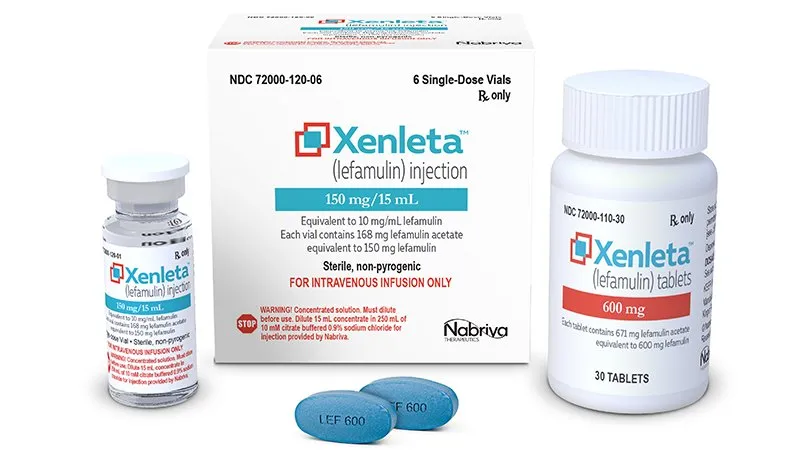
Table of Contents
- Package leaflet: Information for the user
- Xenleta 600 mg film-coated tablets
- 1. What Xenleta is and what it is used for
- 2. What you need to know before taking Xenleta
- 3. How to take Xenleta
- 4. Possible side effects
- 5. How to store Xenleta
- 6. Pack contents and other information
- Patient information leaflet: information for the patient
- Xenleta 150 mg concentrate and solvent for solution for infusion
- 1. What Xenleta is and what it is used for
- 2. What you should know before being given Xenleta
- 3. How Xenleta will be administered to you
- 4. Possible side effects
- 5. How to store Xenleta
- 6. Package contents and other information
- The following information is intended exclusively for healthcare professionals:
Package leaflet: Information for the user
Xenleta 600 mg film-coated tablets
lefamulin
Read this leaflet carefully before taking this medicine because it contains important information for you.
- Keep this leaflet. You may need to read it again.
- If you have any questions, ask your doctor, pharmacist or nurse.
- This medicine has been prescribed for you only. Do not give it to other people, even if their symptoms are the same as yours, as it may be harmful.
- If you experience any side effects, including those not listed in this leaflet, tell your doctor, pharmacist or nurse. See section 4.
Contents of this leaflet
- What Xenleta is and what it is used for
- What you need to know before taking Xenleta
- How to take Xenleta
- Possible side effects
- How to store Xenleta
- Contents of the pack and other information
1. What Xenleta is and what it is used for
Xenleta is an antibiotic medicine that contains the active substance lefamulina. It belongs to a group
of medicines called "pleuromutilins".
Lefamulina works by killing certain bacteria that cause infections.
Xenleta is indicated for the treatment of bacterial pneumonia in adults, also known as lung infections,
when other treatments for pneumonia are not considered suitable.
2. What you need to know before taking Xenleta
Do not take Xenleta
- if you are allergic to lefamulin or to any of the other ingredients of this medicine (listed in section 6);
- if you are allergic to other medicines in the pleuromutilin class;
- if you are taking certain medicines that could interact with Xenleta: some medicines may cause Xenleta to stop working or cause side effects when taken together with Xenleta (see examples listed in section Other medicines and Xenleta below);
- if you are taking medicines that can cause changes in the heart's electrical activity detectable on an ECG (see section Other medicines and Xenleta below), since lefamulin may cause a condition called QT interval prolongation, an abnormal electrical activity affecting heart rhythm;
- if you have an electrolyte imbalance in the blood (particularly low blood potassium levels);
- if you have or have had an irregular heartbeat or an abnormal ECG result called QT interval prolongation;
- if you have a very slow heartbeat (bradycardia);
- if your heart does not function adequately (heart failure).
Warnings and precautions
Talk to your doctor, pharmacist, or nurse before taking Xenleta
- if you have kidney failure and are undergoing dialysis;
- if you have cirrhosis (severe liver disease). If any of the above conditions apply to you, or you are unsure, consult your doctor before taking Xenleta. If you develop severe diarrhoea during or after taking Xenleta tablets, contact your doctor, as you may need to stop taking the medicine or take another medicine to treat the diarrhoea. Antibiotics can cause excessive growth of certain bacteria in the intestine, which may damage it and lead to a severe form of diarrhoea. If you develop yellowing of the skin (jaundice) or yellowing of the whites of the eyes (scleral icterus), contact your doctor, as you may need to stop taking Xenleta or other medicines.
Other infections
The risk of developing a different infection caused by another bacterium during or after treatment with Xenleta is reduced. Your doctor will closely monitor you for any new infections and prescribe another treatment if necessary.
Children and adolescents
The use of Xenleta is not recommended in children and adolescents under 18 years of age.
Other medicines and Xenleta
Inform your doctor or pharmacist if you are taking, have recently taken, or might take any other medicines, as some medicines may affect the action of Xenleta or vice versa. The lists below contain only some examples of medicines that should be avoided during treatment with lefamulin or for which caution is required. Your doctor will determine whether lefamulin is suitable for you. You must not take any of the following medicines together with lefamulin: - carbamazepine, phenytoin, primidone (for epilepsy);
- efavirenz, ritonavir (for HIV);
- St John's wort, a herbal remedy (for depression or low mood);
- bosentan, diltiazem, amiodarone, sotalol, quinidine, procainamide (for angina, high blood pressure, or heart arrhythmias);
- rifampicin, clarithromycin, erythromycin (for bacterial infections);
- fluconazole, itraconazole, posaconazole, voriconazole (for fungal infections);
- ketoconazole (for Cushing's disease);
- repaglinide (for diabetes);
- nefazodone, amitriptyline or pimozide (for depression or other mental illnesses).
Your doctor may need to adjust the dose of certain medicines while you are taking lefamulin. These include: - alprazolam, midazolam, triazolam or other medicines called benzodiazepines (for anxiety);
- alfentanil (an opioid, for pain);
- vardenafil (for erectile dysfunction);
- ibrutinib (for certain types of cancer);
- lovastatin, rosuvastatin or simvastatin (to reduce cholesterol levels);
- metformin (for diabetes);
- zolpidem (for insomnia);
- ethinylestradiol (used in oral contraceptives);
- verapamil (for high blood pressure).
Xenleta with food and drink
Xenleta should be taken on an empty stomach, at least 1 hour before or 2 hours after meals. This is because food and certain beverages can affect how the medicine works.
During treatment with Xenleta, do not eat grapefruit or drink grapefruit juice, as they may interact with Xenleta and increase the risk of side effects.
Pregnancy and breastfeeding
Do not take Xenleta if you are pregnant or breastfeeding. If you are pregnant, suspect you may be pregnant, are planning to become pregnant, or are breastfeeding, consult your doctor or pharmacist before taking this medicine.
Driving and using machines
Taking Xenleta does not affect your ability to drive or operate machinery.
Xenleta contains sodium
This medicine contains less than 1 mmol of sodium (23 mg) per dose, i.e. it is essentially “sodium-free”.
3. How to take Xenleta
Take this medicine exactly as your doctor or pharmacist has told you. If
you have any doubts, consult your doctor or pharmacist.
The recommended dose is one 600 mg Xenleta tablet taken every 12 hours for 5 days. The
tablets must be swallowed whole with water.
Xenleta tablets may also be taken after starting treatment with intravenous Xenleta. In this case,
the number of days you need to take Xenleta tablets depends on the number of days you have
received intravenous infusion treatment.
Your doctor will tell you how long to take Xenleta. It is important to complete the full course of
treatment.
If you take more Xenleta than you should
If you accidentally take too many tablets, contact your doctor or pharmacist.
If you forget to take Xenleta
Do not take a double dose to make up for the forgotten tablet. Continue your treatment with the
next scheduled dose.
If you stop taking Xenleta
Take the complete course of tablets prescribed by your doctor, even if you start to feel better
before finishing it. If you stop taking the tablets too early, the infection may return or your
condition may worsen.
If you do not complete the full course of treatment or do not take the tablets at the correct times,
bacteria may remain and become resistant to antibiotics. This could cause the infection to return
or, in such cases, result in loss of antibiotic effectiveness.
If you experience any side effect that concerns you, consult your doctor immediately before taking
the next dose.
If you have any questions about the use of this medicine, ask your doctor, pharmacist, or
nurse.
4. Possible side effects
Like all medicines, this medicine can cause side effects, although not everyone gets them.
Common: may affect up to 1 in 10 people
- low levels of potassium in the blood (hypokalaemia), which may cause muscle weakness, cramps, or an abnormal heart rhythm
- difficulty sleeping (insomnia)
- headache
- changes in heart rhythm (observed on an ECG, which monitors the heart's electrical activity)
- diarrhoea
- feeling unwell (nausea) or sickness (vomiting)
- increase in a specific liver enzyme in the blood (transaminases)
Uncommon: may affect up to 1 in 100 people
- inflammation of the intestine causing diarrhoea (colitis), due to an infection by a type of bacteria called Clostridioides difficile (previously known as Clostridium difficile)
- fungal (yeast) infection of the throat and mouth (thrush or candida infection)
- vaginal and vulval fungal (yeast) infection (candidiasis or candida infection)
- decrease in red blood cells (anaemia), which may make the skin pale and cause weakness or shortness of breath
- decrease in platelets (blood cells that help blood to clot), resulting in an increased risk of bleeding or bruising
- feeling anxious
- dizziness
- feeling tired or drowsy
- irregular heartbeat or palpitations
- pain at the back of the nose and throat
- stomach pain, abdominal pain or pain around the stomach
- constipation
- indigestion, acid reflux (heartburn) or inflammation of the stomach lining (gastritis)
- increase in a liver enzyme in the blood (gamma-glutamyl transferase and alkaline phosphatase)
- increase in a muscle enzyme in the blood (creatine phosphokinase)
- difficulty passing urine or emptying the bladder completely (urinary retention)
Reporting of side effects
If you get any side effects, including any not listed in this leaflet, talk to your doctor, pharmacist or nurse.
You can also report side effects directly via the national reporting system listed in Annex V.
By reporting side effects, you can help provide more information on the safety of this medicine.
5. How to store Xenleta
Keep this medicine out of the sight and reach of children.
Do not use this medicine after the expiry date stated on the carton and blister. The expiry date refers to the last day of that month.
This medicine does not require any special storage conditions.
Do not dispose of any medicine via wastewater or household waste. Ask your pharmacist how to dispose of medicines you no longer use. This will help protect the environment.
6. Pack contents and other information
What Xenleta contains
- The active substance is lefamulin. Each film-coated tablet contains lefamulin acetate equivalent to 600 mg of lefamulin.
- The other components are silicon dioxide (E551), sodium croscarmellose (E468), magnesium stearate (E572), mannitol (E421), microcrystalline cellulose (E460), povidone K30, talc (E553b).
- Film coating: indigo carmine lake (E132), macrogol, polyvinyl alcohol (E1203), talc, titanium dioxide (E171).
- Printing ink: shellac (E904), iron oxide black (E172), propylene glycol.
Description of the appearance of Xenleta and pack contents
Xenleta 600 mg tablets are blue, oval-shaped, with the inscription “LEF 600” printed in black on one side. Film-coated Xenleta tablets are supplied in blisters of 10 tablets.
Marketing Authorisation Holder and Manufacturer
Nabriva Therapeutics Ireland DAC
Alexandra House, Office 225/227
The Sweepstakes,
Ballsbridge
Dublin 4
D04 C7H2
Ireland
More detailed information on this medicinal product is available on the website of the European Medicines Agency: http://www.ema.europa.eu .
Patient information leaflet: information for the patient
Xenleta 150 mg concentrate and solvent for solution for infusion
lefamulin
Please read this leaflet carefully before this medicine is administered to you because
it contains important information for you.
- Keep this leaflet. You may need to read it again.
- If you have any questions, ask your doctor or nurse.
- If you experience any side effects, including those not listed in this leaflet, tell your doctor or nurse. See section 4.
Contents of this leaflet
- What Xenleta is and what it is used for
- What you need to know before you are given Xenleta
- How Xenleta will be administered to you
- Possible side effects
- How to store Xenleta
- Contents of the pack and other information
1. What Xenleta is and what it is used for
Xenleta is an antibiotic medicine that contains the active substance lefamulina. It belongs to a group
of medicines known as "pleuromutilins".
Lefamulina works by killing certain bacteria that cause infections.
Xenleta is indicated for the treatment of bacterial pneumonia in adults, also known as pneumonia, when other treatments for pneumonia are not considered appropriate.
2. What you should know before being given Xenleta
Xenleta must not be administered to you if:
- you are allergic to lefamulin or to any of the other ingredients of this medicine (listed in section 6);
- you are allergic to other medicines in the pleuromutilin class;
- you are taking certain medicines that could interact with Xenleta: some medicines may cause Xenleta to stop working or cause unwanted effects when taken together with Xenleta (see examples listed in section Other medicines and Xenleta below);
- you are taking medicines that can cause changes in the electrical activity of the heart, detectable on an ECG (see section Other medicines and Xenleta below), since lefamulin may cause a condition known as QT interval prolongation, an abnormal electrical activity affecting the heartbeat;
- you have an electrolyte imbalance in the blood (particularly low blood potassium levels);
- you have or have had an irregular heartbeat or an abnormal ECG result called QT interval prolongation;
- you have a very slow heartbeat (bradycardia);
- your heart does not function adequately (heart failure).
Warnings and precautions
Talk to your doctor or nurse before being given Xenleta:
- if you have renal impairment and require dialysis;
- if you have cirrhosis (a severe liver disease).
If any of the above conditions apply to you, or if you are unsure, consult your doctor before receiving Xenleta.
If you develop severe diarrhoea during or after treatment with Xenleta, contact your doctor immediately, as treatment may need to be stopped. Antibiotics can cause excessive growth of certain bacteria in the intestine, which may damage the gut and lead to a severe form of diarrhoea.
If you develop yellowing of the skin (jaundice) or yellowing of the whites of the eyes (scleral icterus), contact your doctor, as it may be necessary to stop taking Xenleta or other medicines.
Other infections
The likelihood of developing a different infection caused by another bacterium during or after treatment with Xenleta is reduced. Your doctor will closely monitor you for any new infections and prescribe another treatment if necessary.
Children and adolescents
The use of Xenleta is not recommended in children and adolescents under 18 years of age.
Other medicines and Xenleta
Inform your doctor if you are taking, have recently taken, or might take any other medicines, as some medicines may affect the action of Xenleta or vice versa. The lists below include only some examples of medicines that should be avoided during treatment with lefamulin or that require caution. Your doctor will determine whether lefamulin is suitable for you.
You must not take any of the following medicines together with lefamulin:
- carbamazepine, phenytoin, primidone (for epilepsy);
- efavirenz (for HIV);
- St. John’s wort, a herbal remedy (for depression or low mood);
- bosentan, diltiazem, amiodarone, sotalol, quinidine, procainamide (for angina, high blood pressure, or heart arrhythmias);
- rifampicin, clarithromycin, erythromycin (for bacterial infections);
- fluconazole, itraconazole, posaconazole, voriconazole (for fungal infections);
- ketoconazole (for Cushing’s disease);
- repaglinide (for diabetes);
- nefazodone, amitriptyline, or pimozide (for depression or other mental illnesses).
Your doctor may need to adjust the dose of certain medicines while you are taking lefamulin. These include:
- lovastatin, rosuvastatin, or simvastatin (to reduce cholesterol levels);
- metformin (for diabetes);
- ethinylestradiol (used in oral contraceptives).
Pregnancy and breastfeeding
Xenleta must not be administered if you are pregnant or breastfeeding.
If you are pregnant, suspect you may be pregnant, are planning a pregnancy, or are breastfeeding, consult your doctor and nurse before receiving this medicine.
Driving and using machines
Taking Xenleta does not affect your ability to drive or operate machinery.
Xenleta contains sodium
This medicine contains 1.055 mg of sodium (the main component of table salt) per administration unit, equivalent to 53% of the maximum daily recommended sodium intake for an adult.
3. How Xenleta will be administered to you
Xenleta will be administered to you by a doctor or a nurse.
The recommended dose for adults is 150 mg every 12 hours. Xenleta will be given to you through an intravenous infusion (intravenously) directly into a vein over a period of 1 hour.
A typical treatment course usually lasts 7 days or longer, if recommended by your doctor.
Your doctor may decide to complete the treatment course by switching from intravenous administration of Xenleta to oral administration, for a total duration (infusion and tablets) of 7 days.
If you are given more Xenleta than you should receive
Xenleta will be administered to you in a hospital by a doctor or nurse, so it is unlikely that you will receive an excessive amount. However, inform your doctor or nurse if you are concerned that you may have been given too much Xenleta.
If you miss a dose of Xenleta
Xenleta will be administered to you in a hospital by a doctor or nurse, so it is unlikely that you will miss a dose. However, inform your doctor or nurse if you are concerned that you may have missed a dose.
4. Possible side effects
Like all medicines, this medicine can cause side effects, although not everybody gets them.
Common: may affect up to 1 in 10 people
- low levels of potassium in the blood (hypokalaemia), which can cause muscle weakness, cramps or an abnormal heartbeat
- difficulty sleeping (insomnia)
- headache
- diarrhoea
- feeling unwell (nausea) or feeling sick (vomiting)
- increase in a particular liver enzyme in the blood (transaminases)
- redness, swelling or pain at the injection site
- change in heart rhythm (observed on an ECG, which monitors the heart's electrical activity)
Uncommon: may affect up to 1 in 100 people
- inflammation of the bowel causing diarrhoea (colitis), due to an infection with a type of bacteria called Clostridioides difficile (previously known as Clostridium difficile)
- fungal (yeast) infection of the throat and mouth (thrush or candida infection)
- fungal (yeast) infection of the vagina and vulva (candidiasis or candida infection)
- decrease in red blood cells (anaemia), which may make the skin pale and cause weakness or shortness of breath
- decrease in platelets (blood cells that help blood to clot), leading to increased risk of bleeding or bruising
- feeling anxious
- dizziness
- feeling tired or drowsy
- irregular heartbeat or palpitations
- pain at the back of the nose and throat
- stomach ache, abdominal pain or pain around the stomach
- constipation
- indigestion, acid reflux (heartburn) or inflammation of the stomach lining (gastritis)
- increase in a liver enzyme in the blood (gamma-glutamyltransferase and alkaline phosphatase)
- increase in a muscle enzyme in the blood (creatine phosphokinase)
- difficulty passing urine or emptying the bladder completely (urinary retention)
Reporting of side effects
If you get any side effects, including any not listed in this leaflet, talk to your doctor, pharmacist or nurse.
You can also report side effects directly via the national reporting system listed in Annex V.
Reporting side effects can help provide more information on the safety of this medicine.
5. How to store Xenleta
Keep this medicine out of the sight and reach of children.
Do not use this medicine after the expiry date which is stated on the label of the vial and on the
outer carton following EXP. The expiry date refers to the last day of that month.
Concentrate: store in a refrigerator (2°C – 8°C). Do not freeze.
Solvent: store below 25°C. Do not freeze.
After dilution:
the stability of the diluted solution has been demonstrated for 24 hours at room temperature and for 48 hours at a temperature between 2°C and 8°C. Administer immediately after dilution. If not used immediately, the storage times during use and the conditions prior to use are the responsibility of the user and should normally not exceed 24 hours at a temperature between 2°C and 8°C, unless the dilution is carried out under controlled and validated aseptic conditions.
The diluted solution must be clear and colourless. It should not be used if particulate matter is present or if the solution is cloudy.
6. Package contents and other information
What Xenleta contains
- The active substance is lefamulin. Each vial contains lefamulin acetate equivalent to 150 mg of lefamulin.
- The other components of the concentrate are: sodium chloride and water for injections.
- The other components of the solvent are: citric acid (E330), sodium dihydrate citrate (E331), sodium chloride and water for injections.
Description of the appearance of Xenleta and contents of the pack
Xenleta is a concentrate for solution for infusion.
The concentrate is a clear, colourless solution in a glass vial, closed with a rubber stopper and sealed with a removable cap.
The solvent is a clear, colourless solution in a polypropylene infusion bag.
Xenleta is supplied in a pack containing 2 vials, each containing 15 ml of concentrate, and 2 infusion bags, each containing 250 ml of solvent.
Marketing Authorisation Holder and Manufacturer
Nabriva Therapeutics Ireland DAC
Alexandra House, Office 225/227
The Sweepstakes,
Ballsbridge
Dublin 4
D04 C7H2
Ireland
More detailed information on this medicinal product is available on the website of the European Medicines Agency: http://www.ema.europa.eu.
< >
The following information is intended exclusively for healthcare professionals:
Instructions for dilution prior to administration
Parenteral (intravenous) medications must be inspected visually before administration to ensure the absence of particles and discoloration. Only clear, colorless solutions free of visible particles should be diluted.
How to prepare Xenleta for administration
General precautions
Each vial and infusion bag is for single use only.
Standard aseptic techniques must be used during preparation and administration of the solution.
Instructions for dilution and infusion
Xenleta concentrate must be mixed within the solvent bag containing 250 mL of 0.9% sodium chloride solution buffered with 10 mM citrate and administered by intravenous infusion.
- Aseptically withdraw 15 mL of Xenleta from the concentrate vial.
- Transfer the concentrate into the solvent bag containing 250 mL of 0.9% sodium chloride solution buffered with 10 mM citrate.
- Discard any unused portion of the concentrate vial. The concentrate vial and solvent solution bag are for single use only.
- The diluted solution must be clear and colorless. When possible, parenteral medications should be visually inspected before administration to confirm the absence of particulate matter and discoloration.
- Administer by intravenous infusion over 60 minutes via direct infusion or a previously placed Y-site intravenous infusion set. Avoid rapid intravenous infusion or bolus injection.
- Administer exclusively by intravenous infusion. Compatibility of reconstituted Xenleta with other intravenous drugs, additives, or substances has not been established, except for 0.9% sodium chloride solution buffered with 10 mM citrate and 0.9% sodium chloride solution for intravenous infusion. If a common intravenous catheter is used to administer medications other than Xenleta, it must be flushed before and after each Xenleta administration with an intravenous infusion of 0.9% sodium chloride solution.
Disposal
Unused medicine and waste material derived from this medicine must be disposed of in accordance with local regulations.