Xenical
Italy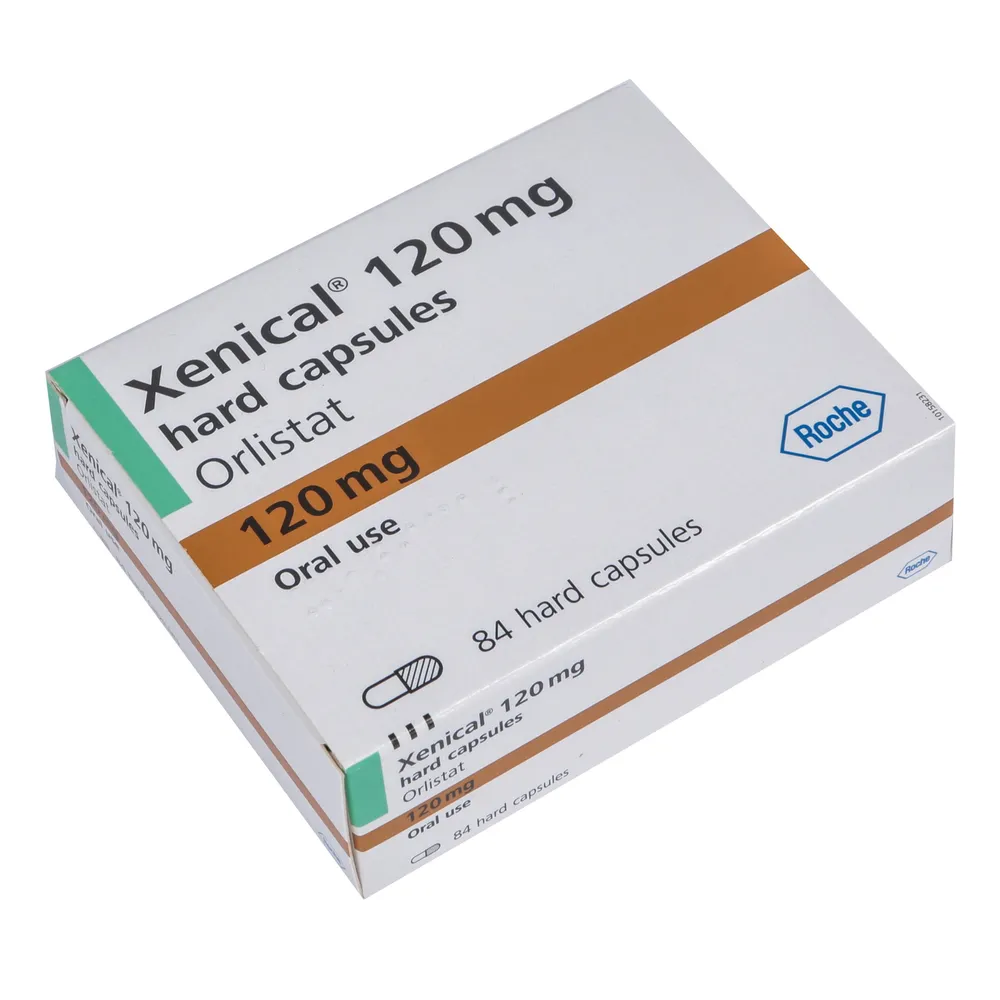
Table of Contents
Package leaflet: Information for the user
Xenical 120 mg hard capsules
Orlistat
Please read this leaflet carefully before taking this medicine because it contains
important information for you.
- Keep this leaflet. You may need to read it again.
- If you have any questions, ask your doctor or pharmacist.
- This medicine has been prescribed for you only. Do not give it to other people, even if they have the same symptoms as you, because it may be harmful.
- If you experience any side effects, including those not listed in this leaflet, talk to your doctor or pharmacist. See section 4.
Contents of this leaflet:
- What Xenical is and what it is used for
- What you need to know before taking Xenical
- How to take Xenical
- Possible side effects
- How to store Xenical
- Contents of the pack and other information
1. What XENICAL is and what it is used for
Xenical is a medicine used to treat obesity. It acts on the digestive system by preventing the digestion of approximately 30% of the dietary fat consumed during a meal.
Xenical acts on digestive enzymes (lipases) and blocks their action on some of the fats ingested during a meal. Undigested fats cannot be absorbed and are eliminated from the body.
Xenical is indicated for the treatment of obesity in combination with a low-calorie diet.
2. What you should know before taking XENICAL
Do not take XENICAL
- if you are allergic (hypersensitive) to orlistat or to any of the excipients of Xenical,
- if you suffer from chronic malabsorption syndrome (inadequate absorption of nutrients from the digestive tract),
- if you have cholestasis (liver disorder),
- if you are breastfeeding.
Warnings and precautions
Weight loss may also affect the dosage of medicines taken to treat other conditions (e.g. hypercholesterolemia or diabetes). Make sure to inform your doctor about these or any other medicines you may be taking. Weight loss might require adjustment of the dosages of these medicines.
To achieve the best results with Xenical, you must follow the dietary advice provided by your doctor. As with any weight control program, excessive intake of fats and calories may reduce any weight loss effect.
This medicine may cause a change, although not harmful, in bowel habits, such as oily or fatty stools, due to the excretion of undigested fats in feces. The likelihood of these events may increase if Xenical is taken with a high-fat diet. Additionally, daily fat intake should be evenly distributed among the three main meals, because if Xenical is taken with a very fatty meal, the probability of gastrointestinal side effects may increase.
It is recommended to use an additional contraceptive method to prevent possible failure of oral contraceptives that could occur in case of severe diarrhea.
The use of orlistat may be associated with kidney stones in patients with chronic kidney disease. Inform your doctor if you have kidney disorders.
This medicine contains less than 1 mmol (23 mg) of sodium per capsule, i.e. essentially 'sodium-free'.
Children Xenical is not suitable for use in children.
Other medicines and Xenical
Inform your doctor or pharmacist if you are taking or have recently taken any other medicines, including those not requiring a prescription.
This is very important because taking multiple medicines simultaneously may enhance or reduce their effectiveness.
Xenical may alter the activity of:
- Anticoagulant medicines (e.g. warfarin). Your doctor may need to monitor your blood clotting.
- Cyclosporine. Concomitant administration with cyclosporine is not recommended. Your doctor may need to monitor cyclosporine blood levels more frequently than usual.
- Iodine salts and/or levothyroxine. Cases of hypothyroidism and/or reduced control of hypothyroidism may occur.
- Amiodarone. Consult your doctor.
- Medicines for the treatment of HIV.
- Medicines for depression, psychiatric disorders or anxiety.
Xenical reduces the absorption of certain fat-soluble nutrients taken in addition to the diet, particularly beta-carotene and vitamin E. Therefore, you should follow your doctor's advice by maintaining a well-balanced diet rich in fruits and vegetables. Your doctor may recommend taking a multivitamin supplement.
Orlistat may interfere with anticonvulsant treatment by reducing the absorption of antiepileptic drugs, thereby possibly causing seizures. Contact your doctor if you notice any change in the frequency and/or severity of seizures while taking Xenical together with antiepileptic medicines.
Xenical is not recommended for people taking acarbose (an anti-diabetic medicine used to treat type 2 diabetes mellitus).
Xenical with food and drinks
Xenical can be taken immediately before, during, or up to one hour after a meal.
The capsules should be swallowed with water.
Pregnancy and breastfeeding
The use of Xenical during pregnancy is not recommended.
Since it is not known whether Xenical is excreted in breast milk, you must not breastfeed while being treated with Xenical.
Driving and using machines
Xenical has no known effect on the ability to drive or use machinery.
3. How to take XENICAL
Take Xenical exactly as directed by your doctor. If you have any doubts, consult your doctor or pharmacist. The usual dose of Xenical is one 120 mg capsule taken with each of the three main meals of the day. The capsule may be taken immediately before, during, or up to one hour after a meal. Swallow the capsule with water.
Xenical should be taken in conjunction with a well-balanced, reduced-calorie diet rich in fruit and vegetables, in which approximately 30% of the calories come from fat. Daily intake of fat, carbohydrates, and protein should be distributed over the three main meals. This means that you will generally need to take one capsule at breakfast, one at lunch, and one at dinner. For optimal results, avoid eating fatty foods between meals, such as biscuits, chocolate, and crisps.
Xenical works only when dietary fat is present. Therefore, if you skip a main meal or consume a meal that contains no fat, you do not need to take Xenical.
Inform your doctor if, for any reason, you have not taken the medicine exactly as prescribed. Otherwise, your doctor might think that the medicine is not effective or not well tolerated and might decide to change your treatment unnecessarily.
Your doctor will discontinue treatment with Xenical after 12 weeks if you have not lost at least 5% of your body weight recorded at the start of Xenical therapy.
Xenical has been studied in long-term clinical trials lasting up to 4 years.
If you take more XENICAL than you should
If you take more capsules than prescribed, or if someone else accidentally takes your medicine, contact a doctor, pharmacist, or go to a hospital, as medical intervention may be necessary.
If you forget to take XENICAL
If you forget to take your dose, take it as soon as you remember, provided this is within one hour after your last meal, and then continue taking it as prescribed. Do not take a double dose. If you have missed taking Xenical several times, inform your doctor and follow their advice.
Do not change the prescribed dose unless your doctor has instructed you to do so.
If you have any questions about the use of Xenical, consult your doctor or pharmacist.
4. Possible side effects
Like all medicines, Xenical can cause side effects, although not everyone experiences them.
Inform your doctor or pharmacist as soon as possible if you experience any disturbances during treatment with Xenical.
Most side effects associated with the use of Xenical are the direct consequence of its local action on the gastrointestinal system. These symptoms are generally mild, occur at the beginning of treatment, and are particularly evident after meals high in fat. Normally, these symptoms disappear with continued therapy and if the prescribed diet is followed.
Very common side effects (affect more than 1 in 10 patients)
Headache, abdominal discomfort/pain, urgent need to defecate, excessive intestinal gas with passage of oily stools, oily evacuation, oily/fatty appearance of stools, liquid stools, low blood sugar levels (observed in some patients with type 2 diabetes).
Common side effects (affect between 1 and 10 in 100 patients)
Rectal discomfort/pain, soft stools, fecal incontinence, bloating (observed in some patients with type 2 diabetes), dental/gum disorders, menstrual irregularities, fatigue.
The following side effects have also been reported, but their frequency cannot be estimated from the available data:
Allergic reactions. The main symptoms include itching, skin rashes, wheals (small raised areas of skin that may be paler or more intense in colour than surrounding skin, accompanied by itching), severe breathing difficulties, nausea, vomiting, and feeling unwell. Bullous eruptions (including burning blisters). Diverticulitis. Rectal bleeding. Increased levels of liver enzymes. Hepatitis (inflammation of the liver). Symptoms may include yellowing of the skin and eyes, itching, dark urine, stomach pain, and liver tenderness (indicated by pain under the front part of the rib cage on the right side), occasionally associated with loss of appetite. Discontinue use of Xenical if these symptoms occur and inform your doctor. Gallstones. Pancreatitis (inflammation of the pancreas). Oxalate nephropathy (calcium oxalate accumulation which may lead to kidney stone formation). See section 2, "Special warnings and precautions for use with XENICAL".
Effects on blood coagulation when taken with anticoagulants.
Reporting of side effects
If you experience any side effect, including those not listed in this leaflet, talk to your doctor, pharmacist, or nurse. You can also report side effects directly via the national reporting system detailed in Annex V.
By reporting side effects, you can help provide more information on the safety of this medicine.
5. How to store XENICAL
Keep out of the sight and reach of children.
Blister packs
Do not use Xenical after the expiry date stated on the packaging.
Do not store above 25 °C.
Store in the original packaging and keep the blister in the outer container to protect the medicine from light and moisture.
Glass bottles
Do not use Xenical after the expiry date stated on the bottle.
Do not store above 30 °C.
Keep the container tightly closed to protect the medicine from moisture.
Medicines must not be disposed of via wastewater or household waste. Ask your pharmacist how to dispose of medicines you no longer use. This will help protect the environment.
6. Package contents and other information
What XENICAL contains
- The active substance is orlistat. Each capsule contains 120 mg of orlistat.
- The excipients are microcrystalline cellulose (E460), sodium starch glycolate (type A), povidone (E1201), sodium lauryl sulfate and talc. The capsule shell is composed of gelatin, indigotine (E132), titanium dioxide (E171), and printing ink for food use.
Description of the appearance of XENICAL and package contents
Xenical capsules are turquoise with "XENICAL 120" printed on them and are available in blisters and
glass bottles containing 21, 42 and 84 capsules.
Not all pack sizes may be marketed.
Marketing Authorization Holder
CHEPLAPHARM Arzneimittel GmbH
Ziegelhof 24
17489 Greifswald
Germany
Manufacturer
CHEPLAPHARM Arzneimittel GmbH
Bahnhofstr. 1a
17498 Mesekenhagen
Germany
or
CHEPLAPHARM Arzneimittel GmbH
Ziegelhof 23-24
17489 Greifswald
Germany
More detailed information on this medicinal product is available on the website of the European Medicines Agency: http://www.ema.europa.eu/