Xaluprine
Italy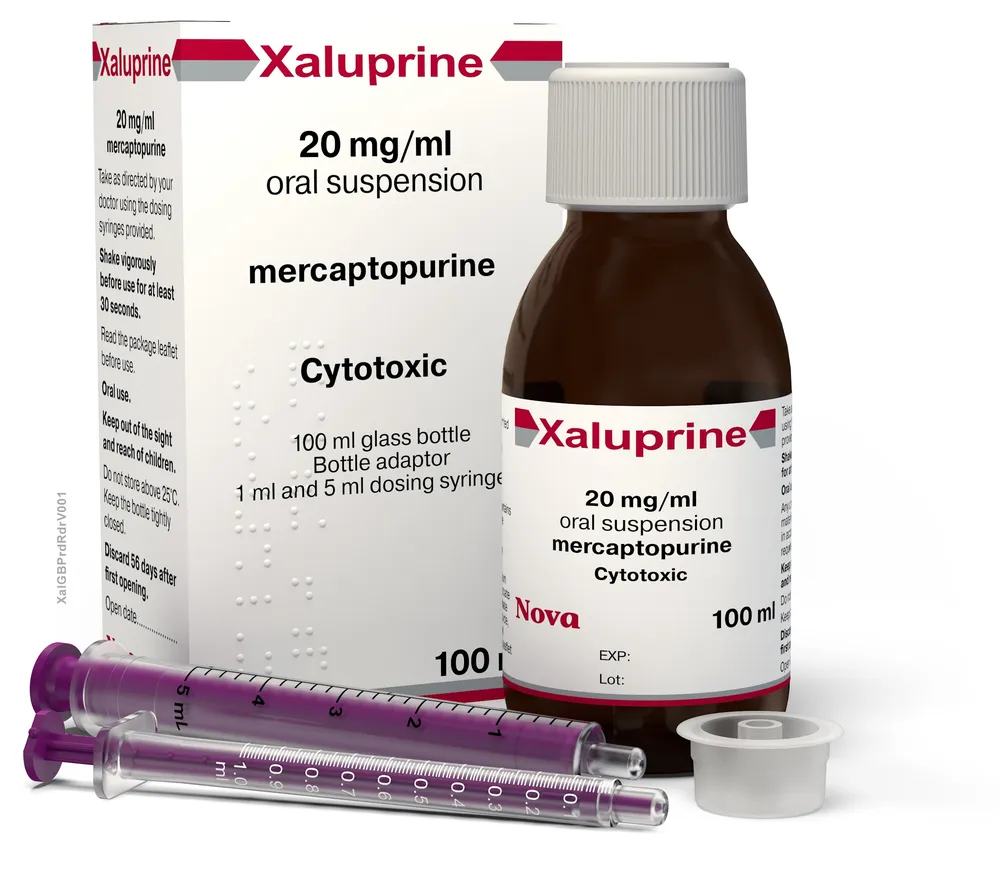
Table of Contents
Package leaflet: Information for the user
Xaluprine 20 mg/ml oral suspension
mercaptopurine monohydrate
Please read this leaflet carefully before taking this medicine because it contains
important information for you.
- Keep this leaflet. You may need to read it again.
- If you have any questions, ask your doctor, pharmacist or nurse.
- This medicine has been prescribed for you only. Do not give it to others, even if their symptoms are the same as yours, as it could be harmful.
- If you experience any side effect, including those not listed in this leaflet, contact your doctor. See section 4.
Contents of this leaflet
- What Xaluprine is and what it is used for
- What you need to know before taking Xaluprine
- How to take Xaluprine
- Possible side effects
- How to store Xaluprine
- Contents of the pack and other information
1. What Xaluprine is and what it is used for
Xaluprine contains mercaptopurine monohydrate. It belongs to a group of medicines known as cytotoxic agents (also referred to as chemotherapeutic agents).
Xaluprine is used for the treatment of acute lymphoblastic leukaemia (also called acute lymphocytic leukaemia or ALL). This is a rapidly progressing disease characterised by an increased number of new white blood cells. These new white blood cells are immature (not fully developed) and are unable to grow and function properly. As a result, they cannot fight infections effectively and may lead to bleeding.
If you require further explanation about this disease, please consult your doctor.
2. What you need to know before taking Xaluprine
- Do not take Xaluprine if you are allergic to mercaptopurine or to any of the excipients of this medicine (listed in section 6).
- Do not get vaccinated against yellow fever while taking Xaluprine, as it could be fatal.
Warnings and precautions
Talk to your doctor, pharmacist, or nurse before taking Xaluprine if:
- you have recently received or are due to receive a vaccination (vaccine).
- you have been vaccinated with the yellow fever vaccine.
- you have kidney or liver problems, as your doctor will need to monitor the function of these organs.
- you have a condition in which your body produces insufficient levels of the enzyme TPMT (thiopurine methyltransferase) or NUDT15 (nudix hydrolase-15), as your doctor may need to adjust your dose.
- you are planning to have a child. This applies to both men and women. Xaluprine may damage sperm or eggs (see section below “Pregnancy, breastfeeding, and fertility”).
If you are receiving immunosuppressive therapy, taking Xaluprine may increase the risk of developing:
- tumors, including skin cancer. Therefore, while taking Xaluprine, you should avoid excessive exposure to sunlight, wear protective clothing, and use a sunscreen with a high sun protection factor.
- lymphoproliferative disorders – treatment with Xaluprine increases the risk of developing a type of tumor called lymphoproliferative disorder. A treatment regimen involving multiple immunosuppressants (including thiopurines) can be fatal. Simultaneous administration of a combination of multiple immunosuppressants increases the risk of developing lymphatic system disorders caused by a viral infection (Epstein-Barr virus (EBV)-associated lymphoproliferative disorders).
Taking Xaluprine may increase the risk of:
- developing a serious condition called macrophage activation syndrome (excessive activation of white blood cells associated with inflammation), which usually occurs in people with certain types of arthritis.
Some patients with inflammatory bowel disease who have received mercaptopurine have developed a rare and aggressive type of cancer called hepatosplenic T-cell lymphoma (see section 4, Possible side effects).
Infections
During treatment with Xaluprine, the risk of viral, fungal, and bacterial infections is increased, and infections may be more severe. See also section 4.
Before starting treatment, tell your doctor if you have ever had chickenpox, shingles, or hepatitis B (a liver disease caused by a virus).
Blood tests
Treatment with mercaptopurine may affect the bone marrow. You may therefore have a reduced number of white blood cells, platelets, and (less frequently) red blood cells in your blood. Your doctor will perform frequent and regular blood tests during treatment to monitor the levels of these cells in your blood. If treatment is stopped promptly, your blood cells will return to normal.
Liver function
Mercaptopurine is toxic to the liver. Therefore, your doctor will perform frequent and regular liver function tests during treatment with mercaptopurine. If you already have liver disease or are taking other medicines that may affect the liver, your doctor may perform tests more frequently. If you notice that the whites of your eyes or your skin turn yellowish (jaundice), inform your doctor immediately, as treatment may need to be stopped immediately.
TPMT and NUDT15 gene variants
If you have an inherited variant of the TPMT and/or NUDT15 gene (genes involved in the metabolism of Xaluprine in the body), you have a higher risk of infections and hair loss, and in this case your doctor may prescribe a lower dose.
Vitamin B3 deficiency (pellagra)
Inform your doctor immediately if you experience diarrhea, pigmented skin rash (dermatitis), or deterioration in memory, reasoning, and thinking ability (dementia), as these symptoms may indicate vitamin B3 deficiency. Your doctor will prescribe vitamin supplements (niacin/nicotinamide) to improve your condition.
Avoid contact of Xaluprine with the skin, eyes, and nose. In case of accidental contact with the eyes or nose, rinse thoroughly with plenty of water.
If you have any doubts whether any of the above situations apply to you, discuss them with your doctor or pharmacist before taking Xaluprine.
Children and adolescents
Low blood sugar levels have occasionally been observed in children, particularly in children under six years of age or with low body mass index. Speak with your child’s pediatrician if this occurs.
Other medicines and Xaluprine
Tell your doctor or pharmacist if you are taking, have recently taken, or might take any other medicines.
In particular, inform your doctor, nurse, or pharmacist if you are taking any of the following:
- ribavirin (used to treat viral infections)
- other cytotoxic medicines (chemotherapy) – when used with Xaluprine, there is an increased likelihood of side effects such as anemia
- allopurinol, thiopurinol, oxypurinol, or febuxostat (used to treat gout)
- oral anticoagulants (used to thin the blood)
- olsalazine or mesalazine (used for a bowel condition called ulcerative colitis)
- sulfasalazine (used for rheumatoid arthritis or ulcerative colitis)
- methotrexate (used to treat cancer, rheumatoid arthritis, or skin conditions (severe psoriasis))
- antiepileptic medicines such as phenytoin, carbamazepine. Blood levels of antiepileptic medicines may need to be monitored and doses adjusted accordingly
- infliximab (used to treat certain intestinal diseases (Crohn’s disease and ulcerative colitis), rheumatoid arthritis, ankylosing spondylitis, or skin conditions (severe psoriasis))
Vaccination during Xaluprine treatment
It is important to inform your doctor or nurse before receiving any vaccination. Vaccination with live vaccines (e.g., for polio, measles, mumps, and rubella) is not recommended, as these vaccines may cause infection if administered during Xaluprine treatment.
Xaluprine with food and drink
Xaluprine may be taken with food or on an empty stomach. However, the chosen method should be kept consistent from day to day.
Do not take Xaluprine at the same time as milk or dairy products, as they may reduce the effectiveness of the medicine. Xaluprine should be taken at least one hour before or two hours after consuming milk or dairy products.
Pregnancy, breastfeeding, and fertility
Do not take Xaluprine if you are planning to have a child without first consulting your doctor. This applies to both men and women. Xaluprine may damage sperm or eggs. An effective method of contraception must be used to prevent pregnancy while either partner is taking Xaluprine. Men and women should continue to use effective contraceptive methods for at least three months and six months, respectively, after the last dose. Consult your doctor. If you are already pregnant, consult your doctor before taking Xaluprine.
Taking Xaluprine during pregnancy may cause severe and persistent itching without a skin rash. Nausea and loss of appetite may also occur at the same time, which could indicate a condition called intrahepatic cholestasis of pregnancy (a liver disorder during pregnancy). Contact your doctor immediately, as this condition may harm the unborn baby.
Xaluprine must not be handled by pregnant women, breastfeeding women, or women planning pregnancy.
Do not breastfeed while taking Xaluprine. Consult your doctor, pharmacist, or midwife.
Driving and using machines
The effects of Xaluprine on the ability to drive or use machines are unknown, and no studies have been conducted to confirm this aspect.
Xaluprine contains aspartame, sodium methylparahydroxybenzoate (E219), sodium ethylparahydroxybenzoate (E215), and sucrose
This medicine contains 3 mg of aspartame (E951) per 1 ml. Aspartame is a source of phenylalanine. It may be harmful if you have phenylketonuria, a rare genetic disorder causing phenylalanine to accumulate because the body cannot properly metabolize it.
Xaluprine also contains sodium methylparahydroxybenzoate (E219) and sodium ethylparahydroxybenzoate (E215), which may cause allergic reactions (including delayed reactions).
Xaluprine contains sucrose. If your doctor has diagnosed you with an intolerance to certain sugars, contact him or her before taking this medicine. It may be harmful to teeth.
3. How to take Xaluprine
Xaluprine must be prescribed by a specialist doctor experienced in blood disorders.
- During treatment with Xaluprine, your doctor will carry out regular blood tests to monitor the number and types of blood cells and to check that your liver is functioning properly.
- Your doctor may also request additional blood and urine tests to monitor your uric acid levels. Uric acid is a natural organic compound whose levels may increase during treatment with Xaluprine.
- Your doctor may occasionally adjust your Xaluprine dose based on the results of these tests.
Take this medicine exactly as directed by your doctor or pharmacist. If you have any doubts, consult your doctor or pharmacist. The usual starting dose for adults, adolescents, and children ranges from 25 to 75 mg/m² of body surface area per day. Your doctor will prescribe the correct dose for you. Carefully check the prescribed dose and the concentration of the oral suspension to ensure the correct amount of medicine is taken, as shown in the following tables. Your doctor may sometimes adjust your dose of Xaluprine, for example based on test results. If you have any doubts about how much medicine to take, always ask your doctor or nurse.
It is important to take Xaluprine in the evening to enhance its effectiveness.
You may take the medicine with food or on an empty stomach, but the chosen method should be kept consistent from day to day. The medicine should be taken at least one hour before or two hours after consuming milk or dairy products.
The Xaluprine package contains a medicine bottle, a cap, a bottle adapter, and two oral dosing syringes (one 1 ml syringe and one 5 ml syringe). Always use the provided syringes to administer the medicine.
It is important to use the correct dosing syringe for the prescribed dose. Your doctor or pharmacist will advise you which syringe to use based on your prescribed dose.
The smaller 1 ml syringe, graduated from 0.1 ml to 1 ml, is intended for measuring doses equal to or less than 1 ml. You should use this syringe if the total amount to be taken is equal to or less than 1 ml (0.1 ml contains 2 mg of mercaptopurine). The following table shows the conversion from dose (mg) to volume (ml) for the 1 ml syringe.
| Dose (mg) | Volume (ml) |
| 6 | 0.3 |
| 8 | 0.4 |
| 10 | 0.5 |
| 12 | 0.6 |
| 14 | 0.7 |
| 16 | 0.8 |
| 18 | 0.9 |
| 20 | 1.0 |
The larger 5 ml syringe, graduated from 1 ml to 5 ml, is used to measure doses greater than 1 ml.
You must use this syringe if the total amount to be taken is more than 1 ml (0.2 ml contains 4 mg of
mercaptopurine). The following table shows the conversion from dose (mg) to volume (ml) for the 5 ml
syringe.
| Dose (mg) | Volume (ml) |
| 24 | 1.2 |
| 28 | 1.4 |
| 32 | 1.6 |
| 36 | 1.8 |
| 40 | 2.0 |
| 44 | 2.2 |
| 48 | 2.4 |
| 52 | 2.6 |
| 56 | 2.8 |
| 60 | 3.0 |
| 64 | 3.2 |
| 68 | 3.4 |
| 72 | 3.6 |
| 76 | 3.8 |
| Dose (mg) | Volume (ml) |
| 80 | 4.0 |
| 84 | 4.2 |
| 88 | 4.4 |
| 92 | 4.6 |
| 96 | 4.8 |
| 100 | 5.0 |
| 104 | 5.2 |
| 108 | 5.4 |
| 112 | 5.6 |
| 116 | 5.8 |
| 120 | 6.0 |
| 124 | 6.2 |
| 128 | 6.4 |
Parents or caregivers administering the medicine must wash their hands before and after giving the dose. Clean up any spills immediately. To reduce the risk of exposure, disposable gloves must be used when handling Xaluprine.
In case of accidental contact with Xaluprine on the skin, eyes, or nose, the affected area must be washed immediately and thoroughly with soap and water.
Follow the instructions below for using the medicine:
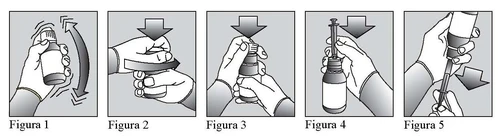
- Wear disposable gloves before handling Xaluprine.
- Shake the bottle vigorously for at least 30 seconds to ensure the medicine is well mixed (Figure 1).
- Remove the bottle cap (Figure 2), place the adapter into the bottle opening firmly, and leave it in place for future doses (Figure 3).
- Insert the dosing syringe tip fully into the hole of the adapter (Figure 4). Your doctor or pharmacist will advise you which syringe to use—the 1 ml or the 5 ml syringe—to administer the correct dose.
- Turn the bottle upside down (Figure 5).
- Pull back the syringe plunger to draw the medicine from the bottle into the syringe. Pull the plunger to the mark corresponding to the prescribed dose (Figure 5). If you are unsure about the amount of medicine to draw up, always consult your doctor or nurse.
- Return the bottle to an upright position and gently remove the syringe from the adapter, holding it by the barrel rather than the plunger.
- Gently insert the syringe tip into the mouth, inside the cheek.
- Slowly and gently push the plunger to empty the medicine inside the cheek, then swallow. DO NOT push the plunger forcefully or spray the medicine to the back of the mouth or throat, as it may cause choking.
- Remove the syringe from the mouth.
- Swallow the oral suspension and drink some water, making sure no medicine remains in the mouth.
- Replace the bottle cap, leaving the adapter in place. Make sure the cap is tightly closed.
- Wash the syringe with warm water and rinse thoroughly. Hold the syringe under water and move the plunger up and down several times to ensure the inside is clean. Allow the syringe to air-dry completely before reusing. Do not dry it with a cloth. Store the syringe in a clean place together with the medicine.
Repeat the above steps for each dose, according to your doctor’s or pharmacist’s instructions.
If you take more Xaluprine than you should
If you take more Xaluprine than prescribed, inform your doctor or go to hospital immediately.
You may feel unwell, vomit, or have diarrhoea. Take the medicine pack and this leaflet with you.
If you forget to take Xaluprine
Inform your doctor. Do not take a double dose to make up for a missed dose.
If you stop treatment with Xaluprine
Do not stop taking the medicine unless instructed by your doctor, as your condition may worsen.
If you have any questions about using this medicine, consult your doctor or pharmacist.
4. Possible side effects
Like all medicines, this medicine can cause side effects, although not everybody gets them.
If you notice any of the following side effects, tell your specialist doctor or go
immediately to hospital:
-
Allergic reaction, which may include:
- skin rashes or high fever
- joint pain
- swelling of the face
- skin nodules (erythema nodosum) (frequency unknown)
-
Any sign of fever or infection (inflamed throat/mouth or urinary problems)
-
Any unexpected bruising or bleeding, as this could mean that your body is not producing enough of a particular type of blood cell
-
Any sudden illness (even with normal temperature) accompanied by abdominal pain and nausea/vomiting, as this could be a sign of inflammation of the pancreas
-
Any yellowing of the whites of the eyes or skin (jaundice)
-
If you develop diarrhoea
Tell your doctor if you notice any of the following side effects, which may also be caused by this medicine:
Very common (affects more than 1 in 10 people)
- decrease in white blood cells and platelets (which may be seen in blood tests)
Common (affects less than 1 in 10 people)
- Nausea or vomiting
- Liver damage (which may be seen in blood tests)
- Decrease in red blood cells, which may cause tiredness, weakness or shortness of breath – known as anaemia
- loss of appetite
- diarrhoea
- inflammation of the pancreas (pancreatitis) in patients with inflammatory bowel disease
Uncommon (affects less than 1 in 100 people)
- mouth ulcers
- joint pain
- skin rashes
- fever
- permanent liver damage (hepatic necrosis)
Rare (affects less than 1 in 1,000 people)
- hair loss
- in men: temporary decrease in sperm count
- allergic reaction leading to facial swelling
- various types of tumours, including blood, lymph node and skin tumours
- inflammation of the pancreas (pancreatitis) in patients with leukaemia (blood cancer)
Very rare (affects less than 1 in 10,000 people)
- a different type of leukaemia from the one being treated
- intestinal ulcers
Other side effects (frequency unknown)
- a rare type of cancer (hepatosplenic T-cell lymphoma, in patients with a condition known as inflammatory bowel disease) (see section 2, Warnings and precautions)
- burning or tingling sensation in the mouth or lips (mucosal inflammation, stomatitis)
- chapped or swollen lips (cheilitis)
- vitamin B3 deficiency (pellagra) associated with localized pigmented skin rash, diarrhoea, or decreased memory, reasoning, or other thinking abilities
- sensitivity to sunlight causing skin reactions
- a decrease in clotting factors
Additional side effects in children and adolescents
Low blood sugar level (hypoglycaemia) – frequency unknown.
If any of the side effects worsen, or if you notice any side effect not listed in this leaflet, tell your doctor or pharmacist.
Reporting of side effects
If you get any side effects, including those not listed in this leaflet, talk to your doctor, pharmacist, or nurse. You can also report side effects directly through the national reporting system listed in Annex V. By reporting side effects, you can help provide more information on the safety of this medicine.
5. How to store Xaluprine
- Keep this medicine out of the sight and reach of children, preferably locked away. Accidental ingestion may be fatal in children.
- Do not use this medicine after the expiry date stated on the carton and on the bottle after “exp”. The expiry date refers to the last day of that month.
- Do not store above 25°C.
- Keep the bottle tightly closed to prevent deterioration of the medicine and to reduce the risk of accidental spillage.
- Unused medicine must be discarded 56 days after first opening the bottle.
Do not dispose of any medicine via wastewater or household waste. Ask your pharmacist how to dispose of medicines no longer required. This will help protect the environment.
6. Package contents and other information
What Xaluprine contains
The active substance is mercaptopurine (as monohydrate). 1 ml of suspension contains 20 mg of
mercaptopurine monohydrate.
The excipients are xanthan gum, aspartame (E951), concentrated raspberry juice, sucrose, sodium methylparahydroxybenzoate (E219), sodium ethylparahydroxybenzoate (E215), potassium sorbate (E202), sodium hydroxide and purified water (see section 2: Xaluprine contains aspartame, sodium methylparahydroxybenzoate (E219), sodium ethylparahydroxybenzoate (E215) and sucrose).
Description of the appearance of Xaluprine and contents of the pack
Xaluprine is an oral suspension with a pink to brown colour. It is supplied in 100 ml amber glass bottles with child-resistant closure. Each pack contains one bottle, one bottle adapter and two dosing syringes (one 1 ml graduated syringe and one 5 ml graduated syringe). Your doctor or pharmacist will advise you which syringe to use, depending on the prescribed dose.
Marketing Authorisation Holder
Lipomed GmbH
Hegenheimer Strasse 2
79576 Weil am Rhein
Germany
Manufacturer
Pronav Clinical Ltd.
Unit 5
Dublin Road Business Park
Carraroe, Sligo
F91 D439
Ireland
More detailed information on this medicine is available on the European Medicines Agency website, https://www.ema.europa.eu