Waylivra
Italy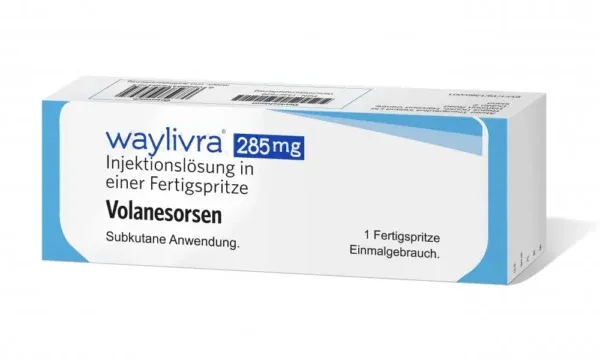
Table of Contents
- Package leaflet: Information for the user
- Waylivra 285 mg solution for injection in pre-filled syringe
- 1. What Waylivra is and what it is used for
- 2. What you need to know before using Waylivra
- 3. How to use Waylivra
- 4. Possible side effects
- 5. How to store Waylivra
- 6. Package contents and other information
- 1. Wash your hands and gather the supplies
- 2. Allow the injection to reach room temperature
- 3. Check the expiry date
- 4. Remove the syringe and check the medicine
- 5. Choosing an injection site
- 6. Preparation of the injection site
- 7. Removing the needle cap
- 8. Pinch the skin
- 9. Needle Insertion
- 10. Waylivra Injection
- 11. Needle removal
- 12. Dispose of the used syringe in a sharps container
- 13. Injection Site Care
Package leaflet: Information for the user
Waylivra 285 mg solution for injection in pre-filled syringe
volanesorsen
▼Medicinal product subject to additional monitoring. This will allow rapid identification of new safety information. You can help by reporting any side effects you experience while taking this medicine. See the end of section 4 for information on how to report side effects.
Please read all of this leaflet carefully before you start using this medicine because it contains important information for you.
- Keep this leaflet. You may need to read it again.
- If you have any questions, ask your doctor, pharmacist or nurse.
- This medicine has been prescribed for you only. Do not pass it on to other people, even if their symptoms are the same as yours, as it may be harmful.
- If you experience any side effect, including those not listed in this leaflet, tell your doctor, pharmacist or nurse. See section 4.
Contents of this leaflet
- What Waylivra is and what it is used for
- What you need to know before using Waylivra
- How to use Waylivra
- Possible side effects
- How to store Waylivra
- Contents of the pack and other information
1. What Waylivra is and what it is used for
Waylivra contains the active substance volanesorsen, which helps treat a condition called
familial chylomicronaemia syndrome (FCS). FCS is a genetic disease that causes abnormally high
levels of fats in the blood called triglycerides. This can lead to inflammation of the
pancreas, accompanied by severe pain. Together with a controlled low-fat diet,
Waylivra helps reduce triglyceride levels in the blood.
Waylivra may be administered after you have already received other medicines used to lower
blood triglyceride levels without achieving an adequate effect.
Waylivra will be administered to you only if genetic tests have confirmed the presence of FCS and your
risk of pancreatitis is considered very high.
During treatment with Waylivra, you must continue the very low-fat diet prescribed by your
doctor.
This medicine is intended for patients aged 18 years and older.
2. What you need to know before using Waylivra
Do not use Waylivra:
- if you are allergic to volanesorsen or to any of the other ingredients of this medicine (listed in section 6).
- if you have a condition called thrombocytopenia, which means you have a very low number of platelets in your blood (less than 140 x 10⁹/L). You may notice this if you have an injury causing bleeding that takes a long time to stop (more than 5–6 minutes for a minor skin scratch). Your doctor will perform tests before starting treatment with this medicine. Until now, you may not have known that you have this condition or what may have caused it.
If any of the above conditions apply to you or if you are unsure, consult your doctor, nurse, or pharmacist before using Waylivra.
Warnings and precautions
Talk to your doctor, pharmacist, or nurse before using Waylivra if you have or have had any of the following medical conditions:
- Very high levels of triglycerides not due to FCS.
- Low platelet count, a type of blood cell that clumps together to help blood clot (thrombocytopenia); before you start using this medicine, your doctor will perform a blood test to check your platelet count.
- Any liver or kidney problems.
Blood tests
Your doctor will perform a blood test before you start using this medicine to check your platelet count and will repeat the test at regular intervals to monitor platelet levels after you begin using Waylivra.
Contact your doctor immediately if you experience signs of low platelet levels, such as unusual or prolonged bleeding, appearance of red spots on the skin (called petechiae), unexplained bruising, uncontrollable bleeding, or nosebleeds, or if you experience neck stiffness or severe headache.
Your doctor may also prescribe a blood test every 3 months to check for signs of liver damage. Contact your doctor immediately if you notice signs of liver damage, such as yellowing of the skin or whites of the eyes, abdominal pain or swelling, feeling unwell, confusion, or general malaise.
If necessary, your doctor may change how often you use this medicine or temporarily stop treatment. You may need to consult a doctor specialized in blood disorders to determine whether you should continue treatment with Waylivra.
Urine tests
Your doctor may perform a urine test and/or blood test every 3 months to check for signs of kidney damage. Contact your doctor immediately if you experience signs of kidney damage, such as swelling of the ankles, legs, and feet, producing less urine than usual, shortness of breath, feeling unwell, confusion, or feeling tired or drowsy.
Diet
Before starting this medicine, you must follow a diet designed to help reduce triglyceride levels in the blood.
While using Waylivra, it is important to maintain this diet to help reduce triglycerides.
Children and adolescents
Do not use Waylivra if you are under 18 years of age. Waylivra has not been studied in patients under 18 years of age.
Other medicines and Waylivra
Tell your doctor or pharmacist if you are taking, have recently taken, or might take any other medicines. It is important to inform your doctor if you are already taking any of the following:
- Medicines to prevent blood clotting, e.g., acetylsalicylic acid, dipyridamole, or warfarin.
- Other medicines that may affect blood clotting, including non-steroidal anti-inflammatory drugs such as ibuprofen, medicines used to prevent heart attacks and strokes such as clopidogrel, ticagrelor, and prasugrel, antibiotics such as penicillin, medicines such as ranitidine (used to reduce stomach acidity), and quinine (used to treat malaria).
- Medicines that may cause liver problems, such as paracetamol.
Waylivra and alcohol
The effect of using Waylivra together with alcohol is unknown. You are advised to avoid alcohol during treatment with this medicine due to the risk of liver problems.
Pregnancy and breastfeeding
If you are pregnant, suspect you may be pregnant, plan to become pregnant, or are breastfeeding, ask your doctor or pharmacist for advice before using this medicine. It is preferable to avoid using Waylivra during pregnancy.
It is not known whether Waylivra passes into breast milk. You are advised to discuss breastfeeding with your doctor to determine what is best for you and your baby.
Driving and using machines
It is unlikely that Waylivra will affect your ability to drive or operate machinery.
Sodium
This medicine contains less than 1 mmol (23 mg) of sodium per dose; i.e., essentially 'sodium-free'.
3. How to use Waylivra
Use this medicine exactly as instructed by your doctor. If you have any doubts, consult your doctor or pharmacist.
Before this medicine is administered to you, your doctor will rule out other potential causes of high triglyceride levels, such as diabetes or thyroid problems.
Your doctor will tell you how often you should take this medicine. Depending on the results of blood and urine tests or the occurrence of side effects, your doctor may change how often you use this medicine, or may temporarily or permanently stop treatment.
You or your caregiver will receive instructions on how to use Waylivra according to the directions provided in this leaflet. Waylivra must be injected under the skin (subcutaneous administration or “SC”), as demonstrated by your doctor, nurse, or pharmacist, and you must ensure that all the liquid in the syringe is injected.
Each single-use pre-filled syringe of this medicine provides a dose of 285 mg in 1.5 mL.
Before using this medicine, it is important that you read, understand, and carefully follow the instructions for use.
The instructions for use are provided at the end of this leaflet.
If you use more Waylivra than you should
If you inject too much Waylivra, contact your doctor or pharmacist or go immediately to a hospital emergency department, even if you do not have any symptoms.
If you forget to use Waylivra
If you miss a dose, contact your doctor to find out when to take the next dose. If a dose is missed and is noticed within 48 hours, the missed dose should be administered as soon as possible. If it has not been noticed within 48 hours, the missed dose should be skipped and the next scheduled injection should be given. Do not inject more than one dose within 2 days.
If you stop using Waylivra
Do not stop using Waylivra unless you have discussed stopping the medicine with your doctor.
If you have any questions about how to use this medicine, consult your doctor, pharmacist, or nurse.
4. Possible side effects
Like all medicines, this medicine can cause side effects, although not everybody gets them.
Serious side effects
If you experience any of the following side effects, inform your doctor immediately:
- Symptoms that may indicate low platelet counts in the blood (platelets are cells important for blood clotting). Consult your doctor immediately if you have signs of low platelet levels, such as unusual or prolonged bleeding, appearance of red spots on the skin (called petechiae), unexplained bruising, uncontrollable bleeding, or nosebleeds, or if you experience neck stiffness or severe headache.
Other side effects
Very common (may affect more than 1 in 10 people)
- Reactions at the injection site (rash, pain, redness or warmth, dryness, swelling, itching, tingling, hardening, hives, blisters, pustules, bruising, bleeding, numbness, paleness, change in colour or burning sensation at the injection site). The likelihood of experiencing a reaction at the injection site may be reduced by allowing Waylivra to reach room temperature before injection, and by applying ice to the injection site after the injection.
- Headache
- Muscle pain
- Chills
Common (may affect up to 1 in 10 people)
- Blood tests show abnormally high levels of white blood cells in the blood
- Blood tests show abnormally low levels of white blood cells ("lymphopenia")
- Easy or excessive bruising, or bruising without an obvious cause
- Subcutaneous bleeding appearing as a skin rash, bleeding from gums or mouth, blood in urine or stools, nosebleeds, or unusually heavy menstrual periods
- An allergic reaction, with symptoms including rash, joint stiffness, or fever
- Presence of blood or protein in the urine
- Changes in the results of certain blood tests, including: increased levels of certain blood components such as creatinine, urea, transaminases, liver enzymes, or prolonged blood clotting time; decreased levels of haemoglobin in the blood; or reduced rate of blood flow through the kidneys
- Diabetes, with symptoms including increased thirst, frequent need to urinate (especially at night), extreme hunger, severe tiredness, and unexplained weight loss
- Difficulty sleeping
- Numbness, tingling, or pricking sensations, feeling faint or actual fainting, dizziness, or tremors
- Vision disturbances, such as flashing lights, brief temporary blindness in one eye, bleeding under the surface of the eye, or blurred vision
- High blood pressure
- Hot flushes, increased sweating, night sweats, feeling of warmth, pain, flu-like illness, or general feeling of being unwell
- Cough, difficulty breathing, nasal congestion, throat swelling, wheezing or laboured breathing
- Feeling unwell or actual malaise, dry mouth, diarrhoea, swelling of the neck, face, or gums, stomach pain or swelling, indigestion
- Skin redness, rash, pustules, thickening, scarring, or itching of the skin, known as "urticaria"
- Pain in hands or feet, pain in large joints of arms and legs, including elbows, wrists, knees, and ankles, pain or stiffness in other joints, back pain, neck pain, jaw pain, muscle spasms, or pain in other body parts
- Severe tiredness (fatigue), weakness or lack of energy, fluid retention, non-cardiac chest pain
Reporting of side effects
If you get any side effects, including ones not listed in this leaflet, talk to your doctor, pharmacist, or nurse. You can also report side effects directly via the national reporting system listed in Annex V. By reporting side effects, you can help provide more information on the safety of this medicine.
5. How to store Waylivra
Keep this medicine out of the sight and reach of children.
Do not use this medicine after the expiry date stated on the label of the carton and the syringe after "Exp" (EXP). The expiry date refers to the last day of that month.
Store in a refrigerator (from +2 °C to +8 °C).
Keep in the original packaging to protect the medicine from light.
Waylivra may be stored at room temperature (up to 30°C) in the original packaging for up to 6 weeks after removal from the refrigerator. During this period, the medicine may be kept at room temperature or returned to the refrigerator, if necessary. Record in the space provided on the outer packaging the date when the pack was first removed from the refrigerator. Dispose of the medicine if it is not used within 6 weeks of first removal from the refrigerator. If the expiry date printed on the syringe label is reached during the 6-week period at room temperature, do not use the syringe and dispose of it.
Do not use this medicine if the solution is cloudy or contains particles; it should be clear and colourless to slightly yellow.
Do not dispose of any medicine via wastewater or household waste. Ask your pharmacist how to dispose of medicines no longer required. This will help protect the environment.
6. Package contents and other information
What Waylivra contains
- The active substance is volanesorsen. Each mL contains 200 mg of volanesorsen sodium, equivalent to 190 mg of volanesorsen. Each single-dose pre-filled syringe contains 285 mg of volanesorsen in 1.5 mL of solution.
- The other components are water for injections, sodium hydroxide, and hydrochloric acid (to adjust the pH level; see section 2 under "Sodium").
Description of the appearance of Waylivra and contents of the pack
Waylivra is supplied in a package as a single-dose pre-filled syringe with a needle and protective cap, containing a clear, colourless to pale yellow solution. It is filled to deliver 1.5 mL of solution after fully depressing the syringe plunger.
It is available either as a box containing 1 pre-filled syringe, or as a multiple pack containing 4 pre-filled syringes (4 boxes of 1 pack each).
Marketing Authorisation Holder
Akcea Therapeutics Ireland Ltd.
St. James House
72 Adelaide Road, Dublin 2
D02 Y017
Ireland
Manufacturer
Almac Pharma Services Ireland Ltd.
Finnabair Industrial Estate
Dundalk
Co. Louth
Ireland
Additional data on this medicinal product must be provided.
The European Medicines Agency will review new information on this medicinal product at least annually, and the product characteristics summary (SmPC) will be updated if necessary.
Other sources of information
More detailed information on this medicinal product is available on the website of the European Medicines Agency: http://www.ema.europa.eu/.
Instructions for use
Waylivra is an injection administered subcutaneously using a single-use, pre-filled syringe, intended for one-time use only.
Do not use Waylivra until you fully understand the procedure described below.
If you have any doubts about how to use Waylivra, consult your doctor or pharmacist.
Components of the pre-filled syringe
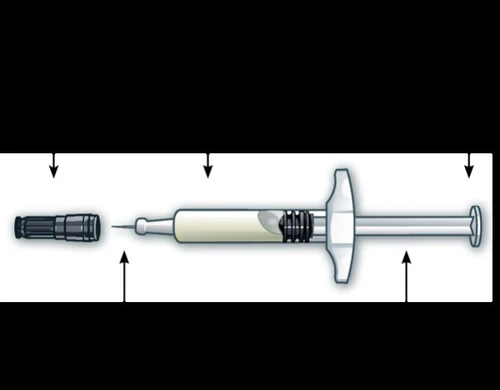
| Ergonomic grips Piston head Cylinder Needle cap | ||||||
Ago Needle of the
plunger
Preparation for injection
1. Wash your hands and gather the supplies
Wash your hands thoroughly with soap (for at least 3 minutes) and dry them well.
Place the following items on a clean, flat surface in a well-lit area (Figure A).
| Sharps container | |
| Ice/cool pack (optional) | |
| Cotton ball/gauze pad (optional) | ||||
| Alcohol swab | ||||
Prefilled syringe with Waylivra
Figure A
2. Allow the injection to reach room temperature
If the syringe has been stored in the refrigerator, allow the prefilled syringe to reach room temperature by removing it from the refrigerator at least 30 minutes before injection.
Injecting cold liquid may cause injection site reactions such as pain, redness, or swelling.
Do not heat the syringe in any other way, for example, using a microwave or hot water.
Figure B
3. Check the expiry date
Check the expiry date on the packaging.
The expiry date on the pack refers to the validity period of the refrigerated medicine.
Record in the space provided on the outer packaging the date when the pack was first removed from the refrigerator.
Do not use Waylivra if the expiry date has passed or if it has been stored for more than 6 weeks at room temperature. Contact your doctor or pharmacist to obtain a new supply.
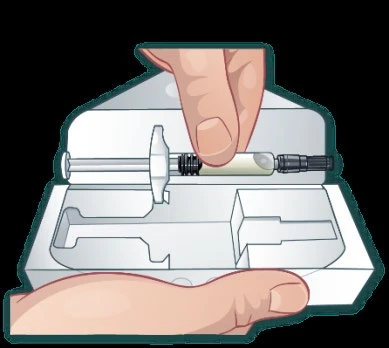
4. Remove the syringe and check the medicine
Open the packaging and remove the syringe by holding it at the barrel (Figure C).
Figure C
Inspect the liquid in the syringe. The medicine should be clear to slightly yellow.
It is normal to see a large air bubble (Figure D).
Do not attempt to remove the air bubble before injection. Injecting the solution with the air bubble is not dangerous.
Do not use the pre-filled syringe if the liquid is cloudy or contains floating particles.
Figure D
5. Choosing an injection site
For self-injection:
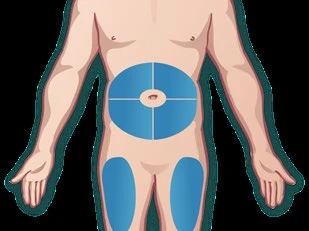
Abdomen: abdominal area as shown,
except for about 5 centimeters around
the navel.
Thighs: anterior and central area as shown
(Figure E).
Figure E
If administration is performed by someone else, for
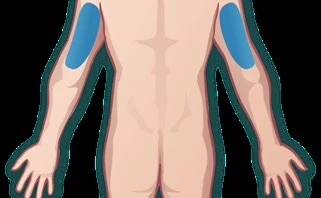
example a family assistant, in addition to the sites above:
Upper arms: posterior upper area as
shown (Figure F).
For all injections:
Rotate the injection site with each injection. Figure F
Do not inject near the waistline, where clothing
might rub or press on the injection site.
Do not inject into tattoos, moles, scars, birthmarks, bruises, rashes, or areas of sensitive, red, hardened, damaged, burned, or inflamed skin.
Consult your healthcare provider if you have any doubts about the injection site.
Injection
6. Preparation of the injection site
Clean the selected injection site with an alcohol wipe
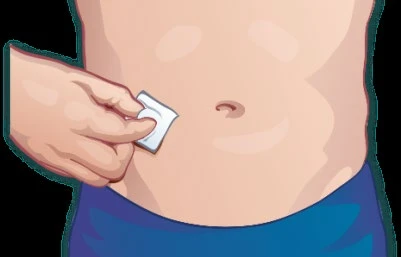
(Figure G).
Figure G
7. Removing the needle cap
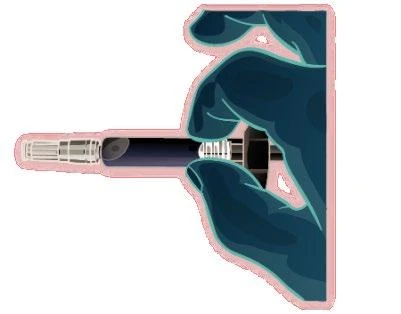
Remove the needle cap by holding the syringe barrel with the needle pointing away from you and pulling off the cap sharply (Figure H).
You may notice a drop of liquid at the tip of the needle. This is normal.
Do not touch the plunger rod or plunger tip while removing the needle cap.
Do not use the pre-filled syringe if the needle appears damaged.
Do not use the pre-filled syringe if it falls after the needle cap has been removed.
Figure H
8. Pinch the skin
Using your free hand, pinch the skin around the injection
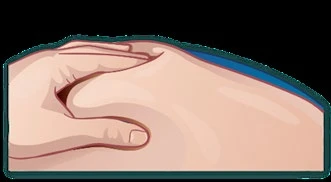
site (Figure I).
Figure I
9. Needle Insertion
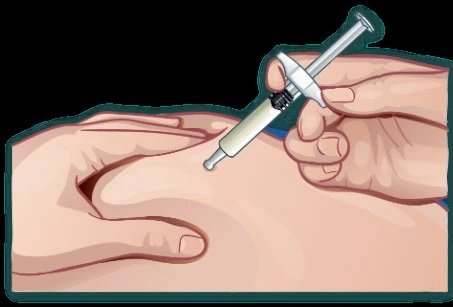
Insert the needle into the injection site with a quick, firm motion,
without touching the plunger head.
The needle should be inserted at a 45-degree angle (Figure J)
relative to the skin surface (Figure J).
10. Waylivra Injection
Inject the liquid while holding the syringe with your thumb on the
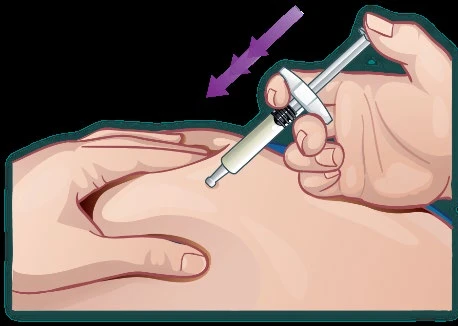
plunger and push slowly until it is fully depressed, until the syringe is completely empty (Figures K and L).
Figure K
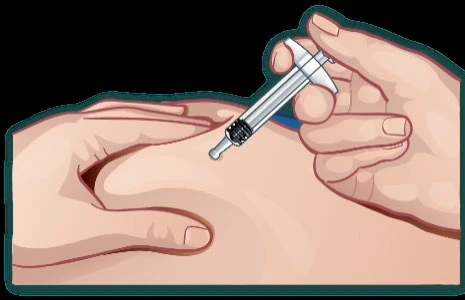
Figure L
11. Needle removal
Remove the needle from the injection site by pulling it out using the
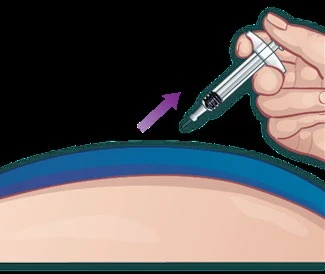
same angle as it was inserted (Figure M).
Figure M
After injection
12. Dispose of the used syringe in a sharps container
Sharps
Immediately after the injection, dispose of the used syringe as instructed by your healthcare provider, usually in a sharps disposal container (Figure N), following these steps. Figure N
Discard the needle cap after the injection.
Do not recap the needle onto the syringe.
If a sharps disposal container is not available, you may use a household container that is:
- Made of heavy-duty plastic,
- Equipped with a closeable, leak-resistant, puncture-resistant lid designed to prevent sharp objects from escaping,
- Kept upright and stable during use,
- Leak-resistant,
- Properly labeled to warn of hazardous waste inside the container.
When the sharps disposal container is nearly full, follow community guidelines for proper disposal of the sharps container. Be aware that there may be specific local laws regarding the disposal of used needles and syringes. Ask your pharmacist or consult the website (if available) of the Ministry of Health for further details on the disposal of sharps in your country of residence.
Do not dispose of the used sharps container in household waste.
Do not recycle the used sharps container.
Always keep the sharps container out of reach of children and pets.
13. Injection Site Care
If you see blood at the injection site, gently press
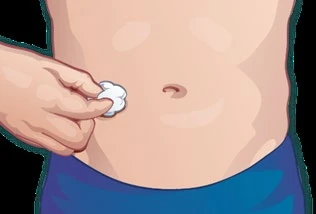
the site with a sterile cotton ball or use gauze
and a bandage, if necessary (Figure O).
Do not rub the injection site after injecting.
Figure O
You may also apply ice to the
injection site to reduce pain, redness, or discomfort
(Figure P).
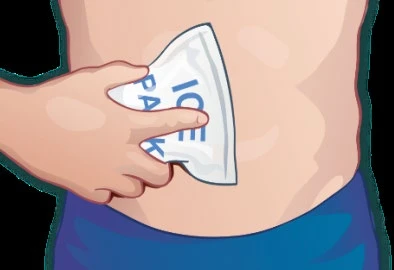
Figure P
Storage
Storage instructions
When you first receive the Waylivra pre-filled syringes, store them in the refrigerator (from +2 °C to +8 °C) inside their packaging.
Waylivra can be stored at room temperature (from +8 °C to +30 °C), in the outer packaging to protect the medicine from light, for up to 6 weeks. During this 6-week period, the medicine can be kept at room temperature or returned to the refrigerator.
Do not freeze the Waylivra pre-filled syringe.
Do not remove the syringe from its packaging or take off the needle cap until you are ready to inject.
Dispose of the medicine immediately if it is not used within 6 weeks after first removal from the refrigerator. If in doubt, refer to the date you wrote on the packaging.